Loading...
7-8 hours
Hiking in Nepal in Kathmandu Valley
Kathmandu Valley
Best Seller Instant Confirmation 7-8 hours
Free Cancellation
Up to 24 hours
Local Expert Guide
English speaking
Small Group
Max 12 people
Instant Confirmation
Mobile voucher
Overview
Plan your Shivapuri hike near Kathmandu with trail routes, entry fees, best season, and tips for reaching Shivapuri Peak in 2026.
Introduction
For anyone based in or visiting the Kathmandu Valley, Shivapuri hiking offers one of the easiest ways to trade city noise for forest quiet without a long journey. Just north of the capital, Shivapuri Nagarjun National Park rises from the valley floor into thick pine and rhododendron forest, culminating at Shivapuri Peak, the highest point within the park's boundaries. What makes Shivapuri hiking so appealing is its accessibility: a full day in nature, complete with monasteries, waterfalls, and forest trails, is possible without ever leaving the greater Kathmandu area. This guide covers everything a hiker needs to know before setting out, from the main trail options to entry fees, seasonal considerations, and practical preparation tips.
About Shivapuri National Park
Shivapuri Nagarjun National Park is far larger than most first-time visitors expect.The park covers roughly 159 square kilometers, extending north from Kathmandu all the way toward Nuwakot and Sindhupalchowk, and connects with Langtang National Park at Chisapani. Within this expanse, Shivapuri Peak stands as the park's signature summit. The peak reaches an elevation of about 2,732 meters, or roughly 8,963 feet.
It's worth setting expectations correctly before heading out. Despite what some tour operators advertise, Shivapuri hiking does not typically deliver dramatic Himalayan mountain panoramas. Instead, the appeal lies elsewhere: dense forest, birdlife, monastic sites, and a genuine sense of escape that's rare to find so close to a capital city. That said,on exceptionally clear days some hikers do report distant views toward Langtang, Ganesh Himal, and even Everest from higher points along certain routes, so it's a pleasant possibility rather than a guarantee.
The park is also home to notable cultural and natural landmarks along its trails, including centuries-old monasteries, the origin point of the sacred Bagmati River, and forest zones that shift dramatically with elevation — a detail that makes Shivapuri hiking interesting even for those who've done the route before.
Main Shivapuri Hiking Routes
There isn't just one way to hike Shivapuri. The park has several entrance gates, and the route you choose shapes the entire feel of the day.
Budhanilkantha to Shivapuri Peak
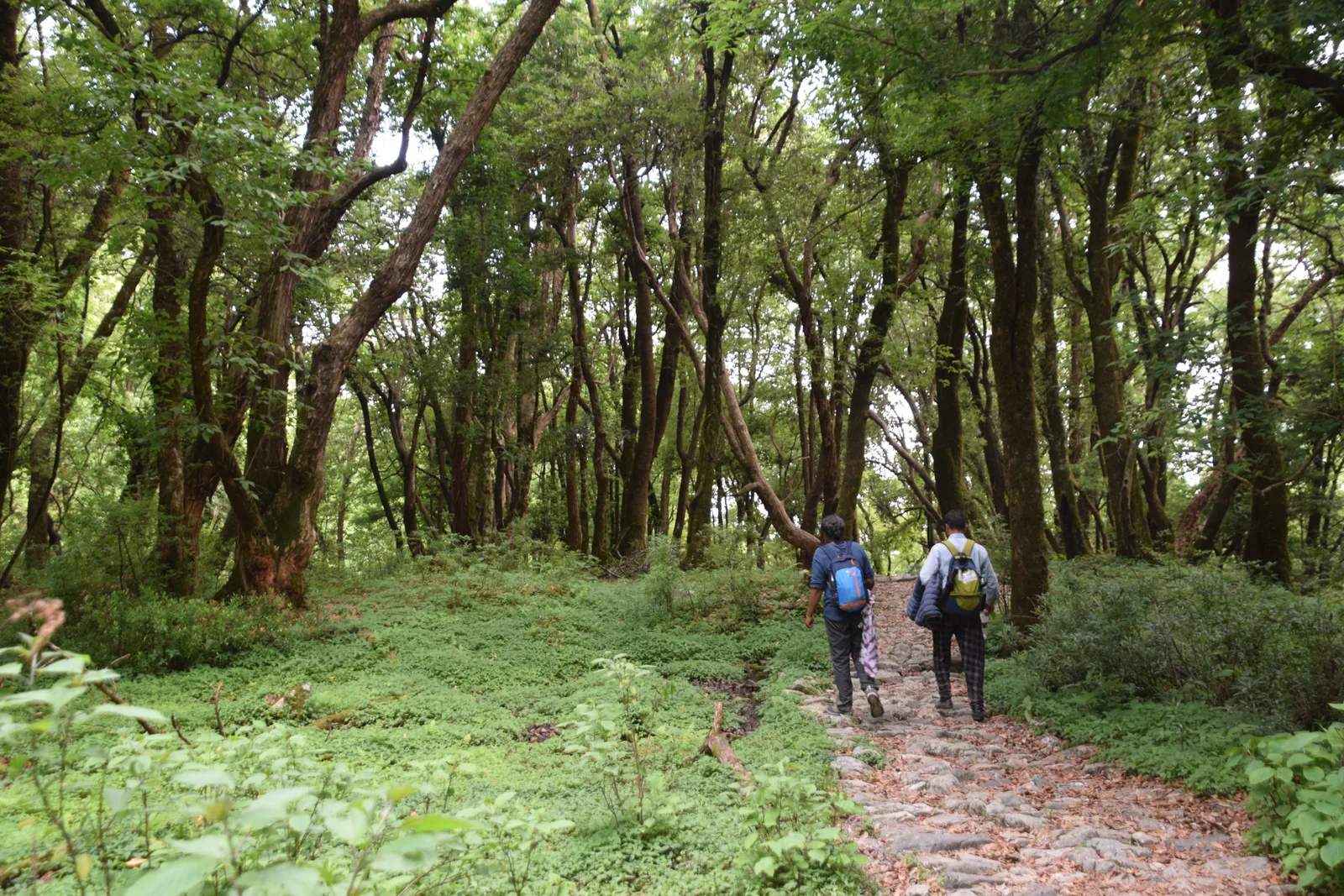
This is the most direct and most commonly used route for a day hike to the summit. The Budhanilkantha gate is the most popular entry point, giving access to Shivapuri Peak, Nagi Gompa, and Baghdwar. From the gate near the Budhanilkantha temple, the trail begins on mostly dusty, tree-lined roads before climbing via stone steps toward Nagi Gumba, a nunnery monastery recognizable by its fluttering prayer flags and resident nuns going about their daily routines. Hikers typically rest here, enjoying tea and valley views before continuing.
From Nagi Gumba, the trail steepens considerably. The climb from Nagi Gumba to Shivapuri Peak covers about 900 meters of elevation gain, mostly along stone steps, which makes the final stretch of the hike noticeably more tiring than the earlier sections. Along the way, hikers pass Baghdwar, the point regarded as the origin of the Bagmati River, marked by a small waterfall — a meaningful stop for many Nepali hikers given the river's cultural and religious significance.
Sundarijal Routes
The Sundarijal gate offers a different character of Shivapuri hiking, one centered more on forest and waterfalls than on monastic sites. This gate is known for its waterfalls, dense forest trails, and its connection onward to Chisapani and the Langtang region. Several distinct hikes originate from here:
- Sundarijal to Budhanilkantha (or the reverse) takes roughly six to seven hours and offers a satisfying full traverse of the park's southern section.
- Sundarijal to Mulkharka and back is a shorter option, taking about three to four hours round trip, well suited to hikers with limited time or less hiking experience.
- For those wanting a multi-day experience, the Sundarijal to Chisapani to Nagarkot route can be done over two days and one night, or extended to three days and two nights if continuing on to Changunarayan. The Chisapani to Nagarkot leg alone takes roughly seven to eight hours, while Nagarkot to Changunarayan takes about five hours.
This flexibility is part of what makes Shivapuri hiking so appealing to a wide range of travelers — the same national park can host a relaxed half-day outing or a serious multi-day trek connecting toward Langtang and Helambu.
Nagarjun Forest Trails
The Nagarjun side of the park, accessed via the Balaju or Fulbari gates, is smaller in scale but offers its own distinct set of trails.The Fulbari Gate to Jamacho Peak hike takes around five to six hours, while longer options extend to cave systems and waterfalls deeper within the forest. These routes see far fewer visitors than the Budhanilkantha or Sundarijal sides, making them a good choice for hikers who want more solitude during their Shivapuri hiking day.
Entry Fees and Permits
Shivapuri hiking requires an entry permit purchased at the gate before starting. Foreign nationals currently pay around NPR 1,000 per person, roughly USD 7 to 8, with tickets available directly at each entrance gate. The park's opening hours run from 7:00 AM to 6:00 PM, though this can vary slightly depending on the season. It's worth carrying a valid ID or passport when hiking, since checkpoints along the trail may ask to see it. Some guided tours handle the permit process directly; on organized day trips, guides typically meet hikers for a morning departure and handle logistics from the entrance onward, though independent hikers can just as easily purchase tickets themselves at the gate.
Best Time for Shivapuri Hiking
Like most hikes in the Kathmandu Valley, Shivapuri hiking is best attempted outside the summer monsoon season, when trails can become slippery and visibility drops considerably. Spring stands out as a particularly rewarding time to hike, since rhododendron forests bloom in shades of red, pink, and white during this period, creating a striking natural corridor along parts of the trail. Autumn offers similarly favorable conditions, with clearer skies and comfortable hiking temperatures. Winter is hikeable as well, though early starts are recommended given shorter daylight hours and cooler temperatures at higher elevation near the peak.
What to Expect Along the Way
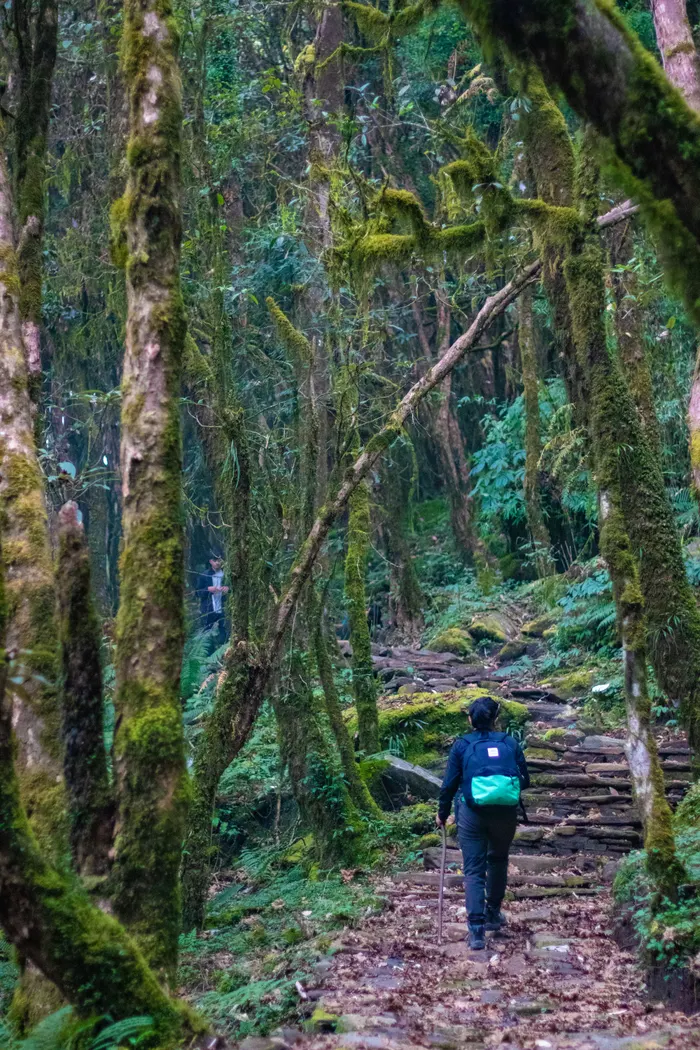
One of the defining features of Shivapuri hiking is the sheer variety packed into a single day. Within minutes of leaving the noise of the city, hikers find themselves surrounded by dense rhododendron forest, small waterfalls, and constant birdsong, a shift that feels far more dramatic than the short travel time from central Kathmandu would suggest. The trail moves through multiple distinct vegetation zones as elevation increases, adding visual variety that keeps the hike engaging even on longer routes.
Cultural stops are woven throughout the park as well. Nagi Gumba remains one of the most memorable waypoints on the Budhanilkantha route, offering both a place to rest and a genuine glimpse into monastic life, with resident nuns often visible going about daily tasks around the grounds. The monastery itself is affiliated with a larger institution based near Boudhanath Stupa, connecting this quiet mountain outpost to one of Kathmandu's most significant religious sites.
Wildlife sightings, while not guaranteed, add another layer of interest to Shivapuri hiking. The park's forested terrain supports a range of bird species, making it a popular, low-effort destination for birdwatchers based in Kathmandu. Occasional glimpses of other native fauna are possible as well, particularly for hikers who move quietly and start early in the day.
Getting There
Reaching the trailhead is straightforward from central Kathmandu. Public buses and microvans run frequently from Ratna Park or Gongabu Bus Park toward both Budhanilkantha and Sundarijal, making independent travel to either gate simple and inexpensive. Motorcycle travel is also a popular option among locals, since the roads leading to both gates are well paved. For those who prefer not to arrange transport themselves, private day tours typically include hotel pickup, transport to the gate, and a guide for the duration of the hike.
Preparation Tips for Shivapuri Hiking
A few practical steps go a long way toward making a Shivapuri hike more comfortable:
- Footwear matters most. The stone-step sections, particularly on the climb to the peak, are far easier with proper hiking shoes than with casual sneakers.
- Carry water and snacks. While tea shops exist at points like Nagi Gumba, longer stretches of trail have no facilities.
- Start early. An early departure allows more flexibility, better light for photography, and a buffer in case any section takes longer than expected.
- Bring cash for the entry fee, since gates may not always offer card payment options.
- Pack out your own waste. The park asks hikers to carry back any garbage, particularly food wrappers and bottles, to help preserve the trail environment.
- Check restricted items before entering. Some entrance checkpoints prohibit items such as knives, lighters, and drones, so it's worth reviewing gate rules in advance if bringing specialized gear.
Choosing Between a Guided Tour and Independent Hiking
Shivapuri hiking works well both as a guided experience and as an independent outing, and the right choice depends largely on hiking experience and comfort with self-navigation. The main trails, particularly from Budhanilkantha, are well marked and manageable for independent hikers with reasonable fitness. Guided tours add value primarily through logistics, local context at cultural stops like Nagi Gumba, and added safety for hikers less familiar with mountain trails or the local language. For multi-day options extending toward Chisapani and Nagarkot, a guide can also be useful for route-finding and arranging accommodation along the way.
Conclusion
Shivapuri hiking remains one of the most rewarding ways to experience nature without leaving the Kathmandu Valley behind entirely. Whether it's a half-day outing to Nagi Gumba and back, a full push to Shivapuri Peak, or a multi-day trek continuing toward Chisapani and Nagarkot, the park offers a version of the experience suited to nearly any traveler's time and fitness level. With modest entry fees, straightforward access from the city, and a genuine sense of forest immersion just minutes from urban streets, Shivapuri hiking earns its place as one of the standout day-trip destinations near Kathmandu.
Hike to Shivapuri Peak (2,732 m), the highest point in Shivapuri National Park
Visit Nagi Gumba, a nunnery monastery with prayer flags and valley views
See Baghdwar, the traditional origin point of the sacred Bagmati River
Walk through rhododendron forest, especially vivid in spring bloom
Highlights
- Hike to Shivapuri Peak (2,732 m), the highest point in Shivapuri National Park
- Visit Nagi Gumba, a nunnery monastery with prayer flags and valley views
- See Baghdwar, the traditional origin point of the sacred Bagmati River
- Walk through rhododendron forest, especially vivid in spring bloom
- Spot birdlife across multiple forest and elevation zones
- Optional multi-day extension toward Chisapani, Nagarkot, and Langtang
- Easy access from Kathmandu — under an hour by bus, microvan, or motorcycle
- Budget-friendly entry fee (~NPR 1,000 / USD 7–8 for foreign nationals)
What's Included
- Water
- Professional local hiking guide
- Park entrance permit/ticket
- Hotel pickup and drop-off (Kathmandu Valley)
- First aid kit
What's Not Included
- Personal travel insurance
- Meals and snacks during the hike
- Tips/gratuities for guide and driver
- ersonal hiking gear (shoes, poles, rain jacket)
- Any additional permits for multi-day extension
Itinerary
No itinerary available.
Gallery
Details
Duration
7-8 hours
Location
Kathmandu Valley
Provider
Enticing Himalayas Travels Pvt Ltd
Contact
+977 9851318388 / +977 9851144618
Book this experience
$100per person
Secure booking- Location
- Kathmandu Valley
- Duration
- 7-8 hours
- Confirmation
- Instant
Travellers
Price calculated per person
1
1 Traveller × $100$100
Total$100
From
$100/person