Loading...
5 days
Traditional Sound Healing in Nepal in Kathmandu Valley
Kathmandu Valley
Best Seller Instant Confirmation 5 days
Free Cancellation
Up to 24 hours
Local Expert Guide
English speaking
Small Group
Max 12 people
Instant Confirmation
Mobile voucher
Overview
Experience traditional sound healing in Nepal with singing bowls, sacred vibrations, meditation, and peaceful wellness practices for deep relaxation and balance.
Traditional Sound Healing in Nepal
Introduction
Traditional sound healing in Nepal is a peaceful wellness experience that combines sound, vibration, meditation, breathing, and traditional Himalayan practices. In the Kathmandu Valley, this experience has become especially interesting for travelers looking beyond ordinary sightseeing. Instead of spending every day visiting monuments and busy streets, visitors can take time to sit quietly, listen to resonant sounds, focus on breathing, and experience a slower side of Nepal.
Sound healing is commonly associated with Tibetan singing bowls, bells, gongs, chanting, and other resonant instruments. During a session, practitioners create sounds and vibrations while participants sit or lie comfortably in a peaceful environment. The experience is generally focused on relaxation, mindfulness, meditation, and personal wellbeing rather than medical treatment.
For travelers interested in wellness, the Kathmandu Valley offers a particularly meaningful setting. Ancient temples, monasteries, stupas, traditional courtyards, and Himalayan cultural traditions surround modern wellness centers and retreat spaces. A sound healing session can therefore become part of a broader wellness activity while exploring the cultural character of Nepal.
Travelers can also discover more through Nepal blogs and combine a sound healing experience with suitable Nepal packages.
What Is Sound Healing?
Sound healing is a wellness practice in which sound and vibration are used to create a calm and meditative environment. Different instruments can produce different tones, rhythms, and resonances. Participants generally listen to these sounds while concentrating on breathing and allowing the mind to become quieter.
In Nepal, travelers commonly encounter singing bowl sound sessions, meditation accompanied by sound, Buddhist-inspired chanting, bells, gongs, and other traditional or contemporary wellness practices.
The purpose of a session can vary. Some people simply want to relax after traveling, while others are interested in meditation or experiencing a cultural wellness tradition.
It is important to understand that sound healing should not be presented as a replacement for medical treatment. It is better understood as a relaxation and mindfulness experience.
Travelers looking for similar experiences can explore wellness activities and spiritual blogs.
Sound Healing in the Kathmandu Valley
The Kathmandu Valley is one of the most suitable places in Nepal for experiencing traditional sound-based wellness. The valley includes Kathmandu, Lalitpur, and Bhaktapur, with a remarkable concentration of Hindu and Buddhist heritage.
Visitors can experience sound healing in wellness centers, meditation spaces, yoga studios, retreat environments, and places connected with Himalayan spiritual traditions.
The surroundings can add another dimension to the experience. After visiting an ancient stupa or temple, travelers can spend time in a quiet room listening to singing bowls and practicing mindful breathing.
For visitors building a complete itinerary, Kathmandu activities can be combined with cultural tours.
Singing Bowls and Nepal
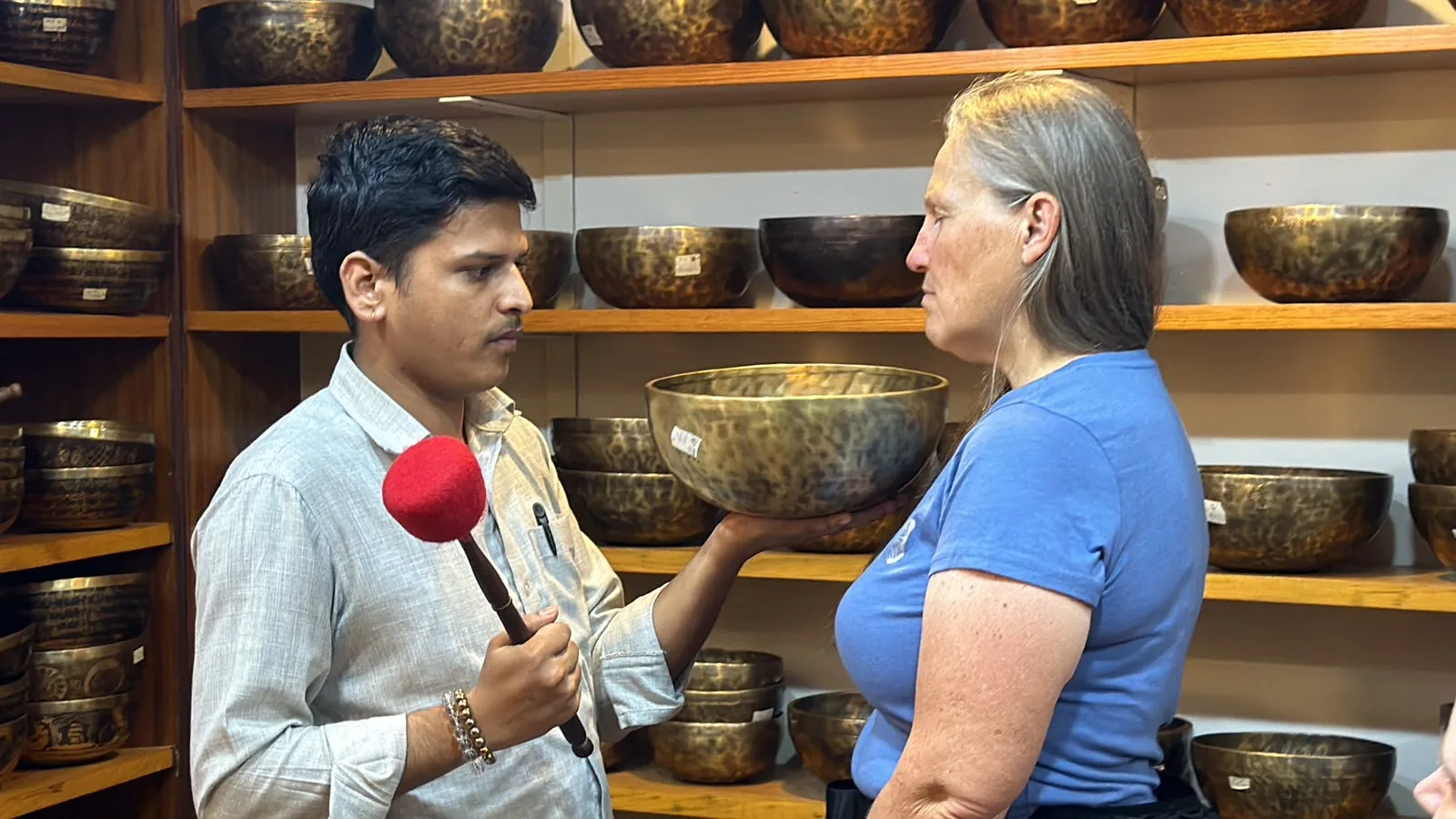
Singing bowls are among the most recognizable instruments associated with Himalayan sound experiences. When a bowl is struck or played around its rim, it produces a sustained resonant tone.
The sound can continue for several seconds, gradually becoming softer. During a wellness session, several bowls may be used to create overlapping tones.
The experience is often peaceful and immersive. Participants may close their eyes, relax their breathing, and focus their attention on the changing sounds.
Travelers interested in Himalayan traditions can read Himalayan stories and discover other wellness experiences.
Traditional Sound and Buddhist Culture
Sound has an important place in many Buddhist traditions. Chanting, bells, horns, drums, and other instruments can be encountered in religious and ceremonial settings.
However, a commercial sound-healing session should not automatically be treated as identical to a traditional religious ceremony. The two can overlap in instruments and atmosphere while having different purposes.
The Kathmandu Valley provides opportunities to see authentic religious practices alongside modern wellness experiences.
A traveler might visit Boudhanath in the morning, explore nearby cultural sites, and later participate in a sound meditation session.
Those interested in spiritual travel can explore spiritual activities, read Buddhist travel, and consider spiritual packages.
The Sound Healing Experience
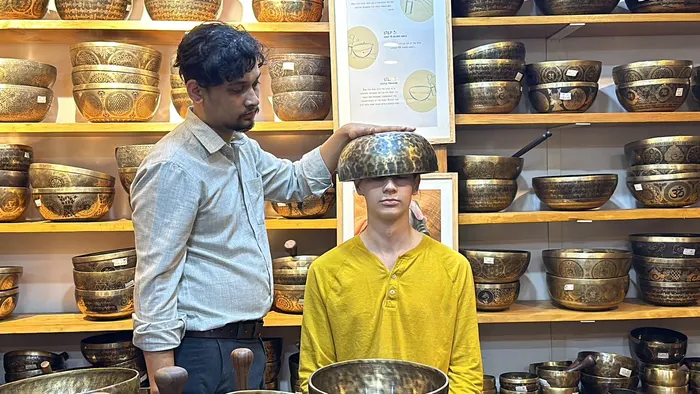
A typical sound healing session begins in a quiet environment. Participants may sit on cushions or lie on comfortable mats.
The practitioner usually explains the session before beginning. Participants may be guided through simple breathing exercises or encouraged to relax their body.
The instruments are then played at different intervals. Singing bowls, gongs, bells, or other instruments may be positioned around the room.
As the sounds continue, participants can focus on the tones rather than everyday thoughts. Some people experience the session as deeply relaxing, while others simply enjoy the unusual sensory experience.
The session can be gentle and accessible even for travelers who have never practiced meditation before.
You can find more meditation activities and related wellness blogs.
A Journey From Noise to Silence
Kathmandu can be energetic and busy. Traffic, motorcycles, pedestrians, markets, construction, temple bells, conversations, and city activity are part of everyday life.
Sound healing creates an interesting contrast.
Instead of trying to escape sound completely, the practice invites participants to focus on particular sounds. The mind gradually shifts attention away from random background noise and toward deliberate tones.
This transition from urban noise to mindful sound can be one of the most enjoyable parts of the experience.
After a busy sightseeing day, travelers can explore relaxing activities, read Kathmandu guides, or select a suitable city package.
Sound Healing and Meditation
Sound and meditation naturally complement one another. A sustained tone can provide a simple object of attention for someone who finds silent meditation difficult.
Instead of trying to stop thoughts, participants can listen carefully to the sound. They may notice how the tone begins, becomes stronger, changes, and eventually disappears.
This makes sound meditation approachable for beginners.
Travelers who want a deeper experience can combine a sound session with meditation, yoga, and quiet time.
Explore meditation sessions, discover mindfulness blogs, and browse wellness tours.
Sound Healing and Yoga
Yoga and sound healing can create a balanced wellness experience.
A traveler may begin the morning with gentle yoga, spend the afternoon exploring Kathmandu, and attend a sound meditation session in the evening.
The combination allows travelers to include movement, breathing, relaxation, and reflection within the same day.
For visitors who enjoy wellness travel, Nepal offers opportunities to build itineraries around these interests.
Explore yoga activities, read yoga guides, and consider yoga packages.
Sound Healing After Trekking
Nepal is famous for trekking, and many travelers spend several days walking through mountain landscapes before returning to Kathmandu.
After a trek, travelers often want a slower experience. A sound healing session can provide a peaceful transition from mountain trails to city life.
Rather than immediately filling every hour with sightseeing, travelers can leave an afternoon for rest, massage, meditation, or sound therapy.
The experience can be included after trekking or toward the end of a longer Himalayan itinerary.
Explore trekking activities, read trekking blogs, and browse trekking packages.
Sound Healing for International Travelers
International visitors often discover sound healing while searching for meditation, yoga, spirituality, or wellness experiences in Nepal.
The experience does not normally require previous knowledge. A beginner can simply listen and follow the practitioner's instructions.
Before booking, travelers should understand what type of session they are purchasing. Some experiences are designed as meditation classes, while others are more like relaxation sessions.
Checking the duration, instruments, setting, group size, and practitioner information can help travelers choose an appropriate experience.
More options can be found through Nepal activities and travel resources.
Sound Healing for Beginners
First-time participants often worry that they need to know how to meditate.
They do not.
Most introductory sound experiences simply ask participants to sit or lie comfortably and listen.
There is no requirement to empty the mind completely. Thoughts will naturally appear. The goal is simply to return attention to the sound and breathing.
This makes sound meditation particularly attractive to travelers who want to try wellness without committing to a long meditation retreat.
Explore beginner activities and meditation articles for additional ideas.
Sound Healing for Solo Travelers
Solo travelers often have flexibility to build their day around personal interests.
A solo traveler in Kathmandu might visit a heritage site in the morning, enjoy local food for lunch, walk through a historic neighborhood, and attend a sound healing session in the evening.
The quiet atmosphere can provide a useful break from navigating a new city.
For a broader itinerary, explore solo activities and solo travel guides.
Sound Healing for Couples
Couples can also enjoy sound healing as a shared wellness experience.
Instead of spending every day on conventional sightseeing, a couple can reserve time for relaxation.
A sound session can be followed by a peaceful dinner or evening walk.
Couples planning a longer Nepal holiday can combine wellness with cultural exploration, trekking, nature, and heritage.
Explore couple activities and couple packages.
Sound Healing for Groups
Small groups can enjoy sound meditation together, particularly when traveling for wellness, yoga, cultural exploration, or retreats.
A group session can create a shared atmosphere while still allowing each person to have an individual experience.
For larger groups, advance arrangements may be necessary because room size and session availability can vary.
Explore group activities and group tours.
Best Places Around Kathmandu Valley
The Kathmandu Valley includes several destinations where wellness and cultural experiences can be combined.
Kathmandu
Kathmandu is the main gateway and offers the greatest variety of tourism services.
Travelers can combine sound healing with temples, heritage sites, restaurants, shopping, meditation, and trekking preparation.
Explore Kathmandu experiences and Kathmandu tours.
Lalitpur
Lalitpur, also known as Patan, is famous for traditional architecture, arts, courtyards, temples, and cultural heritage.
A sound experience can complement a slower cultural day in the city.
Read Patan stories and discover Lalitpur activities.
Bhaktapur
Bhaktapur is known for its preserved historic atmosphere, traditional Newari architecture, temples, pottery, and public squares.
Travelers can spend the day exploring Bhaktapur and include wellness time as part of a broader itinerary.
Explore Bhaktapur activities and Bhaktapur tours.
Boudhanath Area
The area around Boudhanath is strongly associated with Tibetan Buddhist culture.
Visitors can encounter monasteries, prayer flags, traditional shops, restaurants, and Buddhist artistic traditions.
A sound-based meditation experience can complement cultural exploration in this area.
Explore Buddhist activities and Buddhist blogs.
Kopan Area
The hills around Kopan provide a quieter atmosphere compared with central Kathmandu.
The area is associated with Buddhist study and meditation, making it attractive to travelers interested in contemplative experiences.
Travelers can explore meditation activities and spiritual packages.
Sound Healing and Spiritual Tourism
Nepal attracts travelers searching for more than mountains and adventure. Spiritual tourism is an important part of the country's appeal.
Visitors may come for meditation, Buddhist culture, Hindu pilgrimage, yoga, monasteries, temples, or personal reflection.
Sound healing can fit naturally into this style of travel because it creates space for quiet attention.
It does not need to replace religious experiences. Instead, it can complement cultural and spiritual exploration.
Travelers can discover spiritual experiences, read spiritual guides, and explore spiritual tours.
Traditional Instruments
Several instruments may appear in Nepalese sound and meditation experiences.
Singing Bowls
Singing bowls produce long, resonant tones and are among the most recognizable instruments used in Himalayan wellness sessions.
Gongs
Gongs can create deep and powerful sounds that fill an entire room.
Bells
Bells are associated with Buddhist and Hindu religious environments and can also appear in meditation settings.
Chanting
Vocal chanting can provide rhythm and repetition that support concentration.
Mantras
Mantras are repeated words or phrases used in various spiritual traditions. Their meaning and religious significance can vary.
Travelers interested in traditional culture can explore cultural activities and culture blogs.
Sound and Himalayan Wellness
Nepal's Himalayan identity makes sound healing particularly attractive to international wellness travelers.
The image of sitting quietly in the mountains, listening to singing bowls, and practicing meditation is strongly connected with the broader Himalayan wellness experience.
However, authentic wellness travel is not only about scenery. It is also about understanding the traditions and people behind the experience.
Responsible travelers should approach traditional practices with curiosity and respect.
Explore Himalayan activities, read Himalayan travel, and browse Himalayan packages.
What Happens During a Session?
A session commonly follows a simple structure.
Arrival and introduction
Comfortable seating or lying position
Breathing or relaxation
Sound and vibration session
Quiet listening
Gradual return to normal activity
The exact format depends on the practitioner.
Some sessions may be highly structured, while others may be more free-flowing.
Travelers should ask questions before beginning if they are unsure about the process.
Duration of Sound Healing
Session duration varies significantly.
Short sessions can work well for travelers with a busy sightseeing itinerary. Longer sessions may suit people specifically visiting Kathmandu for wellness or meditation.
If you are combining sound healing with trekking or cultural sightseeing, consider choosing a session that fits comfortably within your schedule.
Explore wellness options and Nepal itineraries.
What to Wear
Comfortable clothing is recommended.
Loose trousers, comfortable shirts, lightweight layers, and soft clothing can make it easier to sit or lie down for an extended period.
If the session is held in a meditation center or religious environment, modest clothing is usually appropriate.
Travelers should also bring a light layer because indoor temperatures can vary.
More practical travel advice is available through Nepal travel blogs.
What to Bring
For a simple session, travelers generally do not need specialized equipment.
Useful items may include:
Comfortable clothing
Water
Light sweater
Personal meditation cushion if preferred
Notebook for reflection
Minimal personal belongings
Many providers supply mats, cushions, blankets, and instruments.
Check what is included before arriving.
Explore wellness activities for related experiences.
Sound Healing and Mindful Travel
Modern tourism can sometimes become a checklist of attractions.
Wake up, visit a monument, take photographs, eat quickly, travel somewhere else, and repeat.
Wellness experiences encourage a different approach.
Sound healing creates time to stop and pay attention.
You may notice the sound of a bowl, the rhythm of your breathing, the quietness between tones, or the sensation of simply sitting without rushing.
This can make a Nepal journey feel more personal.
For more slow-travel inspiration, explore mindful activities and slow travel blogs.
Sound Healing and Cultural Immersion
A meaningful sound experience should ideally be approached with cultural curiosity rather than treating Nepal's traditions simply as exotic entertainment.
Learn about the instruments, understand their cultural context, and respect religious spaces.
When sound healing takes place near monasteries or heritage sites, remember that these locations may have religious significance beyond tourism.
Travelers can deepen their understanding through cultural experiences and heritage blogs.
Responsible Sound Tourism
Responsible wellness tourism means respecting local communities and traditions.
Travelers should avoid treating religious ceremonies as performances and should ask before photographing people or sacred objects.
When visiting monasteries, temples, and spiritual centers, follow local instructions regarding clothing, photography, silence, and behavior.
Choosing reputable local practitioners can also help support local employment and Nepal's wellness tourism sector.
Explore responsible activities and Nepal culture guides.
Sound Healing and Mental Relaxation
Many travelers choose sound healing because they want a break from busy routines.
Listening to repetitive, calming sounds can provide a relaxing environment and encourage focused attention.
However, experiences vary from person to person. Some participants may find the sounds deeply calming, while others may not notice a significant effect.
The best approach is to treat the experience as an opportunity for relaxation rather than expecting guaranteed therapeutic results.
For other relaxing experiences, explore wellness activities.
Sound Healing and Sleep
Some travelers choose evening sound sessions because they find quiet sound experiences relaxing before bedtime.
However, there is no need to make medical claims about sleep improvement.
If you enjoy evening meditation, sound can become part of a personal relaxation routine.
A quiet session followed by a light meal and early night can be a pleasant way to end a busy Kathmandu day.
Explore evening activities and wellness travel.
Sound Healing and Digital Detox
Travelers often spend large portions of their holiday using phones for navigation, photography, messaging, and social media.
A sound healing session offers a natural opportunity to put the phone away.
During the session, silence notifications and focus on the experience.
Even a short break from screens can make the activity feel more immersive.
For travelers interested in slower experiences, explore mindful travel.
A Sample Kathmandu Wellness Day
A simple wellness-focused day could begin with breakfast followed by a heritage walk.
After visiting a temple or stupa, travelers can enjoy lunch and return to their hotel for a short rest.
In the afternoon, they can attend a traditional sound healing session.
The evening can remain free for a quiet dinner and personal reflection.
This type of itinerary is less rushed than a typical sightseeing day.
Travelers can explore Kathmandu packages and add suitable wellness activities.
Three-Day Wellness Concept
A longer wellness itinerary can combine different experiences.
Day One: Kathmandu heritage sightseeing and sound meditation.
Day Two: Yoga, cultural exploration, and relaxation.
Day Three: Meditation, wellness treatment, and preparation for onward travel.
This structure allows travelers to experience Nepal without constantly moving between destinations.
Explore wellness tours, yoga experiences, and meditation guides.
Sound Healing and Ayurveda
Sound healing can also be combined with Ayurvedic wellness.
For example, travelers might schedule a gentle Ayurvedic massage on one day and sound meditation on another.
This creates a broader wellness itinerary without trying to fit too many treatments into one session.
Travelers interested in traditional wellness can explore Ayurvedic activities and Ayurveda blogs.
Sound Healing and Massage
Massage and sound healing offer different experiences.
Massage focuses on physical relaxation through touch, while sound healing focuses primarily on listening, vibration, breathing, and mental relaxation.
Combining them can create a balanced wellness day.
Travelers should allow enough time between treatments and avoid overloading the itinerary.
Explore massage activities and wellness packages.
Sound Healing and Nature
Sound becomes particularly interesting in natural surroundings.
The sound of wind, birds, water, leaves, and distant landscapes can become part of a broader mindfulness experience.
Although many Kathmandu sessions take place indoors, travelers can combine sound meditation with nature walks outside the city.
Explore nature activities and nature blogs.
Sound Healing for Travelers Seeking Peace
Some visitors come to Nepal because they want distance from busy routines.
They may not be searching for extreme adventure or packed sightseeing schedules.
For these travelers, sound healing can become part of a peaceful Kathmandu itinerary.
The experience is simple: sit down, breathe, listen, and allow yourself to slow down.
Explore peaceful activities and peaceful journeys.
Choosing a Sound Healing Provider
Choosing the right provider is important.
Look for clear descriptions of the session, experienced practitioners, clean facilities, transparent pricing, and professional communication.
Avoid providers making extreme medical promises.
A wellness practitioner should explain what the session involves and allow participants to stop if they feel uncomfortable.
Before booking, travelers can explore activity listings and read travel information.
Is Sound Healing Religious?
Not necessarily.
Some sound healing practices use instruments associated with Buddhist or Hindu traditions, while modern wellness sessions may present them primarily as relaxation tools.
Travelers should understand the distinction between a spiritual ceremony and a commercial wellness session.
If the session takes place at a religious institution, follow the institution's rules and respect its religious purpose.
Explore spiritual activities for culturally connected experiences.
Is Sound Healing Suitable for Everyone?
Sound healing is generally presented as a relaxation experience, but individual reactions can vary.
People who are sensitive to loud sounds, have particular medical concerns, or feel uncomfortable in group meditation environments should communicate with the provider beforehand.
Very loud instruments may not be comfortable for everyone.
If you have a medical condition, consult an appropriate healthcare professional about whether the activity is suitable for you.
Frequently Asked Questions
What is traditional sound healing in Nepal?
It is a wellness experience using sounds and vibrations from instruments such as singing bowls, gongs, bells, chanting, and other traditional or contemporary instruments.
Where can I experience sound healing?
The Kathmandu Valley is a convenient place to explore sound-based wellness experiences, particularly around Kathmandu and other major cultural areas.
Do I need meditation experience?
No. Beginners can participate. Most sessions provide simple instructions.
Are singing bowls used?
Singing bowls are commonly associated with Himalayan sound meditation experiences.
How long does a session last?
The duration depends on the provider and type of session.
Can I combine sound healing with yoga?
Yes. Yoga and sound meditation can be combined as part of a wellness itinerary.
Can I combine sound healing with trekking?
Yes. Many travelers use wellness activities as a relaxing addition before or after trekking.
Is sound healing medical treatment?
No. It should be considered a wellness and relaxation experience rather than a substitute for medical care.
Can couples participate together?
Many providers offer group or private sessions, depending on availability.
Is Kathmandu good for wellness tourism?
Yes. Kathmandu combines wellness experiences with extensive cultural, spiritual, historical, and travel infrastructure.
Explore Kathmandu activities, Kathmandu blogs, and Kathmandu packages.
Why Include Sound Healing in a Nepal Trip?
A Nepal trip can be physically and mentally busy.
There may be trekking, road travel, sightseeing, photography, shopping, cultural exploration, and long days outdoors.
Sound healing offers contrast.
It asks you to stop moving and simply listen.
That simple change can make a travel itinerary feel more balanced.
Instead of remembering Nepal only through photographs of mountains and temples, you may also remember the sound of a singing bowl fading into silence inside a quiet Kathmandu room.
Travelers can discover more Nepal experiences, explore Nepal stories, and plan Nepal journeys.
Final Thoughts
Traditional Sound Healing in Nepal offers travelers a peaceful way to experience another side of the Kathmandu Valley. The combination of singing bowls, meditation, resonant instruments, breathing, and quiet surroundings provides a simple wellness experience that can fit easily into a Nepal itinerary.
The Kathmandu Valley makes the experience particularly interesting because wellness exists alongside centuries of Hindu and Buddhist culture. Travelers can explore ancient temples, Buddhist stupas, monasteries, historic squares, and traditional neighborhoods before taking time for meditation and sound-based relaxation.
For trekkers, sound healing can be a gentle way to relax after returning from the mountains. For solo travelers, it can provide personal quiet time. For couples, it can become a shared wellness experience. For spiritual travelers, it can complement meditation and cultural exploration.
The key is to approach sound healing with realistic expectations. It can be an enjoyable and relaxing wellness practice, but it should not be presented as a guaranteed medical treatment or cure.
If you are planning a wellness-focused Nepal journey, begin by exploring wellness activities, continue with Nepal travel blogs, and then browse Nepal tour packages.
In the middle of Kathmandu Valley's energy, a quiet room, a comfortable seat, and the gentle resonance of a singing bowl can offer something surprisingly valuable: a few moments to slow down and simply listen.
Traditional Sound Healing
Tibetan Singing Bowls
Himalayan Sound Experience
Sound Meditation
Highlights
- Traditional Sound Healing
- Tibetan Singing Bowls
- Himalayan Sound Experience
- Sound Meditation
- Peaceful Wellness Session
- Mindful Breathing
- Deep Relaxation
- Traditional Instruments
- Buddhist-Inspired Practices
- Kathmandu Valley Experience
- Yoga and Meditation
- Stress-Relief Experience
- Spiritual Wellness
- Cultural Immersion
- Beginner-Friendly Session
What's Included
- Traditional sound healing session
- Tibetan singing bowls
- Sound meditation guida
- Professional practitioner
- Meditation mats and cushions
What's Not Included
- Transportation
- Accommodation
- Meals and drinks
- Personal expenses
- Additional wellness treatments
Itinerary
No itinerary available.
Gallery
Details
Duration
5 days
Location
Kathmandu Valley
Provider
Institute of Natural Medicine
Contact
977 9841465103
Book this experience
$499per person
Secure booking- Location
- Kathmandu Valley
- Duration
- 5 days
- Confirmation
- Instant
Travellers
Price calculated per person
1
1 Traveller × $499$499
Total$499
From
$499/person