Best Time to Visit Nepal: A Month-by-Month Guide for Treks, Tours & Expeditions

Clear autumn skies make October–November the classic best time to visit Nepal. Photo: Wikimedia Commons (CC).
Choosing the best time to visit Nepal depends on what you came for. The country has four distinct seasons, and the difference between a crystal-clear October morning and a July cloudburst is the difference between a trip and a memory. This month-by-month guide covers trekking, cultural touring, and adventure so you can time your journey to the mountains, the festivals, or the quiet shoulders.
The two peak windows
Autumn (October–November) is the classic best season: post-monsoon clarity, stable weather, and the biggest festivals (Dashain, Tihar). Spring (March–May) brings warm days, rhododendron blooms, and good climbing conditions. Both are ideal for the Annapurna Base Camp trek and the Everest Base Camp trek.
Winter and shoulder months
December–February is cold with snow at altitude, but excellent for low-region walks, wildlife in Chitwan, and crowd-free heritage touring in the Kathmandu Valley. February–March warms quickly and is a quiet, cheap shoulder.
Monsoon (June–September)
The summer monsoon brings daily rain, leeches on lower trails, and obscured peaks — but the hills turn lush, and the trans-Himalayan rain-shadow (Upper Mustang, Muktinath approach) stays comparatively dry. It is also festival-rich (Janai Purnima at Gosaikunda).
Month-by-month quick reference
Jan–Feb: cold, low-region & wildlife. Mar–May: spring, rhododendrons, trekking. Jun–Aug: monsoon, rain-shadow treks. Sep: post-monsoon, rising clarity. Oct–Nov: peak — clearest, festivals. Dec: cold, quiet, good value. Match your plan to our tour packages or a Nepal travel guide.
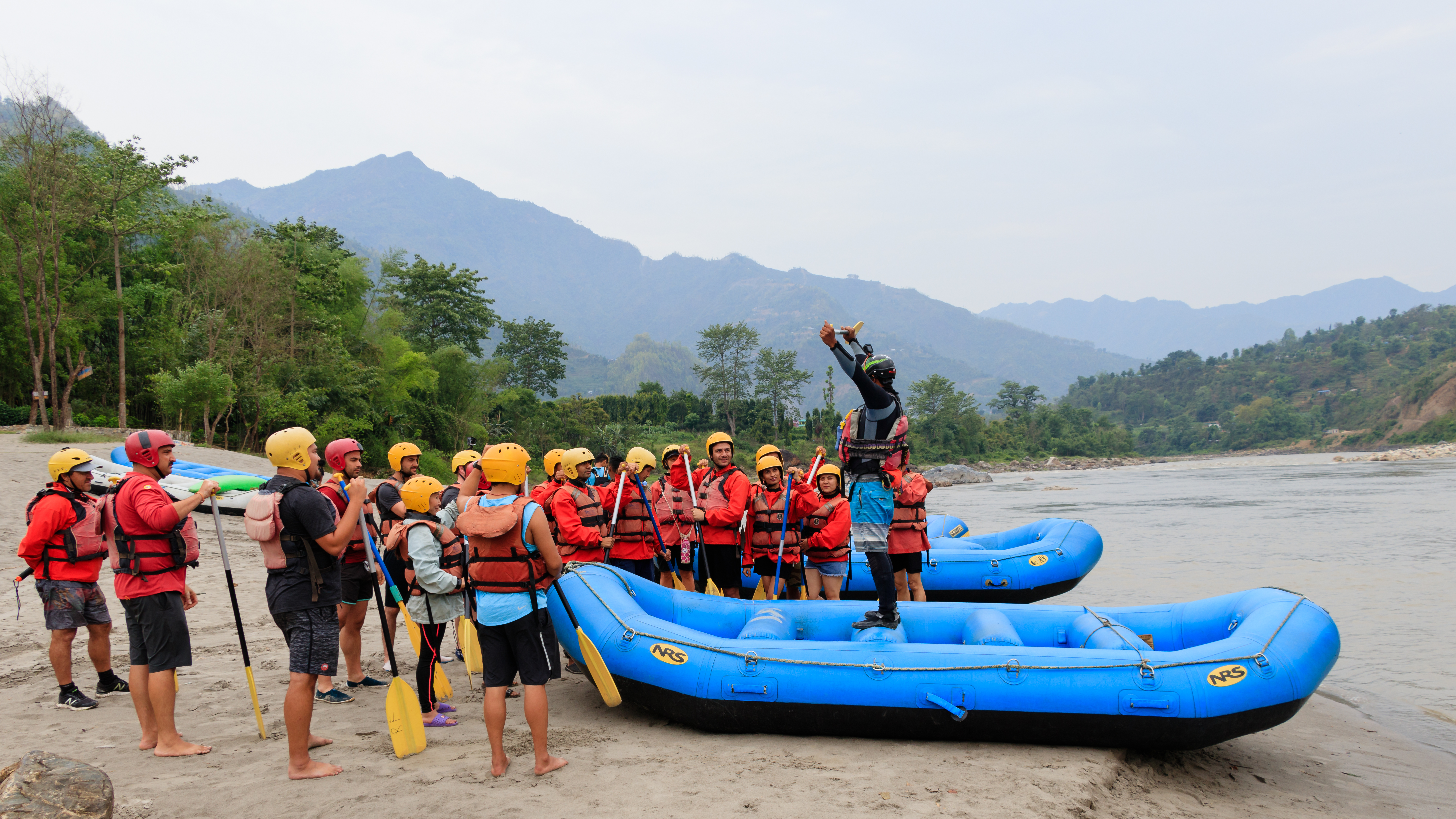
Pre-monsoon and post-monsoon are also good for river trips. Photo: Wikimedia Commons (CC).
Time your adventure too
Rafting runs Oct–May; the Trishuli and Bhote Koshi are best outside monsoon. Heli and cultural tours work almost year-round with the right routing.
Festivals and when they fall
Timing a trip around a festival adds a cultural layer: Dashain and Tihar (Oct–Nov) light up the Kathmandu Valley; Holi (Feb–Mar) brings color to the streets; Buddha Jayanti (Apr–May) is celebrated at Lumbini and Boudhanath; and Janai Purnima (Aug) draws pilgrims to Gosaikunda. The autumn window conveniently stacks the two biggest festivals with the best weather.
Altitude and health by season
If your plan includes trekking, match the season to your acclimatization: autumn and spring are safest for high routes because storms and extreme cold are rarer. In winter, keep plans below 3,000 m unless you are experienced; in monsoon, favor the dry trans-Himalayan zones. Always build rest days and travel with a guide on multi-day walks.
Practical tips before you go
Book autumn and spring treks early — lodges and flights fill fast in peak season. Carry travel insurance that covers altitude and evacuation, keep digital copies of permits, and check the latest weather and road status with a local operator. Flexible dates help if flights to mountain airstrips are delayed by weather.
Month-by-month quick reference
October and November are the all-round peak - clear, stable, post-monsoon. December to February is cold but crisp, with the best mountain views and empty trails. March to May warms with rhododendrons and dust. June to August is monsoon - lush low, cloudy high, leechy trails. September is the shoulder with rising clarity. Pick by your priority: views, warmth, blooms, or solitude.
Trekking seasons in detail
Autumn (Oct-Nov) is the classic trekking window - stable snow lines and the clearest ranges, so Annapurna Base Camp and Everest Base Camp are busy. Spring (Mar-May) is the rhododendron season and good for high passes. Winter suits low treks; the monsoon suits only the rain-shadow regions like Upper Mustang and Dolpo.
Travel by activity
Rafting peaks Sep-Dec; paragliding flies year-round but is best Oct-Nov and Mar-May; wildlife in Chitwan is best Oct-Mar (cool, animals at water); wellness and yoga run comfortably Oct-Apr. Helicopter tours need the morning window in any dry month - winter and monsoon cancel often.
Festivals and crowd planning
Dashain (autumn) and the Teej and Holi festivals shape local life; book transport early in autumn as domestic travel peaks. The Lumbini and Muktinath pilgrimages swell in spring and autumn. If you want quiet, target early December or late February before the spring rush.
Regional differences
The Terai (Lumbini, Chitwan) is hot year-round; the hills (Pokhara, the valleys) are temperate; the high Himalaya is alpine. The same calendar day can be 30C in the Terai and -10C at base camp. Pack by region and altitude, not just the month. Our tour package planners factor this in.
Booking lead times
Autumn and spring fill lodges and flights fast - book 2 to 3 months ahead for the popular treks. Winter and monsoon offer last-minute deals and empty teahouses. Permits (ACAP, TIMS, national parks) are year-round but arrange a day before. Whatever the season, build weather buffer into mountain flights and passes.
Autumn deep dive (Oct-Nov)
Autumn is the headline season: the monsoon has washed the air clear, the rice terraces are gold, and the ranges stand sharp behind every viewpoint. Treks are busy but the logistics are smooth and the lodges open. It is also festival season - Dashain and Tihar light the country. Book flights and popular lodges early. If you want the iconic postcard Nepal - blue sky, white peaks, golden fields - this is the window, and most first-time visitors aim for it.
Winter deep dive (Dec-Feb)
Winter is cold, especially at altitude, but the views are often the clearest of the year and the trails empty. Low-region walks (around Pokhara, the hills, the Terai) are pleasant; high passes need serious cold preparation. The upside is solitude and lower prices, and the morning haze can burn off to diamond light. It suits travellers who prioritise quiet and sharp photography over warmth, and who build weather buffer into mountain flights.
Spring deep dive (Mar-May)
Spring brings warming days, the rhododendron forests in bloom, and good trekking on the high routes before the pre-monsoon heat. The valleys turn green and the festivals return. Dust rises toward May and the high passes can still hold snow. It is the second-best window after autumn and less crowded; the blooms alone make it worth targeting for the Poon Hill and Mardi Himal routes.
Monsoon deep dive (Jun-Aug)
The monsoon greens the hills and fills the rivers but clouds the peaks and leeches the trails; most high trekking pauses. The smart move is the rain-shadow north - Upper Mustang and Dolpo stay dry behind the Himalaya - or a focus on Lumbini, Chitwan wildlife, and the cultural valleys, where the rain is a warm drizzle. Flights are delay-prone. If you must trek in summer, go rain-shadow or go low and wet.
Altitude and the calendar
Whatever the month, altitude follows its own rules: ascend slowly, build buffer days, and respect the cold at height. The best-view months (autumn, winter, spring) are also the best for safe acclimatisation because the weather is stable. The monsoon's unstable air and the winter's extreme cold each add risk up high. Match the month to both the view you want and the altitude you will reach.
Putting it together for your trip
Decide your priority - peaks, blooms, festivals, or quiet - then read the month against it. Build 2 to 3 weather-buffer days into any mountain plan, book autumn and spring early, and keep the Terai and the valleys as flexible fillers. Our tour package planners use this calendar to time your trek, raft, and wellness days so the season works for you rather than against you.
Regional weather at a glance
The Terai stays hot (often 30C plus) year-round; the mid-hills around Pokhara and the valleys are temperate (10 to 25C); the high Himalaya is alpine, dropping well below zero at night above 4,000 m even in spring. The same calendar day can be three different seasons across the country. Pack by region and altitude, not just the month - a down jacket for the pass and light cotton for the plains can both be in your bag on one trip.
Trekking permits and the calendar
ACAP, TIMS, and national-park permits are issued year-round but are easiest in the dry seasons when offices and trails are open. In winter high passes may need gear and a guide; in monsoon the rain-shadow north is the only sensible trekking. Plan the permit around the season you choose. A day in Kathmandu before the trail sorts the paperwork - build it into the itinerary rather than rushing it on arrival.
Wildlife and the seasons
Chitwan and Bardia are best in the cool dry months (October to March) when animals gather at the remaining water and the grass is short for viewing. The hot pre-monsoon (April-May) is also excellent for tiger and rhino sightings. Monsoon greens the parks but floods access and brings leeches. Time a wildlife add-on to the cool season and pair it with the cultural valleys for a rounded low-country stop.
Helicopter and mountain flights by season
Scenic and heli flights run in the morning window year-round but cancel most in winter and monsoon, when cloud and wind dominate. Autumn and spring offer the most reliable clear mornings and the best aerial views. Build 2 to 3 buffer days around any flight you must catch - the weather, not the schedule, decides. A flexible plan turns a possible cancellation into a minor delay rather than a ruined day.
Shoulder-season advantages
September and early December are the smart traveller's windows - clearer than the monsoon, quieter and cheaper than peak autumn and spring. The views are nearly as good and the lodges have room. If your dates are flexible, target the shoulders for the best value and the calmest trails. The trade-off is slightly less stable weather, easily managed with a buffer day or two built into the plan.
Final planning checklist
Fix your priority season first, then book transport and lodges - early for autumn and spring, flexibly for winter and monsoon. Match the region to the month: peaks in the dry seasons, wildlife in the cool, culture year-round with festivals in autumn and spring. Build weather buffer into every mountain leg. Our planners use this calendar to time your trek, raft, and wellness days so Nepal's weather works for your trip, not against it.
Matching the month to your goal
If your goal is the classic mountain postcard, aim autumn. If it is solitude and sharp light, winter low-country and clear high mornings. If it is blooms and warm days, spring. If it is wildlife or culture without crowds, the cool dry Terai months. There is no single best time - only the best time for what you came to do. Naming the goal first is the shortcut to a date that delivers rather than disappoints.
Flexibility as a strategy
The single most useful planning tool in Nepal is a flexible day or two. Weather closes mountain flights, festivals fill roads, and a pass can dump snow. Build buffer and let the local planner shift the sequence around conditions. Rigid itineraries break; flexible ones bend and still deliver. This is especially true for trekking and flying, where the Himalaya sets the timetable and the wise traveller works with it rather than against it.
What is the absolute best month to visit Nepal?
October and November are widely considered the best months, with clear skies, stable weather, and the major festivals of Dashain and Tihar. March to May is the close second, offering warmer days and rhododendron blooms across the hills. Both windows suit trekking, touring, and most adventure activities better than any other part of the year.
When should I avoid visiting Nepal?
The core monsoon from late June to August brings heavy rain, leeches, landslides, and obscured mountain views, though rain-shadow regions like Upper Mustang stay drier. Winter from December to February is fine for low areas but harsh at altitude with snowbound passes, so high treks are best avoided unless you are experienced and well equipped.
Is spring good for trekking in Nepal?
Yes. March to May offers warm weather, blooming rhododendrons, and good trail conditions for Annapurna, Everest, and Langtang routes, though it is slightly hazier than autumn. The days are long and the forests are at their most colorful, making spring a favorite for photographers and for anyone who prefers warmer walking over crisp autumn cold.
Can I visit Nepal in winter?
Yes. December to February is cold with snow at altitude, but great for Chitwan wildlife, low-region walks, and crowd-free Kathmandu Valley heritage touring, often at lower prices. Lower-elevation trails stay open, and clear winter mornings can give stunning Himalayan views if you choose the right region and dress for the cold.
For a full overview of sacred sites, rituals, and wellness travel across the country, see our Spiritual Tour in Nepal — the 2026/2027 pillar guide.
About Enticing Himalayas

Enticing Himalayas (legal name Enticing Himalayas Travels) is a Kathmandu based, Nepal licensed travel operator under the brand Explore Heal Thrive. This guide explains the best time to visit Nepal for trekking, touring, and adventure, month by month.
Our services
- Spiritual and pilgrimage tours (Muktinath, Gosaikunda, Lumbini, Pashupatinath, Namobuddha)
- Wellness and yoga retreats, including the 9 Day Luxury Yoga, Wellness and Himalayan Escape
- Trekking and slow trekking with daily meditation and breathwork
- Certified Ayurveda and Panchakarma, vetted locally
- Cultural, heli, rafting, and wildlife journeys
- Custom itinerary design and on ground logistics
Accreditations and partnerships


We are a recognized partner of the Nepal Tourism Board and list experiences through established global platforms. Every wellness provider we send guests to is met in person and vetted.
About the author
Written by the Enticing Himalayas editorial team in Kathmandu, with input from our resident guides and partners. We update this guide as our programs develop.
Why trust Enticing Himalayas
We are based in Kathmandu and our guides run these routes every season. We vet every wellness partner on three things: verifiable training, a resident qualified practitioner, and a track record with international guests. If a provider cannot clear that bar, we do not send you there.