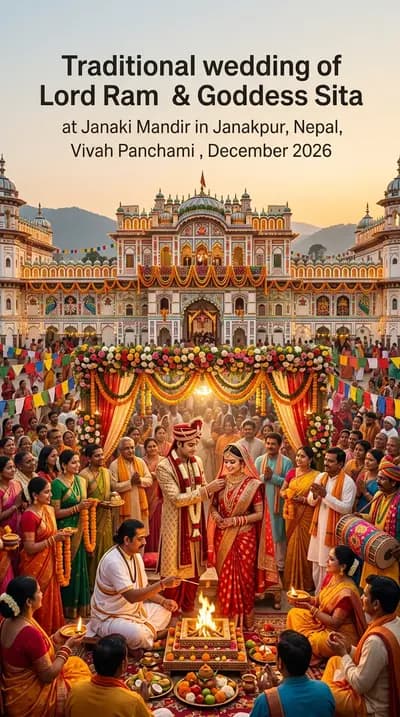
 Dec 13 – Dec 17, 2026
Janaki Mandir, Janakpur
Vivah Panchami 2026 Nepal: Ram–Sita Wedding Festival
Culture
5 Tage
Festival
Free
Janaki Mandir, Janakpur5 Tage
Event Details
Loading...
Event starts in
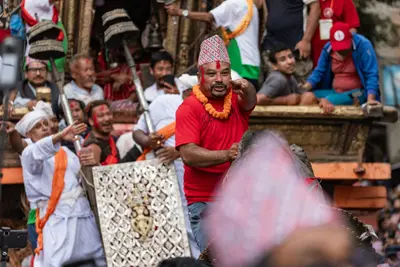
Every spring, when the dust of the dry season settles over the brick alleys of old Kathmandu, a towering wooden chariot begins to creak and roll through the city, carrying with it a story that is centuries old. This is the Seto Machindranath Jatra, one of the most awaited traditional festivals of Nepal, where thousands of devotees gather to pull the sacred chariot of the White Machindranath through the narrow lanes of the capital. If you are planning a trip around this time, this festival can easily become the highlight of your Kathmandu cultural tour, giving you a rare, living glimpse into the Newar heritage that still breathes in the old city. From the quiet courtyard of Jana Bahal to the busy crossroads of Asan Bazaar, and onward to Hanuman Dhoka and Lagan, the journey of this chariot is not just a religious event, it is a moving piece of history that anyone who loves travel in Nepal should witness at least once. Over the following pages you will find a full, day by day account of the route, the rituals, and the best ways to experience it as part of a wider Kathmandu Valley itinerary.
The Seto Machindranath Jatra, also known locally as Jana Baha Dyah Jatra, is a multi-day chariot festival in Kathmandu dedicated to the White Machindranath, a deity closely associated with rain, compassion, and the wellbeing of farmers. The word "seto" simply means white in Nepali, referring to the pale, serene face of the idol that rests inside the temple of Jana Bahal for most of the year. For a short window every spring, the deity is brought out of this quiet sanctuary and paraded on a giant wooden chariot through some of the busiest and most historic parts of the city. This is one of the reasons the festival is considered a must see event for anyone building a Nepal festival tour around the Nepali New Year season, since it blends devotion, craftsmanship, and street life into a single unforgettable spectacle. Locals believe the deity, also worshipped by Buddhists as Karunamaya or Arya Avalokiteshwara, listens closely to the wishes of anyone who touches the chariot ropes, which is why so many people, young and old, push forward simply to lay a hand on the massive wheels as they roll past through the heart of old Kathmandu, one of the standout entries on any list of Nepal's must attend jatras.
To understand why this jatra matters so much to the people of Kathmandu, it helps to know who Seto Machindranath actually is. Among Hindus, he is worshipped as a form of Shiva who governs rainfall and, by extension, the success of the rice harvest across the valley. Among Buddhists, the same deity is honoured as Karunamaya, the compassionate one, an emanation of Avalokiteshwara who watches over suffering beings with equal care. This shared devotion is a beautiful example of the religious harmony found across Nepal's cultural landscape, where Hindu and Buddhist practices often exist side by side rather than apart from one another. Farmers from the surrounding valley have long timed their planting seasons around this festival, praying that a smooth procession will bring good rain in the months ahead. If you enjoy learning about living traditions rather than just static monuments, pairing this event with a visit to nearby Kathmandu Durbar Square gives you both the spiritual and architectural sides of the same story in a single afternoon, and it fits naturally into most guided heritage tours of the valley, alongside a stop at nearby Jana Bahal temple itself.
The roots of the Seto Machindranath Jatra reach back to the reign of King Jayakshya Malla, often remembered simply as Yaksha Malla, who ruled the kingdom of Kantipur, present day Kathmandu, during the fifteenth century. According to local legend, the king's devotion and the divine order of the valley were so admired that even Yamaraj, the god of death, is said to have visited to pay his respects to the city. It was during this era that the tradition of carrying the deity through the streets on a great chariot is believed to have taken firm shape, and it has continued, almost without interruption, for hundreds of years since. For history lovers exploring heritage tours of the Kathmandu Valley, this kind of unbroken tradition is rare and valuable, connecting medieval Malla era city planning with a festival that still runs almost exactly as it did centuries ago. Guthi trusts, community organisations that manage temples and rituals across Nepal, remain responsible for organising the event even today, showing how deeply this festival is woven into the social fabric of the old city and its many heritage courtyards.
Much of what makes the Seto Machindranath Jatra possible year after year is a centuries old community trust system known as Guthi. Under this arrangement, land and resources donated generations ago are still used today to fund the timber, ropes, priests, and labour required to stage the festival, without relying on any single wealthy patron. Members of the Guthi meet weeks in advance to plan every stage of the event, from selecting the right timber to assigning the exact families responsible for pulling the ropes on each day of the procession. This kind of grassroots organisation is one of the more remarkable aspects of Newar society, and travellers who take time to learn about it through a cultural walking tour often come away with a much deeper appreciation of the festival than those who simply watch the chariot pass by. Several other major celebrations listed on Nepal's annual festival calendar rely on the very same Guthi structure, making it one of the quiet threads that ties the country's religious life together across different historic neighbourhoods found throughout Nepal.
Roughly ten days before the procession begins, skilled carpenters and Guthi members start constructing the chariot from scratch using timber, ropes, and bamboo, a craft passed down through generations rather than written in any manual. The finished structure can rise more than thirty feet into the air, supported by four large wooden wheels that are said to represent different forms of the fierce protector deity Bhairav. Multiple tiers rise above the base, each associated with different gods such as Indra, Brahma, and Narayan, while the idol of Seto Machindranath itself sits on the lowest level, dressed in fine cloth and ornamented with jewellery offered by devotees over the years. Watching this construction process is itself a small attraction, and travellers who are already following a Kathmandu old city walking route often stop by the workshop areas near Jana Bahal just to see the wooden frame slowly take shape day by day. Once assembled, the chariot is far too heavy to be moved by machines, which is exactly why the pulling of the ropes by ordinary citizens becomes such a central part of every Kathmandu chariot festival, this one included.
The very first day of the Seto Machindranath Jatra begins quietly, with the idol carried on a palanquin from its permanent home at Jana Bahal, a temple tucked between Indrachok and Asan, two of the busiest trading squares in old Kathmandu. This short procession takes the deity to Teen Dhara Pathshala near Durbar Marg, where it is carefully mounted onto the newly built chariot in a ceremony filled with chanting, incense, and quiet offerings. Once the idol is fixed in place, the chariot begins its slow, creaking movement through Jamal and Bhotahiti before reaching Asan, one of the most photogenic and chaotic marketplaces in the entire city. Visitors curious about the everyday rhythm of Kathmandu often combine this first day with a look at the surrounding Asan and Indrachok markets, since the streets are just as lively as the ritual itself, filled with spice sellers, flower vendors, and curious onlookers watching the wheels roll for the very first time that year. It is a wonderful opening chapter for anyone who has booked a short Kathmandu city tour around this exact week, and a fitting start to any list of Nepal's springtime celebrations.
On the second day, the chariot sets off again from Asan, this time heading toward the historic royal palace complex of Hanuman Dhoka, passing through smaller lanes such as Kel Tol and Makhan along the way. This stretch of the route runs directly past some of the most recognisable landmarks in the valley, and it is not unusual to see the procession pause briefly near the old palace courtyards before finally coming to rest beside the statue of Kaal Bhairav, the fierce guardian deity of Kathmandu. Because this leg of the journey passes right through Hanuman Dhoka Durbar Square, many travellers on a short city break choose to time their sightseeing around this exact afternoon, catching both a UNESCO World Heritage monument and a living festival unfolding side by side in the same square. Anyone arranging a private Kathmandu sightseeing tour should mention this route to their guide in advance, since the crowd can build quickly and a good vantage point makes a real difference to how much of Nepal's living festival culture you actually get to see during a single trip to Nepal.
The third day is often considered the most demanding leg of the entire festival, as the heavy chariot is pulled from Hanuman Dhoka through a series of tighter residential lanes, including Chikanmugal and Jaisidewal, before finally reaching the open square of Lagan. This part of the route requires far more manpower than the earlier stretches, and it is common to see dozens of young men lined up along the ropes, working together in rhythm to keep the giant wheels turning over uneven brick paving. The narrow turns test both the structure of the chariot and the patience of the crowd, yet this is exactly the kind of raw, unscripted energy that draws so many photographers and cultural travellers back to Nepal year after year. If you are interested in documenting some of the country's most photogenic Nepali festivals, this leg of the Seto Machindranath Jatra, with its narrow alleys and determined crowds, offers striking and largely unstaged imagery you will find at few other heritage sites in the Kathmandu Valley.
Once the chariot finally reaches Lagan, it does not move again for a full day, giving both the deity and the exhausted crowd of pullers a much needed pause after three days of steady effort. During this rest day, the chariot is ceremonially circled three times around a sacred tree at a small shrine known locally as Aama Sima, believed to be dedicated to the mother of Seto Machindranath himself. This ritual act of circumambulation, performed with visible devotion by priests and community elders, is considered one of the most symbolically important moments of the entire jatra, representing a kind of homecoming within the larger journey. Travellers who want to understand the quieter, more intimate side of Newar ritual life, beyond the noise of the rope pulling, often find this particular day the most moving part of their visit, and it pairs naturally with a short stop at other nearby Newar heritage courtyards scattered around the Lagan neighbourhood, easily added to any flexible Kathmandu Valley tour.
On the fifth and usually final day, the chariot begins its long return journey from Lagan back toward its starting point, tracing a route through Yatkha, Naradevi, Kilagal, and Kel Tol before finally arriving back at Jana Bahal. This closing procession tends to carry a different emotional tone compared to the earlier days, part celebration and part farewell, as the community senses that the deity is soon to be returned to the quiet of his temple for another year. Crowds along this final stretch are often just as large as on the opening day, with families gathering at doorways and rooftops to watch the chariot pass one last time. For visitors following the entire festival from start to finish as part of a longer Kathmandu Valley cultural itinerary, this last day offers a satisfying sense of closure, tying together everything witnessed over the previous days into a single unbroken story of devotion, craftsmanship, and community effort centred on Jana Bahal itself.
While five days is the most common length for the modern procession, older records and some recent years show the full route stretching closer to a week, with additional short stops added between the major squares depending on local scheduling and weather. In some years, an extra day is inserted between Lagan and the return leg, during which the chariot briefly rests near Bhimsenthan or Maru before continuing its journey back toward Jana Bahal. This flexibility is part of what makes the festival feel genuinely alive rather than fixed to a rigid script, since the Guthi organisers adjust the pace based on the weight of the chariot, the strength of the crowd, and even the condition of the streets it must pass through. Anyone planning a trip specifically around this variable schedule should treat the standard five day outline as a reliable guide while staying flexible, and it always helps to confirm current year details through updated listings on Nepal's festival events page before finalising a travel itinerary around it.
Beyond the physical spectacle of ropes, wheels, and crowds, the Seto Machindranath Jatra carries a much deeper cultural weight for the people of the Kathmandu Valley. Many devotees believe that simply touching the chariot, or helping to pull it even for a few steps, can bring good fortune, healthy children, or a bountiful harvest in the year ahead. Farmers from villages outside the city sometimes travel in specifically to take part, since the festival's timing near the start of the monsoon season links it symbolically to the success of upcoming crops across the region. This blending of everyday hopes with grand public ritual is something you rarely encounter through Kathmandu's temples and monuments alone, since a static monument cannot capture the collective energy of hundreds of hands pulling one rope together. Understanding this belief system also makes the entire experience far more meaningful for travellers, transforming what might otherwise look like a slow moving wooden structure into a genuinely powerful communal act of faith, one of many practised across Nepal's living festival calendar.
First time visitors often confuse this festival with its larger, longer cousin, the Rato Machindranath Jatra celebrated in nearby Patan, and it helps to understand how the two are connected rather than identical. Seto Machindranath, the white faced form, is honoured mainly in Kathmandu, while Rato Machindranath, the red faced form, is the presiding deity of Patan and is pulled through that city's streets over a much longer, sometimes month long procession. Traditionally, the Kathmandu festival concludes just before the Patan chariot festival begins, allowing devotees who follow both traditions to move seamlessly from one celebration to the next across the valley. Travellers with enough time on their hands sometimes plan a trip that captures both festivals back to back, and a well structured Kathmandu and Patan combined tour makes this kind of double festival experience far easier to organise. Both events appear on Nepal's broader chariot festival calendar, and both routes pass through equally rewarding heritage squares worth exploring on foot.
No festival in Kathmandu is complete without the food stalls, tea shops, and snack vendors that spring up along the procession route almost overnight, and the Seto Machindranath Jatra is no exception. Vendors selling chatamari, sel roti, and hot jeri line the lanes near Asan and Indrachok, giving hungry spectators a chance to refuel between the long hours of watching and waiting for the chariot to move. This kind of spontaneous street life adds a wonderfully authentic layer to the festival, turning what could be a purely religious observation into a full sensory experience of sound, smell, and taste unique to old Kathmandu. Travellers who enjoy food focused exploration often pair a festival day with a dedicated Kathmandu food walking tour, discovering small family run kitchens tucked behind the main squares that rarely appear in typical guidebooks about Kathmandu's festival season. These little discoveries, layered on top of the main event, are part of what makes wandering through Kathmandu's old trading quarters during festival season so rewarding for curious visitors.
The Seto Machindranath Jatra generally falls around the end of March or early April, close to the period known as Chaite Dashain, though the exact dates shift slightly each year according to the lunar calendar used across Nepal. If you are planning a visit specifically to catch this event, it is worth checking the latest confirmed schedule through a reliable Nepal festival calendar before booking your flights, since the procession dates are announced only a short time in advance by the local Guthi Sansthan. Arriving in Kathmandu two or three days early gives you time to see the chariot being built, which is a rewarding experience in itself, and also allows some buffer in case the schedule shifts slightly due to weather or ritual timing. Comfortable walking shoes, a hat for the afternoon sun, and plenty of patience for crowded lanes are the only real essentials, since the streets can become tightly packed once the chariot begins to move each afternoon. Many visitors also choose to base their stay near Thamel or the old city core, since both locations sit within easy walking distance of every major stop along the route mapped out in most Kathmandu festival packages.
Because the entire procession moves through the densest part of old Kathmandu, private vehicles are of little use once the chariot begins rolling, and walking becomes the only practical way to follow along. Most of the key stops, including Jana Bahal, Asan, Hanuman Dhoka, and Lagan, sit within a compact area that can comfortably be covered on foot in under an hour when the streets are clear, though festival crowds naturally slow things down considerably. Local taxis and ride hailing apps can drop travellers at the edge of the old city core, from where a short walk is usually the fastest remaining option. Many visitors choose to stay within walking distance of the route for the entire festival week, a strategy often recommended by experienced local tour operators who know exactly how congested the lanes become each afternoon. Checking a simple map of Kathmandu's old city neighbourhoods in advance, alongside the day by day route outlined above, makes navigating the crowds far less stressful for first time visitors exploring Nepal for the first time, especially when following a fixed festival day schedule.
Photographing the Seto Machindranath Jatra can be immensely rewarding, but a little cultural awareness goes a long way toward respecting the devotion on display throughout the week. It is best to avoid stepping directly onto the ropes unless you are genuinely joining the pull, since this is treated as a serious act of devotion rather than a simple photo opportunity for passers by. Early afternoon, just before the procession sets off each day, tends to offer the best combination of good light and manageable crowd density for photographers hoping to capture the chariot in motion. Rooftop cafes and shopfronts along the route, particularly around Asan and Indrachok, often allow visitors a higher, safer vantage point away from the densest part of the crowd, which can make for a far more comfortable viewing experience overall. Travellers combining photography with a broader interest in Nepali culture may also enjoy timing their trip around other major Kathmandu Valley festivals, several of which share similar chariot traditions and appear together on well designed cultural tour itineraries.
Since the entire jatra unfolds across some of the oldest and most culturally rich parts of Kathmandu, it naturally overlaps with several other attractions worth exploring on the very same trip. A short walk from Jana Bahal brings you to the busy trading lanes of Ason Tole, while the palace complex at Kathmandu Durbar Square sits directly along the festival's second day route through the old city. Travellers with a little extra time often extend their stay to include the hilltop stupa of Swayambhunath or the golden temple complex of Boudhanath, both commonly featured on broader Kathmandu Valley heritage tours built around this exact season. Combining the raw, unscripted energy of the chariot festival with the calmer, more contemplative atmosphere of these nearby sites gives visitors a fuller picture of what makes the valley such a rewarding place to explore, and it is exactly the kind of well rounded, memorable experience that a good Nepal travel itinerary should aim to offer every guest.
Many first time visitors ask whether the festival dates change every year, and the honest answer is yes, since the schedule follows the lunar calendar and is confirmed only a short while in advance through official Guthi announcements and updated Nepal festival listings. Others ask whether foreigners are welcome to join the rope pulling, and the answer is a warm yes, since the festival is considered a public act of shared devotion rather than a closed community ritual reserved only for locals. A common question also concerns safety, and while the crowds can feel intense at certain pinch points along narrow lanes, staying near the edges and following the guidance of local guides on a structured Kathmandu festival tour keeps the experience both safe and thoroughly enjoyable. Finally, many travellers want to know where to stay, and the simplest answer remains anywhere close to the old city core, within easy reach of the main heritage squares covered throughout this guide.
Very few travel experiences allow you to stand shoulder to shoulder with local devotees while an entire community works together to move a thirty foot wooden structure through streets that have barely changed in centuries. The Seto Machindranath Jatra offers exactly that kind of immersive, unscripted connection to Nepali culture, something that goes far beyond simply visiting a monument or reading a plaque behind glass. Whether you are drawn by the history, the craftsmanship of the chariot, or simply the collective spirit of the crowd, this festival rewards anyone willing to slow down and watch closely rather than rush through the old city streets. Pairing it with a wider cultural tour of the Kathmandu Valley, or simply exploring the surrounding old city neighbourhoods on foot, turns a single festival into the anchor of a genuinely memorable trip through Nepal and its many living traditions.
The Seto Machindranath Jatra is far more than a colourful street event; it is a living thread connecting the farmers of the valley, the devotion of Malla era kings, and the everyday residents of modern Kathmandu, all through the simple, repeated act of pulling a wooden chariot through familiar streets. For anyone hoping to understand Nepal beyond its mountains, this jatra offers a rare, genuine window into the beliefs, craftsmanship, and community spirit that still shape daily life in the old city today. If your travel plans bring you anywhere near Kathmandu in the spring, take the time to follow at least one day of this procession, and consider building the rest of your trip around Nepal's rich calendar of traditional festivals, its most compelling heritage places, and a well planned guided tour that brings all of it together into one truly unforgettable journey through Nepal.
Key experiences and features
Seto Machindranath Jatra
Dyah Jatra
Machindranath
Jana Bahal
Hanuman Dhoka
Photogenic Nepali festivals
Aama Sima
Chikanmugal and Jaisidewal
Bhimsenthan
Recommended packing list
Jana Bahal, Kathmandu, Kathmandu, Bagmati, Nepal
Got questions about this event?
Seto Machindranath Jatra is a traditional Newar festival in Kathmandu featuring the ceremonial chariot procession of Seto Machindranath.
The festival is mainly celebrated in Kathmandu, with the chariot procession passing through historic areas including Jana Bahal, Ason, Indra Chowk, and Lagan.
Seto Machindranath, also called Janabaha Dyah, is a revered deity traditionally associated with compassion, rain, and prosperity.
The Jatra is traditionally held during the Chaitra period according to the lunar calendar, so the Gregorian dates change each year.
Yes. Visitors can observe the public procession and cultural celebrations while respecting local religious customs and ceremonial spaces.
It is also known as Janabaha Dyah Jatra or Seto Machindranath Rath Jatra.
Mar 23 – Mar 7, 2027
5 days
Quick Info
More culture experiences
Dec 13 – Dec 17, 2026Janaki Mandir, Janakpur
 Nov 15 – Nov 16, 2026
Tsum Valley
 Nov 13 – Nov 14, 2027
Falangashaini Bhagwati Temple