Loading...
26 days
Upper Dolpa & Shey Gompa 2026/2027: Last Forbidden Kingdom
Country
Upper Dolpa
Duration
26 days
Group size
Flexible group size
Difficulty
moderate
4.9(15 reviews)
Upper Dolpa
Tour Description
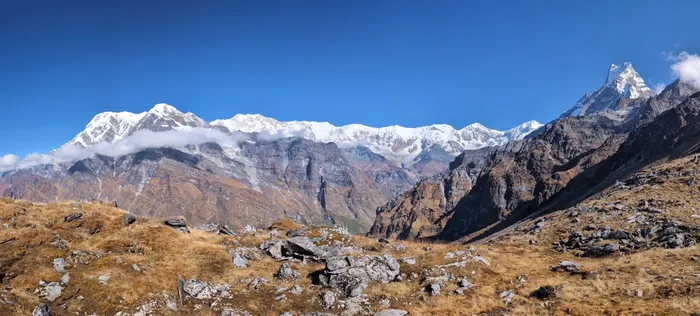
The Upper Dolpa Trek represents the ultimate frontier of wilderness exploration, a true expedition into an isolated geographic pocket where time has stood completely still for centuries. Positioned securely within the steep rain shadow of the massive Dhaulagiri range, this vast restricted territory escapes the heavy summer monsoons that wash over the rest of Nepal, giving rise to a striking, sun-bleached landscape that closely mirrors the dry plains of the Tibetan Plateau. For dedicated explorers who wish to step completely off the grid and experience the world exactly as it existed before the arrival of modern roads, electricity, and telecommunications, Upper Dolpa offers a profound journey through an untouched world. The landscape is defined by towering crimson cliffs, vast multi-colored canyons, and sweeping high-altitude valleys, all framed by the massive peaks of the western Himalayas. This region remains one of the last true sanctuaries on Earth where a classical Tibetan way of life, ancient spiritual practices, and a raw alpine ecosystem survive completely undisturbed by commercial tourism.
The natural landscape of Upper Dolpa is an absolute masterclass in raw, untamed geography, dominated entirely by the protected boundaries of Shey Phoksundo National Park—Nepal's largest and most remote wildlife sanctuary. The lower sections of this high-altitude desert are sliced open by deep, wild river valleys where ancient pine, cedar, and birch forests cling to rocky slopes, fed by the roaring glacial meltwater of the Suligad and Bheri rivers. As you push deeper into the park, the green foliage drops away completely, revealing the legendary jewel of the lower region: Phoksundo Lake. Tucked quietly away at 3,611 meters, this breathtaking alpine body of water is famous for its ever-shifting turquoise color, which changes constantly throughout the day depending on the angle of the sun, and its absolute lack of aquatic life, rendering the water incredibly clear. Leaving the lake's shores, the landscape transitions rapidly into a high-desert tundra. This severe, wind-swept environment serves as a vital sanctuary for rare and endangered Himalayan wildlife. Because the local communities heavily practice non-harming philosophies, the wilderness remains an active, functioning hunting ground for the elusive snow leopard, the Himalayan wolf, and large herds of wild blue sheep (bharal) that move across the loose scree slopes with complete freedom.
Culturally, stepping into Upper Dolpa is akin to entering a living, breathing historical archive of Himalayan spirituality. Long before Buddhism made its way across the mountains from India, the ancient, shamanistic religion of Bon-Po flourished throughout Tibet. While this pre-Buddhist tradition was largely replaced or absorbed across most of the plateau, Upper Dolpa has served as a safe haven, preserving Bon-Po in its purest, most authentic form. In lake-facing settlements like Ringmo and the fortified mud-brick villages of the northern borderlands, trekkers encounter active Bon monasteries and chortens where the sacred structures are traditionally circumambulated in a counter-clockwise direction, separating them from Buddhist paths. As the trail winds deeper into the highlands, this ancient faith blends beautifully with classical Tibetan Buddhism. The upper valleys are home to the Dolpo-pa people, who have maintained an isolated, self-sustaining lifestyle centered around seasonal nomadic herding, the cultivation of hardy mountain barley, and the operation of historic trade routes. Here, traditional yak caravans are still packed by hand to cross the dangerous northern passes into Tibet, trading local grains for highland salt and wool in a rhythmic cycle of survival that has remained unchanged for over a thousand years.
The true spiritual heart and ultimate of this expedition is the legendary Shey Gompa, an 800-year-old monastery nestled deep within the inner valleys, sitting quietly at the base of the sacred Crystal Mountain (Shel-ri). This remote sanctuary was brought to western attention through Peter Matthiessen’s classic book The Snow Leopard and Eric Valli’s Oscar-nominated film Himalaya, both of which beautifully captured the intense, mystical energy of this hidden valley. The Crystal Mountain is deeply revered as the spiritual protector of Dolpa, its unique rock face wrapped in marine fossils that testify to the ancient collision of continents that formed the Himalayas. Every year, devout pilgrims travel from across the region to perform a rigorous circumambulation of the mountain's base, seeking spiritual purification. Standing before the weather-beaten stone walls of Shey Gompa, hearing the low, resonant drone of copper horns bouncing off the dry mountain cliffs, and watching the sun set over the jagged, multi-colored ridges offers an unforgettable immersion into a world completely unbothered by the passage of modern centuries.
Reaching this hidden kingdom requires an exceptional degree of physical endurance and mental stamina, as the geography is protected by a formidable barrier of high mountain passes that routinely exceed 5,000 meters in elevation. Conquering these passes, such as the steep and windswept Kang La (5,350m) or the broad ridge lines of Jeng La (5,085m), stands as a monumental physical test. The ascents are long, slow, and demanding, forcing trekkers to navigate steep slopes of loose shale, slippery scree, and seasonal snowpacks where the thin air contains only half the oxygen pressure found at sea level. However, stepping onto these prayer-flag-draped summits rewards explorers with an unmatched view: a vast panorama of red, ochre, and brown mountain waves rolling endlessly northward into the vast Tibetan plateau, while the massive, icy peaks of the Dhaulagiri massif tower along the southern horizon.
Because Upper Dolpa completely lacks commercial hotels, lodges, or teahouse infrastructure, a journey here is conducted as a fully supported camping expedition, requiring a dedicated team of local kitchen staff, camp crew, and pack mules or yaks to carry all necessary food, fuel, and heavy-duty shelters. Sleeping in durable four-season tents on the valley floors of Saldang or the high basin of Do Tarap, completely cut off from the noise of modern life, unlocks one final reward: camping under the clearest, most unpolluted night skies in the entire Himalayan range. With zero artificial light pollution for hundreds of miles, the sky transforms into a brilliant canopy of stars and galaxies that feel close enough to touch. Ultimately, the Upper Dolpa and Shey Gompa Expedition is far more than a challenging mountain trek; it is a life-altering journey through geography and time, providing a rare opportunity to witness the wild, untamed majesty of the planet's last forbidden kingdom.
Highlights
- Shey Phoksundo Lake: Behold the deep turquoise waters of Nepal’s deepest lake, framed by jagged cliffs.
- Shey Gompa: Visit the "Spiritual Heart of Dolpa," an 800-year-old monastery at the foot of the sacred Crystal Mountain.
- High Mountain Passes: Conquer the challenging Kang La (5,350m) and Jeng La (5,110m).
- Ancient Culture: Experience the authentic Tibetan-Buddhist and Bon-Po traditions in villages like Saldang and Dho Tarap.
- Wildlife & Nature: A chance to spot Blue Sheep, Himalayan Griffons, and the rare Snow Leopard.
- Remote Adventure: A fully supported camping trek in a region with minimal commercialization.
What's Included
- Permits: Upper Dolpo Restricted Area Permit, Lower Dolpo Permit, and Shey Phoksundo National Park entry.
- Transport: All domestic flights (Kathmandu–Nepalgunj–Jhupal return) and private airport transfers.
- Accommodation: 3-star hotel in Kathmandu; best available lodges in Nepalgunj; high-quality North Face/mountain-grade tents during the trek.
- Staff: Government-licensed expert lead guide, assistant guides, cook, and porters/mules for luggage.
- Meals: Full board (Breakfast, Lunch, Dinner) during the trek prepared by our expedition cook.
- Equipment: Dining tent, toilet tent, foam mattresses, and emergency oxygen cylinders.
What's Not Included
- Nepal Entry Visa fee .
- International airfare and travel insurance (mandatory, must include heli-evacuation).
- Personal trekking gear (sleeping bags, down jackets).
- Tips for guides and porters (expected but optional).
- Personal expenses (bottled water, charging, hot showers, alcohol).
Important Information
What to Bring
- Footwear: Broken-in waterproof hiking boots +camp shoes/sandals.
- Clothing: Thermal base layers (merino wool), down jacket (rated to rated to -20c), waterproof shell jacket, and trekking trousers.
- Gear: 4-season sleeping bag, trekking poles, 30L - 40L daypack, and a 100% UV protection pair of sunglasses.
- Health: Personal first-aid kit, Diamox (for altitude), and water purification tablets/filters.
- Power: Large capacity power bank (20,000 mAh +) or portable solar charger.
Know Before You Go
- Permit Regulations (2026/2027): Solo trekking is strictly prohibited in Upper Dolpo. A minimum of two trekkers and a licensed guide from a registered agency are required.
- Physical Fitness: This is a Grade: Strenuous trek. You will spend over two weeks above 3,500m. Prior high-altitude experience is highly recommended.
- Communication: There is virtually no mobile network or Wi-Fi in Upper Dolpo. Our team carries a satellite phone for emergencies.
- Weather: Best months are May–June and September–October. Since Dolpo is in a rain shadow, it is also one of the few treks possible during the Monsoon (July–August).
Detailed Itinerary
Day 1Upon arrival at Tribhuvan International Airport, you will be met by our representative and
Upon arrival at Tribhuvan International Airport, you will be met by our representative and transferred to your hotel. The afternoon is reserved for a gear check and a detailed briefing on the restricted area regulations for Upper Dolpo. We conclude the day with a traditional welcome dinner.
Day 2We take a late afternoon flight to Nepalgunj, a city on the edge of the Terai plains near
We take a late afternoon flight to Nepalgunj, a city on the edge of the Terai plains near the Indian border. The air here is tropical and humid a stark contrast to the mountains to come. We stay overnight in a hotel to catch the early morning "mountain flight" the next day.
Day 3A scenic 45-minute flight takes us over the foothills to the STOL (Short Take-Off and Land
A scenic 45-minute flight takes us over the foothills to the STOL (Short Take-Off and Landing) airstrip at Jhupal. After meeting our porter team and mules, we begin a gentle 3-hour trek. We descend through terraced fields to the Bheri River and follow its banks to Dunai, the administrative headquarters of Dolpa.
Day 4The trail heads west, following the Sulighat River
The trail heads west, following the Sulighat River. We entered the Shey Phoksundo National Park today. The path is a mix of lush forests and narrow tracks carved into the cliffside. We pass through small winter settlements used by the local Dolpa-pa people before reaching Ankhe.
Day 5The terrain becomes more rugged today
The terrain becomes more rugged today. We ascend and descend several ridges, often on trails that feel suspended over the river. We walk through forests of pine and fir, crossing wooden bridges. The air begins to thin, and the vegetation starts to shift toward sub-alpine species.
Day 6A major highlight day
A major highlight day. After a steady climb, we witness Nepal’s highest waterfall (167m) plunging from the Phoksundo River. A final ridge climb reveals the first glimpse of the turquoise Phoksundo Lake. We descend to Ringmo, a traditional Bon-Po village on the lake's shores.
Day 7Rest is vital here
Rest is vital here. You can visit the Tshowa Gompa, a 900-year-old Bon monastery perched on a ridge above the lake. Observing the deep blue-green water, which is said to hold no aquatic life, is a meditative experience.
Day 8We follow the famous "Devils Trail" featured in the film Himalaya
We follow the famous "Devils Trail" featured in the film Himalaya. The path is narrow and precariously perched on the edge of the lake’s vertical cliffs. We eventually reach the western end of the lake and enter a flood plain where we camp by the river.
Day 9The trail leaves the valley floor and climbs steeply through a glacial valley
The trail leaves the valley floor and climbs steeply through a glacial valley. We are now entering the high-altitude wilderness. The trek is slow and steady as we approach the "base camp" for the Kang La pass.
Day 10This is a strenuous day
This is a strenuous day. We climbed to the summit of Kang La (5,350m). From the top, the views of the Tibetan Plateau and the Dhaulagiri range are staggering. A steep descent leads us to the mystical Shey Gompa, the spiritual heart of Upper Dolpa.
Day 11Explore the "Crystal Mountain" (Shelri Sumdo Doh), which pilgrims circumambulate during th
Explore the "Crystal Mountain" (Shelri Sumdo Doh), which pilgrims circumambulate during the Year of the Dragon. The monastery itself houses ancient scrolls and Buddhist icons. This is the most isolated part of the trek, where the silence is profound.
Day 12We cross another high pass, the Shey La (5,010m)
We cross another high pass, the Shey La (5,010m). To the north, the brown, rolling hills of Tibet are visible. We descend into the Namgung Valley, home to a beautiful monastery carved into the red cliffs.
Day 13We descend into the Saldang Valley
We descend into the Saldang Valley. Saldang is the largest village in the Inner Dolpo region. It is a dry, desert-like landscape where the local "Salt Caravans" originate. You will see traditional flat-roofed houses and extensive mani walls.
Day 14We head north towards the border of Tibet
We head north towards the border of Tibet. This section of the trek is rarely visited by tourists. Yangze Gompa is an ancient Bon-Po monastery situated in a bleak but beautiful landscape.
Day 15We retrace our steps toward Saldang and then turn south, following the river through terra
We retrace our steps toward Saldang and then turn south, following the river through terraced fields of barley—the only crop that grows at this altitude. We camp near the small settlement of Sibu.
Day 16The trail follows the Namgung Khola
The trail follows the Namgung Khola. We pass through yak pastures and high-altitude grazing lands. The camp at Jeng La Phedi is cold and basic, serving as the launching point for our last major pass.
Day 17A 2-hour climb brings us to the top of Jeng La (5,110m)
A 2-hour climb brings us to the top of Jeng La (5,110m). The view of the Dhaulagiri massif from here is one of the best in the Himalayas. We descend into the beautiful Tarap Valley, arriving at the village of Tokyu.
Day 18A short, easy walk down the valley leads to Dho Tarap
A short, easy walk down the valley leads to Dho Tarap. This village is famous for being one of the highest permanent human settlements in the world. It is a vibrant hub where Tibetan and Dolpa-pa cultures collide.
Day 19A day to interact with the locals
A day to interact with the locals. You will notice the distinctive dress women often wear heavy jewelry and braided hair. We visit the local monasteries and enjoy the unique atmosphere of this high-altitude "crossroads."
Day 20We begin our long descent
We begin our long descent. The trail enters a massive gorge where the Tarap Khola rushes below. The path is often narrow, with the cliffs towering hundreds of meters above us.
Day 21The descent continues
The descent continues. The scenery changes from barren rock to blue pine and spruce forests. We cross several high suspension bridges over the thundering river.
Day 22We reach the historic fortress town of Tarakot
We reach the historic fortress town of Tarakot. This was once a capital and an important trading post.
Day 23We complete the loop by trekking back toward Dunai and finally climbing back up the ridge
We complete the loop by trekking back toward Dunai and finally climbing back up the ridge to Jhupal. We celebrate the successful completion of the trek with our local crew.
Day 24We take the early morning flight to Nepalgunj and then connect to our flight back to Kathm
We take the early morning flight to Nepalgunj and then connect to our flight back to Kathmandu. After 22 days in the wilderness, the luxuries of a hotel shower and a soft bed are welcome.
Day 25A free day to explore the UNESCO World Heritage sites of Kathmandu (Swayambhunath, Boudhan
A free day to explore the UNESCO World Heritage sites of Kathmandu (Swayambhunath, Boudhanath, or Pashupatinath) or do some last-minute souvenir shopping in Thamel.
Day 26Our representative will transfer you to the airport for your flight home, carrying memorie
Our representative will transfer you to the airport for your flight home, carrying memories of the Last Forbidden Kingdom.
Gallery
1 photoDownloads
4.915 reviews
5
0
4
0
3
0
2
0
1
0
No reviews yet. Be the first to review this tour!
Tour Video
No video available for this tour.
From
$0/person
Booking options
Choose a departure below, or use the availability calendar to select a flexible date. Availability and final pricing are confirmed during booking.