
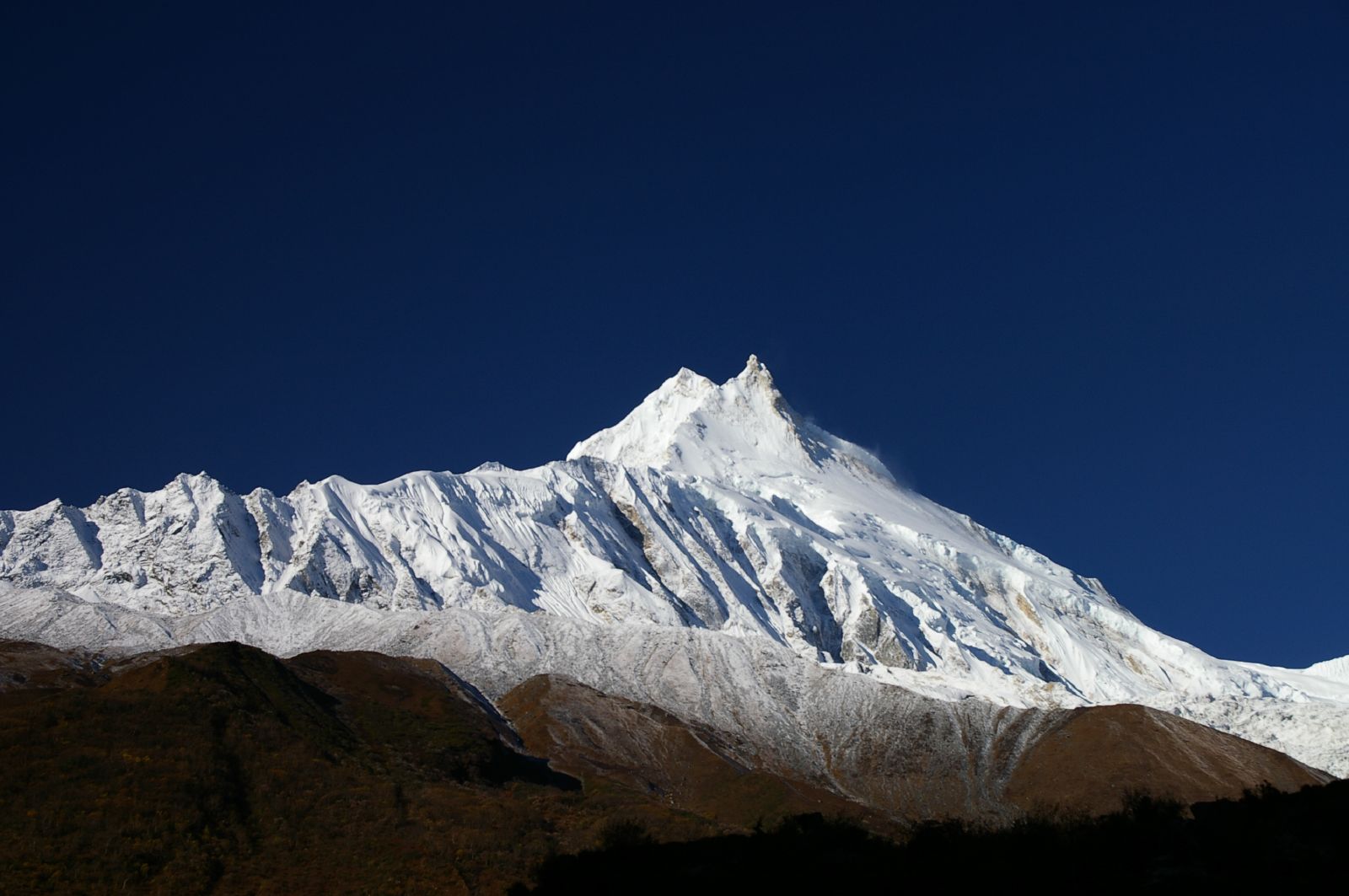
Mount Manaslu (8,163 m) at sunrise — the majestic eighth highest peak in the world
⟐ Exploring Enticing Himalayas
A complete guide to the landscapes, culture, wildlife, and practical essentials of trekking with Enticing Himalayas — including the legendary Mount Manaslu region.
Enticing Himalayas offers curated trekking experiences across the majestic Himalayan range. From the soaring 8,163 m peak of Mount Manaslu to the serene valleys of Budhi Gandaki, our expert guides ensure safety, cultural immersion, and unforgettable memories. This guide covers everything you need to know — wildlife, accommodations, cuisine, culture, gear, permits, and safety tips.
🏔️ Wildlife & Landscape
The Manaslu Conservation Area spans over 1,663 km² and is home to an extraordinary diversity of flora and fauna. Trekkers may spot snow leopards (Panthera uncia), Himalayan tahr, musk deer, and the elusive red panda. The region is also a paradise for birdwatchers, with over 110 bird species including the Himalayan griffon, golden eagle, and colourful pheasants.
Alpine meadows burst with rhododendron forests (Nepal's national flower), dwarf juniper, and vibrant wildflowers in spring. The landscape transitions from subtropical jungle at lower elevations to arctic desert above 5,000 m.

The Manaslu range seen from the trail
🥾 The Manaslu Circuit Trek
The Manaslu Circuit Trek is a 14–16 day journey that circumnavigates Mount Manaslu. The trail begins in Soti Khola, ascends through terraced farmlands and lush forests to Samagaon (3,530 m), crosses the challenging Larkya La Pass (5,106 m), and descends into the Marsyangdi Valley.
Highlights include spectacular glacial valleys, remote Tibetan-Buddhist villages, the ancient Pungyen Gompa monastery, and panoramic vistas of Manaslu, Himlung, Cheo, and Annapurna II.

Trekkers on the Manaslu Circuit trail
🛏️ Accommodations & Local Hospitality
Along the trail, teahouses range from basic wooden lodges with shared bathrooms to comfortable stone cabins offering hot showers, Wi‑Fi, and private rooms. In Samagaon, boutique lodges provide a luxurious escape with panoramic mountain views and hearty local meals. All teahouses offer a warm welcome, a place to charge devices, and the camaraderie of fellow trekkers.
Staying in these family-run lodges supports local communities and provides authentic cultural exchange — many lodge owners are former mountaineers or local farmers who share stories of life in the Himalayas.
🍛 Local Cuisine
Fuel up with traditional Nepali dishes that sustain trekkers at altitude:
- Dal Bhat — Lentil soup with rice, vegetables, and pickles. The ultimate trekking meal, often served with unlimited refills.
- Momos — Steamed or fried dumplings filled with buffalo, chicken, or vegetables, served with spicy tomato chutney.
- Thukpa — Noodle soup with vegetables and meat, perfect for cold evenings.
- Yak Cheese & Butter Tea — A high‑energy snack and a warming local beverage made with Himalayan herbs.
🎎 Culture & Festivals
The Manaslu region is predominantly inhabited by the Nubri and Tsum people, of Tibetan origin. Their culture is deeply rooted in Tibetan Buddhism, and the trail is dotted with ancient monasteries, prayer walls, and fluttering prayer flags.
Major festivals include Losar (Tibetan New Year, February), Dumje (a three‑day dance festival at monasteries), and Lhabab Duchen (Buddha's descent from heaven). Visitors are welcome to observe ceremonies and are often invited to join in the celebrations.

Close-up view of Manaslu from Samagaun village
🎒 Practical Tips & Preparation
| Category | Details |
|---|---|
| Best Season | October–November (autumn) and March–April (spring) offer the clearest skies, moderate temperatures, and the best trail conditions. |
| Permits Required | Manaslu Conservation Area Permit (MCAP) — NPR 3,000 + Trekkers' Information Management System (TIMS) card — NPR 2,000 + Restricted Area Permit (RAP) — US$ 100 (Sept–Nov) / US$ 75 (Dec–Aug) per person per week. |
| Essential Gear | Layered clothing (base, mid, and shell layers), sturdy waterproof trekking boots, trekking poles, sleeping bag (rated to -10°C), headlamp, water purification tablets, sun protection (hat, sunglasses, SPF 50+), and a reliable 40L–50L backpack. |
| Acclimatization | Plan for rest or acclimatization days in Jagat, Samagaon, and Dharapani. Follow the "climb high, sleep low" principle. Ascend no more than 400–500 m per day above 3,000 m. Drink 3–4 litres of water daily. |
| Hydration | Use purification tablets, UV pens, or a portable filter. Fill water bottles at lodges and streams. Avoid untreated tap water. Carry at least 2 litres per day. |
🛡️ Safety & Guided Treks
Hiring a certified local guide from Enticing Himalayas is highly recommended. Our guides are trained in wilderness first aid, high‑altitude medicine, and navigation. They provide cultural insights, ensure proper acclimatization, and handle all permit logistics.
Group sizes are kept small (2–8 people) to minimize environmental impact and maximize the quality of the experience. Emergency evacuation via helicopter is available from most points along the trail (covered by trekking insurance).

Climber on the summit ridge of Manaslu (8,163 m)
📸 Gallery



🌟 Conclusion
Embark on a journey that blends adventure, nature, and culture — creating memories that last a lifetime. The Manaslu region offers one of the most pristine and less‑crowded trekking experiences in the Himalayas, with stunning glaciers, remote Buddhist villages, and the raw beauty of the world's eighth highest peak.
Enticing Himalayas is committed to responsible tourism — supporting local communities, minimizing environmental impact, and preserving the pristine Himalayan environment for future generations. Every trek contributes directly to conservation efforts and community development projects in the region.
⟐
Book your trek today
and discover why the Himalayas continue to inspire adventurers from around the world.
Photos used under Creative Commons license from Wikimedia Commons. Manaslu (8,163 m) — eighth highest peak on Earth.
"The mountains are calling and I must go." — John Muir