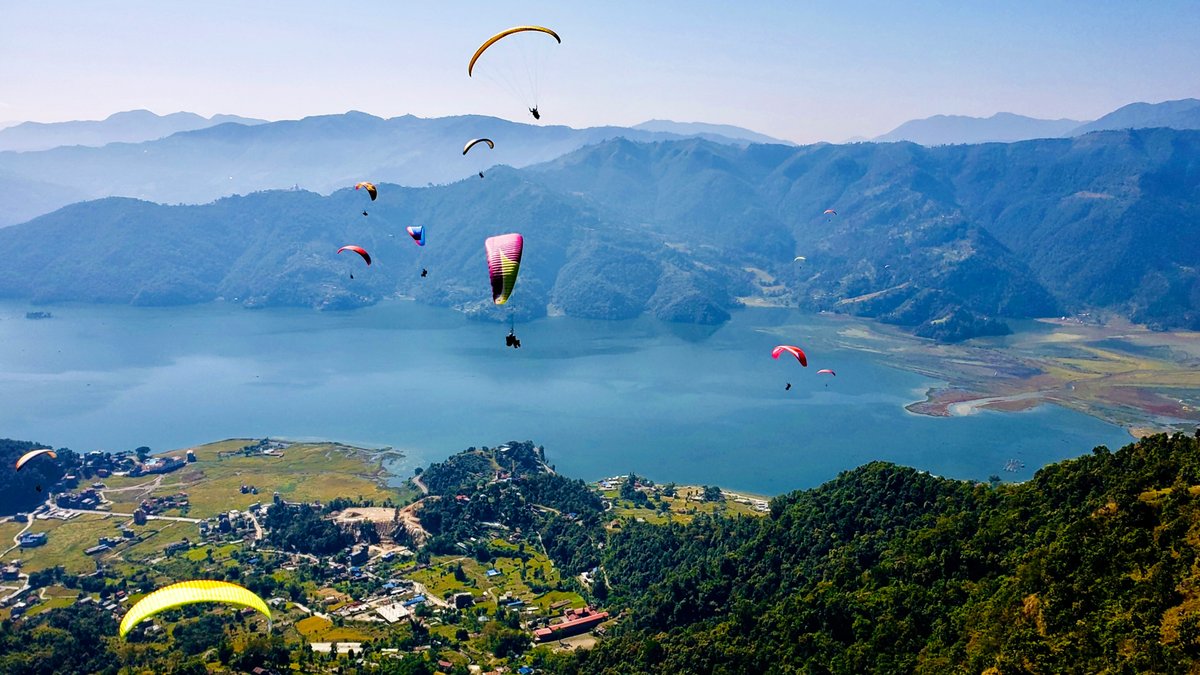
Pokhara vs Sarangkot: Which Paragliding Launch Is Better?
Comparing Nepal's two most popular paragliding launch points to help you choose the right flight for your Himalayan adventure.
Quick answer: Sarangkot is the actual launch hill where every tandem paragliding flight in the Pokhara Valley begins, while "Pokhara paragliding" refers to the overall experience of flying over the city, Phewa Lake, and the Annapurna range. Choosing between them is really about choosing what kind of flight you want: a standard 30-minute tandem from Sarangkot, a longer 60-minute cross-country route, or a sunrise thermaling session. Most first-time flyers take the standard Sarangkot launch, and it delivers everything the postcards promise.
If you are planning a paragliding experience in Nepal, chances are you have seen both names: Pokhara and Sarangkot. Tour operators, travel blogs, and even booking platforms sometimes use the terms interchangeably, which creates confusion. This guide breaks down exactly what each name means, how the two locations relate to each other, and which option suits your skill level, budget, and expectations.

A paraglider prepares for takeoff at the Sarangkot cliff overlooking Pokhara Valley. Credit: Wikimedia Commons.
What Is the Difference Between Pokhara and Sarangkot for Paragliding?
The key distinction is geographic. Pokhara is the lakeside city at an elevation of 820 meters that serves as Nepal's adventure tourism hub. Sarangkot is a hilltop village perched at 1,592 meters on the ridge directly west of Pokhara, about a 30-minute jeep ride from Lakeside. Every commercial tandem paragliding flight in the Pokhara Valley launches from Sarangkot's grassy takeoff slope. When people say "paragliding in Pokhara," they are describing the full experience: the jeep ride up to Sarangkot, the launch, the flight over the valley and lake, and the landing on the shore of Phewa Lake back in Pokhara.
So the comparison is not really two different launch sites. It is one launch site (Sarangkot) versus the broader experience package marketed as "Pokhara paragliding." Understanding this helps you evaluate what you are actually paying for and what variations exist within that package.
Where Do Paragliding Flights in Pokhara Actually Launch From?
All commercial tandem paragliding flights in the Pokhara Valley launch from Sarangkot. The takeoff area is a cleared grassy slope at approximately 1,592 meters elevation, facing east and southeast toward Pokhara and the Annapurna massif. The site is managed by the Nepal Paragliding and Hang Gliding Association, and multiple operators share the launch zone throughout the day. Flights typically run from 9:00 AM to 2:00 PM, with the best thermal conditions between 11:00 AM and 1:00 PM.
There is no separate "Pokhara city" launch site. Some operators have experimented with launches from other nearby hills, but Sarangkot remains the only commercially active paragliding launch in the valley. If a booking says "Pokhara paragliding," you will still go to Sarangkot for takeoff.

A tandem paraglider soars over Pokhara city and Phewa Lake after launching from Sarangkot. Credit: Wikimedia Commons.
How Do the Flight Experiences Compare?
Since both "Pokhara" and "Sarangkot" paragliding refer to the same launch site, the real comparison is between the types of flights offered from Sarangkot. Operators typically run three tiers, and the difference is duration, altitude gain, and what you see.
| Flight Type | Duration | Approx. Altitude | Price Range (USD) |
|---|---|---|---|
| Standard tandem | 25 to 35 minutes | 1,800 to 2,200 m | $70 to $90 |
| Cross-country tandem | 45 to 60 minutes | 2,500 to 3,000 m | $110 to $150 |
| Sunrise thermaling | 40 to 55 minutes | 2,000 to 2,500 m | $90 to $120 |
The standard tandem flight is what most travelers book. You launch from Sarangkot, catch the first thermals rising off the valley floor, glide over Pokhara's Lakeside district, circle above Phewa Lake, and land on the designated landing zone near the lake shore. Cross-country flights stay up longer by riding ridge lift and thermals further along the Sarangkot ridge, sometimes reaching the spine of the Annapurna foothills. Sunrise flights launch earlier and take advantage of the calm, smooth morning air before thermal turbulence builds.
Which Launch Gives Better Mountain Views?
Both flight types depart from the same Sarangkot ridge, so the mountain panorama is similar. You see Machapuchare (Fishtail, 6,993 m), Annapurna South (7,219 m), Hiunchuli (6,441 m), and on clear days, Dhaulagiri (8,167 m) to the west. The difference is altitude and time. Cross-country flights climb higher and travel further along the ridge, which means you see the Annapurna range from a wider angle. Sunrise flights catch golden light on the snow peaks, which is the single most photographed moment in Nepal paragliding.
For photography, the sunrise flight is the best choice. The light is soft and directional, the air is smooth, and the mountains glow pink and gold for about 15 minutes. Standard midday flights have harsher light but stronger thermals, which means more altitude gain and a more dynamic flying sensation.

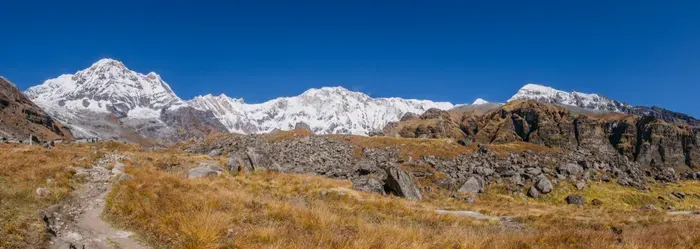
Panoramic view of Pokhara Valley and the Annapurna range from Sarangkot. Credit: Wikimedia Commons.
Is Sarangkot Suitable for First-Time Paragliders?
Sarangkot is one of the most beginner-friendly paragliding launch sites in the world, and that is not an exaggeration. The takeoff slope is a gentle, grassy incline with a clean run-out, meaning you do not need to jump off a cliff. You simply run forward with your pilot behind you, and the wing lifts you off the ground within a few steps. The landing zone on the Pokhara lake shore is large, flat, and soft. Most first-time flyers report that the takeoff was less scary than expected and the flight itself felt smooth and peaceful rather than adrenaline-pumping.
Tandem pilots are licensed by the Nepal Paragliding and Hang Gliding Association and typically have hundreds or thousands of flights logged. You wear a harness, sit back, and enjoy the view. No prior experience, training, or special fitness is required. The minimum age is usually 12, and the weight limit ranges from 30 to 110 kilograms.
What About Weather and Wind Conditions?
Sarangkot's launch faces east-southeast, which means it catches morning thermals predictably. The flying season runs from October through May, with the best months being October, November, March, and April. During these months, the skies are clear, the Annapurna range is visible, and thermal strength is moderate. December and January are flyable but colder at altitude. The monsoon months of June through September are generally off-limits due to heavy cloud cover, unpredictable winds, and reduced visibility.
Wind speed at launch is the primary factor in whether a flight goes ahead. Pilots cancel flights when wind exceeds approximately 25 km/h at the takeoff site. Morning flights (9 to 11 AM) tend to have lighter, smoother conditions, while midday flights (11 AM to 1 PM) have stronger thermals and more dynamic air. If you are prone to motion sickness, book an early morning slot.
How Much Does Each Option Cost?
Pricing in Pokhara is relatively standardized across operators, though there is room for negotiation, especially in the shoulder season. The standard 30-minute tandem flight costs between $70 and $90, including hotel pickup, jeep transport to Sarangkot, the flight, and return to Lakeside. Cross-country flights run $110 to $150, and sunrise sessions cost $90 to $120. Some operators bundle paragliding with other activities like trekking packages or ultralight flights, which can reduce the per-activity cost.
Prices are quoted in USD but typically paid in Nepali Rupees at the prevailing rate. Most operators accept cash only, though a few near Lakeside have card facilities. Tipping your pilot 200 to 500 NPR is customary for good service and good photos.
What Is the Landing Experience Like?
All tandem flights from Sarangkot land at the designated landing zone on the southern shore of Phewa Lake, near the Lakeside tourist district. The landing area is a flat, open field that operators maintain specifically for this purpose. As you descend, the pilot controls the glide path and flare, so you simply lift your legs and touch down softly on the ground. Most landings are gentle enough that you barely feel the contact. After landing, you are within walking distance of cafes, restaurants, and your hotel in Lakeside, making the logistics seamless.
The contrast between the mountain launch at Sarangkot and the lakeside landing in Pokhara is part of what makes this flight so memorable. You start at a windswept hilltop with Himalayan peaks filling the horizon, and you end in the bustling, warm lakefront district of Pokhara. Few paragliding sites in the world offer such a dramatic transition.

A tandem paragliding flight in progress over the Pokhara Valley. Credit: Wikimedia Commons.
Should You Choose Sunrise or Midday Flights?
This is the real decision you need to make when booking a flight from Sarangkot, since all flights launch from the same spot. Sunrise flights require an early wake-up (typically 5:30 AM pickup from Lakeside) and a pre-dawn jeep ride up the hill. The reward is smooth, calm air, golden light on the Annapurnas, and fewer crowds at the launch site. Midday flights have more dynamic thermals, meaning you climb higher and feel more movement under the wing, but the light is harsher for photography and the launch site is busier.
If your priority is photography and a peaceful experience, book sunrise. If you want the thrill of gaining altitude and a more active flying sensation, book midday. If you are unsure, the standard 11 AM slot is the safest middle ground: decent light, moderate thermals, and a reliable flight window.
Can You Combine Paragliding With Other Pokhara Activities?
Yes, and this is where "Pokhara paragliding" as a package concept adds value beyond the flight itself. Most operators offer combination packages that pair paragliding with other adventure activities in the Pokhara Valley. Popular combinations include paragliding plus ultralight aircraft flights, paragliding plus zip-lining, and paragliding plus boating on Phewa Lake. Some trekking packages, such as the Ghorepani Poon Hill Trek or the Mardi Himal Trek, include a free paragliding session as a bonus activity on the final day in Pokhara.
If you are planning a longer Nepal itinerary that includes both trekking and adventure sports, consider booking through a company that can bundle these together. This reduces per-activity cost and ensures logistical coordination between your trek and your paragliding flight.
What Do Reviews and Safety Records Say?
Sarangkot has an excellent safety record relative to its flight volume. The site has been operating commercially since the late 1990s, and the pilot community is well-established. Major operators employ pilots trained and certified by international paragliding bodies (FAI/CIVL) in addition to their Nepali licenses. Equipment is inspected regularly, and wings are replaced after a set number of flight hours. Injuries are rare and typically minor, usually related to rough landings rather than mid-air incidents.
On review platforms, the most common complaints are not about safety but about weather cancellations and photo pricing. Flights are cancelled when conditions are unsafe, and some travelers are disappointed when their only full day in Pokhara is cloudy. To avoid this, build a buffer day into your Pokhara itinerary. Photo and video packages (typically $15 to $25 extra) are almost universally praised as worth the cost, given the unique aerial perspectives.
How Do You Book and What Should You Bring?
Booking is straightforward. You can reserve a flight through any of the dozens of paragliding operators with offices along Lakeside Road in Pokhara, or book in advance through a tour company. Hotel front desks can also arrange bookings. Flights are confirmed the evening before, based on the weather forecast. On the day, wear closed-toe shoes (not sandals), long pants, and a light jacket, as it is noticeably colder at 2,000 meters than at lake level. Bring sunglasses and sunscreen. Leave heavy bags at your hotel; a small phone or camera pouch is all you need.
The operator provides the harness, helmet, and all flying equipment. Hotel pickup is typically 30 to 45 minutes before your flight time, and the jeep ride to Sarangkot takes about 30 minutes. The entire experience, from pickup to return, lasts about 2.5 to 3 hours.
How Does the Pokhara Experience Compare to Other Nepal Sites?
While Sarangkot and Pokhara dominate Nepal's paragliding scene, several other sites have emerged in recent years. Kathmandu Valley sites like Chandragiri offer flights closer to the capital but with shorter durations and less dramatic mountain views. Bandipur provides a quieter, less commercialized alternative with beautiful hill-country scenery. Kushma combines paragliding with one of the world's highest bungee jumps for adrenaline seekers.
For a comprehensive ranking of all paragliding locations in Nepal, including flight durations, costs, and difficulty levels, see our top 10 paragliding sites in Nepal guide. Pokhara and Sarangkot remain the top-ranked site overall due to the combination of reliable weather, professional operators, mountain views, and tourist infrastructure.
What Is the Best Time of Year to Fly From Sarangkot?
The autumn season (October and November) is the absolute best time for paragliding from Sarangkot. The monsoon has just ended, the air is crystal clear, the Annapurna range is fully visible, and thermal conditions are consistent. Spring (March and April) is the second-best window, with warming temperatures, blooming rhododendrons on the hillsides, and stable flying weather. Winter (December through February) is flyable but cold at altitude, with flights sometimes shortened due to weak thermals.
The monsoon season (June through September) is generally not flyable. Cloud cover obscures the mountains, winds are unpredictable, and rain makes the Sarangkot launch slope slippery and unsafe. If you are visiting Nepal during monsoon and paragliding is a priority, plan your Pokhara leg for the shoulder weeks of late September or early October, when the weather begins to stabilize.
What Should You Expect From Your Pilot and Equipment?
Tandem pilots in Pokhara come from diverse backgrounds. Many are local Nepali pilots who have flown Sarangkot for years and know every thermal and wind pattern in the valley. Others are international pilots who spend the European winter in Nepal. All commercial pilots must hold a valid tandem paragliding license from the Nepal Paragliding and Hang Gliding Association, and reputable operators additionally require FAI tandem rating certification.
The gliders used for tandem flights are large, stable wings designed specifically for carrying two people. They are not the same as solo paragliders. Tandem wings have a larger surface area (typically 38 to 42 square meters) and are built for stability rather than agility, which means the ride feels smooth and controlled. Pilots bring a reserve parachute and a communication system so they can talk you through the flight if you want commentary, or let you enjoy the silence if you prefer.
Are There Any Health or Medical Restrictions?
Paragliding from Sarangkot is physically undemanding, but there are a few health considerations. You need to be able to run a few steps for takeoff and stand for the landing. People with severe heart conditions, uncontrolled high blood pressure, or recent surgeries should consult a doctor before flying. Pregnant women are typically not permitted to fly. Motion sickness is uncommon but possible, particularly on midday flights with strong thermals. If you are prone to motion sickness, take a medication like Dramamine 30 minutes before pickup and choose a morning flight slot.
Altitude is not a significant concern. The flight reaches approximately 2,000 to 2,500 meters, which is lower than most trekking destinations in Nepal. If you have already acclimatized in Pokhara (820 m) for a day or two, the altitude during the flight will not cause issues.
Frequently Asked Questions
Is Sarangkot the same as Pokhara for paragliding?
Yes. Sarangkot is the hilltop launch site located about 30 minutes above Pokhara by jeep. Every commercial tandem paragliding flight in the Pokhara Valley takes off from Sarangkot. When operators sell "Pokhara paragliding," the flight always launches from Sarangkot and lands on the Phewa Lake shore in Pokhara. The two names describe the same experience.
Which is better for beginners: sunrise or midday paragliding?
Sunrise flights are generally better for nervous first-timers because the morning air is smoother and calmer, with less thermal turbulence. Midday flights have stronger thermals, which means more altitude gain and a more dynamic feel but also more movement. Both are safe for beginners, but if you are anxious about motion, book the earliest morning slot available.
How long does a paragliding flight from Sarangkot last?
A standard tandem flight from Sarangkot lasts 25 to 35 minutes of airtime. Cross-country flights extend to 45 to 60 minutes by riding thermals further along the ridge. The total experience, including jeep transport to the launch site, preparation, the flight, and return to your hotel, takes about 2.5 to 3 hours from pickup to drop-off.
What is the cost of paragliding in Pokhara in 2026?
A standard 30-minute tandem paragliding flight in Pokhara costs between $70 and $90 USD, including hotel pickup, jeep transport to Sarangkot, equipment, and the flight itself. Cross-country flights cost $110 to $150, and sunrise sessions cost $90 to $120. Photo and video packages are typically $15 to $25 extra.
Can you paraglide in Pokhara during the monsoon season?
Paragliding in Pokhara is generally not available during the monsoon season from June through September. Heavy cloud cover, unpredictable winds, and rain make the Sarangkot launch slope unsafe. The flying season runs from October to May, with October, November, March, and April offering the best conditions for clear mountain views and stable thermals.
What should I wear for paragliding in Sarangkot?
Wear closed-toe shoes (running shoes or hiking boots, not sandals), long pants, and a light jacket or fleece. At 2,000 meters it is noticeably colder than at lake level. Bring sunglasses and sunscreen. The operator provides the harness, helmet, and all flying equipment. Leave heavy bags at your hotel and bring only a small camera or phone pouch.
To learn more about paragliding across Nepal, including other launch sites and the complete national guide, visit our complete paragliding in Nepal guide or our detailed Pokhara paragliding destination guide. For those specifically interested in the Sarangkot launch site, our Sarangkot tandem flights guide covers takeoff procedures, pilot selection, and photo tips in greater depth.