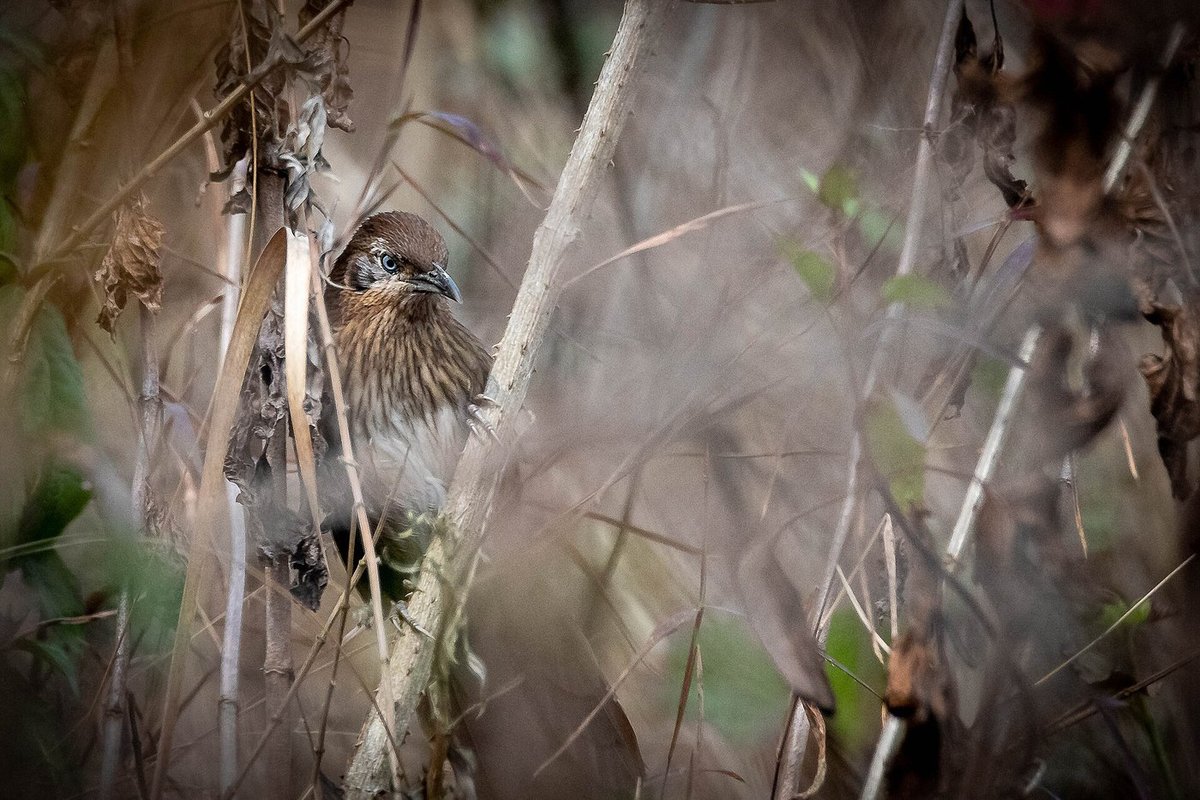
Nepal has recorded more than 880 bird species, and exactly one of them lives nowhere else on earth. The spiny babbler is that bird: a plain, shy, long-tailed babbler of scrub and forest edge, more often heard than seen, and the reason serious listers put Kathmandu Valley on a Nepal itinerary. The good news is that you do not need a expedition to look for it. Most sightings come from hillsides within an hour or two of Thamel.
This guide covers where the spiny babbler is found, how to look for it, and the valley sites that give you a realistic chance: Shivapuri, Phulchowki, Godavari and Taudaha. For the national picture, including the lowland parks, see our bird watching in Nepal guide.
Quick answer
The spiny babbler (Turdoides nipalensis), known in Nepali as Kande Bhyakur, is Nepal's only endemic bird and is found nowhere else. It lives in dense scrub, bamboo and degraded forest edge between roughly 900 m and 2,100 m, sings most persistently from March to May, and is easiest to find on the scrub slopes of Shivapuri Nagarjun National Park and below Phulchowki, both under two hours from Kathmandu.
Spiny Babbler: Identification, Call and Habitat
The spiny babbler is the answer to the question every visiting birder eventually asks: which bird is only found in Nepal? It was first described in 1836, then went unrecorded for so long that it was widely assumed lost until the American ornithologist Sidney Dillon Ripley found it again in 1948 in the hills of central Nepal. As of 2026 it has been recorded in all seven of Nepal's provinces, after a first record in the Madhesh lowlands, but the stronghold remains the mid-hills between west-central and east-central Nepal.
What does it look like?
A medium-sized babbler with a longish tail and a plain brown body, distinguished by pale streaking and the stiff, shiny black shafts on its upperparts that give the bird its English name. It stays low and half-hidden, usually in small noisy parties, and most views are of a bird slipping through a thicket rather than perched in the open.
What does the call sound like?
A series of whistles that rise and then fall, delivered from inside cover and easy to misjudge as coming from further away than it is. Learning that sound before you arrive is the single most useful preparation you can do. When you hear it, stop, stay still and wait: the bird usually moves within the thicket rather than flying out.
Where does it live?
Dense scrub, bamboo, abandoned terracing and degraded forest edge, mostly between 900 m and 2,100 m, often on slopes that grazing and cutting have kept open. Studies from the mid-hills put most sightings in scrubland close to water, with far fewer in closed forest, which is why an unpromising-looking bushy hillside is often better than tall timber.
Where can you actually see one?
- Shivapuri Nagarjun National Park, on the northern rim of Kathmandu Valley, is the standard accessible site, especially the scrubby fringes and the country around Haibung.
- The slopes below Phulchowki and the Godavari forest to the south are the classic day trip, and the reason so many birders give Kathmandu two nights.
- Pokhara, particularly the forest above the city at Raniban, the Sarangkot area and the ridges around Begnas, is the other valley with a reliable population.
- Gadhi-Siraichuli, the Important Bird Area above Chitwan, is the specialist option for anyone already heading to the Terai.
- The lower Langtang approach around Syabrubesi adds the bird to a trekking itinerary rather than a day trip.
Treat any of them as a target, not a guarantee. Good birders have spent whole mornings without a clear view, and a guide who promises the bird is overselling. What a good guide can do is put you in the right stretch of scrub at the right hour and keep the group quiet enough to hear it.
Where Can You Go Bird Watching in Kathmandu Valley?
Four sites do most of the work, and they sit close enough together that a determined birder can touch two in one day. The list below is the short version. The sections after it describe what each place is like once you are standing on the trail.
- Best single day: Phulchowki, for forest specialities and the spiny babbler.
- Easiest half day: Godavari and the National Botanical Garden, under an hour from Thamel.
- Quietest forest: Shivapuri Nagarjun National Park, especially the Jamacho ridge walk.
- Best winter stop: Taudaha Lake, for waterfowl between December and February.
- Best months overall: October and November first, then February to April.
| Site | Elevation | Drive from Thamel | Habitat | Signature species | Best season |
|---|---|---|---|---|---|
| Phulchowki | c. 2,760 m at the summit | 1.5 to 2 hours to the top road | Mossy oak and rhododendron forest | Spiny babbler, cutias, laughingthrushes | Feb to Apr, Oct to Nov |
| Godavari and the National Botanical Garden | c. 1,500 m | 45 to 60 minutes | Streamside forest, gardens, scrub | Spotted forktail, orange-headed thrush | Oct to Apr |
| Shivapuri Nagarjun National Park | 1,350 m to ridgeline | 30 to 45 minutes to the gate | Mid-hill oak, bamboo, damp gullies | Mixed forest flocks, warblers, woodpeckers | Oct to Nov, Feb to Apr |
| Taudaha Lake | c. 1,300 m | 30 to 40 minutes | Small valley lake, reedy edges | Pochards, gadwall, cormorants | Dec to Feb |
| Sundarijal and Budhanilkantha edges | 1,350 to 1,550 m | 30 to 45 minutes | Forest edge, stream, terraced fields | Winter thrushes, woodpeckers | Nov to Feb |
Phulchowki Bird Watching: The Full Valley Day
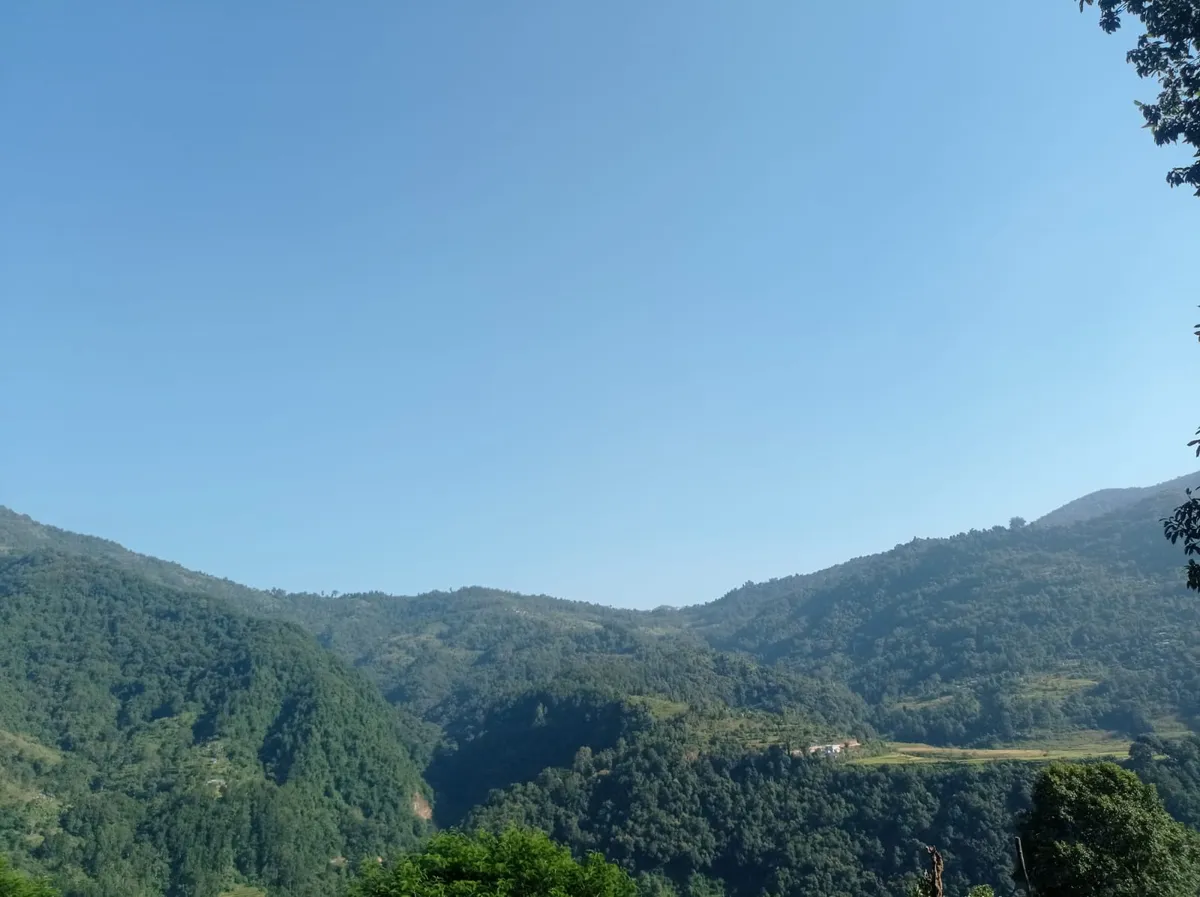 Phulchowki is the highest hill on the southern rim and the reason most serious birders give Kathmandu two nights. The drive leaves the city through Patan and Godavari, then climbs through terraced fields and secondary forest. The lower slopes begin at the National Botanical Garden; above that the road turns rough and narrow, and most groups drive as far as it is sensible and walk the upper kilometres in the early light.
Around 300 species have been recorded on the mountain, which is a large number for one hill and reflects how many zones it stacks together. The lower slopes are warm and subtropical, with streams, bamboo and thickets. Mid-mountain is oak, and near the top the forest turns to mossy oak and rhododendron, cool and quiet even in April.
Birders usually work the summit road on foot, stopping every few hundred metres to listen. Cutias and laughingthrushes move in noisy parties through the understorey, and the rufous-gorgeted flycatcher is a regular prize in the shaded middle storey. Dawn is the productive hour. By ten the mountain can go still, and the walk back down is often better for butterflies than for birds.
The upper road is where the spiny babbler is most often looked for, though nobody should treat it as a certainty. Bring a warm layer even in spring: the top is several degrees colder than Thamel and cloud can roll in without warning. A packed breakfast is worth the trouble, because there is nothing to buy on the mountain and the best light does not wait for a kitchen.
Godavari and the National Botanical Garden
Godavari sits at the foot of Phulchowki and works well as a half day on its own, particularly for anyone with a late arrival or a flight the next morning. The botanical garden holds a mix of planted collections, scrub and remnant forest, and the streams running through it are the reliable place to find spotted forktails picking along the shingle.
The orange-headed thrush is the other bird people come for, usually seen hopping through leaf litter under thick shade rather than out in the open. Move slowly along the shaded paths and give the litter ten quiet minutes. Godavari is gentle ground: flat, shaded, close to the road, and easy to combine with a slow lunch before returning to the city.
Shivapuri Nagarjun National Park
Shivapuri protects the northern rim of the valley and feels different from Phulchowki: damper, greener, with more bamboo and more water in the gullies. Park records list 177 bird species, and the forest is generally quieter in terms of people than the southern hills, which matters on a weekend.
The Jamacho ridge walk is the standard outing. It climbs steadily through oak and bamboo to the stupa on the ridge, with mixed flocks working through the canopy on the way up and again on the descent. Warblers and woodpeckers dominate the mid-morning activity, and the ridge itself gives an open view back over the valley when the air is clear.
Entry is through a staffed gate and the fee is paid there; carry cash and allow a few minutes for the paperwork. Start early, because the first hour of light on the lower switchbacks is where most of the birds are.
Taudaha Lake: The Winter Waterfowl Stop
Taudaha is a small lake on the southern rim, on the road toward Chobhar and Dakshinkali, and it is the easiest waterfowl stop in the valley. In winter it holds pochards, gadwall and cormorants, along with the usual egrets and herons at the edges. Outside the winter months it is a pleasant pond with far less to offer a birder.
Because it is small, Taudaha takes an hour rather than a morning. It pairs well with a Phulchowki descent, since the road back into the city passes close by. A scope helps here, though binoculars are enough at the near edge. Local fishermen use the lake, so keep to the bank and avoid pushing birds off the water.
Shorter Additions Worth Knowing
Sundarijal and the forest edges around Budhanilkantha give quick access to streamside woodland and terraced fields without a long drive. They are not headline sites, but in winter the valley fills with thrushes and woodpeckers that are easier to see at these lower edges than in dense forest.
When Is the Best Time to Go Birding in Kathmandu?
The valley has three genuinely different birding seasons, and what you see changes more between them than between sites. The monsoon is a fourth and a poor one. Choose the window that matches the birds you want rather than the window that matches your holiday.
February to April
This is the resident season. The weather warms steadily, rhododendron comes into bloom on the mid-hills, and the forest fills with song as territory holders start displaying. Pheasants call, laughingthrushes become conspicuous, and the mornings are cold at altitude but comfortable by mid-morning.
If the spiny babbler or the forest specialities are the point of the trip, this is the window to aim for. Trails are firm, the light is good before ten, and the summit of Phulchowki is usually clear enough to work properly.
October to November
Post-monsoon is the best all-round window and the one to pick if you can only come once. The air clears, the undergrowth is still lush from the rains, and passage migrants and raptors are on the move. Days are stable and the light is excellent for most of the morning.
The trade-off is that October is also the busiest month for trekking and for the roads out of Kathmandu. Leave earlier than you think you need to, and let the guide decide which site to work based on the previous day's weather.
December to February
Winter belongs to waterfowl and altitudinal migrants. Taudaha and the valley's other small wetlands reach their peak, and birds that spent the summer higher in the hills move down into the valley. Forest birding is slower but often rewarding, with mixed flocks easier to follow once the canopy thins.
Mornings are genuinely cold, frost on the grass at Godavari and near freezing on the ridge. Dress for it, and expect the first hour to be more about listening than seeing.
June to September: Be Honest About It
The monsoon is the weakest season and it is not close. Leeches are active, cloud sits on the ridge, trails wash out and the roads to Phulchowki can be genuinely difficult. Birds are present but hard to see, and the effort-to-reward ratio drops sharply.
If your dates are fixed in the monsoon, keep to Godavari and the lower forest edges on a dry morning and treat the outing as a walk with birds rather than a birding day.
What Does a Kathmandu Birding Day Trip Actually Look Like?
A private day trip starts early, usually with a pickup in Thamel between 5.30 and 6 am, because the first two hours of light are worth more than the rest of the day combined. The car carries breakfast, water and spare layers, and the route is decided on the morning rather than weeks in advance.
The guide's job is mostly listening. He reads the calls, knows which bend of the Phulchowki road held a mixed flock last week, and sets a pace that keeps the group together without hurrying anyone past a good bird. On a spring morning that might mean three hours on a single kilometre of road.
By late morning the group usually drops altitude, adds Taudaha or Godavari if the season suits, and is back in the city by mid-afternoon. Our own naturalists work the Phulchowki road before the gate traffic arrives, which is why the pickup time is not negotiable on a clear spring day. If you would rather have the day organised for you, the guided bird watching activity covers transport, permits and a specialist guide.
How Much Does a Kathmandu Birding Day Trip Cost?
Two costs dominate. A private car with driver for a valley day trip generally runs in the region of USD 50 to 80, and a specialist birding guide in Nepal typically charges USD 25 to 50 per day. Both are indicative ranges rather than quotes, and they move with fuel prices, group size and how far you go.
Protected-area entry fees are charged at the gate and are not included in those figures, so carry cash for Shivapuri. A scope, if the operator has one, may be an extra. Splitting a car between four people is the single biggest saving, and it costs nothing in birding terms: four pairs of eyes find more than two.
Cheaper is possible. Public buses reach Godavari and the edge of Shivapuri, and a confident birder with good ears can do a half day for the price of a ticket and a park fee. What you lose is the dawn start, the flexibility to change sites and the local knowledge of where a flock was yesterday.
If You Have More Than a Day
The valley is a good warm-up rather than the whole trip. Lowland wetland birding at Koshi Tappu and the grasslands of Chitwan add species the hills simply do not hold, and the Chitwan bird watching expedition links the two halves of the country in one itinerary.

Last updated: November 2026. Thumbnail photo: spiny babbler in Kathmandu Valley by Aditya Pal, CC BY-SA 4.0, via Wikimedia Commons.