 Nov 8 – Nov 8, 2026
Kathamandu
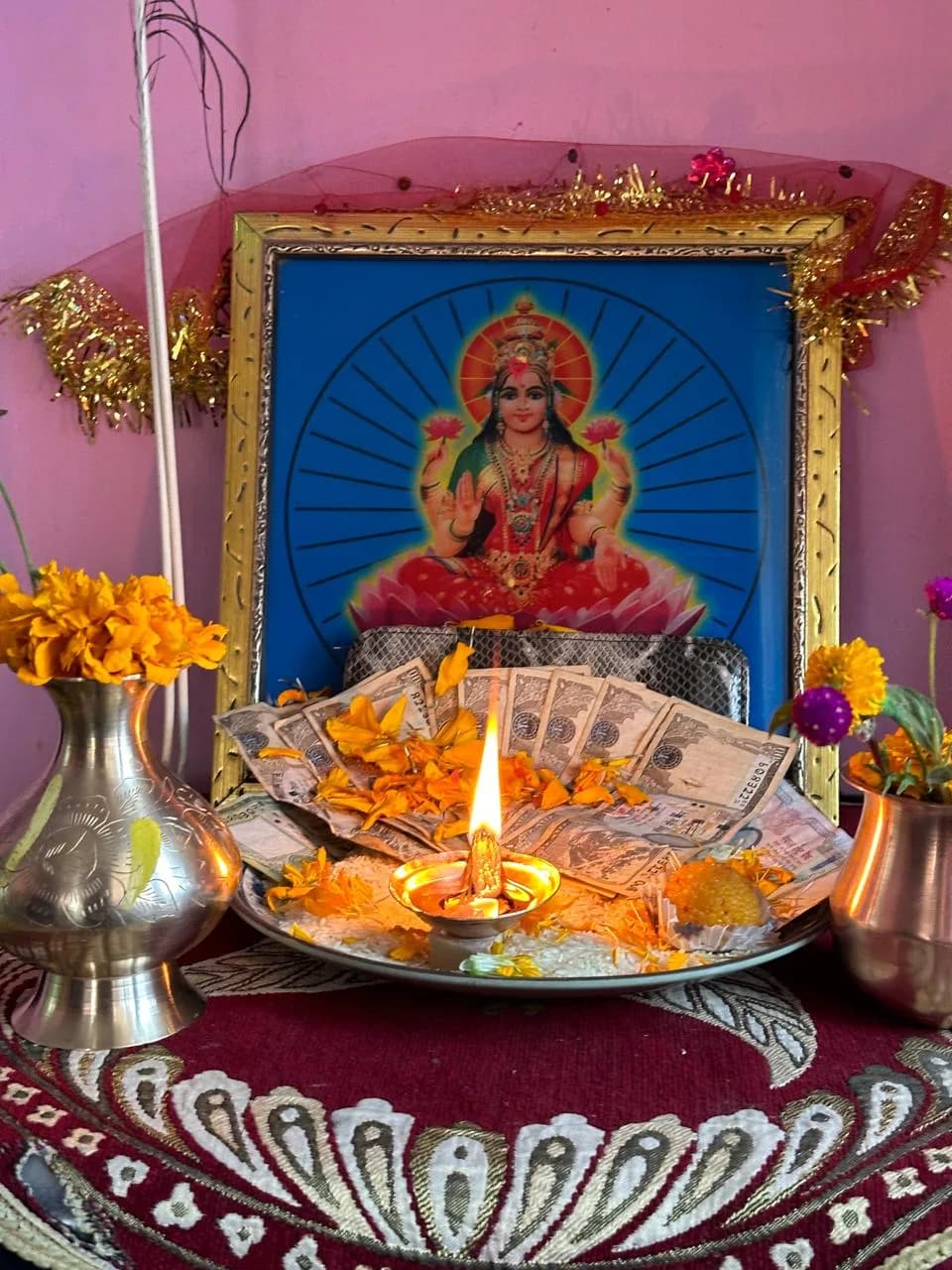
Laxmi Puja 2026 in Nepal: Tihar Festival Guide
Festival
1 day
Festival
Free
Kathamandu1 day
Event Details
Loading...
Event starts in
While most of Nepal's festivals wrap up within a day or two, one ritual cycle in the country's northern hill villages stretches on for nearly two full weeks, unfolding in stages that most outside visitors never get to see from start to finish. That festival is the Chhechu Festival, observed by Tamang and Hyolmo communities in the hills northwest of Kathmandu Valley and in the Helambu region of Sindhupalchowk district. Where Nepal's headline festivals tend to compress their rituals into a single dramatic day, Chhechu takes the opposite approach entirely spreading masked dances, sportive contests, and exorcism rites across eleven consecutive days, immediately following the Tamang and Hyolmo New Year. For readers building out a genuine understanding of Nepal's festival calendar beyond Dashain and Tihar, Chhechu offers something distinct: a rare, community-rotated ritual cycle that reveals how differently Nepal's smaller ethnic communities structure sacred time compared to the country's more widely known Hindu and Newar observances.
Chhechu — also spelled Tshechu or Chechu, and closely related linguistically and structurally to Bhutan's better-known Tshechu tradition is a ceremony observed by Tamang communities in the hill districts northwest of the Kathmandu Valley, and by the closely related Hyolmo (Sherpa of Helambu) community in the Helambu region of Sindhupalchowk district. The festival runs for eleven days, beginning on the fifth day of the lunar month (Panchami) and concluding on the full moon (Purnima), directly following Sonam Lhosar, the Tamang and Hyolmo New Year observance.
Structurally, Chhechu is built around two core categories of ritual activity: tsema, a set of eleven sportive plays and performances staged throughout the festival, and exorcisms, of which three are performed across the eleven-day cycle. The whole community takes part, though in clearly divided roles: Buddhist lamas are responsible for generating spiritual power, referred to locally as wang, while villagers themselves carry out the tsema performances. This division between clerical and lay participation is part of what makes Chhechu feel less like a single performed spectacle and more like a genuinely shared community undertaking, with religious authority and popular participation woven together across the full eleven-day span.
Chhechu sits within the broader tradition of Himalayan Buddhism, specifically as practiced by the Tamang and Hyolmo peoples, both of whose religious life draws heavily on Tibetan Buddhist ritual structure while retaining distinct local character shaped by centuries of settlement in Nepal's mid-hills. The Hyolmo community, concentrated in the Helambu region, observes the festival across a defined cluster of villages, including Sermathang, Tarkeghyang, Melemchighyang, Nakote, Kutumsang, Ghangyul, Tshengyunche, Tapkharka, and Kaje each with its own monastery and local variation on the shared ritual calendar. Tamang communities further west, in the hills northwest of Kathmandu Valley, observe a related version of the same tradition under the same name.
According to Buddhist scripture as understood locally, Chhechu commemorates the victory of Guru Rinpoche (Padmasambhava, the figure credited with establishing Tibetan Buddhism) and ancient lama priests over demonic forces, reenacted through tantric masked dances that form the visual centerpiece of the festival. Phurba Lama Hyolmo, president of the Palmo Choling Monastery, has described the annual Tshechu Puja as performed specifically in the hope of bringing happiness, peace, and prosperity to humanity framing the festival's purpose in terms that extend beyond the immediate community to a broader wish for collective wellbeing. For the Hyolmo community specifically, the festival also marks the practical beginning of a new year, giving it a dual function as both a religious observance and a calendar milestone.
Chhechu unfolds across two related but geographically distinct areas. The Tamang observance is centered in the hill districts northwest of the Kathmandu Valley, encompassing communities across what is broadly considered the Tamang cultural heartland. The Hyolmo observance is more precisely documented, concentrated in the Helambu region of Sindhupalchowk district, a mid-hill area northeast of Kathmandu known for its ancient monasteries and strong Tibetan Buddhist heritage, distinct from but culturally adjacent to the better-known Langtang region.
Villages such as Sermathang and Tarkeghyang, both established Hyolmo settlements with long-standing monastic institutions, serve as primary hosting locations, though the specific household or village responsible for hosting the festival's central rituals rotates from year to year a structural detail that shapes both the festival's logistics and its community significance, discussed in more detail below. For travelers, this means Chhechu isn't anchored to one single, permanently fixed festival site the way many of Nepal's major jatras are; instead, it moves across a defined circuit of villages tied to the Tamang and Hyolmo cultural landscape.
How Many Days Does Chhechu Last, and Why So Long?
Chhechu's defining structural feature is its length: eleven consecutive days, running from Panchami to Purnima of the lunar month, immediately following Sonam Lhosar. This is genuinely unusual within Nepal's festival calendar, where the overwhelming majority of celebrations even major ones like Buddha Jayanti or Indra Jatra's core rituals are concentrated into a single day or, at most, a handful of days. Understanding why Chhechu spans so much longer requires looking at what the eleven days are actually structured to accomplish.
Rather than a single climactic ritual moment, Chhechu is built as a sequential ritual cycle, with eleven distinct tsema performances and three separate exorcism rites distributed across the full period rather than compressed into one day. Each tsema carries its own specific role within the broader ritual sequence, and the exorcisms including the significant Kali Mai exorcism discussed below each require their own dedicated preparation and execution. Compressing this sequence into a shorter window would fundamentally change the nature of what the festival is trying to accomplish: rather than a single dramatic performance, Chhechu functions more like a sustained period of communal spiritual work, with each day contributing a distinct piece to the whole.
There's also a practical dimension tied to the festival's position directly after Sonam Lhosar. Because Chhechu begins on the fifth day of the lunar month and runs to the full moon, it occupies almost the entire first half of the lunar cycle immediately following the new year, effectively extending New Year celebrations into a much longer season of communal ritual observance rather than treating the new year as a single isolated event. This positioning ties Chhechu's unusual length directly to its role as an extended, communal transition into the new year a markedly different approach from festivals that mark a single sacred date and then conclude.
One of the most distinctive organizational aspects of Chhechu, particularly within the Hyolmo tradition, is its rotating hosting structure. Rather than being organized by a fixed temple committee or municipal body year after year, responsibility for hosting the festival's central activities rotates between one or two households each year, with the broader community contributing food and other necessary resources to support that year's designated hosts. This system distributes both the honor and the considerable logistical burden of organizing an eleven-day ritual cycle across the wider community over time, rather than concentrating it permanently in a single family or institution.
This rotating structure also reinforces the festival's function as a genuine community-wide undertaking rather than a spectator event organized for an audience. Each household that takes its turn hosting Chhechu does so knowing the same responsibility will eventually pass to others, creating a long-term cycle of mutual obligation and participation that reinforces social bonds across the village well beyond the festival period itself.
The eleven-day structure allows Chhechu to incorporate a wider range of distinct ritual activities than most shorter Nepali festivals, each contributing to the broader ceremonial arc.
Chhechu shares its name and much of its underlying religious logic with the far better-documented Tshechu festivals of Bhutan, where "Tshechu" translates literally to "day ten" and refers to festivals typically held around the tenth day of a given month in the Tibetan lunar calendar, commemorating events in the life of Guru Rinpoche. Bhutanese Tshechus, held in dzong (fortress-monastery) courtyards across the country, are known internationally for their elaborate masked dance-dramas, the ceremonial unfurling of giant sacred thangka paintings known as thongdrol, and their role as both religious and civic occasions for entire districts. While Nepal's Chhechu operates on a considerably smaller scale and with a different specific ritual sequence, the shared conceptual foundation masked dances reenacting Guru Rinpoche's spiritual victories, staged as a major communal religious event places both traditions within the same broader Himalayan Buddhist festival family.
This connection is worth understanding for travelers specifically because it situates Chhechu within a wider regional pattern rather than as an isolated local curiosity: it represents Nepal's own, more intimately community-scaled version of a ritual tradition that reaches its most famous and elaborate expression across the border in Bhutan.
Costumes, Music, and the Visual Character of Chhechu
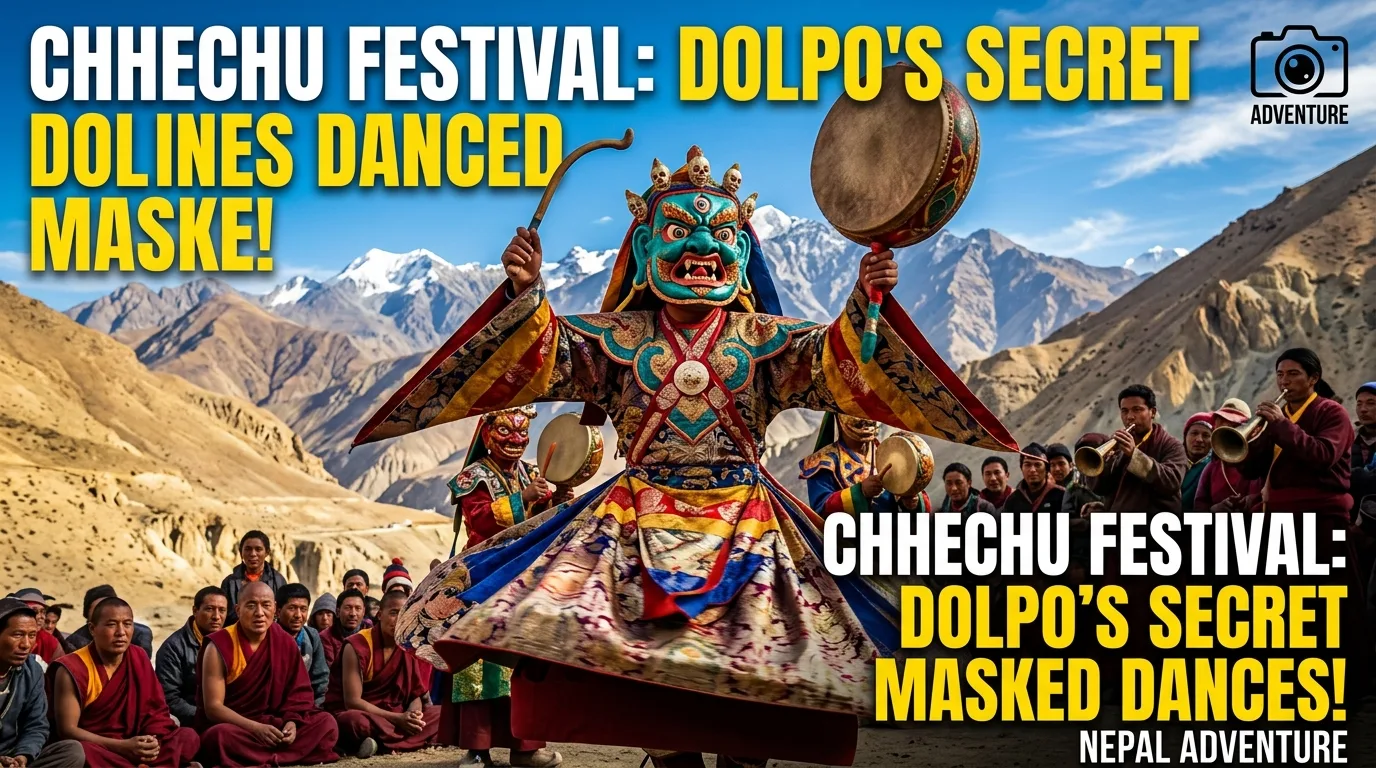
Much of what makes Chhechu visually distinctive comes down to the specific combination of ritual objects and traditional dress used across its various performances. The tsema plays and masked tantric dances rely on elaborate costume work, with performers wearing traditional Tamang and Hyolmo garments alongside the more elaborate ceremonial masks used specifically for the dances depicting Guru Rinpoche's victory over demonic forces. These masks, often carved and painted to represent specific protective deities or symbolic demons, are treated as sacred ritual objects in their own right, typically stored at the village monastery between festivals rather than being purely decorative props.
Traditional instrumentation accompanies the festival's various performances throughout its eleven days, with ceremonial horns, drums, and cymbals common across Himalayan Buddhist ritual dance more broadly providing the rhythmic and tonal backdrop for the tsema and masked dances alike. The specific combination of instruments and performance styles can vary somewhat between the Tamang communities northwest of Kathmandu and the Hyolmo villages of Helambu, reflecting the two communities' related but distinct cultural identities even as they share the same core festival name and structure.
For the Kali Mai exorcism specifically, the ritual objects carried by participants carry direct symbolic weight: the swords held by men and the weaving instruments held by women are not incidental props but central to the ritual's meaning, representing the specific roles each gender plays within this particular act of communal purification. The large bamboo effigy constructed for the ritual is itself a significant undertaking, built specifically for that year's ceremony and understood as a temporary vessel for the negative forces the community seeks to remove before it is ultimately burned at dusk.
Because Chhechu begins so soon after Sonam Lhosar and shares the same broad cultural community, it's worth clarifying how the two observances differ, since they're sometimes conflated by outside observers. Sonam Lhosar is the Tamang and Hyolmo New Year itself a shorter, more contained celebration centered on visiting monasteries and stupas, cleaning homes to welcome the new year, preparing traditional foods such as khapse, babar, and thongsey, and performing shorter masked dances specifically intended to drive away evil spirits before the year begins. It functions similarly to how Losar operates for Sherpa and other Tibetan Buddhist communities: a defined, relatively brief new year observance with its own specific customs.
Chhechu, by contrast, is not the new year celebration itself but rather an extended ritual season that follows directly afterward, picking up where Sonam Lhosar's shorter observances leave off and expanding into the much longer, more structurally complex eleven-day cycle of tsema performances and exorcisms described throughout this guide. Understanding this sequence New Year first, then the extended Chhechu ritual cycle helps clarify why the two are sometimes described together in the same breath despite being functionally distinct observances with different purposes, different lengths, and different ritual content.
For readers considering building a trip around experiencing Chhechu, or simply looking to understand it properly as part of Nepal's wider festival landscape, several practical and cultural points matter.
For travelers drawn to the Helambu region specifically for Chhechu, the timing and geography line up naturally with a broader exploration of Nepal's Tamang and Hyolmo cultural heartland. Helambu sits within relatively accessible trekking distance from Kathmandu compared to more remote regions like Upper Dolpo, and it's frequently combined with routes through the neighboring Langtang Valley, giving visitors the opportunity to pair the cultural depth of Chhechu with genuinely rewarding mid-altitude Himalayan trekking through rhododendron forests, terraced hill villages, and monasteries that have anchored Hyolmo religious life for generations.
Because Chhechu's rotating host system and community-internal character mean it isn't packaged and promoted the way Nepal's larger festivals are, building a trip around it works best as part of a wider Helambu cultural circuit rather than a single-purpose visit. If you're planning a Himalayan cultural trip built around lesser-known festivals like Chhechu, it's worth reviewing how a Helambu or Langtang-focused route might be structured. You can browse relevant trekking and cultural itinerary options on our Tour List page to see how a Tamang and Hyolmo heritage journey might fit into a broader Nepal trip.
Chhechu occupies an interesting position within Nepal's festival landscape precisely because it doesn't fit the mold that defines the country's most internationally recognized celebrations. It isn't a single-day chariot procession like Indra Jatra, nor a rare multi-year pilgrimage like Shey Mela or Gadhimai. Instead, it represents something closer to a sustained, structured season of communal ritual work eleven days of sequential performance, exorcism, and shared responsibility, rotating year after year through the households of a defined community. For travelers and cultural researchers genuinely interested in how Nepal's smaller ethnic communities organize sacred time differently from the country's dominant Hindu and Newar traditions, Chhechu offers a genuinely distinctive case study, and one that remains far less documented and far less visited than it arguably deserves.
Chhechu's rotating hosting structure is not entirely unique within Nepal's festival landscape, but it remains relatively uncommon compared to the fixed, institutionally organized festivals that dominate the country's more publicized calendar. Most of Nepal's major festivals — from the temple-based jatras of the Kathmandu Valley to national observances like Dashain and Tihar are organized around permanent religious institutions, government-recognized committees, or fixed household lineages with long-established, unchanging roles. Chhechu's household-rotation system instead distributes organizational responsibility across the wider community over time, a structural choice that reflects a different underlying philosophy of communal obligation: rather than concentrating the honor and burden of hosting in a single family or institution indefinitely, the responsibility circulates, ensuring that the weight of organizing an eleven-day ritual cycle is shared broadly across the community's households over successive years.
This matters for how outside visitors should think about experiencing Chhechu. Because there is no single, permanent festival "venue" in the way Kathmandu's major jatras are anchored to specific, unchanging temple squares, engaging with Chhechu authentically requires a degree of local connection and flexibility that isn't necessary for Nepal's more institutionally fixed celebrations. It also means that each year's edition of the festival carries a slightly different local character, shaped by whichever household or village segment has taken on that year's hosting responsibility a subtle but meaningful variation that repeat visitors familiar with the tradition often describe as part of what keeps the festival feeling genuinely alive rather than static or purely repetitive from one year to the next.
The Chhechu Festival demonstrates just how varied Nepal's festival traditions become once you move beyond the country's most widely covered celebrations. An eleven-day ritual cycle, rotating annually between host households, blending masked tantric dance with village-wide exorcism rites, and tied structurally to the Tamang and Hyolmo New Year Chhechu is built on a fundamentally different rhythm than Nepal's more familiar single-day festivals, and understanding that rhythm is central to appreciating what makes it significant. For travelers genuinely interested in the depth of Nepal's ethnic and religious diversity beyond its most heavily promoted festivals, Chhechu, particularly as observed in the villages of Helambu, offers a rare and rewarding window into a tradition still largely organized on its own community's terms. For more on Nepal's lesser-known cultural festivals, explore our ongoing coverage on the Enticing Himalayas Blog.
Key experiences and features
11-Day Traditional Festival
Tamang and Hyolmo Culture
Traditional Masked Dances
Guru Rinpoche Rituals
Kali Mai Exorcism Ceremony
Buddhist Monastery Traditions
Tsema Traditional Performances
Helambu Village Experience
Recommended packing list
Kathmandu, Kathmandu, Bagmati, Nepal
Got questions about this event?
Chhechu is an 11-day Tamang and Hyolmo Buddhist ritual festival featuring masked dances, tsema performances, and exorcism ceremonies.
Chhechu traditionally lasts 11 days, from Panchami to the full moon.
It is celebrated among Tamang communities and especially in Helambu, Sindhupalchowk, among the Hyolmo community.
It follows Sonam Lhosar and generally falls around January or February, depending on the lunar calendar.
The festival includes masked dances, tsema performances, Buddhist rituals, and village-wide exorcism ceremonies.
Jan 2, 2027
1 day
Quick Info
More festival experiences
Nov 8 – Nov 8, 2026Kathamandu
 Aug 17 – Sep 16, 2027
Godavari Kunda
 Jan 15 – Jan 16, 2027
Swayambhu Bhuikhhel