 Nov 8 – Nov 8, 2026
Kathamandu
Laxmi Puja 2026 in Nepal: Tihar Festival Guide
Festival
1 day
Festival
Free
Kathamandu1 day
Event Details
Loading...
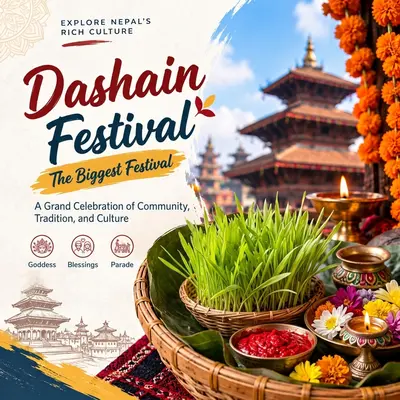
Dashain is the heart and soul of Nepal, a festival that turns the whole country into one big family gathering. It starts quietly with a small clay pot and a handful of seeds on Ghatasthapana day, and slowly grows into fifteen days of prayers, family reunions, red tika powder, and the smell of home cooking drifting through every street. For Hindus in Nepal, this festival is not just a religious event but a reason to travel back home, meet grandparents, and celebrate the victory of good over evil through the story of Goddess Durga. If you are planning to be in Nepal during this season, exploring Enticing Himalayas is a good place to start understanding how the country comes alive, and their curated Nepal tour packages make it easy to experience this festival firsthand. This article walks through every single day of Dashain, starting from Ghatasthapana and ending on the full moon night of Kojagrat Purnima, explaining what happens, why it matters, and where you can go to see it with your own eyes, using the Dashain events calendar and a list of the best places to visit in Nepal during this festive season.
Dashain, also called Bijaya Dashami or Bada Dashain, is the longest and most important festival on the Hindu calendar in Nepal. It falls in the month of Ashwin, usually somewhere between late September and late October, and it marks the victory of Goddess Durga over the buffalo demon Mahishasura. This is the same story that is celebrated as Durga Puja and Navaratri in India, but in Nepal the festival takes its own shape, stretching across fifteen days rather than nine or ten. Every single day carries its own ritual, its own mood, and its own meaning, which is exactly why so many travellers now plan their trips through Enticing Himalayas around this exact window of the year, choosing from a wide range of cultural tour packages in Nepal that line up with the festival dates.
The festival is rooted in the idea that darkness never wins for long. Families see it as a time of renewal, a chance to wipe the slate clean, settle old disagreements, and start fresh with blessings from the eldest members of the family. Because the celebration touches every home, every temple, and every street corner, checking the latest festival events in Nepal before arriving is genuinely useful, since some rituals such as the Kali Puja or the military parade of Fulpati are only open to the public in specific cities. A quick look at the temples and religious sites list also helps first-time visitors understand which shrines carry the deepest significance during this particular festival.
Everything begins with Ghatasthapana, a word that literally means "establishing the pot." On this day, priests and family elders fill a clay pot with holy water, cover it with cow dung, and plant barley or corn seeds inside it. This pot is placed in the family prayer room and is not touched again until the tenth day. Over the next nine days, the seeds sprout into thin yellow-green shoots known as Jamara, which later become one of the most recognisable symbols of the whole festival. In 2026, Ghatasthapana falls on Sunday, October 11, and this single day sets the tone for everything that follows.
Ghatasthapana is also the day when the nine-day worship of Goddess Durga, known as Navaratri, officially starts. Priests recite verses from the Devi Mahatmyam, and households begin daily prayers that continue right up until Maha Navami. Travellers who happen to be in the country at this time often head straight into the Kathmandu valley to watch these opening rituals, and browsing the temples and heritage places in Kathmandu is a good way to plan which courtyards and shrines to visit first. Many guided Kathmandu valley tour packages are timed specifically around this opening week, giving visitors a front-row seat to the very start of Dashain. For those arriving a day or two early, checking the Ghatasthapana opening ceremonies listed for the valley makes it easier to be in the right courtyard at the right hour, and starting from the Enticing Himalayas homepage gives a broader sense of how the rest of the festival will unfold.
The days between Ghatasthapana and Fulpati are collectively called Navaratri, meaning nine nights, though in the Nepali version of Dashain these nights blend into the wider fifteen-day celebration. During this stretch, the Jamara seedlings are watered daily, usually by the family priest or the eldest woman of the household, and each day is dedicated to a different form of the Goddess, from Shailaputri to Kalaratri. Temples dedicated to Durga and her many forms, such as Kali, Bhairavi, and Chandi, see a steady stream of devotees throughout this period.
This quieter middle stretch of the festival is actually one of the best times to travel around the country, since the crowds are lighter than on the big ritual days but the festive decorations, lights, and markets are already in full swing. Many visitors use this window to head out on short trekking tour packages in the hills before returning to the cities for the bigger rituals later in the week, and checking the local Dashain events schedule helps in deciding which town to be in for which day. A short detour to one of the quieter hill villages near Kathmandu during these middle days is also a nice way to see Navaratri celebrated away from the bigger crowds.
Fulpati, meaning "sacred flowers and leaves," is the seventh day of Dashain and one of the most visually striking. In Kathmandu, a formal procession carries flowers, banana stalks, jamara, sugarcane, and other holy plants from Gorkha, the ancestral home of Nepal's royal family, all the way to the historic Hanuman Dhoka Durbar Square. The procession is escorted with traditional music, gun salutes, and a great deal of ceremony, drawing huge crowds who gather along the route. For 2026, Fulpati falls on Saturday, October 17.
Outside the capital, Fulpati is marked in smaller but equally sincere ways, with families bringing fresh flowers and leaves into their own prayer rooms. Anyone hoping to witness the grand Kathmandu procession should plan ahead, since the crowds are dense and the roads around Durbar Square get closed for the ceremony. The Fulpati procession listing on our events page and a look at the surrounding Kathmandu Durbar Square area both help visitors find the best viewing spots without getting caught in the crush. Travellers coming from the western hills sometimes trace the procession's origin by visiting Gorkha a day or two before Fulpati, which adds useful context to the ceremony once it reaches the capital.
Maha Ashtami, the eighth day, is dedicated to the fierce form of the Goddess, Kali, and is one of the most intense days of the entire festival. Temples across the country, most notably Kot in Kathmandu, hold large-scale animal sacrifices before dawn, an old tradition believed to please the Goddess and ward off evil for the coming year. The atmosphere on this day is a mix of solemn ritual and communal energy, with drummers and priests moving between shrines late into the night. In 2026, Maha Ashtami falls on Sunday, October 18.
This is also the day many households prepare a special feast, since meat that has been offered in sacrifice is later cooked and shared among family and neighbours. Not every visitor is comfortable witnessing the sacrificial rituals, and that is completely understandable, so many opt instead to explore quieter heritage places outside Kathmandu on this particular day, or join one of the cultural tour packages that focus purely on architecture, temples, and local food rather than the sacrificial rites themselves. The Maha Ashtami ceremony timings for major temples are usually posted a few days in advance, which helps in deciding whether to attend at dawn or visit later once the crowds have thinned.
The ninth day, Maha Navami, closes out the worship of Goddess Durga and is dedicated to Vishwakarma, the god of craftsmanship and machinery. On this day, families and businesses bring out their vehicles, tools, computers, and machinery to be blessed with tika, flowers, and incense, a custom that has expanded naturally to include cars, motorbikes, and even aeroplanes at Kathmandu's airport. Maha Navami in 2026 falls on Monday, October 19.
Blacksmiths, mechanics, and craftsmen treat this as one of the most important days of their working year, cleaning and decorating their equipment before a short ceremony. Tour operators are no exception, and many vehicles used for Nepal trekking and touring packages are given a small blessing ceremony on this exact day before the busy Tika season begins. If you happen to be staying in a city rather than the countryside, walking through local workshop districts on Maha Navami is a memorable way to see this side of the festival, and a quick glance at nearby places worth visiting can turn a short walk into a full afternoon out. The Vishwakarma Puja gatherings held at local workshops and transport depots are also worth checking, since some communities open their blessing ceremonies to visitors.
Vijaya Dashami, simply called Dashain Tika by most Nepalis, is the tenth and most important day of the entire festival. This is the day the story reaches its emotional peak: family members, starting with the youngest, receive a mixture of red vermillion, yogurt, and rice pressed onto their forehead by their elders, along with the yellow Jamara shoots that have been growing since Ghatasthapana. Along with the tika comes a blessing for long life and success, and often a small gift of money known as dakshina. In 2026, Vijaya Dashami falls on Tuesday, October 20, and it is treated as a full public holiday across the country.
Streets on this day are unusually quiet in the morning as most people stay indoors with their families, but by afternoon, kite flying fills the sky in towns and cities, and large bamboo swings called ping appear in open fields and courtyards. Visitors who want to witness this atmosphere without intruding on a private family moment often join a local family through a homestay arrangement, and checking the homestay and cultural immersion tours ahead of time is the easiest way to be welcomed into a genuine Tika ceremony rather than watching from a distance. The main squares in Kathmandu, Patan, and Bhaktapur also come alive with kite flying and swings, and the Vijaya Dashami public gatherings are worth checking for exact timings. A short trip to Pokhara around the same day offers a calmer, more scenic version of the same celebration, with kites rising against a mountain backdrop instead of city rooftops.
The eleventh and twelfth days, Ekadashi and Dwadashi, continue the spirit of Vijaya Dashami but shift the focus outward, from immediate family to extended relatives, friends, and neighbours. People travel across towns and villages to receive tika from uncles, aunts, and family friends they were not able to visit on the main day itself. Roads and buses are noticeably busier during this stretch as people criss-cross the country to complete their round of visits.
For a traveller, this middle stretch of the post-Tika period offers a wonderful window into everyday Nepali hospitality, since almost every home has sweets, snacks, and drinks ready for unexpected guests. It is common to be invited in for tika even as an outsider, especially in smaller towns, and joining a guided village and countryside tour during these days often leads to exactly this kind of unplanned, genuine hospitality. The community gatherings and local fairs that pop up in smaller towns during this period are also worth checking before deciding where to base yourself. Basing your stay near a well-connected hub such as Bhaktapur makes it easier to reach several relatives' towns within a single day of visiting.
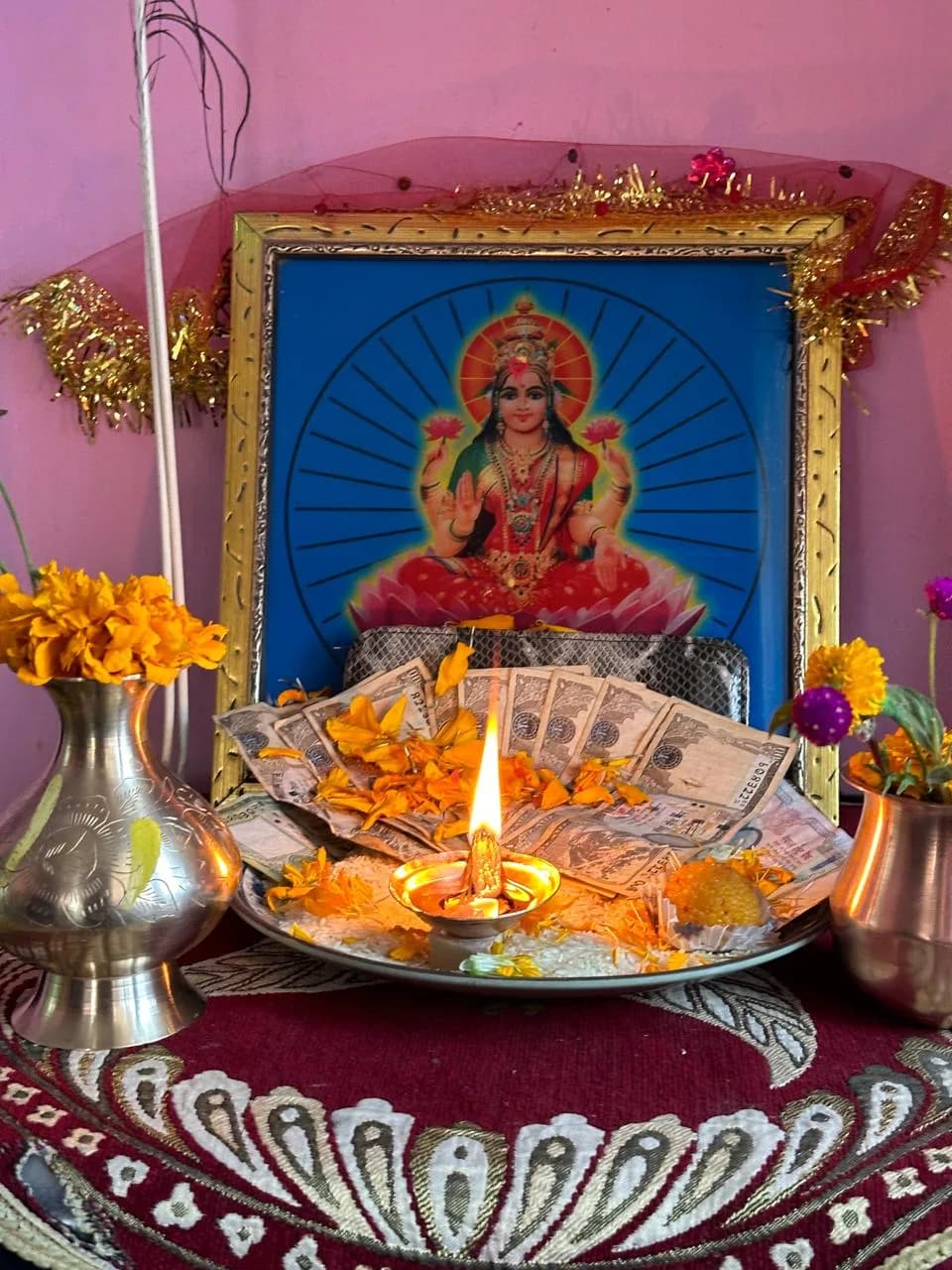
Dashain reaches its final act on the fifteenth day, Kojagrat Purnima, a full moon night dedicated to Goddess Laxmi, the goddess of wealth and prosperity. Families stay awake late into the night, playing cards, sharing food, and praying that Laxmi will visit homes that remain lit and lively rather than dark and asleep. It is considered one of the few nights of the year when gambling within the home is culturally accepted, and the mood is festive rather than solemn. In 2026, Kojagrat Purnima falls on Saturday, October 24, bringing the fifteen-day festival to a close.
Because this night falls on a full moon, it is also a beautiful time to be out in the open countryside or up in the hills, away from city lights, where the moonlight over the mountains creates one of the most memorable sights of the year. Several short Nepal trekking packages are timed to end on this exact night, letting travellers watch the Kojagrat Purnima moon rise over peaks such as Annapurna or Langtang. Checking the full moon night celebrations listed for this date, along with a shortlist of scenic viewpoints across Nepal, helps in choosing the right spot to end the festival on a high note. Reviewing the wider Nepal tour packages before booking also makes it possible to plan an entire trip that opens on Ghatasthapana and closes precisely on this final full moon night.
Beyond the individual rituals, Dashain carries a deeper cultural weight in Nepali society. It is one of the rare times of year when the entire country, regardless of caste, class, or region, pauses at the same time to focus on family. Migrant workers return from abroad, students come home from distant cities, and even government offices and schools shut down for close to two weeks, a pause you can sense the moment you check the Enticing Himalayas travel calendar against this exact window. This shared rhythm is part of why Dashain feels different from an ordinary public holiday; it is a genuinely national pause.
The festival also reinforces the idea of respect for elders, since the entire Tika ritual is built around younger family members bowing down to receive blessings from those older than them. This intergenerational exchange, repeated in millions of households at almost the same time, is part of what makes Dashain feel less like a single event and more like a shared national heartbeat, something that becomes very clear the moment you step off a flight and check the country's travel and culture guide for the season. Understanding this cultural weight also explains why the Dashain events calendar looks so different from an ordinary holiday listing, since almost every entry on it connects back to family, gratitude, or renewal in some way.
Not every corner of Nepal celebrates Dashain in exactly the same way, and choosing where to be during the festival can shape the entire experience. Kathmandu offers the grandest public rituals, including the Fulpati procession and the Kot Maha Ashtami sacrifices, making it the obvious choice for anyone who wants to see the most elaborate ceremonies. A short walk through Kathmandu Durbar Square during Dashain reveals decorated shrines and constant streams of devotees.
Bhaktapur and Patan, the other two historic royal cities in the valley, celebrate with slightly more local, community-based rituals, and their preserved medieval squares make the festival feel like it is unfolding inside a living museum. Visiting the Bhaktapur Durbar Square and Patan Durbar Square during this period is a favourite choice among photographers. Outside the valley, Gorkha holds special importance since it is the origin point of the Fulpati procession, and the Gorkha Durbar hilltop palace is worth the detour for anyone tracing the roots of the festival.
For a completely different mood, the hill towns around Pokhara offer a quieter, more scenic version of Dashain, with mountain views providing a dramatic backdrop to the kite flying and swings. The Pokhara lakeside area and nearby viewpoints are especially popular during Kojagrat Purnima. Meanwhile, the lowland region around Chitwan brings its own Tharu traditions into the mix, and a visit to Chitwan National Park during Dashain combines wildlife spotting with festival hospitality in local villages.
The Dashain season lines up almost perfectly with the start of Nepal's best trekking weather, since the monsoon rains have just cleared and the skies stay crisp through October. This makes it one of the most popular windows of the year for both cultural sightseeing and mountain trekking, and it is worth planning early since accommodation and transport get booked up quickly around the main Tika days. Browsing the full Nepal tour packages list ahead of time makes it much easier to lock in dates before the rush begins.
For travellers who want mountains alongside the festival, the Annapurna region trekking packages and the Everest region trekking packages are both excellent choices, since the clear post-monsoon skies offer some of the best mountain visibility of the entire year. Shorter, easier options such as the Ghorepani Poon Hill trek or a relaxed Kathmandu and Pokhara sightseeing tour suit travellers who would rather spend the actual Tika days settled in one place with a local family or homestay host. Families travelling with children or older relatives sometimes prefer the gentler Langtang region trekking packages, which offer mountain scenery without the longer duration of the bigger circuits.
Those less interested in trekking but keen to understand the festival in depth often prefer a dedicated cultural and heritage tour package, which usually includes guided visits to temples, palace squares, and local homes during the peak ritual days. Combining a few days of city-based cultural touring with a short mountain excursion afterward, using the wider Nepal tour packages as a starting point, tends to give visitors the fullest possible picture of Dashain. Wildlife lovers can also add a jungle safari through one of the Chitwan safari tour packages, pairing Tharu village hospitality during Dashain with a completely different pace of travel.
Alongside the household rituals, Dashain brings out a wide range of public events that are easy to miss unless you know where to look. The Fulpati procession, the Kot Puja sacrifices, and various local Durga Puja processions are all listed in advance, and checking the Dashain events calendar a few weeks before travelling helps in building an itinerary around the exact dates rather than guessing.
Smaller towns often host their own versions of these events, from local fairs to community kite-flying competitions, and these tend to be less crowded and more personal than the big city ceremonies. The local Dashain fairs and gatherings listed for various districts are a good way to discover celebrations that most guidebooks never mention. Cultural performances, traditional music shows, and Jamara distribution ceremonies organised by local communities are also worth tracking through the same festival events page, since timings can shift slightly from year to year based on the lunar calendar.
Photography enthusiasts in particular benefit from checking event timings in advance, since the best light for the Fulpati procession or the Kot Puja rituals often falls within a narrow early-morning window. Pairing the events schedule with a shortlist of nearby vantage points and heritage sites makes it far easier to plan a full day around a single ceremony without missing the moment it actually happens. Outside the capital, checking the Pokhara and Gorkha events listings separately is worthwhile too, since regional celebrations rarely appear in national news coverage.
No description of Dashain is complete without its food. Homes fill with the smell of goat curry, buffalo meat, fried bread called sel roti, and an endless rotation of sweets brought by visiting relatives. Meat consumption rises sharply during this period, partly due to the Ashtami sacrifices and partly because families simply want to celebrate together with their best dishes on the table. Markets in the days leading up to Ghatasthapana are packed with people buying live goats, chickens, and ducks for the coming feasts.
In recent years, Dashain has also picked up more modern touches, from shopping mall sales to social media tika photos sent to relatives living abroad who cannot travel home in time. Even with these small modern changes, the core of the festival, family gathering under one roof for a shared meal and a shared blessing, has stayed exactly the same for generations, and it remains one of the strongest reasons people plan their travel around this exact season through Enticing Himalayas. Food-focused travellers often pair a home-cooked Dashain meal with a stop at a well-known eatery listed among the food and market places in Kathmandu, comparing home flavours with restaurant versions of the same festive dishes.
Travelling in Nepal during Dashain is rewarding but does require a bit of extra planning, since much of the country effectively shuts down for family time around the main Tika days. A few practical points are worth keeping in mind before booking a trip:
From the quiet planting of Jamara seeds on Ghatasthapana to the wide-awake full moon celebrations of Kojagrat Purnima, Dashain is a fifteen-day journey through devotion, family, and renewal. Each day carries its own weight, its own ritual, and its own small story, and together they form the single most important stretch of the Nepali calendar. Whether you are drawn by the religious depth of the festival, the chance to trek through crisp autumn mountains, or simply the warmth of being welcomed into someone else's family celebration, Dashain offers something rare and deeply human. Anyone still deciding between a mountain trek and a city-based cultural stay can browse the full list of Nepal tours side by side before committing to a route.
For anyone hoping to witness even a part of this festival, starting with the Enticing Himalayas homepage gives a full picture of what is possible, while the detailed tour packages, the season's events calendar, and the curated list of places to visit together make it far easier to plan a trip that lines up with exactly the days that matter most.
Key experiences and features
Dashain
Ghatasthapana day
Kojagrat Purnima
Bijaya Dashami or Bada Dashain
Goddess Durga
Devi Mahatmyam
jamara
Fulpati
Maha Ashtami
Tika
Recommended packing list
Kathmandu, Kathmandu, Bagmati, Nepal
Got questions about this event?
Dashain is Nepal’s major Hindu festival, celebrated to honor Goddess Durga and symbolize the victory of good over evil. It is also a special time for family reunions, blessings, Tika, Jamara, traditional food, and cultural celebrations.
Dashain is traditionally observed for 15 days, beginning with Ghatasthapana and ending with Kojagrat Purnima. The first ten days are the most significant part of the festival.
Ghatasthapana is the first day of Dashain. Families establish a sacred Kalash and sow seeds that grow into Jamara, which is later used during the Tika ceremony.
Jamara consists mainly of young barley shoots grown during Dashain. It is placed together with Tika on family members during Vijaya Dashami as a symbol of blessings and prosperity.
Vijaya Dashami is the tenth and most important day of Dashain. Younger family members visit elders to receive Tika, Jamara and blessings.
Oct 11, 2026
1 day
Quick Info
More festival experiences
Nov 8 – Nov 8, 2026Kathamandu
 Aug 17 – Sep 16, 2027
Godavari Kunda
 Jan 15 – Jan 16, 2027
Swayambhu Bhuikhhel