 Nov 8 – Nov 8, 2026
Kathamandu
Laxmi Puja 2026 in Nepal: Tihar Festival Guide
Festival
1 day
Festival
Free
Kathamandu1 day
Event Details
Loading...
Event starts in
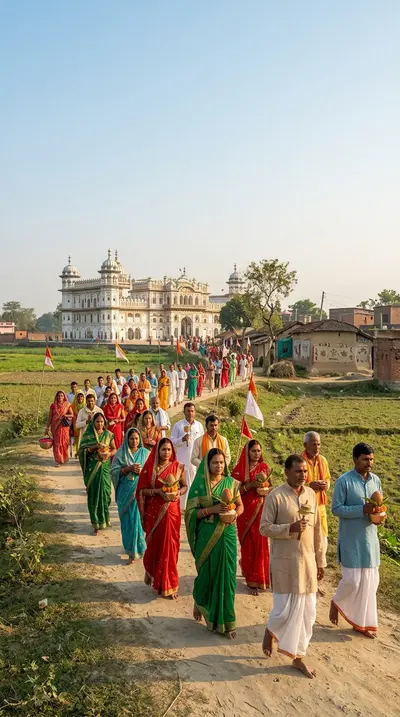
Every year, in the last weeks of winter, thousands of people leave their shoes at home and start walking in a great circle around the holy land of Mithila, and this is the Janakpur Parikrama, also called the Mithila Madhyamiki Parikrama. It begins at the Mithila Bihari temple in Kachuri, passes through fifteen resting places in Nepal's Madhesh Province and across the border in Bihar, and ends in Janakpurdham, the birthplace of Goddess Sita, just before the colours of Holi fill the streets. For fifteen days pilgrims sleep in courtyards, eat simple food, sing the names of Ram and Sita, and walk barefoot for about one hundred and twenty kilometres. Many travellers who come to see the festivals of Nepal never hear of it, yet it is one of the largest and warmest gatherings in the country. Whether you wish to join the full walk, follow part of it, or add it to a longer Nepal pilgrimage tour arranged by Enticing Himalayas, this guide explains the meaning, the route and every single day from start to end.
The word parikrama means to walk around a holy place, keeping it on your right side, as a sign of respect. In Mithila the parikrama is not around a single temple or a single mountain but around a whole sacred region, with the city of Janakpur at its heart. Pilgrims walk a wide circle from one holy halt to the next, and then they return to the centre and walk a smaller circle inside the city itself.
People also call it the Panchakoshi Parikrama or the Madhya Mithila Parikrama, and some proudly call it the Mahakumbha of Mithila. Like the famous Kumbh in India, it brings saints, ordinary families, elders and children together in one long moving crowd. Yet it feels different from a big city fair, because the walking pace is slow, the villages along the way open their doors, and each night the whole camp settles down at a new place.
If you have watched other Nepali processions such as the Bajrayogini Jatra of Sankhu or Rato Machindranath Jatra, you will notice one big difference. Those festivals happen in one town over a few days, while this one is a true journey that moves across fifteen villages and two countries.
To understand the parikrama you must know the story of Mithila. In the old epics, Mithila was the kingdom of the wise King Janak, and it was in a field near today's Janakpur that he is said to have found a baby girl in a furrow of the earth. He named her Janaki, and the world knows her as Sita. When she grew up, she married Lord Ram after he lifted and broke the great bow of Shiva at the king's court.
For Hindus, this marriage is one of the most loved stories of all. It is the picture of a perfect couple, and every place on the route of the parikrama is linked in some way with the young Sita and Ram. Local priests say that walking the circle is like walking through the pages of the Ramayana, one chapter at a time.
The land itself is a flat, green and fertile plain of the Terai, dotted with ponds, mango groves and mustard fields. Here the language is Maithili, the songs are soft and the paintings on the village walls are full of fish, peacocks and lotus flowers. A traveller who joins the walk will find that Mithila culture is as rich as its mountains-neighbour in the north, only quieter and closer to the earth.
The oldest text of the tradition says that the whole circle could be finished in only five days. But the wise pandits of Mithila slowly stretched it to fifteen, so that old, weak and disabled pilgrims could also take part without hurry. That kindness is still the spirit of the walk today, and you will see grandmothers, monks and young students walking side by side.
Over time the start of the journey moved. The palanquin, called a dola, of Lord Ram now leaves each year from the Mithila Bihari temple in Kachuri, in Dhanusha district, while the palanquin of Sita comes from a temple inside Janakpur. Historians also give credit to a head priest of the great Janaki temple, named Surkishor Das, who helped to expand the size of the pilgrimage in the past.
Because it is a living tradition, small parts of the route can change over the years, and different writers count the stops a little differently. Still, the core path and the fifteen-day rhythm have stayed the same for generations, and that is why the pilgrimage feels so deeply rooted.
The full circle is about one hundred and twenty kilometres long, with roughly ninety kilometres inside Nepal and thirty kilometres in the Madhubani area of Bihar in India. Some reports give a slightly bigger number, near one hundred and thirty kilometres, because they count the walking inside the towns. Whatever the exact figure, it is a serious walk, but it is spread over two weeks, so each day is only a few hours of steady movement.
There are fifteen halts, each set about five kos apart, which is an old measure of distance close to a day's gentle walk. At each halt the palanquins are placed in a chosen spot, prayers are offered, and the pilgrims rest for the night. Everything is fixed by tradition, so the resting places are the same each year, and locals prepare for the guests long before they arrive.
The order of the main halts is Hanuman Gadhi, Kalyaneshwar, Phulhar, Mathihani, Jaleshwar, Madai, Dhruvakunda, Kanchanban, Parvata, Dhanushadham, Sattosar, Aurahi, Karuna, Bisaul and back to Janakpur. If you love walking pilgrimages of Nepal, you will appreciate that this route is a perfect circle and ends exactly where the heart of the story lies.
The pilgrimage follows the Hindu lunar calendar. It begins on the new moon day, called Amavasya, of the month of Falgun, and ends near the full moon, when the festival of Holi is celebrated in Janakpur. In 2025 the walk went from late February to mid March, and in 2026 the palanquins set out in the middle of February and finished around the start of March.
Since the dates shift each year, you should always check the coming calendar before booking a trip. A quick look at the Nepal festival calendar can help, and it is wise to confirm the first day and the last day with local temple committees. Travelling in this season is lovely, because the days are dry, the mornings are cool, and the fields are full of yellow mustard flowers.
It is a good idea to reach Janakpur a day or two before the start so that you can see the preparations. The town fills with saints, tents and food stalls, and the whole area gets a festive smell of incense and fresh sweets.
Janakpur lies in the flat plains of southern Nepal, in Madhesh Province. From Kathmandu you can take a short flight of around forty minutes, or a long road trip of several hours through the hills and down to the plains. Buses and private cars both use this route, and a private car is the most comfortable choice for a group.
There is also a road link from Birgunj and from the East-West Highway, so travellers coming from other parts of the country can join the walk without going back through the capital. If you plan to combine the pilgrimage with other spots, Chitwan and Lumbini are also reachable by road, and travellers often plan a long circuit that includes several of them.
On the way, you will feel the land change. The cool green hills slowly turn into wide farms, and the air becomes warmer and heavier. A local guide from Enticing Himalayas can meet you at the airport or bus station, and help you find a clean guest house near the Janaki Temple so that your first night is calm.
Walking barefoot for two weeks is not a small thing, and the pilgrims prepare for it in advance. Start walking daily for at least a month before the trip, and try to do part of it without shoes on soft ground so that your feet begin to toughen. Do not start with hard roads, because that can crack the skin and cause pain.
Many people carry a very light bag with two sets of clothes, a shawl, a small blanket, a water bottle, sunscreen, a hat and a tiny first-aid kit. Foot cream and clean cotton socks for the nights are also wise. Some travellers who are not strict about the barefoot rule carry thin sandals in their bag for emergencies, and no one will judge a visitor who needs comfort, but the spirit of the walk is best felt when you go without shoes.
It is also a good idea to visit a doctor before you go if you have any health worries. A Nepal walking tour for older travellers can shorten the daily distance and add a support car, which is a gentle way to enjoy the atmosphere without doing the whole path.
The first day begins at the Mithila Bihari temple in Kachuri, on the day of the new moon. At dawn the priests prepare the golden palanquin of Lord Ram and perform the morning worship. Then a long, decorated procession of drums, hymns and flags sets out toward Janakpur, while people from nearby villages come out to touch the palanquin and offer flowers.
The pilgrims join the procession slowly. Some sit on small carts, but most walk with their bare feet on the dusty road. Sadhus with orange cloth, families with children on their shoulders and old women leaning on sticks all move at one steady speed, and the chant of Ram and Sita is repeated again and again. It is a moving start to the long journey.
By evening the procession reaches Hanuman Gadhi in Janakpur, where the palanquins of many temples, including the Janaki temple and the Ram temple, gather together. The night is spent here, with singing and storytelling, and a spirit of shared devotion fills the air. This is also the best place to receive the first blessing before the great circle begins.
On the second morning the whole gathering leaves Janakpur and walks south toward the border, heading for Kalyaneshwar, a Shiva temple that is said to have been founded by King Janak himself. It stands on the Indian side, so the pilgrims cross the frontier on foot, which is a special moment for many of them.
At Kalyaneshwar, pilgrims draw a sacred line that marks the true beginning of the parikrama. This line is a symbol that the circle has been opened, and it will only be erased on the final day, when the walk is complete. Standing in front of the line, many people close their eyes and take a silent vow to walk the full path with a clean heart.
Evening prayers here are simple and strong. The Shiva temple is decorated with flowers, and priests explain why King Janak, a wise ruler and a devotee of Shiva, built it. For visitors who love old stories, this day is a good chance to hear the first of many local legends of the region.
The third stop is Phulhar, where the pilgrims reach a temple called Girija Sthan. The name Phulhar means a garden of flowers, and local tradition says this was the garden where young Ram and Sita first saw each other. It is one of the softest and most romantic places on the route.
Girija is another name for the goddess Parvati, and here she is said to have been worshipped by Sita before her wedding. Many women stop here to pray for a happy marriage and a good family. They bring flowers and red powder, and sing folk songs that describe the meeting in the garden with great charm.
The day is usually easy, and the camp is set among mango trees and small ponds. Pilgrims wash their feet, drink tea and rest in the shade while the bands play soft music. If you walk with a group, this is a good time to sit in a circle and listen to the Maithili songs, which are among the sweetest of the whole pilgrimage.
The fourth day brings the pilgrims back into Nepal, to a village called Mathihani. Tradition says that soil for the wedding ceremony of Sita was collected here, and so the place carries a sense of good beginnings. Its name comes from the word for soil, which in the local language is mati.
Devotees bow at the shrine and take a pinch of the soil as a blessing. The village prepares food for thousands, and the streets are full of volunteers who pour water on tired feet, hand out sweets and shout the names of the gods. You may see women carrying brass pots on their heads and men pushing carts of fresh vegetables for the community kitchen.
By this fourth day, the group has fallen into a natural rhythm. People know their neighbours, share their blankets and remind each other to drink water. It is a good moment to notice how strong the spirit of service is along the path, since none of the villagers ask for any payment for their help.
On the fifth day the path leads to Jaleshwar, one of the most famous Shiva temples of the southern plains. The temple is old and large, with a big pond beside it and a busy bazaar around. Many people take a bath in the pond before entering the temple, and the whole town looks like a bright fair.
Jaleshwar is important for both Nepalis and Indians, and its market is full of colourful bangles, brass lamps, clay toys and sweets. Pilgrims often buy a small gift for their family, and travellers who want souvenirs will enjoy walking through the lanes. Because the town is bigger, the camp is noisier here, and the evening is full of hymns and drums.
It is worth spending an extra hour at the temple to watch the rituals. Priests pour water and milk on the Shiva lingam, ring bells and light lamps. If you wish to know more about Shiva worship in Nepal, you may also enjoy reading about the Maha Shivaratri festival, which is celebrated with great devotion at Pashupatinath and other temples.
The sixth day takes the pilgrims to Madai, a village that marks nearly the middle of the walk. By now most people have found a steady walking style, and the sore feet of the first days have hardened a little. This is a good time to notice how deep the friendships have grown.
The camp at Madai is open and spacious, with wide fields where families spread their mats. Local volunteers light fires for cooking, and the smell of fresh rice and lentil curry rises into the evening air. Travellers often say that this is the night when the whole pilgrimage really starts to feel like one large family.
If you are joining only part of the route, this is an excellent place to arrive. A good guided Janakpur tour can bring you by car in the late afternoon, let you walk a short stretch with the pilgrims, and take you back to a comfortable guest house for the night.
On the seventh day the procession moves to Dhruvakunda, a place with a holy pond named after the young devotee Dhruva, who is remembered in old stories for his strong faith. Pilgrims bathe or wash their hands and faces in the water, and they say a short prayer for steady faith.
The walk of the day is calm. The road passes through mustard fields, small canals and quiet villages, and children run beside the pilgrims calling out greetings. Some families set up small tables with water, jaggery and fruit, and they serve each walker with a smile. That kind of open-hearted welcome is the real soul of the pilgrimage.
In the evening the camp is peaceful. There are fewer bazaar stalls here than at bigger towns, and people rest early. It is a good night to write in a journal, stretch your legs and enjoy the stars, which are bright over the dark fields.
The eighth day brings the pilgrims to Kanchanban, whose name means the golden forest. It is a peaceful grove where old trees give deep shade. Local people connect this place with the early days of Sita's life and the beauty of the Mithila countryside, though stories vary from village to village, so it is best to listen to the local priests on the spot.
The atmosphere of Kanchanban is soft and quiet. After the busy towns, the camp feels like a forest retreat, and many pilgrims take the chance to sit and chant in small circles. Some walk barefoot around the trees in a small parikrama of their own, and this simple act feels very moving.
If you love nature, this stop is a favourite. Birds sing in the branches, and the cool shade is a relief in the warm afternoon. Visitors who wish to add a quiet nature stay after the walk can look at the list of Terai nature tours in Nepal, which include safe wildlife trips in Chitwan National Park and other green areas.
On the ninth day the pilgrims reach Parvata, where the temple of Kshireshwarnath, another Shiva shrine, is found. The name Parvata means hill, though the land is mostly flat, and the small rise of ground on which the temple stands gives the place its name.
The temple is simple but much loved, and pilgrims offer milk, which is why the deity is called the lord of milk. A long line forms at the door early in the morning, and families wait patiently with small brass pots. The priests are kind and often bless the walkers by touching their heads with a garland of marigold flowers.
This is also a good day to wash your clothes and rest your feet. Many walkers apply oil and gently massage their heels, and some cover cracked skin with clean cotton. A few hours of rest here can make the next days feel much lighter, and you can start fresh for the most sacred stop of the journey, which comes next.
The tenth day is one of the most important. The pilgrims arrive at Dhanushadham, the place where, according to tradition, a piece of Shiva's great bow fell to the earth after Ram broke it at the marriage contest. A large, old fossil-like stone at the site is worshipped as a part of that sacred bow.
The temple stands in a peaceful compound, and the whole place is thick with incense. Devotees walk around the stone, touch it gently and pray. There is a special feeling here, because this is the spot that connects the walk to the central drama of the Ramayana. Many people say that this is the spiritual heart of the whole journey.
Dhanushadham lies in the Dhanusha district, which is even named after the bow. If you want to visit it separately from the parikrama, it can be reached by a short drive from Janakpur, and it is often included in a Janakpur day tour. Even outside the season, the temple is a peaceful place for reflection.
The eleventh stop is Sattosar, which means the seven ponds. A group of small holy water bodies gives the place its name, and pilgrims are happy to bathe and drink in them. After the strong emotions of Dhanushadham, this day feels like a soft rest.
The people of the area are very hospitable. Volunteers offer rice pudding, fried snacks and tea to pilgrims, and there is often a small cultural programme in the evening. Women from the village sing devotional songs in Maithili, and the men play the drums and cymbals. The whole scene is one of gentle, shared joy.
On this night many pilgrims start to feel a mix of happiness and sadness, because the journey is close to its end. They talk about home, about the friends they have made and about the promises they made at Kalyaneshwar. It is a good time to be quiet and grateful.
On the twelfth day the procession reaches Aurahi, where an old Shiva temple stands beside a pond. The village is known for its friendly people and for the neat rows of small shops that appear during the pilgrimage. Pilgrims use the chance to buy fruit, sweets and small souvenirs.
The road to Aurahi crosses some of the greenest farmland of the whole route. Wheat and mustard grow in wide fields, and small brick homes stand under banana and mango trees. In the early morning the air is cool, and mist hangs over the ponds. Photographers love this light, and many pilgrims stop to take a memory photo.
The camp at Aurahi is a good place to meet other walkers. Many are from distant districts and even from India, and they enjoy sharing stories of past pilgrimages. If you like this kind of journey, look at other Nepal cultural walks and pilgrimages that mix devotion, nature and local hospitality.
The thirteenth stop is Karuna, a village whose name means compassion. The name feels right, because by this time the pilgrims have learned to help each other. Strong walkers carry the bags of the weak, and young men give up their seats on carts to the elders.
Karuna's camp is often quiet and pleasant. The pilgrims prepare for the last two days by washing their cloth, repairing their bags and talking with their neighbours. Some priests give short talks about the meaning of parikrama, reminding everyone that the real goal is not the distance but the change inside the heart.
It is a good night for silence. Sit near the fire, drink hot tea and look at the moon, which is nearly full at this time of the month. The light spreads over the fields, and the songs of the pilgrims float gently through the night air.
On the fourteenth day the pilgrims walk through Bisaul and return to Kalyaneshwar, close to the place where the sacred line was drawn. This is the point where the great circle closes. Many people feel a mix of tiredness, pride and sadness as they stand again before the Shiva temple.
The priests hold a short ceremony to give thanks, and pilgrims offer flowers and water. They say a quiet prayer for their family, for their village and for peace in the world. Even the strongest walkers often have tears in their eyes, because a two-week dream is almost finished.
The last night before Janakpur is joyful. Groups sing loudly, children run through the camp and old friends promise to meet next year. Sleeping under the open sky, with blankets pulled up to the chin, you may feel the long journey settle quietly into your heart.
On the last morning, before entering Janakpur, the pilgrims erase the sacred line they had drawn at the start. This simple act is a sign that the journey is complete. Then, with joy in their steps, they enter the city and walk to the Janaki temple, where drums, conch shells and cheers welcome them home.
The final ritual is the Antargriha Parikrama, an inner circle of about eight kilometres around the holy city. Pilgrims visit the ponds of Ganga Sagar and Dhanush Sagar, take a holy bath, and bow at many temples. It is the spiritual peak of the whole event, and it ends with a deep feeling of peace and thanks.
According to tradition, after the parikrama is finished, the city celebrates Holi with great enthusiasm. The streets fill with coloured powder, music and laughter, and the weary pilgrims join in with bright faces. It is a wonderful contrast, from silent prayer to a joyful festival, and it is the perfect way to close the fifteen days.
For readers who like a short summary, here is the usual order of the halts. Some sources count a little differently, so always confirm the plan with the local committee before you travel.
Food on the parikrama is simple, pure and shared. Since the whole route is a holy path, the local administration usually bans the sale of meat and alcohol in the area until the pilgrimage ends, so meals are vegetarian. Expect rice, lentils, seasonal vegetables, flat bread, curd, jaggery and lots of sweets.
Villages along the way set up free kitchens and water stations for the pilgrims. You may be offered tea, puffed rice, boiled potatoes or fruit at almost any turn. It is polite to accept with both hands and to say thank you. If you have any food problem, carry your own dry snacks and mention it kindly to your hosts, who will be glad to help with a gentle heart.
Water needs care. Bring a bottle with a filter or purification tablets, and drink often, because the plains can be warm at midday. A traveller who plans a food and culture trip in Nepal will also find that Mithila cuisine, with its sweet dishes and light spices, is a delightful surprise.
Since the route enters Bihar in India for a few halts, you should think about border rules and papers in advance. Nepali and Indian pilgrims cross without much trouble because of long-standing open border traditions, but foreign visitors should carry their passports and check what is allowed. Rules can change, so ask the local authorities or your tour operator before you commit to the full circle.
Other rules are simple. Dress modestly, keep your voice soft near shrines, and never step over the palanquins or touch the offerings. Do not litter, and do not bring alcohol or meat into the pilgrimage area. Photography is usually welcome, but ask before you take a close portrait, especially of women and old saints, and put your camera away during the main prayers.
The best attitude is humility. You are a guest on a very old sacred road, and the simple habit of bowing and smiling will earn you the warmth of everyone you meet. A good guide from Enticing Himalayas can help you follow these customs without stress.
Two weeks of walking under the sun can be hard, so look after your body. Rest when you feel tired, apply oil to your heels every night, and check your feet for cuts or thorns. Keep any medicine you need in a small waterproof bag, and tell a friend or guide about it. If a wound becomes red or swollen, ask for help from the volunteers, who often include doctors and nurses.
Sun and dust are the other troubles. Wear a light cotton scarf over your head and mouth, use sunglasses and drink enough water. Nights in February can be cool, so carry a shawl or light blanket. The crowd is friendly but big, so keep your money and phone in a safe inner pocket and hold your children's hands in busy areas, staying calm and alert.
If you cannot walk the whole way, do not worry. Many people join for a day or two and take a car for the rest. A small custom Janakpur pilgrimage plan can be shaped around your health and time, so you still enjoy the sacred atmosphere without pushing your limits.
Once the walk is over, take time to explore Janakpur itself. The greatest sight is the Janaki temple, a large white palace-like building in a mix of Mughal and Rajput style, built in the early twentieth century. At dusk, its courtyard fills with singing devotees, and the whole white building glows in the lights.
Nearby is the Ram temple, and the vivah mandap, a hall where the wedding of Ram and Sita is believed to have taken place. The many ponds of the city, including Ganga Sagar, Dhanush Sagar and Ratna Sagar, have stone steps where families bathe and pray each morning. Walking around them at sunrise is a calm and beautiful experience.
You can also visit the workshops where women make Mithila paintings, full of bright fish, birds and flowers. Buying a small painting is a good way to support local artists and take home a piece of Mithila. Travellers who like art can add a stop at the Janakpur art centre or ask about Mithila art tours.
Janakpur is one of the liveliest festival towns in Nepal. The most beloved is Vivah Panchami, held in the winter month of Margashirsha, when the marriage of Ram and Sita is re-enacted with a grand wedding procession. Pilgrims from many countries come for this Vivah Panchami festival, and the whole city is decorated like a bride.
In spring, Ram Navami celebrates the birth of Lord Ram, and the temples are filled with songs and lamps. Later in the year, Chhath Puja brings crowds to the ponds and rivers to worship the sun, and it is one of the most beautiful sights in all of the Terai. In autumn, Dashain and Tihar are celebrated with equal joy across the region.
A traveller who plans a whole year around these events will see how the seasons shape the faith of Mithila. If you cannot come for the parikrama, you may enjoy one of these Nepal festivals instead, or plan a special Nepal festival tour that catches two or three during a single trip.
Because the parikrama is in the plains, it fits well with trips to the hills and mountains. After the walk, many travellers go back to Kathmandu to visit Pashupatinath, Swayambhunath and Boudhanath, which give a fuller picture of Hindu and Buddhist devotion. A day in Bhaktapur or Patan adds old palaces and wood carving to the list.
If you want a more relaxed second week, Pokhara offers lakes and mountain views, while Annapurna region treks and the Langtang trek provide real Himalayan walking. A holy journey to the temple of Muktinath joins the Hindu and Buddhist worlds high in the mountains, and it makes a natural companion to the low-land pilgrimage.
For nature lovers, a stay in Chitwan or Bardia offers wildlife, while Lumbini, the birthplace of Lord Buddha, adds a very different spiritual note. Together with a well planned Nepal cultural and pilgrimage tour, the parikrama can become the first chapter of a long and deeply rewarding trip.
Janakpur has a good range of guest houses and hotels, from simple rooms near the temple to more modern places on the main road. During the parikrama the town gets very crowded, so book your room well in advance. Rooms near the Janaki Temple are the most in demand, and they can be booked out several weeks before.
If you walk with the pilgrims, most nights you will sleep in the open camps, in tents or in village halls. That is part of the experience, and the hosts usually offer mats and blankets. Carry a light sleeping bag for cold nights, and use earplugs, because the camps can be loud with singing until late in the evening, and the early morning bells start before dawn.
A tour operator can arrange a comfortable base in the city and drive you to the daily halts so that you still see the walk but return to a warm bed. That is a wise choice for older visitors or families, and the flexible plan keeps the trip light and joyful.
Start each day early, because the roads are cooler and calmer in the morning. Keep a small cloth bag with your papers, money and phone, and wear it under your shawl. Carry small notes for offerings and tea, and bring a torch for the camps at night. Learn a few Maithili or Hindi phrases, such as namaste, dhanyabad and jay Siya Ram, since a friendly greeting opens many doors.
Charge your phone when you can, and carry a small power bank, since electricity in the camps may be limited. Keep copies of your passport and your booking, and share your plan with a friend at home. If you get lost, ask any volunteer, who will gladly help. The community is used to helping strangers on this road.
Finally, keep your expectations soft. The parikrama is not a race or a tour with a fixed programme, and things may happen slowly. Delays, crowds and simple food are all part of the journey. Accept them with a smile, and you will discover that the trip becomes a lesson in patience and gratitude.
The Janakpur Parikrama is not the most famous event in Nepal, and it does not have the fame of the great mountains. But it may be one of the most human. In fifteen days you walk with strangers who become friends, sleep in village courtyards, eat food given without payment, and feel the old stories rise from the ground beneath your feet. It is a rare chance to see faith at walking speed.
For many pilgrims, the value of the walk is not the number of kilometres but the gentle change inside. Tired feet teach humility, shared meals teach kindness, and the daily chant of Ram and Sita teaches patience. Even a visitor who is not religious can feel the deep peace of this shared effort, and the joy of Holi at the end feels truly earned.
If you are ready to follow this road, explore the holy places of Nepal, choose your dates with care, and let Enticing Himalayas help you plan a journey of feet, faith and friendship. Bring a light bag, a soft heart and an open mind, and let the ancient land of Mithila welcome you with its warm hospitality.
Key experiences and features
Janakpur Parikrama
Mahakumbha of Mithila
Sita
Mithila culture
palanquins
spirit of the walk
Shared devotion
spirit of service
Recommended packing list
Janakpur, Dhanusha, Madhesh Province, Nepal
Got questions about this event?
Janakpur Parikrama is a traditional religious pilgrimage in which devotees walk around sacred sites of Mithila associated with Ram, Sita, and Janakpur.
The traditional Janakpur Parikrama is observed over 15 days, with pilgrims following the established route and stopping at important religious sites.
Yes. Traditionally, devotees undertake the pilgrimage barefoot as an expression of devotion and spiritual discipline.
The pilgrimage is traditionally associated with Janaki Mandir in Janakpur, from where devotees begin the sacred circumambulation route.
Visitors should carry water, modest clothing, sun protection, personal medicines, essential toiletries, and a small backpack for daily necessities.
Nov 22 – Jun 12, 2026
20 days
Quick Info
More festival experiences
Nov 8 – Nov 8, 2026Kathamandu
 Aug 17 – Sep 16, 2027
Godavari Kunda
 Jan 15 – Jan 16, 2027
Swayambhu Bhuikhhel