 Nov 8 – Nov 8, 2026
Kathamandu
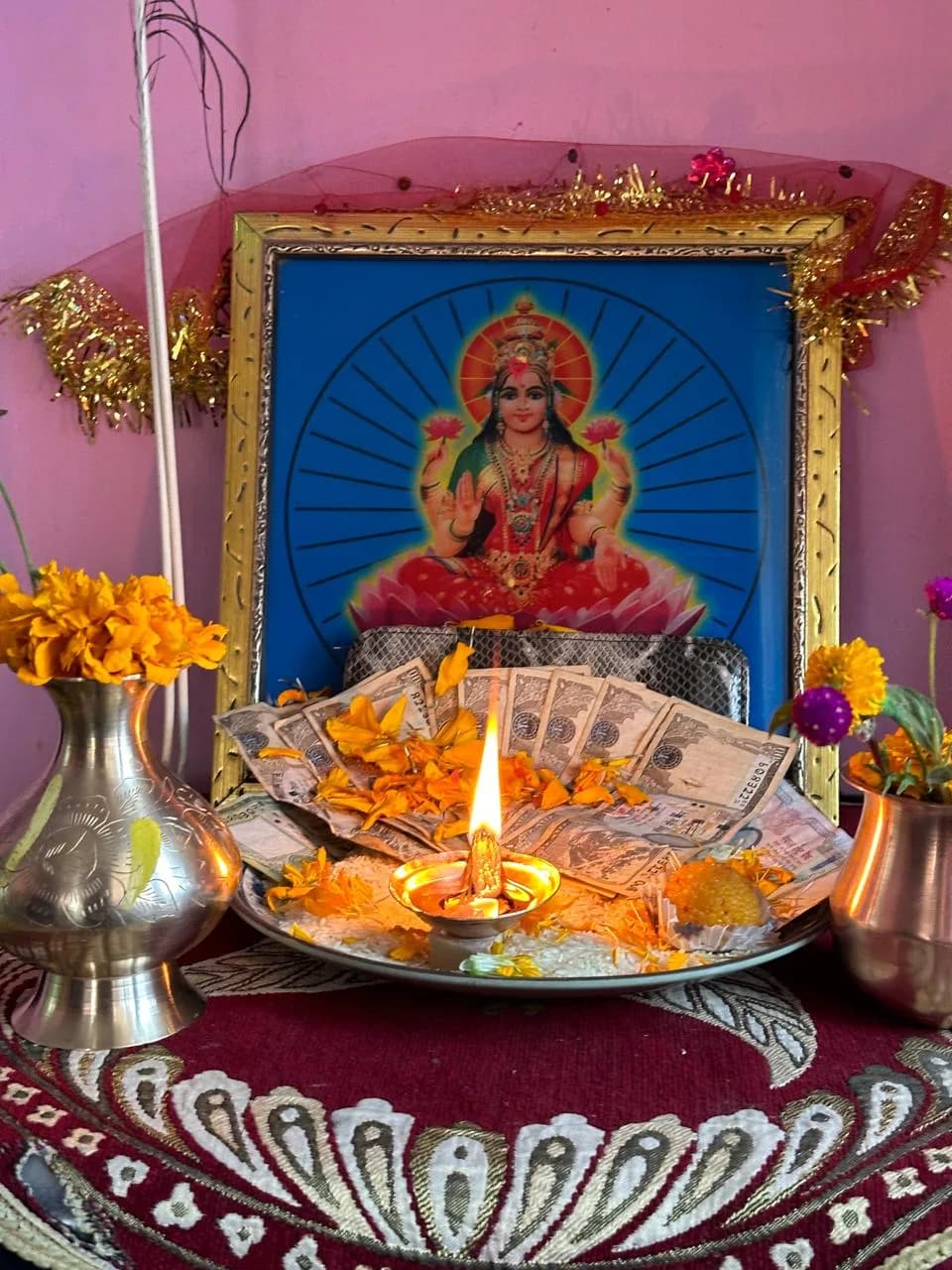
Laxmi Puja 2026 in Nepal: Tihar Festival Guide
Festival
1 day
Festival
Free
Kathamandu1 day
Event Details
Loading...
Every autumn, when the monsoon clouds begin to clear over the Kathmandu Valley, the old royal square turns into a stage for one of the most mysterious festivals on earth, and Enticing Himalayas is glad to walk you through the whole Kumari Jatra story. The Kumari Jatra is the chariot festival of the Living Goddess, and it forms the heart of the larger Indra Jatra festival that fills Kathmandu Durbar Square with masked dancers, tall wooden chariots and thousands of devotees. In 2026 the celebration runs from Wednesday, 23 September to Wednesday, 30 September, with the biggest crowd gathering on Friday, 25 September for the first grand chariot pull. In this guide we explain the meaning of the festival, the full day-by-day plan, where to stand for the best view, and how a well-planned Kathmandu tour can help you enjoy it safely. Read it like a chat with a friendly local who wants you to feel at home in the crowd.
The first question every visitor asks is simple: when does Kumari Jatra start and end in 2026? The wider Indra Jatra festival is an eight-day event, and in 2026 it begins on 23 September with the raising of a long wooden pole called the Yosin, and it closes on 30 September when the pole comes down. Inside this eight-day frame, the chariot festival of Kumari runs for three main days, and the very first pull, on 25 September, is a declared public holiday across the valley. Because the calendar is based on the lunar Nepali calendar, always confirm the final dates on the Nepal festival calendar before booking flights or a hotel.
To keep the shape of the festival clear, here is a short outline of the main stages, and after it we look at each part in a relaxed, detailed way.
Before the chariots roll, it helps to understand who sits inside them. The Kumari is a young girl chosen from the Newar Shakya community and worshipped as a living manifestation of the goddess Taleju. She lives in a beautifully carved building called Kumari Ghar, right beside Kathmandu Durbar Square, and she rarely steps outside except for a handful of major religious occasions. Her life follows strict rituals, and her feet are not supposed to touch the ordinary ground, which is one reason she travels through the streets in a decorated chariot rather than on foot.
Selecting a Kumari is a serious process that involves astrology, physical signs and careful observation by senior priests, and the chosen girl serves until she reaches puberty, after which a new Kumari is selected. For visitors, seeing her in public is a rare privilege, and Indra Jatra is considered the single most important occasion for her appearance. If you enjoy learning about unique Himalayan traditions, the Nepal events and festivals page lists many other sacred customs that shape daily life in the valley, from mask dances to seasonal offerings.
The story behind the celebration begins with Indra, the Vedic god of rain and heaven. According to legend, Indra descended to earth in human form to pick a rare flower called Parijat for his mother, but he was caught by farmers who mistook him for a thief and tied him up as a criminal. When his mother could not find him, she came down from heaven searching for her son, and the people realised they had captured a god rather than a common trespasser. Ashamed and moved, they released him with honour, and Indra blessed the valley with good rain and a bright winter mist in return.
To remember this story, the people of Kathmandu began celebrating Indra Jatra, and over time the chariot festival of the Living Goddess Kumari became joined to the same week. Historical accounts describe how a king in the mid-eighteenth century offered a chariot to the Kumari and made her procession a central part of the celebration, and from then on Kumari Jatra became the most awaited part of the whole eight-day festival. If you like these origin stories, you may also enjoy the tales behind the Vivah Panchami festival and the Holi festival, which are told on the events page with the same warmth.
The festival opens with a quiet but powerful ritual at Hanuman Dhoka, the old royal palace beside Durbar Square. A tall wooden pole, cut from a sacred tree in the forest and carried to the city with special ceremony, is raised upright in front of the palace. This pole is called the Yosin, and its raising marks the official beginning of Indra Jatra. Crowds gather to watch priests perform prayers, and the pole itself is treated as a sacred link between the earth and the heavens, much like similar pole rituals seen during other Himalayan celebrations such as the Holi festival in spring.
Once the pole stands tall, the whole city seems to shift into festival mode. Shops around Basantapur and Kathmandu Durbar Square display extra lights, mask displays appear at street corners, and locals begin cleaning courtyards for the coming week. If your trip allows, arriving a day or two before the pole-raising lets you feel the city's excitement build slowly, rather than jumping straight into the biggest crowd of the year. It is also a wonderful time to explore nearby heritage sites such as Patan Durbar Square and Bhaktapur before the main rush begins.
On the same opening day, another dramatic sight appears at Makhan Tole, close to the old palace. A huge mask of Swet Bhairav, the fierce white form of Lord Shiva, is unveiled from behind a wooden screen and displayed for only eight days a year. During the festival, rice beer is made to flow from the mouth of this giant mask, and eager devotees push forward to catch a sip, believing it brings blessings and protection. The mask itself is enormous, and its wide eyes and open jaw make it one of the most photographed sights of the whole celebration.
Nearby, other Bhairav shrines and masks are displayed at various points around the old city, each attracting its own small crowd of worshippers. Walking from mask to mask is a good way to see the different faces of this fierce protector deity, and it also gives visitors a natural route through the old lanes of Kathmandu's heritage core. If you enjoy searching out such hidden details, a guided walk booked through the Kathmandu Valley tour can help you find masks and shrines you might otherwise miss in the crowd.
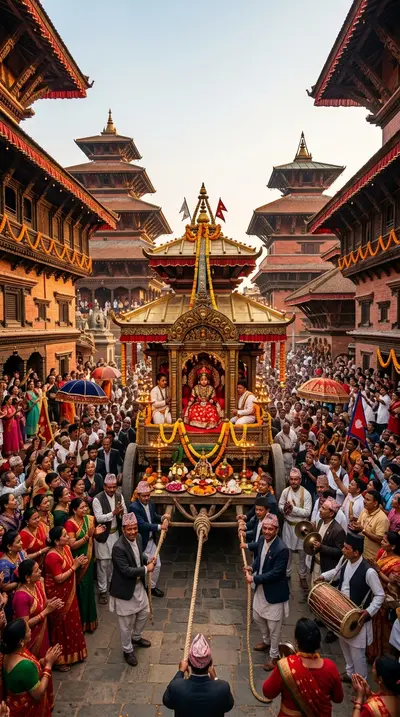
The most anticipated day of the whole festival is the first chariot pull, known as Kwaneya, which took place on Friday, 25 September in 2026 and is marked as a public holiday across the valley. In the afternoon, three chariots are prepared at Durbar Square: a small chariot for Ganesh, pulled mostly by children, a chariot for Bhairav, and the tallest of all, the three-storey wooden chariot of Kumari herself, built freshly every year by the skilled Manandhar community. The Kumari's chariot rises nine to ten metres into the air, wrapped in red cloth and gilded carvings, with her seat high enough that devotees at street level can look up and see her clearly.
Before the procession begins, a formal military parade is held near Gaddhi Baithak, and officials and guests gather to watch. Then the chariots move out from Basantapur through the downtown route, called Kwaneya, pulled by hundreds of devotees using thick ropes. In the evening, once the Kumari's chariot returns to Basantapur, she gives a ceremonial tika to the head of state of Nepal, a tradition that stretches back to the days of the monarchy and still continues today with the country's leader. Watching from a good spot near Basantapur Durbar Square gives you a clear view of this remarkable evening ceremony.
On the second chariot day, called Thaneya, the same three chariots are pulled again, but this time through the northern part of the old city. The route passes through busy market lanes such as Pyaphal, Yatkha, Nyata and Tengal, giving a different crowd of neighbourhoods their own chance to welcome the Living Goddess. Because these streets are narrower than the main square, the atmosphere feels closer and more personal, and locals often say this is their favourite day to watch, since the chariot passes almost at arm's length through the old bazaar streets.
Alongside the chariot procession, the palanquin of the goddess Annapurna, the patron deity of grain and abundance, is also carried through the same neighbourhood on this day, adding another layer of colour and devotion to the celebration. If you are staying near Asan Bazaar, you are perfectly placed to see both processions without a long walk. Vendors sell snacks, tea and small souvenirs along the route, and it is a lovely place to feel everyday Kathmandu life blending with sacred ritual.
Between the big chariot pulls, the festival does not pause. Every evening, groups of dancers wearing elaborate wooden masks perform the Lakhey and other traditional dances, retelling old stories of demons, protectors and playful spirits. These dances move through different neighbourhoods, and children often follow behind, laughing and sometimes running from the masked figures in friendly mock fear. Locals treat these performances as both entertainment and spiritual protection for their homes.
On one of the early nights, families also observe a quiet ritual called Mata Biye, when butter lamps are lit in memory of relatives who died during the past year. This is a gentle, reflective moment tucked inside a loud and colourful week, and it shows how the festival holds both joy and remembrance side by side. If you would like to see how other communities honour their dead through festival ritual, the Gai Jatra festival, which is also unique to the Kathmandu Valley, follows a similar spirit of mixed celebration and memory.
Later in the week comes the third and final chariot pull, called Nanicha, which takes a somewhat shorter route through the midtown lanes, including Kilagal, Bhedasing and Indra Chowk, before returning again to Basantapur. Since 2012, the rope of the Kumari's chariot on this last day has been pulled by an all-women's team, a change that gave new visibility and pride to women in the ritual and made the day especially meaningful for many local families. Watching a chariot as tall as a small building move through narrow lanes, powered entirely by human effort, is a striking reminder of shared devotion in the old city.
After this last procession returns to Basantapur, another quieter but symbolic event follows: the procession of the goddess Dagin, who re-enacts the search of Indra's mother for her lost son through the town. This story closes the circle of the Indra legend that started the whole festival, and it is a peaceful, less crowded moment to witness if you want a break from the biggest crowds. A short stop nearby at Kathmandu Durbar Square afterward lets you compare the quiet aftermath with the excitement of the earlier chariot days.
The eight-day celebration comes to an end with the lowering of the same Yosin pole that opened the festival. Priests perform closing prayers, and the pole is carefully taken down and stored until the next year. This is usually a smaller, community-focused event compared with the chariot days, and it marks the moment when the city slowly returns to its normal rhythm. If you have stayed for the whole week, this closing ritual gives a nice sense of completion, tying the end of the festival back to its opening scene at Hanuman Dhoka.
In the days that follow, the streets are cleaned, decorations are taken down, and shopkeepers return to their usual routines. For travellers, this is a good time to explore the valley calmly, visiting places such as Swayambhunath and Boudhanath Stupa without the festival crowds, or planning a short trip out to Bhaktapur and Nagarkot for mountain views. Many visitors use these final days to reflect on the festival and prepare for the next stage of their Nepal journey.
Choosing the right spot can make a huge difference to your experience. Kathmandu Durbar Square is the natural centre of the action, offering the best views of the main performances, the chariot departures and the evening tika ceremony. Hanuman Dhoka is ideal for the pole-raising ceremony at the start of the festival. For the chariot processions themselves, Asan Bazaar and Indra Chowk give you a closer, more intimate view as the towering chariots squeeze through narrow lanes, and the energy there feels wonderfully local and unfiltered.
Because the crowds can be very large, especially on the first chariot day, arrive at least an hour early to find a good standing spot, and consider paid seating areas or rooftop cafés around the square if you prefer a calmer view from above. Kathmandu Durbar Square remains open to visitors throughout the festival, which makes it convenient to combine sightseeing with festival watching. A local guide booked through a Kathmandu Valley tour can help you find the safest and most rewarding vantage points for each day of the celebration.
Kumari Jatra is a wonderful subject for photography, but it comes with responsibilities. Photography restrictions may apply near the Living Goddess herself and inside certain palace areas, so always look for signs or ask a guide before raising your camera close to her chariot. Respect the personal space of dancers, priests and devotees, and avoid using flash directly at performers' faces during the masked dances. Drones are generally discouraged in such dense, sacred crowds, both for safety and for respect of tradition.
Remember that Indra Jatra is a living ritual, not a staged show put on for visitors, so patience and humility go a long way. If a priest or organiser asks you to step back or lower your camera, do so immediately and with a smile. Many travellers find that putting the camera down occasionally, and simply watching with your own eyes, creates a deeper and more lasting memory of the sacred atmosphere than any photograph could hold.
Most travellers arrive at Tribhuvan International Airport in Kathmandu, and from there it is a short drive to the old city near Thamel and Basantapur. During the festival, traffic around Durbar Square is heavily restricted, and many streets close to vehicles for hours at a time, so walking is by far the easiest way to move around once you are near the old city. If you are building a wider Kathmandu itinerary, it is wise to pair the festival with nearby heritage sites on a different day, rather than trying to move between monuments while a procession is passing through the same streets.
Taxis and ride-hailing services can struggle to reach hotels near the old city on chariot days, so it is often better to walk the last stretch or arrange transport well outside the festival hours. A trusted operator such as Enticing Himalayas can plan your daily movements around the festival schedule, mixing museum visits, temple walks and rest time so that the crowds never catch you off guard. Ask about a custom Kathmandu itinerary if you want your entire stay shaped around the festival calendar.
Because the best festival experience depends on being close to the action, many travellers choose hotels in or near Thamel, which is a short walk from Kathmandu Durbar Square and offers plenty of restaurants and shops for the evenings. Guesthouses inside the old city, closer to Basantapur and Asan, put you right in the middle of the atmosphere but can be noisy during festival nights, which some visitors enjoy and others prefer to avoid. Rooftop hotels and cafés around the square sometimes offer paid viewing spots, which can be a comfortable way to watch the chariot procession from above the crowd.
Booking early is important, since hotels fill up quickly around the main chariot days, especially the public holiday on the first procession. If you would rather stay in a quieter part of the city and visit only for the festival hours, areas near Patan or Boudhanath are peaceful bases with easy access by taxi or a short drive. Whichever option you choose, confirm your dates and location through a reliable Kathmandu tour package so that transport and timing are already sorted for you.
Late September in Kathmandu sits at the tail end of the monsoon season, so you can expect a mix of clear skies, warm afternoons and occasional short showers. Light cotton clothes work well during the day, but it is wise to carry a light raincoat or umbrella in your bag, since sudden monsoon showers can appear even in a mostly sunny week. Comfortable walking shoes are essential, because you will be standing and walking on stone streets for long hours, and some lanes can be uneven or slightly slippery after rain.
Evenings can feel pleasantly cool, so a light jacket is useful once the sun goes down, especially if you plan to stay out late for the tika ceremony or the masked dances. Modest clothing is appreciated near temples and shrines, and comfortable, breathable fabric helps you cope with both the warm days and the pressing crowds. If you are also planning a trek after the festival, the trekking packages often include useful packing lists that adapt well to Kathmandu's late-monsoon weather patterns too.
Kumari Jatra draws enormous crowds, especially on the first chariot day, so a few simple habits keep your visit safe and enjoyable. Arrive early to secure your spot, keep your group together, and choose a clear meeting point in case you get separated in the crush of people. Keep bags zipped and valuables close to your body, since pickpockets can take advantage of dense, distracted crowds. Children and elderly travellers are safest in less packed areas, such as the edges of Kathmandu Durbar Square rather than directly beside the chariot ropes.
Stay alert around the moving chariots themselves, since the towering wooden structures and thick pulling ropes can be dangerous if you stand too close or step into the path of the rope teams. Follow the instructions of police and festival organisers at all times, and never try to touch the chariot or the Kumari without clear permission. If you prefer a calmer experience, a small-group tour with a knowledgeable guide, arranged through the tour list, can help you enjoy the spectacle while staying at a safe and comfortable distance.
Festival crowds in Kathmandu always come with wonderful street food, and Indra Jatra week is no exception. Look out for freshly made sel roti, a sweet ring-shaped rice bread, along with newari snacks such as chatamari, bara and yomari sold from small stalls around Basantapur and Asan Bazaar. Warm, spiced tea and local sweets are perfect companions while you wait for a chariot to pass, and sharing food with fellow spectators is a simple way to feel part of the shared celebration.
For a fuller meal, small restaurants around Thamel and the old city serve traditional Newari thali sets, offering a taste of the same food culture that shapes the festival itself. Choose busy stalls with quick turnover for the freshest and safest food, and carry a bottle of water, since standing in the sun or in tight crowds for hours can be tiring. If you enjoy learning about food traditions tied to festivals, you might also like reading about the sweets served during Vivah Panchami and other seasonal celebrations listed on the events page.
Kathmandu Valley is full of chariot festivals, and Kumari Jatra is only one, though arguably the most famous, among them. In spring, the Seto Machindranath Jatra and the longer Rato Machindranath Jatra pull enormous wooden chariots through Kathmandu and Patan to pray for good rain and harvest, echoing the same rain god theme found in the Indra legend. In Bhaktapur, the dramatic Bisket Jatra marks the Nepali New Year with a chariot pull and a rope-pulling contest between two sides of the town, a scene full of friendly rivalry and noise. If you enjoy collecting these unique cultural moments, the Nepal festival calendar lets you plan a longer trip that catches several jatras across different seasons. Comparing Kumari Jatra with festivals such as Gai Jatra, which also takes place in Kathmandu, or the mountain celebrations like the Mani Rimdu Festival in Solukhumbu, shows just how varied Nepal's festival traditions truly are, each shaped by its own community, geography and belief.
Many travellers build a wider holiday around the festival, since Kathmandu offers so much beyond the chariots. A Kathmandu Valley tour is a natural starting point, letting you explore Patan Durbar Square, Bhaktapur and the great stupas of Swayambhunath and Boudhanath in the days before or after the festival. For those craving mountain views, a short trip to Nagarkot offers sunrise views of the Himalayas, a peaceful contrast to the noise of the festival streets.
Adventure lovers can pair the celebration with a Pokhara adventure tour, enjoying the lakes and paragliding after the excitement of Kathmandu, while nature enthusiasts might add a Chitwan safari tour to spot rhinos and birds in a completely different landscape. If your schedule is flexible, the Best of Nepal tour combines culture, wildlife and mountains into a single well-planned journey, and the tour list offers many more options to browse and compare for your ideal itinerary.
To make planning simple, here is one possible plan. On day one, arrive in Kathmandu, settle into your hotel near Thamel, and take an easy walk toward Durbar Square to see the newly raised Yosin pole and the unveiled mask of Swet Bhairav. On day two, position yourself early near Basantapur Durbar Square for the grand Kwaneya procession, and stay through the evening tika ceremony, which is one of the most memorable moments of the entire festival week.
On day three, head to Asan Bazaar for the Thaneya procession, enjoying street food and a closer view of the chariots. Spend the middle days exploring Patan and Bhaktapur, attending evening mask dances back in the old city. Toward the end of the week, watch the shorter Nanicha procession and the closing pole ceremony, then use your final day for a relaxed visit to Swayambhunath or a short trip to Nagarkot before continuing your Nepal journey with a fresh, calm mind.
Kumari Jatra is not a performance staged for tourists but a living religious tradition carried by generations of Newar families, so visitors have a responsibility to tread gently. Avoid loud, disruptive behaviour near shrines and during prayers, and never attempt to touch the Kumari, her chariot or any sacred masks. Support the community by buying food and souvenirs from local vendors rather than large chain outlets, and consider hiring a local guide, since this directly supports families connected to the festival.
Be mindful of your environmental impact as well: avoid single-use plastic where possible, dispose of rubbish properly, and never climb on historic monuments or carved wooden structures for a better photograph. Choosing a responsible operator like Enticing Himalayas helps ensure that your visit benefits the local economy while respecting the cultural boundaries that keep this festival meaningful for the people who have celebrated it for centuries.
Many visitors ask whether the exact festival dates ever change. Since the celebration follows the lunar Nepali calendar, the dates do shift slightly from year to year, so always double check the festival calendar a few months before you travel. Another common question is whether outsiders can watch every part of the celebration. Most public processions, mask displays and dances are open to everyone, though a few inner rituals inside temples and the Kumari Ghar remain private, and it is best to follow signs and local guidance rather than push into restricted areas.
Other small details are easy to miss on a first visit. Hotel prices and availability tighten considerably around the main chariot days, so book well ahead if your trip falls during the festival. Streets close to traffic for hours at a time, so plan extra walking time between appointments. If Indra Jatra does not fit your travel dates, do not worry, since Nepal offers dozens of other cultural festivals throughout the year, and the places to visit page can help you find alternative destinations and celebrations that match your schedule.
Kumari Jatra brings together myth, devotion and community pride into one unforgettable week in the heart of Kathmandu. From the quiet raising of the Yosin pole to the thunderous pull of the towering Kumari chariot, the fierce gaze of Swet Bhairav, and the gentle closing rituals that bring the celebration full circle, every stage of the festival tells its own part of an ancient story. Visitors who come with patience, respect and curiosity often leave with a far deeper appreciation of Newar culture and the living traditions that still shape everyday life in the valley.
If this guide has sparked your interest, start planning early. Check the Nepal festival calendar for the confirmed dates, explore the places to see along your route, and choose a comfortable tour package that keeps your stay flexible around the festival days. The team at Enticing Himalayas can help you design a trip that balances culture, comfort and unforgettable moments. The chariots will roll again next autumn, and the streets of Kathmandu will be ready to welcome you with masks, music and the timeless presence of the goddess.
Key experiences and features
Kumari Jatra
Chariot
Indra Jatra
Eight-day festival
Hanuman Dhoka
Blessings and protection
Friendly mock fear
Tika
Sel roti
Recommended packing list
Kathmandu, Kathmandu, Bagmati, Nepal
Got questions about this event?
Kumari Jatra is a traditional chariot procession featuring the Living Goddess Kumari during the annual Indra Jatra festival in Kathmandu.
Kumari Jatra 2026 takes place in Kathmandu during Indra Jatra, with the main Kumari chariot processions scheduled in September 2026.
The procession begins around Kathmandu Durbar Square and travels through historic areas of central Kathmandu, including Asan and Indra Chowk.
The Kumari is a young girl traditionally selected and revered as the living manifestation of the goddess Taleju in Newar tradition.
Yes. Visitors can watch the public chariot procession and cultural celebrations while respecting religious customs and local crowd-management rules.
Sep 25 – Sep 29, 2026
5 days
Quick Info
More festival experiences
Nov 8 – Nov 8, 2026Kathamandu
 Aug 17 – Sep 16, 2027
Godavari Kunda
 Jan 15 – Jan 16, 2027
Swayambhu Bhuikhhel