 Nov 8 – Nov 8, 2026
Kathamandu
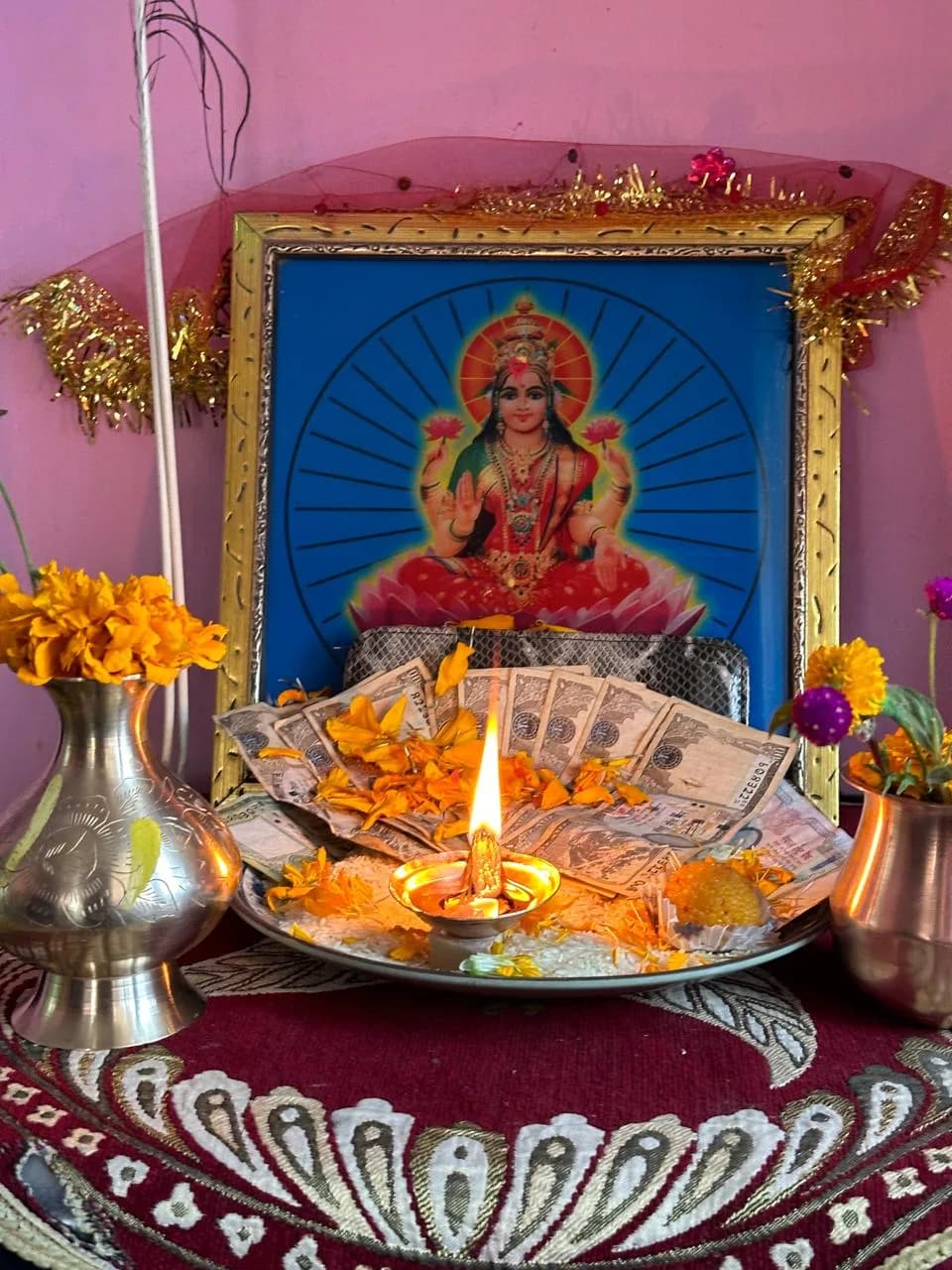
Laxmi Puja 2026 in Nepal: Tihar Festival Guide
Festival
1 day
Festival
Free
Kathamandu1 day
Event Details
Loading...
Event starts in
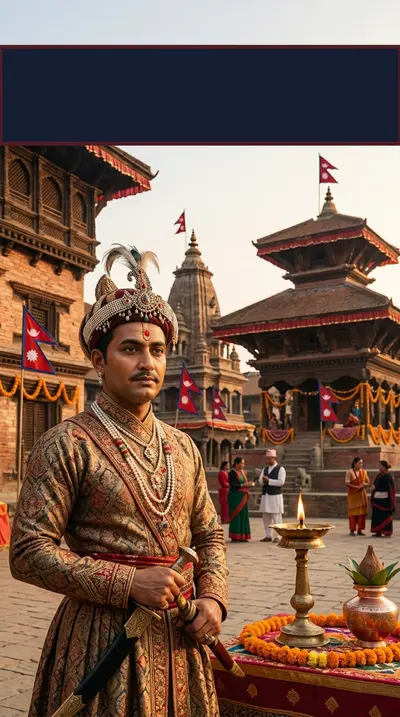
Prithvi Jayanti Nepal observes every year on 27 Poush, the ninth month of the Bikram Sambat calendar, commemorates the birth of King Prithvi Narayan Shah, the ruler credited with unifying the scattered principalities of the Himalayan region into the single nation known today as Nepal. Also called National Unity Day, or Rashtriya Ekata Diwas, this occasion sits at the intersection of history, politics, and national identity, and few figures in South Asian history remain as continuously discussed, honoured, and debated as the founder of the Shah dynasty. For anyone researching Prithvi Jayanti date, planning to understand Prithvi Jayanti celebration traditions, or exploring how National Unity Day 2027 will unfold, this guide lays out the verified historical record, the evolving official status of the day, and the cultural legacy that still shapes conversations about Nepali identity nearly 250 years after the king's death.
Prithvi Jayanti, literally the birth anniversary of Prithvi Narayan Shah, marks a date of considerable weight in Nepali historical memory. The occasion is also formally referred to as Nepal Ekikaran Diwas, or National Unification Day, and it is this dual naming, birthday on one hand, unification anniversary on the other, that captures why the day carries more than simple ceremonial value. It is treated as a moment to reflect on how a small hill kingdom centred in Gorkha expanded, through decades of campaigning, into the modern territorial nation that exists on the map today.
Unlike religious festivals that rotate through the lunar calendar with shifting Gregorian dates, Prithvi Jayanti is fixed to 27 Poush in the Nepali calendar every year, which generally corresponds to 11 January in the Gregorian calendar, occasionally shifting to 10 or 12 January depending on how the Bikram Sambat calendar aligns in a given cycle. This structural stability is one reason the date remains widely known even among Nepalis who may not follow every detail of the surrounding historical debate, since it consistently falls in the second week of January each year.
The significance of Prithvi Jayanti in Nepal, however, is not static. Its meaning has been reshaped repeatedly by the country's own political transformations, from the era of monarchy through the People's Movements to the establishment of a federal republic, making it one of the more instructive case studies in how a single historical date can be interpreted quite differently across generations and political outlooks.
For readers specifically searching Prithvi Jayanti 2027, the date falls on Monday, 11 January 2027, corresponding to 27 Poush 2083 BS in the Nepali calendar. This follows the same annual pattern observed in recent years, including 11 January 2026, which was a Sunday, and it will continue to anchor itself around this same window each January because the observance is tied to a fixed date in the lunar-solar Bikram Sambat system rather than a purely lunar festival calendar.
It is worth noting for planning purposes that Prithvi Jayanti falls in the heart of Nepal's winter travel season, shortly after the New Year and roughly a month before Maha Shivaratri, placing it within a period when Kathmandu Valley temperatures are cool and mountain visibility is often excellent. Travellers building an itinerary around Nepal Hindu festivals and patriotic observances in early 2027 can reasonably expect Prithvi Jayanti activities in Kathmandu and Gorkha to coincide with clear winter skies, which also happens to be a favourable season for cultural heritage walks through the old palace and temple complexes associated with the king's story.
Because the date's official public holiday status has changed over the decades, discussed in detail further below, readers should confirm the current government holiday calendar close to January 2027 rather than assuming automatic office or school closures, even though public observance of the day itself continues regardless of its formal holiday designation.
Prithvi Narayan Shah was born on 27 Poush 1779 BS, corresponding to 11 January 1723, in the hill kingdom of Gorkha, as the son of King Nara Bhupal Shah. He ascended to the Gorkha throne at the age of twenty following his father's death, inheriting a modest principality that was just one of numerous small kingdoms, commonly grouped historically as the Baise and Chaubise states, scattered across the hills of what is now Nepal. From this relatively small base, he began a deliberate, decades-long campaign to expand his territory.
His early strategic moves included the capture of Nuwakot in 1744, a critical gateway settlement that gave him a foothold near the Kathmandu Valley, followed by a prolonged and difficult effort to subdue Kirtipur, which resisted his forces across several attempts before finally falling. These campaigns demonstrate a documented pattern of patient, incremental military and diplomatic strategy rather than a single decisive conquest, a detail historians consistently point to when explaining why his unification project took the better part of a generation to complete.
The turning point came in 1768, when Prithvi Narayan Shah's forces took Kathmandu, followed shortly after by Patan and Bhaktapur, bringing the three Malla kingdoms of the Kathmandu Valley under Gorkhali rule. This consolidation effectively created the geographic and administrative core of what would become the unified Kingdom of Nepal, and Prithvi Narayan Shah is documented as having then shifted his capital toward the valley itself, marking the practical beginning of a centralised Nepali state under a single crown.
The unification of Nepal under Prithvi Narayan Shah did not conclude with the conquest of the Kathmandu Valley in 1768 to 1769; rather, it set the template that his successors continued to follow for several more decades. Under subsequent Shah rulers, Gorkhali territorial control eventually extended from areas near present-day Kangra in the west to close to Sikkim in the east, making the kingdom at its territorial peak roughly twice the geographic size of modern Nepal, before later contracting after the Anglo-Nepal War of 1814 to 1816 and the resulting Sugauli Treaty redrew the country's boundaries closer to their present form.
Historians frequently cite one of Prithvi Narayan Shah's often-quoted strategic observations, describing Nepal's geopolitical position as a yam caught between two boulders, referring to the pressure exerted by expanding colonial and imperial powers on either side of the Himalayan region. This framing is commonly presented as evidence of his forward-looking awareness of regional power dynamics at a time when European colonial expansion was actively reshaping South Asia, and it remains one of the most cited lines attributed to him in Nepali political and educational discourse.
The unification campaign is documented in Nepali historical scholarship not merely as a series of military engagements but as an administrative and cultural consolidation, one that brought together diverse linguistic, ethnic, and religious communities under a single governing structure for the first time in the region's recorded history. This is precisely why the term unification, rather than simple conquest, has become the dominant framing in mainstream Nepali historiography, even as more recent scholarship, discussed later in this article, has begun to examine the campaign from additional angles.
Among the most enduring documents associated with the king is the Divya Upadesh, commonly translated as the Divine Counsel or Sacred Advice, a set of guiding principles and reflections he is recorded as having conveyed toward the end of his reign. This text is frequently studied in Nepali schools and referenced by public officials as an early articulation of statecraft, self-reliance, and caution regarding foreign influence, and it remains one of the primary sources scholars draw upon when discussing his political philosophy.
The Divya Upadesh includes reflections often summarised as guidance on maintaining social harmony among Nepal's varied communities, a line frequently paraphrased in modern retellings as describing the nation as a garden containing many different castes and ethnic groups that must be tended together. This particular framing has taken on renewed significance in recent decades as Nepal has navigated questions of federalism, inclusion, and the representation of Indigenous and marginalised communities within a historically centralised state structure.
Beyond social guidance, the document also addresses matters of trade policy, defence posture, and the importance of economic self-sufficiency, reflecting the practical concerns of a ruler managing a newly unified but still fragile kingdom surrounded by larger regional powers. Contemporary references to Prithvi Jayanti history in Nepali media and educational programming very often draw directly from these recorded counsels when framing the king's broader legacy for modern audiences.
Prithvi Jayanti's status as an official public holiday in Nepal has a documented and fairly well-established timeline. It was first observed as a public holiday beginning around 1951, in the years following the end of the Rana oligarchy, and it continued as a nationally recognised holiday for more than half a century. This period coincided with the broader political framing of the Shah monarchy as the historical and symbolic centre of the Nepali state.
Following the Second People's Movement of 2006, which led to major constitutional changes and eventually the abolition of the monarchy in 2008 when Nepal became a federal democratic republic, Prithvi Jayanti's official public holiday status was withdrawn as part of a broader re-evaluation of state symbols tied to the former royal institution. Multiple holiday-tracking and historical sources confirm this abolition, describing the shift as directly connected to the political transition away from monarchical governance.
Despite the change in official status, public observance did not disappear. People continue to gather annually at the statue of Prithvi Narayan Shah near Singha Durbar in Kathmandu to lay garlands, and in his native Gorkha, local communities, including villagers in areas such as Bungkot, have continued informal commemorations regardless of the shift in national holiday policy. There have also been periodic political proposals, including from parties advocating for restoration of the holiday, to reinstate 27 Poush as an official public holiday, an ongoing and unresolved policy conversation that readers should understand as a live debate rather than a settled matter, since some calendar sources continue to list varying holiday statuses for the date even in recent years.
Even without uniform official holiday status nationwide, Prithvi Jayanti celebration activities remain visible across Nepal each year. In Kathmandu, the most consistent public tradition involves citizens, officials, and representatives of various organisations gathering at the Prithvi Narayan Shah statue near the Singha Durbar government complex to offer garlands and pay respects, an act that has continued with remarkable regularity since the statue's installation regardless of shifting political circumstances.
The Nepali Army plays a particularly prominent institutional role in marking the occasion, often organising formal programs and, in some years, symbolic processions along routes historically associated with the unification campaign, sometimes described as marching along an Ekikaran Pad, or unification path, connecting sites tied to the original Gorkha-to-valley expansion. Government ministries, cultural institutions such as Nepal Pragya-Pratishthan, and various civil society organisations frequently host talk programs, seminars, and cultural events reflecting on his legacy and its relevance to contemporary Nepal.
Educational institutions across the country also participate meaningfully, with many schools organising essay competitions, poetry recitations, and classroom discussions centred on Prithvi Narayan Shah's life and the broader unification narrative. In Gorkha itself, the king's ancestral territory, commemorations tend to carry a distinctly local and continuous character, with residents maintaining observances that in some cases predate and have outlasted the shifting national policy around the holiday's official status.
Looking ahead to National Unity Day 2027, falling on 11 January, readers can reasonably expect a continuation of the established pattern seen in recent years: statue garlanding ceremonies in Kathmandu, institutional programs led by government bodies and the Nepali Army, school-level educational activities, and localised commemorations in Gorkha. Given the ongoing political conversation around restoring the day's formal holiday status, it remains possible that policy could shift again before 2027, so travellers and researchers should check the most current Nepal government holiday notification closer to the date.
For visitors interested in observing or learning about National Unity Day Nepal firsthand, Kathmandu offers the most accessible entry point, particularly around the Singha Durbar area where the primary public ceremony traditionally takes place. Those with a deeper interest in the historical narrative may find it more rewarding to travel toward Gorkha itself, where the physical setting of the king's origin story, including the historic Gorkha Durbar complex, provides direct context that the capital city commemoration alone cannot fully convey.
A well-planned winter visit built around this period can reasonably combine observation of Prithvi Jayanti-related programs with broader exploration of Nepal's layered festival calendar, since the country's early-year events schedule includes a range of cultural, religious, and patriotic observances that together offer a fuller picture of Nepali civic and religious life; a browse through Nepal's festival and events calendar is a useful starting point for travellers sequencing multiple observances into one trip.
The cultural footprint of Prithvi Narayan Shah extends well beyond the single annual observance of his birthday. He is formally credited in mainstream Nepali historiography and civic education as the founder of modern, unified Nepal, and his image, name, and quoted sayings appear consistently across school curricula, government buildings, currency-adjacent symbolism in earlier eras, and public monuments throughout the country, most notably the statue near Singha Durbar that remains the focal point of annual observance.
His often-cited description of Nepal as a common garden of diverse castes and ethnicities has been repeatedly invoked in modern political rhetoric, particularly during debates over federal restructuring and inclusion policy following the 2015 constitution, illustrating how a nearly 250-year-old political testament continues to be reinterpreted and applied to entirely new governance questions. This durability of reference is itself a notable indicator of the depth of his continued presence in Nepali public discourse.
At the same time, his legacy is inseparably tied to the broader project of Gorkhali expansion, meaning that discussions of his cultural significance frequently intersect with conversations about regional identity, the historical experience of communities absorbed into the unified kingdom, and the balance between celebrating national founding narratives and acknowledging the more complex, sometimes contested, realities of how that unification was achieved on the ground.
Mainstream Nepali historical narrative, taught widely in schools and reinforced through decades of state commemoration, presents Prithvi Narayan Shah's campaign primarily as an act of unification, one that created a single sovereign nation capable of resisting colonial absorption at a time when British expansion was reshaping the wider region. This framing emphasises his strategic foresight, his stated concerns about foreign influence recorded in the Divya Upadesh, and the practical outcome of establishing Nepal as one of the few states in the region to avoid direct colonisation.
A more recent and increasingly visible strand of scholarship and public commentary, however, approaches the same historical events with additional emphasis on the perspective of the smaller kingdoms and communities that were militarily absorbed during the campaign, some of whom, particularly among certain Indigenous and Janajati communities, have described the process using language closer to conquest or annexation rather than voluntary unification. This is a documented and ongoing area of historical and political discussion within Nepal itself rather than a fringe reinterpretation, and it has become more prominent alongside broader national conversations about federalism and inclusion since the 2006 political changes.
Presenting both framings accurately matters for anyone researching Prithvi Jayanti history seriously: the celebratory unification narrative and the more critical absorption-focused narrative are not mutually exclusive accounts of fictional events, but rather differing interpretive emphases applied to a shared, well-documented historical record. Responsible coverage of the topic, including this article, aims to note that this interpretive debate exists without adjudicating which framing is correct, since that determination sits within Nepal's own ongoing political and academic discourse rather than being a matter this piece can or should resolve.
No exploration of Prithvi Narayan Shah's legacy is complete without attention to Gorkha itself, the hill town roughly 140 kilometres west of Kathmandu that served as the launching point for the entire unification campaign. The historic Gorkha Durbar, a fortress-palace complex perched on a ridge above the town, remains one of Nepal's most significant heritage sites specifically because of its direct association with the king's early reign and the Gorkhakali Temple within its grounds, which continues to hold ceremonial importance to this day, including its documented role in the annual Dashain Phulpati procession sent from Gorkha to Kathmandu.
Visiting Gorkha offers a markedly different experience from observing Prithvi Jayanti ceremonies in the capital, since the town retains a tangible physical connection to the earliest chapters of the unification story, including views that stretch across the surrounding hills the king once ruled as a comparatively modest local monarch before his campaign began. Travellers drawn to this kind of historically grounded travel often combine a Gorkha visit with wider exploration of Nepal's historical and heritage tour packages, which frequently pair the town with Kathmandu Valley heritage sites for a more complete narrative arc.
For those specifically interested in walking the physical and symbolic route connecting Gorkha to Kathmandu, several guided heritage and cultural activities in the region incorporate this unification narrative directly into their itineraries, offering historical context on site rather than relying solely on museum displays or classroom retellings, which many visitors find considerably more engaging when trying to understand how the unification campaign actually unfolded across this hill terrain.
Prithvi Jayanti occupies a distinctive position within Nepal's annual calendar of observances precisely because it is patriotic and historical rather than religious in character, setting it apart from the country's many Hindu, Buddhist, and ethnic festivals that dominate much of the yearly cultural calendar. Falling in mid-January, it arrives during a relatively quiet stretch between the conclusion of Tihar and Chhath in the preceding autumn months and the arrival of Maha Shivaratri roughly a month later, giving it a somewhat standalone position on the national calendar.
For travellers and researchers building a broader understanding of Nepal Hindu festivals and civic observances across the year, Prithvi Jayanti serves as a useful entry point into a category of Nepali commemoration that is explicitly nationalistic rather than devotional, alongside occasions such as Democracy Day and Constitution Day, both of which similarly reflect the country's ongoing negotiation between its monarchical past and its current republican identity. A wider look at Nepal's full annual calendar of festivals and cultural events helps place Prithvi Jayanti within this larger pattern of religious, seasonal, and civic observances that together define the Nepali year.
This positioning also makes Prithvi Jayanti a useful case study for anyone examining how postmonarchical states manage the commemoration of pre-republican historical figures, since Nepal's approach, continued informal public reverence alongside withdrawn official holiday status, offers a distinctive middle path compared to how some other nations have handled similarly complex historical transitions.
Travellers hoping to witness Prithvi Jayanti observances or explore related heritage sites should plan around the fixed 11 January date while remaining aware that specific program schedules, particularly any formal government or Nepali Army events, are typically confirmed only in the weeks immediately preceding the occasion. Kathmandu's Singha Durbar area is the most reliable location for observing the primary public ceremony, while a Gorkha excursion offers a deeper, more historically immersive alternative for those with additional time.
Because the day falls within Nepal's dry winter season, road travel toward Gorkha from Kathmandu is generally reliable, and the clear conditions typical of this period make it a favourable window for combining historical sightseeing with wider Kathmandu Valley heritage exploration, including Durbar Square complexes in Kathmandu, Patan, and Bhaktapur, all of which were directly incorporated into the kingdom Prithvi Narayan Shah founded. Those planning a dedicated trip around this theme may find it useful to consult a broader overview of travel in Nepal to sequence Gorkha, Kathmandu Valley heritage sites, and any surrounding festival or seasonal considerations into a single coherent itinerary.
As with any historically and politically significant commemoration, visitors are encouraged to observe respectfully, particularly at the Singha Durbar statue site, and to approach conversations about the day's meaning with awareness that Nepali perspectives on Prithvi Narayan Shah's legacy are not uniform, ranging from strong national pride to more critical historical reassessment, both of which are legitimate parts of the country's ongoing public conversation.
When is Prithvi Jayanti 2027? Prithvi Jayanti 2027 falls on Monday, 11 January 2027, corresponding to 27 Poush 2083 BS in the Nepali calendar.
What is Prithvi Jayanti in Nepal? Prithvi Jayanti is the annual commemoration of the birth of King Prithvi Narayan Shah, credited with unifying the various principalities of the Himalayan hill region into the Kingdom of Nepal; it is also known as National Unity Day or Nepal Ekikaran Diwas.
Is Prithvi Jayanti a public holiday in Nepal? It was an official public holiday from around 1951 until it was withdrawn following the political changes of 2006 to 2008 that led to the abolition of the monarchy; it is observed today primarily through public ceremonies, government and Nepali Army programs, and school activities rather than as a guaranteed nationwide day off, though its holiday status remains a subject of ongoing political discussion.
Who was Prithvi Narayan Shah? He was the King of Gorkha, born in 1723, who ascended the throne at twenty and led a multi-decade military and diplomatic campaign that culminated in the 1768 to 1769 conquest of the Kathmandu Valley, establishing the foundation of unified Nepal.
What is the significance of Prithvi Jayanti today? Beyond commemorating a historical birthday, the day functions as an occasion for reflecting on Nepali national identity, unity, and the country's founding narrative, while also increasingly serving as a moment for public discussion about differing historical interpretations of the unification campaign.
Where can visitors learn more about Prithvi Narayan Shah's legacy in person? Gorkha Durbar, the fortress-palace complex in his native town, along with the historic Durbar Squares of Kathmandu, Patan, and Bhaktapur that were incorporated into his kingdom, together offer the most direct and immersive physical connection to his story.
Prithvi Jayanti endures as one of Nepal's more layered commemorations precisely because it sits at the crossroads of history, politics, and ongoing national self-definition. What began as a straightforward royal birthday observance has, over roughly seventy-five years, moved through phases of official state celebration, formal abolition following a major political transition, and a continuing informal public reverence that persists regardless of shifting holiday policy, reflecting Nepal's own complex journey from monarchy to federal republic.
For readers approaching Prithvi Jayanti 2027 with genuine interest, whether drawn by the historical record of Prithvi Narayan Shah's unification campaign, curiosity about National Unity Day's uncertain but persistent place on the calendar, or a desire to visit Gorkha and the Kathmandu Valley heritage sites tied to his legacy, the most accurate approach is to hold the celebratory and critical historical narratives together rather than choosing one to the exclusion of the other, since that tension is itself part of what makes 27 Poush a date still actively being written into Nepal's evolving national story.
Key experiences and features
Prithvi Jayanti
Bikram Sambat calendar
Rashtriya Ekata Diwas
Nepal Ekikaran Diwas
National Unification Day
Maha Shivaratri
King Nara Bhupal Shah
Gorkhali rule
Sugauli Treaty
Recommended packing list
Kathmandu, Kathmandu, Bagmati, Nepal
Got questions about this event?
Prithvi Jayanti 2027 falls on Monday, 11 January 2027, corresponding to Poush 27, 2083 BS.
It commemorates the birth anniversary of Prithvi Narayan Shah, the 18th-century ruler associated with the unification of Nepal.
National Unity Day is the name commonly associated with the observance of Prithvi Jayanti, emphasizing Nepal’s historical unification.
Observances can include commemorative programs, speeches, cultural activities, public gatherings, and tributes to Prithvi Narayan Shah.
Yes. Visitors can observe public programs and cultural activities while respecting local customs, ceremonies, and heritage spaces.
Jan 11, 2027
1 day
Quick Info
More festival experiences
Nov 8 – Nov 8, 2026Kathamandu
 Aug 17 – Sep 16, 2027
Godavari Kunda
 Jan 15 – Jan 16, 2027
Swayambhu Bhuikhhel