 Nov 8 – Nov 8, 2026
Kathamandu
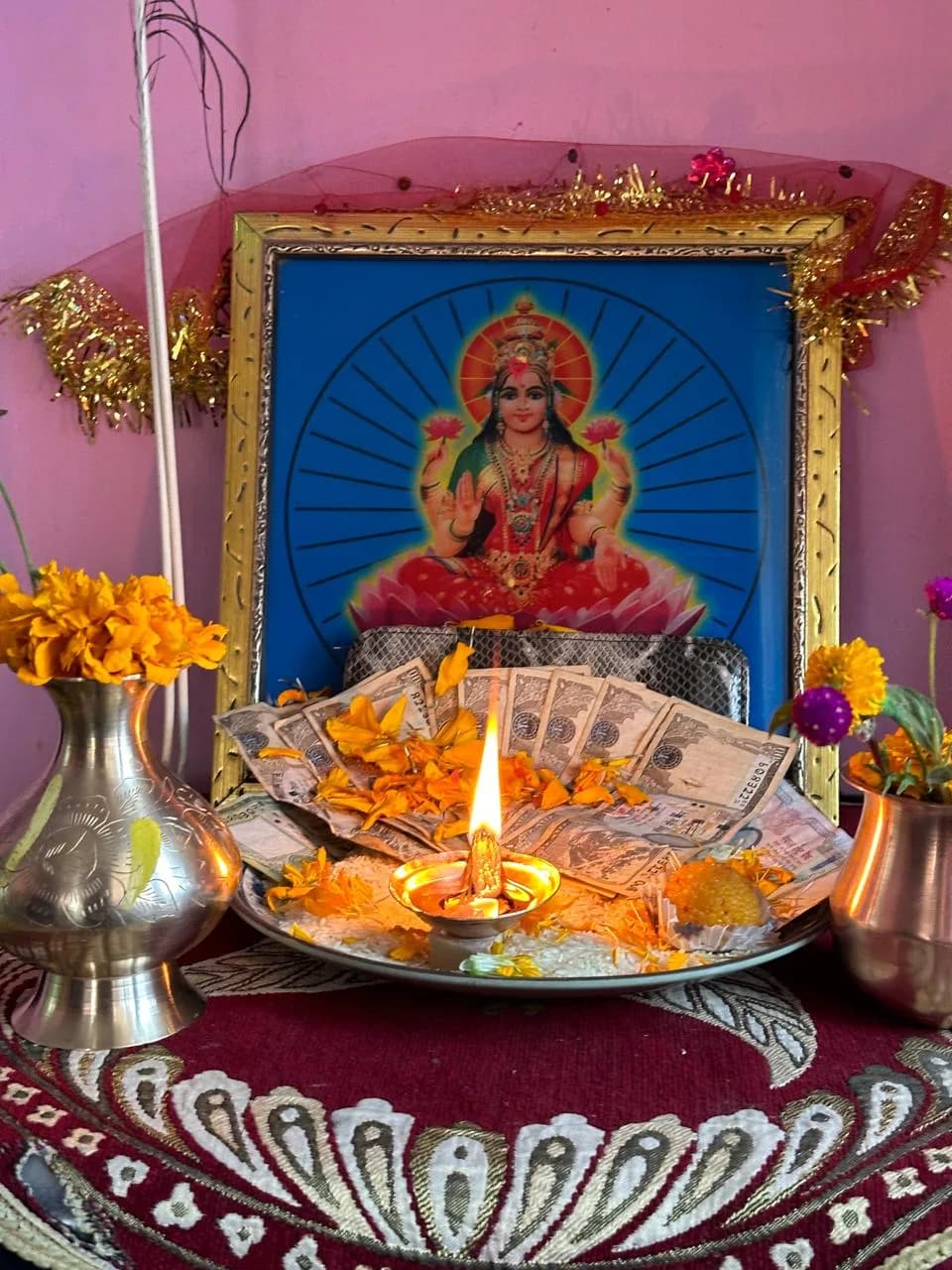
Laxmi Puja 2026 in Nepal: Tihar Festival Guide
Festival
1 day
Festival
Free
Kathamandu1 day
Event Details
Loading...
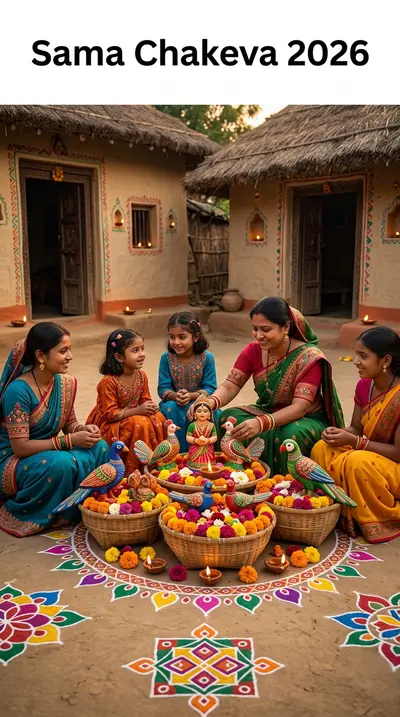
Sama Chakeva is a folk festival of the Mithila region that celebrates the bond between brothers and sisters through clay idols, evening folk songs, and a story that has been passed down through generations of Maithili households in the plains of southern Nepal. Unlike the more widely known Bhai Tika, which forms part of the national Tihar calendar, Sama Chakeva is a distinctly regional observance rooted in Maithili culture, centred on the Terai districts of Nepal's Madhesh Province and closely tied to the arrival of migratory birds as winter approaches. This guide covers the confirmed Sama Chakeva date for 2026, the mythology behind the festival, how it is actually celebrated across villages and towns in the Mithila region of Nepal, and what travellers planning a wider journey across Nepal should know before visiting.
Sama Chakeva, sometimes written as Sama Chakeva or Saama Chakeba, is a Hindu folk festival native to the Mithila region spanning parts of Nepal and the Indian state of Bihar. At its heart, it is a celebration of the loyalty between siblings, expressed not through a single day of ritual as with Bhai Tika, but through an extended, multi-day sequence of storytelling, singing, and communal activity performed almost entirely by young, mostly unmarried girls in the lead-up to the full moon of Kartik.
The festival's name comes directly from its two central characters, Sama and her brother Chakeva, whose story forms the emotional and moral core of the celebration. Girls fashion small clay figurines representing Sama, Chakeva, and a cast of supporting characters, then gather each evening near riverbanks, courtyards, or open fields to sing traditional Maithili folk songs describing the siblings' trials and eventual reunion, a practice that makes Sama Chakeva as much an oral storytelling tradition as it is a religious observance.
What distinguishes Sama Chakeva Nepal celebrations most clearly from other regional festivals is its intimate, almost theatrical structure. There is no temple ceremony or priest-led ritual at its centre; instead, the festival unfolds through repeated evening gatherings, songs performed from memory, and a slow narrative build-up that concludes with a symbolic farewell on the final night, giving it a folk-performance character closer to a living epic than a conventional puja.
Distinguishing documented history from traditional belief is important here, since much of what defines Sama Chakeva comes from oral legend rather than recorded historical events. According to Maithili tradition, the story is set during the Dwapara Yuga and centres on Sama, described as a daughter of Lord Krishna, and her devoted brother, variously named Chakeva, Chakradhar, or Samb in different retellings. The legend holds that Sama was falsely accused of improper conduct by a jealous or scheming courtier known as Chugla, and that Krishna, believing the accusation, cursed his daughter to be transformed into a bird.
The story continues with Chakeva's unwavering loyalty to his sister; through his devotion, penance, and eventually by exposing Chugla's deceit, Sama is restored to human form, and the bond between brother and sister is affirmed as stronger than false rumour or hasty judgment. This narrative, found in regional retellings connected to the wider Puranic tradition, is the foundational legend of the festival rather than a documented historical event, and Maithili cultural scholars are generally clear that Sama Chakeva's antiquity lies in oral folklore and continuous community practice rather than in any single dated text or inscription.
Some cultural commentators describe the festival's roots as stretching back several thousand years within Mithila's oral tradition, though this should be understood as a claim rooted in cultural memory and storytelling continuity rather than an independently verifiable historical timeline. What is far better documented is the festival's living continuity: Sama Chakeva has been practised generation after generation across Mithila villages in both Nepal and Bihar, adapting in small ways over time while preserving its core structure of clay idols, evening songs, and a Kartik Purnima conclusion.
Different retellings of the Sama Chakeva story vary in small details, some naming the brother Chakradhar, others Samb, and some describing Chugla as a courtier rather than a hermit, which is typical of orally transmitted folklore that has been carried across generations and villages without a single standardised written text. Rather than treating any one version as the definitive account, most Mithila cultural commentators encourage understanding the story as a shared narrative framework, one flexible enough to be retold slightly differently from household to household while preserving its central themes of loyalty, false accusation, and eventual vindication. This flexibility is itself a hallmark of how oral festival traditions typically survive across long periods of time, in contrast to festivals anchored in a single fixed scriptural account.
For readers specifically searching for the Sama Chakeva date 2026, the festival is tied to the lunar Kartik month and unfolds across roughly ten days connected to two fixed astronomical anchors. It begins around the night of Kharna during Chhath Puja, which in 2026 falls on Saturday, 14 November, corresponding to Kartik Shukla Panchami, and it concludes on Kartik Purnima, the full moon of Kartik, which falls on Tuesday, 24 November 2026.
Because Sama Chakeva follows the lunar Bikram Sambat and Mithila Panchang calendars rather than a fixed Gregorian date, some sources describe slightly different starting conventions, with certain references marking the opening a day or two later than the Kharna night itself, and total duration described anywhere from about a week to ten or eleven days depending on local practice and how a given year's tithis align. This kind of minor variation is normal for lunar festivals and is best confirmed against a current Mithila Panchang or local community calendar closer to the date rather than treated as a single universally fixed count of days.
What remains consistent across all sources is the festival's placement immediately after Chhath Puja and its conclusion precisely on Kartik Purnima, making Sama Chakeva Festival 2026 part of a dense cluster of Kartik-month observances in the Terai that also includes Tihar and Chhath, giving the region an unusually rich stretch of consecutive cultural activity through much of November.
The core significance of Sama Chakeva lies in its celebration of sibling devotion, placing it alongside Bhai Tika and Raksha Bandhan as one of the subcontinent's several festivals dedicated to the brother-sister bond, yet distinguished by its folk-narrative format rather than a single ritual exchange of tika or thread. For Maithili families, the festival reinforces values of loyalty, truthfulness, and protection against slander, since the antagonist of the story, Chugla, represents the destructive power of gossip and false accusation, a theme that resonates strongly within tightly knit village communities.
Beyond its interpersonal meaning, Sama Chakeva carries a distinctive ecological and seasonal dimension that sets it apart from most Hindu festivals. The clay figurines include birds, an elephant, a wild fowl, and other creatures, and the timing of the festival coincides with the annual migration of birds descending from the Himalayan foothills toward the warmer plains of the Terai and northern India as winter approaches. This connection between festival timing and natural seasonal change is frequently cited by Mithila cultural researchers as evidence of the festival's deep roots in agrarian and ecological observation, layered onto the mythological narrative over generations.
The religious significance of Sama Chakeva is therefore best understood as operating on multiple levels at once: a devotional retelling of a Puranic family drama, a moral lesson about resisting slander and protecting the vulnerable, and a seasonal marker tied to the rhythms of the agricultural and migratory calendar in the Mithila plains, all reinforced annually through a shared community ritual performed almost entirely by young women.
The Sama Chakeva Puja and associated rituals unfold as a sequence rather than a single ceremony. On the opening night, typically the evening of Chhath's Kharna, groups of mostly unmarried girls fashion small clay figurines representing the festival's central cast: Sama, Chakeva, the scheming Chugla, a set of seven brothers known as Satbhaiya, a figure representing Vrindavan, along with an elephant, a wild bird, a bumblebee, a dog, and musician figures playing cymbals and a small drum. These figures are placed in a decorated basket alongside items such as kohl, small clay household items, and lamps.
Each evening from that point until Kartik Purnima, the girls gather near riverbanks, courtyards, or open community spaces to sing traditional Sama Chakeva songs, an extensive body of Maithili folk verses that narrate different chapters of the Sama and Chakeva story, often performed from memory and passed down orally through mothers, grandmothers, and older girls in the community rather than from any written songbook. A distinctive social element of the celebration involves girls visiting one another's homes or gathering points to exchange baskets, compare idol displays, and sing together, turning the festival into an extended, community-wide performance rather than a private household rite.
On the final night, Kartik Purnima, the celebration builds to its climax. In many communities, an effigy or clay representation of Chugla is symbolically punished or burned as the songs reach their narrative conclusion, representing the defeat of falsehood and gossip within the story. Brothers then take part directly for the first time in the sequence, breaking the clay idols and burying or immersing them in a ploughed field or open ground, an act often compared symbolically to a daughter's departure from her parental home after marriage. Brothers customarily give their sisters gifts of clothing or cash as a token of gratitude and protection, while sisters in turn prepare and feed their brothers a mixture of curd and beaten rice, or chooda-dahi, echoing similar sibling-festival customs found elsewhere in Nepali culture.
The folk songs at the centre of Sama Chakeva deserve particular attention because they represent one of the more distinctive intangible cultural elements of Maithili heritage. These songs are not fixed liturgical texts; rather, they exist as an evolving oral repertoire, with verses composed, adapted, and passed down primarily among women, often incorporating local references, humour, and emotional nuance specific to a given village or family lineage. Because the tradition is maintained largely through memory and direct transmission rather than published text, each community's version of the songs can carry subtle regional variations while preserving the same core narrative arc.
This oral song tradition is frequently highlighted by scholars of Maithili culture as an important, if under-documented, form of women-centred storytelling and cultural transmission within Mithila society, distinct from the more male-dominated priestly traditions associated with many other Hindu festivals. For travellers and researchers interested in Maithili folk festival traditions specifically, the evening singing sessions of Sama Chakeva offer one of the more accessible and genuinely community-driven cultural experiences available in the Nepal Terai, provided they are approached as an invited observer rather than an intrusive one.
Because these songs are performed live and vary from community to community, no single definitive version exists in the way a scripted ritual might have; this variability is itself considered part of the tradition's charm and resilience, allowing Sama Chakeva to remain a genuinely living practice rather than a static, museum-piece observance.
Sama Chakeva is celebrated most prominently across the Mithila-influenced districts of Nepal's Madhesh Province, including Mahottari, Dhanusha, Sarlahi, Siraha, and Saptari, with Janakpur, the historic heart of the wider Mithila cultural region, serving as one of the more culturally rich places to witness related festivities alongside the district's many other Mithila traditions. Both Maithil and Tharu communities observe versions of the festival, giving it a somewhat broader ethnic footprint across the eastern and central Terai than some other strictly Maithil-specific observances.
Because Sama Chakeva unfolds primarily at the household and neighbourhood level rather than through large public processions, visitors are unlikely to find a single large public gathering point comparable to a temple festival; instead, the experience is distributed across countless individual courtyards, riverbanks, and village squares, making a locally guided visit considerably more rewarding than an independent attempt to locate the celebration. Travellers interested in this kind of intimate cultural access may find it useful to explore Mithila cultural tour packages covering Janakpur and the surrounding Terai districts, which can help arrange respectful, locally facilitated access to communities observing the festival during its ten-day window.
For those building a broader understanding of the region's festival calendar, Sama Chakeva sits alongside other significant Mithila observances such as Chhath Puja, Vivah Panchami at Janakpur, and the Mithila Madhya Parikrama, together forming a dense annual cycle that reflects the distinct religious and cultural identity of the Mithila region within Nepal's wider Hindu festival landscape; a broader look at the country's Mithila festivals in Nepal and events calendar can help travellers sequence a visit around several of these observances in a single trip.
For travellers accustomed to Nepal's larger, more visually spectacular festivals, Sama Chakeva offers something quite different: a quieter, more intimate cultural encounter centred on family courtyards and neighbourhood gatherings rather than large public spectacle. The atmosphere in participating villages during the ten-day window is gentle and communal, dominated by the sound of young girls singing in groups each evening rather than drums, fireworks, or large processions, making it a distinctly different kind of cultural experience compared to festivals like Holi or Indra Jatra.
Photography opportunities exist, particularly around the colourful clay figurines and decorated baskets, though visitors should approach picture-taking with sensitivity, since the core participants are typically young girls and the setting is often a private household courtyard rather than a public performance space. Engaging respectfully, ideally through a guided Mithila cultural experience or a local host and community introduction, tends to produce a far richer experience than attempting to observe from a distance, and many families are genuinely welcoming to curious visitors who show authentic interest in the tradition rather than treating it purely as a photo opportunity.
Travellers interested in combining this kind of grassroots cultural observation with broader regional sightseeing often pair a Sama Chakeva visit with wider exploration of Nepal's cultural festivals and Terai heritage sites, including the Janaki Temple in Janakpur and the region's distinctive Mithila art traditions, giving the trip a fuller sense of the area's layered religious and artistic identity beyond this single festival alone.
The most rewarding time to experience Sama Chakeva is during its active ten-day window in mid-to-late November, aligning in 2026 with the period between 14 and 24 November, which also happens to fall within Nepal's pleasant post-monsoon travel season, offering cooler temperatures and generally reliable weather across the Terai plains. Since the festival immediately follows Chhath Puja, many visitors choose to extend a Chhath-focused trip to the region by several additional days specifically to witness the Sama Chakeva sequence through to its Kartik Purnima conclusion.
Janakpur, the natural base for exploring this part of the Mithila region, is reachable from Kathmandu by a short domestic flight of roughly forty minutes or by road in several hours via the Terai highway network, with additional access points from Birgunj and other Terai towns for travellers approaching from elsewhere in Nepal. From Janakpur, the surrounding districts of Dhanusha, Mahottari, and Siraha, where much of the household-level Sama Chakeva activity takes place, are accessible by short local road journeys, making a multi-day base in or near Janakpur a practical choice for anyone hoping to witness the festival across several of its evenings rather than a single night.
Travellers combining this trip with wider Nepal itineraries often use Janakpur as one stop within a broader Nepal tour package covering the Terai's cultural and religious sites alongside more conventional Kathmandu Valley and hill destinations, allowing the Sama Chakeva experience to sit within a fuller picture of the country's religious and cultural diversity rather than as an isolated day trip.
Because Sama Chakeva is primarily a household and community-level festival rather than a staged public event, visitors should approach it with the same courtesy they would extend to any private family gathering. It is advisable to visit with a local host, guide, or introduction rather than attempting to walk into courtyards uninvited, and to ask permission clearly before photographing children, family groups, or ritual objects such as the clay idols and decorated baskets central to the celebration.
Modest dress is appropriate throughout the Terai region generally, and this holds particularly true during religious and cultural observances such as this one. Visitors should also be mindful that the festival's participants are predominantly young, often pre-teen or teenage girls, and should exercise particular sensitivity and restraint around photography or prolonged attention directed at them, prioritising respectful observation over intrusive documentation at all times.
Responsible travel in this context also means recognising Sama Chakeva as a living, evolving tradition maintained by the community itself rather than a tourism product staged for outside visitors. Supporting local guides, artisans, and homestay hosts from the Mithila region when arranging a visit helps ensure that tourism interest translates into genuine community benefit, and helps preserve the kind of authentic, unstaged cultural access that makes festivals like Sama Chakeva meaningful to experience in the first place.
Nepal observes several festivals centred on the bond between brothers and sisters, and understanding how Sama Chakeva relates to these helps clarify its distinct place within the country's cultural calendar. Bhai Tika, the final day of the national Tihar festival, is by far the most widely observed sibling festival across Nepal, involving a single-day tika ceremony performed in households nationwide regardless of regional or ethnic background. Sama Chakeva, by contrast, is geographically and culturally specific to the Mithila region, unfolds over roughly ten days rather than one, and is built around collective storytelling and song rather than a household ritual exchange.
This distinction matters for anyone exploring Nepal cultural festivals as a travel theme, since it illustrates the country's broader pattern of layering a shared national festival calendar, such as Dashain and Tihar, over a rich patchwork of more localised, ethnically specific traditions, including Sama Chakeva in the Terai, Sakela among the Kirat communities, and various Lhosar celebrations among Himalayan communities further north. Together, these layered observances reflect Nepal's considerable cultural and ethnic diversity far more fully than any single national festival could on its own.
For travellers specifically seeking out festivals in Terai Nepal that go beyond the most widely publicised national celebrations, Sama Chakeva represents one of the more rewarding options precisely because of this regional specificity, offering insight into Maithili cultural identity that a purely Kathmandu-centred itinerary would likely miss entirely.
When is Sama Chakeva 2026? Sama Chakeva 2026 begins around the night of Kharna during Chhath Puja, falling on Saturday, 14 November 2026, and concludes on Kartik Purnima, Tuesday, 24 November 2026, though some communities mark the opening a day or two later depending on local tithi reckoning.
What is Sama Chakeva in Nepal? Sama Chakeva is a Mithila folk festival celebrating the bond between brothers and sisters, built around the legend of Sama and her brother Chakeva, and observed primarily by Maithili and Tharu communities across Nepal's Madhesh Province.
How is Sama Chakeva celebrated? Girls fashion clay idols of Sama, Chakeva, and supporting characters, sing traditional folk songs each evening for roughly ten days, and conclude on Kartik Purnima by symbolically punishing the character of Chugla, breaking and burying the idols, and exchanging gifts and food with their brothers.
What is the story behind Sama Chakeva? According to Maithili legend set in the Puranic tradition, Sama, a daughter of Krishna, was falsely accused of wrongdoing by a courtier named Chugla and cursed to become a bird; her brother Chakeva's loyalty and eventual exposure of the false accusation restore her to human form.
Where is Sama Chakeva celebrated in Nepal? The festival is most widely observed in the Terai districts of Mahottari, Dhanusha, Sarlahi, Siraha, and Saptari, with Janakpur serving as a natural base for travellers wishing to experience the wider Mithila cultural region during the festival period.
Is Sama Chakeva the same as Bhai Tika? No. Both celebrate the sibling bond, but Bhai Tika is a single-day, nationwide Tihar ritual observed across Nepal, while Sama Chakeva is a regionally specific, roughly ten-day Mithila tradition built around collective storytelling, clay idols, and evening folk songs rather than a single tika ceremony.
Sama Chakeva remains one of Nepal's most quietly distinctive cultural festivals, a ten-day tradition of clay idols, oral folk songs, and sibling devotion that continues to be sustained almost entirely at the community level across the Terai's Mithila districts. Its blend of Puranic legend, seasonal bird migration symbolism, and a moral narrative built around resisting slander gives it a depth that extends well beyond a simple sibling-bonding ritual, offering genuine insight into Maithili cultural identity for those willing to engage with it respectfully. With Sama Chakeva 2026 running from mid-to-late November, travellers interested in Nepal's regional festival traditions have a clear window to plan a visit to Janakpur and the surrounding Mithila districts, ideally through locally arranged access, to witness a celebration that, unlike many of Nepal's larger festivals, remains genuinely rooted in household and neighbourhood life rather than public spectacle.
Key experiences and features
Sama Chakeva
Mithila region
Mithila region of Nepal
Mithila villages
Sama Chakeva story
Kartik Purnima
Sama Chakeva Festival 2026
Bhai Tika
Sama Chakeva songs
Recommended packing list
Janakpur, Dhanusha, Madhesh Province, Nepal
Got questions about this event?
Sama Chakeva is traditionally celebrated for 10 days during Kartik, mainly in the Mithila region.
Sama Chakeva is a traditional Mithila folk festival that celebrates the loving bond between brothers and sisters.
Women create clay figures, sing Maithili folk songs, perform rituals, and gather in the evening for celebrations.
The festival is mainly celebrated in Mithila and Terai-Madhesh communities, particularly around Janakpur and surrounding districts.
The festival represents sibling love, family bonds, cultural traditions, and wishes for brothers’ well-being.
Nov 16, 2026
1 day
Quick Info
More festival experiences
Nov 8 – Nov 8, 2026Kathamandu
 Aug 17 – Sep 16, 2027
Godavari Kunda
 Jan 15 – Jan 16, 2027
Swayambhu Bhuikhhel