 Nov 8 – Nov 8, 2026
Kathamandu
Laxmi Puja 2026 in Nepal: Tihar Festival Guide
Festival
1 day
Festival
Free
Kathamandu1 day
Event Details
Loading...
Every year, a few weeks after Dashain ends, Nepal slowly changes colour. The streets of Kathmandu fill with orange marigold garlands, small clay lamps appear on every doorstep, and children begin to sing in the lanes after dark. This is Tihar, the five-day festival of lights, and it is one of the warmest festivals in Nepal that a visitor can ever join. Some people call it Deepawali and others call it Yamapanchak, but everyone agrees that it feels like a big family hug. In 2026 the festival runs from 7 November to 11 November. During these days Nepali families honour crows, dogs, cows, oxen, the goddess Laxmi and, on the last day, their own brothers. This guide explains every day in simple words, the food, the music and the best places to see it all, with helpful pointers to tour packages and places to visit from Enticing Himalayas.
 Tihar is the second biggest festival in Nepal after Dashain, and many people say it is the sweetest one. Dashain is about long rituals and large family gatherings, while Tihar feels lighter and brighter. The mood is playful. Neighbours visit each other, shops stay open late, and the whole country seems to glow after sunset. For a traveller, this is the best moment to see the culture of Nepal up close, because the celebration happens in homes and streets, not behind a stage.
What makes Tihar special is the way it includes every living thing. In most parts of the world, a festival is for people only. In Nepal, the Kukur Tihar day thanks the dog, the Kaag Tihar day greets the crow, and the Gai Tihar day bows to the cow. The idea is simple and kind. Humans and animals live together, and each one has a job in keeping the home safe, fed and happy. A visitor who understands this idea will enjoy every small ritual much more.
Tihar also falls at a lovely time of year. The monsoon is over, the air is clean, and the mountains are sharp and clear. Many travellers combine the festival with a short walk in the hills, and our trekking routes are at their best in November. Kathmandu, Patan and Bhaktapur look their prettiest with lights, and the evenings are cool enough for a walk through the old Durbar Squares.
The festival follows the Nepali lunar calendar, so the dates move every year. In 2026 the five days run from Saturday, 7 November, to Wednesday, 11 November, which is Kartik 21 to Kartik 25 in the year 2083 of the Bikram Sambat calendar. Most calendars agree on this range, although a few small details change between sources, so please check the local patro or ask your host before you plan an exact hour.
The reason for the small difference on Day 2 and Day 3 is the way the lunar day, called a tithi, falls across the calendar. In some years the cow worship and the Laxmi Puja share the same day, and in other years they are separated. If you are visiting, the safest plan is to be in Kathmandu for the whole stretch from 7 to 11 November and let the days unfold around you.
Like most Hindu festivals, Tihar has more than one story. The best known one is about Yama, the god of death, and his sister Yamuna. It is said that Yamuna invited her brother for a meal and put a tika on his forehead, and she prayed that he would live long. Yama was so happy that he promised that any brother who receives a tika from his sister on this day will be safe from death. That is why the last day, Bhai Tika, is so emotional and why sisters take it so seriously.
The crow and the dog are linked to Yama too. The crow is seen as his messenger, and the dog is seen as his guard at the gates of the other world. By treating them with love and food, people ask for peace and protection for their families. The cow is linked to Laxmi, the goddess of wealth, and the ox is linked to the farmer and the field. The Newar community has its own layer of meaning, because for the Newars the fourth day is the beginning of a new year in the Nepal Sambat calendar.
You do not need to remember every story to enjoy the days. A good way to learn is to join a local family or take a cultural tour with a local guide who can explain each ritual in plain words while it is happening in front of you. Many guests say that one explanation at the right moment is better than ten pages of reading.
Preparation starts almost two weeks before the first lamp is lit. Women and men clean the house from top to bottom, wash the courtyard, paint the doorstep, and repair small cracks in the walls. It is a kind of spring cleaning in autumn. A clean house is believed to invite Laxmi, so nobody wants to take the work lightly. If you walk through the old lanes of Patan in late October, you will see freshly washed windows, new curtains and ladders leaning against walls.
The markets are busy too. In Asan Bazaar and the streets around it, sellers pile up marigold, globe amaranth, clay lamps, coloured powder, small oil bottles, sweets, and fruit. The smell of flowers is strong and sweet. Families buy new clothes, nuts, apples and bananas for the tika plates. If you wish to buy a garland or a few lamps as a souvenir, this is the right time, and the prices are friendly if you ask politely. A walk through these markets is a small festival of its own, and it is a good first stop in our Kathmandu cultural walks.
Many households also order the special food in advance. Sel roti flour is soaked, the oil is bought, and relatives who live far away start to travel home. Buses leave Kathmandu full, and the airport is busy, because every family wants all its brothers and sisters together on the last day. If you travel in these days, book your tickets early.
The festival opens quietly with Kaag Tihar on Saturday, 7 November. Early in the morning, before the sun is high, people go to their rooftops or courtyards with small plates of rice, sweets and grains. They call the crows with a soft cawing sound and place the food on high walls so that the birds can eat in peace. Because the crow is the messenger of Yama, the plate is a polite offering and a prayer that no sad news will reach the house.
For a visitor, this is the most peaceful morning of the whole festival. The valley is still, the air is cool, and the sound of a crow answering the call from a nearby roof feels almost magical. Try to be on a rooftop terrace in Bhaktapur or Swayambhunath at sunrise, when the temples are half in mist and the first plates appear on the walls. It is a lovely moment for photos, but please keep the camera low and never disturb an offering.
Many families also light the first lamp of the festival on this evening, and some begin to draw simple patterns at the doorstep. The day is short and soft, and it works like a gentle introduction. After a quiet breakfast, you can visit the temples of Kathmandu Valley before the crowds arrive, or join a short heritage tour to understand the ritual better.
On Sunday, 8 November, Nepal says thank you to its dogs. Kukur Tihar is probably the most photographed day of the festival, and it is easy to see why. Every dog, from the guard dog at a rich house to the street dog under a tea stall, gets a red tika on the forehead and a garland of marigold around the neck. Owners offer them eggs, milk, meat and special dishes, and for one day nobody scolds a dog for anything.
The idea comes from the belief that the dog guards the gate of the world of Yama, so a happy dog means a protected home. Many people also visit temples dedicated to Bhairav, the fierce form of Shiva, who is linked with dogs. Even police dogs and rescue dogs are honoured in some towns, and you may see officers placing garlands on them in the morning. It is worth a walk near Boudhanath and Pashupatinath, where the street dogs seem to know that today is theirs.
As a visitor, you can join in with some care. Do not touch a dog that you do not know, and ask the owner before taking a photo of a garlanded pet. A small packet of dog biscuits will make friends quickly. In the afternoon you can walk through quiet neighbourhoods in Lalitpur, or take one of our short day tours to see how different communities mark the day. In the evening, many homes light lamps and the mood slowly shifts toward the big night.
Cows are holy in Nepal at every time of year, but on Gai Tihar they are the stars. In the morning, the cow is washed and fed with fresh grass and sweets. She receives a tika and a thick garland of marigold, and sometimes her horns are painted. The family walks around her and offers a small lamp. The cow is seen as the living form of Laxmi, because she gives milk and her dung is used to purify the floor, so a family that honours her is thanking the source of its food.
The tradition is strongest in villages, but you can see it in towns also. In the mornings of Gai Tihar, small groups of children lead cows through the lanes of Thamel and the old quarter, asking for a few coins from each house. Shop owners often leave a garland at the door and a plate of fruit. Walking through these streets is gentle and happy, and many guests say it is the day they felt closest to the real Nepal.
Because the Nepali calendar splits the day in some years, the cow worship and the Laxmi Puja can happen on different dates, as explained earlier. In 2026 you may find the cow worship on the morning of 9 November and the main lamp night on 8 November, depending on the calendar your host follows. Ask your guide, and plan your festival tour so that you are free for both mornings and both evenings.
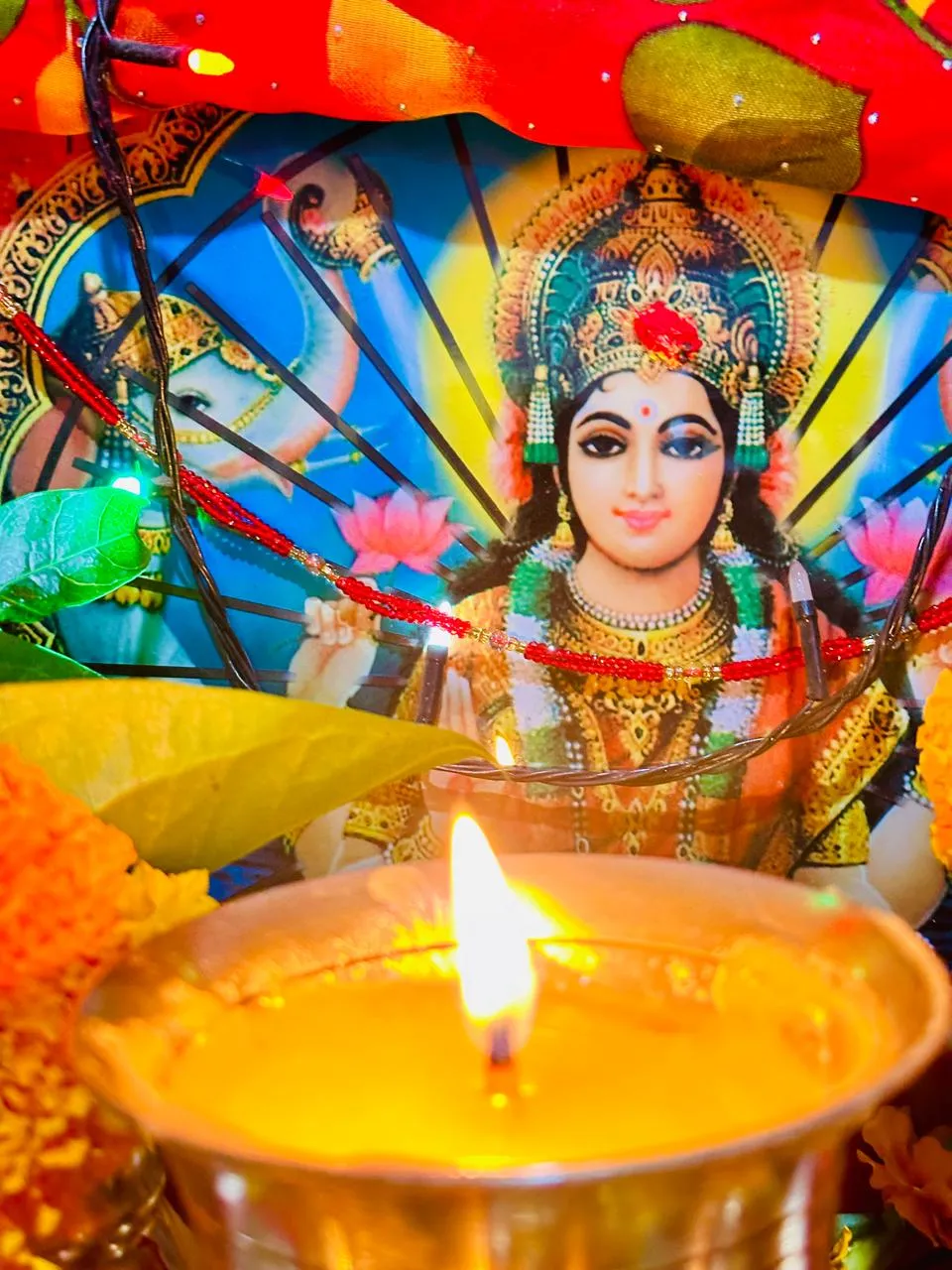
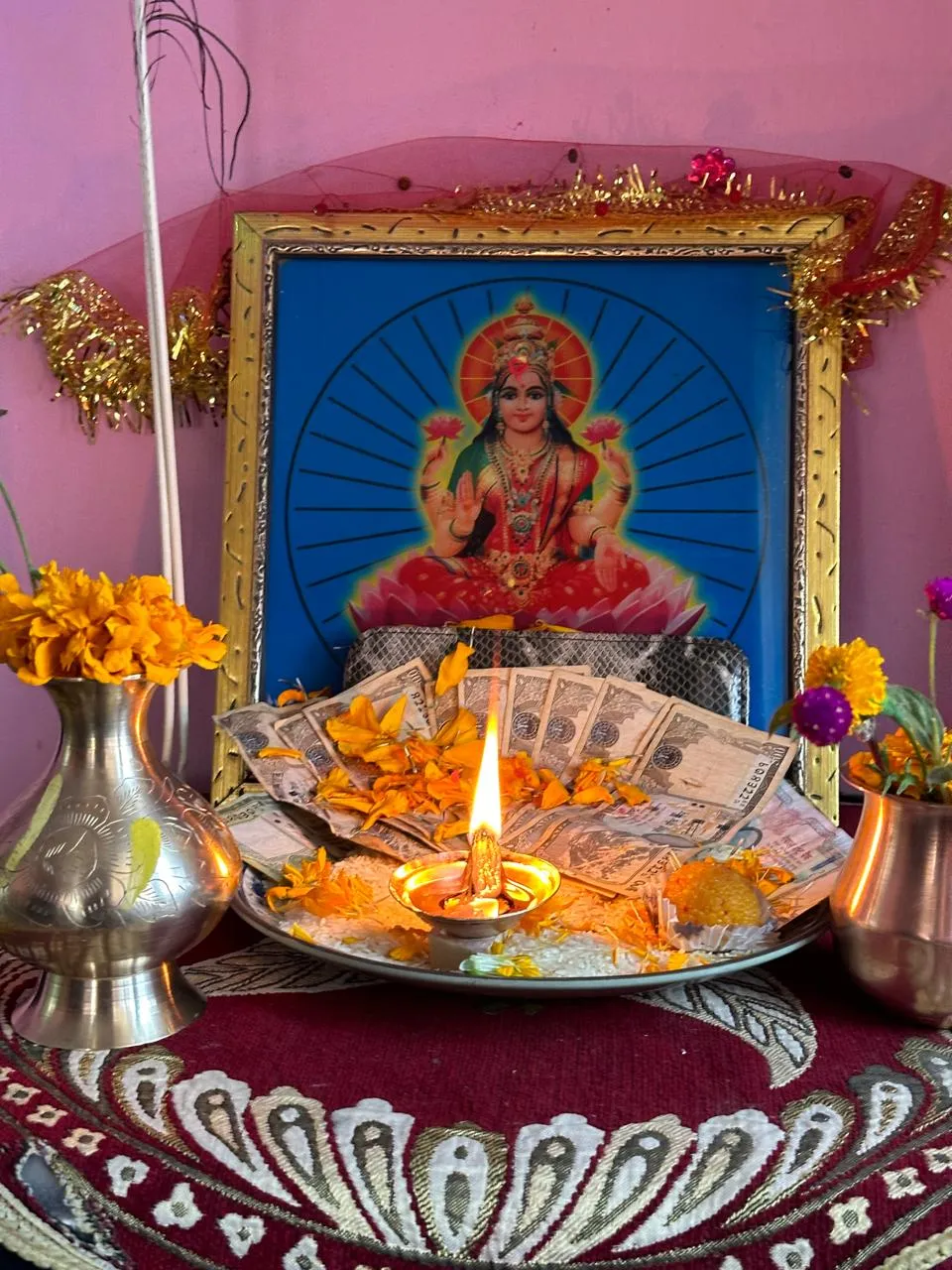 If Tihar has one night that people remember forever, it is the night of Laxmi Puja. As the sun goes down, every house in the country lights oil lamps, candles and colourful string lights along windows, roofs, gates and stairs. The whole of Kathmandu turns golden. From a high point such as Swayambhunath Hill, the valley looks like a field of stars that has come down to rest.
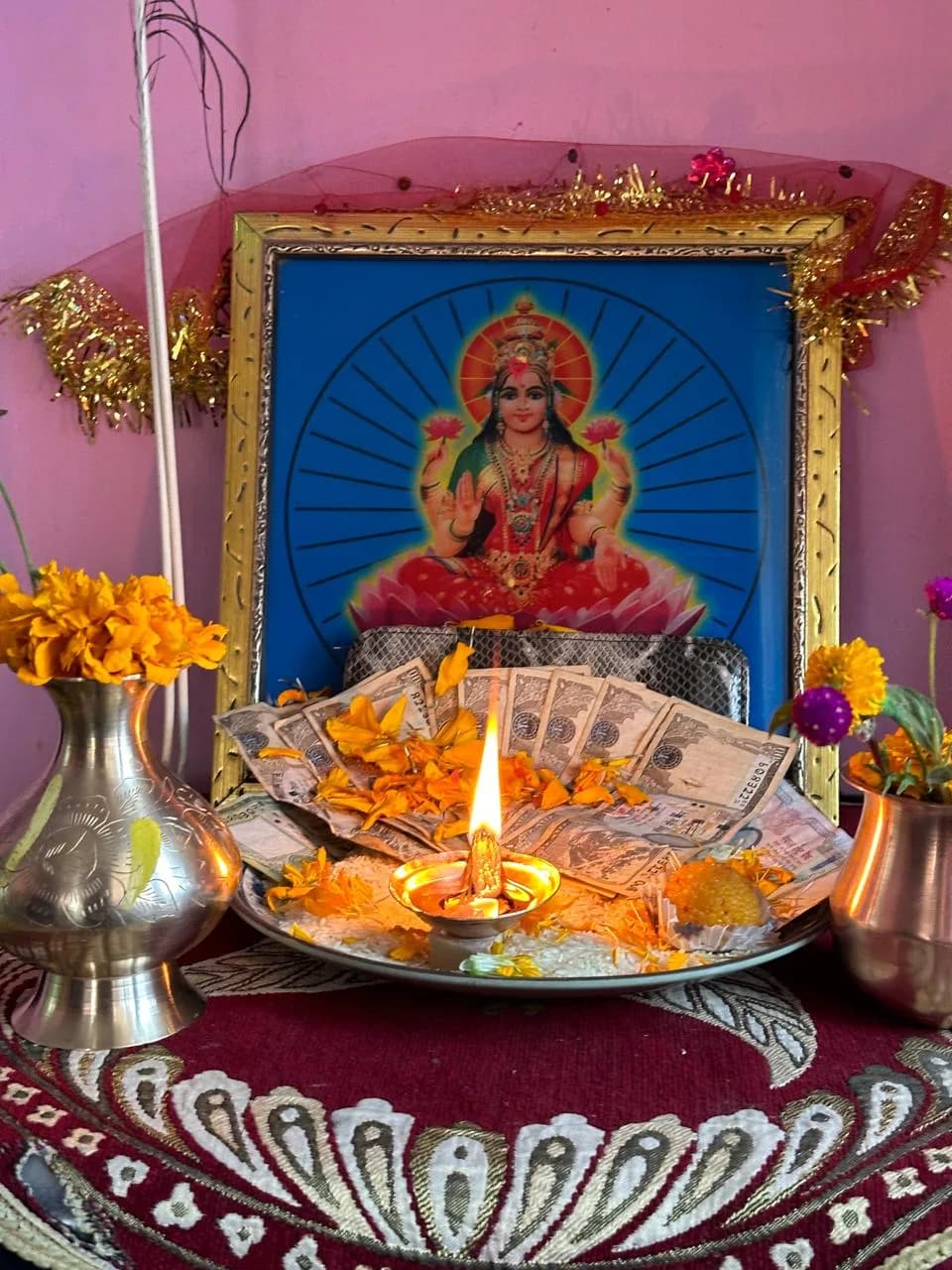
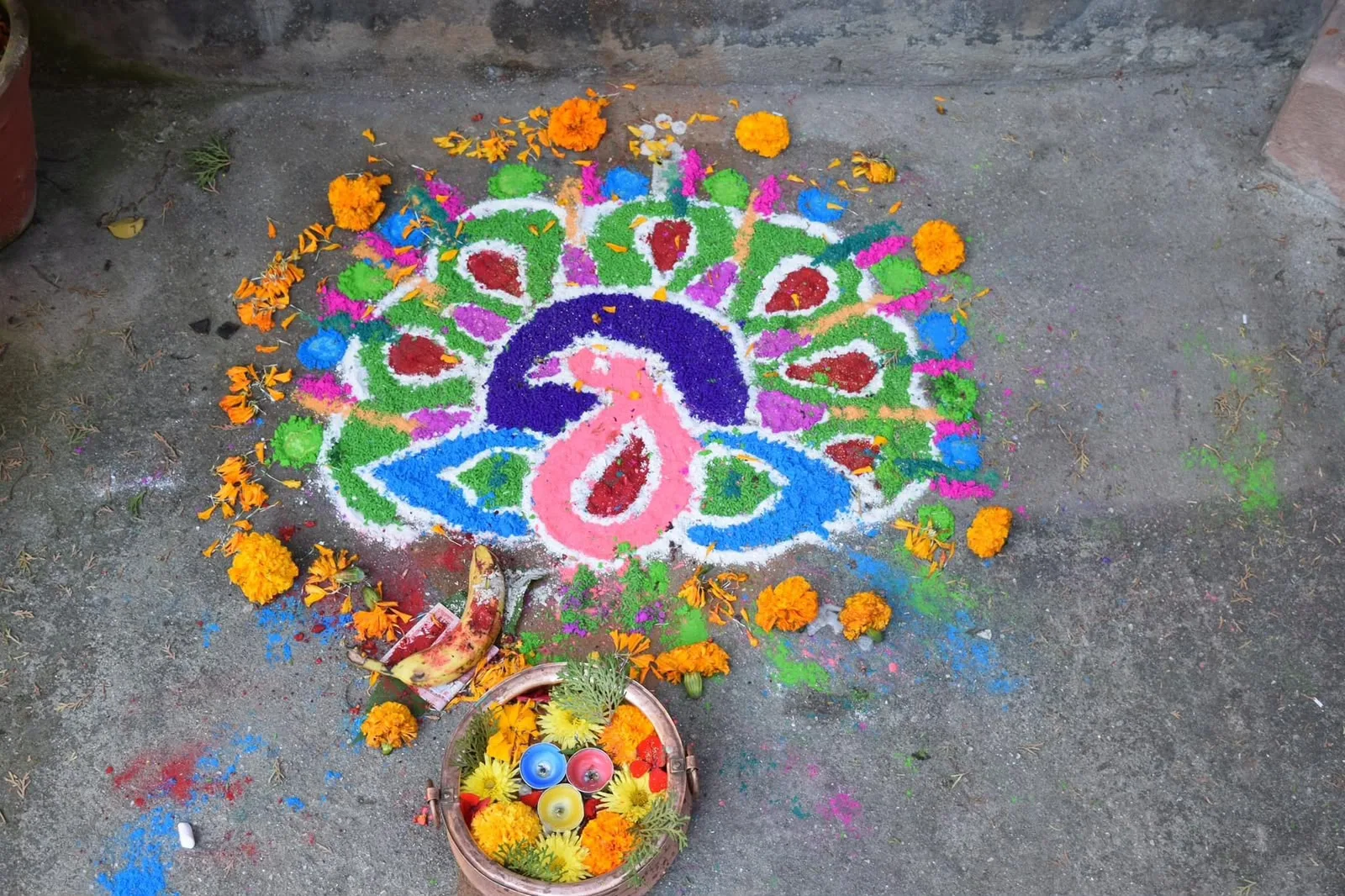
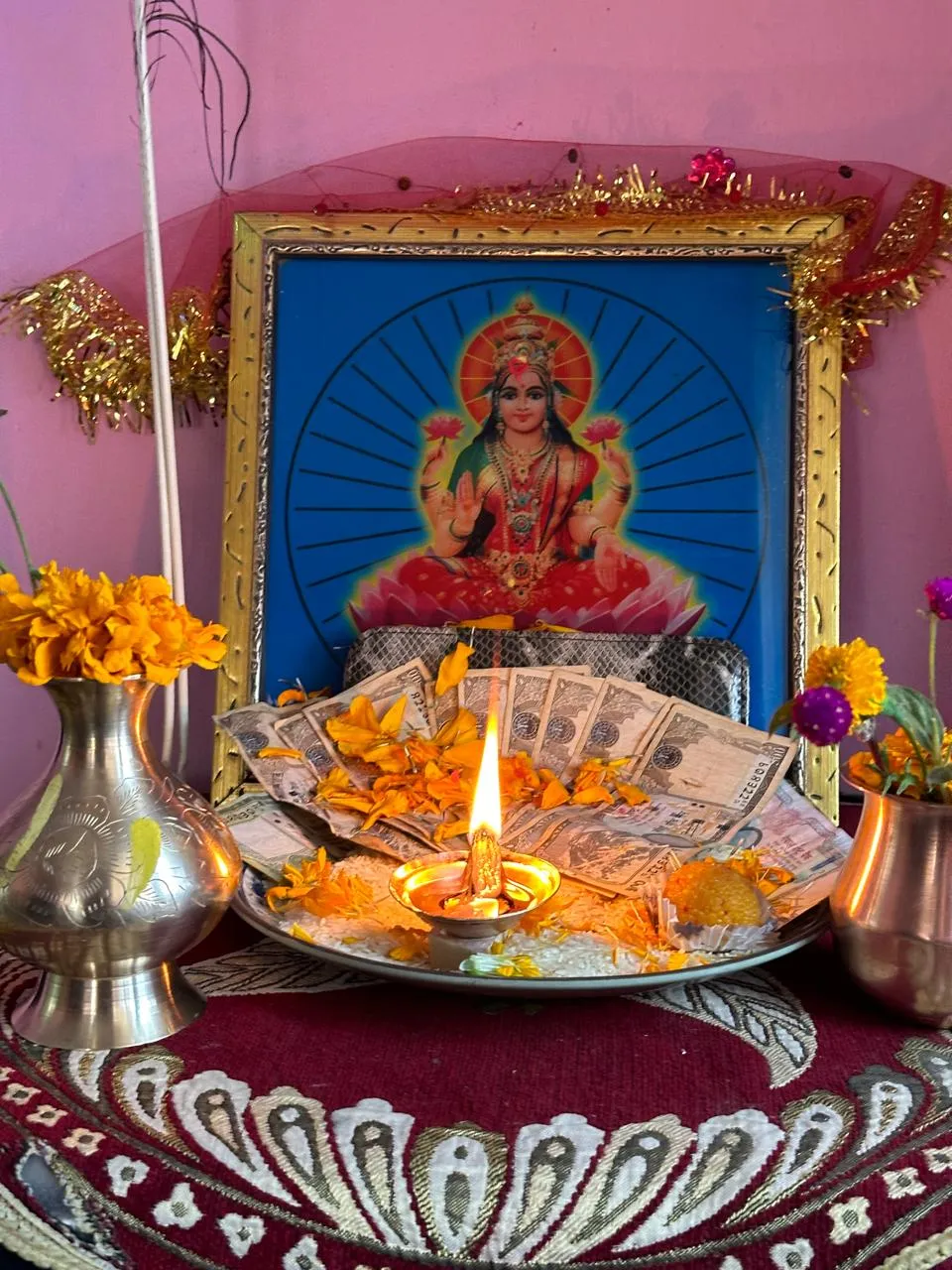
The ritual begins with rangoli, the floor art made from coloured powder, rice flour and flower petals. Each family draws a pattern at the front door, often a lotus, a footprint or a mandala. Small footprints are drawn from the doorstep to the prayer room to show Laxmi the way inside. The doors are kept open, because the goddess will not enter a closed house. Inside, the family places money, jewellery and account books near the shrine, and the head of the house leads a prayer with incense, flowers and sweets.
Many businesses also honour Laxmi on this night. Shopkeepers clean their stores and start a new account book for the year. In some homes, families play cards and games late into the night, which is an old custom of the festival. As a guest you are warmly welcome to walk the streets, but dress politely, keep your voice low near shrines, and ask before you step into a courtyard. A guided evening tour in Kathmandu Durbar Square lets you see the glow without getting lost in the crowd.
From the night of Laxmi Puja, another sound fills the air. Groups of young people knock at doors and sing blessing songs called Deusi-Bhailo. Girls usually sing Bhailo and boys sing Deusi, but today the groups are often mixed. They carry a drum called a madal, a few bells and sometimes a small stage costume. When the door opens, the leader sings a verse that praises the house, and the group answers with the call of "Deusi re" and a lively clap.
Why do they sing? The songs bless the family for health, wealth and long life, and in return the house gives money, rice, fruit or sweets. In many towns the money is used for a village temple, a school or a community project. It is an old way of building a small fund without any bank. The songs can be sweet, funny or sad, and some groups add a short dance. If a group comes to your hotel or home stay, it is polite to listen to the whole song and give a small gift.
For a visitor, joining a group for one evening is one of the best things to do in Tihar. You will sing a few words, clap with the rhythm, eat what the families give, and walk home tired and happy. Our village homestay tours can arrange a safe and friendly group, and it is a lovely idea to try it in a village near Panauti or Kirtipur, where the old songs are still strong.
No festival in Nepal is complete without food, and Tihar has plenty. The star is sel roti, a ring-shaped bread made of rice flour, sugar, ghee and spices. The batter is poured in a circle into hot oil and turned until it is golden and crisp outside and soft inside. The first bite is sweet and a little spicy, and it goes perfectly with a cup of milk tea. Families make a big pile of sel roti and share it with every guest who comes to the door.
Along with sel roti you will see anarsa, a sweet rice cake with sesame seeds, laddu, barfi, fried bread, dry fruits, and a fruit plate with apple, banana, orange and pomegranate. Some homes also make savoury dishes such as spiced potatoes, lentil soup and pickles. The Newar kitchens add their own taste with beaten rice, buffalo meat, fried fish and rice wine. Each community has a slightly different table, and in a single walk through Bhaktapur you may eat three different Tihar plates.
If you want to learn how to cook these dishes, a short cooking class in a local kitchen is a good way to do it. You can cook with a family, learn the trick of the sel roti circle, and take home a few recipes. Eating together is also the best way to understand the spirit of Nepali hospitality, because nobody will let you leave without a second helping.
The fourth day, Tuesday, 10 November, has three different faces. In the hills and villages, farmers celebrate Goru Tihar, the worship of oxen. The ox is washed, fed and decorated with a tika and flower garlands, because it pulls the plough and carries the harvest. Some communities also remember the story of Krishna lifting the Govardhan hill to protect villagers from heavy rain, and they make a small hill from cow dung and worship it as Govardhan Puja.
In the Kathmandu Valley, the same day is Mha Puja, a very special ritual of the Newar people. The word means worship of the self. Family members sit in a row, and a mandala is drawn on the floor with coloured powder and rice. Then each person is blessed in turn with oil, flowers, fruits and a long life prayer. The idea is that the body is a temple and should be respected. It is a beautiful ritual for visitors who want to understand Newar traditions in a deeper way.
Mha Puja is also the start of the Nepal Sambat new year. In the evening there are processions with music and costumes, and the streets of Patan and Kathmandu are full of colour. If you want to see it properly, book a place on a Newar culture tour and ask for a visit to a family courtyard, because the ritual is private and a good guide will arrange a polite invitation.
The last day, Wednesday, 11 November, is Bhai Tika, and it is the emotional peak of the festival. In the morning, sisters bathe and dress in fresh clothes and prepare a plate with seven-colour tika, flowers, sweets, fruits, dry nuts and a lamp. The brother sits on a mat, and the sister draws a line of oil around him in a circle. She prays that no harm will come to him and that his life will be long, and she is not supposed to eat until the tika is finished.
Then comes the tika itself. The sister puts a thick, colourful tika on the brother's forehead, hangs a garland of globe amaranth around his neck, and gives him sweets and fruits. The flower is chosen because it does not wither for many days, like the wish for a long life. The brother bows, gives her a gift or money, and promises to protect her. Friends and cousins who are close like siblings also exchange tikas, and the whole house is full of laughter, hugs and photos.
If you are visiting, you may be invited to a family for tika, and it is a great honour. Bring a small gift of fruit or sweets, and accept the tika with both hands. The best places to feel the mood are the old courtyards of Bhaktapur and Patan, and a local family tour can arrange a warm invitation. Many shops close early, so plan your day around the morning and early afternoon.
The Kathmandu Valley is the heart of Tihar, and every old town has its own flavour. In the capital, Kathmandu Durbar Square and the lanes around Asan have the best lights and the busiest bazaars. Climb to a high terrace at sunset and watch the old palace roofs light up one by one. Nearby, Thamel turns into a glowing carpet of lamps and hotels decorate their gates with marigold and rangoli.
Patan is calm, artistic and full of courtyards, and its Durbar Square is a delight at night. Bhaktapur is more traditional, with its brick lanes, wooden windows and potters' square, and it is the best place for Newar customs on Mha Puja. Boudhanath Stupa has a soft golden glow, and the monks and pilgrims add butter lamps to the thousands of lights. Pashupatinath is more serious, with prayers on the river bank and a quiet, powerful atmosphere. Each of these is covered in our Kathmandu valley tours, which are made for small groups with local guides.
Smaller towns are worth a trip too. Kirtipur sits on a hill with old Newar houses, Panauti has temples at the meeting of two rivers, and Sankhu has a famous Bajrayogini temple and old stone steps. These places are quieter, and the people have more time to welcome a stranger. A one-day cultural day trip from the city is an easy way to see them.
Tihar is not only for Kathmandu. In Pokhara, the lakeside is magical, with floating lamps on Phewa Lake and glowing homes along the hill. The mountains, such as Machhapuchhre, stand behind the lights like a painted curtain on a clear day. The local families are warm, and a short stay in a lakeside guest house is a lovely way to enjoy the festival with a slower rhythm.
In the Terai, the plains in the south, Tihar blends with the local traditions of Mithila. Janakpur glows around the great Janaki Mandir, and the ponds fill with small oil lamps. Not far from there, families prepare for Chhath, another festival of the sun that comes soon after Tihar. If you like pilgrimages, it is a good idea to read about the Janakpur Parikrama and the Vivah Panchami celebration, which are other big events of the same region.
In the hills and mountains, such as Gorkha, Bandipur and the Annapurna villages, Tihar is simple and warm. Villagers decorate houses with mud and lamps, and Deusi-Bhailo groups visit every house. These villages are often stops on our Annapurna region treks and short village walks, so you can combine a few days of festival with a gentle walk. It is a lovely way to see a different side of the country.
Nepal has a festival almost every week, and Tihar sits in the middle of a long, beautiful calendar. If your trip is longer than a week, you can see several of them. A good way to plan is to open our full list of festivals and events and match it with the dates of your flight, so that you do not miss anything special.
Before Tihar, the great Dashain festival fills the autumn with kites, swings, family feasts and long tika days. In the spring, Holi covers the streets with colour and water balloons. In summer, Gai Jatra and Indra Jatra bring masks, processions and the living goddess Kumari Jatra chariot to Kathmandu, while the Seto Machindranath Jatra pulls a huge white chariot through the old city. In the Newar towns, Gunla Lakhey brings dancing demons and a month of music, and the Sankhu Bajrayogini Jatra lights up an old hill town.
There are also adventurous festivals far from the cities. The Tsum Valley Horse Race in the high Himalaya is a rare event with horses, monks and mountain families, and it can be joined by a trek. Vivah Panchami in Janakpur celebrates the wedding of Ram and Sita, and the Janakpur Parikrama is a long walk of faith around holy sites. All of these are good partners to Tihar, and each one gives a different window on the living traditions of Nepal.
November is the best month for walking in the mountains, which is why many guests ask if they can mix the festival with a trek. The answer is yes. The weather is dry, the sky is blue, and the views of Everest, Annapurna and Manaslu are at their sharpest. After Tihar, the trails are busy but the teahouses are warm, and the days are mild at lower heights.
A common plan is to spend the first five days in the Kathmandu Valley for the festival and then fly or drive to the mountains. A short Annapurna Base Camp trek or a gentle Poon Hill trek fits well, and so does the Langtang valley trek for people who want a quieter route. For longer plans, the Everest Base Camp trek and the Manaslu Circuit trek are great choices, and the Tsum Valley trek is a special one for culture lovers.
If you want comfort and rest after the festival, look at the wellness side of our tour list, such as spa days, yoga retreats and hiking breaks near the valley. A day of yoga after a week of festivals feels very good, and it gives the body a gentle reset before a long walk. You can read all our trips on the tour list and ask the team to build a custom plan around the dates of Tihar.
Here is a simple plan for travellers who want to enjoy the five days without stress. It is flexible, so you can swap days or add a trek at the end.
You can ask the Enticing Himalayas team to turn this outline into a private plan with guides, cars and hotels. The best seats for the main rituals fill early, so it is wise to book at least a few weeks before the festival, and our tour packages list shows the options that are available.
Tihar is a family festival, and visitors are welcome, but a few small habits will make your stay smoother. Dress modestly when you enter a temple or a home, with covered shoulders and knees. Take off your shoes at the door, and never step over a rangoli or an offering. Ask before you take a photo of a person at prayer, and never use a flash near an altar. When a family offers you tika, accept it with a smile, and do not wipe it off in front of them.
Be careful with fire and fireworks. Lamps are everywhere, and some streets become crowded after dark. Keep your bag close, walk in groups at night, and use licensed taxis or a private car. Animals can be nervous around loud crackers, so keep your distance from dogs and cows. Carry small notes for Deusi-Bhailo groups, because the usual gift is a modest sum, and give it with both hands.
Also remember that public offices and many shops close during the main days, so keep cash, water and snacks handy. Banks and ATMs may run low, and transport prices rise as families travel home. If you are not sure about something, ask your guide or your hotel manager, because people are happy to explain. A good local travel partner can save you a lot of worry, and our festival guides are trained to explain every custom with kindness.
Tihar is more than a holiday. It is a week in which light replaces darkness, animals receive thanks, and brothers and sisters remember how much they mean to each other. It teaches that wealth is not only money, it is also a clean home, a loyal dog, a fed cow, and a family that sits together. Few festivals in Asia are as gentle and as inclusive.
If you are in Nepal from 7 to 11 November 2026, do not stay inside your hotel. Walk the lanes, listen for the songs, eat a warm sel roti, and let a stranger put a tika on your forehead. If you are still planning, explore the events page, pick the days that interest you most, and build your trip with the tour list and the places guide. We hope that your own Tihar will be as bright and happy as the lamps on every doorstep, and that Enticing Himalayas can help you find your way into the glow.
Key experiences and features
festivals in Nepal
marigold garlands
culture of Nepal
Kukur Tihar ,Kaag Tihar
Newar community
Temples of Kathmandu Valley
Red tika
Recommended packing list
Patan Durbar Square Gate at 04:30 PM
Detailed pricing breakdown
Per Person Rate
$30 USD
Early Bird Rate 🐦
$25 USD
Child Rate 👶
$15 USD
8 photos
Mangal Bazaar, Lalitpur, Kathmandu, Lalitpur, Bagmati, Nepal
Got questions about this event?
Visitors can experience traditional Tihar celebrations, colourful Rangoli designs, red tika blessings, flower garland making, a traditional Nepali family dinner, and the beautiful evening illumination around Patan Durbar Square.
The experience includes a traditional host family dinner, Rangoli art materials, flower garlands, a red tika blessing, and a guided evening tour to explore Patan’s festive decorations and cultural atmosphere.
Yes, international visitors can participate in selected Tihar activities, including making Rangoli, receiving tika, learning about festive customs, and enjoying a traditional meal with a local host family.
Patan Durbar Square offers a beautiful setting for experiencing Nepal’s cultural heritage during Tihar. Its historic temples, traditional Newari architecture, decorated streets, and festive lights create a memorable atmosphere.
Wear modest, comfortable festive clothing and walking shoes. Bring a camera or smartphone to capture the colourful Rangoli, traditional decorations, illuminated heritage streets, and special cultural moments.
Nov 7 – Nov 12, 2026
5 days
Quick Info
More festival experiences
Nov 8 – Nov 8, 2026Kathamandu
 Aug 17 – Sep 16, 2027
Godavari Kunda
 Jan 15 – Jan 16, 2027
Swayambhu Bhuikhhel