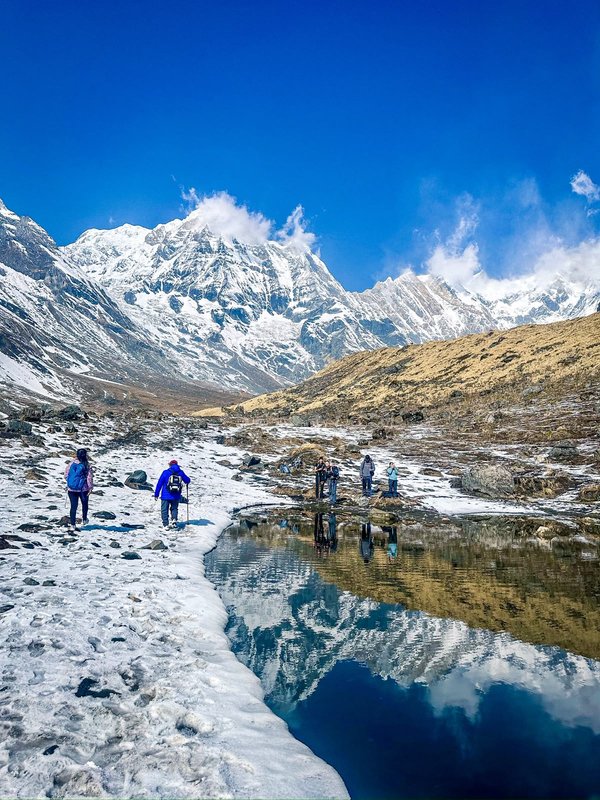
Trekking in the Annapurna region is a dream for many adventurers, but before you set foot on the trail, you need to sort out your permits. Nepal's permit system can seem complex, with different requirements depending on your route, nationality, and whether you are trekking independently or with a guide. This comprehensive 2026 guide breaks down every permit you need for Annapurna trekking: the Annapurna Conservation Area Project (ACAP) entry fee, the Trekkers' Information Management System (TIMS) card, and special permits for restricted areas like Upper Mustang and Nar-Phu. We cover costs, where to obtain them, what documents you need, and recent changes to the system. Explore with us as we make permit planning simple and clear.
What Permits Do You Need for Annapurna Trekking in 2026?
Every trekker in the Annapurna region needs at least two permits: the ACAP (Annapurna Conservation Area Project) entry permit and the TIMS (Trekkers' Information Management System) card. The ACAP permit is mandatory for anyone entering the Annapurna Conservation Area, which covers the entire trekking region. The TIMS card is a national requirement for all trekkers in Nepal, designed for safety tracking and monitoring. If you plan to trek in restricted areas within the broader Annapurna region, such as Upper Mustang or Nar-Phu, you need an additional Restricted Area Permit (RAP) on top of ACAP and TIMS. Your trekking agency typically arranges all permits, but independent trekkers can obtain them at the Nepal Tourism Board office in Kathmandu or Pokhara.
ACAP: The Annapurna Conservation Area Project Permit Explained
The ACAP permit is the primary permit for all trekking in the Annapurna Conservation Area, Nepal's largest protected area covering 7,629 square kilometers. This permit funds conservation work, trail maintenance, community development, and environmental education in the region. As of 2026, the ACAP entry fee for foreign nationals (excluding SAARC countries) is approximately NPR 3,000 per person. For SAARC nationals (India, Bangladesh, Sri Lanka, Pakistan, Bhutan, Maldives, Afghanistan), the fee is significantly reduced at approximately NPR 1,500. Nepali citizens are not required to pay but should carry identification. The ACAP permit is a one-time fee valid for a single entry into the conservation area. If you exit and re-enter, you need a new permit. The permit must be carried with you at all times on the trail, as checkpoints are located at major trailheads and along the route. Your permit will be checked at entry points like Birethanti, Larjung, and Manang. Lost permits can be replaced at the conservation area office, but it requires time and proof of purchase.
How Does the TIMS Card Work for Annapurna Trekkers?
The TIMS (Trekkers' Information Management System) card is a mandatory trekking permit for all trekkers in Nepal, including those in the Annapurna region. The system was designed to track trekkers for safety purposes, enabling rescue services to locate trekkers in emergencies and maintaining a database of who is on which trail. There are two types of TIMS cards: the Independent Trekker TIMS (for those trekking without a registered guide) and the Organized Trekker TIMS (for those trekking with a guide or agency). As of 2026, the TIMS card fee for foreign nationals is approximately NPR 2,000 per person for organized trekkers and NPR 2,200 for independent trekkers. For SAARC nationals, the fee is reduced. The TIMS card includes your personal details, trekking route, emergency contact, and insurance information. It is issued per trekking route and is non-transferable. You must present your TIMS card at checkpoints along the trail. The TIMS system has been integrated with the ACAP permit in some trekking regions, so check current regulations before your trip.
Restricted Area Permits: Upper Mustang and Nar-Phu
If your Annapurna trek takes you into restricted areas, you need additional permits beyond ACAP and TIMS. The most common restricted areas in the Annapurna region are Upper Mustang and the Nar-Phu valley. Upper Mustang, the former Buddhist kingdom bordering Tibet, requires a Restricted Area Permit costing approximately USD 500 per person for the first 10 days, plus approximately USD 50 per person per day thereafter. This permit is only available through a registered trekking agency, and trekkers must travel in a group of at least two with a licensed guide. The Nar-Phu valley, a remote side valley off the Annapurna Circuit, requires a permit of approximately USD 90 per person per week (USD 75 for the first 7 days plus USD 15 per day after). These permits are obtained from the Department of Immigration in Kathmandu and require your original passport, visa, and passport-size photographs. The Muktinath Helicopter Pilgrimage passes through Lower Mustang, which does not require a restricted area permit, but any trek north of Kagbeni into Upper Mustang does.

Where Can You Buy Annapurna Trekking Permits?
Permits for Annapurna trekking can be obtained at several locations. The main offices are the Nepal Tourism Board (NTB) in Kathmandu (Pradarshani Marg, Bhrikutimandap) and the NTB office in Pokhara (Damside, Pardi). Both offices issue ACAP permits and TIMS cards during business hours (typically 10:00 AM to 4:00 PM, Sunday to Friday, with a lunch break). For restricted area permits, you must visit the Department of Immigration in Kalikasthan, Kathmandu. If you are trekking with a registered agency like Enticing Himalayas, the agency handles all permit arrangements as part of your package. Independent trekkers should bring their passport, visa, passport-size photos (at least four), and the permit fees in cash. Some permits can also be obtained at trailhead checkpoints, but this is not guaranteed and prices may be higher. It is always best to arrange permits in Kathmandu or Pokhara before starting your trek. The offices are closed on Saturdays and public holidays, so plan accordingly.
What Documents Do You Need for Annapurna Permits?
To obtain your Annapurna trekking permits, you need the following documents: a valid passport with at least six months of validity remaining, a Nepal visa (available on arrival at Tribhuvan International Airport or at land border crossings), passport-size photographs (at least four for standard permits, more for restricted areas), and cash for permit fees in Nepali rupees. For the TIMS card, you also need to provide your trekking route, estimated dates, emergency contact details, and proof of travel insurance that covers helicopter evacuation. If you are trekking with a guide through a registered agency, the agency will typically collect your passport details and photos in advance and process the permits on your behalf. For restricted area permits, additional documentation may include a letter from your trekking agency and a group permit application. Always carry original documents, as photocopies are often not accepted at permit offices.
How Much Do Annapurna Trek Permits Cost in 2026?
The total permit cost depends on your nationality and route. For foreign nationals on a standard Annapurna trek (ACAP plus TIMS), the combined cost is approximately NPR 5,000 to NPR 5,200 per person. SAARC nationals pay significantly less, around NPR 2,500 to NPR 3,000 combined. Nepali citizens are exempt from most fees but may need to pay a nominal conservation fee. For restricted areas, the costs are substantially higher: Upper Mustang costs approximately USD 500 for the first 10 days (roughly NPR 67,500), and Nar-Phu costs approximately USD 90 per week. If you are trekking the full Annapurna Circuit without entering restricted areas, you only need ACAP and TIMS. The Circuit with Tilicho Lake also requires only standard permits, as Tilicho Lake is not in a restricted area. All fees are subject to periodic revision, so verify current rates with the NTB or your trekking agency before departure.
Do You Need a Guide for Annapurna Trekking Permits?
As of 2026, the question of whether a guide is mandatory depends on the specific area. For standard Annapurna routes like the Annapurna Base Camp trek and the Ghorepani Poon Hill trek, independent trekking is still permitted with the standard TIMS card. However, Nepal has been moving toward requiring guides on major trekking routes for safety reasons, and regulations can change. For restricted areas (Upper Mustang, Nar-Phu), a licensed guide is absolutely mandatory, and you must trek in a group of at least two people. Even where guides are not legally required, trekking with a guide is strongly recommended for safety, cultural interpretation, and logistical support. Guides also handle permit procurement, checkpoint interactions, and emergency situations. If you are trekking independently, you carry your own permits and present them at each checkpoint. If you hire a guide through a registered agency, the agency manages all paperwork.
What Happens If You Trek Without Proper Permits?
Trekking without the required permits is illegal and carries consequences. Checkpoints are stationed along all major Annapurna routes, and officials will ask to see your ACAP permit and TIMS card. If you are found without permits, you will be asked to purchase them on the spot, often at a higher rate, or in some cases you may be turned back. For restricted areas, the penalties are more severe: trekking without a RAP in Upper Mustang or Nar-Phu can result in fines and deportation. Beyond legal consequences, the permit system exists for your safety. The TIMS database is used by rescue services to locate trekkers in emergencies. Without a TIMS card, rescue coordination becomes much harder and potentially slower. The permit fees also fund the infrastructure you rely on: trail maintenance, bridge construction, conservation projects, and community health posts along the route. Paying for permits is both a legal obligation and an investment in the trail system.
Can You Get Annapurna Permits Online or at the Trailhead?
As of 2026, ACAP and TIMS permits are primarily issued in person at the Nepal Tourism Board offices in Kathmandu and Pokhara. Some trailhead checkpoints, such as the one at Birethanti on the ABC route, can issue ACAP permits, but this is not guaranteed and should not be relied upon. The TIMS card is generally not available at trailheads. Online permit systems have been discussed for years but are not fully implemented for all trekking regions. If you are trekking with a registered agency, the agency handles all permit procurement before you arrive at the trailhead. Independent trekkers should plan to spend a half-day in Kathmandu or Pokhara obtaining permits. The process is straightforward if you have all documents ready (passport, visa, photos, and cash). For restricted area permits, the Department of Immigration in Kathmandu is the only issuing office, and processing can take several hours. Always build buffer time into your itinerary for permit acquisition.
How Do Permits Differ Between Annapurna and Other Nepali Regions?
Permit requirements vary significantly across Nepal's trekking regions. In the Annapurna region, you need ACAP plus TIMS. In the Everest region, you need the Sagarmatha National Park entry fee plus a Khumbu Pasang Lhamu Rural Municipality fee, and TIMS. In the Langtang region, you need the Langtang National Park entry fee and TIMS. Restricted area permits (RAP) apply to several regions beyond Annapurna, including Manaslu, Dolpo, Kanchenjunga, and Tsum Valley. The costs and requirements differ for each. The Annapurna region is generally one of the more straightforward and affordable permit areas, with no restricted area requirements on the standard Circuit or ABC routes. For comparison, the Manaslu restricted area permit costs approximately USD 70 per week in the off-season and USD 100 per week in peak season. Browse our full range of Nepal trekking options on the EHT tour list to compare regions and permit requirements.
Tips for a Smooth Permit Process on Your Annapurna Trek
To ensure a hassle-free permit experience, follow these practical tips. First, carry extra passport-size photos (at least six) as you may need them for multiple permits and checkpoint registrations. Second, bring cash in Nepali rupees, as permit offices do not accept foreign currency or cards. Third, arrive at the permit office early in the day, as processing can take time and offices close by mid-afternoon. Fourth, double-check that all information on your permits is correct (name spelling, passport number, dates) before leaving the office. Fifth, keep your permits in a waterproof bag, as trail officials will need to read them at checkpoints. Sixth, if trekking with an agency, confirm in writing that permit costs are included in your package. The ABC Short Trek and Mardi Himal Trek both include permit arrangements when booked through Enticing Himalayas. Finally, keep copies of your permits as souvenirs, but do not give the originals to anyone except authorized checkpoint officials.
Conclusion: Get Your Permits and Hit the Annapurna Trail
Understanding the Annapurna permit system is the first step to a successful trek. For most trekkers, the process is straightforward: obtain your ACAP and TIMS permits in Kathmandu or Pokhara, carry them on the trail, and present them at checkpoints. If you are heading to Upper Mustang or Nar-Phu, plan ahead for restricted area permits through a registered agency. The permit fees directly support the conservation and community infrastructure that makes the Annapurna region one of the world's premier trekking destinations. Explore, Heal, Thrive with Enticing Himalayas, and let us handle the paperwork while you focus on the mountains.
Frequently Asked Questions About Annapurna Trek Permits
How much do Annapurna trek permits cost in 2026?
For foreign nationals, the ACAP permit costs approximately NPR 3,000 and the TIMS card costs approximately NPR 2,000, for a total of about NPR 5,000 per person. SAARC nationals pay roughly half. Restricted area permits for Upper Mustang cost approximately USD 500 for the first 10 days, and Nar-Phu costs approximately USD 90 per week.
Where do I buy Annapurna trekking permits?
ACAP and TIMS permits are issued at the Nepal Tourism Board offices in Kathmandu (Bhrikutimandap) and Pokhara (Damside, Pardi). Restricted area permits are issued only at the Department of Immigration in Kathmandu. If you trek with a registered agency, they handle all permit procurement on your behalf.
Do I need a guide for the Annapurna Circuit trek?
On the standard Annapurna Circuit and ABC routes, a guide is not legally required as of 2026, though this may change. For restricted areas like Upper Mustang and Nar-Phu, a licensed guide is mandatory and you must trek in a group of at least two. Hiring a guide is strongly recommended for safety and cultural enrichment on all routes.
Can I get Annapurna permits at the trailhead?
Some trailhead checkpoints can issue ACAP permits, but this is not guaranteed and should not be relied upon. TIMS cards are generally not available at trailheads. Always obtain your permits in Kathmandu or Pokhara before starting your trek. The offices are closed on Saturdays and public holidays.
Do I need a separate permit for Tilicho Lake?
No, Tilicho Lake does not require a separate restricted area permit. It is within the Annapurna Conservation Area, so your standard ACAP and TIMS permits cover the entire route. The Annapurna Circuit with Tilicho Lake trek (13 days) only requires the standard two permits regardless of the side trip to the lake.
What documents do I need for Annapurna permits?
You need a valid passport with six months of validity, a Nepal visa, at least four passport-size photos, and cash in Nepali rupees for the permit fees. For restricted area permits, you also need a letter from your trekking agency and additional photos. Always carry original documents, as photocopies are not accepted.