Loading...
11 days
1 Option Available
Annapurna Photography Trek: 11 Days Golden-Hour ABC and Poon Hill
Country
Annapurna Region, Nepal
Duration
11 days
Group size
Flexible group size
Difficulty
moderate
0(0 reviews)
Annapurna Region, Nepal
Tour Description
Annapurna Photography Trek: An 11-Day Photo Expedition to Poon Hill, MBC and ABC
Introduction
Most treks are planned around the kitchen. Breakfast is at seven, so the walk starts at eight, and the best light is already gone. The Annapurna Photography Trek reverses this. Over 11 days, the schedule follows the light, and you stand at the viewpoint before first light, not two hours after it. Among the many Nepal trekking packages, this is a photography tour in Nepal built for people who care about the shot. It covers the Annapurna Base Camp route and Poon Hill. For background, see our Nepal travel guide and the places to see in Nepal.
Why a Photography Trek Is Different
A normal group trek moves at a fixed pace and a fixed schedule. A photo trek cannot, because light does not wait. Here, departure times are set by the light forecast, not by meal times, so you can wake early for dawn or stay out for dusk. Flexible wake-up calls and tripod-friendly timing mean you are never rushed away from a good scene. This is the main difference from other guided treks in Nepal and from most Annapurna region treks. It also works well alongside photography activities. You can read more about shooting in the mountains on the Enticing Himalayas blog, and you can customize the schedule if you want extra shooting days.
Built for Photographers
Every detail of the trek supports the camera:
- Daily dawn departures timed to civil twilight at each viewpoint
- A guide trained in photography support, covering positioning, weather calls, and porter-paced gear handling
- A porter allowance raised to 18 kg per trekker for tripods, lenses, and filters
- Guaranteed window or best-position teahouse rooms at the base camps
- A small group of a maximum of 8, so tripods never trip over each other
These features make the trek one of the most practical photo-focused tours in Nepal. The higher porter allowance matters on any porter-supported trek, because camera gear is heavy. Small groups are also a feature of our small group treks. For answers about gear and baggage, see the FAQ.
Poon Hill at Dawn
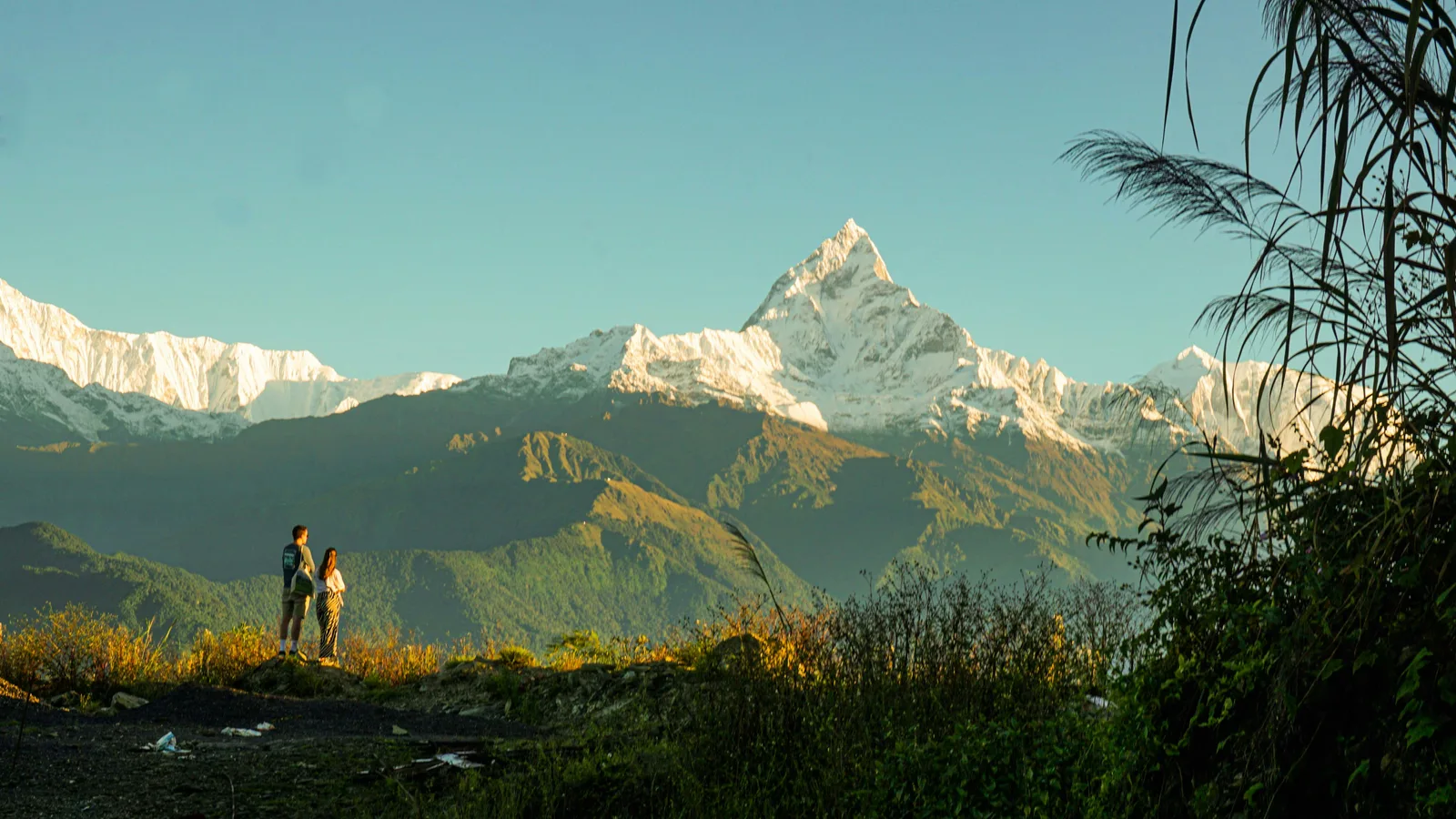
The first big shoot is Poon Hill. From the summit you see the classic panorama, from Dhaulagiri to Manaslu, across about 300 kilometers of Himalaya. The best frames come before sunrise, when the peaks turn from blue to pink to gold. Your guide gets you to the viewpoint in time for civil twilight and helps you pick a position before the crowd arrives. Many travelers choose a Poon Hill trek for this view alone. On this route, it is the first of many photo moments on a Pokhara trekking route. It pairs well with other Himalayan viewpoint tours. Check the events calendar if you want to shoot during a local festival, and use the travel guide to plan the best season.
Tadapani and the Rhododendron Forests
After Poon Hill, the trail enters the forests around Tadapani. In bloom season, the rhododendrons turn the hillsides red, pink, and white, and the mossy trunks create layered scenes in soft light. This is a good place to slow down and work with texture and color rather than big mountains. Forest photography rewards patience, and the schedule gives you time for it. These trails are among the finest on any Annapurna trekking package. They are also a highlight of a spring rhododendron trek. For ideas on flowers and wildlife, see the places page and the activities, and read the blog for seasonal tips.
The Modi Khola Gorge in Soft Morning Shade
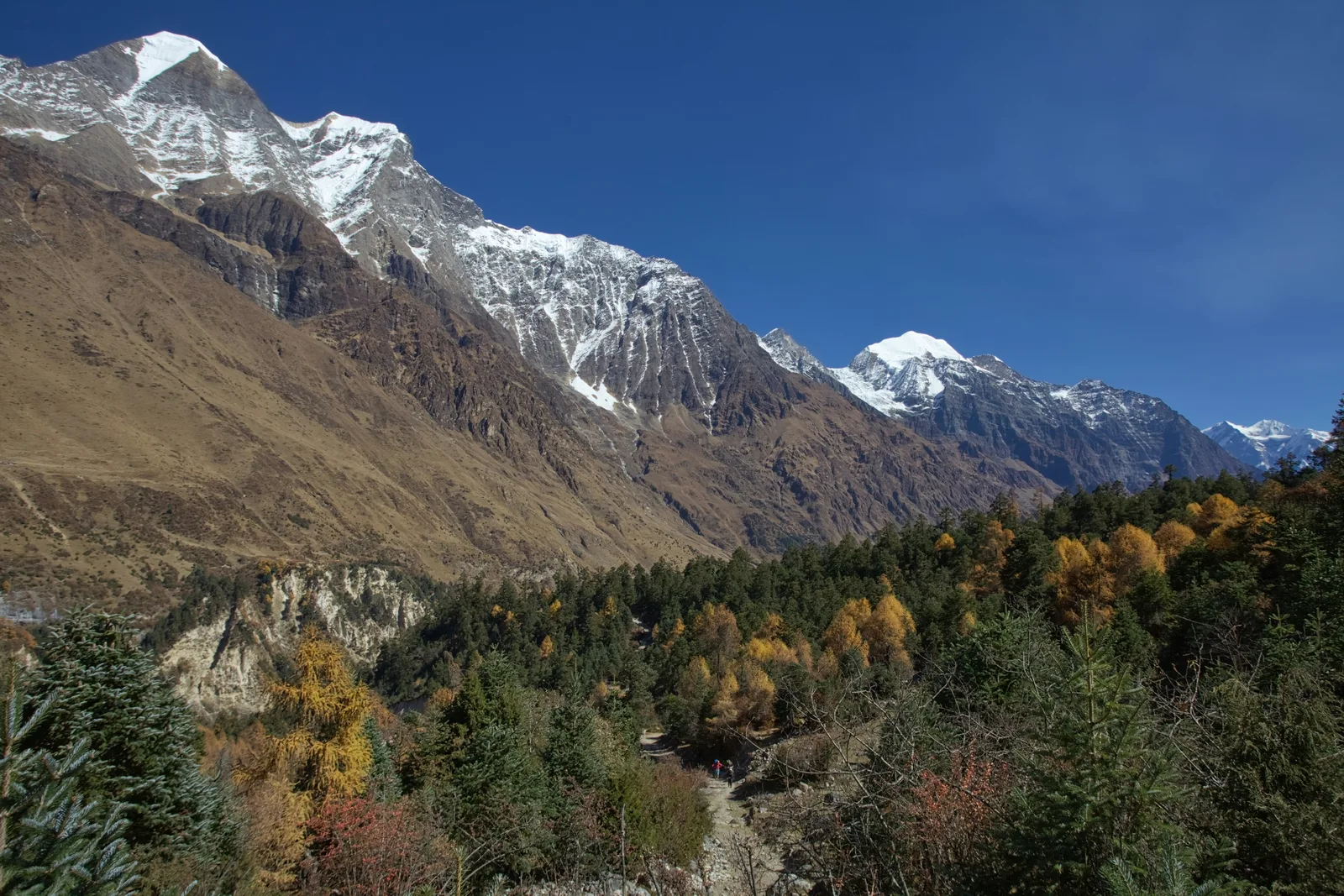
Deeper into the valley, the trail follows the Modi Khola gorge. Harsh midday sun makes this area difficult to shoot, but in the soft morning shade it is ideal. Waterfalls, moss, steep walls, and river light all work well when the sun is low. The flexible schedule lets you start early and finish the gorge before the light turns hard. This is exactly the kind of timing a regular Annapurna Base Camp trek cannot offer. You also pass the Hinku Cave canyon walls, which give strong shapes and shadows. If you want a different style of valley walk, browse the full tour list or create a custom trek.
Machhapuchhre Base Camp at Sunset
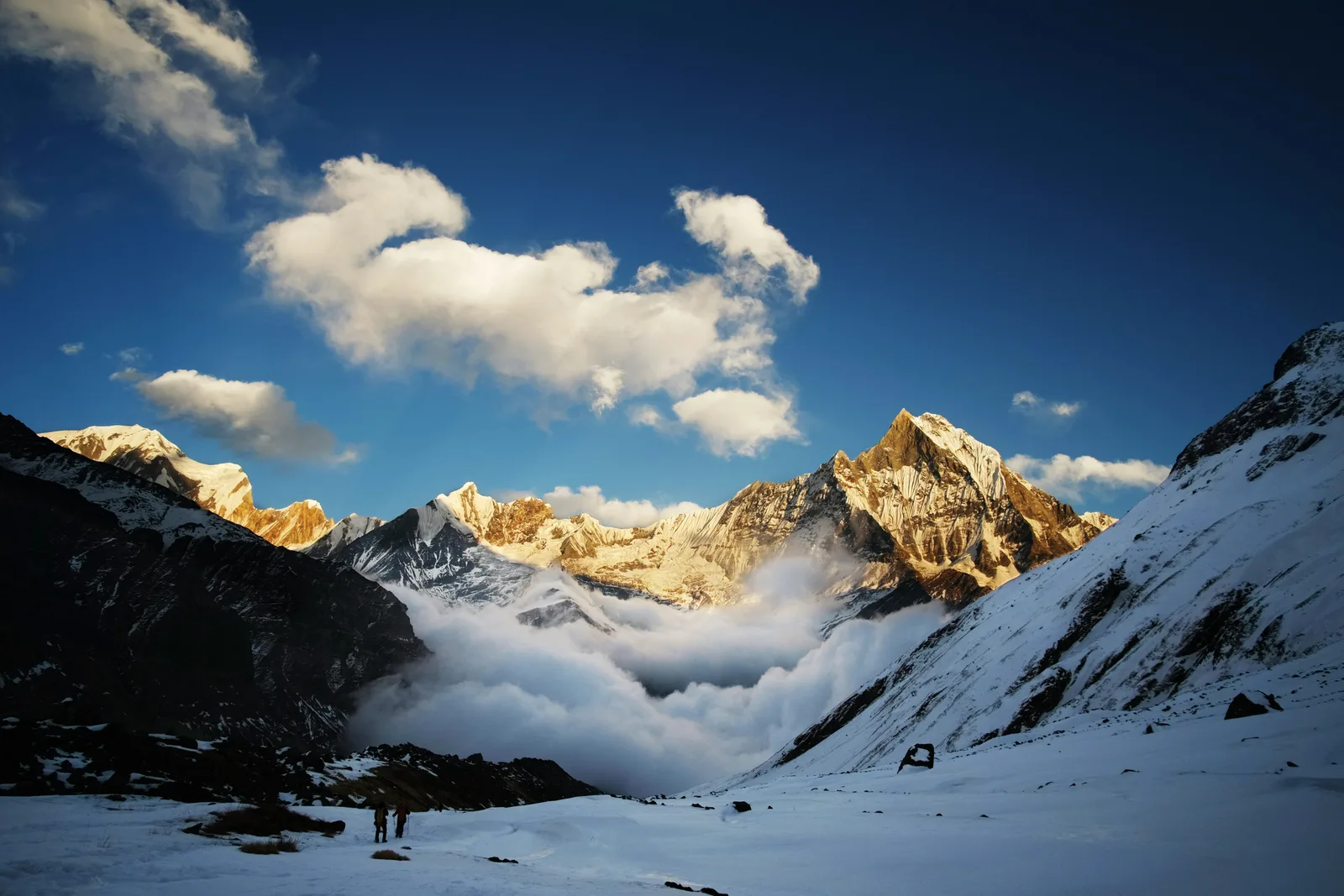
At Machhapuchhre Base Camp, the main event is the evening. Alpenglow lights up Annapurna South and Hiunchuli, and the fishtail summit holds the last light. Your teahouse room is a guaranteed window or best-position room, so you can watch the light from inside if the air is freezing. Blue-hour and astro options are available here on clear nights, when the stars fill the sky above the peaks. This stop is the heart of any Machhapuchhre Base Camp trek. It is also a favorite among astrophotography tours. Dress warmly and pack spare batteries. The FAQ and the travel guide have more cold-weather tips, and the blog covers night shooting.
Annapurna Base Camp at Both Ends of the Day
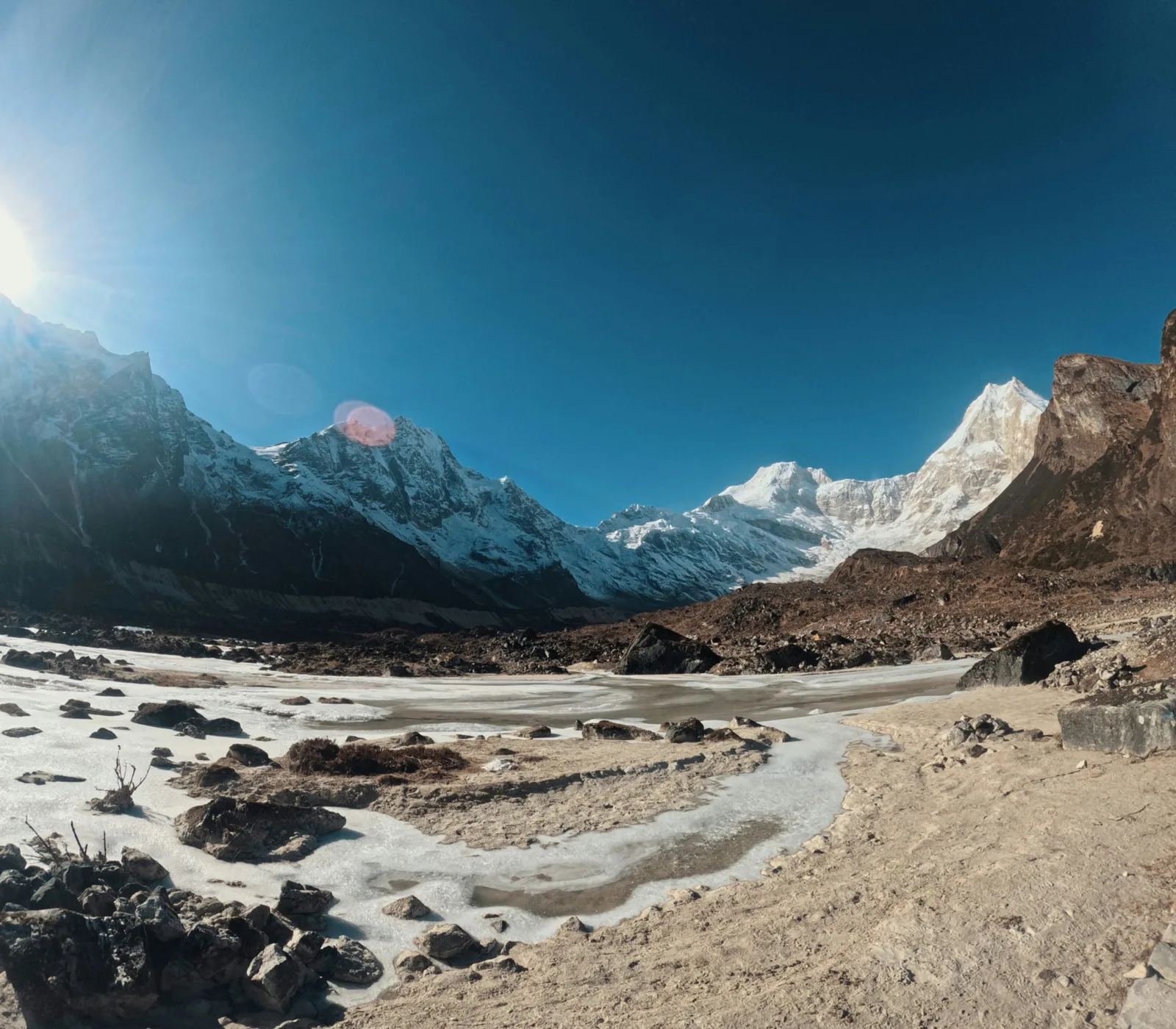
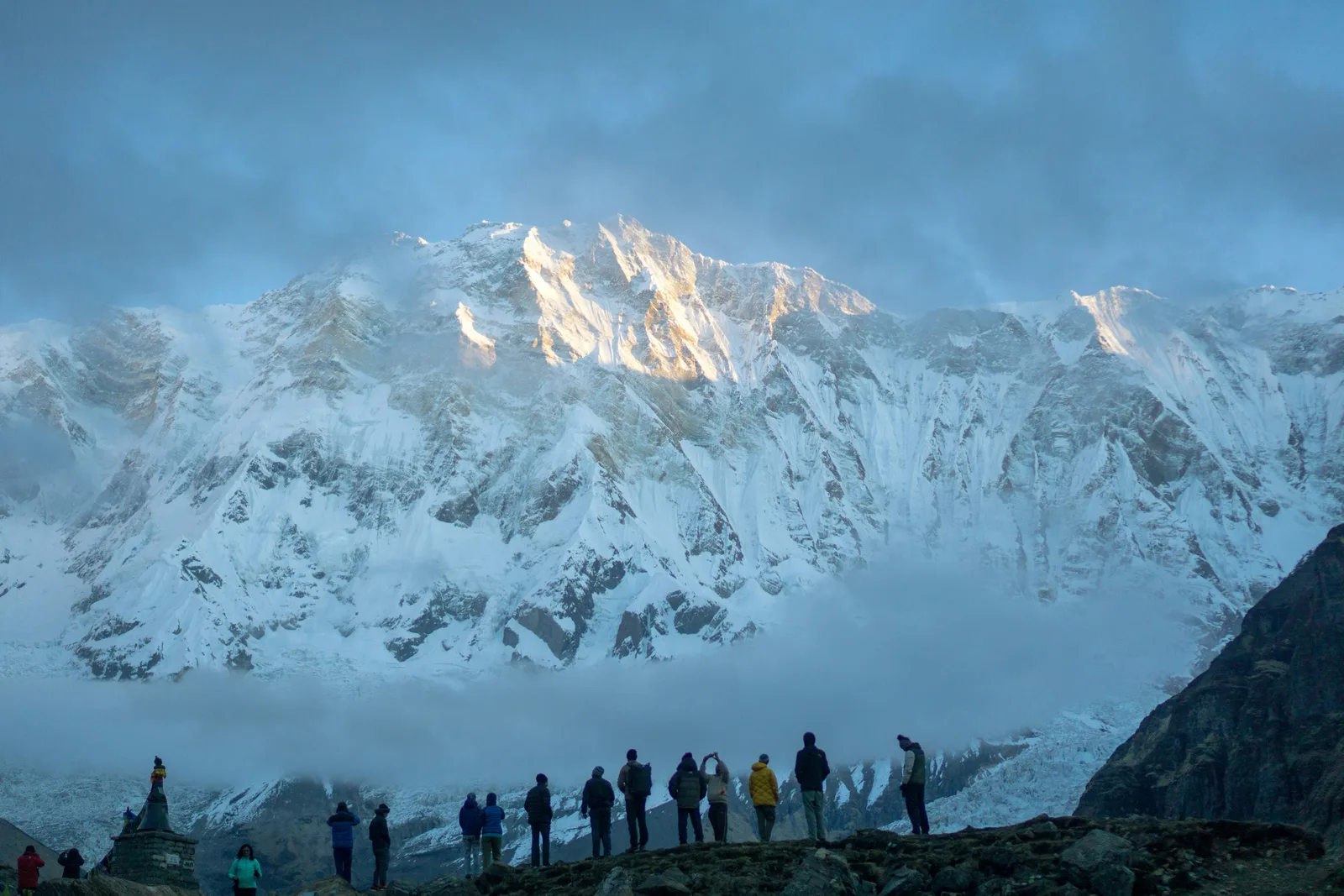
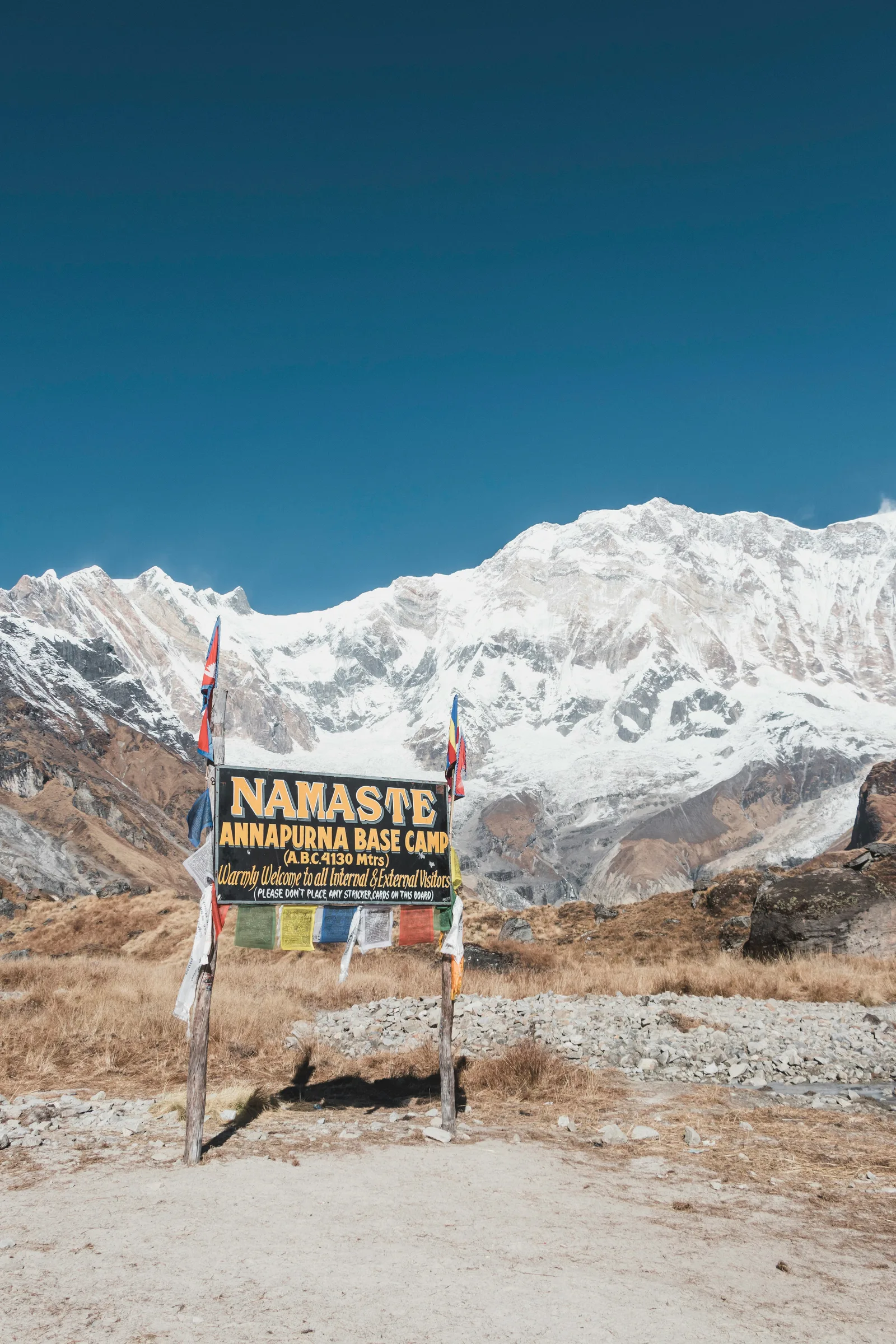
The climax of the trek is Annapurna Base Camp. You stand inside a 360-degree glacier amphitheater, ringed by giants. The plan includes shooting at both ends of the day, with dawn light on the summits and the last glow at dusk. Clear nights also allow blue-hour and astro work. This is the payoff of any ABC trek, and with the extra time, you can work through several compositions. For those who want a quicker route without the photography focus, there is the 7-day ABC Short Trek. More mountain options are on the tour packages page, and the places page covers nearby sights.
Gear, Weather, and Planning
A full-frame body and a wide zoom are all you need, although longer glass is rewarded. Bring a sturdy tripod, spare batteries, memory cards, filters, and cold-weather protection for your gear. The 18 kg porter allowance means you do not have to leave useful equipment behind. Weather calls come from your guide, who decides when to leave based on the forecast. Good planning is as important as good gear on any high-altitude trek. Read the FAQ for packing advice, and see the blog for gear lists. If you need a different schedule, customize your tour, and use the travel guide to choose the best season.
Who Should Join
This trek suits serious hobbyists and working photographers alike. You do not need to be an expert, but you should enjoy early starts and be comfortable walking for several days at altitude. The small group keeps the mood relaxed and focused on the pictures. If you prefer more comfort between shoots, look at the Annapurna Luxury Lodge Trek, which offers upgraded lodges on the ABC route. If you want a gentler walk with less gear, there is also the Annapurna Family Trek. Compare all choices on the tour list, and use the activities page for extra ideas.
Final Thoughts
The Annapurna Photography Trek gives photographers what ordinary treks cannot: time at the right place in the right light. With dawn at Poon Hill, soft shade in the Modi Khola gorge, sunset at Machhapuchhre Base Camp, and both ends of the day at Annapurna Base Camp, every day has a clear shooting purpose. When you are ready, explore the full tour list, read the travel guide, or browse the places to visit. You can also customize your trip, check the FAQ, and plan around Nepal’s festivals.
Highlights
What's Included
What's Not Included
Not Suitable For
Important Information
What to Bring
Know Before You Go
Not Allowed
Detailed Itinerary
Day 1Pokhara arrival, gear prep and sunset at Phewa Lake
A driver meets you at the airport and takes you to your hotel in Pokhara for a relaxed check-in. Your guide then goes through your trekking and camera gear, making sure everything is packed smartly for the days ahead. As the afternoon softens, head to Phewa Lake for a warm-up sunset shoot, catching boats, reflections, and the Annapurna skyline glowing above the water. It’s an easy first session to get your eye and camera ready for the trek.
Day 2Pokhara to Ulleri (1,960m)
Ride a private jeep to Hille, then begin the climb up the famous stone steps to Ulleri. The walk takes about three hours at a steady, unhurried pace. Once you arrive, spend the afternoon photographing daily village life, from children on the paths to farmers in the fields. As the sun lowers, the terraced hillsides catch beautiful warm light, giving you soft shadows and rich colors for your first real trail frames.
Day 3Ulleri to Ghorepani (2,860m)
Today’s four to five hour walk leads through quiet rhododendron forest, with mossy trunks, filtered light, and birdsong all around. Take your time and stop often, since the forest rewards patient photographers. You arrive in Ghorepani with energy to spare, perfectly placed for the Poon Hill dawn. In the evening, your guide gives a light briefing on timing and light for tomorrow morning, so you wake up knowing exactly where to stand.
Day 4Poon Hill sunrise, trek to Tadapani (2,630m)
Start in the dark with a one-hour climb to Poon Hill, where the classic 300-kilometer panorama unfolds from Dhaulagiri to Manaslu as the sun rises. Linger for the best light, then return for breakfast. In the afternoon, a six-hour day continues through peaceful forest to Tadapani, with plenty of chances for woodland frames. At dusk, Machhapuchhre appears in the distance, a lovely way to end a long, rewarding day.
Day 5Tadapani to Chhomrong (2,170m)
Today’s five-hour walk drops steeply into a river gorge, crosses the bridge, and climbs again toward Chhomrong. The contrast between shaded canyon and open hillside gives you plenty to photograph, from rushing water to small stone-built villages. Keep some energy for the final stretch, because late in the day the light falls softly across Annapurna South. Chhomrong’s high, open setting makes it an excellent place to watch the mountain change color.
Day 6Chhomrong to Bamboo (2,310m)
Walk about five hours through a deeper, shadowed part of the valley, where waterfalls spill down the cliffs and moss covers the forest floor. The sanctuary walls begin to narrow, creating layered, moody scenes. This is a day for slow photography, working with soft light, textures, and the sound of falling water. Without harsh sun, colors look rich and deep, and the trail feels like a quiet green corridor leading you toward the high mountains.
Day 7Bamboo to Deurali (3,230m) via Hinku Cave
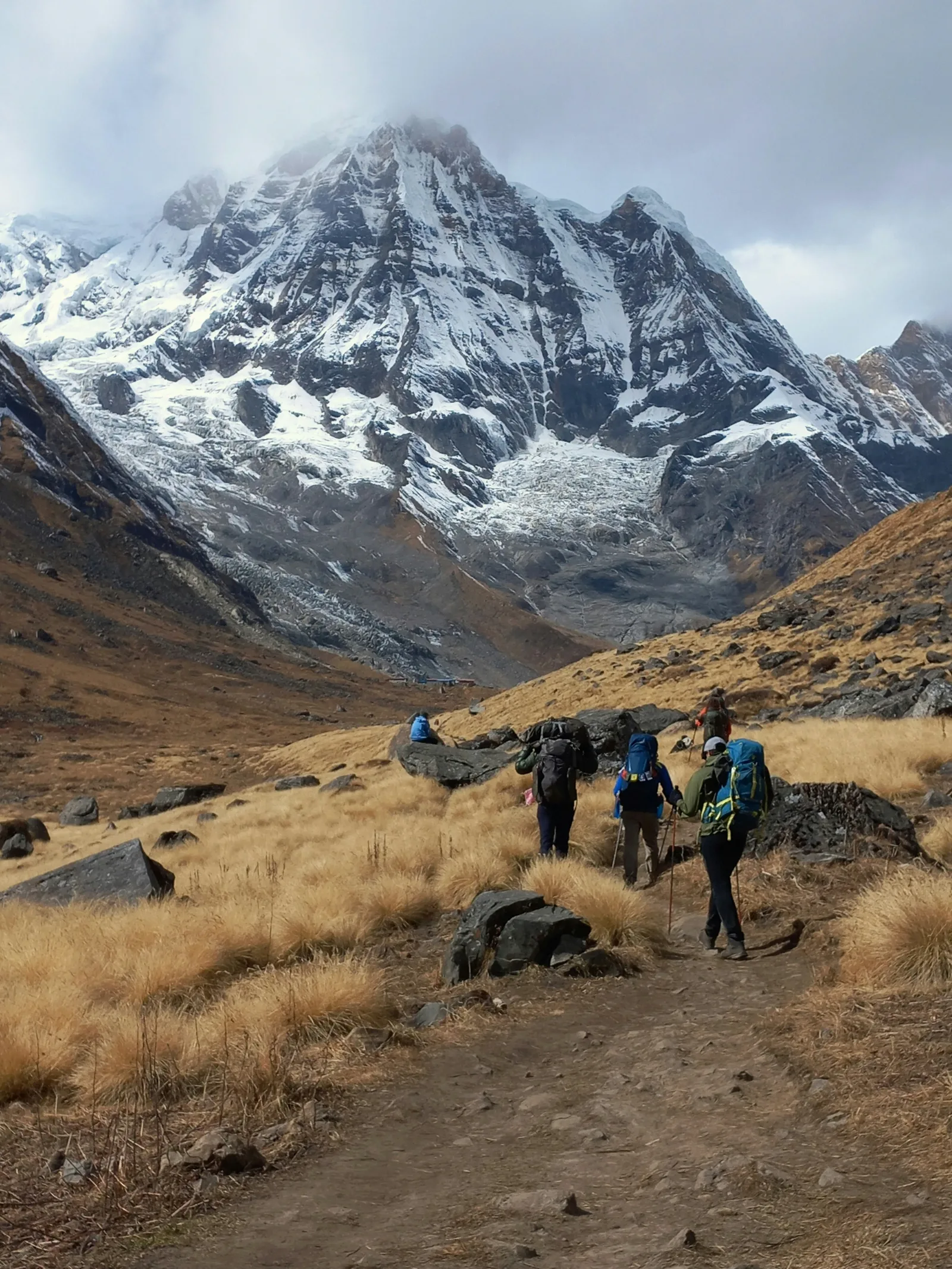
Over four to five hours, the trail climbs through narrowing canyon walls, where rock, ice, and mist create striking abstract compositions. As you approach Deurali, the forest thins and the first true high-alpine light appears, clean, bright, and cold. The scenery changes noticeably today, with bigger skies and sharper peaks. Pace yourself, drink plenty of water, and take time to photograph the dramatic shift from dense valley to open mountain landscape.
Day 8Deurali to Machhapuchhre Base Camp (3,700m), sunset shoot
Today is a shorter walk of three to four hours, which leaves time for photography. You reach Machhapuchhre Base Camp in the afternoon, just in time for alpenglow on the fishtail summit, when the peak turns gold and pink. After dinner, there’s an optional blue-hour session, with deep blue skies and the glowing outline of the mountains. Dress warmly, bring a tripod, and enjoy a quiet, magical evening at altitude.
Day 9MBC to Annapurna Base Camp (4,130m), dawn and dusk on Annapurna I
Begin with a predawn session at Machhapuchhre Base Camp while the peaks wake up, then walk about three hours up to Annapurna Base Camp. You have a full day inside the amphitheatre, surrounded by giants on every side. Explore different angles, watch the light shift across the ice, and take your time. As dusk arrives, set up for a final session facing Annapurna I, when the glow fades slowly from the summit.
Day 10ABC sunrise, descend to Bamboo
Wake early for a first-light panorama at base camp, as sunrise touches the surrounding peaks one by one. After breakfast, begin a slow six-hour descent, stopping at places you passed on the way up. Walking down in the morning gives you new angles and softer light on familiar scenes. Take it easy, keep your camera ready, and enjoy seeing the valley from a completely different perspective as the landscape gradually turns green again.
Day 11Bamboo to Siwai/Jhinu, jeep to Pokhara
Enjoy the final forest frames of the trek, with green trails and quiet streams, before a transfer back to Pokhara. Time for a hot shower and a well-earned rest at the hotel. In the evening, gather on Lakeside for a farewell dinner, where the group shares stories and laughter. It’s also an image-share evening, a chance to look through each other’s best photographs and celebrate the journey you’ve made together.
Gallery
0 photosNo gallery images available for this tour.
Downloads
No downloadable files available for this tour.
00 reviews
5
0
4
0
3
0
2
0
1
0
No reviews yet. Be the first to review this tour!
Tour Video
No video available for this tour.
1 option available
Annapurna Photography Trek: 11 Days Golden-Hour ABC and Poon Hill
Standard tour package with flexible dates
11 days
Guide: English
Select a date
1
$1,897
1 Adult × $1,897
Free cancellation
Cancel up to 24 hours in advance for a full refund
From
$1,897/person
Booking options
Choose a departure below, or use the availability calendar to select a flexible date. Availability and final pricing are confirmed during booking.