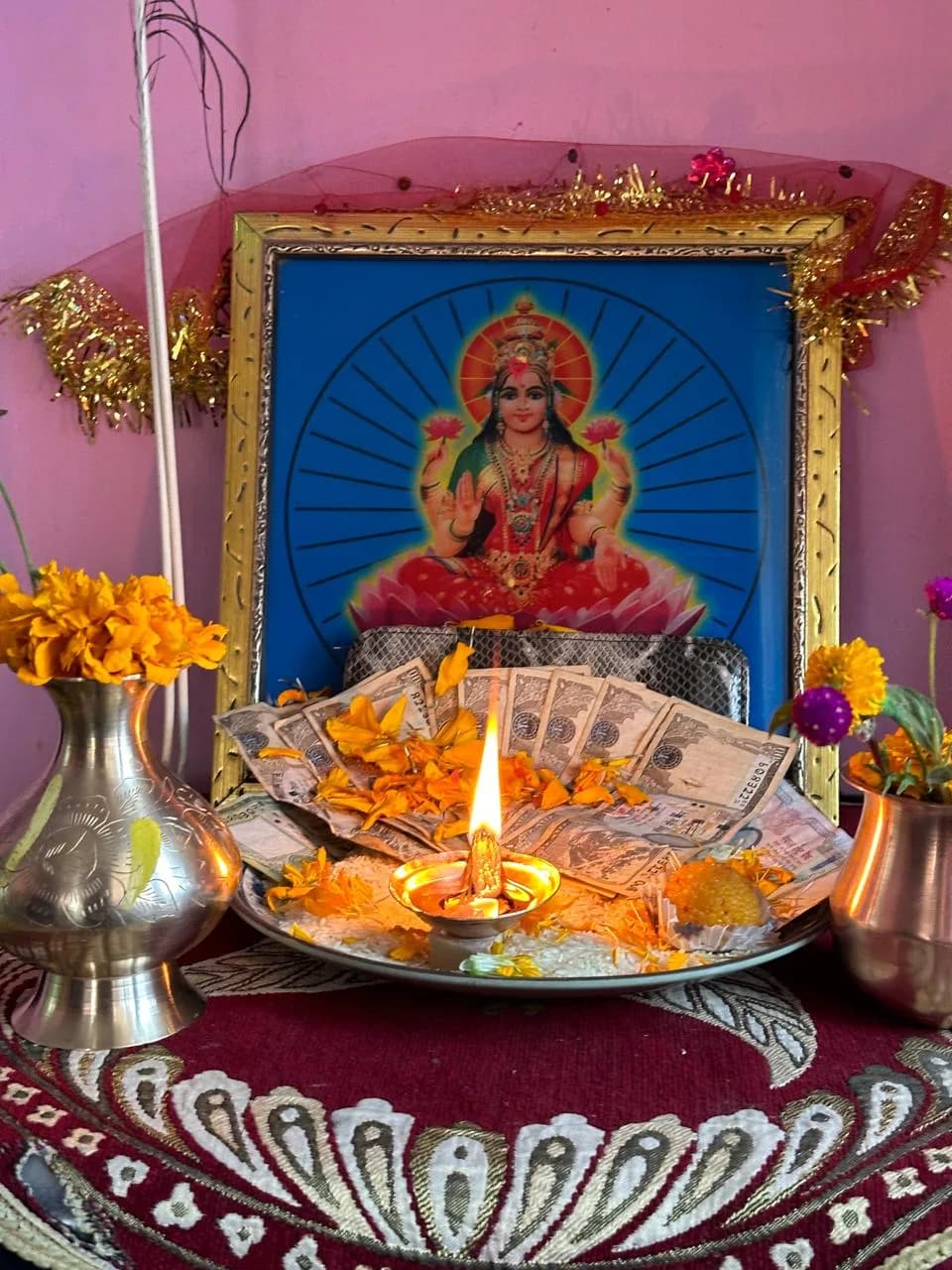
 Nov 8 – Nov 8, 2026
Kathamandu
Laxmi Puja 2026 in Nepal: Tihar Festival Guide
Festival
1 天
Festival
Free
Kathamandu1 天
Event Details
Loading...
Event starts in
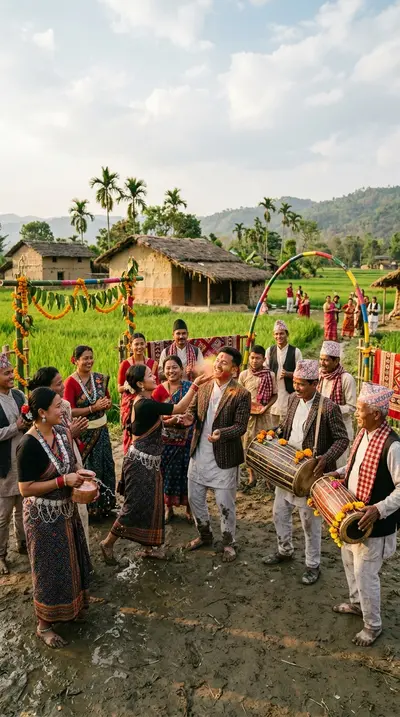
As mid-April arrives and the Nepali New Year approaches, a very different kind of celebration takes hold across the eastern Terai plains, far removed from the mountain trails most visitors associate with Nepal. This is Siruwa Parva, a three-day festival celebrated primarily by the Rajbhansi community, along with neighboring Tharu and Maithili groups, across the flat farmland districts of Jhapa, Morang, and Sunsari. Built around water, mud, and color, the festival marks the turning of the year with a sequence of rituals that feel both playful and deeply symbolic, offering travelers exploring Nepal's lesser-known Terai region a genuinely different cultural experience from anything found in the hills or high mountains further north.
Siruwa Parva, sometimes written as Siruwa Parwa, is the traditional way the Rajbhansi community marks the start of the Nepali New Year according to the Vikram Samvat calendar. Rather than a single day of celebration, it unfolds across three consecutive days, each with its own distinct ritual theme, running from the final day of the outgoing year into the first two days of the new one. At its core, the festival is rooted in the belief that these rituals appease local village deities and cleanse both the body and the surrounding land ahead of a new agricultural and calendar cycle.
The festival carries particular weight for communities living across the flat, fertile plains of the eastern Terai, where agricultural rhythms and water sources have historically shaped daily life far more directly than in the hill regions. Because of this, Siruwa blends spiritual observance with practical symbolism tied to farming, rainfall, and soil, making it as much a festival of the land as it is a festival of the calendar. The Government of Nepal formally recognizes its importance by granting a three-day public holiday to the Rajbhansi community each year it is celebrated.
Siruwa Parva is celebrated over three consecutive days in mid-April, aligning with the transition from the last day of Chaitra into the first days of Baishakh on the Nepali calendar, the same broader window in which the wider Nepali New Year falls. In 2026, the festival's three days fall across April 13, 14, and 15, though families and local committees often confirm exact scheduling closer to the date through community notices, since minor local variation can occur between districts. Travelers planning a visit around this window can cross-check the specific year's dates against the Nepal festival and events calendar to avoid arriving a day early or late, and can also browse the Nepal travel homepage for a wider view of what else is happening across the country during mid-April.
Unlike festivals tied to a single lunar date, Siruwa's three-day structure means the celebration has a clear beginning and a clear end, with each day building toward the next in both mood and ritual intensity. The first day opens the festival on a note of blessing and respect, the second turns toward earthy, physical ritual, and the third closes the celebration in a burst of color and communal joy, mirroring the emotional arc of a new year beginning in hope and ending in shared celebration.
The festival opens with Pani Siruwa, the water day, which typically falls on the final day of the outgoing Nepali year. The rituals on this day center on water as a symbol of blessing, respect, and purification. Elders sprinkle water gently on the heads and foreheads of younger family members, offering blessings for health and prosperity in the year ahead, while younger community members reciprocate by pouring water over the feet of their elders as a gesture of respect and gratitude. This exchange, though simple, carries deep social meaning within Rajbhansi households, reinforcing intergenerational bonds at the very start of the new year.
Beyond the household ritual, community members often gather at shared water sources, ponds, or riverbanks to continue the water-based celebration in a more communal setting. Friends and neighbors sprinkle water on one another in a spirit of goodwill, and the atmosphere throughout the day tends to be gentle and warm rather than boisterous, setting a respectful tone before the festival shifts into its more physically energetic second day. Many families also use this day to clean their homes and courtyards, treating the water rituals as both a literal and symbolic act of washing away the old year.
The second day, Kado Siruwa, shifts the festival's energy considerably. Kado means mud, and on this day communities embrace mud play as a central ritual activity. Participants, often gathering in open fields, courtyards, or muddy patches near water sources, smear mud on one another in a lively, good-humored atmosphere that stands in sharp contrast to the gentler water rituals of the previous day. Beneath the playful surface, the ritual carries a specific belief: that contact with mud on this day strengthens the body against illness in the year ahead and reaffirms a person's connection to the earth that sustains their community through farming.
Kado Siruwa is widely regarded as the most physically energetic and communally binding day of the three, since it requires direct, close contact between participants in a way the water and color rituals do not quite replicate. Children in particular look forward to this day, often initiating mud fights that draw in adults as the celebration spreads through a village. For visitors observing the festival, this day offers a particularly vivid and memorable glimpse into a ritual practice built entirely around a community's relationship with the land itself.
The festival closes with Rang Siruwa, the color day, which bears a strong resemblance to the more widely known Holi festival celebrated elsewhere in Nepal and India. On this final day, communities gather to throw colored powders and colored water at one another, filling village streets and open grounds with a burst of red, yellow, green, and blue. Music and informal dancing frequently accompany the color celebrations, turning the closing day into the most visually spectacular and outwardly festive part of the entire Siruwa Parva sequence.
Socially, Rang Siruwa functions as a day of renewed greeting and goodwill, with community members actively seeking each other out to exchange colors and well-wishes for the year ahead, regardless of any minor disagreements or distance that may have grown between them over the previous year. By the time the day winds down in the evening, the festival concludes on a note of shared joy and communal reset, closing the three-day cycle exactly as it began, with a gesture of respect and blessing, but now expressed through color and celebration rather than quiet water rituals.
Siruwa Parva is most vividly celebrated across the eastern Terai districts of Jhapa, Morang, and Sunsari, where Rajbhansi communities maintain the strongest concentration of population and cultural continuity. Within these districts, both rural municipalities and larger market towns host organized public celebrations, particularly for the Kado Siruwa and Rang Siruwa days, which naturally draw larger crowds than the more private, family-centered Pani Siruwa rituals. Neighboring Tharu and Maithili communities in the same region often observe parallel New Year traditions around the same period, adding further cultural texture to the area during this stretch of April.
Travelers interested in experiencing the festival firsthand can review the broader destinations across Nepal's eastern Terai to identify towns within Jhapa, Morang, or Sunsari that align with their travel plans, keeping in mind that the Terai's flat, agricultural landscape offers a markedly different visual and cultural backdrop compared to the hill and mountain regions most associated with Nepal tourism. Basing a visit in a larger town within these districts generally provides easier access to organized public celebrations, particularly during the more communal second and third days of the festival, and reviewing available Nepal tour options ahead of time can simplify arranging transport into this less-visited part of the country.
The Rajbhansi community, concentrated in Nepal's eastern Terai and closely linked to related populations across the border in India's North Bengal and Assam regions, maintains a distinct cultural identity shaped by centuries of agricultural life along the fertile plains bordering the Himalayan foothills. This identity has persisted despite the community's relatively small size compared to Nepal's larger ethnic groups, sustained in large part through festivals like Siruwa Parva that give younger generations a tangible, embodied connection to Rajbhansi heritage rather than an abstract or purely historical one. Siruwa Parva stands as one of the clearest expressions of this identity, blending New Year celebration with rituals specifically tied to soil, water, and seasonal renewal in a way that reflects the community's long-standing relationship with Terai agriculture.
Language and oral tradition play a supporting role throughout the festival, with older community members often using the gathering as an opportunity to pass on Rajbhansi folk songs, sayings, and New Year greetings to younger generations who may increasingly grow up speaking Nepali or English as a primary language in urban settings. Storytelling around the festival's origins, and the reasons behind each of the three ritual days, often accompanies these gatherings as well, reinforcing the connection between practice and meaning for children experiencing Siruwa Parva in full for the first time. In this sense, Siruwa functions similarly to many of Nepal's other indigenous festivals, serving simultaneously as spiritual observance, seasonal marker, and quiet mechanism for cultural transmission across generations.
Food plays a meaningful role throughout the three days of Siruwa Parva, particularly on the closing day when families and neighbors often share communal meals after the color celebrations wind down. Dishes commonly served during this period draw on regional Terai staples, including rice-based preparations, seasonal vegetables, and locally prepared sweets specifically associated with New Year celebrations across the region. Sharing food across households during Rang Siruwa reinforces the same spirit of renewed goodwill expressed through the exchange of colors earlier in the day.
In many villages, community kitchens or shared cooking arrangements emerge naturally during the festival period, with neighboring families contributing ingredients or dishes to a larger shared meal rather than each household cooking entirely separately. This communal approach to food during Siruwa mirrors the broader theme running through all three days of the festival: a deliberate strengthening of community bonds at the very start of the new year, expressed through water, earth, color, and finally, shared food.
Visitors often ask whether outsiders can join in the water, mud, or color rituals, and the general answer is yes, particularly during the more public celebrations of Kado Siruwa and Rang Siruwa, which tend to welcome enthusiastic participation from anyone present. Because these rituals involve getting genuinely wet, muddy, or covered in colored powder, visitors are advised to wear clothing they do not mind damaging and to bring a change of clothes for later in the day.
Another common question involves how Siruwa Parva relates to the broader Nepali New Year celebrated nationally. While the two occur within the same general calendar window, Siruwa is specifically a Rajbhansi and Terai community tradition with its own distinct three-day ritual structure, separate from the single-day New Year observances practiced elsewhere in the country. Understanding this distinction helps visitors appreciate Siruwa as its own complete festival rather than simply a regional variation of a more widely known national holiday.
Because Siruwa Parva takes place in the flat, fertile districts of the eastern Terai, it pairs naturally with a broader trip through this often-overlooked region of Nepal. Beyond the festival itself, Jhapa and Morang offer access to wildlife areas, riverine landscapes, and market towns rarely covered in standard travel itineraries, while Sunsari provides a convenient gateway toward both the Terai plains and the eastern hill districts further north. Structuring a trip this way allows travelers to experience Siruwa Parva as one vivid highlight within a longer, more varied regional journey.
Anyone interested in building an itinerary around this region can browse available Nepal tour packages covering the eastern Terai and adjust timing to align with the specific mid-April dates for the year of travel. Pairing a Terai-focused visit with time spent in the eastern hill districts, home to festivals such as Udhauli and Falgunanda Jayanti at other points in the calendar, gives travelers a fuller picture of just how culturally varied eastern Nepal is beyond its more famous mountain routes.
Planning ahead matters considerably for anyone hoping to witness Siruwa Parva firsthand, since the festival is concentrated in specific Terai districts rather than observed nationwide. Confirming the exact three-day window for the year of travel is essential, as is arranging accommodation in advance in Jhapa, Morang, or Sunsari, since these districts see less dedicated tourism infrastructure compared to Kathmandu, Pokhara, or the main trekking regions. Basing a visit in a larger town within one of these districts generally provides the easiest access to organized public celebrations.
Respectful participation matters just as much as logistics. Visitors are generally welcomed to join the water, mud, and color rituals, but should take cues from local hosts regarding when and how to participate, particularly during the more private Pani Siruwa rituals conducted within individual households. Bringing appropriate clothing, asking permission before photographing personal or family rituals, and approaching the festival with genuine curiosity rather than treating it purely as a spectacle all contribute to a more meaningful and respectful visit.
Each of the three elements central to Siruwa Parva carries specific symbolic weight within Rajbhansi belief. Water, used on the first day, represents purification and blessing, an element capable of washing away misfortune from the previous year while carrying goodwill into the next. Mud, the focus of the second day, ties directly to the agricultural foundation of Terai life, symbolizing fertility, resilience, and a physical reminder of the soil that sustains the community through farming. Color, reserved for the final day, represents joy, renewal, and the vibrant hope associated with a fresh calendar year finally underway.
Taken together, these three elements trace a deliberate emotional progression across the festival's three days, moving from quiet respect through physical grounding and finally into open celebration. This structure is not incidental; it reflects a broader pattern found across many indigenous Nepali festivals, in which ritual sequence mirrors the emotional journey a community is meant to experience collectively, from reflection and blessing toward renewal and joy.
Nepal's New Year is marked in strikingly different ways depending on region and community. In Kathmandu and much of the hill region, Naya Barsha is typically a single-day observance involving temple visits and family gatherings. In Bhaktapur, the dramatic Bisket Jatra chariot festival dominates the celebration instead. Siruwa Parva stands apart from both by stretching across three distinct days, each with its own ritual theme, and by rooting its symbolism specifically in the agricultural and riverine landscape of the Terai rather than temple-centered urban tradition.
This regional variation reflects Nepal's broader pattern of New Year celebrations shaped by geography and ethnicity rather than a single, uniform national tradition. Just as the Kirat communities of the eastern hills mark seasonal transition through Udhauli and Ubhauli, and Newar communities in the Kathmandu Valley celebrate through their own distinct calendar traditions, the Rajbhansi community's Siruwa Parva reflects the specific rhythms and beliefs of Terai farming life, offering travelers a genuinely different New Year experience depending on which part of Nepal they choose to visit during this period.
Like many community-specific festivals in Nepal, Siruwa Parva faces gradual pressure from urban migration and the broader cultural pull of more widely publicized national celebrations. Community organizations within Jhapa, Morang, and Sunsari have responded by organizing public events specifically designed to draw younger generations back into active participation, ensuring that the water, mud, and color rituals continue being practiced rather than fading into private, family-only observance.
These efforts have also gradually increased outside awareness of Siruwa Parva, with local tourism boards and cultural organizations beginning to document and promote the festival as a distinct part of Nepal's eastern Terai identity. Growing outside interest, when approached with genuine respect, can support these preservation efforts by reinforcing the value of continued celebration, provided visitors engage with the festival as a living community tradition rather than treating it as a staged performance arranged purely for outside observation.
Traditional Rajbhansi attire often appears throughout Siruwa Parva, particularly during the more public Kado Siruwa and Rang Siruwa celebrations. Women frequently wear brightly patterned saris or traditional Terai dress suited to the physical, outdoor nature of the mud and color rituals, while men often dress in simple, practical clothing that can withstand the mess of the second day before switching to something they are willing to see stained with color on the third. Folk music, often performed on traditional drums and string instruments specific to Terai culture, accompanies the celebrations throughout, particularly during the closing color festivities, where informal group dancing frequently breaks out in open village grounds.
The overall atmosphere of the festival shifts noticeably from day to day, moving from the calm, respectful tone of Pani Siruwa through the boisterous, high-energy chaos of Kado Siruwa, and finally into the joyful, carnival-like spirit of Rang Siruwa. This shifting emotional register is part of what makes the festival so distinctive compared to single-day celebrations elsewhere in Nepal, giving visitors who stay for the full three days a genuinely varied and memorable cultural experience rather than a single repeated ritual.
Beyond its cultural festivals, the eastern Terai offers a landscape defined by slow-moving rivers, fertile floodplains, and pockets of forest that support a noticeably different range of wildlife compared to the mountainous regions further north. Travelers extending their trip beyond Siruwa Parva itself often find that Jhapa and Morang provide access to wetlands and riverine habitats worth exploring on the days surrounding the festival, offering a quieter, nature-focused counterpart to the high-energy ritual days themselves.
This contrast between the flat, agricultural Terai and the towering hills further north is part of what makes eastern Nepal such a rewarding region for travelers willing to move beyond the standard trekking circuits. A visit timed around Siruwa Parva naturally encourages this broader exploration, since reaching Jhapa, Morang, or Sunsari already requires venturing well outside the more heavily touristed parts of the country, opening the door to a wider, more varied regional itinerary in the process.
Siruwa Parva offers a rare and vivid window into the cultural life of Nepal's Terai plains, moving across three distinct days from the gentle blessings of water, through the earthy, communal energy of mud, and finally into the joyful, colorful celebration that closes out the old year and welcomes the new one. Few festivals in Nepal compress such a complete emotional arc into so short a span, and fewer still remain as accessible to respectful outside visitors willing to get a little wet and a little muddy along the way.
For travelers genuinely interested in experiencing a different side of Nepal, one shaped by flat farmland and river-fed communities rather than mountain peaks, exploring the full range of Nepal travel experiences alongside a closer look at Terai festivals like Siruwa offers a richer, more complete understanding of the country's cultural diversity. Approaching the festival with curiosity, respect, and a willingness to get genuinely wet, muddy, and colorful is ultimately what turns a simple visit into a memorable encounter with one of eastern Nepal's most joyful living traditions.
Key experiences and features
Siruwa Parva
Vikram Samvat calendar
Eastern Terai
Three-day public holiday
Pani Siruwa
Kado Siruwa
Rang Siruwa
Rajbhansi communities
Rajbhansi folk songs
Traditional Rajbhansi attire
Recommended packing list
Bhadrapur, Jhapa, Koshi Province, Nepal
Got questions about this event?
Siruwa Parva 2026 is celebrated around Baisakh 1–3 (April 14–16, 2026), marking the beginning of the Nepali New Year in the Rajbanshi community.
They are the three main forms of Siruwa celebration: Pani Siruwa involves water, Kado Siruwa involves mud, and Rang Siruwa involves colors and joyful community activities.
Major celebrations can be experienced in Jhapa, Morang and Sunsari in eastern Nepal, where Rajbanshi and other local communities observe the festival.
Siruwa is particularly associated with the Rajbanshi community, along with other communities in eastern Nepal. Traditions and ways of celebrating can vary between communities and locations.
Visitors can experience traditional rituals, cultural gatherings, local food, music, dancing and community celebrations. Visitors should participate respectfully and follow local customs.
Apr 14, 2027
1 day
Quick Info
More festival experiences
Nov 8 – Nov 8, 2026Kathamandu
 Aug 17 – Sep 16, 2027
Godavari Kunda
 Jan 15 – Jan 16, 2027
Swayambhu Bhuikhhel