 Nov 8 – Nov 8, 2026
Kathamandu
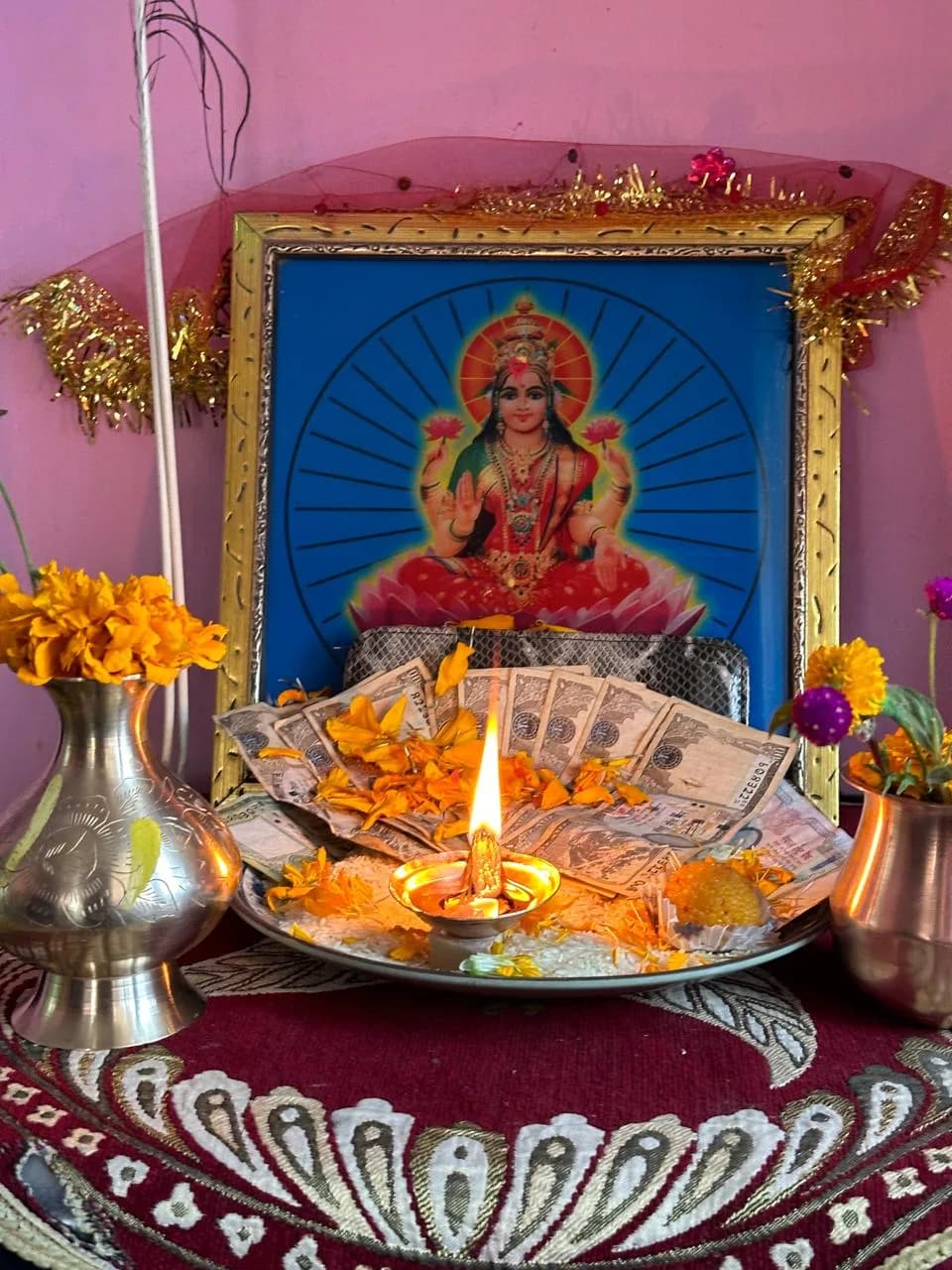
Laxmi Puja 2026 in Nepal: Tihar Festival Guide
Festival
1 Tag
Festival
Free
Kathamandu1 Tag
Event Details
Loading...
Event starts in
The Godavari Mela 2027 is one of the rare religious gatherings of the Kathmandu Valley, traditionally held at Godavari Kunda in Lalitpur once every twelve years. Unlike annual festivals that return every year, this mela follows a much longer cycle and brings pilgrims together for sacred bathing, worship, prayer, religious observances, and visits to the holy water source at Godavari. The upcoming edition belongs to Bhadra 2084, which corresponds to August 17 to September 16, 2027, according to the Nepali calendar. Historical reporting on the previous edition described the mela as a month-long Godavari Singhastha Mela, with the opening and closing ceremonies connected to traditional ritual practices around the sacred pond. The festival is therefore an important part of Lalitpur religious heritage, and it also offers visitors an opportunity to explore Godavari Kunda, nearby temples, forest landscapes, and other cultural attractions in the southern Kathmandu Valley.
The next 12-year Godavari Mela is expected to take place throughout Bhadra 2084, from August 17 to September 16, 2027. A Nepali calendar source confirms that Bhadra 1, 2084 falls on August 17, 2027, while Bhadra 31 falls on September 16. Earlier reporting on the previous cycle described the Godavari Singhastha Mela as running throughout the month of Bhadra, beginning on Bhadra 1 and ending at the end of the month.
The exact dates of particular mahasnan, special worship, opening rituals, closing rituals, and other major observances should be checked against the final announcement from the organizing authorities and religious institutions before publishing them as fixed daily events.
The twelve-year cycle is one of the defining characteristics of the Godavari Singhastha tradition. Historical reporting from the 2015 edition described the mela as a month-long religious gathering held every twelve years and reported that millions of pilgrims visited Godavari during the festival period.
The long gap gives the festival a very different feeling from ordinary religious fairs. Families may remember attending an earlier edition with parents or grandparents, while younger generations may experience the full mela for the first time. This creates a strong sense of generational pilgrimage, especially for devotees who regard the sacred water at Godavari as an important place for religious bathing.
For travelers, the twelve-year cycle also makes the event an unusual opportunity to experience living religious heritage in Lalitpur rather than simply visiting a historic monument.
Godavari Mela is a major Hindu pilgrimage gathering centered on Godavari Kunda, a sacred water source in Godavari, Lalitpur. The festival is also referred to as Godavari Singhastha Mela or the twelve-year Godavari Kumbh-style mela.
The central experience is connected with holy bathing, worship, prayer, and religious merit. During the previous edition, reporting described pilgrims gathering around the water spout and pond at Godavari Kunda, with very large crowds arriving during important days.
The festival therefore combines several layers of experience: sacred water, Hindu pilgrimage, Lalitpur heritage, community gatherings, and the natural surroundings of Godavari.
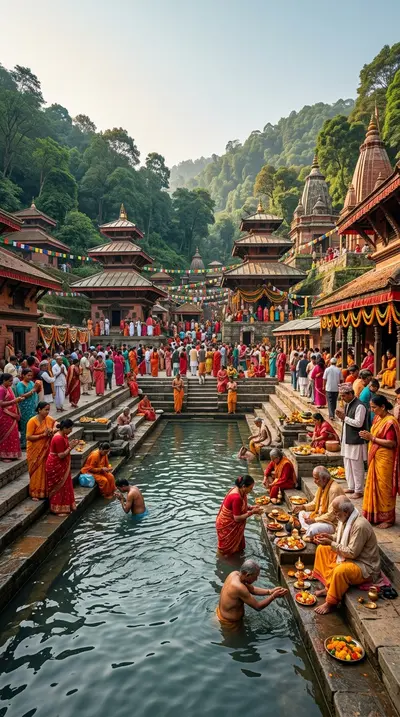
At the center of the festival is Godavari Kunda, the sacred water area where pilgrims come for bathing and religious observances. During the previous mela, the water spouts and the pond formed by their water became the main focus of pilgrimage activity.
For a first-time visitor, the importance of the place may not be immediately obvious because it is smaller and quieter than some of Nepal's famous pilgrimage destinations. During the mela, however, the character of the area changes dramatically. Pilgrims, religious ceremonies, temporary facilities, shops, and crowds create an atmosphere that is very different from an ordinary day in Godavari.
Visitors should remember that the water is considered sacred by devotees. Photography should therefore be respectful, particularly when people are bathing or performing private religious rituals.
The expected first day is Bhadra 1, 2084, or August 17, 2027. The previous edition began on Bhadra 1, and contemporary reporting described traditional opening rituals involving priests associated with Harisiddhi Bhawani Guthi.
The opening should be understood as the beginning of the wider month-long pilgrimage period, rather than assuming that every major ritual happens on the first day. The exact 2027 opening program should be confirmed when the organizing committee publishes its final schedule.
For visitors, the opening period can be an interesting time to experience the early festival atmosphere before the biggest crowds arrive on particularly important bathing days.
Because the festival traditionally extends across the whole month of Bhadra, it is more useful to understand the period in stages than to invent individual rituals for every calendar day. The dates below provide a practical pilgrimage framework based on the known month-long structure, while exact ceremonial details remain subject to official confirmation.
The mela is expected to begin on August 17, 2027, corresponding to Bhadra 1, 2084. The opening period traditionally involves religious preparation, worship, and the formal beginning of the pilgrimage season.
Visitors arriving on this day can expect a developing festival atmosphere around Godavari Kunda, although the exact opening ceremony and timing should be confirmed closer to the event.
The early festival period provides an opportunity for pilgrims to visit Godavari Kunda, perform worship, take a sacred bath, and spend time around the religious area without necessarily targeting the busiest days.
This can also be a good period for visitors interested in combining religious tourism with sightseeing around Godavari and Lalitpur.
During the second week, the mela atmosphere is expected to become increasingly established. Pilgrims from Kathmandu Valley and other parts of Nepal may continue arriving for bathing and worship.
Visitors should allow extra travel time because the road connecting Satdobato and Godavari can become congested during major pilgrimage periods. Historical reporting from 2015 recorded substantial traffic-management challenges during the mela.
The middle portion of the festival is traditionally an active period for pilgrimage. This is an appropriate time for visitors who want to experience the religious atmosphere of Godavari while also exploring the surrounding Lalitpur landscape.
Because the exact 2027 schedule of major bathing days has not yet been published in the sources reviewed, travelers should avoid assuming that August 31 itself is a specific principal bathing day for the Nepal mela.
The final week approaches as the month of Bhadra continues. Pilgrims may continue visiting Godavari Kunda for bathing, worship, and prayers.
The surrounding temporary market areas may also become an important part of the visitor experience. In 2015, the mela included food stalls, handicrafts, vegetables, religious goods, and other temporary shops.
The final days are part of the closing phase of the month-long mela. Visitors attending at this point should pay particular attention to crowd-management instructions because the end of a large pilgrimage can produce concentrated movement.
Bhadra 31, 2084 corresponds to September 16, 2027, and therefore represents the expected final day of the month-long festival period.
Historical reporting on the previous edition described the closing ceremony as a formal religious event performed by priests, including rituals around the opening and closing of the sacred area.
The exact timing of the 2027 closing ritual should be confirmed before visitors make plans specifically around the final ceremony.
The most recognizable activity of the Godavari Mela is holy bathing. Pilgrims come to the sacred water source as part of their religious observance and belief in the spiritual significance of the place.
Historical coverage of the 2015 mela reported that the festival centered on the water spouts at Godavari Kunda and that pilgrims crowded around the pond created by the water.
For visitors, it is important to understand that this is not a recreational swimming experience. The bathing is a religious practice, and people participating should be given privacy and space.
Travelers who are not participating can still observe the broader cultural environment, but they should avoid interfering with the bathing area.
The sacred status of Godavari is connected with Hindu religious traditions surrounding Gautam Rishi and the appearance of sacred water. Historical accounts of the mela describe a tradition in which Gautam Rishi is connected with the origins of the sacred water and the establishment of the pilgrimage tradition.
Local religious traditions give the site a strong connection with purification, pilgrimage, and merit. This explains why devotees may travel long distances to take a bath at the sacred water source.
The meaning of the festival is therefore deeper than simply attending a fair. The mela provides a communal setting where religious belief, ritual practice, family tradition, and pilgrimage come together.
One of the important traditional figures associated with the festival is Gautam Rishi. Historical reporting on the Godavari Singhastha Mela connects the festival with a legend in which Gautam Rishi encountered the goddess Ganga in a dream and sacred water subsequently appeared at Godavari.
Such stories form part of the religious and cultural identity of the pilgrimage site. Visitors do not need to accept or reject the religious interpretation to appreciate its cultural importance. Understanding the story helps explain why Godavari Kunda has become a pilgrimage destination.
The story also gives the mela a connection with the wider Hindu tradition of sacred rivers and pilgrimage bathing.
Nepal contains many pilgrimage destinations where water, temples, mountains, and religious stories are closely connected. Godavari belongs to this broader network of Hindu sacred places in Nepal.
Visitors interested in this tradition can explore destinations connected with Pashupatinath, Muktinath, Janakpur, Devghat, and other pilgrimage locations. Each site has its own history and religious character.
A Godavari-focused trip can therefore become part of a broader cultural journey through Nepal rather than remaining a single-day excursion.
Godavari is located in Lalitpur District, at the southern edge of the Kathmandu Valley. This makes it relatively easy to combine with other destinations in Kathmandu and Patan.
A traveler can begin with the historic Patan area, continue toward Godavari, and spend time around the sacred water source before exploring the greener surroundings.
The wider Lalitpur destination collection can be used to connect the mela with other heritage places in Lalitpur, while the main Nepal travel site provides a broader starting point for planning a Kathmandu Valley journey.
A visit to Godavari becomes more meaningful when combined with Patan's Newar heritage. Patan is famous for its traditional architecture, courtyards, temples, metalwork, wood carving, and Buddhist and Hindu religious traditions.
Travelers can use the Lalitpur places collection to discover related Patan heritage sites before or after visiting Godavari.
This combination creates an interesting contrast: Patan's dense historic cityscape on one side and the greener, quieter environment of Godavari on the other.
Another major Lalitpur cultural tradition is Rato Machhindranath Jatra. The festival is associated with the long chariot procession of Rato Machhindranath through the streets of Lalitpur and culminates in the Bhoto display at Jawalakhel. Recent reporting describes the procession as one of Nepal's major cultural-religious festivals.
Although Rato Machhindranath Jatra and Godavari Mela are different traditions, both demonstrate how deeply religious festivals are embedded in Lalitpur's cultural identity.
Readers can explore the related Lalitpur festival collection for more cultural experiences connected with the Kathmandu Valley.
Godavari Mela works particularly well as the center of a religious and cultural Nepal itinerary. Seven related event themes can be connected naturally with the festival: Rato Machhindranath Jatra, Indra Jatra, Bisket Jatra, Teej, Janai Purnima, Bala Chaturdashi, and Chhath Parva.
The Nepal events collection is the most useful place to explore these related celebrations.
Rato Machhindranath Jatra connects the journey with Lalitpur's chariot culture. Recent reporting describes its route through Pulchowk, Mangal Bazar, Sundhara, Lagankhel, Kumaripati, and Jawalakhel.
Indra Jatra connects the journey with Kathmandu's traditional urban festival culture, including chariot processions, masked dances, and ceremonies around Hanumandhoka.
Bisket Jatra introduces travelers to Bhaktapur's distinctive Newar festival traditions.
Teej provides a different perspective on Hindu women's religious observance, fasting, worship, and cultural gatherings.
Janai Purnima connects pilgrimage with sacred bathing and religious renewal at several locations across Nepal.
Bala Chaturdashi provides another example of a Hindu pilgrimage tradition involving sacred places, remembrance, and ritual offerings.
Chhath Parva adds the important Terai tradition of worship connected with the sun, water, family, and ritual bathing.
All seven can be explored through the focused Nepal festival and event collection.
Travelers interested specifically in Lalitpur can create a cultural theme around Godavari Mela and Rato Machhindranath Jatra. One is centered on sacred water and pilgrimage, while the other is strongly associated with a large chariot procession and the deity Rato Machhindranath.
The recent Rato Machhindranath procession traveled through several historic neighborhoods before reaching Jawalakhel for the Bhoto display.
This makes the Lalitpur events collection especially relevant for readers who want to understand the district through its festivals rather than only through monuments.
Visitors who enjoy traditional Kathmandu Valley festivals can also compare Godavari Mela with Indra Jatra. Indra Jatra is an eight-day festival in Kathmandu featuring traditional dances, chariot processions, worship, and the erection of the sacred Indradhwaja. Recent reporting on the 2026 edition confirms the beginning and traditional eight-day structure of the festival.
Godavari is more strongly centered on pilgrimage and sacred bathing, while Indra Jatra fills the historic city with processions and public performances.
Readers can continue to the Kathmandu festival events page to discover other celebrations.
A simple cultural itinerary can begin in Kathmandu and move south toward Lalitpur. The first part of the journey can focus on Kathmandu heritage, followed by Patan's historic center and then Godavari.
The main Nepal travel planning page can serve as the starting point, while the places collection can help identify additional destinations.
Travelers interested in organized cultural experiences can also browse the Nepal tour collection for related travel ideas, selecting only tours that match their interests and available time.
Godavari is not only a festival destination. The area is also known for its green landscape, botanical surroundings, forested hills, temples, and quiet walking environments.
This makes the destination particularly appealing to visitors who want to combine pilgrimage with nature. A morning around the sacred water can be followed by a relaxed exploration of the surrounding area.
The Godavari and Lalitpur places collection provides a natural internal route for readers interested in extending their visit.
One of the best-known attractions in the area is the Godavari Botanical Garden, which offers a very different atmosphere from the crowded pilgrimage zone. The garden provides an opportunity to experience Nepal's plant diversity and enjoy a slower part of the Godavari landscape.
Visitors attending the mela can consider adding the garden to their itinerary when crowd levels and opening arrangements allow.
This combination of religious pilgrimage and botanical tourism makes Godavari unusual within the Kathmandu Valley.
The hills around Godavari lead toward Phulchoki, one of the prominent high points around the Kathmandu Valley. Visitors who have additional time can explore the wider landscape, although any hiking plan should be treated separately from the pilgrimage itself.
The mela period can be crowded around Godavari Kunda, while the nearby hills can offer a quieter environment.
For travelers looking for outdoor extensions, the Nepal tour collection can be used to explore relevant hiking and nature experiences.
The previous Godavari Mela attracted enormous numbers of pilgrims. Reports from 2015 said that more than 1.5 million pilgrims had visited by September 1, while another report described attendance of more than four million people over the full mela.
Such figures explain why visitors should expect crowded roads, queues, temporary markets, and busy bathing areas during peak periods.
In 2015, traffic authorities deployed personnel between Satdobato and Godavari and monitored transport fares after complaints from pilgrims.
For 2027, travelers should therefore plan additional travel time and follow whatever traffic-management system local authorities establish.
Godavari is accessible from Kathmandu through Satdobato and the Lalitpur side of the valley. During the mela, ordinary journey times can change considerably because of pedestrian and vehicle congestion.
Public transportation may be convenient but crowded. Private vehicles can provide flexibility, although parking can become difficult during peak periods.
The best approach is to check festival-day traffic instructions before departure and avoid assuming that normal Kathmandu travel times will apply.
Responsible tourism matters greatly during a pilgrimage of this size. Visitors should avoid littering around Godavari Kunda, respect bathing areas, avoid pushing through religious gatherings, and follow instructions from volunteers, security personnel, and religious organizers.
The 2015 mela faced serious crowd and waste-management pressures, with reports mentioning plastic waste and congestion around the site.
Visitors can help by carrying reusable water bottles, minimizing single-use plastic, keeping personal waste with them until disposal points are available, and supporting local businesses responsibly.
Because the event is a religious pilgrimage, modest and comfortable clothing is appropriate. Visitors should choose clothing that allows easy walking while respecting the religious character of the location.
Comfortable shoes are particularly useful because crowds and pedestrian movement may require visitors to walk farther than expected.
A light rain layer may also be useful because August and September fall within Nepal's monsoon-influenced period, although daily weather conditions vary.
The mela can provide excellent opportunities for cultural photography, particularly through architecture, ceremonial decorations, crowds, religious objects, temporary markets, and the wider Godavari landscape.
However, bathing pilgrims should not be photographed intrusively. Visitors should also ask permission before taking close-up photographs of individuals involved in religious ceremonies.
A respectful photograph is more valuable than an image that interrupts someone's worship.
Temporary food stalls are an important part of large Nepalese melas. During the previous Godavari event, reports mentioned hundreds of temporary stalls selling food, handicrafts, vegetables, kitchen items, and religious goods.
Visitors can therefore expect a lively festival food environment, although the exact vendors and regulations for 2027 will depend on the organizing arrangements.
Travelers with dietary restrictions should carry suitable snacks and bottled or safe drinking water rather than relying entirely on temporary stalls.
Visitors can stay in Kathmandu or Lalitpur and travel to Godavari during the festival. Staying in the valley rather than directly beside the mela may provide more accommodation choices.
Those who want to attend particularly busy bathing days should consider booking accommodation in advance because the festival can attract very large numbers of pilgrims.
The Nepal tour collection can also help travelers combine accommodation planning with a wider cultural itinerary.
International visitors can attend Godavari as part of a broader Nepal cultural journey. The festival offers something different from the country's better-known trekking experiences because the focus is on religion, pilgrimage, community, and local tradition.
A visitor can combine several days in Kathmandu with Godavari, Patan, Bhaktapur, Boudhanath, and other heritage destinations.
The Enticing Himalayas Nepal travel platform provides a starting point for travelers looking to connect cultural experiences with other Nepal journeys.
Godavari is particularly suitable for visitors interested in spiritual travel in Nepal. The combination of sacred water, temples, religious stories, pilgrimage, and natural surroundings creates a slower travel experience.
Visitors who want to extend the spiritual theme can explore Pashupatinath, Muktinath, Janakpur, Lumbini, and other sacred destinations.
The Nepal places collection provides a useful way to discover additional spiritual destinations without mixing unrelated tourism topics into the Godavari experience.
Travelers who want to continue their pilgrimage after Godavari can consider Muktinath, one of Nepal's most important Hindu and Buddhist pilgrimage destinations.
The journey is very different geographically: Godavari lies in the Kathmandu Valley, while Muktinath is high in Mustang. The contrast gives travelers an opportunity to experience Nepal's religious diversity across very different landscapes.
A relevant Muktinath pilgrimage tour can be explored through the Enticing Himalayas tour collection.
Another possible extension is Lumbini, the birthplace of Gautama Buddha. Although Lumbini belongs to a Buddhist pilgrimage tradition rather than the Hindu religious context of Godavari, the two destinations can form part of a broader spiritual journey through Nepal.
The Nepal places collection can help travelers explore Lumbini alongside Kathmandu Valley destinations.
Janakpur offers another major Hindu pilgrimage experience, especially through the Janaki Mandir and traditions associated with Sita.
Combining Janakpur with Godavari creates a journey across two very different cultural regions of Nepal: the Kathmandu Valley and the eastern-central Terai.
Travelers can explore relevant Janakpur pilgrimage experiences through the Nepal tour collection.
For readers planning a longer Nepal journey around Godavari, seven useful themes are sacred bathing, Hindu temples, Kathmandu Valley heritage, Newar culture, spiritual travel, Lumbini Buddhist pilgrimage, and Muktinath pilgrimage.
Each theme can be connected naturally to the festival without turning the article into a generic list of unrelated tourism links.
The Nepal events page is particularly useful for finding religious festivals, while the places collection is better for destinations and the tour collection for organized travel experiences.
Godavari demonstrates why Nepal's festival calendar is so diverse. Some festivals occur every year, while others follow much longer cycles.
The 12-year Godavari Mela belongs to the second category. Its rarity makes it particularly useful for cultural tourism content because travelers need to plan ahead rather than simply arriving during an annual holiday.
The Nepal festival calendar can help readers discover other festivals taking place before or after the Godavari period.
A traveler with one week could create a relaxed itinerary around the festival.
Day 1: Arrive in Kathmandu and explore the historic center.
Day 2: Visit Swayambhunath and Boudhanath.
Day 3: Explore Patan and its traditional courtyards.
Day 4: Travel to Godavari Kunda and experience the mela.
Day 5: Explore Godavari Botanical Garden and surrounding areas.
Day 6: Return to Kathmandu and explore another cultural area.
Day 7: Continue to another Nepal destination.
This approach gives the festival enough space without forcing the visitor to spend every hour inside a crowded pilgrimage zone.
A longer trip can connect Godavari, Pashupatinath, Muktinath, Lumbini, and Janakpur. Such a journey moves through several major Hindu and Buddhist traditions and also introduces travelers to Nepal's changing geography.
The Nepal travel homepage can be used as the general starting point, followed by the places directory for destination research and the tour directory for relevant organized journeys.
A large mela has a significant impact on the local community. During the 2015 event, temporary markets included food, handicrafts, vegetables, kitchen goods, and religious items, and the festival generated substantial commercial activity.
This means the mela is not only a religious gathering but also a temporary economic ecosystem.
Visitors can contribute positively by purchasing appropriate local products, eating at legitimate local establishments, and treating residents and festival workers respectfully.
Large religious gatherings require basic crowd awareness. Keep personal belongings secure, agree on a meeting point if traveling in a group, carry enough water, and avoid entering congested areas without understanding the exit route.
Families traveling with children should keep children close, particularly around Godavari Kunda and busy pedestrian areas.
Visitors should also follow any temporary instructions issued by local authorities, traffic police, volunteers, and festival organizers.
The festival environment can be challenging for people with limited mobility because crowds, temporary structures, narrow routes, and uneven surfaces may make movement difficult.
Anyone requiring accessibility assistance should check the conditions of the route and festival facilities before traveling.
Because the exact 2027 infrastructure arrangements have not yet been published, visitors should not assume that facilities from the previous mela will be identical.
Godavari Mela is different from a typical tourism event because the main purpose is religious pilgrimage rather than entertainment. The central experience is the sacred water and the religious practices surrounding it.
The festival also differs from major urban festivals such as Indra Jatra, where public processions, chariots, dances, and large street performances dominate the experience.
At Godavari, the visitor is more likely to encounter pilgrims bathing, worshippers praying, priests performing rituals, temporary religious markets, and families visiting the sacred site together.
For photographers, the festival presents a strong combination of ritual life, human movement, traditional clothing, sacred water, and Lalitpur landscapes.
The strongest images may come from observing rather than approaching. Early morning light around the water, distant views of pilgrims, temporary market scenes, and architectural details can tell the story without interfering with worship.
A responsible photographer should always remember that the people appearing in the photograph are participants in a religious ceremony rather than performers.
The importance of Godavari Mela lies partly in its continuity. A tradition that returns every twelve years requires community memory, religious knowledge, organization, and participation.
The 2015 festival demonstrated the scale that the mela can reach, with reports of millions of pilgrims and major preparations involving security, volunteers, health services, transportation, and temporary facilities.
The 2027 edition will therefore be more than a single event on a calendar. It will again temporarily transform Godavari Kunda and its surrounding area into a major pilgrimage landscape.
Readers planning a Godavari journey can begin with the Enticing Himalayas Nepal travel guide, then move to the Nepal events collection for related festivals.
For destination research, the Nepal places collection is the most relevant resource, while travelers looking for organized experiences can browse the Nepal tour collection.
The events collection is especially relevant when comparing Godavari with Rato Machhindranath, Indra Jatra, Teej, Janai Purnima, Bala Chaturdashi, Chhath, and other religious or cultural events.
The places collection is more appropriate for topics such as Godavari, Patan, Kathmandu, Boudhanath, Swayambhunath, Lumbini, Janakpur, and Muktinath.
The tour collection should be used selectively for specific travel experiences connected with these destinations rather than linking every mention to a generic tour list.
The Godavari Mela 2027 will be a rare opportunity to experience one of the Kathmandu Valley's long-cycle pilgrimage traditions. Expected to run from August 17 to September 16, 2027, corresponding to Bhadra 1–31, 2084, the month-long gathering will once again bring pilgrims toward Godavari Kunda in Lalitpur for sacred bathing, worship, prayer, and religious observance. The previous edition demonstrated the enormous scale that the festival can reach, with millions of visitors and major arrangements for transportation, security, health services, temporary markets, and crowd management.
For travelers, the best way to approach Godavari is not simply as a large fair but as a living pilgrimage tradition. Spend time understanding the religious meaning of the sacred water, observe respectfully, explore the surrounding Lalitpur heritage, and give yourself enough time to experience the area without rushing. Godavari can also become the center of a wider Nepal journey connecting Patan, Kathmandu, Swayambhunath, Boudhanath, Lumbini, Muktinath, and other cultural destinations.
The festival's twelve-year cycle makes it particularly memorable. A visitor attending in 2027 is not simply visiting another annual attraction; they are witnessing a tradition that returns only after a long interval. That combination of sacred water, pilgrimage, community life, Lalitpur culture, and rare festival timing makes Godavari Mela one of the most distinctive religious tourism experiences to include in a Nepal travel calendar.
Key experiences and features
Godavari Mela 2027
Godavari Singhastha Mela
Godavari Kunda
Holy bathing
Gautam Rishi
Gautam Rishi
Kathmandu heritage
Recommended packing list
Godawari, Lalitpur, Bagmati, Nepal
Got questions about this event?
Godavari Mela 2027 is expected to take place from 17 August to 16 September 2027, corresponding to Bhadra 1–31, 2084.
The main pilgrimage site is Godavari Kunda in Godavari, Lalitpur, on the southern side of Kathmandu Valley.
The Mela is associated with sacred bathing, Hindu pilgrimage, religious rituals, and the spiritual importance of Godavari Kunda.
The major Godavari Singhastha Mela is traditionally associated with a 12-year cycle, making the event especially significant for pilgrims.
Visitors can participate according to local religious practices and festival arrangements while following safety, cleanliness, and crowd-management guidelines.
Aug 17 – Sep 16, 2027
31 days
Quick Info
More festival experiences
Nov 8 – Nov 8, 2026Kathamandu
 Jan 15 – Jan 16, 2027
Swayambhu Bhuikhhel
 Nov 1 – Jan 1, 2028
Bhaktapur