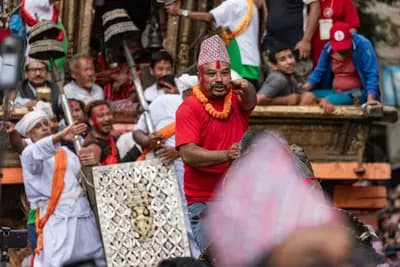
 Mar 23 – Mar 7, 2027
Kathmandu
Seto Machindranath Jatra 2027: Kathmandu’s Sacred Festival
Culture
5 Tage
Festival
Free
Kathmandu 5 Tage
Event Details
Loading...

Event starts in
Kartik Nach is one of the oldest and most fascinating traditional dance-drama festivals of Nepal, celebrated in the historic city of Patan, Lalitpur. This extraordinary cultural performance has been preserved for centuries and remains an important part of the Newar community's identity, religious beliefs, artistic traditions, and historical heritage. Started during the Malla period by King Siddhi Narasimha Malla in 1641 AD, Kartik Nach combines music, dance, drama, mythology, costumes, and storytelling to present powerful stories from Hindu religious traditions. Every year, during the Nepali month of Kartik, the historic Kartik Dabali near Patan Durbar Square becomes a stage for performers who bring ancient stories to life. The festival is not simply a religious celebration but also an example of how communities protect cultural knowledge, artistic skills, and historical traditions through generations. For visitors exploring Nepal, Kartik Nach in Patan offers a meaningful way to understand the cultural depth of the Kathmandu Valley beyond its temples, courtyards, and monuments.
Kartik Nach, also known as Kartik Pyakhan or Kātti Pyākhã in Nepal Bhasa, is a traditional Newar musical dance-drama festival performed in Patan, Lalitpur, Nepal. It was established in 1641 AD by King Siddhi Narasimha Malla and traditionally features stories associated with Lord Vishnu, Hindu mythology, devotional narratives, and folk theatre. The performance takes place at Kartik Dabali in the Patan Durbar Square area, usually during the month of Kartik, which falls around October or November. The festival's duration varies depending on the annual programme and available resources. It is one of the important living cultural traditions of Patan and offers visitors an opportunity to witness traditional music, storytelling, dance, and costumes.
The history of Kartik Nach is closely connected to the cultural, religious, and artistic development of Patan during the Malla period. The tradition was established in 1641 AD by King Siddhi Narasimha Malla, who ruled Lalitpur and supported religious practices, architecture, music, dance, and artistic expression. During his reign, Patan was an important centre of craftsmanship, temple construction, religious activities, and cultural development. The king's contribution to the establishment of Kartik Nach created a tradition that would become one of the city's most recognised cultural performances.
Historical and cultural records associate the festival with Nepal Sambat 761 and Bikram Sambat 1697. The original performances were relatively short compared with the longer programme that developed in later generations. Over time, the dance-drama was expanded by successive Malla rulers, who added more stories, performances, and theatrical elements to the tradition. The festival eventually developed into a much longer annual programme, demonstrating the continued royal and community support for traditional performing arts.
Kartik Nach is often remembered as a cultural contribution made by multiple generations of Malla rulers. King Siddhi Narasimha Malla laid its foundation, while later rulers, including Srinivasa Malla and Yog Narendra Malla, contributed to its development and expansion. These additions helped transform a relatively small performance into a complex series of dance-dramas, religious stories, and folk performances.
The festival also reflects the importance of religious beliefs and cultural values in traditional Nepalese society. The performances were connected with devotion, social education, moral lessons, and the well-being of the community. Through stories of divine characters, demons, kings, devotees, and ordinary people, audiences were able to understand religious narratives and social teachings in an entertaining and accessible form.
Today, Kartik Nach remains a living heritage of Patan, maintained through the work of performers, musicians, cultural organisations, local residents, and preservation committees. Its survival demonstrates the importance of community participation in protecting Nepal's traditional performing arts.
King Siddhi Narasimha Malla is widely recognised as the founder of Kartik Nach. He was an important ruler of Patan during the Malla period and is remembered for his religious devotion and contributions to the arts and architecture of Lalitpur. His support for traditional performances, temples, and religious activities helped shape the cultural identity of Patan.
The establishment of Kartik Nach is associated with the king's devotion to religious traditions and his desire to promote the welfare of the people. Traditional accounts of the festival connect its origin with a period of fear, misfortune, or troubling circumstances in the kingdom. According to a popular origin narrative, religious advisers suggested a ritual solution involving human sacrifice. The king rejected the idea of sacrificing a person and sought an alternative. The story connects the development of the Narasimha performance with a ritual and theatrical alternative that symbolically represented the victory of divine power over evil.
Although these stories are preserved through cultural narratives and tradition, they are also important for understanding how communities explain the origins of festivals. Kartik Nach is associated with the religious and cultural world of the Malla kings, where mythology, ritual, dance, music, and theatre were closely connected.
King Siddhi Narasimha Malla's contribution was not limited to the creation of the festival. The tradition also reflects the artistic environment of Patan, where craftsmen, musicians, dancers, sculptors, priests, and storytellers contributed to a rich cultural landscape. His initiative created a platform through which religious stories could be performed publicly and passed down through generations.
The historic Patan Durbar Square environment provides an important connection to this legacy. The performance continues in the traditional setting of the city, allowing the audience to experience the relationship between historic architecture, local culture, religious beliefs, and traditional theatre.
Kartik Nach is celebrated as a traditional religious and cultural performance that brings together devotion, mythology, music, dance, and storytelling. The festival is closely associated with stories of Lord Vishnu, his incarnations, and other religious narratives that communicate the victory of good over evil, the importance of devotion, and the consequences of human actions.
The performance has a strong religious background, but it also serves as a form of cultural education and community entertainment. In earlier generations, when modern entertainment and communication were limited, traditional performances were important ways of sharing stories, values, beliefs, and social lessons. Kartik Nach helped audiences understand religious narratives through live performance rather than written texts alone.
The stories presented during the festival often contain lessons about faith, courage, justice, devotion, morality, and the responsibilities of individuals. The characters include divine figures, kings, demons, devotees, and people whose actions represent different human qualities. These stories are presented through expressive movements, costumes, music, dialogue, and dramatic scenes.
Kartik Nach also reflects the identity of the Newar community and the artistic traditions of Patan. The festival is supported by local people who contribute to the organisation, preservation, performance, and continuation of the tradition. It is an important cultural event that connects younger generations with the heritage of their ancestors.
For visitors, the festival provides an opportunity to experience Nepal's cultural heritage in a living form. Rather than observing only monuments or museum displays, visitors can witness traditional performance techniques, religious symbolism, and community participation in a historic environment.
The stories of Lord Vishnu form an important part of Kartik Nach. Vishnu is one of the principal deities in Hinduism and is commonly associated with the preservation and protection of the universe. His incarnations and stories are represented in many religious traditions, festivals, paintings, sculptures, and theatrical performances across South Asia.
Kartik Nach presents different episodes associated with Vishnu and other characters from Hindu mythology. These stories may include divine battles, devotional narratives, playful episodes, moral teachings, and the protection of the world from destructive forces. Through performance, the audience can experience these stories as a combination of music, movement, theatre, and religious symbolism.
The festival does not present every story in the same way. Each performance may have its own characters, musical arrangement, costume style, dramatic structure, and message. Some episodes focus on the powerful actions of divine figures, while others present emotional, devotional, or playful narratives.
The relationship between mythology and traditional theatre is an important part of Kartik Nach. Performers use physical movement, facial expressions, gestures, masks or costume elements where appropriate, and music to communicate the meaning of a story. These performance traditions require knowledge and preparation, as performers must understand both the dramatic role and the cultural context of the episode.
The stories of Vishnu also connect Kartik Nach with broader Hindu traditions. Visitors who are familiar with Hindu mythology may recognise certain episodes, while others may discover new narratives through the festival. This makes the performance an interesting experience for cultural travellers, religious visitors, students, researchers, and people interested in traditional performing arts.
Kartik Dabali is the traditional open performance space associated with Kartik Nach in the Patan Durbar Square area. The dabali, or traditional public stage, is an important feature of historical cities in the Kathmandu Valley. These spaces were used for performing arts, cultural activities, religious celebrations, public gatherings, and storytelling.
The Kartik Dabali provides a historic setting for the dance-drama. The surrounding architecture, traditional courtyard environment, temples, and historic buildings contribute to the atmosphere of the performance. Rather than being staged in a modern theatre, Kartik Nach is presented in a public heritage space that reflects the cultural identity of Patan.
The performance is usually organised during the evening, when visitors and local residents gather to watch. The stage is prepared for the particular episode being presented, and performers enter in traditional costumes. Musicians provide the rhythm and musical accompaniment, while dancers and actors present the story through movement and theatrical expression.
The open-air environment allows the audience to experience the performance in a shared community setting. People may sit, stand, or watch from nearby areas depending on the arrangements and crowd conditions. The traditional stage also connects the performance with the historical role of public spaces in Nepalese cities.
For visitors planning to attend, it is helpful to arrive early, particularly during popular nights or weekends. The performance area may become crowded, and the available seating or viewing space can vary. Respecting performers, local residents, religious practices, and the surrounding heritage buildings is important throughout the visit.
Traditional music, dance, costumes, and theatrical expression are among the most distinctive elements of Kartik Nach. The performance combines different artistic forms to create a complete storytelling experience. Music supports the movements of dancers, establishes the atmosphere of the story, and helps audiences understand the emotions and actions of the characters.
Traditional instruments and musical arrangements may vary between performances and episodes. Musicians play an important role in maintaining rhythm, supporting dramatic scenes, and guiding the flow of the dance. The musical structure is closely connected with the performance tradition and requires experience and preparation.
The dance movements are often expressive and symbolic. Performers may use hand gestures, body movements, facial expressions, walking patterns, and dramatic poses to represent particular characters or actions. These movements are not simply entertainment but also form part of a traditional artistic language.
Costumes help audiences recognise the characters and understand their roles. Divine figures, mythological characters, kings, devotees, and other participants may be represented through different clothing, ornaments, colours, headpieces, and costume arrangements. The visual presentation is an important part of the performance because it helps communicate the story without relying entirely on dialogue.
The costumes and music also reflect the craftsmanship and cultural knowledge of the community. Maintaining traditional clothing, instruments, dance styles, and performance techniques requires ongoing effort. Artists and organisers must ensure that the knowledge is passed on to future generations.
For photography enthusiasts, the colourful costumes, expressive movements, musicians, and historic surroundings create interesting visual opportunities. However, visitors should always respect any restrictions on photography or recording and avoid using flash if it distracts performers or audiences.
Kartik Nach is not a single dance but a series of performances that may change according to the annual programme. Each night or performance session may feature a different story, allowing audiences to experience a range of mythological, devotional, and folk narratives.
The festival has historically included a variety of stories associated with Vishnu, Krishna, religious legends, and folk theatre. The programme can change over time, depending on the available resources, the preservation committee's decisions, and the number of performances scheduled.
Varaha Avatar is one of the important incarnations of Lord Vishnu. In Hindu mythology, Varaha is represented as a boar or a divine figure with boar-like features. The story is associated with the rescue of the Earth from a destructive force and the restoration of cosmic order.
The Varaha story represents protection, courage, and the restoration of balance. In traditional performance, the characters and movements may communicate the battle between divine power and destructive forces. The story is one of the well-known mythological episodes associated with Hindu religious traditions.
Narasimha Avatar is another important story connected with Vishnu. Narasimha is represented as a powerful figure with human and lion characteristics. The story is associated with the protection of the devotee Prahlada and the defeat of the demon king Hiranyakashipu.
The Narasimha narrative is widely known for its message of devotion, divine protection, and the triumph of good over evil. It is also closely connected with the traditional origin narratives associated with Kartik Nach.
The performance of Narasimha Avatar is often one of the most dramatic episodes because of the powerful characters, expressive movements, and religious symbolism.
Madhavanala Leela is among the traditional narrative performances associated with Kartik Nach. The story is linked with the romantic and dramatic narrative traditions of South Asian literature and theatre. It includes characters, emotional situations, and dramatic episodes that can be presented through dance, music, and theatrical expression.
The performance may be presented in multiple parts or episodes depending on the annual programme. Its presence in Kartik Nach reflects the diversity of the festival, which includes both religious narratives and other dramatic stories.
Bathah Pyakhan is a traditional folk theatre performance associated with Kartik Nach and the stories of three brothers. The performance contains humorous, dramatic, and social elements, making it different from the more directly religious episodes.
Folk theatre is important because it reflects the experiences, behaviour, and social situations of ordinary people. The characters and events may include humour, cleverness, conflict, and lessons about human behaviour. Through storytelling and theatrical expression, the performance provides entertainment while also reflecting cultural values.
Vastraharan Leela is associated with the stories of Krishna and the gopis. In traditional religious narratives, the episode is interpreted within a devotional context, and the performance represents a story associated with Krishna's playful and symbolic relationship with the devotees.
This episode forms part of the broader Krishna narrative tradition and may be presented through music, dance, costumes, and theatrical expression. It demonstrates how Kartik Nach includes a range of mythological stories that are familiar to Hindu audiences.
Dadhi Leela is connected with the playful stories of Krishna, often involving yoghurt, butter, and the cultural traditions of his childhood narratives. The performance can include expressive movements, dramatic scenes, and humorous elements that bring the story to life.
These stories are popular in many Hindu traditions and are represented in festivals, devotional music, paintings, and performances. Their presence in Kartik Nach adds a lively and entertaining element to the programme.
The episodes listed above are examples of stories associated with Kartik Nach. The exact programme, sequence, and availability of performances may vary from year to year.
Kartik Nach is deeply connected to the Newar culture of Patan. The Newar community has developed a rich tradition of architecture, sculpture, painting, music, dance, festivals, food, rituals, and craftsmanship throughout the Kathmandu Valley. Patan is one of the most important historic centres of Newar culture and is widely known for its temples, courtyards, traditional houses, and artistic heritage.
The festival represents the relationship between cultural identity and community participation. Performers, musicians, costume makers, organisers, families, and local residents contribute to the tradition in different ways. The performance is maintained through collective knowledge and cultural responsibility.
Newar festivals often combine religious rituals, music, processions, dance, traditional foods, community gatherings, and public celebrations. Kartik Nach reflects this cultural environment by bringing a traditional performance into the historic public space of Patan.
The use of Nepal Bhasa and other traditional performance elements is also important to the cultural identity of the festival. The language, music, gestures, and storytelling styles help preserve knowledge that may not be fully represented through modern entertainment or written records.
For travellers, attending Kartik Nach provides an opportunity to understand Newar cultural heritage in a more meaningful way. Visitors can explore Patan's historic streets during the day and attend the performance in the evening, creating a cultural experience that combines architecture, history, art, and traditional theatre.
Kartik Nach has experienced several changes in its duration over the centuries. According to the tradition's historical records, the performance programme was expanded by successive Malla kings and eventually became a month-long festival. It continued in an extended form for generations, but its duration changed significantly during the twentieth century.
Following political changes in Nepal around 1950, the performance was reduced to a much shorter programme. For a period, only a small number of episodes were performed, and the tradition faced difficulties in maintaining its original length.
Efforts to revive and expand Kartik Nach continued in later decades. From around 1981, the festival gradually returned to a longer format, with additional episodes and performances included over time. The number of days varied according to organisational resources, funding, artists, and other circumstances.
The COVID-19 pandemic also affected the festival, reducing the number of performances during the period of public-health restrictions. Since then, organisers and cultural supporters have continued working to maintain the tradition and restore more of its historical repertoire.
The changes in the festival's duration demonstrate the challenges faced by traditional performing arts. A long programme requires financial resources, trained performers, musicians, costumes, rehearsal time, stage management, and support from the community. Preserving a tradition is not simply a matter of repeating a performance every year; it also requires maintaining the knowledge and resources needed to sustain it.
Today, Kartik Nach continues to be presented as an important cultural heritage of Patan. Preservation efforts aim to maintain the performances, support artists, encourage younger generations to participate, and protect the tradition for the future.
Kartik Nach is generally performed during the Nepali month of Kartik, which usually falls around October and November in the Gregorian calendar. The festival is associated with the traditional lunar calendar, so the exact dates may change from year to year.
The annual programme is announced by the Kartik Nach Preservation Committee or other organising bodies. The number of performance days and the schedule may vary, so visitors should check the latest programme before planning their trip.
The month of Kartik is considered significant in many Hindu traditions. Religious observances, festivals, devotional activities, and cultural celebrations take place during this period in different parts of Nepal and India. Kartik Nach forms part of the broader cultural and religious atmosphere of the season in Patan.
In 2026, Kartik Nach was scheduled for 12 nights, from 13 November to 24 November 2026, at Kartik Dabali in the Patan Durbar Square area. Performances were scheduled each evening at 7:00 PM, according to the festival's official programme.
The 2026 programme included Bhakta Surdas Pyakhan, Madhavanala Leela, Bathah Pyakhan, Jalashayan, Varaha Avatar, Narasimha Avatar, Vastraharan Leela, and Dadhi Leela.
This is the 2026 programme only. Future dates and performance schedules should be checked with the organisers before travelling.
Kartik Nach is celebrated in Patan, also known as Lalitpur, within the Kathmandu Valley of Nepal. The traditional performance takes place at Kartik Dabali in the Patan Durbar Square area, particularly around Mangal Bazar.
Patan is one of the three historic cities of the Kathmandu Valley, alongside Kathmandu and Bhaktapur. It is known for its traditional Newar architecture, temples, courtyards, stone sculptures, monasteries, and cultural festivals.
Kartik Dabali is situated in a historic urban environment that allows visitors to explore the surrounding cultural attractions. The area contains traditional buildings, temples, courtyards, and monuments that reflect the artistic history of Patan.
Visitors attending Kartik Nach can also explore nearby attractions, including:
Patan Durbar Square
Krishna Mandir
Bhimsen Temple
Taleju Temple area
Patan Museum
Hiranya Varna Mahavihar, also known as the Golden Temple
Traditional Newar courtyards and streets around Mangal Bazar
These attractions can be explored during the daytime, while the performance can be attended in the evening if the annual programme is scheduled.
Patan is easily accessible from Kathmandu and other parts of the Kathmandu Valley. Visitors can reach Lalitpur by taxi, public bus, ride-sharing services, private vehicles, or walking from nearby areas.
Travellers staying in central Kathmandu can reach Patan Durbar Square by taxi or other local transportation. Depending on the starting point and traffic conditions, the journey may take approximately 20 to 45 minutes, although longer travel times are possible during busy periods.
Visitors arriving at Tribhuvan International Airport can travel to Patan by taxi or private transportation. The journey generally takes around 30 to 60 minutes, depending on traffic, the route, and the time of arrival.
Public buses, microbuses, and other local transport services connect different parts of Kathmandu and Lalitpur. Visitors can use local transport to reach areas around Patan and continue on foot to the historic square.
Visitors staying in nearby parts of Lalitpur may be able to walk to Patan Durbar Square. Walking through the historic streets can be an enjoyable way to explore the local architecture, shops, temples, and traditional neighbourhoods.
Travellers should plan their return transportation if attending an evening performance, particularly if staying outside Patan.
The best time to visit Patan for Kartik Nach is during the festival's officially announced performance dates in the month of Kartik. The performance usually takes place in October or November, although the exact dates vary annually.
Autumn is generally a comfortable season for exploring the Kathmandu Valley. Temperatures are often pleasant during the day, and the skies may be clearer compared with the monsoon season. Evenings can become cooler, so visitors should bring a light jacket or warm clothing.
Autumn is one of the popular seasons for tourism in Nepal. Visitors can explore Patan's historic monuments, traditional streets, and cultural attractions during the day and attend Kartik Nach in the evening.
The performance evenings are the main opportunity to experience Kartik Nach. Visitors should check the schedule in advance, as the stories and performances may differ from night to night.
Arriving in Patan earlier in the day allows visitors to explore the historic square, visit museums, observe traditional architecture, and enjoy local food before the evening performance.
Visiting Kartik Nach can be relatively affordable for travellers already staying in Kathmandu or Lalitpur. The total cost depends on transportation, accommodation, food, museum visits, guided tours, and personal spending.
Transportation costs depend on where the visitor is staying. Travellers from nearby Kathmandu areas may use public buses or ride-sharing services, while visitors who prefer convenience can hire taxis or arrange private transportation.
Patan has a wide range of restaurants, cafes, traditional Newar eateries, and local food shops. Visitors can enjoy traditional Newar cuisine, Nepalese meals, snacks, tea, and other local food options.
Accommodation costs depend on the type of hotel, guesthouse, or homestay selected. Visitors staying in Kathmandu or Lalitpur can attend Kartik Nach without needing to book accommodation specifically for the festival.
Some attractions in the Patan Durbar Square area may charge entry fees, particularly museum facilities or designated heritage visitor areas. Fees may differ for Nepali citizens, SAARC visitors, and international tourists. Visitors should confirm current prices before their visit.
Guide Costs
Travellers interested in the history, architecture, and cultural significance of Patan may choose a local guide. Guide fees vary depending on the duration of the tour, services, language, and the arrangement made.
Kartik Nach itself may be accessible to the public, but visitors should confirm the arrangements, access conditions, and any applicable charges with the organisers.
Patan offers several accommodation options for visitors who want to explore its cultural heritage and attend Kartik Nach. Travellers can choose between traditional guesthouses, boutique hotels, homestays, budget accommodation, and larger hotels in Lalitpur and Kathmandu.
Traditional Guesthouses
Traditional guesthouses around Patan provide opportunities to experience the historic atmosphere of the city. Some accommodation facilities are located in restored traditional buildings, allowing guests to enjoy local architecture and neighbourhood culture.
Boutique Hotels
Boutique hotels in Lalitpur often provide comfortable rooms, restaurants, and convenient access to heritage attractions. They are suitable for travellers looking for a comfortable stay while exploring the city.
Budget hotels and guesthouses are available in different areas of Lalitpur and Kathmandu. Visitors can select accommodation based on transportation access, price, comfort, and distance from Patan Durbar Square.
Staying near the historic square allows visitors to explore the area on foot. This can be particularly convenient for attending evening performances, visiting museums, exploring traditional streets, and enjoying local food.
Visitors planning to stay during popular festivals may benefit from booking accommodation in advance.
Kartik Nach can be combined with a cultural exploration of Patan. The city offers a variety of attractions that allow visitors to understand its history, architecture, artistic traditions, and religious heritage.
Visit Patan Durbar Square
Patan Durbar Square is one of the most important historic areas of Lalitpur. The square contains temples, courtyards, traditional buildings, sculptures, and other architectural features that reflect the artistic traditions of the Kathmandu Valley.
Visitors can explore the square, admire the architecture, photograph the historic surroundings, and learn about the cultural significance of the monuments.
Patan Museum provides visitors with an opportunity to learn about Nepalese art, religious traditions, craftsmanship, sculpture, and historical objects. The museum is an important cultural attraction for travellers interested in the history of the Kathmandu Valley.
Visit the Golden Temple
Hiranya Varna Mahavihar, commonly known as the Golden Temple, is an important Buddhist monastery in Patan. Its architecture, religious atmosphere, traditional artwork, and historic surroundings make it a significant cultural attraction.
Visitors should follow the monastery's rules and respect religious activities.
Walking through Patan's historic neighbourhoods allows visitors to observe traditional houses, courtyards, temples, shops, and local daily life. These streets provide a different perspective on the city's cultural heritage beyond the major monuments.
Enjoy Newar Cuisine
Patan is an excellent place to experience traditional Newar food. Visitors can explore local restaurants and enjoy dishes such as yomari, bara, chatamari, samay baji, traditional rice-based foods, and other regional specialties.
Food is an important part of Newar culture, and exploring local cuisine can make the visit more memorable.
Kartik Nach is an important example of cultural tourism in Nepal. Cultural tourism allows visitors to explore a destination through its history, traditions, art, architecture, religion, food, festivals, and community practices.
Nepal is known internationally for trekking, mountain climbing, wildlife tourism, and adventure travel. However, the country's cultural heritage also plays a significant role in attracting visitors. Traditional festivals, historic cities, religious sites, local crafts, music, and dance offer opportunities to understand the country's diverse cultural landscape.
Kartik Nach contributes to the cultural identity of Patan and provides a platform for traditional artists. Visitors attending the festival can support cultural tourism by participating respectfully, spending time in local businesses, using local guides, buying locally made products, and learning about the heritage of the community.
Cultural tourism should not be limited to watching a performance or taking photographs. It also involves understanding the values, traditions, and social context behind the event. Visitors who take time to learn about the festival's history and significance can gain a deeper appreciation of Nepal's heritage.
The preservation of cultural performances also depends on the continued support of communities, institutions, local governments, tourism organisations, and visitors. Traditional artists need opportunities to perform, train younger generations, maintain costumes and instruments, and preserve the stories and techniques that make the performance unique.
Kartik Nach demonstrates that cultural tourism can help connect historic heritage with contemporary travel while encouraging the protection of traditions.
Kartik Nach is an important cultural heritage that deserves continued preservation and support. Its history demonstrates the contribution of Malla rulers, artists, musicians, performers, and communities to Nepal's traditional performing arts.
The festival preserves stories, music, dance, costumes, theatrical techniques, and cultural knowledge. These elements are valuable not only for the Newar community but also for Nepal's broader cultural heritage.
The continued performance of Kartik Nach depends on the availability of trained artists, musicians, financial resources, costumes, instruments, rehearsal facilities, and community participation. Long traditions cannot survive only through historical records; they require people who actively practise and transmit the knowledge.
Younger generations can contribute by learning traditional dance, music, theatre, language, costume-making, and other cultural skills. Educational programmes, documentation, cultural events, and community support can help create opportunities for younger people to participate.
Tourists and cultural visitors can also contribute by attending performances, respecting cultural practices, sharing accurate information, and supporting local organisations.
The festival is an example of how traditional arts remain relevant in modern society. It connects the past with the present and demonstrates how cultural identity can be maintained through community participation, creativity, and dedication.
Start writing your story here...Visitors attending Kartik Nach should respect the cultural, religious, and historical environment of Patan. The festival is a traditional performance with cultural significance, and the audience plays an important role in maintaining a respectful atmosphere
Respect performers: Avoid disturbing dancers, musicians, and other performers during the performance.
Follow photography rules: Ask or check before photographing performers, particularly when close-up photography or flash may be distracting.
Respect the heritage site: Avoid touching fragile monuments, sculptures, or historic structures unnecessarily.
Keep the area clean: Dispose of rubbish properly and avoid leaving waste in the historic square.
Support local businesses: Purchase food, handicrafts, and other products from local shops when appropriate.
Respect religious practices: Follow instructions around temples, shrines, and sacred spaces.
Be considerate of local residents: The historic square is not only a tourism destination but also a living neighbourhood.
Check the official programme: Confirm performance dates and times before travelling.
Responsible tourism helps preserve the atmosphere and cultural value of Kartik Nach for performers, residents, visitors, and future generations.
Kartik Nach is one of the most remarkable traditional dance-drama festivals of Patan, Lalitpur, and represents centuries of cultural history, religious devotion, artistic creativity, and community participation. Established during the Malla period by King Siddhi Narasimha Malla in 1641 AD, the festival has continued through changing political, social, and cultural circumstances.
Its stories, costumes, music, dance, and theatrical performances provide a window into the artistic traditions of Nepal. The festival also reflects the importance of preserving cultural heritage through the participation of artists, local communities, organisers, and younger generations.
For visitors to Nepal, Kartik Nach offers an opportunity to explore Patan's historic surroundings while experiencing a traditional performance that remains meaningful to the local community. The combination of Patan Durbar Square, traditional Newar culture, religious storytelling, and artistic expression makes the festival an important cultural experience.
At Enticing Himalayas, we believe every journey has the power to inspire, heal, and transform. Exploring Nepal's festivals and cultural traditions allows travellers to connect with local communities, understand the country's history, and discover experiences beyond ordinary sightseeing.
Discover Nepal through its culture, heritage, festivals, and living traditions with Enticing Himalayas.
Explore | Heal | Thrive.
Key experiences and features
Patan Durbar
Watch the traditional Kartik Nach dance-drama.
Experience Newar culture, music and storytelling.
Explore the historic Patan Durbar Square.
Discover Hindu mythological performances.
Recommended packing list
Patan Durbar Square
Kathmandu, Kathmandu, Bagmati, Nepal
Got questions about this event?
Kartik Nach is a traditional Newar dance-drama festival celebrated in Patan, featuring mythology, music, dance and cultural storytelling.
Kartik Nach is performed at Kartik Dabali near Patan Durbar Square, Lalitpur, Nepal.
Kartik Nach 2027 is expected during October or November, but the official festival dates have not yet been announced.
Kartik Nach was established by King Siddhi Narasimha Malla in 1641 AD during the Malla period.
It preserves traditional Newar performing arts, religious stories, music, dance and cultural heritage passed down through generations.
Nov 13 – Nov 24, 2027
9 days
Quick Info
More culture experiences
Mar 23 – Mar 7, 2027Kathmandu
 Dec 13 – Dec 17, 2026
Janaki Mandir, Janakpur
 Nov 15 – Nov 16, 2026
Tsum Valley