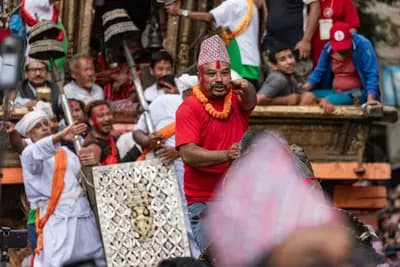
 Mar 23 – Mar 7, 2027
Kathmandu
Seto Machindranath Jatra 2027: Kathmandu’s Sacred Festival
Culture
5 Tage
Festival
Free
Kathmandu 5 Tage
Event Details
Loading...
Event starts in
Krishna Janmashtami is one of the most meaningful Hindu festivals in Nepal, celebrated to remember the birth of Lord Krishna, who is worshipped as an incarnation of Lord Vishnu. The festival combines devotion, fasting, temple visits, music, prayers, storytelling, and joyful community gatherings. In Nepal, the celebration becomes especially vibrant in the Kathmandu Valley, where the historic Krishna Mandir at Patan Durbar Square attracts thousands of devotees. People gather throughout the day and remain awake late into the night, waiting for the sacred midnight moment traditionally associated with Krishna's birth. For travelers, Janmashtami offers a chance to see Nepal's living religious culture rather than simply visiting monuments. A cultural journey can begin with Nepal travel experiences and continue through Kathmandu Valley heritage.
In 2027, Krishna Janmashtami in Nepal falls on Wednesday, August 25. The festival follows the Hindu lunar calendar, so its Gregorian date changes every year. Janmashtami is observed on the eighth lunar day, known as Ashtami, of the dark fortnight of the month traditionally associated with Shravana or Bhadrapada depending on the calendar system being used. For visitors planning a Nepal cultural trip, August 25 should be kept free for the main celebration, while the evening of August 24 may also be useful for preparing for fasting and temple visits. Calendar calculations can vary slightly by location and tradition, so travelers should confirm local timings closer to the festival. The broader setting can be explored through Kathmandu cultural travel and Nepal travel planning.
Krishna Janmashtami celebrates the traditional birth of Lord Krishna, who is revered by Hindus as the eighth avatar of Vishnu. Religious stories describe Krishna's birth in Mathura to Devaki and Vasudeva at midnight under difficult circumstances. According to the Bhagavata tradition, Krishna was born during a period when the tyrannical King Kamsa was threatening Devaki's family and the wider community. His birth is therefore remembered not simply as the arrival of a divine child, but as a moment associated with the restoration of righteousness and hope. Nepalese devotees express this belief through prayers, fasting, devotional songs, and offerings. The sacred atmosphere can be connected with the wider Hindu heritage found at Pashupatinath Temple and the broader Kathmandu spiritual landscape.
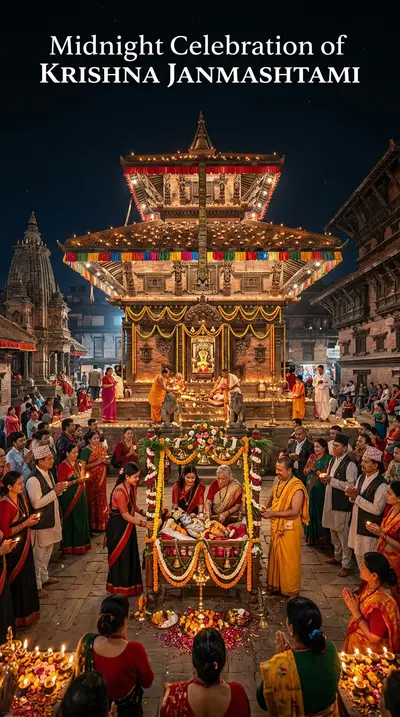
The midnight celebration is one of the most recognizable features of Janmashtami. According to Hindu tradition, Krishna was born at midnight, so devotees often remain awake until the exact period when the birth is ritually remembered. At temples, the atmosphere gradually becomes more intense as the evening progresses. Devotees sing bhajans, chant Krishna's names, ring bells, light lamps, and listen to stories about Krishna's childhood and divine activities. At midnight, the image of the infant Krishna may be placed in a decorated cradle, followed by prayers and offerings. The Nepal Tourism Board notes that devotees gather at Krishna Mandir in Patan and remain into the night to honor Krishna. Travelers can experience this atmosphere alongside the wider Kathmandu heritage experience and Nepal cultural journeys.
The most famous place for Krishna Janmashtami in Nepal is Krishna Mandir in Patan Durbar Square, Lalitpur. The stone temple is an important landmark of Nepal's religious and architectural heritage, and during Janmashtami its surroundings become filled with devotees. The temple's distinctive stone construction and multi-level design make it visually different from many of Nepal's traditional pagoda temples. During the festival, however, the architecture becomes secondary to the people and rituals taking place around it. Devotees queue to offer flowers, lamps, incense, and prayers while musicians and religious singers create a devotional atmosphere. Travelers interested in sacred architecture can use Kathmandu Valley heritage as a starting point before visiting Patan and its historic religious spaces. Nepal cultural travel can also help frame the festival within a wider journey.
Patan, also known as Lalitpur, has a long history of Hindu and Buddhist religious traditions, making it a natural setting for understanding Janmashtami. The old city contains temples, monasteries, courtyards, shrines, traditional houses, and artisan workshops, many of which remain part of everyday life. During Krishna Janmashtami, the historic center becomes especially lively as devotees come from different parts of Nepal to worship at Krishna Mandir. Walking around Patan during the festival can therefore reveal much more than one temple. Visitors can see how religious life is connected with architecture, markets, family traditions, and neighborhood communities. The Kathmandu Valley is known for precisely this mixture of living heritage and daily life, as described in Kathmandu Valley's cultural landscape and the wider Enticing Himalayas Nepal experience.
Fasting is an important part of Janmashtami devotion, although the exact form differs between individuals and traditions. Some devotees observe a complete fast, while others consume fruits, milk, water, or specially prepared fasting foods. The purpose is generally understood as spiritual discipline and focused devotion rather than simply avoiding food. Many devotees spend the fasting day visiting temples, listening to religious stories, chanting Krishna's names, and preparing offerings. The fast is commonly continued until the appropriate time of worship around midnight or until a prescribed ritual period has passed. Travelers should understand that fasting practices are personal and religious, so there is no need to imitate them unless they choose to participate respectfully. Similar devotional practices can be observed during Teej Festival celebrations and at Pashupatinath Temple.
Music gives Krishna Janmashtami its emotional character. Throughout the day and especially during the evening, devotees sing bhajans and devotional songs praising Krishna. The music can be simple and intimate inside homes or much louder and more energetic around temples. Drums, bells, hand cymbals, harmoniums, and group singing may accompany the prayers. Some songs describe Krishna's childhood, while others focus on devotion, divine love, and surrender. For visitors, the musical experience is often one of the most memorable parts of the festival because it allows them to experience religious emotion without needing to understand every ritual. Kathmandu's wider festival culture also includes music and public performance, as seen during Indra Jatra in Kathmandu and across the historic Kathmandu Valley.
Another beautiful tradition involves decorating a small cradle for baby Krishna. Since Janmashtami celebrates Krishna's birth, devotees may prepare an image of infant Krishna and place it inside a decorated cradle. Flowers, colorful cloth, lamps, leaves, and other devotional decorations can be used to create a special space for the deity. Families may perform this ritual at home, while temples create larger ceremonial arrangements for public worship. The cradle represents Krishna as a divine child and brings the festival into a personal and family setting. Children especially enjoy this part because the story of baby Krishna is easy to connect with and full of playful episodes. Visitors exploring Nepal's family-oriented cultural traditions can begin with Nepal cultural experiences and Kathmandu heritage.
The stories of Krishna's childhood are central to the emotional appeal of Janmashtami. Traditional Hindu literature describes Krishna growing up in Gokul and Vrindavan, where he became famous for his playful personality, love of butter, friendship with other children, and interactions with the people around him. Stories about his mother Yashoda, his flute, his friends, and his playful activities are often shared with children and families during the festival period. These stories make Krishna approachable because they show both his divine nature and his playful human-like qualities. In Nepal, storytelling can take place in temples, homes, religious gatherings, and community programs. The wider spiritual character of Nepal can be explored through Pashupatinath's sacred traditions and Kathmandu's religious heritage.
Krishna is also remembered as the speaker of the Bhagavad Gita, one of the most influential texts within Hindu philosophical tradition. In the Gita, Krishna teaches Arjuna about duty, action, knowledge, devotion, and the importance of performing one's responsibilities without being attached to the results. Although Janmashtami focuses on Krishna's birth, many devotees also remember this broader spiritual teaching during the festival. This gives the celebration a deeper dimension beyond the joyful image of baby Krishna. For some people, Janmashtami becomes a time to reflect on personal responsibility, faith, and the way they approach difficult situations. Travelers interested in Nepal's spiritual side can connect this experience with Pashupatinath's Hindu traditions and the wider Kathmandu spiritual landscape.
Offerings are an important part of Krishna worship during Janmashtami. Devotees may offer flowers, fruits, sweets, milk, butter, curd, incense, lamps, and other foods associated with Krishna traditions. Since Krishna's childhood stories frequently mention milk and butter, dairy-based offerings have a special symbolic connection with his early life in Gokul. The exact offerings differ according to family traditions and temple customs. At public temples, devotees may wait in lines to make offerings or receive blessings after worship. Visitors should avoid touching offerings or sacred objects without permission because temple practices differ from place to place. Respectful observation is usually the best way to experience the ceremony. Travelers can also learn about Nepal's Hindu heritage and Kathmandu's sacred spaces.
Children often have a special place in Krishna Janmashtami celebrations because Krishna himself is remembered through stories of divine childhood. Families may dress children as Krishna or Radha, complete with traditional clothing, peacock-feather decorations, small flutes, and colorful ornaments. Schools and community groups may also organize cultural programs where children sing songs, perform dances, or act out stories from Krishna's life. These activities help pass religious stories from one generation to the next in a way that feels enjoyable rather than purely formal. The family-friendly nature of the celebration makes Janmashtami accessible to people of different ages. Families visiting Nepal can explore broader cultural experiences through Enticing Himalayas and discover the living traditions of the Kathmandu Valley.
During Janmashtami, homes, temples, schools, and community spaces may be decorated with flowers, lamps, images of Krishna, and colorful displays. Some groups create small scenes representing episodes from Krishna's childhood, while others build decorative spaces around an image of infant Krishna. These displays can turn ordinary rooms and public areas into temporary religious environments. The use of lights becomes especially beautiful after sunset when the festival moves toward the midnight celebration. Visitors interested in photography can capture details of flowers, lamps, temple architecture, and devotional arrangements, but should always ask permission before photographing private rituals. Kathmandu's larger festivals also transform the city visually, as travelers can see through Indra Jatra's cultural celebrations and Kathmandu's living heritage.
Krishna Janmashtami is celebrated both inside homes and at public temples, and the two experiences can feel very different. At home, the festival may be quiet, family-centered, and focused on prayer, fasting, food preparation, and storytelling. At temples, the atmosphere is usually more public, with large crowds, devotional music, lines of worshippers, lamps, and organized ceremonies. The combination of these two settings shows how Hindu festivals operate at different levels of society. A major temple can become a public center of devotion while the same festival remains deeply personal inside individual households. Travelers should remember that public access does not mean every ritual is open to photography or participation. This balance can also be observed during Teej in Kathmandu and at Pashupatinath.
The character of Janmashtami changes significantly after sunset. As darkness arrives, temple courtyards and surrounding streets begin to glow with oil lamps and electric decorations. Devotional music becomes more noticeable, and people gather for evening prayers while waiting for the midnight worship. Some devotees spend hours singing and listening to religious stories. Others move between temples or wait quietly in long queues. The atmosphere can be both peaceful and energetic at the same time. Travelers should expect crowds around major Krishna temples and should allow additional time for walking and waiting. Similar evening transformations can be seen during Indra Jatra's nighttime traditions and throughout Kathmandu's historic neighborhoods.
The midnight birth ceremony is the emotional center of Krishna Janmashtami. As the traditional birth time approaches, devotees gather closely around the temple or home shrine, chanting Krishna's name and singing devotional songs. When midnight arrives, the image of infant Krishna may be ceremonially revealed, rocked in a cradle, bathed, dressed, decorated, and worshipped. Bells may ring while devotees offer flowers and prayers. The exact sequence differs according to temple and family tradition, so visitors should avoid assuming that every location follows the same ritual. What remains consistent is the idea of celebrating Krishna's arrival with devotion and joy. Nepal Tourism Board specifically identifies Krishna Mandir in Patan as a major center for this midnight gathering. Travelers can explore the wider Kathmandu cultural setting before joining the celebration.
Although Krishna Mandir in Patan is the main Krishna Janmashtami destination in the Kathmandu Valley, Pashupatinath is useful for understanding Nepal's wider Hindu religious environment. Pashupatinath is dedicated to Shiva rather than Krishna, yet the temple complex demonstrates how deeply Hindu worship is woven into everyday life in Kathmandu. Visitors can observe priests, pilgrims, offerings, bells, lamps, and other devotional practices while learning how sacred spaces function in Nepal. A traveler interested in several Hindu traditions can therefore visit Pashupatinath before or after Janmashtami and see the differences between Shiva worship and Krishna devotion. The temple's cultural background is available through Pashupatinath Temple, while Kathmandu Valley heritage provides a wider regional context.
Janmashtami belongs to a much wider calendar of Hindu festivals in Nepal, each with its own deity, story, rituals, food, and community traditions. Teej focuses strongly on devotion to Shiva and Parvati, while Janmashtami centers on Krishna's birth. Other festivals such as Dashain, Tihar, Shivaratri, and Ram Navami have their own distinct meanings. Comparing these celebrations can help visitors understand that Hindu culture is not a single uniform practice. It is a broad collection of traditions that vary between communities and regions. Travelers can see how different festivals transform Kathmandu at different times of year through Teej Festival Celebration, Indra Jatra, and the wider Kathmandu Valley.
Food during Janmashtami is connected with both fasting and celebration. Devotees who are fasting may choose fruits, milk, yogurt, nuts, or specially prepared foods according to their tradition, while families who are not observing a strict fast may prepare a wider range of festive dishes. After the religious observance, food becomes part of the family gathering and celebration. Krishna's association with milk, butter, and curd also gives dairy products a symbolic place in many Krishna traditions. Food customs differ considerably from household to household, so visitors should not assume there is one universal Janmashtami menu. Travelers interested in Nepal's broader food traditions can explore Nepal cultural experiences and the food-rich heritage of Kathmandu Valley.
One of the most important aspects of Janmashtami is the way it brings families and communities together. People who may have busy lives during ordinary days make time for prayer, temple visits, storytelling, and shared meals. Religious organizations and community groups may organize singing, performances, decorations, and public worship. The festival therefore works as both a spiritual observance and a social gathering. For children, it can be an introduction to stories and traditions; for older generations, it can be a way of preserving familiar customs. This community role is shared by many festivals in Nepal, including the public processions of Indra Jatra and the family-centered practices seen during Teej.
The Kathmandu Valley provides a particularly rich setting for Janmashtami because it contains centuries-old temples, historic squares, traditional neighborhoods, and living religious communities. Patan is the central destination for Krishna worship, but the wider valley contains many other temples and shrines where devotees observe the festival. A traveler can combine Janmashtami with walks through Patan, Kathmandu, and other historic areas to understand how religion and urban life exist side by side. The valley's architecture also creates a beautiful background for festival photography, with brick courtyards, carved windows, stone temples, and traditional squares. More information about the region is available through Kathmandu Valley and the wider Nepal travel experience.
Visitors should approach Krishna Janmashtami as a religious celebration rather than a staged tourist performance. Dress modestly when visiting temples, keep your voice low during prayers, follow instructions from temple staff and devotees, and ask before taking close-up photographs. Large crowds may make the area around Krishna Mandir difficult to navigate, particularly later in the evening. Visitors should also be prepared to wait and should avoid pushing into queues or blocking worshippers. If a particular area is restricted, respect the boundary even if other visitors appear to enter. Responsible cultural tourism makes the experience more meaningful for both travelers and local communities. These same principles are useful during Teej Festival and other religious experiences around Pashupatinath.
Janmashtami offers many opportunities for festival photography, especially around decorated temples, lamps, traditional clothing, devotional music, and nighttime gatherings. However, the strongest photographs often come from patient observation rather than standing directly in front of worshippers. A respectful distance allows you to capture the atmosphere without interrupting prayers. Ask permission before photographing individuals, especially children and people engaged in private rituals. Avoid using flash directly in front of worshippers unless permitted. If the crowd becomes dense, keep your camera secure and focus on enjoying the experience instead of capturing every moment. Travelers can also explore Kathmandu's visual heritage through Kathmandu Valley and the dramatic public atmosphere of Indra Jatra.
Krishna Janmashtami contributes to Nepal's living cultural heritage because traditions continue through participation rather than existing only in historical records. Children learn stories from parents and grandparents, devotees return to temples every year, musicians continue devotional songs, and families maintain their own forms of prayer and food preparation. Historic temples such as Krishna Mandir provide the physical setting, but people give those places their living meaning. This relationship between architecture and community is one of the strongest characteristics of the Kathmandu Valley. Visitors who come during Janmashtami can therefore see history being practiced in the present. The wider heritage environment is described through Kathmandu Valley's living culture and the broader Nepal travel experience.
If you want to experience Krishna Janmashtami in Nepal in 2027, plan around Wednesday, August 25, and consider arriving in Kathmandu at least a day earlier. The main midnight worship means that staying close to the central Kathmandu Valley can make the evening much easier. Public transportation and roads may become busy around major temples, so allow extra travel time. Comfortable shoes are important because visitors may spend several hours standing or walking. Modest clothing is recommended for temple visits, and a small bag is easier to manage in crowded areas. Because the festival follows a lunar calendar, local timings should be reconfirmed as the date approaches. Current calendar sources identify August 25, 2027 as Janmashtami in Nepal. For broader planning, explore Nepal travel services and Kathmandu Valley information.
Krishna Janmashtami gives travelers an opportunity to experience faith, family, music, architecture, and community in one celebration. The most memorable part may not necessarily be the busiest moment at midnight. It could be a family preparing offerings, a child dressed as Krishna, a group singing bhajans, a temple glowing with lamps, or an elderly devotee quietly praying. These smaller moments show why the festival continues to matter to people. Travelers who take time to observe rather than rush from one attraction to another can gain a deeper understanding of Nepal's religious culture. A visit during Janmashtami can also be combined with other cultural experiences across Kathmandu through Enticing Himalayas and the historic Kathmandu Valley.
At its heart, Janmashtami is about devotion and remembrance. The festival remembers Krishna's birth, but its meaning extends into ideas of faith, duty, compassion, courage, and the relationship between the individual and the divine. For devotees, fasting and prayer create a period of focused attention. For families, the festival creates a moment to reconnect with traditions. For children, Krishna's stories offer lessons through memorable characters and playful stories. For visitors, the festival provides an opportunity to observe a religious tradition respectfully and understand the people and history behind it. This spiritual dimension can be placed within Nepal's broader Hindu heritage through Pashupatinath Temple and the wider Kathmandu cultural landscape.
Krishna Janmashtami is much more than a single night of celebration. It is a festival of faith, storytelling, family, music, fasting, temple worship, and cultural continuity that brings Nepal's religious heritage into everyday life. In 2027, the main celebration falls on Wednesday, August 25, with the most important worship traditionally taking place around midnight. For travelers, Patan's Krishna Mandir is the most prominent place to experience the festival, but the wider Kathmandu Valley adds depth through its temples, historic streets, courtyards, and communities. The best experience comes from observing respectfully, allowing time for crowds and rituals, and understanding that every ceremony has meaning for the people taking part. To discover more of Nepal's living heritage, begin with Enticing Himalayas, explore Kathmandu Valley, and experience the country's rich tradition of religious festivals.
Key experiences and features
Hindu festivals in Nepal
Krishna Janmashtami in Nepal
Birth of Lord Krishna
Krishna Mandir
Patan Durbar Square
sunset
Festival photography
Public temples
Krishna Janmashtami celebrations
Recommended packing list
Lalitpur, Lalitpur, Bagmati, Nepal
Got questions about this event?
Krishna Janmashtami is celebrated according to the Hindu lunar calendar and usually falls in August or September. In 2027, the main festival date is August 25.
Krishna Mandir at Patan Durbar Square is one of the most important places to experience the festival, with worship, lamps, devotional activities, and large gatherings.
Devotees observe fasting, visit temples, sing devotional songs, perform prayers, and celebrate the birth of Lord Krishna around midnight.
Visitors can generally experience the public cultural atmosphere, but temple access and photography rules may vary. Respect local religious customs and follow instructions.
Yes. Families can experience the festival together, although crowded areas and late-night celebrations require extra care with children.
Aug 25, 2027
1 day
Quick Info
More culture experiences
Mar 23 – Mar 7, 2027Kathmandu
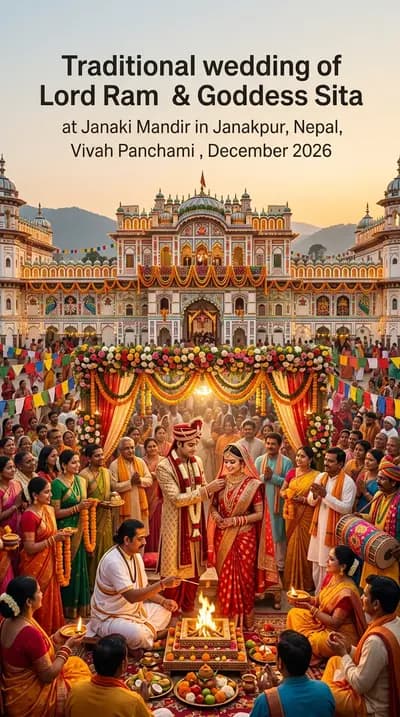 Dec 13 – Dec 17, 2026
Janaki Mandir, Janakpur
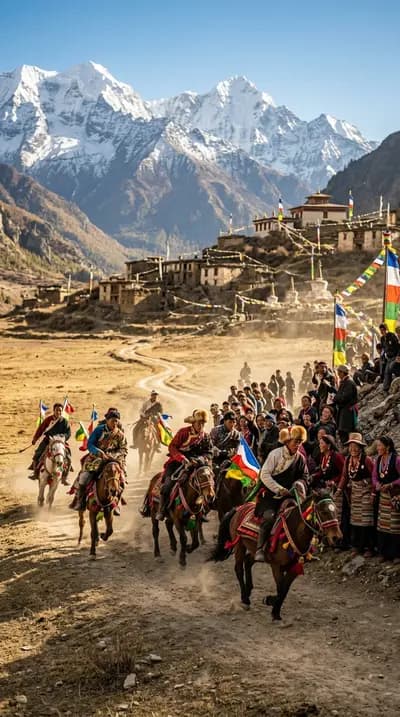 Nov 15 – Nov 16, 2026
Tsum Valley