 Mar 23 – Mar 7, 2027
Kathmandu
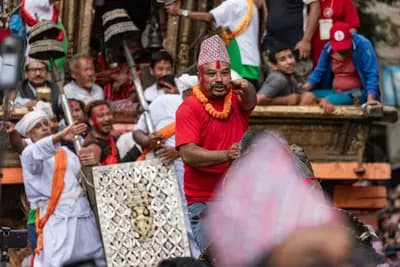
Seto Machindranath Jatra 2027: Kathmandu’s Sacred Festival
Culture
5 Tage
Festival
Free
Kathmandu 5 Tage
Event Details
Loading...
Event starts in
Magh Bihu / Maghe Mela at Devghat and Ridi is a special winter festival experience in Nepal, where sacred river bathing, religious rituals, family gatherings, traditional food, temple visits, and lively local fairs come together. In Nepal, the festival is more commonly known as Maghe Sankranti, and it is observed on the first day of the Nepali month of Magh, usually around January 14. In 2027, Maghe Sankranti falls on Thursday, January 14, making it an important date for people planning a pilgrimage or cultural journey. Devghat, where the Trishuli and Kali Gandaki rivers meet, attracts large numbers of devotees for the holy bath, while Ridi, at the meeting area of the Ridi Khola and Kali Gandaki, is famous for its traditional multi-day fair. For travelers interested in Nepal's living culture, this is a chance to experience spiritual traditions and local community life rather than simply visiting a tourist attraction. You can begin planning your wider Nepal journey through Nepal travel experiences while keeping the festival itself at the center of your itinerary.
The main day of Maghe Sankranti is the first day of Magh, which normally falls in the middle of January. For 2027, the main festival day is January 14. The date follows the solar calendar, so it is generally more predictable than many lunar festivals in Nepal. Devotees commonly wake early, prepare for a sacred bath, visit temples, make offerings, and spend time with family. Nepal Tourism Board describes Maghe Sankranti as a festival connected with renewal, prosperity, longer days, and the beginning of the sun's northward journey.
At Devghat, the principal pilgrimage activity is concentrated around Magh 1, although the wider religious atmosphere and visitor movement can begin before the main day and continue afterward. Ridi has a different pattern because the traditional Ridi Mela lasts three days. These three days are known as Jethi Sankranti, Maili Sankranti, and Kanchhi Sankranti. For a traveler, this means Ridi can offer a longer festival experience than simply arriving for the single main bathing day.
If you are preparing a cultural itinerary, you can also read the Nepal Festival Calendar to understand how Maghe Sankranti fits into Nepal's wider annual festival cycle. The festival season can also be combined with a visit to Kathmandu Valley heritage sites for a broader cultural journey.
For planning purposes, the most important dates are:
January 14, 2027 — Maghe Sankranti / Magh 1: Main festival and sacred bathing day.
Ridi Mela Day 1 — Jethi Sankranti: First day of the traditional Ridi fair.
Ridi Mela Day 2 — Maili Sankranti: Second day of the fair and continued religious activities.
Ridi Mela Day 3 — Kanchhi Sankranti: Third and final traditional day of the Ridi Mela.
The exact local program, performances, stalls, religious ceremonies, traffic arrangements, and public events can vary from year to year, so travelers should check local announcements close to the festival. The main religious date, however, remains Magh 1.
The festival can be understood as both a religious observance and a seasonal celebration. It marks the beginning of Magh and is traditionally connected with the sun's movement toward the north, longer daylight, and the gradual change from the coldest part of winter toward warmer days.
Maghe Sankranti is one of Nepal's major traditional festivals. It is celebrated in different ways by different communities, which makes it much wider than one single religious ceremony. Hindu devotees may take a ritual bath in a sacred river, visit temples, give donations, and offer prayers. Families prepare special foods such as til ko laddu, chaku, ghee, yam, and sweet potatoes. Among Tharu communities, the same period is celebrated as Maghi, which has strong links with community life, harvest traditions, family gatherings, and the beginning of the Tharu New Year.
The festival also has importance among the Magar community, while different regions of Nepal give the day their own local character. Radio Nepal reported that large numbers of devotees traditionally gather at places including Devghat and Ridi for bathing and religious observances.
This diversity is what makes a journey around Maghe Sankranti interesting. It is not only about watching a ceremony. It is about seeing how food, faith, family, river culture, and seasonal traditions are connected in Nepalese life. Travelers interested in spiritual culture can also explore the Spiritual Tour in Nepal guide before planning their route.
Devghat is one of the best-known pilgrimage areas associated with Maghe Sankranti in Nepal. The area is connected with the meeting of the Trishuli and Kali Gandaki rivers, creating an important river landscape for religious bathing. During Maghe Sankranti, pilgrims arrive early in the morning to take a holy bath and continue with worship, prayer, offerings, and visits to nearby sacred places. Reports from Nepal's national media have repeatedly identified Devghat as one of the major gathering points for the festival.
For many pilgrims, the river is not simply a beautiful natural feature. It is part of the spiritual meaning of the day. The act of entering the water before sunrise, offering prayers, and then visiting a temple creates a sense of beginning again. The cold winter air, river mist, bells, chanting, and movement of pilgrims can make Devghat pilgrimage feel very different from ordinary sightseeing.
Travelers who want to understand the wider spiritual side of Nepal can connect this experience with Muktinath sacred pilgrimage, another major Himalayan pilgrimage destination. A broader route can also include Lumbini spiritual heritage, where Buddhist heritage creates a very different but equally important side of Nepal's spiritual landscape.
The holy bath, often called Makar Snan or Magh Snan, is one of the central traditions of Maghe Sankranti. People rise early and make their way toward the river. At Devghat, the confluence becomes especially busy as pilgrims arrive from different parts of Nepal. The ritual is traditionally understood as an act of purification and devotion. Some devotees combine bathing with prayer, meditation, offerings, charity, and temple visits.
For visitors, it is important to remember that the river bath is a religious practice, not a performance created for tourists. People may be praying, fasting, making offerings, or observing family traditions. A respectful visitor should avoid blocking access to the river, taking intrusive photographs, or treating private religious moments as entertainment.
If you are documenting the festival, focus on the wider atmosphere, architecture, river scenery, and public areas unless people clearly welcome photography. This simple approach helps protect the sacred atmosphere and local dignity of the celebration.
Ridi is another major destination connected with Maghe Sankranti. Also known as Ruru Kshetra, Ridi lies around the confluence of the Ridi Khola and Kali Gandaki and has long been associated with pilgrimage and religious traditions. The traditional Ridi Mela is held for three days during Maghe Sankranti.
The three-day structure gives the festival a special rhythm. The first day is called Jethi Sankranti, followed by Maili Sankranti, and finally Kanchhi Sankranti. Instead of experiencing everything in one crowded day, visitors staying longer can observe how the fair develops across several days.
The atmosphere around Ridi combines religious devotion with local commerce and social gathering. People come to bathe, visit sacred places, meet relatives, buy local goods, and participate in the fair. The result is a festival that feels deeply connected to the surrounding communities rather than separated from ordinary life.
A visit to Ridi can also be connected with other Nepal cultural destinations through an itinerary designed around temples, rivers, villages, and heritage sites. The Kathmandu Valley destination guide provides another example of how sacred sites and everyday community life exist together in Nepal.
Jethi Sankranti is traditionally the first day of the three-day Ridi Mela. It falls around the main Maghe Sankranti observance and is one of the busiest times for religious activity. Pilgrims may arrive before dawn, take a holy bath in the river, visit temples, and make offerings.
The first day often carries the feeling of arrival. Roads and paths become busier, local shops prepare for visitors, and the riverside takes on a more festive atmosphere. For travelers, this is the day when the religious purpose of the mela is most visible alongside the community gathering.
Because the first day can be busy, arriving early is useful. It also gives visitors a chance to see the morning light around the river before the larger daytime crowd develops. Those interested in photography should remember that sunrise photography around a sacred site should be done with care and without interfering with worship.
The second day of the Ridi Mela is known as Maili Sankranti. By this stage, the fair has its own rhythm. Pilgrims and local residents continue their religious activities while market stalls, food sellers, and community gatherings contribute to the festival environment.
For travelers staying more than one night, the second day can be an opportunity to experience Ridi at a slower pace. Instead of rushing from one religious activity to another, you can walk around the town, observe local architecture, speak respectfully with residents, and sample seasonal foods.
The middle day can also be useful for understanding the difference between a pilgrimage site and a festival town. Ridi is both. Its sacred identity remains central, but the mela also creates a temporary social and economic space where people meet, trade, eat, and celebrate.
The final day is traditionally called Kanchhi Sankranti. It completes the three-day sequence of the Ridi Mela. While the exact activities can vary from year to year, the final day forms part of the long-established festival tradition.
Visitors who stay through all three days may notice that the experience is different from simply arriving on Magh 1 for a quick bath. The longer stay gives more time to understand the religious calendar, local community, and fair culture.
For a cultural traveler, this is often the most valuable part of staying longer. You are not simply collecting photographs of a festival; you are seeing how a traditional event occupies several days of community life.
Food is one of the warmest parts of Maghe Sankranti. The festival is closely associated with foods that are especially suitable for the cold winter season. Common foods include chaku, til ko laddu, ghee, sweet potato, yam, and other seasonal ingredients. Nepal Tourism Board highlights these foods as an important part of the festival's family and cultural traditions.
Chaku is a thick sweet made from molasses or jaggery and is especially associated with the festival. Sesame sweets provide another familiar flavor, while ghee, yam, and sweet potato add richness to the winter meal. These foods are not simply snacks. They are part of a seasonal food tradition passed between generations.
Visitors who enjoy learning about food culture can combine the festival with the Traditional Nepali Culinary Food Tour to learn more about how Nepali food connects with culture and daily life.
Sesame and jaggery-based foods are strongly associated with Maghe Sankranti because the festival falls during winter. Families prepare and share foods that are traditionally seen as warming and nourishing. The Nepal Tourism Board specifically lists til ko laddu, chaku, ghee, yam, and sweet potato among the foods associated with the festival.
There is also a social meaning behind sharing these foods. Festivals often turn food into a way of expressing care. Older family members prepare or serve traditional dishes, children receive blessings, and relatives gather around a common meal.
That is why a festival meal can sometimes tell you more about family traditions than a formal explanation of the festival. If you are traveling during Maghe Sankranti, try to understand the food as part of the culture rather than simply looking for something unusual to eat.
Maghe Sankranti is also a family festival. People return home, meet relatives, receive blessings, and share meals. The festival creates a moment when religious practices and ordinary family relationships come together.
In many homes, elders bless younger family members and traditional foods are shared. The exact customs vary by community and family, so visitors should avoid assuming that one ritual represents everyone in Nepal. Nepal's festival culture is diverse, and regional customs and family traditions can differ considerably.
This is one reason why Devghat and Ridi are interesting places for cultural travel. You can observe the public festival while remembering that many of its deepest meanings continue inside families and religious communities.
Although this article focuses on Devghat and Ridi, Maghe Sankranti is celebrated in many different ways across Nepal. Among the Tharu community, the festival is known as Maghi and is strongly associated with community gatherings, feasting, cultural programs, traditional clothing, and the beginning of the Tharu New Year.
This regional diversity is important because it shows that Maghe Sankranti is not one identical ceremony across Nepal. The same calendar date can carry different community meanings.
Travelers interested in this broader cultural landscape can explore Lumbini's cultural heritage and the wider Terai region, where the Maghi tradition has a strong community character.
Maghe Sankranti also has particular importance among the Magar community. Nepal Tourism Board notes that the festival is celebrated across communities and regions under different names and with different customs.
This is an important reminder that Nepal's festival calendar is built from many overlapping cultural traditions. A traveler may encounter Hindu rituals, indigenous community traditions, seasonal food practices, family ceremonies, and local fairs during the same period.
The best way to experience this is with curiosity rather than assumptions. Listen to local explanations, ask before photographing ceremonies, and remember that a festival is part of people's living identity.
A visit to Devghat during Maghe Mela can include several cultural experiences. The most important is observing the holy river bath and the movement of pilgrims around the sacred river landscape. Visitors can also explore temples and nearby religious areas, observe prayer and offerings, experience the atmosphere of the mela, and taste seasonal foods.
Devghat is especially interesting because the river landscape is inseparable from the religious landscape. The confluence gives the place its physical identity, while temples, rituals, pilgrims, and festivals give it its cultural identity.
Travelers looking for a wider pilgrimage journey can read the Hindu Pilgrimage Tour in Nepal guide for background on other major Hindu pilgrimage destinations in Nepal.
Ridi offers a slightly different experience because of its three-day mela tradition. Visitors can combine river bathing, temple visits, local market activity, traditional foods, community gatherings, and the atmosphere of the Ridi fair.
The town's location around the river gives the festival a strong visual character. During the mela, the normally quiet pilgrimage landscape becomes much more active.
Ridi is also part of the wider sacred geography of Nepal. Its identity as Ruru Kshetra adds historical and religious depth to a visit, while the Kali Gandaki river connects it with other important pilgrimage landscapes.
For the main bathing experience, arriving before sunrise is useful because many devotees begin their religious activities early in the morning. The exact crowd levels and road conditions can vary each year, but the main day of Maghe Sankranti is naturally expected to be much busier than an ordinary winter day.
At Ridi, staying for the three-day period provides a broader experience. If your schedule allows, arriving the day before the main festival can reduce the pressure of reaching the site on the busiest morning.
A calm approach is especially helpful at religious festivals. The goal should be to experience the festival atmosphere without adding unnecessary pressure to crowded sacred spaces.
Visitors should remember that Devghat and Ridi are living religious places. Dress modestly, follow local instructions, avoid disturbing worshippers, and ask permission before photographing people closely.
Do not enter restricted temple areas simply because other visitors appear to be doing so. Some temples have rules regarding who may enter particular spaces. Similarly, avoid touching ritual objects unless invited.
Simple respect makes a big difference. A visitor who watches quietly, waits patiently, and asks before taking photographs will usually have a much more meaningful experience than someone trying to rush through the crowd.
This same principle is useful throughout Nepal, whether visiting Pashupatinath Temple, Muktinath Temple, or another sacred destination.
Maghe Mela offers many photographic subjects: winter sunrise, river landscapes, temple architecture, traditional food, colorful market stalls, and the movement of pilgrims. However, people should never be treated as objects simply because they are attending a public festival.
A good photograph can capture the river, temple, or festival environment without invading someone's private moment. Before taking a close portrait, ask for permission. During bathing rituals, maintain distance and avoid photographing people in ways that may make them uncomfortable.
For travel writers and content creators, responsible photography also helps create a more accurate picture of Nepal. The festival should appear as a living tradition, not as an exotic spectacle.
Winter mornings around river valleys can be cold, so warm clothing is useful. Comfortable walking shoes are important because festival areas can become crowded and movement may involve uneven paths.
A simple festival packing list can include:
Warm jacket or sweater
Comfortable walking shoes
Water bottle
Personal medicines
Small day bag
Phone or camera
Power bank
Hand sanitizer
Modest clothing for temple visits
Small cash for local purchases and offerings
Avoid carrying unnecessary valuables. Crowded festival days require the same basic awareness you would use in any busy public gathering.
Visitors should look for traditional winter foods such as chaku, sesame sweets, ghee, yam, and sweet potatoes. Local food stalls may also offer other Nepali snacks depending on the festival location.
Food is one of the easiest ways to understand a cultural festival because it connects the event with everyday household life. Instead of seeing the festival meal as a separate attraction, notice how people prepare, share, and eat the food with family and friends.
If you want to continue exploring Nepali food culture after the festival, the Traditional Nepali Culinary Food Tour offers a wider introduction to local cuisine and food traditions.
For travelers interested in spiritual tourism, Devghat and Ridi can form part of a larger Nepal pilgrimage route. Nepal has a remarkable range of sacred landscapes, from river confluences and temples to Buddhist monasteries and Himalayan shrines.
A wider route can include Pashupatinath, Muktinath, Lumbini, and other important places depending on the time available. The 10-Day Hindu and Buddhist Pilgrimage Circuit provides useful background for travelers interested in connecting different spiritual traditions.
For a Buddhist-focused journey, the Lumbini to Boudhanath pilgrimage guide explains how sacred destinations across Nepal can be combined into one cultural journey.
Devghat is also useful for travelers interested in combining a pilgrimage experience with a visit to the southern plains. Chitwan lies within the same broader region and offers a completely different landscape of forests, wetlands, villages, and wildlife.
After experiencing the religious atmosphere of Devghat, travelers can continue toward Chitwan National Park for a change of scenery.
This combination can make a winter Nepal journey more varied. One day may be centered on river rituals and temples, while another can focus on forest landscapes and wildlife culture.
Maghe Sankranti arrives during winter, but it also carries the symbolic idea of movement toward warmer and longer days. Nepal Tourism Board describes the festival as marking the transition toward Uttarayana, associated with the sun's northward journey and the return of longer days.
This makes the festival more than a religious date. It is also a seasonal marker. People recognize the changing relationship between sunlight, agriculture, food, and daily life.
At Devghat and Ridi, this seasonal meaning becomes especially visible because the festival happens around rivers, open landscapes, and early-morning winter rituals.
Giving is another important part of Maghe Sankranti traditions. Devotees may donate food, money, sesame, or other offerings according to their customs. Religious bathing and donation are often performed together.
Visitors do not need to copy every ritual. Instead, they can observe and understand why charity and generosity are part of the festival. If making an offering, it is better to do so respectfully and through an appropriate local or religious channel.
The important idea is generosity, not the size of the donation. Festivals often remind people that spiritual life also includes relationships with other people.
Maghe Sankranti is closely connected with the idea of Uttarayana, or the sun's northward journey. Nepal Tourism Board describes the festival as a seasonal transition associated with longer and warmer days.
This gives the festival a hopeful character. Winter is still present, but the calendar has reached an important turning point. The festival therefore carries ideas of renewal, purification, health, and new beginnings.
At Devghat and Ridi, these ideas are expressed through the river bath, prayers, temple visits, food, family gatherings, and community fairs.
Not exactly. Magh Bihu is a festival name especially associated with Assam in northeastern India, while Maghe Sankranti is the more appropriate Nepalese name for the festival observed at Devghat and Ridi.
The two traditions share some broad seasonal and harvest connections, but they have different regional histories, customs, foods, and cultural expressions. Therefore, when writing about Devghat and Ridi, it is more accurate to describe the event as Maghe Sankranti / Maghe Mela.
Using both terms in an SEO title can help reach readers searching for different names, but the article itself should make the Nepalese context clear.
If you are planning for 2027, the key date to remember is January 14, 2027. That is Magh 1 and the main Maghe Sankranti date. Ridi's traditional mela extends across three days.
A simple cultural itinerary could begin with travel toward Devghat, an early morning pilgrimage experience, time around the river and temples, and then onward travel through the surrounding region. Travelers wanting to focus more heavily on Ridi could allocate additional days so they can experience the traditional three-day fair.
Before departure, check current road conditions, accommodation availability, local festival notices, and crowd management information. Festival travel can change from year to year.
The best way to experience Maghe Mela is to slow down. Listen to the bells. Watch the river. Notice how families prepare food. Observe how pilgrims move toward the water. Look at the small details of the fair rather than trying to see everything at once.
The festival is meaningful because it belongs to the people who maintain it. Visitors are guests in that cultural space.
If you are traveling with a local guide, use the opportunity to ask questions about local history and religious customs rather than relying only on assumptions. A good guide can also help you move around crowded areas respectfully.
Festivals such as Maghe Mela are part of Nepal's living heritage. They are not frozen traditions displayed behind glass. They continue because families, pilgrims, religious communities, traders, and local residents participate every year.
At Devghat, the sacred rivers remain central to the festival. At Ridi, the three-day mela continues the long connection between pilgrimage and community gathering. These traditions show how religion, nature, and social life can exist together in one place.
For cultural travelers, that is perhaps the most important lesson of the festival.
Magh Bihu / Maghe Mela at Devghat and Ridi offers a beautiful way to understand Nepal's winter religious culture. The main Nepalese observance is Maghe Sankranti, celebrated on Magh 1, with January 14, 2027 being the main date for the 2027 celebration. Devghat is known for its sacred river confluence and large Maghe Sankranti gathering, while Ridi is especially known for its traditional three-day Ridi Mela of Jethi, Maili, and Kanchhi Sankranti.
The festival brings together holy bathing, temple worship, traditional food, family blessings, charity, and community gatherings. It is also an excellent reminder that Nepal's festivals cannot always be understood through one simple definition. The same calendar day can carry different meanings for Hindu communities, Tharu communities, Magar communities, and other groups across the country.
For travelers, the most meaningful approach is simple: arrive respectfully, learn from local people, protect the sacred atmosphere, enjoy the traditional food, and give yourself enough time to experience the festival rather than rushing through it.
To continue planning a Nepal cultural journey, begin with Explore Nepal with Enticing Himalayas and explore related destinations such as Muktinath pilgrimage, Lumbini heritage, Pashupatinath sacred temple, and Chitwan National Park.
Key experiences and features
Sacred river bathing
Maghe Sankranti
First day of Magh
Jethi Sankranti
Kanchhi Sankranti
Ridi Mela
Trishuli and Kali Gandaki rivers
Nepal cultural destinations
Devghat pilgrimage
Recommended packing list
Devghat / Ridi, Tanahun & Chitwan / Gulmi & Palpa, Gandaki & Lumbini, Nepal
Got questions about this event?
Maghe Sankranti will be celebrated on January 14, 2027. It falls on Magh 1 of the Nepali calendar.
Maghe Mela at Devghat is a major religious gathering where devotees take a holy bath at the sacred river confluence, visit temples, offer prayers, and participate in traditional activities.
The traditional Ridi Mela lasts for three days, known as Jethi Sankranti, Maili Sankranti, and Kanchhi Sankranti.
Traditional foods include chaku, til ko laddu, ghee, yam, and sweet potatoes, which are commonly enjoyed during the winter festival.
Visitors should respect religious rituals, dress appropriately, follow local instructions, avoid disturbing worshippers, and ask permission before taking close photographs.
Jan 14 – Jan 16, 2027
2 days
Quick Info
More culture experiences
Mar 23 – Mar 7, 2027Kathmandu
 Dec 13 – Dec 17, 2026
Janaki Mandir, Janakpur
 Nov 15 – Nov 16, 2026
Tsum Valley