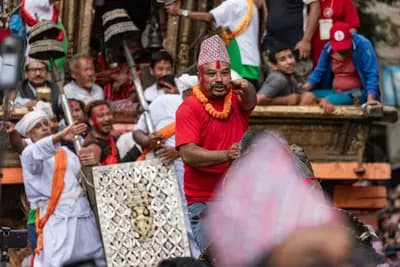
 Mar 23 – Mar 7, 2027
Kathmandu
Seto Machindranath Jatra 2027: Kathmandu’s Sacred Festival
Culture
5 Tage
Festival
Free
Kathmandu 5 Tage
Event Details
Loading...
Event starts in
Tucked into the folds of the Kathmandu Valley's outer rim, the small Newari town of Panauti holds onto a festival tradition so old that locals struggle to date its true beginning. Known formally as Jya: Punhi and more commonly as the Panauti Jatra, this three-day chariot festival is one of the most visually striking and spiritually charged events on Nepal's cultural calendar. Travelers planning a trip through Enticing Himalayas often discover this festival almost by accident while researching things to do near Kathmandu, only to find it becomes the highlight of their entire journey. The festival recreates the mythic battle between the fierce forms of Shiva and Parvati, and it is celebrated with a devotion that has barely changed across centuries. For anyone building a Nepal itinerary through our curated Nepal tour packages, timing a visit around this jatra adds a layer of living heritage that no monument alone can offer.
Panauti lies roughly 32 kilometers southeast of Kathmandu, at the sacred confluence of the Punyamati and Roshi rivers, a site the Newari community has revered for over a thousand years. The town itself predates much of what tourists typically see on a standard Nepal tour packages itinerary, and its temples, courtyards, and river ghats remain largely untouched by mass tourism. Many travelers exploring places to see in Nepal overlook Panauti in favor of Bhaktapur or Patan, yet this quieter town offers arguably a more authentic glimpse into medieval Newari urban planning. The confluence itself, known as Tribeni Ghat, is considered so sacred that it hosts more than twenty festivals throughout the year. Anyone reading our Nepal travel blog for cultural context will notice how frequently Panauti appears as a reference point for understanding Newari ritual geography across the entire valley, and browsing our Nepal travel guide beforehand makes the town's layout far easier to navigate once the festival crowds arrive.
At its core, the Panauti Jatra retells the story of Bhairab and Bhadrakali, the wrathful manifestations of Shiva and Parvati, engaged in a symbolic battle representing the eternal balance between destruction and renewal. Local priests and elders pass this story down orally, and it is woven into every stage of the three-day event. This mythological backbone is part of what makes the festival so compelling for travelers who come through our things-to-do page looking for immersive cultural experiences rather than passive sightseeing. The narrative unfolds publicly, through masked performers, chariot processions, and nighttime rituals, rather than being confined to a temple interior. Those who have read our Nepal travel guide before visiting often say the mythology makes far more sense once witnessed firsthand, since the chariot movements, drumbeats, and processional routes are choreographed to physically enact the ancient legend rather than simply commemorate it. Anyone new to Newari mythology can find further background across our travel blog and through Enticing Himalayas' broader cultural resources.
Beyond its religious symbolism, Panauti Jatra is deeply tied to Nepal's agrarian calendar, which is why it is also known locally as Hile Jatra. The festival traditionally marks the end of the dry season and the beginning of the paddy transplantation period, a transition of enormous practical importance to farming communities across the valley. Two bamboo poles symbolizing snakes are laid horizontally across the Punyamati River, and the festival is considered to formally begin only once ritual performers called Devgans slowly cross them. Visitors who explore our activities page for seasonal experiences in Nepal will find that few events tie spirituality and agriculture together as visibly as this one. Locals believe strong winds arrive during the festival's final days, followed by the season's first proper rains, reinforcing the idea that Jya: Punhi is as much a weather-marking ritual as it is a religious commemoration passed down through generations of Panauti's farming families. Seasonal travel planning tips for this window are also covered across our Nepal travel blog and our events calendar.
The festival unfolds over three distinct days, each with its own rituals, processions, and symbolic weight. On the opening night, the chariot of Bhadrakali is pulled through narrow stone streets while priests conduct a Homa fire ritual that continues until dawn. The second day intensifies with masked dance sequences and additional processions weaving through Panauti's historic core, an experience that pairs naturally with our curated Nepal tour packages for travelers who want structure around an otherwise chaotic, crowd-driven event. By the third day, the chariots of Bhairab and Bhadrakali are drawn together in a symbolic reunion representing cosmic balance restored. Photographers and cultural researchers following our travel blog frequently describe this final day as the most photogenic, with firelight, chanting, and chariot wheels grinding over centuries-old stone creating an atmosphere unmatched elsewhere in the valley's festival calendar. Travelers can cross-check exact festival dates against our events calendar and festival calendar before committing to a fixed travel window.
The chariots used in the Panauti Jatra are not decorative props; they are massive wooden structures built and rebuilt by hand using techniques passed down within specific Newari craft lineages. Pulling these chariots through Panauti's tight lanes requires coordinated community effort, often involving hundreds of local participants working in rotation. The masks worn by ritual dancers are considered sacred vessels, and performers are believed to be temporarily inhabited by the deities they portray during the dance. Travelers researching things to do around cultural festivals in Nepal will find that few events showcase traditional craftsmanship as openly as this one, since the chariot-building process itself often begins publicly in the days leading up to the jatra. This transparency, rare in festivals that guard ritual preparation from outsiders, is part of what makes Panauti such a rewarding stop for anyone genuinely interested in Newari material culture rather than a quick photo opportunity between other valley visits, a theme also explored across our travel blog and Enticing Himalayas' cultural trip pages.
Nepal's festival calendar is famously dense, and the Kathmandu Valley alone hosts dozens of jatras throughout the year, each tied to a specific town, deity, or agricultural milestone. Panauti Jatra shares thematic DNA with events like Bhaktapur's Bisket Jatra and Kathmandu's Indra Jatra, all of which involve chariot processions and masked performances rooted in Newari cosmology. However, Panauti's version retains a more localized, community-driven character, largely because the town sits outside the primary tourist circuits covered by our Nepal tour packages. This relative obscurity has preserved much of the festival's original intensity. Visitors who have also attended larger valley festivals often tell us, through feedback shared after browsing our activities page, that Panauti felt noticeably less commercialized, with locals still treating the event primarily as devotional practice rather than as a tourism showcase built around visitor expectations. For comparison, our Nepal travel guide and places to see in Nepal outline how other valley jatras differ in scale and tourist accessibility.
The Panauti Jatra typically falls around the December full moon, though the exact dates shift slightly according to the lunar calendar used across Newari communities. Travelers hoping to time a Nepal trip around this event should check our Nepal events calendar well in advance, since lunar-based festivals rarely align neatly with the fixed dates most international travelers expect. Weather during this period tends to be crisp and dry, making it comfortable for standing through the multi-hour processions and nighttime rituals. Those planning a broader itinerary can consult our festival calendar to see how Panauti Jatra fits alongside other seasonal events like Maghe Sankranti or the Makar Mela, a related pilgrimage also held at Panauti's sacred river confluence. Building a trip around this window allows travelers to combine cultural immersion with pleasant trekking conditions elsewhere in the country, and browsing our tour packages alongside Enticing Himalayas directly can help confirm real-time availability for the festival period.
Panauti is easily reached by road from Kathmandu, with the journey typically taking around ninety minutes depending on traffic through the Banepa corridor. Independent travelers can arrange local buses or hired vehicles, though those wanting a smoother, guide-supported experience often prefer arrangements through our curated Nepal tour packages, which can incorporate Panauti as a cultural day trip alongside destinations like Namo Buddha or Dhulikhel. The route itself passes through terraced hillsides and small Newari settlements that offer a preview of the architectural and cultural richness awaiting in Panauti. Travelers who prefer flexibility can also explore customize your own Nepal itinerary tools to build a festival-specific day trip around their existing travel dates. Because Panauti Jatra draws large local crowds, arriving a day early is often recommended for securing accommodation and avoiding the heaviest traffic congestion on festival mornings, a point echoed throughout our Nepal travel guide and FAQ page.
Accommodation directly within Panauti remains limited, consisting mostly of small guesthouses and homestays run by local Newari families, which actually enhances the cultural experience for travelers seeking authenticity over luxury. Many visitors instead base themselves in nearby Dhulikhel or Banepa, both of which offer more developed hotel infrastructure while remaining a short drive from the festival grounds. Those consulting our Nepal travel guide for regional accommodation advice will find that booking early during festival season is essential, since local demand spikes significantly during Jya: Punhi. Homestay experiences in Panauti itself, when available, offer an unmatched vantage point, since festival processions often pass directly through residential lanes. For travelers who want this arranged seamlessly, our team can incorporate Panauti homestays into broader cultural packages found across our tour packages collection, with additional accommodation context available through Enticing Himalayas directly.
Even outside festival season, Panauti rewards visitors with an architectural density rarely found in towns of its size. The Indreshwar Mahadev Temple, believed to be one of the oldest pagoda-style temples in Nepal, anchors the town's central square with intricately carved wooden struts and a roofline that has survived multiple earthquakes largely intact. Cultural travelers browsing places to see in Nepal frequently rank Indreshwar Mahadev among the valley's most underrated heritage sites, precisely because it receives a fraction of the footfall seen at Kathmandu's more famous Durbar Squares. Surrounding the temple, narrow brick lanes lead to smaller shrines, community rest houses, and courtyards that reveal centuries of continuous Newari urban life. Visitors reading our travel blog for heritage architecture insights often extend their Panauti visit by a full day simply to explore this dense concentration of historic structures at a relaxed pace, an approach also recommended across our Nepal tour packages built around slower cultural travel.
Tribeni Ghat, the sacred confluence point where the Punyamati and Roshi rivers meet, functions as the spiritual anchor for nearly every major festival Panauti hosts throughout the year, including Jya: Punhi and the twelve-yearly Makar Mela pilgrimage. Pilgrims believe that bathing at this confluence during auspicious periods washes away accumulated sins, a belief that draws devotees from across Nepal and parts of northern India. This ghat also functions as a staging ground for several ritual sequences during the Panauti Jatra itself, particularly the symbolic pole-crossing ceremony that formally opens the festival. Travelers exploring our activities page for spiritually significant experiences in Nepal will find Tribeni Ghat listed among sites where visitors can observe, and occasionally participate in, genuine local ritual practice rather than staged cultural performances designed primarily for tourists passing through on limited schedules. Further reading on sacred river sites across Nepal is available through our Nepal travel blog and places to see in Nepal.
Panauti Jatra offers extraordinary photographic opportunities, from firelit night processions to the vivid colors of ceremonial masks, but visitors should approach photography with cultural sensitivity given the event's deep religious significance. Flash photography during certain ritual moments, particularly the Homa fire ceremony, is generally discouraged, and travelers should always observe local cues before raising a camera. Guides affiliated with Enticing Himalayas typically brief travelers on these etiquette points before the festival begins, ensuring respectful participation rather than disruptive tourism. Crowds can become dense during chariot-pulling moments, so maintaining awareness of personal space and community boundaries matters as much as capturing the perfect shot. Readers of our Nepal travel blog consistently note that the most memorable festival photographs come not from the chariots themselves but from candid moments of local families preparing offerings in the hours before each day's rituals begin, a nuance also highlighted in our Nepal travel guide.
Because Panauti sits just outside the valley's primary tourist loop, it pairs naturally with several other underexplored destinations that rarely make it onto standard sightseeing lists. Namo Buddha, Dhulikhel, and the Araniko Highway corridor all offer complementary cultural and scenic stops that can be woven into a single multi-day trip. Travelers working with our curated Nepal tour packages often combine a Panauti Jatra visit with short hikes around Namo Buddha's Tibetan Buddhist monasteries, creating a itinerary that spans both Hindu and Buddhist ritual landscapes within a compact geographic area. For those wanting outdoor movement alongside cultural immersion, our activities page lists regional hiking and biking options that fit comfortably around festival scheduling, allowing travelers to balance high-energy trekking with the slower, ceremony-driven rhythm that defines a Panauti Jatra day, an itinerary style Enticing Himalayas helps design for mixed-interest travel groups.
Most travelers researching Nepal arrive with mountain trekking already at the center of their plans, whether that means Everest Base Camp, Annapurna, or the increasingly popular Langtang region. Cultural festivals like Panauti Jatra offer a valuable counterbalance to these physically demanding itineraries, requiring no altitude adjustment and minimal physical exertion while still delivering a profound sense of discovery. Trekkers following our Langtang region guide often add a Panauti day trip either before or after their mountain journey, using it as a gentle cultural bookend to a physically intense trek. This pairing also appeals to travel groups with mixed fitness levels, since Panauti Jatra requires only standing, walking short distances, and patience during long ritual sequences rather than the sustained cardiovascular demand associated with high-altitude trekking routes across the Himalayas, a distinction explored further across our Nepal tour packages and our travel blog.
While Panauti Jatra involves none of the altitude concerns associated with mountain trekking, it does require its own form of preparation, particularly around crowd endurance and standing for extended periods during nighttime rituals. Travelers who have read our guide on preventing altitude sickness for high-altitude treks will find that festival preparation instead centers on comfortable footwear, layered clothing for cold December nights, and hydration during long daytime waits. Crowd density peaks during chariot-pulling moments, so families and older travelers may prefer positioning themselves along the procession route rather than in the densest central crowd. This kind of practical planning mirrors advice found in our senior-friendly Himalayan travel guide, which similarly emphasizes accessible, lower-exertion ways for travelers of all ages and fitness levels to engage meaningfully with Nepal's cultural and natural heritage, a philosophy reflected across Enticing Himalayas' full activities page.
Food plays a quietly important role during the Panauti Jatra, with local tradition holding that visitors should eat chiura, or beaten rice, along with bananas before heading out to watch the festival's rituals. Households throughout Panauti also maintain a longstanding custom of offering sacrifices and welcoming guests with generous hospitality during the festival period, reflecting the deeply communal nature of Newari celebration. Travelers curious about Nepal's broader culinary traditions can find related context across our travel blog, which regularly covers regional food customs tied to specific festivals and geographic areas. Sharing a meal with a local Panauti family, when the opportunity arises through homestay arrangements, often becomes one of the most memorable parts of a festival visit, offering insight into Newari domestic ritual that formal sightseeing itineraries rarely provide to outside visitors passing through briefly. Homestay-inclusive options can be arranged through our tour packages or by contacting Enticing Himalayas directly.
Jatras across Nepal function as more than religious spectacle; they serve as living repositories of oral history, community identity, and intergenerational knowledge transfer. Each jatra encodes specific local mythology, agricultural timing, and social hierarchy through its rituals, masks, and processional routes, making festivals like Panauti Jatra essential windows into how Nepali communities understand their own history. Cultural researchers and curious travelers alike, including many who first encounter this topic through Enticing Himalayas, often describe jatras as more revealing of authentic Nepali life than any museum collection could be. This is partly because jatras remain living traditions actively practiced by communities rather than preserved artifacts behind glass. Understanding this broader context deepens appreciation for Panauti Jatra specifically, situating it within a nationwide network of chariot festivals, masked dances, and river-based rituals that collectively define much of Newari cultural identity across the Kathmandu Valley. Further comparative reading is available across our Nepal travel blog and our Nepal travel guide.
As Panauti Jatra gains gradual recognition among international travelers, questions around sustainable tourism and community impact have become increasingly relevant. Unlike heavily commercialized festivals elsewhere, Panauti has largely retained control over its own cultural narrative, with local committees managing logistics and ritual scheduling independently of outside tourism operators. Travelers booking through our tour packages are encouraged to support local guesthouses, artisans, and food vendors directly rather than relying solely on outside catering, helping ensure festival tourism benefits the community hosting it. Reading our activities page alongside community-focused travel advice can help visitors identify which experiences channel spending back into Panauti itself. Respectful, low-impact festival tourism of this kind helps preserve the very authenticity that makes Panauti Jatra so compelling in the first place, protecting it from the commercialization that has diluted similar events elsewhere in Asia, a commitment Enticing Himalayas upholds across all of our tour packages.
Several smaller details often escape first-time visitors to Panauti Jatra, including the significance of the Kha Me buffalo tradition practiced in related regional festivals, and the twelve-year cyclical nature of the connected Makar Mela pilgrimage held at the same river confluence. Travelers exploring our FAQ page before their trip often ask about festival duration, appropriate dress, and whether foreign visitors are welcome to observe closely, and the answer is generally yes, provided basic respect for ritual space is maintained throughout. Understanding these smaller cultural threads through our Nepal travel guide transforms a casual festival visit into a genuinely informed cultural encounter. These overlooked details, though minor individually, collectively shape how meaningfully a traveler engages with Panauti's layered religious calendar rather than experiencing it as an isolated, decontextualized spectacle disconnected from the town's broader ritual life. More such details surface regularly across our travel blog and our activities page.
For travelers ready to build a trip around this remarkable festival, working with an experienced local operator removes much of the uncertainty around lunar-calendar timing, transportation, and accommodation availability during peak festival demand. Enticing Himalayas can incorporate Panauti Jatra into broader cultural itineraries spanning the Kathmandu Valley, or arrange it as a standalone cultural day trip for travelers with limited time. Exploring our curated Nepal tour packages alongside our activities page offers a practical starting point for understanding how Panauti fits within a wider Nepal travel plan. Those wanting full flexibility can also customize a Nepal itinerary built entirely around the festival's dates, combining chariot processions, temple visits, and nearby hikes into a single, well-paced cultural journey through one of the valley's most rewarding hidden destinations.
Panauti Jatra stands apart from Nepal's more famous cultural spectacles precisely because it has resisted the commercialization that has reshaped festivals in larger, more accessible towns across the valley. Its three-day sequence of chariot processions, fire rituals, and masked performances offers travelers a rare, largely unfiltered window into Newari religious life, mythology, and community structure. Whether approached as a standalone cultural trip or paired with treks documented across our travel blog, a visit timed around Jya: Punhi rewards curious travelers with memories that outlast typical sightseeing itineraries. For anyone drawn to Nepal's living heritage rather than its postcard imagery alone, exploring Enticing Himalayas and its Nepal tour packages is the logical next step toward experiencing Panauti Jatra firsthand, in a town where ancient ritual still shapes everyday life along a sacred Himalayan river confluence.
Key experiences and features
Ancient Newari chariot festival tradition
Bhairab vs. Bhadrakali mythic battle
Battle Sacred rituals at Tribeni Ghat
Authentic, uncommercialized local experience
Three-day lunar calendar celebration
Recommended packing list
Kathmandu, Kathmandu, Bagmati, Nepal
Got questions about this event?
Panauti Jatra, also called Jya: Punhi, is a three-day Newari chariot festival held in Panauti that reenacts the mythic battle between Bhairab and Bhadrakali, fierce forms of Shiva and Parvati.
It follows the lunar calendar and typically falls around the December full moon, so exact dates shift slightly each year.
Locally it's known as Hile Jatra because it marks the end of the dry season and the start of the paddy transplantation period for local farmers.
Panauti sits about 32 km southeast of Kathmandu, roughly a 60–90 minute drive depending on traffic.
Yes, foreign visitors are welcome to observe closely, provided they maintain respectful distance and follow local etiquette during sacred rituals.
Dec 20, 2026
1 day
Quick Info
More culture experiences
Mar 23 – Mar 7, 2027Kathmandu
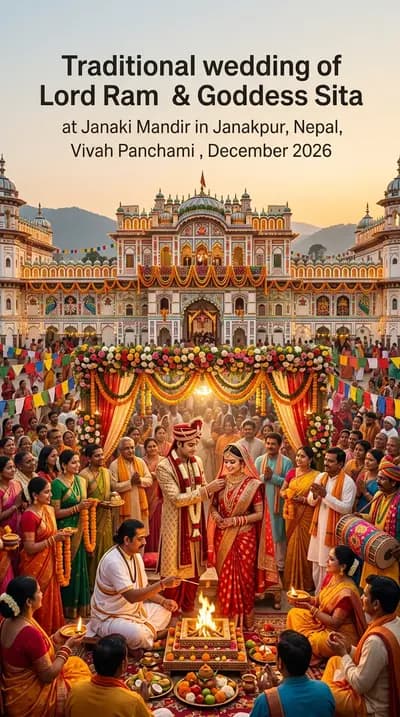 Dec 13 – Dec 17, 2026
Janaki Mandir, Janakpur
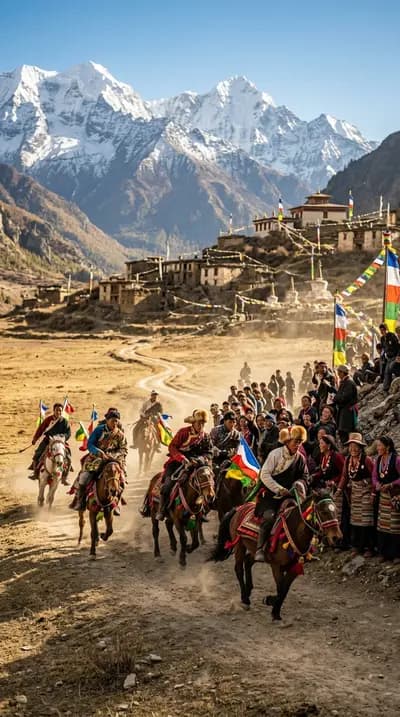 Nov 15 – Nov 16, 2026
Tsum Valley