Nepal Cultural Pilgrimage Himalayan Experience: An 8-Day Journey Through Sacred Valleys and Mountain Sanctuaries
Introduction: The Call of the Himalayas
Nepal is not merely a destination; it is a pilgrimage of the soul. Nestled between the vast plains of the Indian subcontinent and the towering peaks of the Tibetan Plateau, this small Himalayan nation has drawn seekers, sages, and travelers for millennia. The 8-day Nepal Cultural Pilgrimage Himalayan Experience is a carefully orchestrated journey that distills the essence of this ancient land into a single, transformative week. From the incense-filled courtyards of Kathmandu's living temples to the serene lakeside tranquility of Pokhara beneath the Annapurna range, every day unfolds a new layer of Nepal's spiritual and cultural tapestry.
This tour is designed for travelers who seek more than photographs. It is for those who want to stand before the living goddess Kumari in her palace courtyard, to spin prayer wheels alongside Tibetan monks at Boudhanath, to witness the sacred cremation ghats at Pashupatinath, and to feel the mountain silence that has inspired yogis and meditators for centuries. With all transport, accommodation, expert guiding, and entrance fees included, you are free to immerse yourself completely in the experience.
Nepal's spiritual heritage is unique in the world: it is the birthplace of Lord Buddha in Lumbini, the abode of Pashupatinath (one of Hinduism's most sacred Shiva temples), and a living museum of medieval Newari architecture where Hinduism and Buddhism have intertwined for over two thousand years. This 8-day itinerary connects the dots between these traditions, taking you from the Kathmandu Valley's UNESCO World Heritage Sites to the natural splendor of Pokhara, with its panoramic Himalayan vistas and sacred caves. For a deeper understanding of what makes Nepal's spiritual landscape so extraordinary, read our complete guide to cultural and spiritual tours in Nepal.
Why Choose This 8-Day Cultural Pilgrimage?
Eight days is the sweet spot for a first-time Nepal visitor. It is long enough to move beyond surface-level sightseeing and into genuine cultural immersion, yet compact enough to fit into a standard vacation window. This itinerary has been refined over years of guest feedback to balance temple visits, mountain experiences, and free time for personal reflection. You will not be rushed through sites; instead, each UNESCO World Heritage location receives the unhurried attention it deserves, with your private guide providing historical context, religious significance, and local stories that bring the stones to life.
What sets this tour apart is its holistic approach. Rather than focusing exclusively on either culture or nature, it weaves both together. You begin in the Kathmandu Valley, the cultural and spiritual heart of Nepal, exploring its seven UNESCO monument zones. Then you travel westward to Pokhara, where the Annapurna massif reflects in Phewa Lake and the World Peace Pagoda offers a different kind of spiritual experience: one of silence, panoramic beauty, and contemplation. The journey back to Kathmandu completes the circle, leaving you with a deep, integrated understanding of Nepal's soul.
For travelers considering trekking as well, our complete guide to trekking in Nepal explains how cultural tours like this one can be combined with Himalayan treks for the ultimate Nepal experience.
Day-by-Day Itinerary
Day 1: Arrival in Kathmandu - Welcome to the Valley of Gods
Your journey begins the moment you land at Tribhuvan International Airport, where the air itself carries a hint of incense and the distant silhouette of the Himalayas frames the horizon. Our representative will greet you with a traditional welcome and transfer you to your boutique hotel in the heart of Kathmandu. After settling in, your guide will provide a comprehensive orientation covering the week ahead, cultural etiquette, and practical tips for navigating Nepal's vibrant capital. The evening is yours to rest or to take a gentle stroll through the Thamel neighborhood, where prayer flags flutter above shops selling singing bowls, pashmina, and hand-carved Buddhist statues.
Day 2: Kathmandu Durbar Square and Swayambhunath - The Living Goddess and the Monkey Temple
After breakfast, you step into Kathmandu Durbar Square, a UNESCO World Heritage Site and the historic seat of Nepal's royalty. This sprawling complex of palaces, courtyards, and temples is a masterpiece of Newari architecture, with intricately carved wooden struts, pagoda-style roofs, and stone sculptures dating back to the 12th century. Your guide will lead you through the Hanuman Dhoka Palace, the Taleju Temple, and the Kumari Ghar, the residence of the living goddess Kumari. If fortune favors you, the Kumari may appear at her window, a fleeting glimpse of a tradition that has endured for centuries.
In the afternoon, you ascend the 365 steps to Swayambhunath Stupa, affectionately known as the Monkey Temple. Perched atop a hill overlooking the entire Kathmandu Valley, this ancient Buddhist complex is one of the oldest religious sites in Nepal, with origins tracing back to the 5th century. The iconic white dome, topped with a gilded spire painted with the all-seeing eyes of Buddha, is a symbol of Nepal recognized worldwide. As you circumambulate the stupa clockwise, spinning prayer wheels and listening to the chants of monks, the panoramic view of Kathmandu sprawling below is nothing short of mesmerizing. The resident monkeys add a playful energy to the sacred atmosphere, reminding visitors that the divine and the earthly coexist here without contradiction.
Day 3: Pashupatinath and Boudhanath - The Sacred River and the Great Stupa
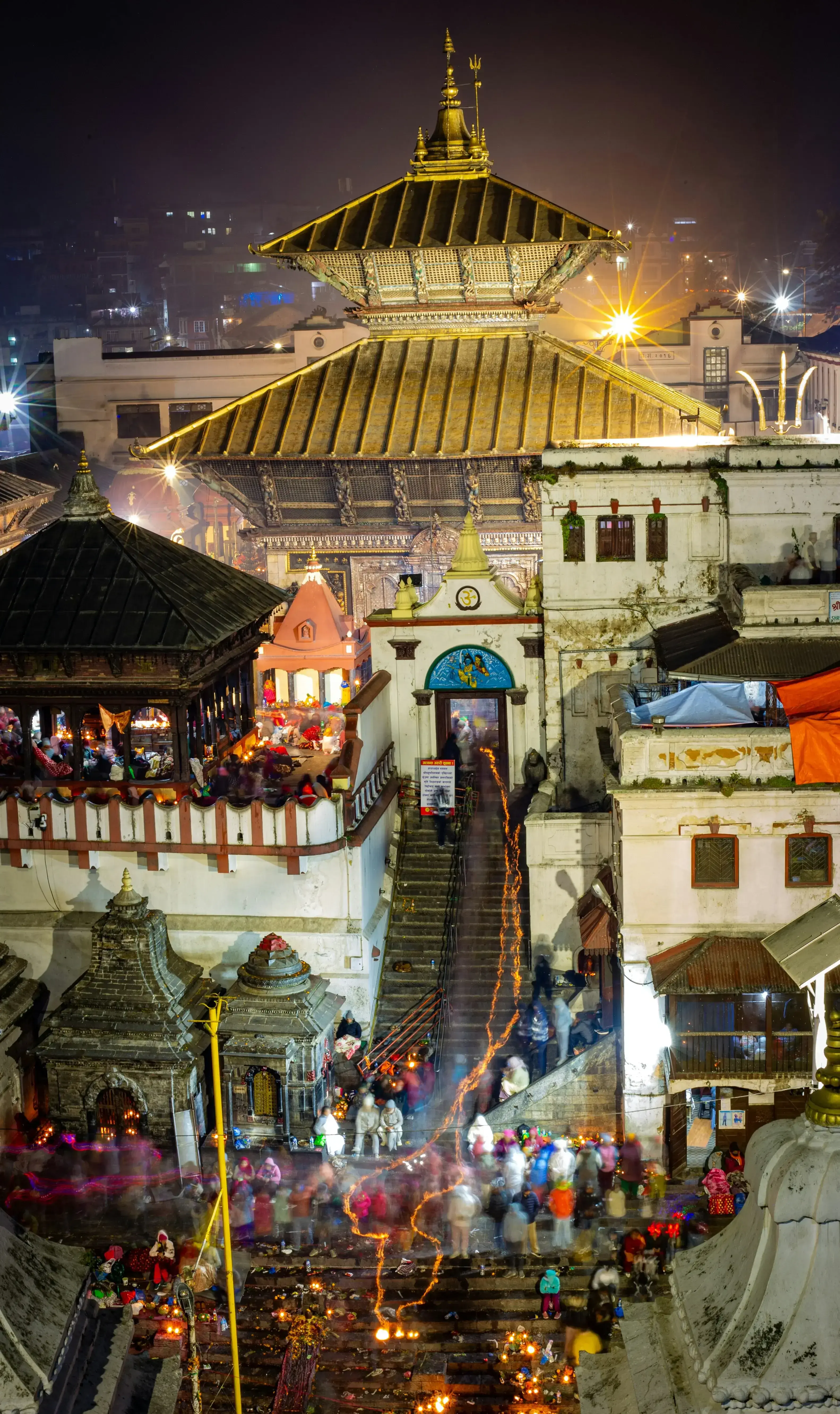
The morning is dedicated to Pashupatinath Temple, the most sacred Hindu shrine in Nepal and one of the most important Shiva temples in the world. Situated on the banks of the holy Bagmati River, this sprawling temple complex is a profound place of worship, ritual, and, for many visitors, deep emotional resonance. You will witness the open-air cremation ghats where Hindu funeral rites are performed, a practice that has continued here for centuries. The atmosphere is solemn yet not somber; it is a place where the cycle of life and death is accepted with a clarity that can be transformative for Western visitors. Sadhus, or holy men, with ash-smeared bodies and matted hair, meditate near the temple gates, and the air is thick with the scent of sandalwood and marigolds.
In the afternoon, you visit Boudhanath Stupa, one of the largest spherical stupas in the world and the spiritual heart of Nepal's Tibetan Buddhist community. The massive white dome, crowned with a golden spire, dominates the skyline of the surrounding neighborhood, which is home to over fifty Tibetan monasteries. Join the stream of pilgrims, monks, and locals as they perform kora, the ritual circumambulation of the stupa. The energy here is palpable: prayer wheels spin, butter lamps flicker, and the deep, resonant sound of monks chanting drifts from nearby gompas. Take time to visit one of the rooftop cafes overlooking the stupa, where you can sip butter tea and watch the light change as the sun sets behind the golden spire. For more on Nepal's spiritual destinations, explore our spiritual tour in Nepal guide.
Day 4: Patan and Bhaktapur - The Cities of Art and Devotion
Today you explore the two other royal cities of the Kathmandu Valley, each a UNESCO World Heritage Site in its own right. The morning begins in Patan, also known as Lalitpur, the City of Beauty. Patan Durbar Square is widely considered the finest collection of Newari architecture in Nepal, with the ancient Royal Palace, the Krishna Mandir (a stone temple carved entirely from a single block of dark stone), and numerous Buddhist courtyards known as bahals. Patan is also the center of Nepal's metalworking tradition; you will see artisans hammering copper and brass into statues of deities using techniques passed down through generations.
After lunch, you continue to Bhaktapur, the best-preserved medieval city in the Kathmandu Valley. Walking through Bhaktapur's brick-paved streets feels like stepping back in time. The entire city is a living museum, with its pottery square where artisans shape clay on traditional wheels, its five-story Nyatapola Temple (the tallest pagoda temple in Nepal), and the magnificent 55-Window Palace. Bhaktapur is also famous for its juju dhau, the king of yogurts, a creamy delicacy served in clay pots that you must try. The slower pace here, free from the traffic of modern Kathmandu, allows you to absorb the architectural and cultural richness at leisure.
Day 5: Kathmandu to Pokhara - Journey to the Lake City
After an early breakfast, you depart Kathmandu for the scenic drive to Pokhara, a journey of approximately 200 kilometers that takes you through the heart of Nepal's middle hills. The road follows the Trishuli River for much of the way, offering glimpses of terraced rice fields, traditional villages, and, on clear days, the distant snow peaks of the Ganesh Himal and Manaslu ranges. You will stop for lunch at a riverside restaurant where you can stretch your legs and enjoy the fresh mountain air. Arriving in Pokhara by late afternoon, you check into your lakeside hotel and have the evening free to explore the vibrant Lakeside district, with its cafes, bookshops, and stunning views of Phewa Lake reflecting the Annapurna range.
Day 6: Pokhara - Peace Pagoda, Caves, and Mountain Vistas
Pokhara is Nepal's adventure capital, but it is also a place of profound natural beauty and spiritual resonance. Your day begins with a boat ride across the calm waters of Phewa Lake to the trailhead for the World Peace Pagoda. A gentle hike through forest brings you to this gleaming white stupa, one of over eighty peace pagodas built around the world under the guidance of Japanese Buddhist monks. From this vantage point, the panorama is breathtaking: the entire Annapurna range, including Machhapuchhre (Fishtail Mountain), reflected in the lake below. The pagoda itself houses golden statues of Buddha in four postures, representing the stages of his life.
After descending, you visit the Gupteshwor Mahadev Cave, a sacred limestone cave that houses a natural Shiva lingam. The cave is a place of active worship, and the atmosphere inside is cool, damp, and charged with devotion. Nearby, the thundering Devi's Falls adds a dramatic natural element to the day. In the afternoon, you have free time to explore Pokhara at your own pace: perhaps paragliding over the lake, visiting the International Mountain Museum, or simply relaxing at a lakeside cafe with a book and the mountains as your backdrop.
Day 7: Return to Kathmandu - Reflection and Farewell
After a leisurely breakfast with the Annapurna range as your companion, you begin the drive back to Kathmandu. The return journey offers a different perspective on the landscapes you crossed two days earlier, and the time on the road provides an opportunity to reflect on the experiences of the past week. Upon arrival in Kathmandu, you have the afternoon free for last-minute shopping, visiting any sites you wish to revisit, or simply relaxing at your hotel. In the evening, we host a farewell dinner featuring traditional Nepali cuisine, complete with cultural performances of folk music and dance. It is a fitting conclusion to a journey that has touched the spiritual, cultural, and natural dimensions of Nepal.
Day 8: Departure - Carrying Nepal in Your Heart
After breakfast, you are transferred to Tribhuvan International Airport for your onward flight. As your plane rises above the Kathmandu Valley, you will carry with you not just photographs and souvenirs, but a deeper understanding of a land where the sacred is woven into the fabric of everyday life. The Himalayas will call you back; they always do.
What's Included in Your Package
- All airport transfers by private vehicle
- 7 nights accommodation in boutique hotels (twin-sharing basis)
- Daily breakfast; welcome and farewell dinners
- Private, English-speaking cultural guide throughout the tour
- All ground transportation by private vehicle (Kathmandu-Pokhara-Kathmandu)
- All entrance fees to UNESCO World Heritage Sites and monuments
- Boat ride on Phewa Lake, Pokhara
- All government taxes and service charges
Best Time to Embark on This Pilgrimage
Nepal's cultural tours can be enjoyed year-round, but the most comfortable seasons are spring (March to May) and autumn (September to November). During these months, the weather is mild, the skies are generally clear, and the mountain views from Pokhara are at their most spectacular. Spring brings blooming rhododendrons to the hillsides, while autumn offers crystal-clear air after the monsoon rains have washed the atmosphere clean. Winter (December to February) is also a viable option, with fewer tourists and crisp, clear days, though evenings can be chilly. The monsoon season (June to August) brings lush green landscapes and fewer crowds, but mountain views may be obscured by cloud cover.
Cultural Etiquette and Practical Tips
Nepal is a deeply religious country, and respecting local customs enhances your experience. When visiting temples and stupas, always walk clockwise around Buddhist monuments and remove your shoes before entering Hindu temples. Dress modestly, covering shoulders and knees, particularly at Pashupatinath and other active places of worship. Photography is generally permitted at most sites, but always ask before photographing sadhus, monks, or cremation ceremonies. A small donation at monasteries and temples is appreciated. Your guide will brief you on specific protocols at each site, ensuring you navigate Nepal's spiritual landscape with confidence and respect.
Accommodation and Cuisine
You will stay in carefully selected boutique hotels that blend Nepali hospitality with modern comfort. In Kathmandu, your hotel is located in the Thamel or Lazimpat area, within walking distance of major attractions. In Pokhara, you stay in the Lakeside district, with rooms offering mountain or lake views. Nepali cuisine is a highlight of the journey: you will sample dal bhat (the national dish of lentil soup, rice, and vegetable curry), momos (steamed or fried dumplings), Newari specialties like bara and chatamari, and the sweet juju dhau of Bhaktapur. Vegetarian options are abundant, reflecting the country's Hindu and Buddhist traditions.
Extending Your Journey
Many travelers choose to extend their stay in Nepal after this 8-day tour. Popular extensions include a visit to Lumbini, the birthplace of Lord Buddha, a short trek in the Annapurna foothills from Pokhara, or a journey to the medieval town of Bandipur. Our team can arrange customized extensions to suit your interests. Browse our full collection of Nepal tour packages for inspiration, or explore Kathmandu and Pokhara in more detail.
About Enticing Himalayas

Enticing Himalayas is a premier Nepal-based travel company dedicated to crafting transformative journeys through the Himalayas. Our philosophy, Explore, Heal, Thrive, guides every itinerary we design. We specialize in cultural tours, spiritual pilgrimages, trekking adventures, and wellness retreats that connect travelers with Nepal's rich heritage and breathtaking landscapes.
Our Services
- Cultural and heritage tours across Nepal
- Spiritual pilgrimages to sacred Hindu and Buddhist sites
- Trekking and hiking adventures in the Annapurna, Everest, and Langtang regions
- Wellness retreats, yoga, and meditation programs
- Customized private tours and group travel
- Helicopter tours and mountain flights
- Jungle safaris in Chitwan and Bardia National Parks
- Airport transfers, hotel bookings, and travel logistics
Our Accreditations


About the Author
This itinerary was crafted by the Enticing Himalayas team, a group of Nepal-based travel professionals with decades of combined experience guiding visitors through the cultural and spiritual heart of the Himalayas. Our guides are licensed by the Nepal Tourism Board and trained in the history, religion, and cultural traditions of every site on this itinerary. We are passionate about sharing the authentic Nepal with travelers from around the world.
Why Trust Enticing Himalayas
We are a registered travel and trekking company in Nepal, licensed by the Nepal Tourism Board and the Government of Nepal. Our team has over fifteen years of experience organizing cultural tours, treks, and pilgrimages across the country. We maintain direct relationships with local communities, monasteries, and heritage sites, ensuring authentic and respectful experiences. Every itinerary is personally vetted by our senior guides, and we maintain a 24/7 support line for all our guests. Your safety, comfort, and spiritual enrichment are our highest priorities.
Frequently Asked Questions
What is the best time of year for this cultural pilgrimage tour?
Spring (March to May) and autumn (September to November) offer the most pleasant weather, with mild temperatures, clear skies, and excellent mountain views from Pokhara. These seasons also coincide with major Nepali festivals like Holi and Dashain, adding cultural richness to your experience. Winter is quieter with crisp days, while monsoon brings lush greenery.
Is this tour suitable for solo travelers and families?
Yes, this tour is designed for all traveler types. Solo travelers benefit from the security of a private guide and pre-arranged logistics. Families with children will find the pace manageable, with plenty of engaging cultural experiences. The itinerary includes comfortable boutique hotels, private transport, and flexible pacing to accommodate different needs.
What level of physical fitness is required for this tour?
This is a cultural tour, not a trek, so moderate fitness is sufficient. You will walk through temple complexes and medieval city squares, and climb approximately 365 steps to Swayambhunath. The hike to the World Peace Pagoda in Pokhara involves a gentle uphill trail of about 45 minutes. Comfortable walking shoes are recommended.
Are entrance fees to UNESCO sites included in the package price?
Yes, all entrance fees to UNESCO World Heritage Sites and monuments mentioned in the itinerary are included. This covers Kathmandu Durbar Square, Swayambhunath, Pashupatinath, Boudhanath, Patan Durbar Square, Bhaktapur Durbar Square, and the sites in Pokhara. Your guide will handle all ticketing so you can focus on the experience.
Can this tour be customized or combined with a trek?
Absolutely. Many guests extend their stay with a short trek from Pokhara, such as the Ghorepani Poon Hill trek (3-5 days) or the Australian Camp hike. We can also add visits to Lumbini, Chitwan National Park, or Bandipur. Contact our team with your interests, and we will design a personalized itinerary that combines cultural exploration with adventure.
What should I pack for an 8-day cultural tour in Nepal?
Pack lightweight, modest clothing suitable for temple visits (covering shoulders and knees), comfortable walking shoes, a light jacket for evenings, sun protection, and a reusable water bottle. A small daypack is useful for daily excursions. Your detailed packing list will be provided after booking, tailored to the season of your visit.