Everest Base Camp Helicopter Tour vs Annapurna Base Camp Helicopter Tour: Which One Should You Choose?
If you are planning a helicopter tour in Nepal, two names dominate every conversation: Everest Base Camp and Annapurna Base Camp. Both deliver jaw-dropping Himalayan panoramas, both include a high-altitude landing at a legendary base camp, and both turn what would be a multi-day trek into a single morning of flight. But they are not the same experience, and choosing between them is not as simple as picking the taller mountain.
This guide puts the two flagship helicopter tours side by side across every dimension that matters: scenery, flight duration, landing altitude, cost, photography potential, physical demands, and the overall feel of the journey. By the end, you will know exactly which one matches your Nepal travel goals, whether you are a first-time visitor with one free morning in Kathmandu or a seasoned trekker who wants to see both sides of the Himalaya from the air.
We operate both tours through our trekking and tour agency, and the insights below come from real guest feedback, pilot briefings, and hundreds of flights logged across both routes. No marketing fluff, just the honest comparison you need to book with confidence.
Quick Comparison at a Glance
| Feature | Everest Base Camp Helicopter Tour | Annapurna Base Camp Helicopter Tour |
|---|---|---|
| Peak Altitude | 5,550 m (Kala Patthar fly-by) | 4,130 m (ABC landing) |
| Landing Point | Hotel Everest View (3,880 m) or Lukla | Annapurna Base Camp (4,130 m) |
| Total Duration | 3.5 to 4 hours | 2.5 to 3 hours |
| Flight Time | ~2.5 hours round-trip | ~1.5 hours round-trip |
| Starting Point | Kathmandu domestic terminal | Kathmandu domestic terminal |
| Price (from) | USD 1,300 per person | USD 1,200 per person |
| Best Season | October to December, March to May | October to December, March to May |
| Mountain Views | Everest, Lhotse, Nuptse, Ama Dablam, Makalu | Annapurna I, Machhapuchhre, Dhaulagiri, Hiunchuli |
| Physical Demand | Low (short walk at Lukla/HEV) | Low (short walk at ABC) |
Everest Base Camp Helicopter Tour: The Full Experience
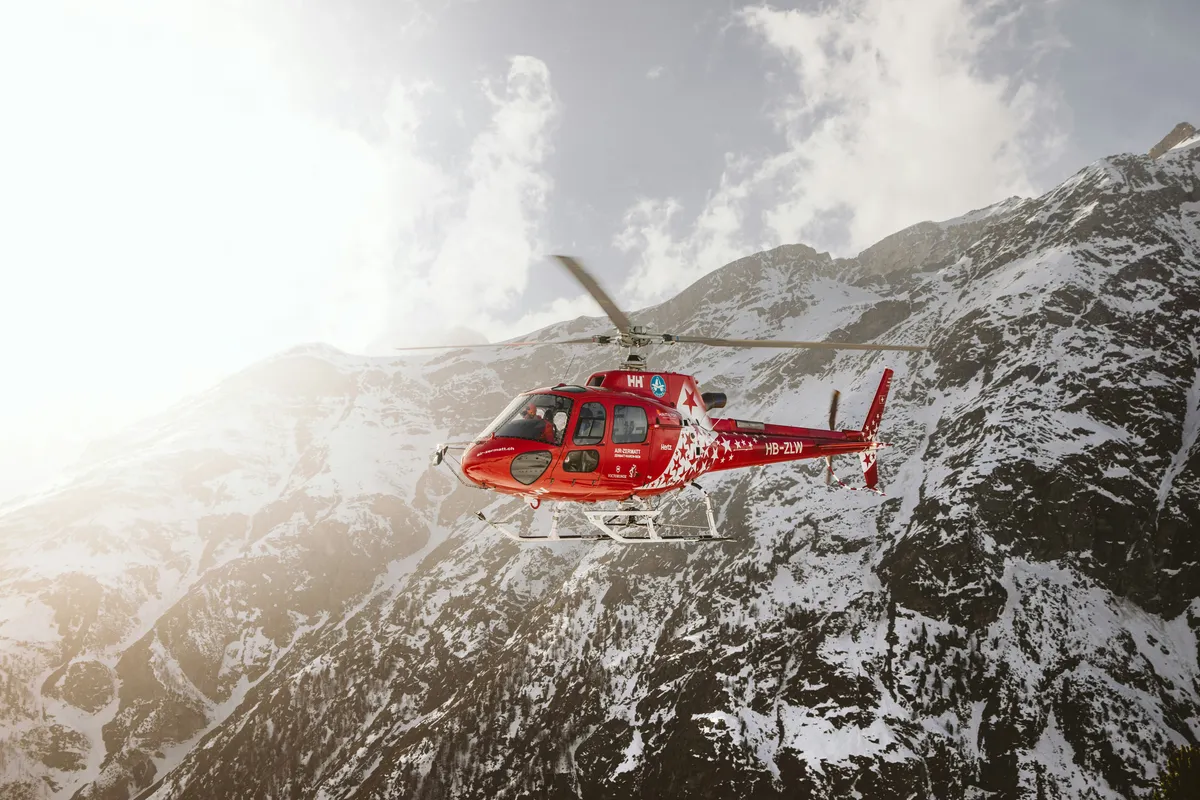
The Luxury Everest Base Camp Helicopter Tour with Landing is the flagship aerial experience in Nepal, and for good reason. For a complete deep-dive into this specific flight, read our definitive Everest Base Camp helicopter tour guide. You lift off from Kathmandu's domestic terminal at first light, when the air is still and the mountains are at their sharpest. The AS350 B3e helicopter climbs east over the terraced hills of the Kathmandu Valley, and within 20 minutes the first snow peaks appear on the horizon.
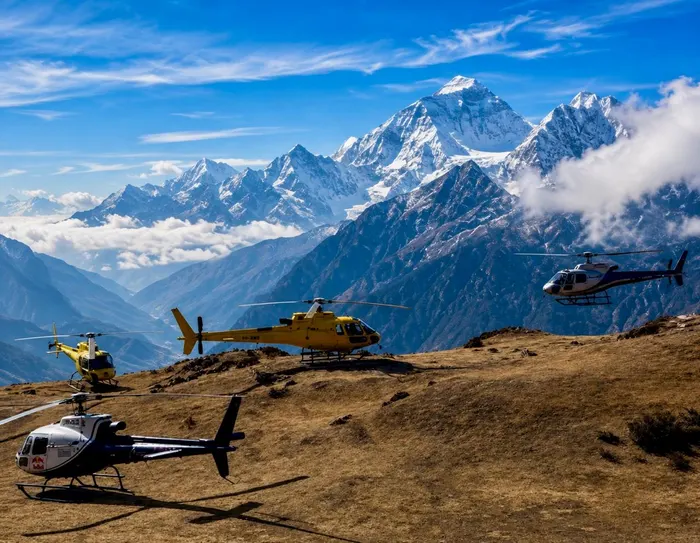
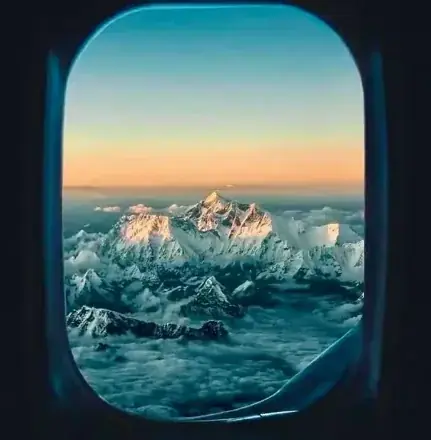
The flight path follows the classic Everest trekking route from above: you trace the Bhote Koshi river valley, pass over the Sherpa town of Lukla and its famously short airstrip, then enter Sagarmatha National Park. This is where the scenery shifts from beautiful to overwhelming. The helicopter weaves between ridgelines at 12,000 feet, and suddenly the south face of Lhotse fills the windshield, a wall of ice and rock rising nearly two vertical miles from the Khumbu Glacier.
The pilot circles Kala Patthar (5,550 m), the iconic viewpoint where trekkers traditionally gather for sunrise. From the helicopter, you get the same unobstructed panorama of Everest, Nuptse, and the Khumbu Icefall that trekkers spend 12 days walking to see, compressed into a single, silent minute of hovering. No oxygen mask, no altitude headache, just the mountain in full morning light.
After the fly-by, the helicopter descends to Hotel Everest View (3,880 m) in Syangboche, one of the highest-placed hotels in the world. You step out onto the helipad, breathe the thin Khumbu air, and sit down to breakfast on a terrace facing Everest. The hotel serves hot tea, fresh pastries, and eggs while you absorb the view that most people only see in photographs. You have roughly 30 to 45 minutes on the ground before the return flight, enough time for photos, a short walk, and the quiet realization that you are having breakfast at 13,000 feet with the world's tallest mountain as your backdrop.
The return leg takes a slightly different route, often passing over the Gokyo Lakes if weather permits, then descending through the middle hills back to Kathmandu. Total door-to-door time is about four hours, and you are back at your hotel by late morning with a memory card full of images and a story that will outlast any souvenir.
Annapurna Base Camp Helicopter Tour: The Full Experience
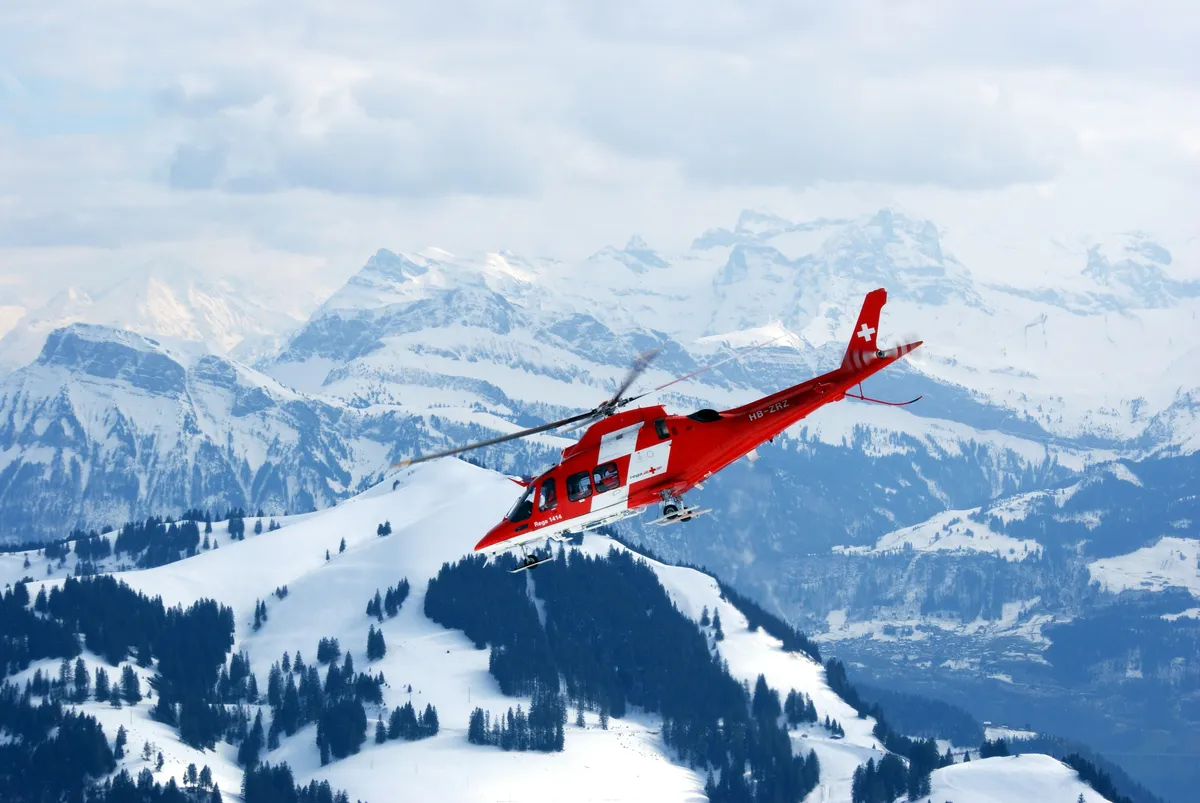
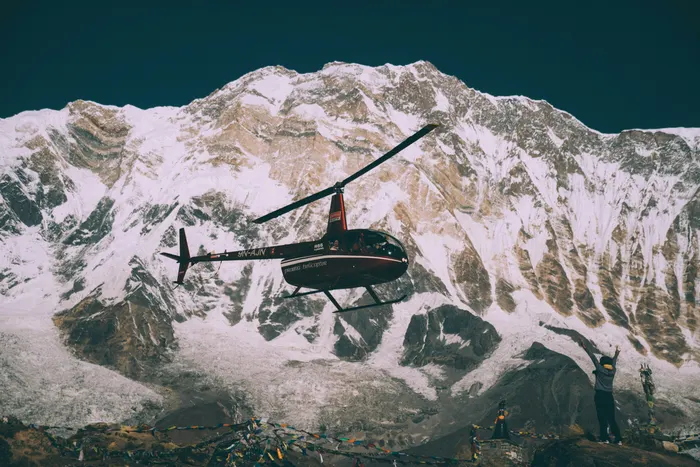
The Luxury Annapurna Base Camp Helicopter Tour from Kathmandu with Landing flies west instead of east, into the deep gorge of the Modi Khola river that cuts between the Annapurna and Dhaulagiri massifs. The flight path is shorter than the Everest route, but the scenery is no less dramatic: you cross the mid-hills of Gorkha and Lamjung, then enter the Annapurna Sanctuary, a natural amphitheater ringed by peaks over 7,000 meters.
What makes the Annapurna flight distinct is the sense of enclosure. Unlike the wide-open Khumbu, the Annapurna Sanctuary is a horseshoe of mountains that wraps around you on three sides. As the helicopter descends toward the base camp at 4,130 meters, the walls of Annapurna South, Hiunchuli, and the iconic fishtail peak of Machhapuchhre (6,993 m) rise almost vertically around the landing zone. It feels like landing inside a cathedral made of ice and granite.
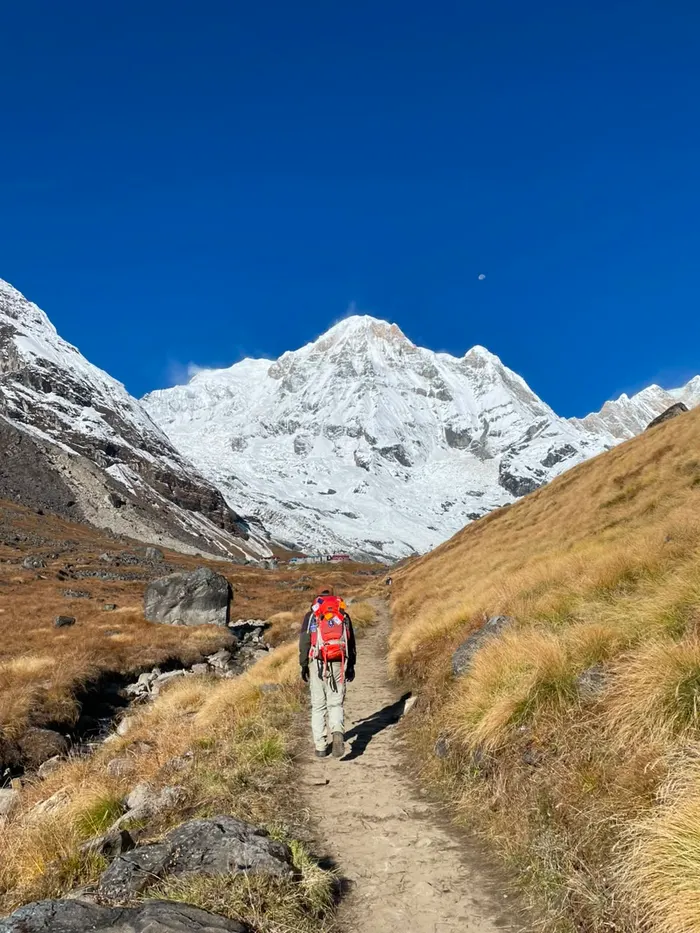
The helicopter touches down directly at Annapurna Base Camp itself, the same patch of glacial moraine where trekkers collapse in exhausted triumph after a week on the trail. You step out at 4,130 meters, higher than the Everest tour's landing point, and stand in the center of the Sanctuary with a 360-degree panorama that includes Annapurna I (8,091 m), the tenth-highest mountain on Earth. The pilot typically allows 20 to 30 minutes on the ground, enough to walk the moraine, photograph the peaks from multiple angles, and absorb the scale of the place.
Because the flight is shorter (roughly 1.5 hours of air time versus 2.5 for Everest), the Annapurna tour is a tighter package overall, about 2.5 to 3 hours door-to-door. You still get the full landing experience, the high-altitude bragging rights, and a completely different set of mountains, but you are back in Kathmandu with half the morning still ahead of you. For travelers with a packed itinerary, that extra hour can matter.
Head-to-Head Comparison: The Five Key Differences
1. Scenery and Mountain Character
The Everest flight is about scale and celebrity. You see the tallest mountain on Earth, the most famous ridgeline in mountaineering history, and the vast Khumbu Glacier spilling down from the Western Cwm like a frozen river. The mountains are massive, distant, and awe-inspiring in a way that feels almost abstract: you know Everest is 8,849 meters tall, but from the helicopter it simply fills the horizon without any reference point to anchor the scale.
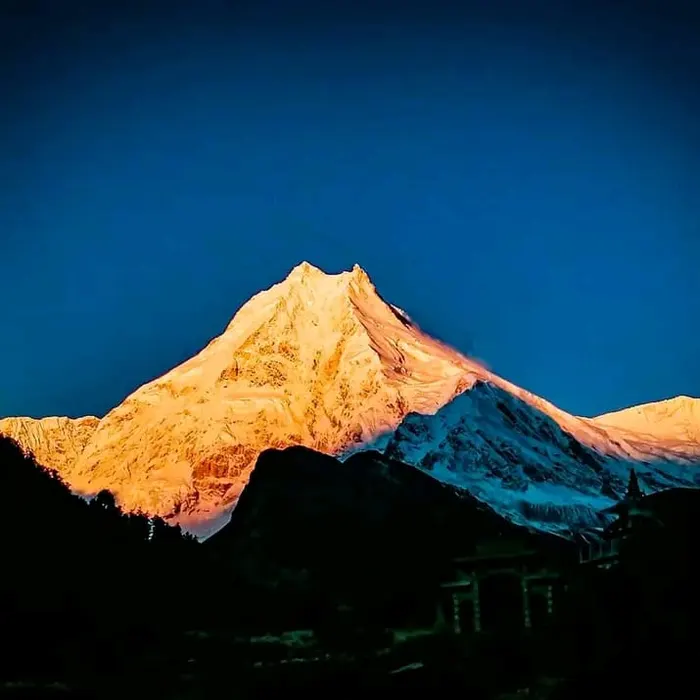
The Annapurna flight is about intimacy and enclosure. The Sanctuary walls are closer, the peaks feel more immediate, and the landing zone at ABC puts you literally at the foot of 8,000-meter mountains rather than looking at them from a distance. Machhapuchhre, the fishtail peak, is arguably the most photogenic mountain in Nepal, and from ABC you are close enough to see individual seracs on its south face. If you want the iconic postcard shot of a single perfect peak, Annapurna delivers it. If you want the bucket-list bragging right of seeing Everest from the air, the Khumbu flight is the one.
2. Landing Experience
This is the single biggest practical difference between the two tours. On the Everest flight, you do not land at Everest Base Camp itself. The helicopter touches down at Hotel Everest View in Syangboche (3,880 m), a comfortable lodge with a restaurant, restrooms, and a terrace. You get breakfast, you get photos, and you get the bragging rights of having been at 13,000 feet in the Everest region, but you are not standing on the Khumbu Glacier among the expedition tents.
On the Annapurna flight, you do land at the actual base camp, at 4,130 meters, on the glacial moraine where trekking groups camp. There is no lodge, no restaurant, no terrace: just you, the helicopter, and the mountains. The landing is higher, rawer, and more of an adventure. For travelers who want the authentic "I stood at base camp" experience, Annapurna wins this category decisively.
3. Flight Duration and Time Commitment
The Everest tour takes roughly 4 hours door-to-door, with about 2.5 hours of actual flight time. The Annapurna tour takes 2.5 to 3 hours, with about 1.5 hours in the air. If you have a single free morning in Kathmandu and want the maximum experience in the minimum time, Annapurna is the more efficient choice. If you want the longer, more cinematic journey with breakfast at altitude, Everest is worth the extra hour.
4. Cost and Value
The Everest tour starts at approximately USD 1,300 per person, while the Annapurna tour starts at approximately USD 1,200. The USD 100 difference reflects the longer flight time and the higher operating costs of the Everest route (fuel, permits, and the logistics of landing at Syangboche). Both prices are for shared-group flights; private charters cost more. For a detailed breakdown of all helicopter tour costs in Nepal, see our complete helicopter tour cost guide.

In terms of value, neither tour is objectively "better." The Annapurna flight gives you a higher landing, a more immersive base camp experience, and a lower price. The Everest flight gives you the world's tallest mountain, a longer journey, and the breakfast-at-altitude experience that no other tour replicates. Choose based on which experience matters more to you, not on a USD 100 price difference.
5. Photography and Best Seats
Both tours use AS350 B3e helicopters with forward-facing seats and large windows. On the Everest flight, the left-side seats get the best views of Everest on the outbound leg; on the return, the right side is better. On the Annapurna flight, both sides get excellent views because the Sanctuary surrounds the helicopter on three sides. The pilot typically does a slow 360-degree rotation at the high point of each flight so every passenger gets the money shot.
For photographers, the Everest flight offers more variety: terraced hills, deep river gorges, the Khumbu Glacier, and the Everest massif. The Annapurna flight is more concentrated: you spend most of the flight inside the Sanctuary, and the light bouncing off the encircling walls creates dramatic contrast that is easier to capture than the vast, hazy distances of the Khumbu.
Which Helicopter Tour Is Right for You?
Choose the Everest Base Camp Helicopter Tour if:
- Seeing Mount Everest is a lifelong dream and you want the closest possible aerial view without trekking for two weeks.
- You value the breakfast-at-altitude experience and want a longer, more leisurely morning in the mountains.
- You are a first-time visitor to Nepal and want the single most iconic Himalayan experience available in a day.
- You are traveling with family members who would appreciate the comfort of a lodge landing with restrooms and hot drinks.
- You want to see the Khumbu region, Lukla, and Sagarmatha National Park from the air.
Choose the Annapurna Base Camp Helicopter Tour if:
- You want to actually stand at a real base camp, on the glacier, at over 4,000 meters.
- You prefer a more intimate, enclosed mountain landscape over wide-open distances.
- You have a tighter schedule and want the full experience in under 3 hours.
- You are a photographer who wants dramatic, close-up mountain shots with strong foreground-to-background contrast.
- You have already seen Everest (or plan to trek to EBC) and want a completely different Himalayan region.
Can You Do Both?
Absolutely. Many travelers book both tours on separate days, and the experiences complement each other perfectly. The Everest flight gives you the scale and the celebrity; the Annapurna flight gives you the intimacy and the landing. If your budget and schedule allow, doing both is the ultimate Nepal helicopter experience. We offer a combined package discount for guests who book both tours through our Nepal helicopter tours guide.
What About Other Helicopter Tours in Nepal?
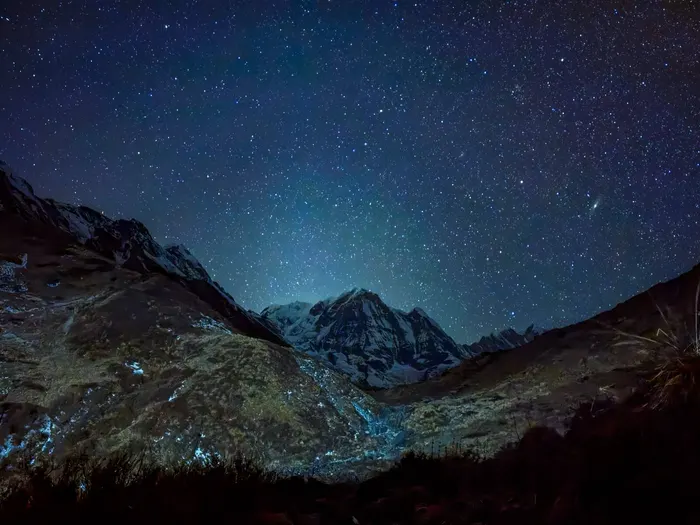
Everest and Annapurna are the two most popular helicopter tours, but they are not the only ones. Nepal's helicopter landscape includes several other remarkable flights that are worth considering, especially if you want something beyond the two base camps:
- Gosaikunda Helicopter Tour: A shorter flight to the sacred alpine lake at 4,380 meters, revered by both Hindus and Buddhists. The Gosaikunda Sacred Lake helicopter tour includes a lakeside landing and is ideal for travelers interested in Nepal's spiritual heritage alongside its mountain scenery.
- Muktinath Helicopter Pilgrimage: A Muktinath helicopter pilgrimage from Kathmandu combines aerial views of the Annapurna and Dhaulagiri ranges with a landing at the sacred Muktinath temple (3,710 m), one of the most important pilgrimage sites in the Himalayas.
- Rara Lake Helicopter Tour: For travelers who want to go truly off the beaten path, the Rara Lake helicopter tour flies to Nepal's largest lake in the remote far-west, a pristine alpine basin surrounded by pine forest s and snow peaks.
Each of these tours offers a different slice of Nepal's aerial landscape. For a complete overview of all helicopter options, including pricing, seasonal advice, and booking tips, read our comprehensive Nepal helicopter tours guide.
Practical Tips for Both Tours
What to Wear
Dress in layers. The Kathmandu morning is mild (15 to 20 degrees Celsius in season), but the landing zones are at or below freezing. A warm jacket, gloves, a beanie, and sturdy shoes are essential. Sunglasses are non-negotiable: the glare off snow and ice at altitude is intense, even through helicopter windows.
Altitude Considerations
Neither tour involves significant physical exertion, so altitude sickness is rare. However, you will spend 20 to 45 minutes at elevations between 3,880 and 4,130 meters. If you are prone to altitude symptoms, take it easy the night before, stay hydrated, and avoid alcohol. The helicopter descends quickly if anyone feels unwell.
Weather and Cancellations
Both tours are weather-dependent. The pilots make a go/no-go decision on the morning of the flight based on real-time visibility at the destination. If the flight is cancelled due to weather, we reschedule for the next available clear day at no extra charge. The best months for reliable flying weather are October, November, March, and April. December and January can be clear but cold; May and June bring pre-monsoon haze.
Booking Window
Book at least 3 to 5 days in advance during peak season (October to November and March to May). During the off-season, 24 to 48 hours is usually sufficient. Group-shared flights require a minimum of 2 to 3 passengers; if you are a solo traveler, we will match you with other guests on the same date.
Frequter choice for most first-time visitors. It delivers the single most iconic Himalayan experience, the breakfast at altitude is a memorable touch, and seeing Everest from the air is a bucket-list moment that defines a first trip to Nepal. If you only have one helicopter flight in your lifetime, make it Everest.
Can I do both the Everest and Annapurna helicopter to urs on the same trip?
Yes, and many guests do. The tours operate on separate days, typically with a rest day in between. Doing both gives you a complete picture of Nepal's two most famous mountain regions. We offer a combined booking discount for guests who reserve both tours together.
Is the Annapurna landing really at the actual base camp?
Yes. The helicopter lands directly on the glacial moraine at Annapurna Base Camp (4,130 m), the same location where trekking groups set up their tents. You step out onto the glacier itself, surrounded by the Sanctuary walls. This is a genuine base camp landing, not a nearby lodge or viewpoint.
Which tour has better mountain views?
Neither is objectively better; they are different. Everest gives you the tallest mountain on Earth and the vast Khumbu panorama. Annapurna gives you a more intimate, enclosed amphitheater of peaks with stronger foreground-to-background contrast. Photographers often prefer Annapurna for composition; bucket-list travelers prefer Everest for the icon.
Are these helicopter tours safe?
Yes. Both tours use AS350 B3e helicopters, the industry standard for high-altitude operations, flown by pilots with thousands of hours of Himalayan flight experience. All flights follow strict weather protocols, and the go/no-go decision is made on the morning of the flight based on real-time conditions. Safety is never compromised for schedule.
What happens if the weather is bad on my flight day?
If the pilot determines that visibility or wind conditions are unsafe, the flight is postponed to the next available clear day at no extra charge. We monitor weather forecasts closely and will communicate any changes the evening before your scheduled flight. In the rare event that weather prevents flying for your entire stay in Nepal, you receive a full refund.
Sources