Introduction to the Gokyo Lakes Trek
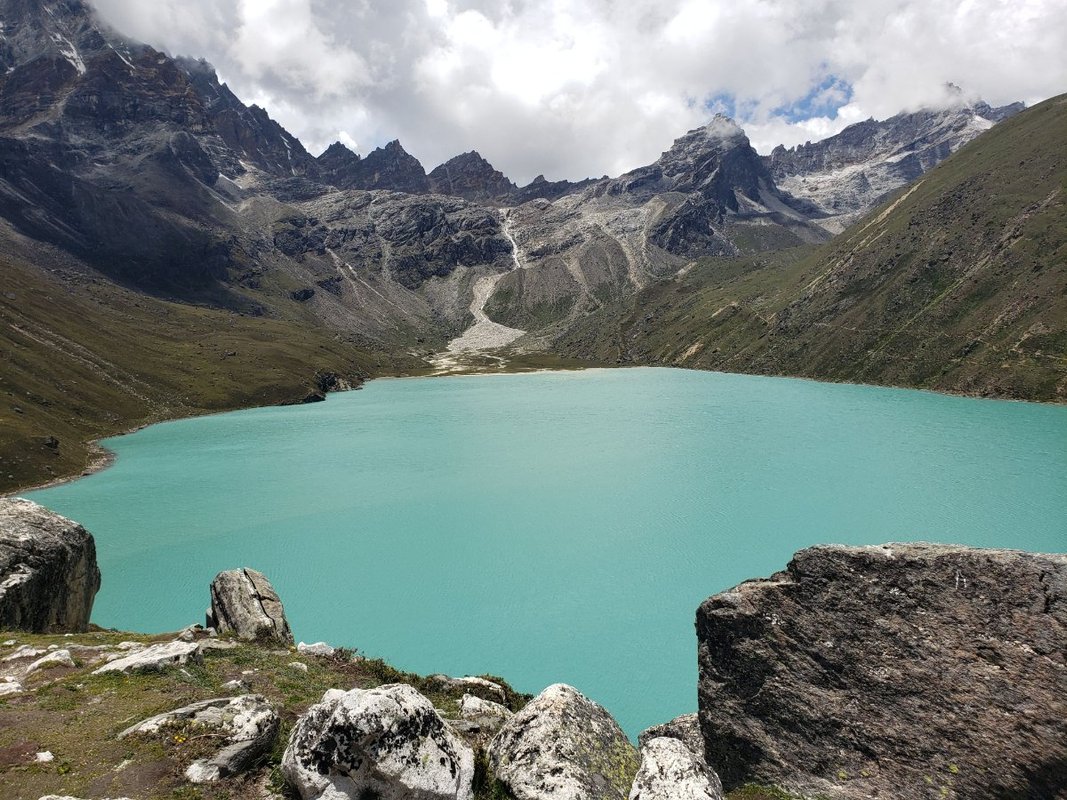
The Gokyo Lakes Trek is one of the most spectacular journeys in the Everest region, offering a serene alternative to the classic Everest Base Camp route. Instead of following the crowded trail to Base Camp, this trek diverges at Namche Bazaar and climbs the Dudh Koshi valley toward a chain of six emerald and turquoise glacial lakes collectively known as the Gokyo Lakes. Situated above 4,700 meters in the Sagarmatha National Park, these lakes are sacred to both Hindus and Buddhists. Each year during the Janai Purnima festival, hundreds of pilgrims make the arduous journey to bathe in the holy waters. For trekkers, the Gokyo Valley offers something rare: immense Himalayan grandeur with fewer crowds, a massive glacier to cross, and a viewpoint at Gokyo Ri that many consider the finest panorama in all of Nepal.
The appeal of the Gokyo Lakes Trek in 2026 lies in its combination of accessibility and raw wilderness. The trail is well-marked and supported by comfortable teahouse lodges, yet the landscape feels wild and untouched. You walk alongside the Ngozumpa Glacier, the largest glacier in Nepal, and stand on the summit of Gokyo Ri at 5,357 meters surrounded by four of the six highest peaks on Earth. Whether you are a first-time high-altitude trekker or a seasoned mountaineer looking for a quieter Khumbu experience, the Gokyo Valley delivers an unforgettable adventure. This comprehensive guide covers everything you need to plan your trek: route overview, day-by-day itinerary, Gokyo Ri ascent, the five lakes, the Ngozumpa Glacier, permits, costs, accommodation, difficulty, and the best time to go.
Route Overview: Lukla to Gokyo
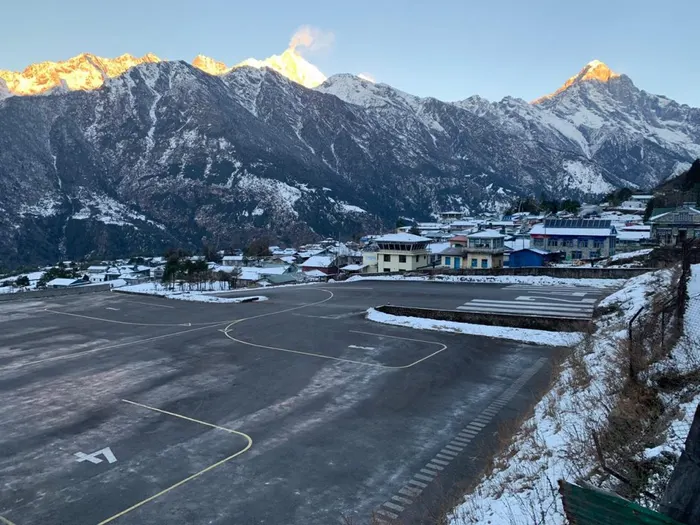
The standard Gokyo Lakes Trek begins with a short but dramatic flight from Kathmandu or Manthali to Lukla, the gateway to the Khumbu region. From Lukla at 2,860 meters, the trail descends to the Dudh Koshi river and follows its banks through dense forests of Himalayan pine, fir, and rhododendron. You pass through several Sherpa villages including Phakding, Benkar, and Monjo before reaching the entrance to Sagarmatha National Park. The trail then climbs steadily to Namche Bazaar, the bustling trading hub of the Sherpa people at 3,440 meters, where you spend a crucial acclimatization day.
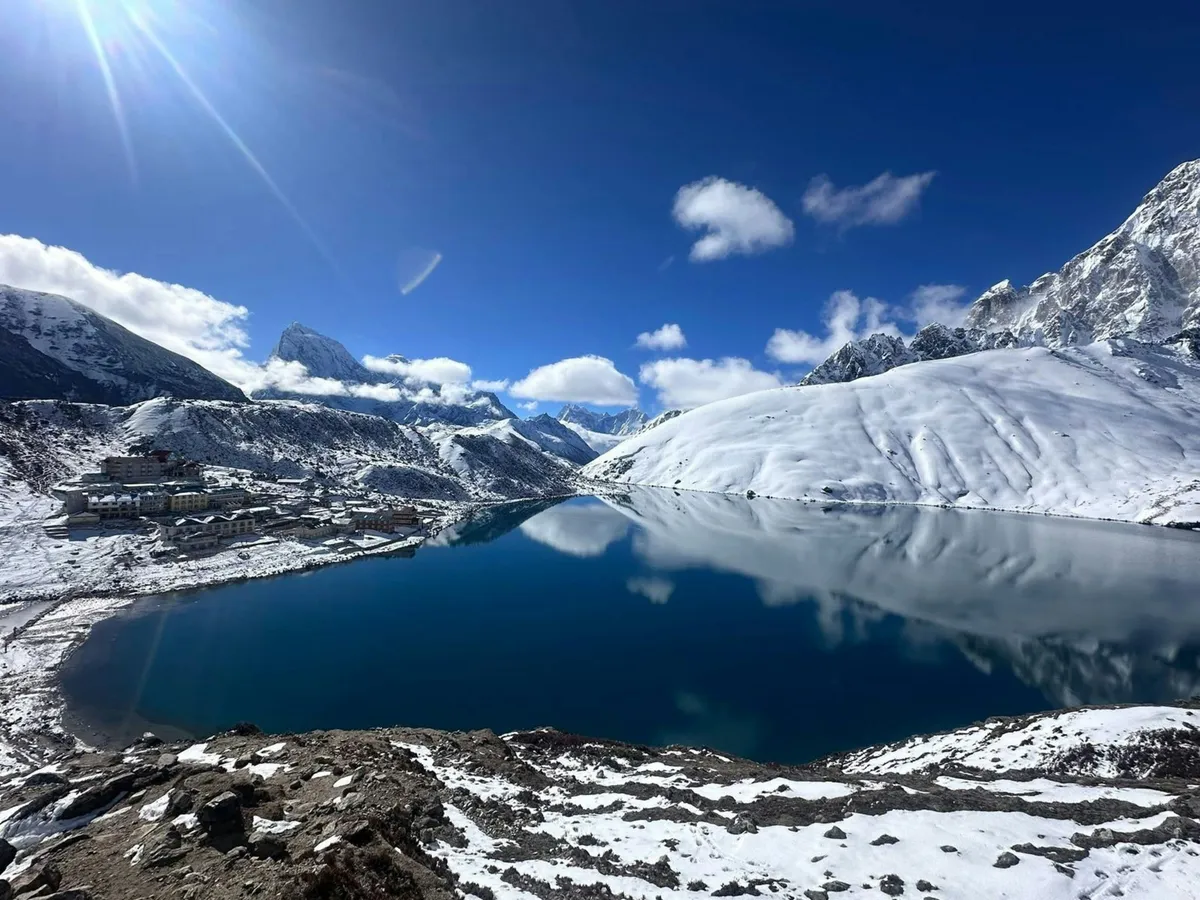
From Namche, the Gokyo route splits from the main Everest Base Camp trail. Instead of continuing up the Imja Khola valley toward Tengboche, you turn west and follow the Dudh Koshi upstream. The trail crosses the river on suspension bridges and climbs through the villages of Kyangjuma and Mong La. At the small settlement of Dole at 4,200 meters, you enter the upper Gokyo Valley. The vegetation thins as you gain altitude, and the landscape opens to sweeping views of snow-capped peaks. You continue through the seasonal herding settlements of Luza and Machhermo before reaching the first of the Gokyo Lakes. The final approach to Gokyo village at 4,790 meters follows the shore of the third lake, Longponga, and the second lake, Tabatabuk, before arriving at the turquoise waters of Dudh Pokhari, the main lake beside the village.
The return journey typically follows the same trail back to Namche and Lukla, though many trekkers extend the route by crossing the Cho La pass at 5,420 meters to reach Everest Base Camp, or by traversing the Renjo La pass at 5,360 meters to complete a circuit back to Namche. These variations are covered in the Gokyo Lakes and Everest Base Camp trek via Cho La Pass and the Everest Three Passes Trek, both of which are excellent extended options.
Gokyo Ri: The Finest Viewpoint in the Khumbu
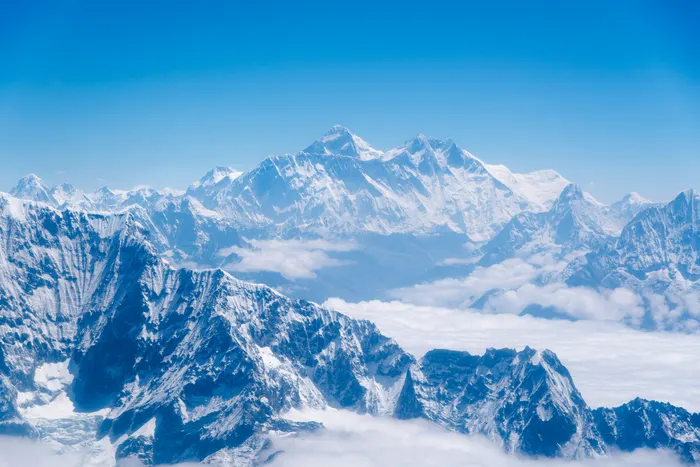
Gokyo Ri, standing at 5,357 meters above sea level, is widely regarded as the single best viewpoint in the Everest region. The peak rises directly above Gokyo village and can be summited in a two to three hour climb from the lakeshore. The ascent is steep but requires no technical mountaineering skills, just steady pacing and good acclimatization. Most trekkers begin the climb before dawn to reach the summit in time for sunrise, when the first golden light hits the summit of Mount Everest and slowly illuminates the entire range.
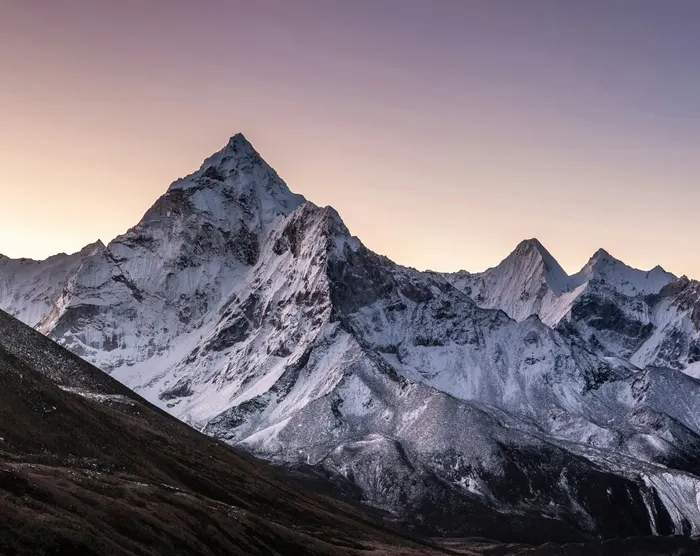
From the summit of Gokyo Ri, the panoramic view is breathtaking. To the east, the summit of Mount Everest at 8,849 meters dominates the horizon, flanked by Lhotse at 8,516 meters and Makalu at 8,481 meters. To the west, Cho Oyu at 8,188 meters rises just across the Ngozumpa Glacier, its flanks gleaming white against the blue sky. Below, the chain of Gokyo Lakes stretches in a series of turquoise and emerald pools, each one a different shade depending on the depth and mineral content. The Ngozumpa Glacier curves below the viewpoint like a frozen river, its surface textured with ice pinnacles, meltwater pools, and lateral moraines. On a clear day, you can also see the peaks of Gyachung Kang, Pumori, Nuptse, and the distant Kangchenjunga range on the eastern horizon.
Many trekkers who have visited both Kala Patthari near Everest Base Camp and Gokyo Ri report that Gokyo Ri offers the superior panorama. While Kala Patthari gives you a closer view of Everest, it lacks the sweeping vista of the lakes and glacier that Gokyo Ri provides. The combination of alpine lakes, a massive glacier, and four 8,000-meter peaks visible from a single point makes Gokyo Ri a truly unique experience. The climb should not be underestimated at this altitude, but the reward is well worth the effort. Bring warm layers, a headlamp for the pre-dawn start, and plenty of water for the climb.
The Five Gokyo Lakes: Sacred Turquoise Waters
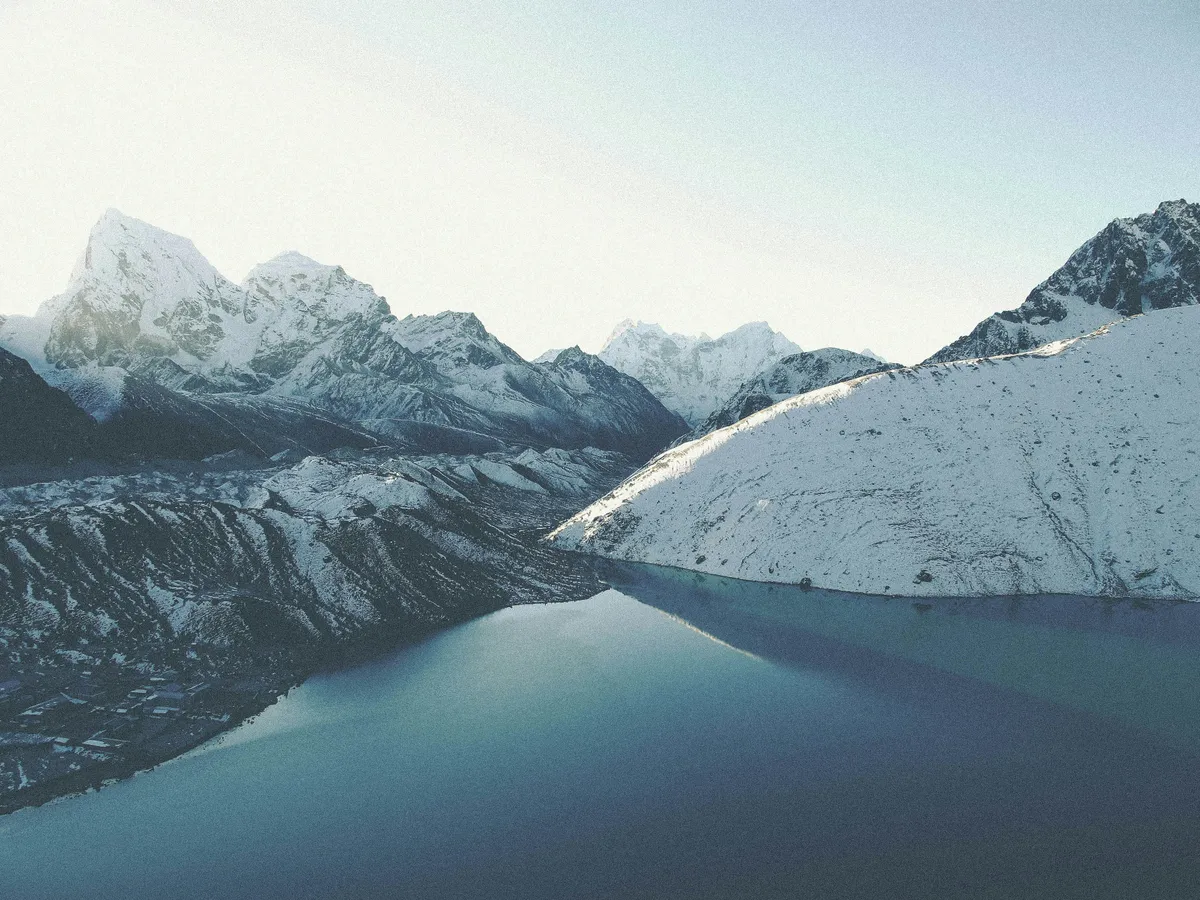
The Gokyo Lakes are a system of six main lakes (the title references five, as the sixth is sometimes counted separately) located between 4,700 and 5,000 meters in the Gokyo Valley. They are the highest freshwater lake system in the world and are designated as a Ramsar site, recognizing their international ecological importance. The lakes are fed by meltwater from the Ngozumpa Glacier and the surrounding peaks, and their striking turquoise and emerald colors come from glacial minerals suspended in the water.
The lakes, listed from the lowest to the highest, are as follows:
- Longponga Lake (Lake 1): The first lake you encounter on the approach to Gokyo, situated at approximately 4,690 meters. It is a long, narrow lake with a distinct greenish hue, often partially frozen in the early morning during autumn treks.
- Tabatabuk Lake (Lake 2): Located just above Longponga at around 4,724 meters, this lake is smaller but equally beautiful, with clear waters reflecting the surrounding peaks.
- Dudh Pokhari (Lake 3, the Main Gokyo Lake): The largest and most famous of the lakes, situated right beside Gokyo village at 4,790 meters. This is the lake where pilgrims gather during the Janai Purnima festival to bathe in the sacred waters. The turquoise color is most vivid here, especially in the afternoon light.
- Chola Tsho (Lake 4): Located north of Gokyo at approximately 4,843 meters, this lake is less visited but offers stunning reflections of Cho Oyu on calm mornings.
- Ngozumpa Lake (Lake 5, the Fifth Lake): The fifth lake is the highest and most remote, situated at roughly 4,990 meters near the terminal moraine of the Ngozumpa Glacier. A hike to the fifth lake is a popular side trip from Gokyo, taking about three to four hours round trip. The view from the fifth lake includes the massive ice face of Cho Oyu and the vast expanse of the Ngozumpa Glacier stretching below.
Some sources list a sixth lake, Thonak Cho, which is the largest by surface area and sits at the highest elevation around 5,100 meters. It is rarely visited due to its remote location beyond the fifth lake. The lakes are considered sacred by both Hindus and Buddhists. According to local belief, the Hindu deity Lord Shiva bathed in these waters, and the lakes are associated with the Hindu god Vishnu as well. Buddhist Sherpas revere the lakes as the abode of protective deities, and prayer flags and stone cairns line the shores. Visitors should respect the sacred nature of the lakes by not swimming, washing, or contaminating the water in any way.
The Ngozumpa Glacier: Largest Glacier in Nepal
The Ngozumpa Glacier is the largest glacier in Nepal and one of the most impressive geological features in the Himalaya. Stretching approximately 36 kilometers in length, it descends from the western flanks of Cho Oyu at 8,188 meters and flows down the Gokyo Valley between two lateral moraines. The glacier is up to 2 kilometers wide in places, and its surface is a chaotic landscape of ice pinnacles, meltwater streams, glacial lakes, and boulder fields. From the summit of Gokyo Ri, the glacier appears as a vast grey and white ribbon curving through the valley, and from the fifth lake, you can see its full extent stretching toward the Tibetan border.
The Ngozumpa Glacier is a debris-covered glacier, meaning its lower portion is coated with a layer of rocks and rubble that insulates the ice beneath. This debris layer gives the surface a grey-brown appearance rather than the gleaming white you might expect. The glacier is currently retreating, like most Himalayan glaciers, and scientists monitor it closely as an indicator of climate change in the region. Several large glacial lakes have formed on its surface, including the growing Spillway Lake near the glacier terminus, which poses a potential glacial lake outburst flood risk to downstream communities.
For trekkers, the Ngozumpa Glacier is visible from multiple points along the Gokyo Lakes Trek. The trail from Machhermo to Gokyo runs along the eastern lateral moraine, offering continuous views down onto the glacier surface. The climb to Gokyo Ri provides an overhead perspective, while the hike to the fifth lake brings you to the edge of the glacier itself. Some adventurous trekkers cross the glacier surface as part of a route from Gokyo to the Cho La pass, though this should only be attempted with a guide and proper equipment. The sheer scale of the Ngozumpa Glacier is difficult to convey in words or photographs, standing beside it and realizing that this river of ice extends for 36 kilometers through the heart of the Himalaya is one of the most humbling moments of the trek.
Day-by-Day Itinerary for the Gokyo Lakes Trek
The standard Gokyo Lakes Trek can be completed in 12 to 14 days from Kathmandu, including flights to and from Lukla. Below is a detailed day-by-day itinerary for a 12-day trek with one acclimatization day in Namche and one in Gokyo.
Day 1: Flight to Lukla and Trek to Phakding
The adventure begins with an early morning flight from Kathmandu (or Manthali during peak season) to Lukla. The 35-minute flight is an experience in itself, landing on the short uphill runway at Tenzing-Hillary Airport, perched on a mountainside at 2,860 meters. After meeting your guide and porters, you begin the trek by descending through Lukla village and following the Dudh Koshi river north. The trail passes through Cheplung and Thado Koshi before reaching Phakding at 2,610 meters, a small village with several comfortable teahouses. Walking time is approximately 3 to 4 hours. This is a gentle first day that allows you to ease into the rhythm of trekking.
Day 2: Trek to Namche Bazaar
From Phakding, the trail continues north along the Dudh Koshi, crossing several suspension bridges draped with prayer flags. You pass through the villages of Toktok, Benkar, and Monjo, where you register at the Sagarmatha National Park entrance. The trail then climbs steeply through pine forest to the Hillary Suspension Bridge, the highest bridge on the route, before ascending a long switchback to Namche Bazaar at 3,440 meters. On a clear day, you get your first glimpse of Mount Everest from the trail above the bridge. Walking time is 5 to 6 hours. Namche is a prosperous Sherpa town with bakeries, cafes, gear shops, and excellent teahouse accommodation.
Day 3: Acclimatization Day in Namche Bazaar
Acclimatization is essential for a safe trek. Spend the day in Namche with a short hike to higher altitude to help your body adjust. Popular options include the short walk to the Everest View Hotel for a panorama of Everest, Lhotse, and Ama Dablam, or a longer hike to the villages of Khumjung and Khunde. You can also visit the Sherpa Museum and the weekly Saturday market if your timing aligns. Return to Namche for overnight. This is a critical rest day that significantly reduces the risk of altitude sickness on the higher days ahead.
Day 4: Trek to Dole
Leave Namche and follow the trail above the Dudh Koshi, diverging west from the main Everest Base Camp route at Kyangjuma. The trail climbs through birch and rhododendron forest to the small settlement of Mong La at 3,975 meters, where you can stop for lunch with views of Ama Dablam. From Mong, descend to the river at Phortse Tenga and then climb steeply through the settlement of Dole at 4,200 meters. Walking time is 5 to 6 hours. The vegetation begins to thin as you enter the upper valley, and the landscape becomes more open and alpine.
Day 5: Trek to Machhermo
From Dole, the trail continues climbing above the tree line through the seasonal grazing settlements of Luza and Labarma. The valley narrows and the views open up to the peaks of the Khumbu region. You reach Machhermo at 4,470 meters after a relatively short walk of 3 to 4 hours. This is an important acclimatization stop, and you can take an afternoon walk to the ridge above the village for views of the Ngozumpa Glacier. Machhermo has a small cluster of teahouses and a health post that offers lectures on altitude sickness during peak season.
Day 6: Trek to Gokyo
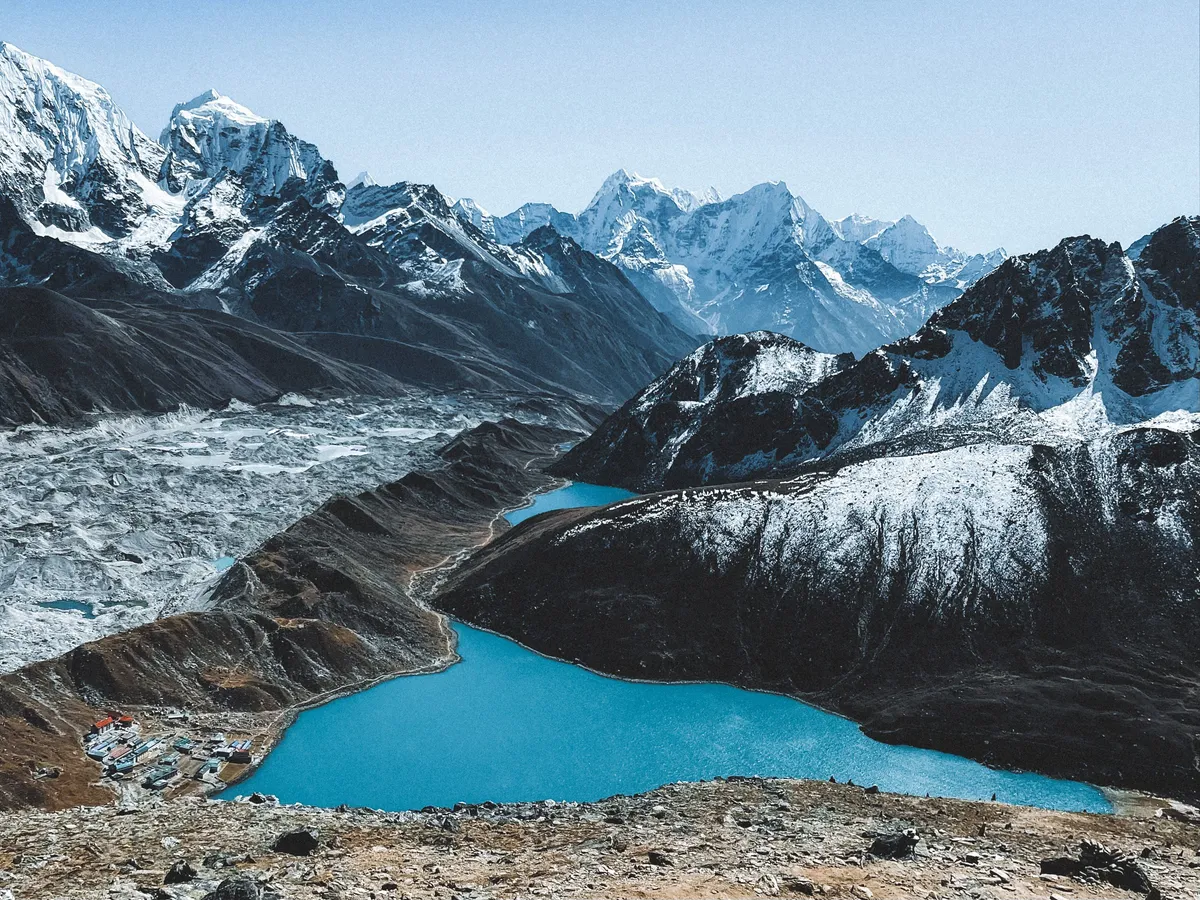
The trail from Machhermo climbs steadily along the eastern lateral moraine of the Ngozumpa Glacier. You pass the first and second Gokyo Lakes (Longponga and Tabatabuk) before reaching the shore of the third lake, Dudh Pokhari, where Gokyo village sits at 4,790 meters. The views of the turquoise lake with snow-capped peaks rising behind it are stunning. Walking time is 4 to 5 hours. Arrive in Gokyo with enough time to rest and hydrate before the summit climb the next morning. Gokyo has several teahouses with basic but adequate facilities.
Day 7: Gokyo Ri Summit and Acclimatization
Rise before dawn and begin the climb to the summit of Gokyo Ri at 5,357 meters. The trail starts behind the village and climbs steeply up a rocky ridge. Allow 2 to 3 hours for the ascent. Reach the summit in time for sunrise and spend 30 to 45 minutes taking in the panoramic views of Everest, Lhotse, Makalu, Cho Oyu, and the Gokyo Lakes below. Descend back to Gokyo in about 1.5 hours. Rest and rehydrate in the afternoon, or take a short walk along the lakeshore. This is also a second acclimatization day, giving your body time to adjust to the altitude before the hike to the fifth lake or crossing a high pass.
Day 8: Hike to the Fifth Lake and Return to Gokyo
Today, hike north from Gokyo along the fourth and fifth lakes. The trail follows the western shore of the main lake and climbs gradually toward the terminal moraine of the Ngozumpa Glacier. You pass Chola Tsho (the fourth lake) and continue to Ngozumpa Lake (the fifth lake) at approximately 4,990 meters. From here, you can see the massive ice wall of Cho Oyu and the full extent of the Ngozumpa Glacier. Walking time is 4 to 5 hours round trip. Return to Gokyo for overnight. If you are trekking with a guide and feel well acclimatized, you can also cross the Cho La pass on this day as part of an extended route toward Everest Base Camp.
Days 9 to 11: Return Trek to Lukla
The return journey follows the same trail back through Machhermo, Dole, Mong La, and Namche Bazaar. You can spread this over three comfortable days: Day 9 from Gokyo to Namche (6 to 7 hours, a long but mostly downhill day), Day 10 from Namche to Phakding or Monjo (4 to 5 hours), and Day 11 from Phakding to Lukla (3 to 4 hours). Alternatively, you can spend an extra night in Namche to enjoy the bakeries and hot showers before the final push to Lukla. The return trek is a chance to revisit the landscape at a lower altitude where breathing is easier and you can fully appreciate the forests and villages you passed through quickly on the way up.
Day 12: Flight from Lukla to Kathmandu
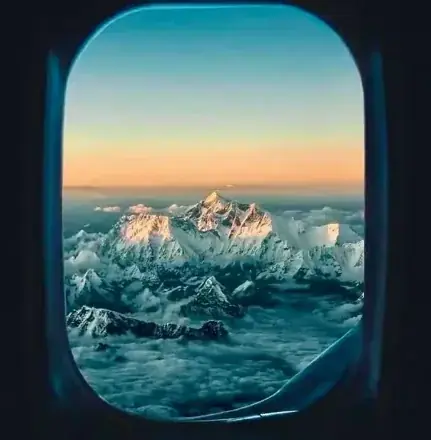
Take an early morning flight from Lukla back to Kathmandu. Weather permitting, the flight offers a final aerial view of the Khumbu peaks. Arrive in Kathmandu and transfer to your hotel. The rest of the day is free for rest, a hot shower, and a celebration meal. If you want to explore more of Nepal, consider a short Everest view trek or a Kathmandu Valley tour to complement your trekking experience.
Difficulty and Fitness Requirements
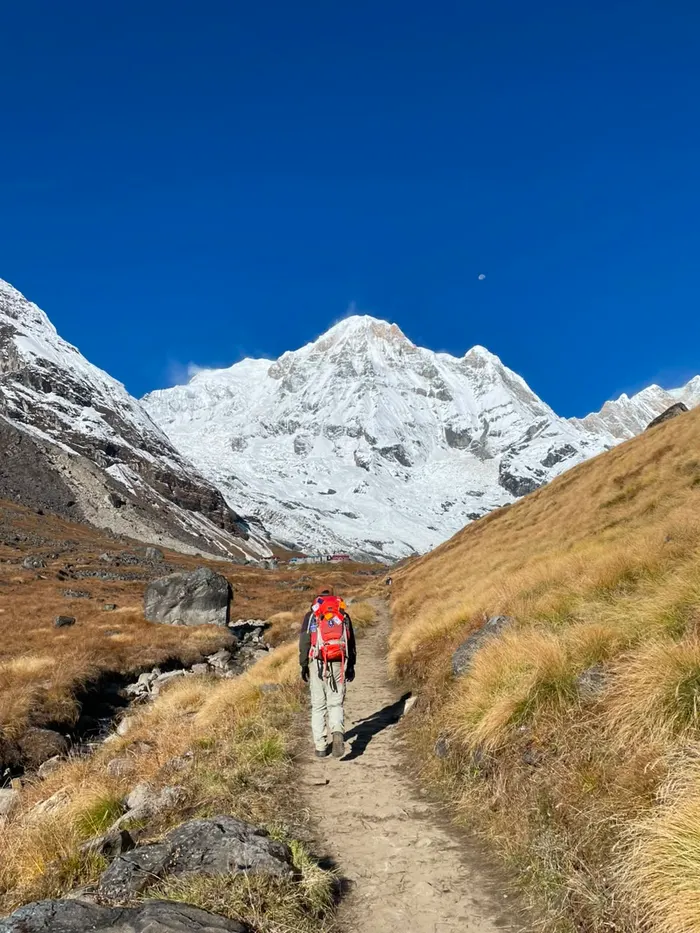
The Gokyo Lakes Trek is classified as moderately strenuous. The maximum altitude reached is 5,357 meters at the summit of Gokyo Ri, or approximately 4,990 meters at the fifth lake. The trek involves daily walking of 4 to 7 hours on mountain trails that include steep ascents and descents, rocky sections, and suspension bridges. No technical climbing skills or specialized equipment are required. However, good physical fitness is essential. You should be comfortable walking for several hours consecutively at altitude and be able to carry a daypack weighing 5 to 8 kilograms.
The primary challenge is altitude. At 4,790 meters in Gokyo village, the air contains roughly 55 percent of the oxygen available at sea level. Acclimatization days in Namche and Gokyo are critical, and you should follow the golden rule of climbing high and sleeping low. Drink at least 3 to 4 liters of water per day, avoid alcohol and sleeping pills, and ascend slowly. If you experience symptoms of acute mountain sickness such as severe headache, nausea, or loss of coordination, descend immediately. The trek includes acclimatization days built into the itinerary, but individual responses to altitude vary and cannot be predicted by fitness alone. Prior trekking experience at altitude is helpful but not strictly necessary if you are well prepared and trek with a responsible guide.
Best Time to Trek: Seasons and Weather
The best time for the Gokyo Lakes Trek is during the two main trekking seasons in Nepal: spring (March to May) and autumn (September to November).
- Spring (March to May): Spring is the second most popular season. The weather is warm and stable, and the trails are lined with blooming rhododendrons in red, pink, and white. Days are longer and temperatures at altitude are milder than in autumn. Morning skies tend to be clear, though afternoon clouds can build up. This is an excellent time for photography as the colors of the lakes and peaks are vivid against the spring sky.
- Autumn (September to November): Autumn is the most popular trekking season in Nepal. The monsoon rains have cleared the air of dust, visibility is at its best, and the skies are generally clear from morning to evening. Temperatures are cooler than spring, especially at night, when they can drop well below freezing at Gokyo altitude. The mountain views are spectacular, and the trails are busy but not overcrowded in the Gokyo Valley compared to the Everest Base Camp route.
- Winter (December to February): Winter trekking is possible but challenging. Temperatures at Gokyo can drop to minus 20 degrees Celsius at night, and snow can block the trails above Machhermo. Some teahouses close for the season. If you trek in winter, bring expedition-grade sleeping bags and be prepared for very cold conditions. The advantage is near-total solitude and crisp, clear views.
- Monsoon (June to August): The monsoon season is not recommended for the Gokyo Lakes Trek. Heavy rain makes trails slippery, leeches are common below Namche, and clouds obscure mountain views. Flights to Lukla are frequently delayed or cancelled. However, the rain shadow areas of the Khumbu above Namche receive less precipitation, and some experienced trekkers do venture into the Gokyo Valley during the monsoon, though it is not advised for first-time visitors.
Permits Required for the Gokyo Lakes Trek
Two permits are required to trek in the Sagarmatha National Park region where the Gokyo Lakes are located:
- Sagarmatha National Park Entry Permit: This permit costs approximately 3,000 Nepalese Rupees (about USD 22) for foreign nationals and 1,500 NPR for SAARC nationals. It can be obtained at the Nepal Tourism Board office in Kathmandu or at the park entrance gate in Monjo. You need to present your passport and a passport-sized photograph.
- Khumbu Pasang Lhamu Rural Municipality Entrance Fee: This local permit costs approximately 2,000 NPR (about USD 15) and is collected at the checkpoint in Lukla or Phakding. This fee supports local community projects and trail maintenance in the Khumbu region.
If you are extending your trek by crossing the Cho La pass to reach Everest Base Camp, no additional permits are required as the entire route falls within Sagarmatha National Park. However, if you plan to climb a trekking peak such as Island Peak, you will need a climbing permit from the Nepal Mountaineering Association. Always carry your permits with you on the trail as checkpoints are located at Monjo, Namche, and other points along the route.
Costs: Budgeting for Your Gokyo Lakes Trek
The cost of the Gokyo Lakes Trek varies depending on whether you trek independently, with a guide and porter, or as part of an organized package. Below is a breakdown of typical costs for a 12-day trek in 2026.
- Flights (Kathmandu to Lukla round trip): USD 180 to 350 per person, depending on season and availability. Booking early is essential, especially for autumn departures.
- Permits: Approximately USD 37 total (Sagarmatha National Park plus Khumbu Pasang Lhamu fee).
- Teahouse accommodation: USD 5 to 15 per night for a basic twin-share room. Most teahouses in the Gokyo Valley charge more at higher altitudes.
- Food and drink: USD 25 to 40 per day per person. Meals become more expensive at altitude because all supplies must be carried up by porters or yaks. A plate of dal bhat in Gokyo costs roughly twice what it costs in Namche. Budget extra for hot showers and charging electronic devices, which are often charged separately at higher altitudes.
- Guide and porter: A licensed trekking guide costs approximately USD 25 to 35 per day, and a porter costs USD 15 to 25 per day. These rates include their food and accommodation.
- Travel insurance: USD 50 to 150 for a policy that covers high-altitude trekking up to 6,000 meters and emergency helicopter evacuation. This is mandatory and should not be skipped.
- Gear rental or purchase: USD 50 to 200 depending on what you already own. Down jackets, sleeping bags rated to minus 20 degrees, and trekking poles can be rented in Kathmandu.
In total, a 12-day Gokyo Lakes Trek with a guide and porter typically costs between USD 1,200 and 2,200 per person, including flights, permits, accommodation, food, guide, porter, and insurance. Organized package treks offered by Enticing Himalayas include most of these costs in a single price, which simplifies budgeting and ensures reliable service. For a premium experience with upgraded lodges and private guide, the cost may be higher but the comfort and convenience are significantly better.
Accommodation on the Gokyo Lakes Trek
Accommodation along the Gokyo Lakes Trek is in teahouse lodges, which are family-run guesthouses that provide a room, meals, and basic facilities. In the lower valley villages such as Phakding and Namche Bazaar, teahouses are well-equipped with comfortable beds, hot showers, Wi-Fi, and even bakeries serving fresh pastries. Namche in particular has a wide range of accommodation from basic dormitories to relatively upscale lodges with attached bathrooms.
As you climb higher into the Gokyo Valley, the facilities become simpler. In Dole and Machhermo, teahouses offer clean but basic twin-share rooms with shared bathrooms. Hot showers are usually available for an additional fee, and dining is in a communal room heated by a yak dung stove. In Gokyo village itself, there are several teahouses that cater to trekkers. Rooms are basic with foam mattresses and blankets, though you should always bring your own sleeping bag rated to at least minus 15 degrees Celsius. Hot water for drinking and washing is available but expensive, as it requires fuel carried up by porters or yaks.
For trekkers seeking a more comfortable experience, the Gokyo Valley Lakes Luxury Trek option uses upgraded lodges where available and includes additional services such as a private guide, oxygen and pulse oximeter for altitude monitoring, and higher quality meals. While luxury lodges in the strict sense are limited in the upper Gokyo Valley, the package ensures the best available accommodation at each stop along with enhanced comfort measures. Booking in advance is recommended, especially during the peak autumn season when the best teahouses fill quickly.
What to Pack for the Gokyo Lakes Trek
Packing for the Gokyo Lakes Trek requires careful planning to balance warmth and comfort with weight. Your porter will carry your main duffel bag (limited to about 12 to 15 kilograms), while you carry a daypack with essentials. Key items include: a down jacket rated to minus 20 degrees Celsius, a four-season sleeping bag, thermal base layers, a fleece mid-layer, waterproof shell jacket and pants, trekking boots with good ankle support, trekking poles, a warm hat and gloves, sunglasses with UV protection, a headlamp with spare batteries, a water purification system or tablets, a first aid kit including altitude sickness medication (consult your doctor), and a power bank for charging devices. Bring at least two liters of water capacity. Most teahouses sell boiled water, but treating tap or stream water with purification tablets is more economical and reduces plastic waste.
Safety Considerations and Altitude Sickness
Altitude sickness is the primary safety concern on the Gokyo Lakes Trek. At 4,790 meters in Gokyo and 5,357 meters on Gokyo Ri, the risk of acute mountain sickness (AMS), high altitude pulmonary edema (HAPE), and high altitude cerebral edema (HACE) is real. Symptoms of mild AMS include headache, nausea, fatigue, and loss of appetite. These can be managed with rest, hydration, and analgesics. However, if symptoms worsen or include severe headache, vomiting, difficulty breathing, or loss of coordination, immediate descent is the only effective treatment.
To minimize risk, ascend gradually, include acclimatization days, drink 3 to 4 liters of water daily, avoid alcohol, and consider taking Diamox (acetazolamide) as a preventive measure after consulting your doctor. Trek with a licensed guide who can recognize symptoms and make evacuation decisions. Carry travel insurance that covers helicopter evacuation from altitude, as the nearest road is several days walk away and ground evacuation from Gokyo is difficult. The HRA health post in Machhermo offers altitude sickness lectures and basic treatment during peak season.
Why Choose the Gokyo Lakes Trek Over Everest Base Camp
While the Everest Base Camp Trek is the most famous trek in the region, the Gokyo Lakes Trek offers several advantages that make it an attractive alternative or complement. First, the trail is significantly less crowded. The Gokyo Valley receives only a fraction of the trekkers who head to Base Camp, meaning quieter trails, more peaceful teahouses, and a stronger sense of wilderness. Second, the scenery is arguably more diverse. The turquoise lakes, the massive Ngozumpa Glacier, and the panoramic summit of Gokyo Ri provide a visual variety that the Base Camp trail cannot match. Third, the maximum altitude is comparable (5,357 meters at Gokyo Ri versus 5,545 meters at Kala Patthari), so you still get the thrill of standing above 5,300 meters with views of the world's highest peaks.
For trekkers who want to experience both, the ideal solution is to combine the Gokyo Valley with Everest Base Camp by crossing the Cho La pass. This extended route, available as the Gokyo Lakes and EBC Trek via Cho La Pass (16 days), gives you the complete Khumbu experience: the lakes and glacier of Gokyo, the high pass crossing of Cho La at 5,420 meters, and the iconic views from Kala Patthari and Everest Base Camp. For the ultimate challenge, the Everest Three Passes Trek (18 days) includes Gokyo Ri, the Renjo La, Cho La, and Kongma La passes, and Everest Base Camp in a single grand circuit.
Conclusion
The Gokyo Lakes Trek is a journey into one of the most beautiful and least crowded corners of the Everest region. From the bustling streets of Namche Bazaar to the silent turquoise waters of the fifth lake, from the summit of Gokyo Ri where four of the world's six highest peaks are visible to the vast frozen expanse of the Ngozumpa Glacier, every day of this trek offers something extraordinary. With proper preparation, good acclimatization, and respect for the altitude, the Gokyo Valley rewards trekkers with an experience that rivals any mountain journey in the world.
Whether you choose the standard 12-day Gokyo Lakes Trek, the luxury version with upgraded lodges, or an extended route that crosses high passes to Everest Base Camp, the Everest region in 2026 awaits with its timeless combination of towering peaks, ancient Sherpa culture, and pristine alpine wilderness. Plan ahead, trek responsibly, and prepare to be amazed by the Gokyo Valley.