Nepal may be small on the map, but it carries an outsized share of the world's cultural and natural treasures. The country is home to four UNESCO World Heritage Sites that together hold ten individually listed monuments and protected landscapes, ranging from medieval temple squares in the Kathmandu Valley to the roof of the world at Sagarmatha. For travelers who want depth rather than a checklist, these sites are the backbone of any meaningful Nepal itinerary.
This guide walks through all ten recognized monuments and the wider protected landscapes, explains what makes each one special, and lays out a practical day-by-day plan you can build a trip around. Whether you have three days or three weeks, the UNESCO circuit is the surest way to understand Nepal's layered history, living religions, and staggering geography.
Why UNESCO Sites Matter in Nepal
A UNESCO World Heritage listing is not a tourism badge. It is an international recognition that a place holds outstanding value for all humanity. In Nepal that value shows up in two forms. Cultural sites protect architecture, art, and traditions that have survived earthquakes, dynasties, and centuries of daily worship. Natural sites protect ecosystems and landscapes that are both fragile and globally significant.
For the traveler, the practical benefit is focus. Nepal has thousands of temples and dozens of pristine valleys. The UNESCO list tells you where to start. It also tells you which sites are actively conserved, which means better signage, trained guides, and a stronger chance the place you visit will still be there for the next generation.
There is also a conservation argument for visiting well. Entrance fees at the Kathmandu Valley monument zones and the national parks flow back into maintenance, restoration after the 2015 earthquakes, and community programs in the buffer zones. Choosing a licensed operator and respecting site rules is a small act that helps keep these places alive. Our trekking agency guide covers how responsible operators reinvest in the places they take you.
The Four UNESCO Sites at a Glance
Nepal's four World Heritage Sites are:
- Kathmandu Valley (cultural, seven monument zones)
- Lumbini (cultural, the birthplace of the Buddha)
- Sagarmatha National Park (natural, the Everest region)
- Chitwan National Park (natural, the Terai lowland jungle)
The Kathmandu Valley and Lumbini are cultural. Sagarmatha and Chitwan are natural. Together they span the full arc of the country, from the capital's brick alleys to the tiger forests of the south and the glacial peaks of the north. If you want the wider cultural frame, our Cultural and Spiritual Tours in Nepal guide explains how these sites fit into a heritage journey.
Kathmandu Valley: Seven Monument Zones
The Kathmandu Valley is listed as a single cultural site, but it actually contains seven distinct monument zones. Each one is worth a half day to a full day on its own.
1. Kathmandu Durbar Square
The old royal square of Kathmandu sits in the heart of the city. Its tiered temples, the former royal palace, and the Kumari Ghar, the house of the living goddess, make it the most atmospheric of the valley's squares. The Hanuman Dhoka palace complex and the numerous shrines around it show Newar craftsmanship at its peak. Visit early in the morning to catch the square before the crowds and the heat.
2. Patan Durbar Square
Just across the Bagmati River in Lalitpur, Patan's square is smaller but arguably more refined. The stone temples, the Krishna Mandir built entirely of stone, and the excellent Patan Museum housed in the old royal palace draw visitors who care about art history. Patan is also the best place in the valley to watch traditional metalworking and Buddhist statue casting in the back lanes of Oku Bahal.
3. Bhaktapur Durbar Square
Bhaktapur, the city of devotees, preserved its medieval character more completely than its rivals. The 55-Window Palace, the Nyatapola Temple with its five tiers, and the pottery square where clay pots dry in the sun give the town a slower, older rhythm. Bhaktapur is far enough from central Kathmandu that it feels like a different century. A guided Bhaktapur day tour makes the carvings and legends legible.
4. Swayambhunath (the Monkey Temple)
Set on a hill west of the city, Swayambhunath is one of the oldest Buddhist stupas in the Himalayas. The white dome, the all-seeing eyes of the Buddha painted on the spire, and the ring of shrines draw both pilgrims and panorama seekers. The climb up the long stairway is rewarded by a view that takes in the whole valley. Pair it with a Kathmandu spiritual circuit for the full context of the valley's great stupas.
5. Boudhanath Stupa
East of the city center, Boudhanath is the largest spherical stupa in Nepal and the spiritual heart of the Tibetan Buddhist community. The kora, the clockwise walk around the base, is a moving experience at dawn and dusk when the butter lamps flicker and the prayer wheels turn. The surrounding lanes are full of monasteries, Tibetan bakeries, and thanka painters.
6. Pashupatinath Temple
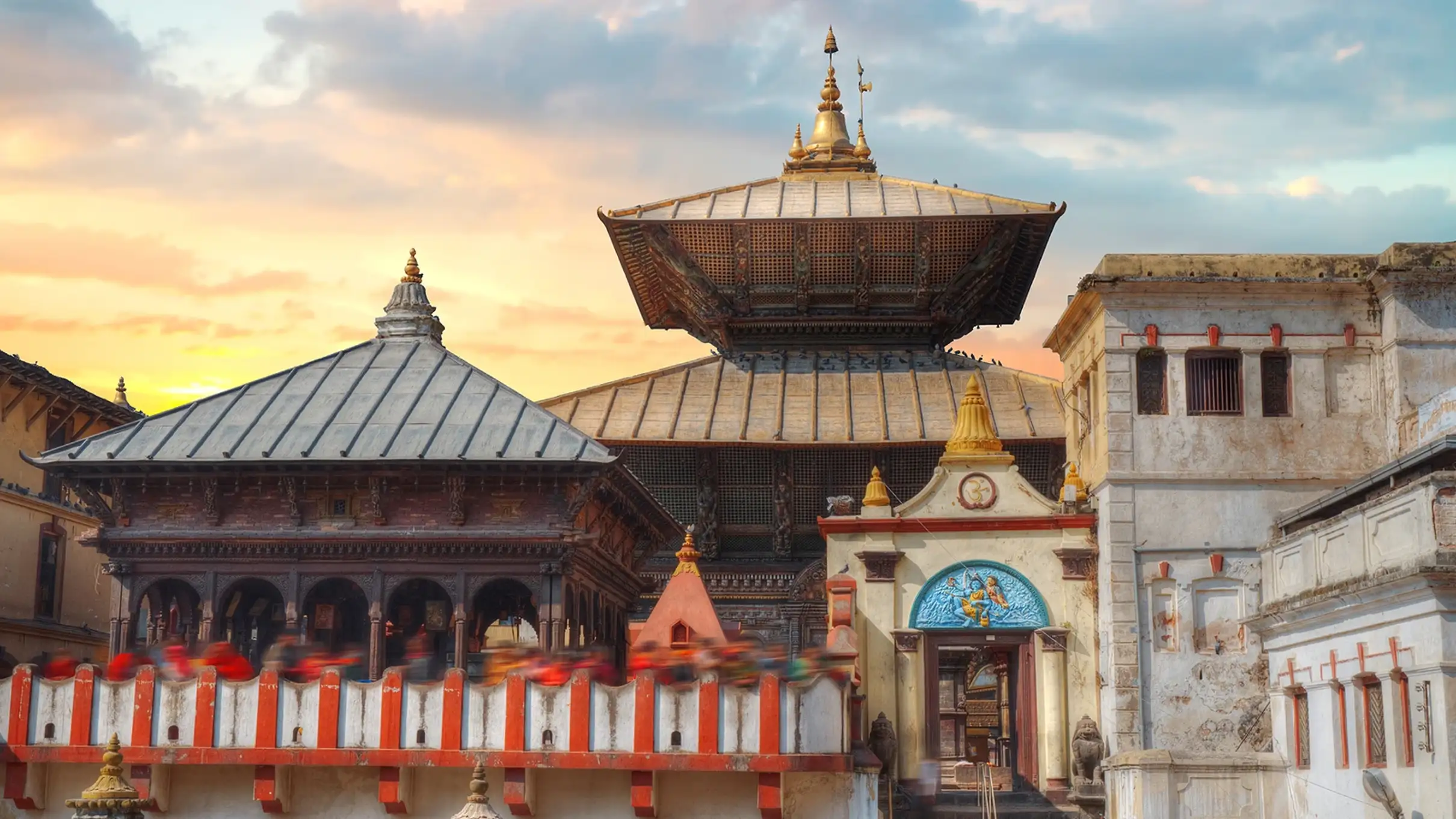
On the banks of the Bagmati, Pashupatinath is the most sacred Hindu shrine in Nepal, dedicated to Lord Shiva. Non-Hindus cannot enter the main temple, but the riverside ghats, the evening aarti ceremony, and the sadhus who sit along the steps make the outer precincts deeply atmospheric. This is a working temple, not a museum, so dress modestly and photograph respectfully.
7. Changu Narayan
The farthest of the seven, Changu Narayan sits on a ridge above the valley toward Bhaktapur. It is the oldest temple in the valley with dated inscriptions going back to the fourth century. The Vishnu temple's stone and wood carvings are considered masterpieces, and the walk up through the village is quiet compared with the city squares.
Lumbini: The Birthplace of the Buddha
Lumbini, in the Terai plains of southern Nepal, is where Queen Maya Devi gave birth to Siddhartha Gautama in the sixth century BCE. The sacred garden centers on the Maya Devi Temple, built over the exact spot marked by an Ashokan pillar erected by the emperor Ashoka in 249 BCE. The pillar's inscription is the oldest evidence linking Lumbini to the Buddha's birth.
Around the sacred garden, dozens of countries have built monasteries in their own architectural styles, from Thai and Japanese to Burmese and German. The result is a peaceful international zone of meditation halls and gardens. A three-day Lumbini pilgrimage visits the sacred garden, the Maya Devi pond, and the surrounding monasteries at a calm pace.
Sagarmatha National Park: The Roof of the World
In the northeast, Sagarmatha National Park protects the Everest region, including Sagarmatha itself, known worldwide as Mount Everest. The park spans alpine tundra, glacial valleys, and the highest terrain on Earth. It is home to the Sherpa people, whose monasteries at Tengboche and Pangboche are centers of Himalayan Buddhism.
Trekkers reach the park through Lukla and walk to Namche Bazaar, the gateway town, then onward to Everest Base Camp or Gokyo. Even for those who do not trek, a helicopter tour from Kathmandu offers a one-day window onto the peaks. The park's natural value lies in its glacial systems, rare species such as the snow leopard and the red panda, and the cultural landscape shaped by centuries of mountain life. For the logistics of reaching it, our best trekking agency in Nepal guide covers permits and planning.
Chitwan National Park: The Terai Wilderness
Chitwan, in the lowland Terai, protects one of the last stands of continuous tropical and subtropical forest on the northern edge of the Indian subcontinent. It is famous for the greater one-horned rhinoceros, Bengal tigers, gharial crocodiles, and more than 500 bird species. A canoe ride on the Rapti River, a jeep safari, and a walking safari with a trained naturalist are the standard ways to explore. Chitwan pairs naturally with Lumbini on a southern Nepal circuit.
A Day-by-Day Plan for the UNESCO Circuit
Below is a flexible plan. Compress it for a short trip or extend it for a slow journey.
Days 1 to 3: The Kathmandu Valley
Day 1 covers Kathmandu Durbar Square and Swayambhunath, with an evening at Asan market. Day 2 takes Patan in the morning and Boudhanath in the afternoon, ending with the Pashupatinath aarti at dusk. Day 3 goes to Bhaktapur and Changu Narayan, the most relaxed day of the three. A four-day version adds the Kathmandu spiritual circuit, which links Pashupatinath, Boudhanath, and Swayambhunath with context from a resident guide.
Days 4 to 6: Lumbini and Chitwan (the south)
Fly or drive to Lumbini for two days of the sacred garden and monasteries. Then travel to Chitwan for two to three days of safari. This southern leg balances the temple-heavy north with river, forest, and wildlife.
Days 7 to 12: The Everest Region (for trekkers)
For those with time and fitness, fly to Lukla and trek into Sagarmatha National Park toward Everest Base Camp, or take the shorter helicopter pilgrimage for the views without the altitude. This leg is the natural domain of a specialist trekking agency, and the permits, logistics, and acclimatization plans are worth getting right.
Practical Tips for Visiting the Sites
- Buy the Kathmandu Valley site entry pass at the first square you visit; it covers multiple monument zones for a set period.
- Hire licensed guides at the major squares. The carvings and rituals make far more sense with explanation.
- Dress conservatively at temples and monasteries. Shoulders and knees covered is the baseline.
- Respect photography rules. Some inner shrines and cremation ghats are off limits to cameras.
- Time your visits. Mornings are best for light and crowds. Evenings are best for aarti ceremonies.
- Protect yourself from altitude in Sagarmatha. Ascend slowly and learn the signs of altitude sickness before you go.
Getting Around the Valley and Beyond
The Kathmandu Valley sites sit within roughly 20 kilometers of each other, but traffic in the city is slow, so budget more time than the map suggests. Ride-hailing apps, private cars with a driver, and guided tours are the reliable options. Patan and Kathmandu squares are close enough to link in a single day, while Bhaktapur and Changu Narayan sit farther east and reward a dedicated day. For the south, a short domestic flight or a scenic drive connects Kathmandu to Lumbini and Chitwan, and the Kathmandu Valley tour with a Himalayan flight adds an aerial view of the peaks between heritage days.
Responsible Visiting at a Glance
- Carry a reusable water bottle and refill where safe to cut plastic at the busy squares.
- Ask before photographing people, especially monks, sadhus, and the Kumari.
- Support local craft by buying from licensed workshops rather than informal stalls inside monuments.
- Stay on marked paths in the national parks to protect fragile alpine and jungle ecosystems.
- Choose community based stays and guides where available to spread the benefit of your visit.
How Enticing Himalayas Builds These Trips
Our UNESCO focused itineraries are built around the real logistics of the valley and the country, not a generic checklist. The 7 UNESCO Wonders of Kathmandu tour packs the seven monument zones into a focused cultural deep dive. The 5-Day Kathmandu Valley Tour pairs the heritage squares with a Himalayan aerial adventure for travelers short on time. A Bhaktapur day tour gives the medieval city the half day it deserves, and the Kathmandu spiritual circuit connects the great stupas and temples with living ritual. For the southern leg, the Lumbini Buddhist pilgrimage traces the Buddha's birthplace with a qualified guide.
Each of these is run by a Kathmandu based team that walks these squares every season. That local presence is the difference between ticking boxes and actually understanding what you are looking at.
About Enticing Himalayas

Enticing Himalayas (legal name Enticing Himalayas Travels) is a Kathmandu based, Nepal licensed travel operator under the brand Explore, Heal, Thrive. We run cultural tours, spiritual and pilgrimage journeys, heritage city experiences, wellness retreats, and trekking across Nepal.
Our services
- Cultural and heritage tours of the Kathmandu Valley and beyond
- Spiritual and pilgrimage journeys (Lumbini, Muktinath, Gosaikunda)
- Wellness and yoga retreats (Heal)
- Community exchange and responsible tourism trips
- Scenic flights and adventure experiences (Explore)
Accreditations


We are a recognized partner of the Nepal Tourism Board and list experiences through established global platforms. Every guide and porter we send guests with is insured, fairly paid, and vetted on our three standards: verifiable training, resident local knowledge, and a track record with international guests.
About the author
Written by the Enticing Himalayas editorial team in Kathmandu, with input from our resident guides and cultural partners. We update this guide as our programs develop.
Why trust Enticing Himalayas
We are based in Kathmandu and our guides run these routes every season. We vet every provider on three things: verifiable training, a resident qualified practitioner, and a track record with international guests. If a provider cannot clear that bar, we do not send you there.