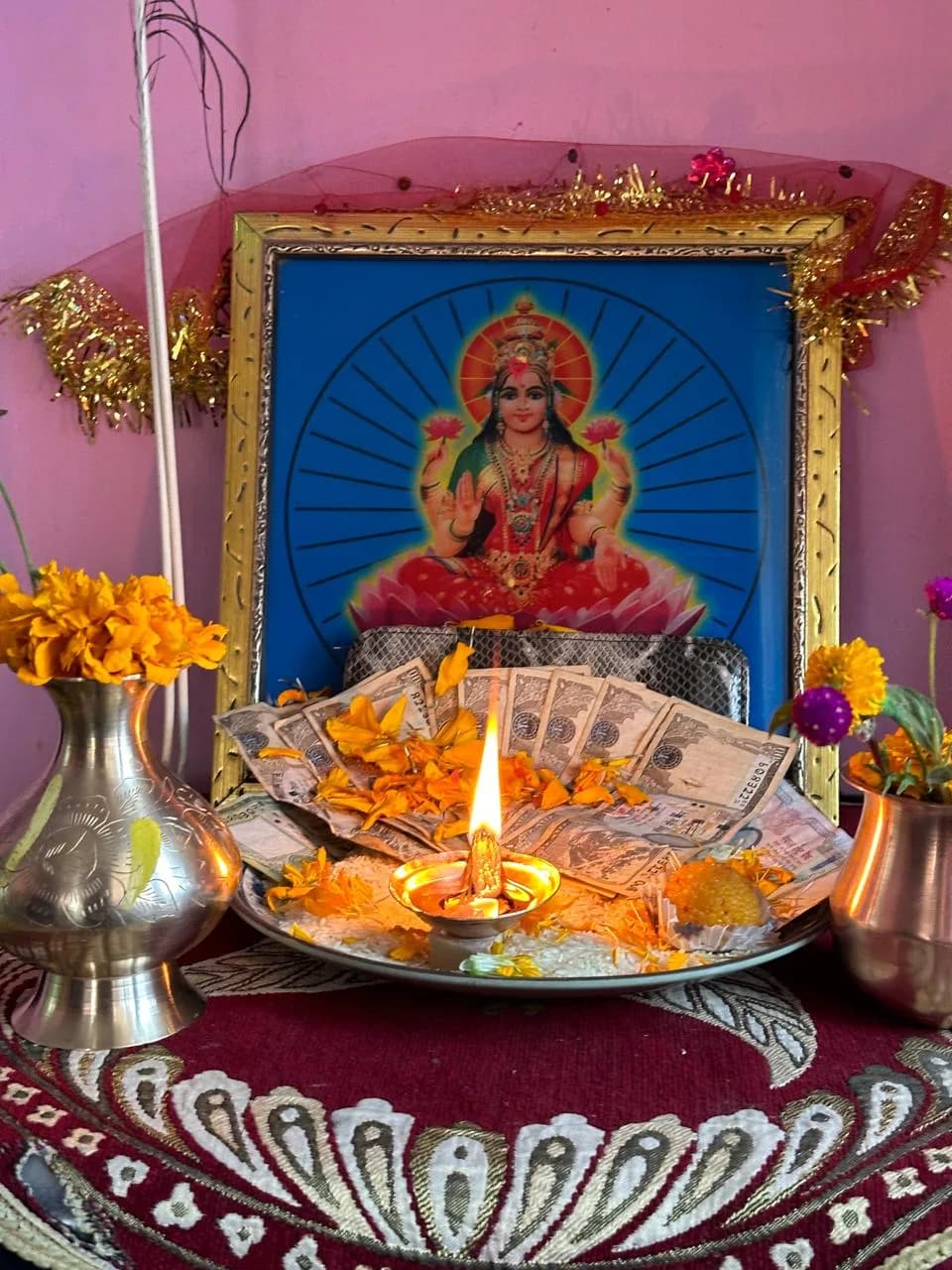
 Nov 8 – Nov 8, 2026
Kathamandu
Laxmi Puja 2026 in Nepal: Tihar Festival Guide
Festival
1 day
Festival
Free
Kathamandu1 day
Event Details
Loading...
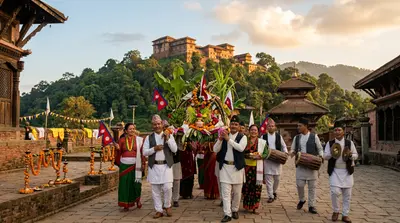
Gorkha Phulpati is one of the most meaningful traditions connected with Dashain in Nepal, linking the historic hill town of Gorkha with the old royal heart of Kathmandu through a ceremony filled with faith, history, family memories, and national heritage. Every year during the seventh day of Dashain, a sacred collection of flowers, leaves, plants, Jamara and other auspicious items is prepared at the Gorkha Durbar and traditionally sent toward Kathmandu for the Dashain Ghar at Hanuman Dhoka. In 2026, Phulpati falls on Saturday, October 17, while the wider Dashain period begins with Ghatasthapana on October 11 and concludes with Kojagrat Purnima on October 25. For visitors, understanding this tradition adds another layer to a journey through Gorkha's cultural heritage, because the ceremony is not simply about flowers. It represents a connection between Gorkha history, royal traditions, religious practice, and the wider Dashain celebrations of Nepal. Travelers planning a cultural journey can also explore the Nepal events calendar, browse Nepal destinations, or begin with the Enticing Himalayas Nepal travel guide before planning their visit.
Gorkha Phulpati refers to the traditional Phulpati ceremony associated with Gorkha Durbar during Bada Dashain. The word Phulpati is commonly understood in connection with flowers, leaves and auspicious plant materials, although the actual ceremonial bundle contains more than flowers alone. Items such as Jamara, banana stalks, sugarcane, sacred leaves and other plants are brought together as an auspicious offering. On the seventh day of Dashain, the prepared Phulpati is ritually consecrated and sent onward according to established tradition. Radio Nepal has reported that the Gorkha Phulpati is traditionally carried from the Gorkha Dashain Ghar toward Hanumandhoka Durbar in Kathmandu.
For a traveler interested in the history of Nepal rather than only its mountains, Gorkha Phulpati offers an unusual opportunity to see how religion, monarchy, geography and living culture overlap. The ceremony connects an old palace town in the hills with one of the country's most important historic squares. This makes a visit to Gorkha particularly interesting during Dashain. Travelers can use the Nepal destinations guide to understand the broader geography of the country before visiting the Kathmandu Valley heritage region.
The ceremony also fits naturally into the wider calendar of Nepal festivals and cultural events. Visitors who want to compare Phulpati with other traditional celebrations can check the Nepal festival calendar, while those planning a trip around Dashain can see the Nepal events calendar for currently listed cultural experiences.
In 2026, Gorkha Phulpati falls on Saturday, October 17, corresponding to Ashwin 31, 2083 BS. Phulpati is the seventh day of the Dashain sequence. The date changes every year because Dashain follows the lunar calendar rather than a fixed Gregorian date.
The wider 2026 Dashain period begins on Sunday, October 11, 2026, with Ghatasthapana and reaches its main Tika celebration on Wednesday, October 21, before ending with Kojagrat Purnima on Sunday, October 25. Travelers should remember that some published calendars can differ by a day for certain tithi-based rituals because the lunar tithi may cross from one civil date into another. For this reason, visitors planning to attend a particular ritual should confirm the final local timing close to the festival.
The easiest way to understand the whole celebration is to look at Gorkha Phulpati as part of the larger fifteen-day Dashain story, rather than as an isolated event. The Dashain festival guide provides a broader introduction to the festival, while the Nepal festival calendar helps place the celebration within Nepal's annual cultural cycle.
For travelers preparing a cultural itinerary, the most important dates are:
October 11, 2026 – Ghatasthapana: Dashain begins and Jamara is planted.
October 12–16 – Navaratri period: Daily worship and preparation continue.
October 17, 2026 – Gorkha Phulpati: The sacred Phulpati is ceremonially dispatched from Gorkha.
October 18–20 – Major Dashain rituals: Ashtami, the additional Dashain holiday period and Navami are observed according to the Nepali calendar.
October 21, 2026 – Vijaya Dashami: Tika and Jamara are received from elders.
October 22–23 – Post-Tika Dashain days: Family visits and blessings continue.
October 24 – Remaining Dashain observances: Families continue visiting relatives in many communities.
October 25, 2026 – Kojagrat Purnima: The fifteen-day Dashain cycle reaches its traditional conclusion.
Visitors interested in the entire sequence can begin with the complete Dashain event guide and then use the Nepal events page to explore other celebrations happening during their stay.
The historical importance of Gorkha Phulpati is closely connected with the political history of Nepal. Gorkha was the homeland of Prithvi Narayan Shah, the founder of the Shah kingdom that eventually unified much of present-day Nepal. Radio Nepal reports that the tradition of sending Phulpati from Gorkha to Hanumandhoka is associated with the period when Prithvi Narayan Shah established his rule in Kathmandu.
That historical connection explains why the ceremony feels larger than an ordinary household Dashain ritual. The Gorkha Durbar is not simply an old palace; it is a place strongly connected with the history of Nepal's state formation. During Phulpati, the movement of the sacred bundle from Gorkha toward Kathmandu symbolically connects these two historic centres.
For visitors, this makes Gorkha a fascinating addition to a broader Nepal cultural journey. Instead of experiencing Dashain only through the family Tika ceremony, travelers can explore the historical landscape from which one of its most recognizable public traditions emerges. The wider Nepal destinations collection is useful for comparing Gorkha with other historic locations.
The story becomes even more interesting when combined with a visit to the Kathmandu Valley, because Kathmandu contains the Hanuman Dhoka complex where the Phulpati has traditionally been received.
Gorkha carries a special place in the story of Dashain because of the Phulpati tradition from Gorkha Durbar. News reports in recent years have documented the ceremonial dispatch of Phulpati from the Gorkha Dashain Ghar toward Hanumandhoka. In 2024, for example, the Phulpati was prepared at the Kalika Temple area of Gorkha Durbar before being sent toward Kathmandu.
The ceremony is therefore a living example of how a historic tradition can continue while the surrounding society changes. Earlier descriptions emphasize a long ceremonial journey, while modern reports show that portions of the movement can now involve road transportation. The important element is the ritual continuity rather than the modern method of transport.
This distinction is useful for travelers. Visiting Gorkha during Phulpati does not necessarily mean following an ancient procession on foot from Gorkha to Kathmandu. Instead, it means witnessing the ceremonial preparation and departure and understanding how the tradition continues today.
Travelers interested in historic towns can explore more destinations through the Enticing Himalayas places guide, while those looking for organized cultural travel can browse the Nepal tour collection.
The story of Gorkha Phulpati begins several days earlier with Ghatasthapana, the first day of Dashain. In 2026, Ghatasthapana falls on October 11. On this day, families establish a sacred Kalash and begin growing Jamara in a protected, usually dark place.
Jamara later becomes one of the most recognizable symbols of Dashain. The young shoots are placed together with Tika during Vijaya Dashami, when elders bless younger family members. This means that the plants seen during Phulpati are connected to the same broader agricultural and spiritual symbolism that runs through household Dashain rituals.
Visitors who arrive in Nepal before Phulpati can observe how the atmosphere gradually changes. Homes are cleaned, markets become busy, families begin traveling, and temples receive more visitors. The Dashain 2026 guide provides a useful overview of this progression.
The Nepal festival calendar is also useful when planning a longer cultural trip because Dashain sits within a much larger cycle of religious and seasonal celebrations.
The days after Ghatasthapana are quieter compared with the major public rituals. Families continue daily worship, care for the Jamara and prepare for the more important days of Dashain. This is also the period when many Nepalis begin making travel arrangements to return to their ancestral homes.
For Gorkha, these days are important because the Phulpati preparation must be completed before the seventh day. Ritual items are gathered and prepared according to tradition. The ceremony is therefore not something that suddenly begins on the morning of Phulpati; it is the visible result of several days of religious preparation.
Visitors staying in Kathmandu can use this quieter period to explore historic heritage areas before the major Dashain crowds arrive. The Kathmandu Valley destination guide covers Kathmandu, Bhaktapur and Patan and their historic cultural landscapes.
Those who prefer a guided cultural itinerary can also browse the Nepal tour list for suitable cultural experiences.
Saturday, October 17, 2026, is the central day of Gorkha Phulpati. Phulpati is the seventh day of Dashain and is recognized as a public holiday in Nepal.
On this day, the sacred collection is ceremonially prepared and associated with the Dashain Ghar at Gorkha Durbar. Recent reports describe the Phulpati being placed on a decorated palanquin and ceremonially dispatched from Gorkha toward Kathmandu.
The departure is accompanied by traditional music, ritual activity and local participation. In 2025, Nepal News reported that a farewell rally with traditional music accompanied the dispatch from Gorkha Durbar.
This is the moment travelers interested in Gorkha Phulpati should focus on. Rather than treating the ceremony as a normal festival procession, it is better understood as a religious and historical ritual taking place within an old royal landscape.
A trip to Gorkha around this date can therefore combine Gorkha cultural exploration with the broader Dashain festival experience.
The Phulpati is not simply a bouquet of flowers. It is a carefully prepared combination of auspicious flowers, leaves, plants and agricultural materials. Sources describing the wider Nepalese Phulpati tradition mention materials such as banana stalks, Jamara, sugarcane and sacred leaves.
The combination is important because Dashain is strongly connected with fertility, prosperity, protection and renewal. Green plants and newly grown Jamara represent life and growth, while the ritual preparation places those natural elements inside a sacred context.
This is one reason photography should be approached respectfully. A visitor may see beautiful colors, decorated objects and traditional clothing, but for participants the Phulpati is a religious offering rather than simply a cultural performance.
Anyone planning a cultural Nepal tour should keep this distinction in mind.
Historically, the movement of Phulpati from Gorkha toward Kathmandu has been an important part of the tradition. Radio Nepal reported that the Phulpati was carried from Gorkha Dashain Ghar toward Hanumandhoka according to Vedic rites.
Older accounts describe a ceremonial journey involving different groups along the route. More recent reports describe sections of the journey using vehicles while preserving the ritual handover and ceremonial character.
The journey is meaningful because it connects Gorkha's historic palace landscape with Kathmandu's former royal centre. It is almost like a cultural thread running across central Nepal during Dashain.
For visitors, the most useful approach is to experience the two ends of this story. Spend time in Gorkha to understand where the Phulpati begins, then visit Kathmandu to see how the tradition is received.
The Kathmandu destination guide is particularly useful for understanding the historic centre of the capital.
The traditional destination of the Gorkha Phulpati is the Dashain Ghar at Hanuman Dhoka Durbar in Kathmandu. Radio Nepal and other Nepalese media have documented this continuing tradition.
Hanuman Dhoka is part of the historic Kathmandu Durbar Square complex, making the final destination itself an important heritage site. The surrounding palace courtyards, temples and old urban streets create a setting that is very different from a modern festival venue.
A visitor interested in this final stage can read about Kathmandu Durbar Square before arriving. The article explains the historic royal courtyard, Hanuman Dhoka and the surrounding heritage landscape.
The Kathmandu Valley destination page can then help place Kathmandu Durbar Square within the larger valley.
When the Phulpati reaches Kathmandu, it becomes part of a larger public ceremony. Reports have described traditional music, military participation, government officials, cultural performances and processions associated with the arrival.
The exact format can change over time, so travelers should not assume that every year's ceremony will look identical. The core tradition, however, remains the arrival and ceremonial reception of the sacred Phulpati.
For someone visiting Nepal for the first time, this is an opportunity to see how a religious tradition can become part of national cultural heritage without losing its household significance.
The Nepal events page can be checked for current festival listings, while the festival calendar gives a broader view of seasonal events.
After Phulpati comes the more intense ritual period of Dashain. Maha Ashtami is associated with the worship of fierce manifestations of Goddess Durga and is traditionally an important ritual day.
The exact Gregorian date can vary in online calendars because the festival follows lunar tithi calculations. For 2026, Nepal-based calendars commonly place Maha Ashtami around October 18–19, with the Nepali holiday calendar listing October 19 for Astami.
Visitors should therefore confirm the final local calendar before making a detailed ritual itinerary.
The Dashain 2026 event guide is useful for understanding the sequence after Phulpati.
Maha Navami follows Ashtami and is another important Dashain day. In Nepal, the day is associated with worship, protection and blessings for vehicles, tools and machinery in many communities.
The 2026 Nepali calendar places Maha Navami on October 20.
For travelers, this is another interesting example of how Dashain extends beyond temples and household prayer rooms. Motorcycles, cars, workshop tools and other equipment can become part of the festival environment.
Visitors interested in seeing these everyday expressions of Nepali culture can combine the festival with a broader Nepal cultural tour rather than focusing only on major tourist attractions.
The most widely recognized day of Dashain is Vijaya Dashami, when younger family members visit elders to receive Tika, Jamara and blessings. In 2026, the main Tika day is Wednesday, October 21 according to Nepal-based calendars.
This day feels different from Phulpati. Phulpati is strongly associated with public ritual and ceremonial movement, while Vijaya Dashami is primarily a family-centered day.
Homes become the main setting. Elders apply Tika and Jamara, relatives visit one another, traditional food is shared and many people travel between family homes.
For international visitors, it is important to understand that not every Dashain activity is a public tourist event. Being invited into a family celebration is a privilege, and visitors should follow the host family's customs rather than treating the ritual as a performance.
A respectful cultural travel experience can provide useful context before participating in local celebrations.
Dashain does not end immediately after Tika. Family visits continue, people travel between relatives' homes and the festive atmosphere remains strong.
The days following Vijaya Dashami are particularly important for families who cannot meet everyone on the main Tika day. Blessings may continue for several days, and many Nepalis use the period to visit relatives outside their immediate hometown.
This is also when the country gradually begins returning to normal. Roads become busy again as people return to Kathmandu and other cities.
Travelers can use this period to explore nearby Nepal destinations before the festival completely winds down.
The traditional fifteen-day Dashain cycle ends with Kojagrat Purnima, the full moon day. Nepal-based calendars place Kojagrat Purnima on Sunday, October 25, 2026.
The name is connected with the idea of staying awake during the full moon night. Goddess Laxmi is traditionally associated with prosperity on this night, and families may remain awake, pray, talk, eat and enjoy time together.
For someone who has followed the festival from Ghatasthapana through Phulpati and Tika, Kojagrat Purnima provides a gentle conclusion.
Travelers can check the Nepal festival calendar for other seasonal celebrations that follow Dashain.
Gorkha during Phulpati offers something different from simply attending Dashain in Kathmandu. The atmosphere is connected to the source of the ceremonial tradition, and the historic setting gives greater meaning to what visitors later see in Kathmandu.
The town also allows travelers to combine cultural exploration with views of Nepal's middle hills. Instead of spending the entire trip in a busy city, visitors can experience an older hill settlement before continuing toward Kathmandu.
Those looking for a wider itinerary can explore the Nepal destination collection and choose other historic locations that fit naturally with Gorkha.
The Nepal tour list can also be useful for travelers who want transportation and cultural sightseeing arranged together.
One of the most beautiful things about Gorkha Phulpati is that it is living heritage. It is not a tradition preserved only inside a museum.
People still prepare the sacred materials, priests still conduct rituals, communities still participate and the Phulpati still travels toward Kathmandu.
This living quality is important because cultural traditions are rarely frozen in exactly the same form forever. Vehicles have replaced some older methods of transportation, communication has become faster and modern Nepal looks very different from the Nepal of the eighteenth century. Yet the central ritual connection continues.
For travelers, this is precisely what makes a Nepal cultural journey meaningful.
Phulpati is religious, but its meaning extends into Nepal's broader cultural identity. The journey from Gorkha to Kathmandu connects family religion, royal history, traditional communities and national heritage.
It is also a reminder that Nepal's history is not located only in textbooks. It is visible in ceremonies, temples, palace courtyards, festivals, food and everyday family practices.
The Nepal events calendar provides one way to discover this wider cultural landscape.
Visitors who want to understand the country's heritage more deeply can also begin with the Nepal travel homepage, where destinations, tours and cultural experiences can be explored together.
A visitor in Gorkha during Phulpati should expect a religious ceremony rather than a staged tourist show. The atmosphere can include traditional music, people gathering around the palace area, ceremonial preparations and the movement of the sacred Phulpati.
The exact public access and timing can vary, so it is sensible to check locally before arriving at the ceremony.
Visitors should dress respectfully, avoid blocking processions and ask permission before photographing people closely.
The Gorkha-related Nepal destinations and broader Nepal destination guide can help with planning the wider journey.
Comfortable clothing is useful because travelers may walk around historic areas and wait outdoors. At the same time, modest clothing is appropriate when visiting temples, shrines and palace religious areas.
A light jacket can be useful in the morning or evening because October is part of Nepal's autumn season.
Comfortable walking shoes are also practical for exploring old streets and historic sites.
Visitors can combine the ceremony with a wider Nepal cultural tour, particularly if they want a guide to explain the historical context.
Gorkha Phulpati can be visually beautiful, with traditional clothing, flowers, plants, palanquins, musicians and historic architecture creating strong photographic scenes.
Still, religious respect should come before photography. Not every ritual moment should be photographed, and visitors should follow instructions from priests, officials and local participants.
A good approach is to photograph the broader atmosphere rather than placing a camera directly in front of someone's private religious moment.
The nearby Kathmandu Durbar Square heritage guide can also help photographers understand the second major location associated with the tradition.
Gorkha Phulpati is especially interesting for travelers who enjoy history, religion and traditional architecture. Unlike an ordinary sightseeing stop, it provides a reason to visit Gorkha at a particular moment in the annual calendar.
The experience can be extended into a larger journey through central Nepal. Travelers can begin in Kathmandu, travel toward Gorkha, experience the Phulpati preparations and then return toward Kathmandu to understand the receiving ceremony.
The Kathmandu Valley destination is a natural companion to the journey.
Travelers can also review the Nepal tour collection before building the route.
The relationship between Gorkha and Kathmandu is one of the most important parts of the story. The Phulpati starts in the historic hill kingdom of Gorkha and reaches the former royal centre of Kathmandu.
That makes the journey more than a movement from one town to another. It connects two important chapters of Nepal's history.
Kathmandu Durbar Square, where Hanuman Dhoka is located, contains a dense collection of palaces, temples and courtyards. The Kathmandu Durbar Square article gives travelers useful background before visiting.
The wider Kathmandu Valley guide is useful for planning additional heritage stops.
Nepal has a remarkable annual cycle of festivals. Dashain is only one part of that larger cultural landscape.
The Nepal festival calendar brings together celebrations across the country, while the Nepal events collection provides an easier way to find current events and festivals.
For a visitor staying in Nepal for several weeks, this makes it possible to connect Gorkha Phulpati with other cultural experiences rather than treating it as a single isolated day.
The Enticing Himalayas homepage can also be used as a starting point for combining destinations and cultural activities.
If your main goal is to experience Gorkha Phulpati in 2026, it is sensible to plan around October 17 rather than arriving randomly during Dashain.
A practical itinerary could allow time to reach Gorkha before the ceremony, explore the historic area, observe the Phulpati preparation and then travel toward Kathmandu afterward.
Because Dashain is one of Nepal's busiest travel periods, transportation and accommodation can become more complicated. Many Nepalis travel to their ancestral homes during this season, meaning roads can become crowded.
Travelers can review the Nepal tour list early and compare it with the wider Nepal destinations guide.
A simple cultural route could begin with a few days in Kathmandu Valley, followed by travel west toward Gorkha. After experiencing Gorkha Phulpati, the journey can return toward Kathmandu for the receiving ceremony.
The route can include Kathmandu's historic palace area, Gorkha's hilltop heritage and several smaller cultural stops along the way.
The Kathmandu Valley destination guide is useful for the beginning or end of the trip, while the Nepal places directory can help with additional destinations.
For travelers who want a pre-arranged itinerary, the Nepal tour list is the natural place to explore available options.
The best way to experience Gorkha Phulpati is through respectful cultural tourism. Visitors should remember that the people taking part are observing a sacred tradition.
That means avoiding unnecessary disturbance, following temple rules, dressing appropriately and asking before photographing individuals.
It also means understanding that the ceremony belongs to the local community. Travelers are guests.
The Nepal cultural events page can help travelers discover other celebrations where similar principles of respectful participation apply.
Modern Nepal has changed dramatically, but the continuation of Gorkha Phulpati shows how traditions can survive within a changing society.
The ceremony has adapted to modern roads, vehicles and communication systems, but the underlying ritual relationship between Gorkha and Kathmandu remains visible.
This balance between old tradition and modern Nepal is one of the most interesting aspects of the experience.
Visitors looking for more examples of living heritage can explore the Nepal events calendar, which includes festivals from different regions and communities.
For photographers, the ceremony can offer a rich mixture of subjects: old palace architecture, ritual objects, traditional clothing, flowers, musicians, local communities and mountain-town scenery.
However, the best photographs often come from patience rather than getting extremely close. A wider composition can show the relationship between people, architecture and ritual.
Photographers can also continue the visual story in Kathmandu, particularly around Hanuman Dhoka and Kathmandu Durbar Square.
The Kathmandu Durbar Square guide is helpful for understanding this heritage setting.
At its heart, Dashain is about family. Phulpati may have a public and historical dimension, but the festival eventually returns to homes.
After the ceremonial days, families gather for Tika, Jamara, food and blessings.
This connection between a national tradition and ordinary family life is what makes Dashain so powerful. A visitor may watch a public Phulpati procession in one place and then see a small family preparing Tika in another.
The Dashain 2026 event guide provides a broader explanation of this family-centered festival.
Food is another important part of Dashain. Families prepare special meals, invite relatives and share dishes that may not be eaten as frequently during ordinary weeks.
Although Gorkha Phulpati itself is primarily a ritual event, visiting during Dashain gives travelers a chance to understand how festival food and hospitality fit into the larger celebration.
Visitors staying in Kathmandu can explore the traditional Nepali food experience as an additional cultural activity.
This can help connect what travelers see during the public festival with the food traditions practiced inside Nepali homes.
The plants included in Phulpati are not random decorations. Flowers, leaves, agricultural products and Jamara are connected with ideas of life, fertility, prosperity and auspiciousness.
The use of green plant material is particularly meaningful during Dashain because Jamara itself grows from seeds planted at Ghatasthapana.
By the time Phulpati arrives, those plants have become a visible symbol of the festival's progress.
Visitors can learn more about the broader Dashain sequence through the Dashain festival page.
The association between Phulpati, Gorkha Durbar and Hanuman Dhoka reflects the history of Nepal's former royal institutions. Radio Nepal reports that the tradition is associated with the period following Prithvi Narayan Shah's establishment of rule in Kathmandu.
Today, the ceremony exists within a republican Nepal, meaning its political context is different from the historical period in which the tradition developed.
Yet the cultural ritual remains significant.
That difference between historical origin and modern meaning is worth understanding when writing or speaking about Gorkha Phulpati.
Modern Phulpati ceremonies show how tradition can adapt. Recent reports have described vehicles being used for portions of the journey while maintaining ceremonial preparation and ritual dispatch from Gorkha Durbar.
This does not necessarily make the tradition less meaningful. Instead, it demonstrates how communities maintain rituals while using contemporary transportation.
For travelers, this is a useful reminder that living heritage is not the same as historical reenactment.
The Nepal events guide provides a broader look at other living festivals in the country.
Travelers should choose accommodation based on the ceremony's final confirmed timing and accessibility rather than relying on a generic festival schedule.
Because Dashain is a major national travel period, early planning is sensible.
Visitors can use the Nepal travel homepage to begin organizing their trip and explore destinations, experiences and tours.
Those building a longer itinerary can also check the Nepal tour list.
A few simple preparations can make the experience smoother. Carry comfortable walking shoes, modest clothing, water, a light jacket and a phone or camera with enough battery.
More importantly, leave flexibility in your schedule. Religious ceremonies may follow auspicious timings, and access can change because of security or local arrangements.
Visitors should avoid planning the entire day around a minute-by-minute assumption.
Checking the Nepal events page before departure and confirming locally is a more practical approach.
Gorkha can be visited throughout the year, but the Dashain season gives the town a special cultural atmosphere.
October is generally part of Nepal's autumn travel period, which is also a major tourism season.
For travelers combining Gorkha with Kathmandu, the Kathmandu Valley destination is particularly useful for planning the wider route.
Those who want to add more destinations can browse the Nepal places collection.
If this is your first time experiencing Dashain in Nepal, it can initially feel overwhelming because many rituals happen at the same time.
The easiest approach is to understand the sequence:
Ghatasthapana begins the festival, Phulpati brings the public ceremony into focus, Ashtami and Navami intensify the religious rituals, Vijaya Dashami brings family Tika, and Kojagrat Purnima closes the traditional fifteen-day cycle.
The complete Dashain guide is useful for keeping this sequence clear.
There is something special about watching a tradition travel from one historic place to another. Gorkha Phulpati tells a story about faith, geography, history and continuity all at once.
The sacred bundle begins in Gorkha, a place strongly connected with Nepal's political history, and moves toward Kathmandu, the country's historic political and cultural centre.
Along the way, the tradition connects communities, families and generations.
That is why Gorkha Phulpati remains an important part of the Dashain story.
Gorkha Phulpati 2026 is much more than a single day on Nepal's festival calendar. It is a living cultural tradition that connects the hills of Gorkha with the historic courtyards of Kathmandu. The sacred plants, flowers and Jamara represent the religious side of Dashain, while the journey from Gorkha Durbar to Hanuman Dhoka carries a strong historical connection. Modern transportation may have changed the practical journey, but the ritual meaning remains visible.
For travelers, the most rewarding approach is to see Phulpati as part of the larger Dashain experience. Begin with Ghatasthapana on October 11, understand the preparations of the following days, experience Gorkha Phulpati on October 17, follow the festival through Ashtami and Navami, observe the family-centered Tika traditions on October 21, and stay long enough to understand the closing atmosphere of Kojagrat Purnima on October 25.
If you are planning a cultural journey through Nepal, start by exploring Nepal's destinations, then look through the Nepal tour list and the current Nepal events calendar. For the festival itself, the Dashain 2026 guide provides the wider context, while the Kathmandu Valley guide is useful when following the Phulpati tradition to its historic destination.
Gorkha Phulpati ultimately tells a simple but powerful story: a sacred tradition begins in one historic place, travels through modern Nepal, and arrives in another historic centre while carrying generations of memory with it. That combination of faith, history and living culture is exactly what makes Dashain one of Nepal's most important times of the year.
Key experiences and features
Dashain in Nepal
Gorkha Durbar
Jamara, banana stalks
Nepal festivals and cultural events
Ghatasthapana
Vijaya Dashami
Phulpati preparation
Hanuman Dhoka Durbar
Maha Ashtami
Dashain experienc
Recommended packing list
Gorkha, gorkha, Gandaki , Nepal
Got questions about this event?
Gorkha Phulpati 2026 falls on October 17, 2026, the seventh day of the Dashain festival.
The ceremony begins at Gorkha Durbar, where the sacred Phulpati is traditionally prepared and ceremonially sent toward Kathmandu.
The traditional destination is Hanuman Dhoka Durbar in Kathmandu, where the Phulpati is ceremonially received.
Visitors should bring comfortable shoes, modest clothing, water, sun protection and a phone or camera, while respecting local religious practices.
Oct 17, 2026
1 day
Quick Info
More festival experiences
Nov 8 – Nov 8, 2026Kathamandu
 Aug 17 – Sep 16, 2027
Godavari Kunda
 Jan 15 – Jan 16, 2027
Swayambhu Bhuikhhel