 Nov 8 – Nov 8, 2026
Kathamandu
Laxmi Puja 2026 in Nepal: Tihar Festival Guide
Festival
1 day
Festival
Free
Kathamandu1 day
Event Details
Loading...
Event starts in
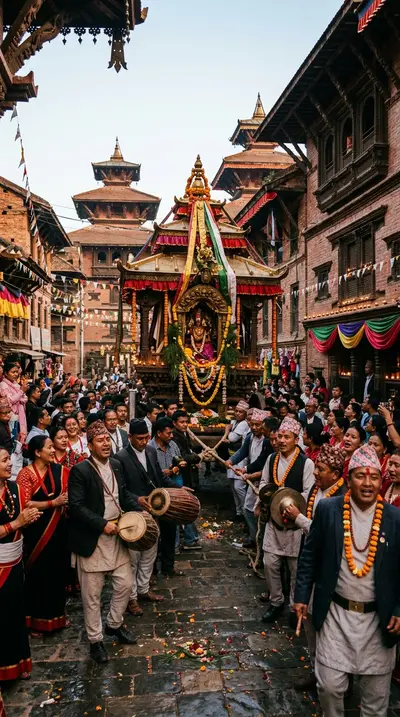
Indrayani Jatra is one of the traditional festivals that keeps the cultural streets of Kirtipur alive with religious devotion, music, chariot processions, and community participation. Held in the historic hill town southwest of Kathmandu, the festival is closely connected with Goddess Indrayani and the old Newar settlement that surrounds her sacred spaces. Kirtipur itself is known for its traditional brick houses, old temples, narrow lanes, and living Newari culture, making the festival much more than a single religious ceremony. Visitors who want to understand the character of the Kathmandu Valley can use the Kirtipur cultural guide and the Kathmandu Valley destination guide before visiting. Nepal Tourism Board also identifies Indrayani Jatra as one of Kirtipur's major traditional jatras, generally celebrated around November and December.
For visitors planning ahead, the current Nepali calendar listing places Kirtipur Indrayani Jatra on Wednesday, December 8, 2027. The festival itself is traditionally described as a multi-day celebration rather than an event that happens only for a few hours. Sources describing Kirtipur's observance explain that the decorated chariot travels through different locations, accompanied by traditional music and community participation, before returning toward the main temple area. Because the exact sequence and timings can be determined by local ritual schedules, travelers should avoid treating one online time as the complete program. A good starting point is the Nepal festival calendar, while the broader festival experiences in Nepal can help place Indrayani Jatra within the country's larger cultural calendar.
The Kirtipur celebration is commonly described as a three-day festival centered on the movement of Goddess Indrayani's chariot. On the opening day, the deity and chariot become the focus of a procession accompanied by traditional musicians and local participants. The chariot travels through parts of the old settlement, allowing different communities and neighborhoods to take part in the rituals. The following days continue the religious observance, with devotees visiting the deity and participating in worship before the chariot returns toward the main sacred area. This makes the festival closely connected to the physical layout of Kirtipur itself. Travelers exploring the Kirtipur heritage experience can therefore understand the procession as part of the town's living heritage rather than simply a parade.
The first day is when the festival atmosphere becomes especially visible in the streets. A decorated chariot carrying the representation of Goddess Indrayani is taken through the historic settlement, accompanied by traditional musical groups and local devotees. The movement is not simply a performance for spectators; it is part of the community's religious practice. Different neighborhoods become connected through the procession, and people gather along the route to observe, worship, and receive blessings. Visitors should understand that the best way to experience this day is by watching respectfully rather than trying to move into the center of the ritual. The Kirtipur city walk is useful for understanding the old streets, while the Kathmandu cultural heritage guide gives wider context about Newar traditions.
The second day continues the connection between Goddess Indrayani and the people of Kirtipur. The chariot and deity remain at the center of religious activity while devotees gather to offer prayers and receive blessings. Traditional music adds another layer to the experience, with drums and other instruments helping define the rhythm of the procession. For an outside visitor, this is one of the moments when the difference between a staged cultural show and a living festival becomes clear. The customs belong to local families and communities first. A visitor is present as a guest. Travelers interested in the Newari culture of Kathmandu Valley can also explore the traditional Nepali food experience to understand how food, community, religion, and hospitality often connect during cultural celebrations.
The final stage of the Kirtipur Indrayani Jatra brings the deity and chariot back toward the central sacred area. Descriptions of the festival note that the goddess and her chariot return to the main temple area near Bagh Bhairab Temple on the third day. This final movement is important because it reconnects the procession with the permanent sacred spaces of the town. Bagh Bhairab is itself one of Kirtipur's best-known temples and forms part of the historic religious landscape. Visitors can combine the festival with a quiet walk around the old town rather than trying to see everything only from the main crowd. The Kirtipur heritage walk and Kathmandu Valley guide are useful companions for that approach.
Goddess Indrayani is associated with the Astamatrika, or eight mother goddesses, a group of protective mother deities important in Newar religious traditions. In Kirtipur, Indrayani has a particularly strong relationship with the identity of the town. Heritage documentation describes the Indrayani shrine, also known as Indrayani Pith, at the edge of the historic settlement and identifies a second important sacred house within the Bagh Bhairab complex. The relationship between these places helps explain why the festival involves movement between different parts of the old town. To understand the wider spiritual landscape, travelers can read the spiritual journey in Nepal and explore the Kathmandu Valley heritage destination.
The location of Indrayani's shrine is important to understanding the festival. Heritage research identifies the Indrayani Pith at the northwestern edge of the historic Kirtipur settlement. The goddess is also connected with a sacred house, or Dyo Chhen, within the Bagh Bhairab Temple complex. This arrangement means that Indrayani is not represented by just one isolated temple. Instead, her presence is woven into the old town's religious geography. When the procession moves through Kirtipur, it connects these sacred spaces with ordinary residential streets, courtyards, and community areas. The Kirtipur walking guide helps visitors appreciate this relationship, while the Kathmandu destination page places Kirtipur within the larger valley heritage landscape.
One popular Kirtipur tradition connects Indrayani Jatra with a story about a demon who threatened the people of the town. According to a cultural account published by Republica, the community was believed to have suffered from a demon that demanded human sacrifices. The story says that when the turn came to an elderly couple, a prince who had received shelter from them offered to face the danger himself. In the traditional telling, the prince was actually Goddess Indrayani, who defeated the demon and freed the community from the threat. The festival is therefore remembered locally as a celebration of protection and victory, while also carrying a message about community connection. The Nepal festival calendar and Kirtipur cultural story offer useful context for exploring these traditions.
The history of the festival is also associated with ideas of brotherhood and community cooperation. Cultural expert Shree Krishna Maharjan told Republica that the festival was connected with relationships among seven different places around Kirtipur and that the celebration helped strengthen social bonds. Another cultural source describes the festival as part of the wider Nhegan or Satgaule Jatra tradition involving seven settlements. These accounts show that a jatra can work on several levels at the same time: religious worship, historical memory, neighborhood cooperation, and social identity. Visitors can learn more about this living community tradition through the Kirtipur heritage story and then explore the wider Nepal cultural calendar to see how many other festivals share similar community-centered structures.
Some cultural accounts describe Kirtipur Indrayani Jatra as part of a wider seven-place tradition. The settlements named in these accounts include Kirtipur, Panga, Nagaun, Satungal, Machhegaun, Joshi Gaun, and Lohokho. The exact way people describe the historical relationship can vary between sources, but the recurring idea is that the festival connects communities around the old Kirtipur area. This makes the event interesting for travelers who want to look beyond one temple and understand the wider cultural landscape. Instead of treating Kirtipur as an isolated attraction, you can use the Kathmandu Valley destination guide to understand its relationship with neighboring settlements, while the Kirtipur city walk gives a closer view of the historic town itself.
Kirtipur is one of the old Newar settlements of the Kathmandu Valley, and its cultural importance extends well beyond Indrayani Jatra. Nepal Tourism Board describes the town as an ancient Newar settlement with traditional brick houses, tiled roofs, temple squares, and a strong calendar of jatras. UNESCO's tentative-list documentation also recognizes the medieval settlement as important for Newar art, architecture, and history. This background makes Indrayani Jatra easier to understand because the festival takes place inside an already historic cultural environment. A traveler can spend time walking the old streets, visiting temples, tasting local food, and then experience the procession. The Kirtipur cultural walk and Kathmandu Valley heritage guide are especially relevant for planning this kind of visit.
One of the most enjoyable parts of visiting Indrayani Jatra is seeing how the festival interacts with traditional architecture. Kirtipur's historic streets contain red-brick houses, carved wooden windows, temple courtyards, shrines, rest houses, and narrow lanes shaped by centuries of urban life. UNESCO's documentation identifies several historic monuments in the medieval settlement, including Indrayani Pith, Bagh Bhairab Temple, Umamaheshvara Temple, and Buddhist monuments. During a jatra, these buildings are not simply background scenery. They become active parts of a living cultural setting. Visitors interested in architectural heritage can begin with the Kathmandu Valley places guide and then follow the Kirtipur hidden treasures walk through the old settlement.
Traditional music is one of the most recognizable elements of Indrayani Jatra. The chariot procession is accompanied by local musical groups, creating a rhythm that announces the movement of the deity through the streets. In Newar festivals, music is not merely entertainment. It can signal the beginning of a ritual, accompany movement between sacred places, and help communities participate together. Heritage documentation about Kirtipur specifically notes the close relationship between music, place, and lights during Indrayani processions. Visitors should therefore listen as much as they watch. The traditional food and culture experience can add another dimension to the visit, while the Kirtipur cultural walk helps explain how music fits into the town's streets.
Lights are another important part of the cultural atmosphere around the procession. Heritage research on Kirtipur explains that lamps are connected with processions and sacred gates, creating a relationship between music, light, movement, and place. For a visitor, this can make evening hours particularly memorable because the old brick streets and temple areas take on a different character when illuminated by traditional lamps and festival activity. Photography can be beautiful during this period, but travelers should remember that the lighting and rituals are primarily religious rather than staged for cameras. Before visiting, explore the Nepal festival calendar and the Kirtipur city guide so you can understand what you are seeing rather than simply photographing it.
A major reason Indrayani Jatra remains meaningful is the participation of local communities. Republica reports that people from different areas and several Newar social groups have specific responsibilities connected with the festival. This reflects the wider role of traditional community organizations and Guthis in Kathmandu Valley festivals. Rather than one institution doing everything, many people contribute different skills, responsibilities, and forms of service. That structure helps explain why the festival feels deeply local. Visitors can watch, learn, and respectfully participate where appropriate, but the event remains community-owned. The Kathmandu cultural destination guide provides broader context, while the Kirtipur heritage walk gives a more focused look at the community behind the old town.
Food is naturally part of festival life in Kirtipur. Nepal Tourism Board highlights the town's Newari eateries and traditional cuisine, while local festival descriptions also mention Newari food as part of the Indrayani Jatra atmosphere. Visitors may encounter dishes associated with the wider Newar culinary tradition, such as samay baji, bara, choila, yomari, beaten rice, pickles, and traditional drinks, depending on the household or restaurant. Food should be approached as part of cultural learning rather than simply a list of dishes to try. The traditional Nepali culinary tour is particularly relevant for visitors interested in food heritage, and the Kathmandu food and culture destination gives a wider introduction to Valley cuisine.
Samay baji is one of the best-known traditional Newari food sets and is often associated with celebrations, gatherings, and special occasions. It can include beaten rice, black soybeans, spicy meat or other protein dishes, pickles, bara, boiled egg, and other seasonal or locally prepared foods. The exact combination varies between households and occasions. During a festival such as Indrayani Jatra, food becomes part of the social side of the celebration, bringing families and visitors together after religious activities. Travelers who want to understand this side of Kirtipur can explore the Nepali culinary experience and combine it with a Kirtipur heritage walk. This approach makes the festival feel like a complete cultural experience rather than only a procession.
Bagh Bhairab Temple is one of Kirtipur's most important religious landmarks and has a close connection with Indrayani traditions. Heritage documentation notes that the Indrayani Dyo Chhen, or sacred house, is located within the Bagh Bhairab complex. The final stage of the Kirtipur procession is also associated with returning the goddess toward this area. This connection makes Bagh Bhairab an important stop for anyone visiting during the festival. Rather than rushing from one procession point to another, visitors can spend time understanding the temple complex and its place in Kirtipur's history. The Kirtipur walking route and Kathmandu Valley heritage page can help build a wider cultural itinerary around the festival.
Indrayani Jatra is a particularly good reason to explore Kirtipur on foot. The town's historic character becomes easier to appreciate when you move slowly through its narrow lanes rather than viewing it only from a vehicle. You can notice carved windows, old courtyards, shrines, traditional houses, small temples, and everyday community life. Nepal Tourism Board describes Kirtipur as a hill town with traditional Newari buildings and several important temples, while recent cultural writing on Enticing Himalayas presents it as a living Newari town rather than a museum. Start with the Kirtipur city walk and connect it with the broader Kathmandu Valley travel guide for a fuller day of cultural exploration.
A visit to Kirtipur can include several nearby cultural and natural places. Nepal Tourism Board mentions Chilamchu Stupa, Bagh Bhairab Temple, Adinath Temple, Lohan Dega, Manjushree Park, Chobhar Gorge, and Taudaha Lake among the area's attractions. This makes the festival useful as the center of a broader cultural day rather than an isolated event. If the procession schedule allows, travelers can walk through the old town first, observe the festival, and then explore another nearby heritage or nature site. The Kathmandu Valley destination page is useful for understanding the larger region, while the Kirtipur heritage walk focuses more closely on the historic settlement itself.
Kirtipur's Indrayani Jatra is part of a much larger culture of jatra festivals across the Kathmandu Valley. Each town has its own deities, routes, musical traditions, ritual responsibilities, and community histories. Kathmandu has Indra Jatra, Bhaktapur has Bisket Jatra, Patan has its own major processions, and many smaller communities maintain festivals that receive less international attention. Comparing these celebrations helps visitors understand that Newari culture is not one single tradition. The Indra Jatra event guide shows one of Kathmandu's major examples, while the Nepal festival calendar provides a broader view of the country's year-round cultural celebrations.
The names can cause confusion, especially for international travelers. Indrayani Jatra in Kirtipur is centered on Goddess Indrayani and the local traditions of Kirtipur, while Indra Jatra in Kathmandu is a separate major festival associated with Lord Indra, Kumari, chariot processions, masked dances, and other Kathmandu traditions. Both belong to the rich Newar festival culture of the Kathmandu Valley, but they should not be treated as the same event. Travelers interested in the distinction can read the Indra Jatra Kathmandu guide and then compare it with the Kirtipur heritage story. This makes the differences in deity, location, ritual structure, and local history easier to understand.
The current 2027 calendar listing places Kirtipur Indrayani Jatra on December 8, placing the celebration in the cooler part of Nepal's year. Winter in the Kathmandu Valley can bring crisp mornings and evenings, while daytime conditions are often comfortable for walking. Because the festival is connected to lunar dates and local ritual scheduling, travelers should still confirm the final program before arriving. The Nepal festival calendar is a useful place to monitor cultural events, while the Kathmandu Valley destination guide can help with planning additional heritage visits around Kirtipur. The festival's winter timing also makes warm layers, comfortable shoes, and patience for crowded streets practical choices for visitors.
The easiest way to enjoy Indrayani Jatra is to remember that it is first a religious community festival, not a tourist performance. Wear respectful clothing, keep a reasonable distance from the chariot and ritual participants, and follow instructions from local organizers. If a temple or ritual area appears restricted, do not enter simply because other visitors are nearby. Photography should also be handled carefully. A good photograph is never more important than someone's religious practice or privacy. Travelers who enjoy cultural experiences can combine the Kirtipur heritage walk with a traditional Nepali food experience, creating a slower visit that focuses on learning rather than simply collecting photographs.
Indrayani Jatra offers many interesting photographic subjects, including the decorated chariot, traditional musicians, old brick houses, lamps, temple architecture, and crowds moving through narrow streets. However, festival photography requires awareness. Avoid blocking the procession route, standing directly in front of worshippers, or entering restricted areas for a better angle. Ask before taking close portraits, particularly during private religious moments. The Kirtipur city walk can help you identify architectural details before the festival becomes crowded, while the Kathmandu Valley guide provides ideas for other cultural photography locations. The best festival photographs often come from observing patiently and allowing the ceremony to happen naturally rather than trying to control the scene.
Visitors do not need special costumes to attend Indrayani Jatra, but comfortable and respectful clothing is recommended. Kirtipur involves walking through narrow historic streets, standing for periods, and sometimes moving with a crowd, so practical footwear is more useful than fashionable shoes. A light jacket is helpful during the December evening, while modest clothing is appropriate around temples and religious spaces. If you plan to continue into other parts of the valley, you can use the Kathmandu travel guide to plan the rest of the day. Travelers interested in a more immersive cultural experience can also look at the Nepali culinary tour, where traditional food and heritage are experienced together.
A small backpack is usually enough for a festival visit. Carry drinking water, a phone or camera, a light jacket, comfortable walking shoes, and any personal medication you may need. Avoid bringing large bags because crowded lanes can make them uncomfortable. A portable power bank can also be useful if you plan to photograph or navigate for several hours. Since festival routes can change or become busy, keep your belongings secure and stay aware of your surroundings. The Kirtipur walking experience gives a good idea of the walking environment, while the Kathmandu Valley destination guide can help you prepare for a wider cultural day across the valley.
Kirtipur lies southwest of central Kathmandu and is accessible by road, making it practical for a cultural day trip. Nepal Tourism Board describes the town as approximately 30 minutes from Kathmandu under normal conditions, although actual travel time depends heavily on traffic and the starting point. During a major festival, roads around the procession can become slower or restricted, so leaving extra time is sensible. Once in Kirtipur, walking is often the best way to understand the historic center. You can plan the route with the Kirtipur heritage walk and use the Kathmandu Valley destination page for wider transport and sightseeing context.
Most visitors do not need to move accommodation specifically for Indrayani Jatra. Staying in Kathmandu provides access to Kirtipur as well as many other cultural sites in the valley. If you are visiting for several days, you can combine the Kirtipur festival with Kathmandu Durbar Square, Swayambhunath, Boudhanath, Pashupatinath, or Patan depending on the rest of your schedule. The Kathmandu Valley destination guide provides a useful overview of these cultural sites, while the spiritual Nepal itinerary shows how cultural and religious destinations can be combined into a longer journey. Indrayani Jatra can therefore become one part of a broader Kathmandu Valley cultural experience.
One of the easiest ways to make the visit more meaningful is to combine the festival with local food. Kirtipur's Newari identity is visible not only in temples and processions but also in its food traditions. After spending time around the festival, visitors can look for traditional eateries and try local dishes where available. Nepal Tourism Board specifically highlights Newari cuisine as part of the Kirtipur experience. The traditional Nepali culinary experience provides a deeper introduction to the food culture, while the Kirtipur city walk provides the heritage side of the same experience. Together, they show how religion, architecture, food, and community are closely connected in Newar life.
Travelers with more than one day can build a wider heritage itinerary around Indrayani Jatra. A morning can begin in Kirtipur with a walk through the historic settlement, followed by time around the festival procession. Another day can focus on Kathmandu Durbar Square and the cultural traditions connected with Indra Jatra, while Patan and Bhaktapur provide different expressions of Newar architecture and ritual. The Kathmandu Valley destination guide is the natural starting point, while the Indra Jatra festival page provides a useful comparison with Kathmandu's own major jatra tradition. This type of itinerary gives visitors a much broader picture than seeing only one festival procession.
The importance of Indrayani Jatra lies partly in the fact that the festival remains connected to the people and places of Kirtipur. The chariot travels through real residential streets, local families participate, musicians perform traditional music, and religious spaces continue to serve their original cultural roles. This is what makes a living heritage festival different from a museum display. UNESCO's documentation of Kirtipur emphasizes the settlement's surviving medieval character and its significance for Newar art and architecture. Visitors can explore that heritage through the Kirtipur cultural walk and then place it within the wider Nepal cultural calendar.
The word jatra is commonly used for traditional processions and festivals in Nepal, especially in the Kathmandu Valley. But a jatra can involve much more than moving a deity through the streets. It may bring together worship, music, food, community responsibility, oral history, social relationships, and the physical heritage of an old town. Indrayani Jatra demonstrates this layered character particularly well. The festival connects a goddess, sacred spaces, neighborhoods, musicians, families, and historic routes. The Nepal festival calendar allows visitors to compare this with other festivals, while the Kathmandu Valley guide explains the broader environment in which these traditions continue.
Every generation experiences traditional festivals slightly differently, yet the basic structure can continue through community participation. Indrayani Jatra provides an example of how religious traditions, local stories, old buildings, music, and social responsibilities can remain connected even as Kirtipur changes around them. Heritage research notes the role of local groups and sacred places in maintaining the festival environment. That continuity is especially visible when modern life continues alongside old rituals. Visitors can explore this contrast through the Kirtipur hidden-treasures guide and then compare it with the larger spiritual traditions of Nepal.
Kirtipur offers a different experience from the busiest tourist areas of Kathmandu because its historic character is still embedded in everyday community life. During Indrayani Jatra, that character becomes especially visible through the procession, music, religious activity, and gatherings. Travelers who enjoy history, architecture, photography, food, and cultural observation can find several layers to explore without needing an elaborate itinerary. The Kirtipur heritage walk is useful before attending the festival, while the Kathmandu Valley destination page can help connect the experience with other nearby cultural sites. The result is a visit that feels less like ticking off attractions and more like spending time inside a living historic town.
Responsible festival travel begins with a simple idea: observe first, participate carefully, and respect local ownership of the tradition. Visitors should not assume that every ritual is open to everyone or that every moment can be photographed. Follow barriers, listen to local organizers, avoid touching sacred objects, and give processions enough space to move safely. Supporting local food businesses and guides can also contribute to the visitor economy without changing the character of the festival. The Kirtipur cultural experience can help visitors learn before arriving, while the Enticing Himalayas Nepal travel site provides a broader starting point for planning culturally respectful journeys around Nepal.
Indrayani Jatra brings together religion, history, community, architecture, music, food, and living Newari heritage in a way that is deeply connected to Kirtipur itself. The current 2027 calendar listing gives December 8 as the festival date, while descriptions of the local celebration show a three-day structure around the goddess's chariot and sacred places. For travelers, the most meaningful approach is not to treat the event as a spectacle but to walk slowly, observe respectfully, learn the story, and appreciate the community that keeps the tradition alive. Begin with the Kirtipur heritage story, explore the Kathmandu Valley culture, and use the Nepal festival calendar when planning the wider journey.
Key experiences and features
Kirtipur
Indrayani Jatra Kirtipur
Three-day festival
Bagh Bhairab Temple
Astamatrika
Indrayani Pith
Lohokho
Umamaheshvara Temple
Buddhist monuments
Samay baji, bara, choila, yomari
Recommended packing list
Kirtipur, Kathmandu, Bagmati, Nepal
Got questions about this event?
It is traditionally observed around November or December. The 2027 calendar listing places Kirtipur Indrayani Jatra on December 8.
The festival takes place around historic Kirtipur, with the Indrayani temple and surrounding traditional settlements forming important parts of the celebration.
Visitors can experience a decorated deity chariot, traditional music, processions, community gatherings, and Newari cultural traditions.
Yes. The festival is generally accessible to families, although crowded procession areas require additional care with young children.
Photography may be possible in public areas, but visitors should ask permission before photographing private rituals, worshippers, or restricted ceremonies.
Aug 27, 2027
1 day
Quick Info
More festival experiences
Nov 8 – Nov 8, 2026Kathamandu
 Aug 17 – Sep 16, 2027
Godavari Kunda
 Jan 15 – Jan 16, 2027
Swayambhu Bhuikhhel