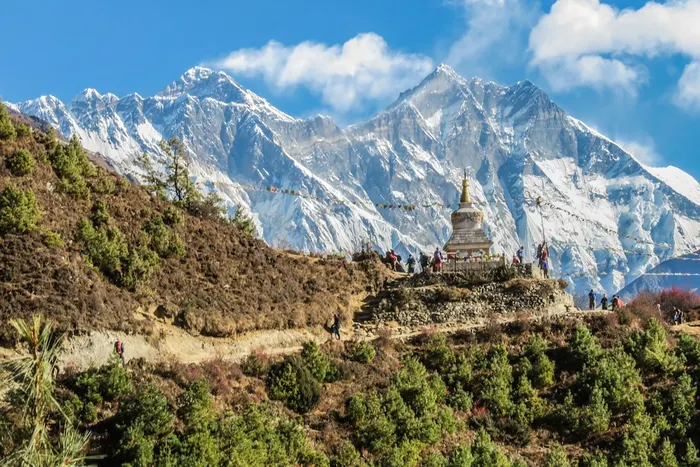
Annapurna Region Complete Trekking Guide 2026/27: Routes, Permits, Seasons and Itineraries
The Annapurna region is the most trekked mountain range in Nepal, and for good reason. It packs an extraordinary diversity of landscapes into a compact area: from subtropical rhododendron forests at 1,000 metres to the Thorong La pass at 5,416 metres, from terraced rice fields to the deepest gorge on earth. Whether you have four days or four weeks, the Annapurnas have a trail that fits your calendar, fitness level and budget.
This guide covers every major Annapurna trekking route for the 2026/27 season, with honest difficulty ratings, permit requirements, teahouse expectations, and day-by-day itinerary outlines. If you are planning your first Himalayan trek or your fifth, start here.
Why the Annapurna Region?
The Annapurna Conservation Area (ACA) spans 7,629 square kilometres and contains some of the most accessible high-altitude trekking on the planet. Unlike the Everest region, which requires a flight to Lukla, the Annapurna trailheads start from Pokhara, a lakeside city with an international airport, excellent hotels and direct bus connections from Kathmandu. You can be on the trail within hours of landing.
The region is also culturally rich. The lower valleys are home to Gurung and Magar communities whose stone villages, terraced farms and warm hospitality define the trekking experience. Higher up, Tibetan Buddhist influences appear in mani walls, prayer flags and ancient monasteries. The Annapurnas are not just a physical journey; they are a walk through living cultures that have shaped these mountains for centuries.
For a deeper look at Nepal's cultural and spiritual heritage beyond the trail, read our complete guide to cultural and spiritual tours in Nepal. And if you are still deciding which trekking agency to trust with your Annapurna adventure, our guide to choosing the best trekking agency in Nepal walks you through what to look for.
All Annapurna Trekking Routes at a Glance
| Route | Days | Max Altitude | Difficulty | Best Season |
|---|---|---|---|---|
| Ghorepani Poon Hill | 4-5 | 3,210 m | Easy | Mar-May, Oct-Nov |
| Mardi Himal | 5-7 | 4,500 m | Moderate | Mar-May, Oct-Nov |
| Khopra Ridge | 7-9 | 3,660 m | Moderate | Mar-May, Oct-Nov |
| Annapurna Base Camp (ABC) | 7-12 | 4,130 m | Moderate | Mar-May, Oct-Nov |
| Annapurna Circuit | 12-21 | 5,416 m | Challenging | Mar-May, Oct-Nov |
| Annapurna Circuit with Tilicho Lake | 13-18 | 5,416 m | Challenging | Apr-May, Oct-Nov |
| Panchase Panorama | 3-4 | 2,500 m | Easy | Year-round |
Ghorepani Poon Hill Trek (4-5 Days)
The Ghorepani Poon Hill trek is the classic short Annapurna trek and the best introduction to Himalayan trekking for first-timers. The highlight is sunrise from Poon Hill (3,210 m), where the entire Annapurna and Dhaulagiri massifs ignite in alpenglow. The trail winds through oak and rhododendron forests that explode in red and pink during the March-April bloom.
Day-by-day outline: Day 1: Drive Pokhara to Nayapul, trek to Tikhedhunga (1,540 m). Day 2: Steep stone staircase to Ulleri, then through forest to Ghorepani (2,860 m). Day 3: Pre-dawn climb to Poon Hill for sunrise, then trek to Tadapani (2,630 m). Day 4: Descend through forest to Ghandruk, a beautiful Gurung village, then to Nayapul and drive back to Pokhara.
This trek requires no prior experience and minimal fitness. The stone staircase on day two is the hardest section; take it slowly and it is entirely manageable. Teahouses are plentiful and comfortable, with hot showers and varied menus.
Mardi Himal Trek (5-7 Days)
Mardi Himal is the Annapurna region's best-kept secret. The trail climbs a narrow ridge to Mardi Himal Base Camp (4,500 m), with Machapuchare (Fishtail) looming so close you feel you could touch it. Unlike the busier ABC and Circuit routes, Mardi Himal sees far fewer trekkers, giving it a wild, exploratory feel.
The route starts from Kande or Phedi near Pokhara and follows a ridge through forest, then opens into alpine meadows above the treeline. The final push to Upper Viewpoint delivers a 360-degree panorama of Annapurna South, Hiunchuli, Machapuchare and Mardi Himal itself. Five to seven days is comfortable; fit trekkers can do it in four.
Khopra Ridge Trek (7-9 Days)
The Khopra Ridge trek is the quieter alternative to Ghorepani, offering equally spectacular views with a fraction of the foot traffic. The ridge sits at 3,660 metres and faces Dhaulagiri, the world's seventh-highest mountain, across the Kali Gandaki gorge. A side trip to Khayer Lake (4,600 m), a sacred high-altitude lake, adds a day and serious altitude gain.
Khopra is community-run, meaning your teahouse fees directly support local schools and health posts. The trail passes through Magar and Gurung villages that see very few foreign visitors, making it one of the most authentic cultural experiences in the Annapurnas.
Annapurna Base Camp Trek (7-12 Days)
The Annapurna Base Camp trek is the crown jewel of the region. The trail follows the Modi Khola valley deep into the Annapurna Sanctuary, a natural amphitheatre ringed by Annapurna I (8,091 m), Annapurna South, Hiunchuli, Machapuchare and Gangapurna. Standing at ABC (4,130 m) at sunrise, surrounded by 7,000 and 8,000-metre peaks on all sides, is one of the most humbling experiences in trekking.
Standard 10-day itinerary: Day 1: Drive Pokhara to Nayapul, trek to Ghandruk (1,940 m). Day 2: Ghandruk to Chhomrong (2,170 m). Day 3: Chhomrong to Bamboo (2,310 m). Day 4: Bamboo to Deurali (3,230 m). Day 5: Deurali to Annapurna Base Camp via Machapuchare Base Camp (4,130 m). Day 6: Sunrise at ABC, descend to Bamboo. Day 7: Bamboo to Jhinu Danda (hot springs). Day 8: Jhinu to Nayapul, drive to Pokhara. A 7-day express version skips the Ghandruk detour; a 12-day version adds rest days and side hikes.
ABC is rated moderate. The altitude gain is gradual, the trail is well-maintained, and teahouses are spaced at comfortable intervals. The only challenging day is the push from Deurali to ABC, which gains 900 metres. Trekkers with reasonable fitness and no prior altitude experience complete it successfully every season.
Annapurna Circuit Trek (12-21 Days)
The Annapurna Circuit with Tilicho Lake is one of the world's great long-distance treks. It circumnavigates the entire Annapurna massif, crossing the Thorong La pass (5,416 m) and passing through dramatically different climate zones: subtropical lowlands, temperate forests, alpine meadows and the arid Trans-Himalayan rain shadow of Upper Mustang.
Classic 15-day outline: Days 1-3: Drive Besi Sahar to Chame (2,670 m), trekking through Marsyangdi valley. Days 4-6: Chame to Manang (3,540 m), with acclimatisation day in Manang. Days 7-8: Manang to Thorong Phedi/High Camp. Day 9: Cross Thorong La (5,416 m), descend to Muktinath (3,800 m). Days 10-12: Muktinath to Jomsom, then to Tatopani (hot springs). Days 13-15: Tatopani to Ghorepani, Poon Hill sunrise, descend to Nayapul, drive Pokhara.
The Circuit is rated challenging due to the altitude and the length of the Thorong La crossing day. Proper acclimatisation is essential. The side trip to Tilicho Lake (4,919 m), one of the highest lakes in the world, adds two to three days and is worth every step.
Road construction has shortened the classic Circuit in recent years; the lower Marsyangdi sections now have jeep tracks. Purists can still walk the full route by taking the alternative trails on the opposite side of the river, and the upper sections from Chame onward remain pristine foot trail.
Panchase Panorama Trek (3-4 Days)
Panchase is the Annapurna region's shortest trek and the best option for travellers with very limited time. The trail climbs to Panchase Hill (2,500 m) through forests and small villages, with views of the Annapurna range, Dhaulagiri and Machapuchare. It starts and ends near Pokhara, making it a perfect add-on to a Pokhara stay. Three days is comfortable; fit walkers can do it in two.
Best Time to Trek the Annapurnas
The Annapurna region has two primary trekking seasons and two shoulder seasons. For a detailed month-by-month breakdown across all of Nepal, see our month-by-month Nepal trekking guide.
October-November (peak season): The post-monsoon window delivers crystal-clear skies, stable weather and comfortable daytime temperatures (10-20 degrees C at 3,000 m). Trails are busiest, especially on the Ghorepani and ABC routes. Book teahouses and guides early.
March-May (spring season): Warmer temperatures, longer daylight hours and the famous rhododendron bloom make spring the second-best window. The lower forests are a riot of colour. Afternoon cloud build-up is more common than in autumn, but mornings are generally clear.
December-February (winter): Cold but viable on lower routes like Ghorepani and Panchase. ABC and the Circuit are possible with proper gear, but Thorong La may close after heavy snow. Teahouses at higher elevations may shut for the season; check ahead.
June-September (monsoon): The Annapurna region lies partly in the rain shadow of the main range, so the Circuit's northern side (Manang, Mustang) stays relatively dry. The southern approaches (Ghorepani, ABC) get heavy rain and leeches. The rain-shadow section of the Circuit is one of the few monsoon trekking options in Nepal.
Permits for the Annapurna Region
Every Annapurna trek requires two permits: the Annapurna Conservation Area Permit (ACAP) and the Trekkers' Information Management System (TIMS) card. For a complete breakdown of all Nepal trekking permits including restricted area fees, read our Nepal trekking permits and TIMS guide.
ACAP: NPR 3,000 for foreign nationals, NPR 1,000 for SAARC nationals. Obtainable at the Nepal Tourism Board office in Kathmandu or Pokhara, or at the ACAP checkpost in Besi Sahar. Carry your passport and two passport photos.
TIMS: NPR 2,000 for individual trekkers, NPR 1,000 for group trekkers (through a registered agency). If you book through a registered trekking agency in Nepal, your TIMS card is included in the package and handled for you.
Both permits are checked at multiple points along every Annapurna route. Keep them accessible in a waterproof pouch. Fines for trekking without permits are steep, and you will be turned back at checkpoints.
Teahouses and Accommodation
Annapurna teahouses are among the best in Nepal. Most offer private rooms (twin beds, foam mattress, blanket), a communal dining hall with a wood-burning stove, and a menu covering dal bhat, noodles, soups, fried rice, pancakes and hot drinks. Hot showers cost NPR 200-500 extra. Wi-Fi is available at most lodges for a small fee, though it becomes unreliable above 3,500 metres. For a detailed comparison of teahouse versus camping trekking, see our teahouse vs camping trekking guide.
On the busier routes (Ghorepani, ABC), teahouses fill up during peak season. Your guide will call ahead to reserve rooms. On quieter routes like Khopra and Mardi Himal, availability is rarely an issue. Bring a sleeping bag rated to -10 degrees C for treks above 3,500 metres; teahouse blankets are warm but not always sufficient at altitude.
Difficulty and Fitness: Which Route Is Right for You?
Choosing the right Annapurna trek is the single most important decision you will make. Pick a route that is too hard and you risk altitude sickness, injury or a miserable experience. Pick one that is too easy and you may feel underwhelmed. Our guide to choosing a trek in Nepal walks through the decision framework in detail.
If you have never trekked before: Start with Ghorepani Poon Hill (4-5 days) or Panchase (3-4 days). These routes have low maximum altitudes, short daily walking distances (4-6 hours) and comfortable teahouses. No prior training is required beyond basic walking fitness.
If you are reasonably fit but new to altitude: Annapurna Base Camp (7-10 days) is the ideal step up. The altitude gain is gradual, the trail is never technical, and the Sanctuary payoff is world-class. A few weeks of stair climbing and weekend hikes before departure will make the experience much more enjoyable.
If you have trekking experience and want a challenge: The Annapurna Circuit (12-18 days) is your trek. The Thorong La crossing is a genuine physical test, and the landscape variety from subtropical to high desert is unmatched. Train with loaded daypacks and include hill repeats in your preparation.
If you want solitude: Khopra Ridge and Mardi Himal see a fraction of the traffic of ABC and Ghorepani. Both offer spectacular views and authentic village experiences without the crowds.
For trekkers with specific needs, our guide to the best treks for beginners, families and solo women covers route recommendations tailored to different traveller profiles.
Altitude Safety on Annapurna Treks
Altitude sickness is the number one preventable risk on Annapurna treks. The Thorong La pass (5,416 m) and Annapurna Base Camp (4,130 m) are both high enough to cause Acute Mountain Sickness (AMS) if you ascend too quickly. Symptoms include headache, nausea, dizziness and loss of appetite. The only treatment is descent.
Every Annapurna itinerary includes acclimatisation days. On the Circuit, you spend two nights in Manang (3,540 m) with a day hike to higher elevation before the Thorong La push. On ABC, the gradual ascent through the Modi Khola valley provides natural acclimatisation. Follow the rule of thumb: above 3,000 metres, do not increase your sleeping altitude by more than 500 metres per day, and take a rest day every 1,000 metres of gain.
For a comprehensive guide to altitude sickness prevention and treatment on Nepal's high treks, read our altitude sickness prevention guide for Everest and Annapurna treks.
Cost and Budget
Annapurna trekking costs vary widely depending on whether you go independent or guided. A rough breakdown for the 2026/27 season:
Independent trekker (budget): USD 20-30 per day on the trail, covering teahouse accommodation (USD 3-8/night), meals (USD 5-10/meal), permits (USD 40 total) and transport to/from Pokhara. A 7-day ABC trek independently costs roughly USD 300-400 all-in.
Guided trek through an agency: USD 600-1,500 for a 7-10 day trek, including guide, porter, permits, accommodation, meals and transport. The premium over independent trekking buys you route knowledge, safety backup, cultural interpretation and logistical peace of mind. For a detailed cost comparison, see our trek planning guide.
Getting There: Pokhara as Your Gateway
Pokhara is the launchpad for every Annapurna trek. From Kathmandu, you have three options: a 25-minute flight (USD 120-150, multiple daily departures), a tourist bus (6-8 hours, USD 10-15), or a private jeep (5-6 hours, USD 120-150). The new Pokhara International Airport now handles direct international flights from select cities, though most travellers still connect through Kathmandu.
From Pokhara, most trailheads (Nayapul, Phedi, Kande) are a 1-2 hour drive. The Circuit's eastern trailhead at Besi Sahar is a 4-5 hour drive from Pokhara or a direct bus from Kathmandu.
Plan Your Annapurna Trek
The Annapurna region rewards every kind of trekker. Whether you want a four-day sunrise walk to Poon Hill or a three-week circuit crossing a 5,416-metre pass, the trails are ready, the teahouses are open and the mountains are waiting. The key is choosing the right route for your fitness, season and appetite for adventure.
Browse our full range of Nepal trekking and tour packages to find your Annapurna adventure, or explore our cultural and spiritual tours guide to combine your trek with Nepal's rich heritage.



Our Services
About the Author
Enticing Himalayas is a registered trekking and tour operator based in Kathmandu, Nepal, licensed by the Nepal Tourism Board and the Ministry of Tourism. Our team of local guides, porters and travel planners has decades of combined experience on every major Annapurna route. We design every itinerary with safety, sustainability and authentic cultural connection at its core.
Why Trust This Guide?
This Annapurna region guide is built from firsthand trail knowledge, updated for the 2026/27 season. Every route description, permit fee and teahouse detail has been verified by our guides who walk these trails every season. We do not publish information we have not personally confirmed on the ground.
Frequently Asked Questions
Do I need a guide for Annapurna treks?
Independent trekking is permitted on all major Annapurna routes (Ghorepani, ABC, Circuit, Mardi, Khopra). However, a licensed guide adds significant value: route finding in poor weather, teahouse reservations during peak season, cultural interpretation, and emergency response. For first-time trekkers or those unfamiliar with altitude, a guide is strongly recommended. All guides arranged through Enticing Himalayas are government-licensed and trained in wilderness first aid.
What is the hardest Annapurna trek?
The Annapurna Circuit with Tilicho Lake is the hardest standard route, combining the Thorong La pass (5,416 m) with the steep side trail to Tilicho Lake (4,919 m). The total elevation gain exceeds 8,000 metres over 15-18 days. The Thorong La crossing day alone involves 8-10 hours of walking, starting before dawn. Trekkers should have prior high-altitude experience and excellent cardiovascular fitness before attempting this route.
Can I trek Annapurna in the monsoon?
Yes, but only the northern side of the Annapurna Circuit (Manang to Muktinath) is viable. This section lies in the Trans-Himalayan rain shadow and receives minimal rainfall from June to September. The southern routes (Ghorepani, ABC, Mardi, Khopra) experience heavy rain, leeches and obscured mountain views during monsoon. If you must trek in monsoon, the Circuit's rain-shadow section is your best option.
How much does an Annapurna trek cost?
Independent budget trekkers spend USD 20-30 per day on the trail. A 7-day ABC trek independently costs roughly USD 300-400 including permits and transport. Guided packages through a registered agency range from USD 600-1,500 depending on route length, group size and inclusions. All Enticing Himalayas packages include guide, porter, permits, accommodation, meals on the trail and transport to/from Pokhara.
What fitness level do I need for Annapurna Base Camp?
ABC requires moderate fitness. You should be comfortable walking 5-7 hours per day on uneven terrain with a daypack (5-8 kg). The altitude gain is gradual, and no technical climbing skills are needed. A preparation programme of 4-6 weeks including stair climbing, hill walks and cardiovascular exercise (running, cycling, swimming) is sufficient for most people. If you can comfortably walk 15 km on hilly terrain, you are ready for ABC.
Is altitude sickness a risk on Annapurna treks?
Yes. Any trek above 3,000 metres carries altitude sickness risk. On Annapurna routes, the risk is highest on the Circuit (Thorong La at 5,416 m) and moderate on ABC (4,130 m). Ghorepani Poon Hill (3,210 m) and Panchase (2,500 m) are below the threshold where serious AMS typically occurs. Proper acclimatisation, slow ascent and hydration reduce risk dramatically. Every Enticing Himalayas guide carries a pulse oximeter and is trained to recognise AMS symptoms early.