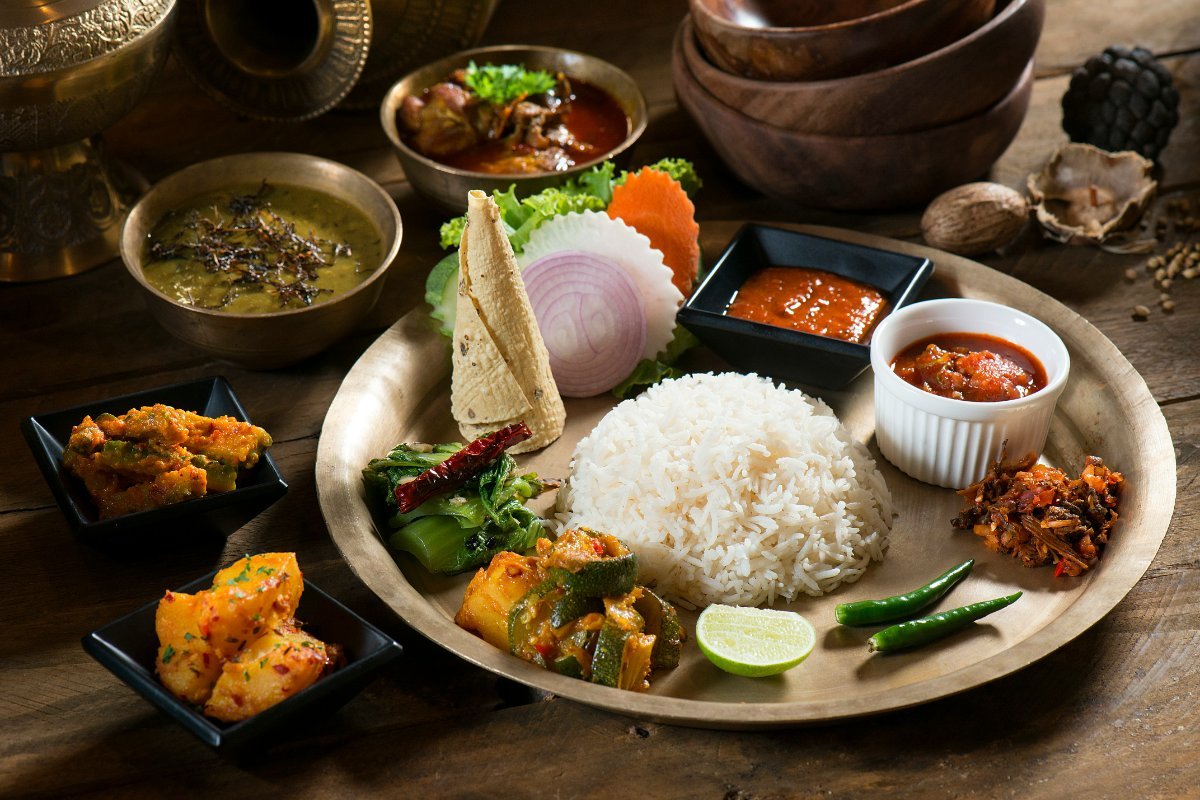
Nepal is a country where the landscape shapes the plate. From the fertile Terai plains in the south to the high Himalayan valleys in the north, every region has developed its own distinct food traditions over centuries. A traditional Nepali culinary and food tour is not merely about eating well. It is about understanding a nation through its flavors, its ingredients, and the rituals that surround the table. In 2026, as Nepal continues to open its doors to cultural travelers, food tourism has emerged as one of the most authentic ways to experience the country beyond its trekking trails and temple circuits.
Whether you are sampling a steaming plate of dal bhat in a Kathmandu teahouse, sharing a Newari feast in Bhaktapur, or learning to fold momos in a family kitchen, every meal tells a story of geography, seasonality, and community. This guide walks you through everything you need to plan a food-focused journey in Nepal: the regional cuisines, the must-try dishes, where to eat, how to book a guided culinary experience, and how to combine your food tour with Nepal's rich cultural and spiritual heritage.
Why Nepal Is a Hidden Gem for Food Lovers
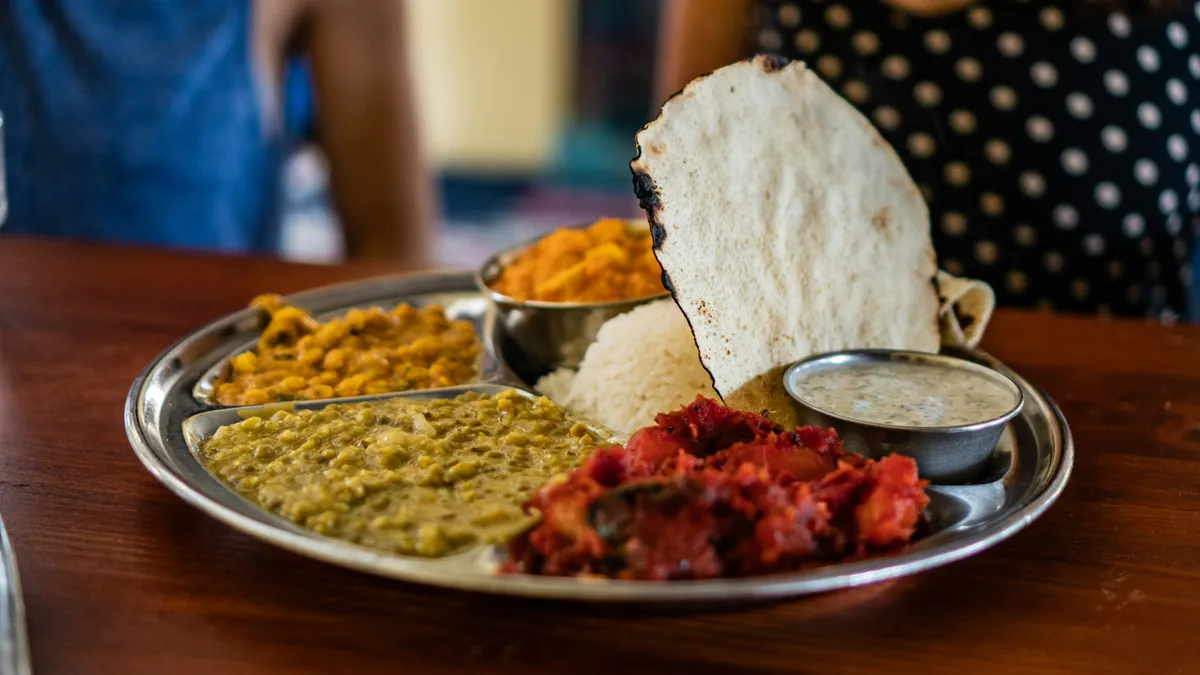
Most travelers associate Nepal with mountains and monasteries, but the country's culinary tradition is equally remarkable and far less explored. Nepal sits at the crossroads of two great culinary civilizations: the spice-driven kitchens of the Indian subcontinent and the noodle-and-dumpling culture of Tibet and China. Over centuries, these influences merged with indigenous ingredients and cooking techniques to produce something entirely unique.
The result is a cuisine that is hearty, aromatic, and deeply tied to the land. Nepali food relies on fresh, seasonal ingredients rather than complex preparations. Mustard oil is the primary cooking medium in the hills, giving many dishes a distinctive pungent warmth. Timur, the Nepali pepper also known as Sichuan pepper, adds a citrusy tingle to pickles and meat dishes. Fermented vegetables, dried fish, and preserved meats reflect the need to sustain families through long mountain winters. Every bite carries the imprint of altitude, soil, and season.
A cultural and spiritual tour in Nepal naturally intersects with food at every turn. Temple offerings include prasad, sacred food distributed to devotees. Festivals are defined by their special dishes, from sel roti during Dashain to yomari in the winter solstice. Monasteries serve butter tea and tsampa to visitors. By following the food trail, you also follow the spiritual and cultural pulse of the country.


The Regional Cuisines of Nepal
Nepal's food landscape divides broadly into five regional traditions, each shaped by its climate, ethnicity, and trade history. Understanding these regions helps you plan a culinary tour that covers the full spectrum of Nepali cooking.
The Hills and Kathmandu Valley: Newari and Brahmin-Chhetri Traditions
The Kathmandu Valley is the epicenter of Nepali food culture. The indigenous Newar people, who have inhabited the valley for over two millennia, developed one of the most sophisticated culinary traditions in the Himalayas. Newari food is famous for its elaborate feasts called bhoj, which can include dozens of dishes served in a specific order on a leaf plate called a bvap. The star of the Newari table is chatamari, a rice-flour crepe topped with minced meat or egg, often called Nepali pizza. Another staple is choila, grilled and spiced water buffalo meat that is punched tender and marinated in mustard oil, garlic, and timur.
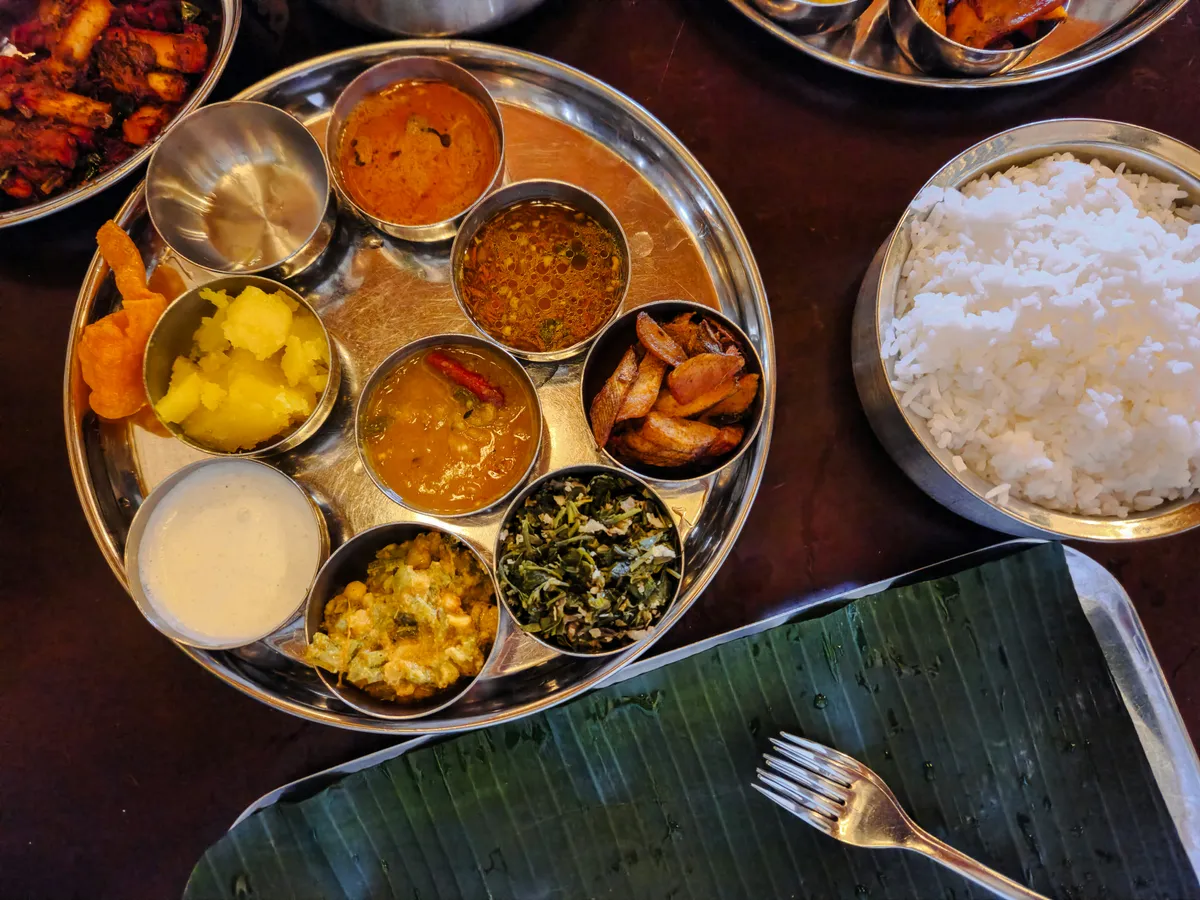
Brahmin and Chhetri communities in the hills have their own distinct tradition centered on dal bhat, the national dish. Dal bhat is a plate of steamed rice (bhat) served with lentil soup (dal), accompanied by seasonal vegetables (tarkari), spinach greens (saag), pickles (achar), and sometimes meat or fish. The philosophy is simple: eat what the land provides, seasoned with mustard oil and turmeric. A proper dal bhat is a complete meal that fuels a day of work in the fields or on the trail.
The Mountains: Tibetan and Sherpa Cuisine
As you climb into the high Himalayas, the food shifts to reflect Tibetan influences. At altitudes above 3,000 meters, rice gives way to barley, buckwheat, and potatoes. Sherpa and Tibetan communities eat tsampa, roasted barley flour mixed with butter tea and rolled into bite-sized balls. Thukpa, a hearty noodle soup with vegetables and sometimes meat, is the standard high-altitude meal, warming and filling after a cold day on the trail. Momos, the dumplings that have become Nepal's unofficial national snack, originated in this Tibetan tradition and have since spread to every corner of the country.
Butter tea, made by churning tea leaves with yak butter and salt, is the universal highland beverage. It is an acquired taste for outsiders, but at 4,000 meters in a wind-swept lodge, nothing restores warmth and energy like a steaming bowl of butter tea. For trekkers who want to understand mountain food more deeply, our complete guide to trekking in Nepal covers what to expect on the trail and how to prepare for high-altitude dining.
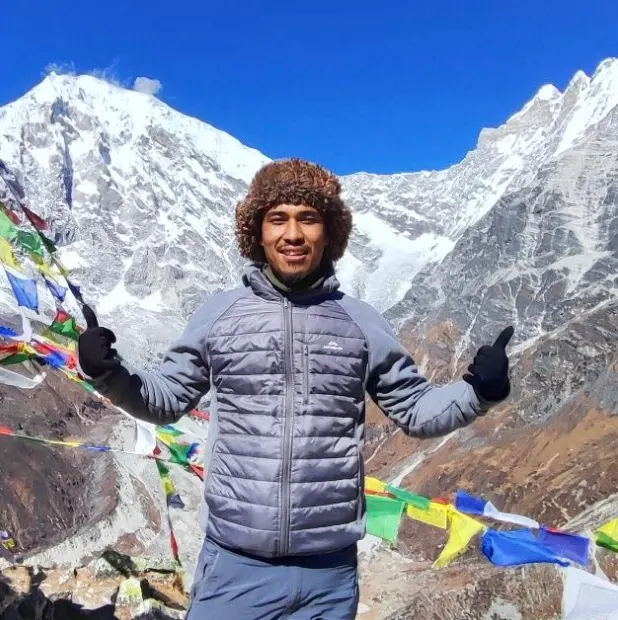
The Terai: Plains Food and Tharu Tradition
The southern Terai region, bordering India, produces most of Nepal's rice, wheat, and sugarcane. The food here is spicier and more oil-rich than in the hills, reflecting the influence of North Indian cuisine. Fish from the region's many rivers is a staple, often fried in mustard oil with turmeric and garlic. The indigenous Tharu people have a unique food culture based on rice, lentils, wild greens, and pork. Dhikri, a steamed rice-flour dumpling shaped like a triangle, is a Tharu specialty often served with a spicy chutney.
In Chitwan, the gateway to Nepal's national parks, you can find both Tharu traditional food and classic Nepali dishes. The 6-Day Kathmandu and Chitwan Food and Culture Tour is an ideal way to experience the transition from valley cuisine to Terai flavors in a single guided itinerary, combining wildlife safaris with cooking demonstrations and local market visits.
The Thakali Tradition: The Best Dal Bhat in Nepal
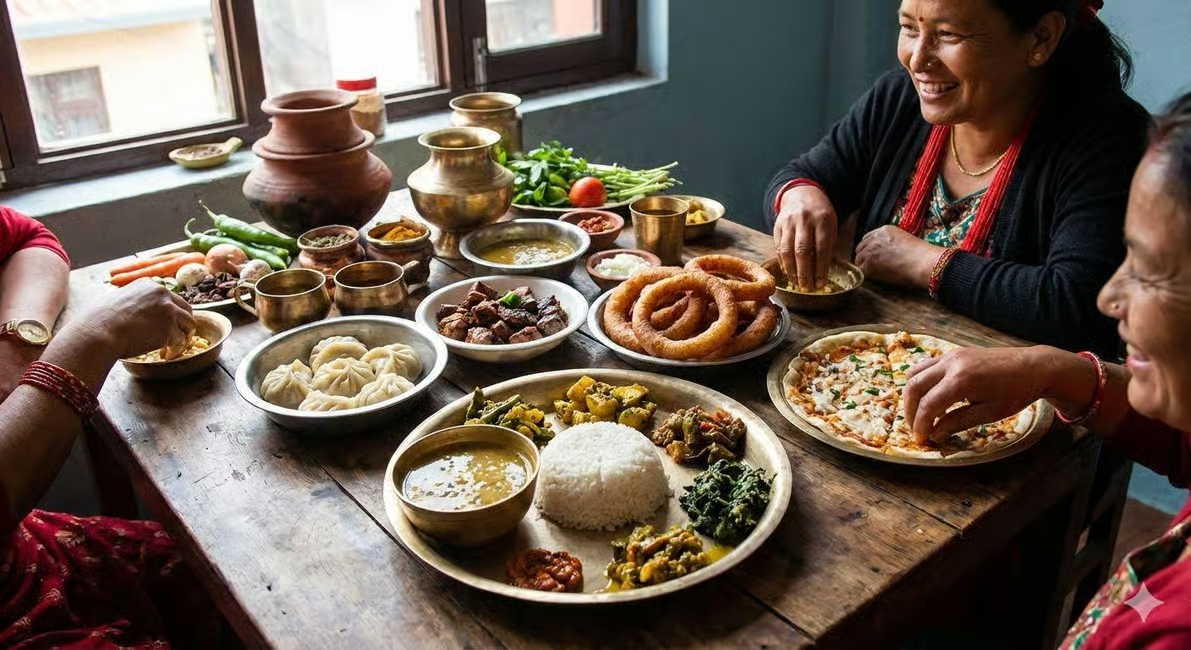
The Thakali people, originally from the Kali Gandaki valley in the Annapurna region, are renowned across Nepal for running the best teahouses on trekking routes. Thakali cuisine is a refined version of mountain food, featuring a elaborate thali plate with multiple small portions of vegetables, meat, dal, rice, and pickles. The signature dish is kachhyamba, battered and deep-fried water buffalo meat, served with a fiery buckwheat chutney. Thakali ghee, clarified butter made from yak milk, is drizzled over rice for a rich, nutty flavor.
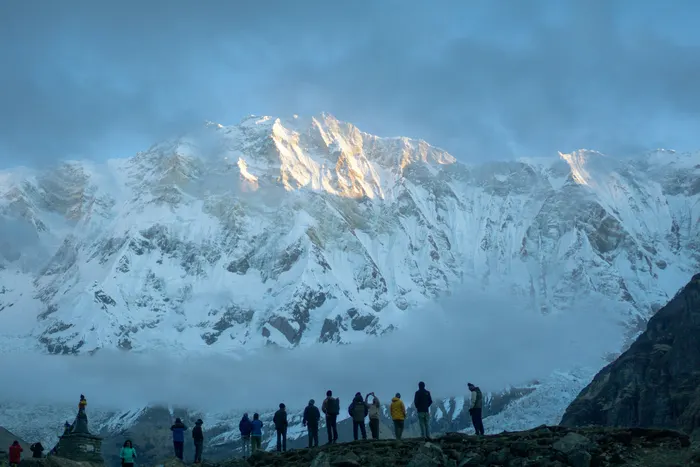
If you are trekking in the Annapurna or Mustang region, you will encounter Thakali lodges in almost every village. The quality of a Thakali kitchen is legendary among trekkers. Many travelers return from Nepal saying that the Thakali thali was the best meal they had in the entire country, often better than any restaurant in Kathmandu.
Street Food and Urban Snacking in Kathmandu
Kathmandu's street food scene is vibrant, chaotic, and delicious. In the narrow lanes of Asan and Indrachowk, vendors sell panipuri, hollow crisp shells filled with spiced water and chickpeas. Chatpate, a tangy mixture of puffed rice, potato, chickpeas, and spices, is scooped into paper cones. At the stalls around Ratna Park, you can find samosas, kachauri, and sel roti, the ring-shaped rice flour bread that is fried until golden and crisp.
For a deeper dive into Kathmandu's food culture, the 5-Day Kathmandu Valley Tour combines UNESCO heritage site visits with opportunities to sample local food in each town. Eating your way through Kathmandu, Patan, and Bhaktapur is a journey through three distinct culinary micro-regions within a single valley.
The Must-Try Dishes on a Nepali Food Tour
A traditional food tour in Nepal should cover the full range of dishes that define the cuisine. Here is a curated list of what to seek out, organized by category.
Everyday Staples
Dal Bhat Tarkari: The foundation of every Nepali meal. Steamed rice, lentil soup, seasonal vegetable curry, and pickles. In a good restaurant or teahouse, the dal is thick and garlicky, the tarkari is fresh and seasonal, and the achar adds a tangy counterpoint. Eat it with your right hand for the full experience.
Dhindo: A thick porridge made from buckwheat, millet, or corn flour, cooked by stirring continuously in boiling water. Dhindo is the traditional mountain staple that predates rice in many high-altitude communities. It is eaten with dal, vegetable curry, and gundruk, fermented leafy greens. The texture is dense and satisfying, and it keeps you full for hours on the trail.
Gundruk: Fermented and dried leafy greens, usually mustard leaves or radish leaves. Gundruk has a sour, umami flavor that is uniquely Nepali. It is used in soups, stir-fries, and pickles, and is a winter staple in hill households. For many Nepalis living abroad, the smell of gundruk cooking is the smell of home.
Festive and Special-Occasion Dishes
Sel Roti: A ring-shaped bread made from rice flour batter, deep-fried until crisp on the outside and soft inside. Sel roti is the defining dish of Dashain and Tihar, Nepal's biggest festivals, but you can find it year-round in street stalls. It is sweet, slightly spongy, and best eaten fresh with a cup of milk tea.
Yomari: A steamed dumpling made from rice flour dough, filled with molasses and sesame seeds. Yomari is traditionally made during Yomari Punhi, the Newari harvest festival in December. The dough is shaped like a fig, and the molasses filling melts into a warm, sweet syrup when steamed. It is one of the most beautiful and unique foods in the Newari tradition.
Samay Baji: The ceremonial Newari plate, served during festivals and religious occasions. It includes beaten rice (chiura), roasted soybeans, boiled egg, fried fish, black soybean curry, and aila, a clear distilled liquor. The plate is arranged in a specific order on a leaf, and each item has a symbolic meaning tied to prosperity and good fortune.
Snacks and Street Food
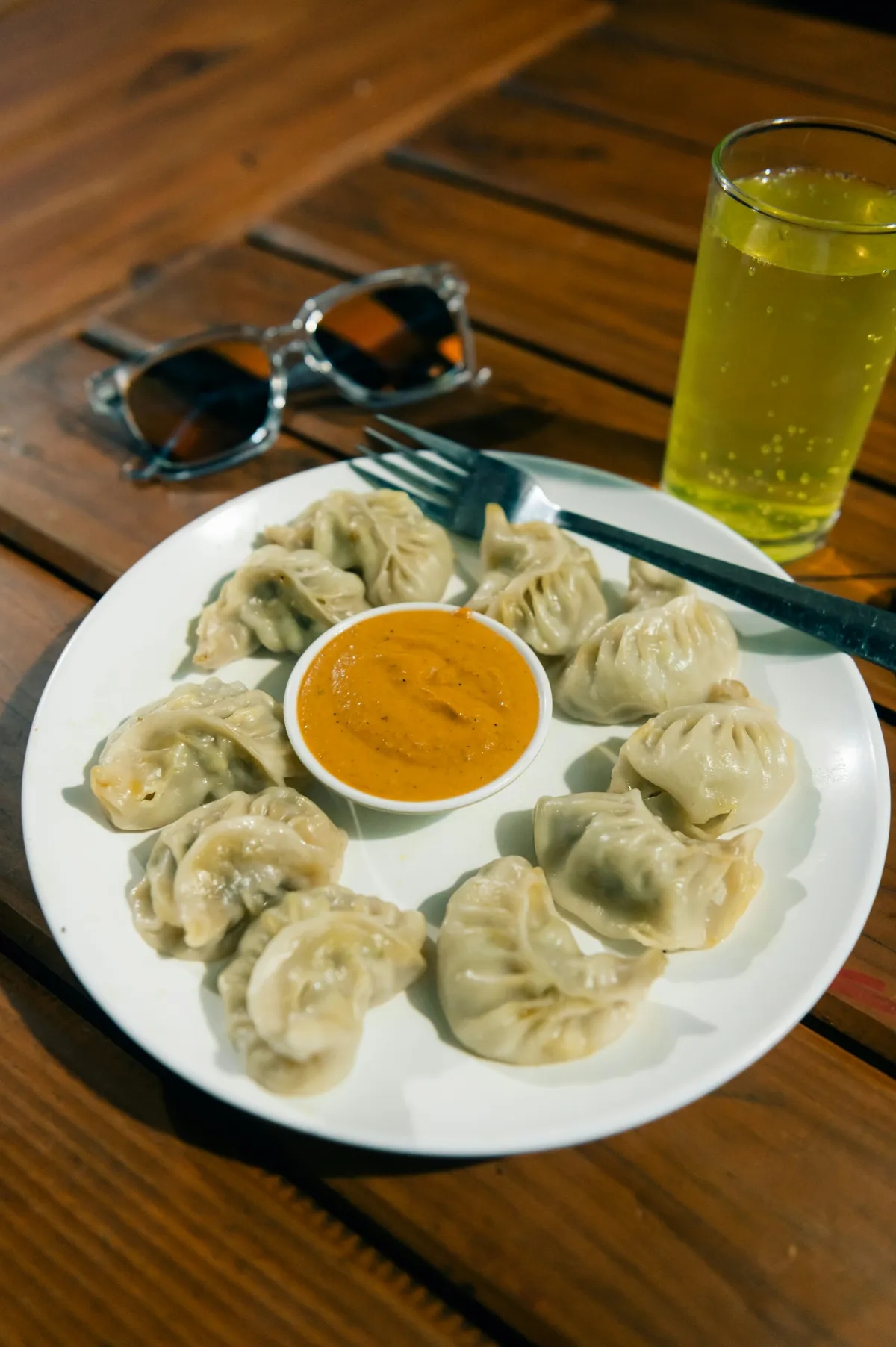
Momos: Nepal's most beloved snack, found everywhere from street carts to high-end restaurants. Momos are dumplings filled with minced meat (usually buffalo or chicken) or vegetables, steamed and served with a spicy tomato-based chutney called achar. The momo was introduced by Tibetan traders but has been thoroughly adopted and adapted by Nepalis. In Kathmandu, you can find creative variations including cheese momos, chocolate momos, and even open-faced momos topped with sauce and cheese.
Chatamari: The Newari rice-flour crepe, topped with minced meat, egg, and sometimes vegetables. Often called Nepali pizza, chatamari is cooked on a griddle until the bottom is crisp and the toppings are set. It is a specialty of Newari restaurants in Patan and Bhaktapur.
Choila: Grilled water buffalo meat, tenderized by pounding, then marinated in mustard oil, garlic, ginger, and timur pepper. Choila is served cold as part of a Newari snack plate or alongside chiura. The mustard oil gives it a sharp, distinctive heat that lingers on the palate.
Bara: A savory lentil pancake, crispy on the outside and soft inside, made from soaked and ground black lentils. Bara is a Newari specialty often served with a topping of egg or minced meat. It is naturally gluten-free and is a popular snack during Newari festivals.
Beverages
Chiya (Milk Tea): Nepali milk tea is brewed by boiling black tea leaves with milk, sugar, cardamom, and sometimes ginger. It is served in small glasses and drunk throughout the day. The tea stalls along Kathmandu's streets are social hubs where people gather to talk, read newspapers, and watch the world go by. No food tour in Nepal is complete without multiple cups of chiya.
Tongba: A traditional fermented millet drink popular in the Limbu and Rai communities of eastern Nepal. Tongba is served in a wooden or bamboo vessel, with hot water poured over fermented millet. You drink it through a bamboo straw, and the same vessel can be refilled with hot water multiple times, each pour weaker than the last. It is warm, mildly alcoholic, and perfect for cold mountain evenings.
Rakshi: Distilled liquor made from rice or millet, served at Newari feasts and religious ceremonies. Rakshi is clear, potent, and slightly sweet. It is poured from a brass vessel called an anti into a small bowl called a khura. In Newari culture, refusing a cup of rakshi at a bhoj is considered impolite.
Where to Eat: A Region-by-Region Food Guide
Kathmandu: The Culinary Capital
Kathmandu is where every food tour begins. The city offers the widest range of Nepali cuisine, from street-side stalls to heritage restaurants specializing in Newari feasts. The old town around Asan, Indrachowk, and Maru is the best area for street food. Here you can eat your way through samosas, chatpate, panipuri, and sel roti in a single afternoon walk.
For a sit-down Newari meal, head to Patan, just across the Bagmati River from Kathmandu. Patan has several restaurants that serve traditional samay baji and bhoj platters in a courtyard setting. Bhaktapur, the third city in the valley, is famous for its juju dhau, king curd, a thick, sweet yogurt sold in clay pots. No visit to Bhaktapur is complete without a pot of juju dhau from one of the shops near Durbar Square.
If you want to learn to cook Nepali food, several cooking classes in Kathmandu offer hands-on sessions where you learn to make momos, dal bhat, and Newari dishes from scratch. These classes typically start with a visit to a local market to buy ingredients, followed by a cooking session and a shared meal.
Pokhara: Lakeside Dining
Pokhara, on the shores of Phewa Lake, is the gateway to the Annapurna region and a food destination in its own right. The lakeside promenade is lined with restaurants serving everything from traditional Thakali thali to international cuisine. Pokhara is the place to try fresh lake fish, grilled and served with mustard oil and lemon. The city also has a growing organic food scene, with several restaurants sourcing vegetables from local farms.
For travelers combining wellness with food, a yoga and healing retreat in Pokhara pairs naturally with clean, vegetarian Nepali cooking. Many yoga retreats in Pokhara offer sattvic meals that showcase how Nepali food can be both nourishing and deeply flavorful without meat or heavy spices.

Chitwan and the Terai
Chitwan offers a completely different food experience. In the Terai, the cuisine is spicier and more Indian-influenced. Tharu community kitchens serve traditional dishes like dhikri, ghonghi (snail curry), and bagiya, steamed rice dumplings with a savory filling. A guided Tharu village visit often includes a meal in a local home, which is one of the most authentic culinary experiences you can have in Nepal.
On the Trail: Teahouse Food
If your food tour includes trekking, the teahouse dining room is where the magic happens. Teahouse menus across the trekking regions follow a similar pattern: dal bhat, fried rice, chowmein, momos, and Tibetan bread with jam. But the quality varies enormously, and the best teahouse kitchens are run by Thakali families who bring their refined cooking tradition to the trail.
On the popular trekking routes, the food is reliable and safe. As you go higher, the menu narrows and prices rise, since every ingredient must be carried up by porters or animals. Above 4,000 meters, rice becomes expensive and buckwheat and potatoes take over. The high-altitude potato, grown in Khumbu and Mustang, is one of the most delicious potatoes you will ever eat, roasted with butter and salt.
Food and Festival Calendar: When to Visit
Nepal's festival calendar is closely tied to its food traditions. If you want to experience the richest culinary culture, time your visit around one of the major festivals.
Dashain (September-October): The biggest Hindu festival in Nepal, celebrating the victory of good over evil. Families gather to eat meat, particularly goat, and sel roti is fried in enormous batches. The air in every neighborhood fills with the smell of frying rice flour batter. Dashain is the closest thing Nepal has to a national food holiday.
Tihar (October-November): The festival of lights, during which different animals are honored on successive days. The final day, Bhai Tika, involves sisters preparing special meals for their brothers. Sel roti, malpua, and various sweets are prepared in every household.
Yomari Punhi (December): The Newari harvest festival, when yomari is made and eaten in every Newar household. This is the best time to visit the Kathmandu Valley for food lovers, as you can taste freshly made yomari in the traditional Newari neighborhoods of Patan and Bhaktapur.
Holi (March): The festival of colors, celebrated with cannabis-laced bhang and an array of sweet snacks. While the colored powder gets most of the attention, the food side of Holi is equally vibrant, with gujiya, a sweet fried dumpling, as the centerpiece.
For more on timing your visit, our guide to the best time for a spiritual tour in Nepal covers the festival calendar in detail and explains how food, weather, and cultural events align throughout the year.
Planning Your Food Tour: Practical Tips
Guided vs. Independent
A guided food tour offers several advantages over going independent. A local guide knows which street stalls are safe, which restaurants serve authentic recipes rather than tourist versions, and how to order dishes that are not on the English menu. Guides can also arrange home visits and cooking demonstrations that are nearly impossible to organize on your own.
The traditional Nepali culinary food tour activity offered by Enticing Himalayas is a structured culinary experience that combines market visits, cooking classes, and restaurant meals into a single itinerary. It is designed for travelers who want to understand Nepali food at a deeper level, not just eat it.
Food Safety
Food safety is a common concern for travelers in Nepal. The general rule is to eat where locals eat, which ensures high turnover and fresh ingredients. Street food is safe when it is cooked in front of you and served piping hot. Avoid raw vegetables and salads in places where you are unsure about the water source. Bottled water is widely available, and most restaurants serve filtered water.
If you have a sensitive stomach, start with simple dal bhat and work your way up to spicier dishes. Nepali food is generally not as spicy as Indian food, but some Newari pickles and Tharu dishes can be fiery. Carry basic medication for stomach issues, and always wash your hands before eating.
Vegetarian and Vegan Options
Nepal is one of the easiest countries in Asia for vegetarian and vegan travelers. A large percentage of the population is vegetarian, particularly among Brahmin communities, and every restaurant has vegetarian options on the menu. Dal bhat is naturally vegan when prepared without ghee. Vegetable momos are available everywhere. In Kathmandu and Pokhara, several restaurants specialize in vegan and organic cuisine, and the yoga retreat scene has created a demand for plant-based Nepali cooking.
For a deeper exploration of wellness-oriented food, the sound healing traditions of Nepal and the broader wellness community in the Kathmandu Valley have developed a distinctive sattvic food culture that is worth exploring alongside the traditional cuisine.

Budget and Cost
Food in Nepal is inexpensive by international standards. A plate of momos costs 150-300 NPR (about $1.15-$2.30). A dal bhat meal at a local restaurant is 250-500 NPR ($1.90-$3.80). A sit-down Newari feast for two at a heritage restaurant in Patan runs 1,500-3,000 NPR ($11-$23). Street food snacks are 50-100 NPR ($0.40-$0.75) each. Cooking classes range from $25-$50 per person for a half-day session. For a full breakdown of travel costs, our guide to Nepal tour costs in 2026 includes food and dining expenses across budget, mid-range, and luxury tiers.
Combining Food and Culture: A Sample 5-Day Itinerary
Here is a practical itinerary that combines culinary exploration with cultural sightseeing in the Kathmandu Valley. This can be extended with a Chitwan food extension or a Pokhara lakeside dining day.
Day 1: Arrival and Old Kathmandu Street Food Walk. Arrive in Kathmandu, settle into your hotel, and head out for an evening street food walk through Asan and Indrachowk. Sample samosas, chatpate, panipuri, and sel roti from the bustling stalls. End the walk with a cup of chiya at a tea shop in Maru. This is a gentle introduction to Nepali flavors that gets your palate calibrated for the days ahead.
Day 2: Newari Feast in Patan. Cross the Bagmati River to Patan, one of the three royal cities of the valley. Visit Patan Durbar Square, a UNESCO World Heritage Site, then sit down to a traditional Newari samay baji platter at a heritage restaurant in one of the old courtyards. In the afternoon, take a walking tour of Patan's metalworking and craft neighborhoods, where you can see the artisans who make the ritual vessels used in Newari feasts. This is also a good day to explore the spiritual heritage of the Newars, whose food traditions are inseparable from their religious practices.
Day 3: Bhaktapur and Juju Dhau. Take a short drive to Bhaktapur, the best-preserved of the three valley cities. Walk through Durbar Square, Potter's Square, and Taumadhi Square, stopping to eat juju dhau, the famous king curd, from a clay pot. Have lunch at a Newari restaurant serving bara, chatamari, and choila. In the late afternoon, visit a pottery workshop where the clay pots used for juju dhau are still made by hand.
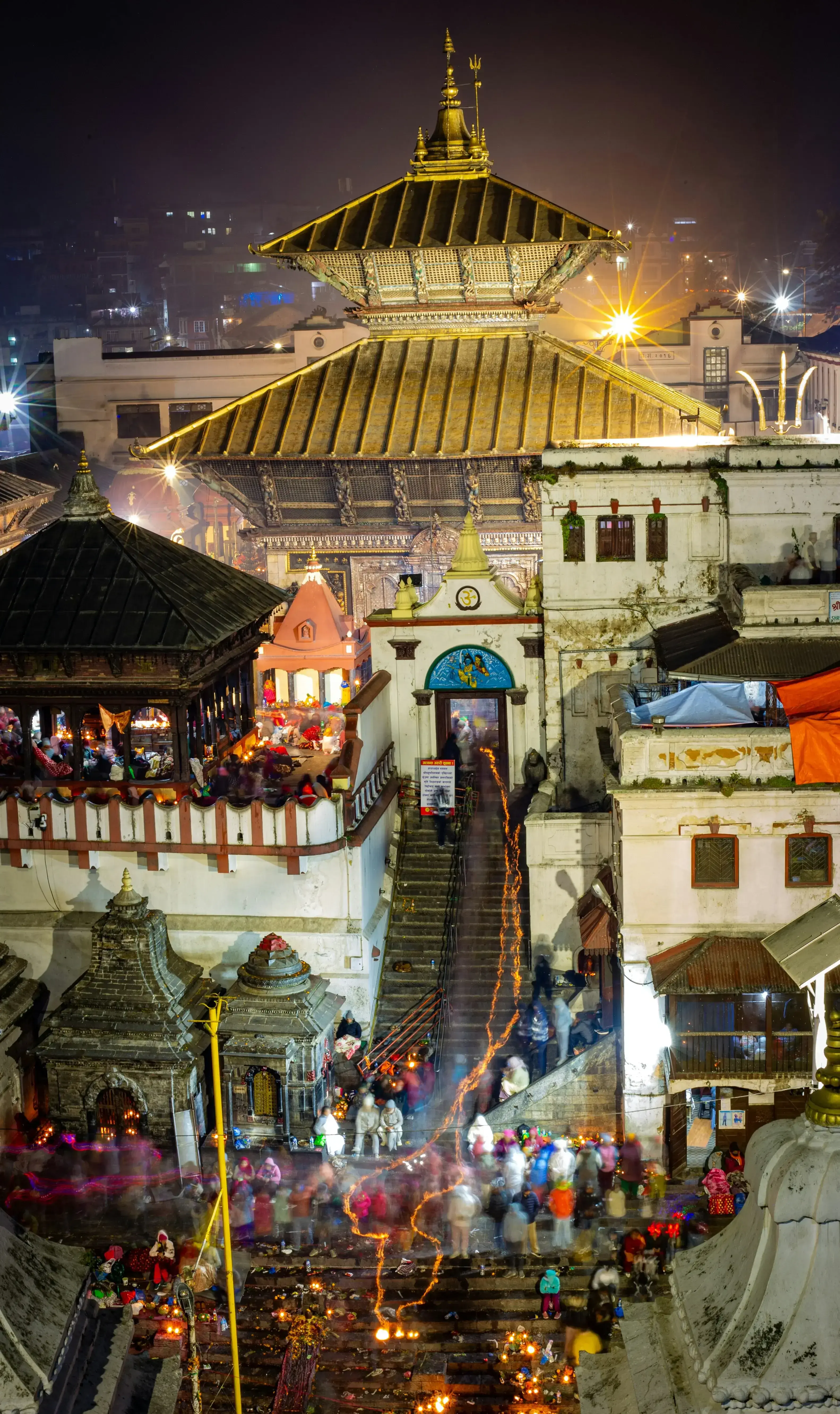
Day 4: Cooking Class and Market Visit. Start the morning at a local market in Kathmandu, shopping for ingredients with your cooking instructor. Learn to fold momos, prepare dal bhat, and make a Newari pickle. Sit down to eat what you have cooked for lunch. In the afternoon, visit Pashupatinath and Boudhanath, two of the most sacred sites in Nepal, where you can observe the connection between food and ritual, including offerings at the temples and prasad distribution.

Day 5: Departure or Extension. Enjoy a final dal bhat lunch before departing. Or extend your trip with a visit to Chitwan for Tharu cuisine and wildlife, or to Pokhara for lakeside dining and the Annapurna foothills.
The Spiritual Dimension of Nepali Food
In Nepal, food and spirituality are deeply intertwined. The concept of prasad, food offered to a deity and then distributed to devotees, is central to Hindu worship. At Pashupatinath, the most important Shiva temple in Nepal, devotees bring fruits, sweets, and milk as offerings. After the puja, these are distributed as prasad, considered blessed and purifying to eat.
In Buddhist monasteries, food is prepared with mindfulness and offered to monks as part of the daily alms round. The act of giving food to monks is a merit-making practice, and the food itself is simple: rice, dal, vegetables, and sometimes fruit. Butter tea is served in every monastery, and visitors are always offered a cup as a gesture of hospitality.
The Newari tradition has perhaps the most elaborate food rituals. During life-cycle events like the rice-feeding ceremony (pasni) and the coming-of-age ceremony (kayata puja), specific foods are prepared and served in a prescribed order. The samay baji plate is not just a meal, it is a ritual offering to the gods and ancestors before it is eaten by the family.
Understanding this spiritual dimension transforms a food tour from a culinary exercise into a cultural immersion. When you eat prasad at a temple, share a meal with a family during a festival, or drink butter tea in a monastery, you are participating in traditions that have been practiced for centuries and continue to shape daily life in Nepal.
Responsible Food Tourism in Nepal
As food tourism grows in Nepal, it is important to travel in a way that supports local communities and preserves culinary traditions. Here are some principles to follow:
Choose family-run restaurants and street stalls over international chains. Every meal at a local eatery directly supports a family and preserves a recipe tradition. Buy ingredients from local markets rather than supermarkets. When booking a cooking class, look for ones run by local home cooks rather than commercial operators. Pay fairly for what you receive. Nepali food is inexpensive, but that does not mean it should be undervalued. Tip generously when the service and quality are good.
Be respectful of food customs. In Hindu households, it is common to eat with the right hand only, as the left hand is considered unclean. In some Brahmin homes, the kitchen is a sacred space and outsiders may not enter. When invited to a meal in a Nepali home, follow your host's lead on customs and table manners.
For more on traveling responsibly in Nepal, you can also combine your food tour with a deeper understanding of the country's cultural and spiritual framework, as outlined in our guide to cultural and spiritual tours in Nepal.
Conclusion
A traditional Nepali food tour is a gateway to understanding Nepal at a level that mountains and monuments alone cannot reach. Every dish on the table is the product of centuries of adaptation, migration, and cultural exchange. Every spice blend tells a story of trade routes and mountain passes. Every festival feast carries the weight of ritual and devotion. By following the food trail through Nepal, you connect with the people, the land, and the traditions that make this country one of the most culturally rich destinations in the world.
Whether you spend five days eating your way through the Kathmandu Valley or combine a culinary tour with a trekking adventure in the Annapurna region, the flavors of Nepal will stay with you long after you return home. The warmth of a cup of chiya on a cold morning, the crunch of a fresh sel roti, the comfort of a plate of dal bhat after a long day of walking. These are the memories that make a journey memorable, and they are waiting for you in Nepal.