 Nov 8 – Nov 8, 2026
Kathamandu
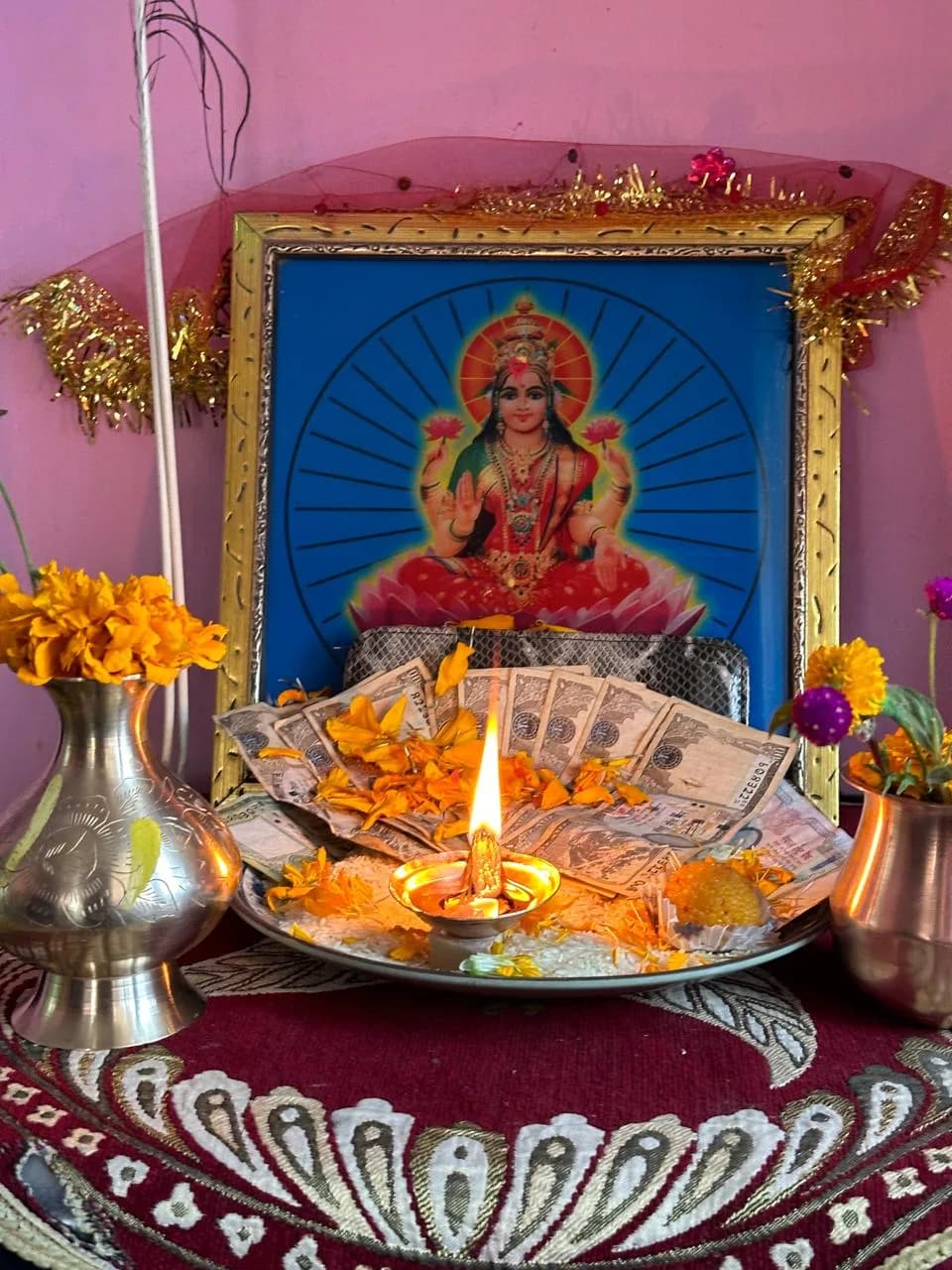
Laxmi Puja 2026 in Nepal: Tihar Festival Guide
Festival
1 día
Festival
Free
Kathamandu1 día
Event Details
Loading...
Event starts in
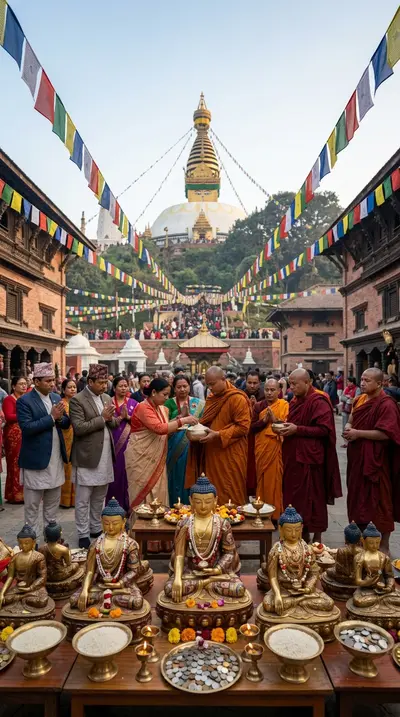
Samyak Mahadan is one of the rarest and most meaningful Newar Buddhist festivals in Kathmandu, traditionally organized once every twelve years and centered on the practice of giving, worship, compassion, and respect for Buddhist teachers and sacred images. Unlike an ordinary annual festival that visitors can plan around almost any year, Samyak Mahadan comes with a much longer rhythm, making each celebration a special moment in the cultural life of the Kathmandu Valley. In 2027, Kathmandu is preparing to revive this ancient tradition at Swayambhu Bhuikhhel, with the main ceremony extending across two days and connecting the historic area of Hanumandhoka with the sacred open ground below Swayambhunath. For travelers interested in Newar heritage, Buddhist culture, living traditions, historic courtyards, sacred art, and community festivals, Samyak Mahadan offers an opportunity to see Kathmandu through a different lens—not simply as a capital city, but as a place where religion, family, craft, generosity, and old community systems are still woven into everyday life.
The 2027 Samyak Mahadan is especially significant because Kathmandu Metropolitan City has officially announced its revival after a long gap. The announced date is January 15, 2027, corresponding to Magh 1, while the traditional program is planned for two days. The first main part will take place at Hanumandhoka in Kathmandu, while the second day will move to Swayambhu Bhuikhhel, the large open ground associated with the Kathmandu Samyak tradition. The ceremony is centered on Dipankara Buddha images, sacred Buddhist deities, offerings, almsgiving, and participation by members of the Buddhist Sangha. Because the festival requires extensive preparation, community participation, financial resources, and ceremonial coordination, it is very different from a simple public street festival.
For visitors planning a cultural journey, the best starting point is the wider Kathmandu Valley cultural landscape, where Swayambhunath, Kathmandu Durbar Square, Boudhanath, Pashupatinath, Patan, and Bhaktapur can be understood as connected parts of the valley's living heritage. Samyak becomes much easier to appreciate when these places are not treated as separate tourist stops but as parts of the same historical environment.
The announced main date for Samyak Mahadan Kathmandu 2027 is Friday, January 15, 2027, or Magh 1 in the Nepali calendar. Kathmandu Metropolitan City announced that the traditional Mahadan will be organized at Bhuikhhel in Swayambhu and that the ceremony will follow the traditional two-day structure. The first main programs are planned around Hanumandhoka, while the second day centers on Swayambhu Bhuikhhel.
This date is worth marking early because the festival is not an annual celebration. Kathmandu traditionally observes Samyak at a 12-year interval, while related Samyak traditions occur at different intervals in Lalitpur and Bhaktapur. Historical sources describe Kathmandu's Samyak as a major almsgiving ceremony involving many Dipankara Buddha images and Buddhist communities from across the valley.
Visitors who want to understand why the date matters can also explore the wider Nepal festival calendar, where festivals are organized by season, location, and cultural character. The calendar is useful for building a broader Nepal cultural itinerary around the Samyak period.
The currently announced structure gives travelers a clear understanding of how the major ceremony will move through Kathmandu. Because detailed hour-by-hour public programming may still be released by the organizing committee closer to the festival, the following should be understood as the announced two-day structure, rather than an invented minute-by-minute timetable.
The first major day of Samyak Mahadan will be associated with Hanumandhoka, the historic royal center of Kathmandu. This location is important because the traditional Samyak ceremony has long connected the city's Buddhist communities with its historic political and cultural center. Dipankara Buddha images are traditionally brought out and arranged so that devotees can pay respect and make offerings. The atmosphere combines sacred images, traditional architecture, Buddhist ritual, community participation, and the old urban fabric of Kathmandu.
Visitors can prepare for this first day by reading about Kathmandu Durbar Square and its historic royal courtyard and then exploring the broader Kathmandu Valley destination guide. These resources help explain why Hanumandhoka is not simply a backdrop for the festival but an important part of the historic Kathmandu experience.
The first day is likely to be particularly interesting for travelers who enjoy photography, traditional architecture, Buddhist iconography, Newar craftsmanship, and old city walks. However, visitors should remember that the central purpose of the gathering is religious rather than entertainment. The most respectful approach is to observe quietly, follow local instructions, avoid blocking ceremonial movement, and ask before photographing people or sacred objects.
The second main day moves toward Swayambhu Bhuikhhel, the open ground at the foot of Swayambhunath. This is the heart of the traditional Kathmandu Samyak setting. Historical descriptions explain that large numbers of Dipankara Buddha images are assembled at the open ground and that offerings are made to Buddhist religious communities. The 2027 announcement confirms that the second main day will be held at Bhuikhhel in Swayambhu.
This makes the second day particularly important for visitors who want to understand the religious scale of Samyak Mahadan. Rather than viewing one temple in isolation, travelers can see how sacred images, monks, donors, community members, and traditional ritual systems come together in one large public space.
The nearby Swayambhunath-focused Kathmandu travel guide is useful before visiting. Swayambhunath is one of Nepal's best-known Buddhist sites, and its hilltop position provides a strong geographical connection to the Bhuikhhel ceremony below.
The twelve-year interval is one of the features that makes Kathmandu's Samyak Mahadan different from many other festivals in Nepal. Historical sources describe Samyak as an elaborate almsgiving Buddhist festival in which Dipankara Buddha images are gathered and offerings are made. The practice is connected with generosity and the giving of food and other offerings to Buddhist religious communities.
The long interval also means that many residents may hear about Samyak from older family members before they personally witness the complete ceremony. Kathmandu Metropolitan City has specifically described the 2027 revival as an opportunity for younger generations to experience the tradition directly rather than knowing it only from books or family stories.
This generational aspect gives Samyak a special place in Kathmandu cultural tourism. A visitor does not simply see an old ritual; they are seeing a tradition being carried from one generation to another.
Although Kathmandu's Samyak is traditionally described as a twelve-year festival, the actual recent history has been more complicated. Kathmandu Metropolitan City announced in September 2026 that the 2027 Mahadan would revive the ceremony after approximately 22 years, with the previous major Kathmandu ceremony dating to 2003/2060 BS.
This is an important point for an accurate article. It would be misleading to say that Samyak was simply held exactly every twelve years without interruption. The traditional cycle is twelve years, but the planned 2027 ceremony follows a much longer gap in Kathmandu. That makes the upcoming event especially notable.
For visitors interested in rare cultural events, this gap is one reason to follow the official-style Enticing Himalayas events calendar and check for updated festival information as the date approaches.
The word Mahadan refers to great giving or great almsgiving. Samyak is therefore deeply connected with the Buddhist value of generosity. The festival is not built around a single theatrical performance. Its central purpose is the act of giving offerings and honoring sacred Buddhist images and religious communities.
During Samyak, Dipankara Buddha images hold a central place. Sources describe Dipankara as one of the Buddhas of the past and explain that the festival is closely associated with his veneration in Newar Buddhist tradition. The Kathmandu ceremony historically brought together numerous images from different parts of the valley.
The concept of generosity is important for understanding the atmosphere of the festival. Food, money, ceremonial offerings, and other forms of support are not simply objects displayed for visitors. They represent a religious practice through which donors create merit and support the Buddhist community.
This is why Samyak Mahadan can be understood as both a religious festival and a major expression of Newar Buddhist community life.
Dipankara Buddha is one of the most important figures associated with Samyak. In Buddhist traditions, Dipankara is regarded as a Buddha of the distant past. In traditions surrounding the life of Gautama Buddha, Dipankara is associated with a prediction or recognition of the future Buddhahood of the Bodhisattva who would become Shakyamuni Buddha.
For travelers, the easiest way to understand Dipankara's role is to see the Buddha images not simply as museum objects but as living objects of devotion. Their ceremonial movement, decoration, arrangement, and reception by devotees are part of a larger religious system.
The importance of sacred images is also visible elsewhere in the Kathmandu Valley. Visitors can compare the atmosphere of Samyak with the daily Buddhist practice around Boudhanath and Swayambhunath in Kathmandu, where pilgrims continue to walk, pray, light lamps, turn prayer wheels, and make offerings.
Samyak is deeply connected with Newar Buddhist heritage, one of the distinctive cultural traditions of the Kathmandu Valley. The Newar Buddhist tradition developed through monasteries, bahals, ritual families, artisans, merchants, priests, and community organizations. The festival therefore brings together many parts of the social structure.
Historical descriptions note that different groups traditionally have specific responsibilities, including preparing food, making ceremonial objects, playing instruments, and organizing physical arrangements for the ceremony. This means that the festival is also an example of traditional community cooperation.
Visitors interested in this side of Kathmandu should spend time exploring the city's old courtyards rather than only visiting major monuments. The Kathmandu Valley heritage guide explains how the valley's temples, bahals, stupas, former royal cities, and traditional neighborhoods form one connected cultural landscape.
One reason Samyak is so interesting for travelers is that it represents the Kathmandu Valley as a whole. Although the major Kathmandu ceremony takes place in Kathmandu, related forms of Samyak are celebrated elsewhere in the valley. Historical sources describe the Kathmandu cycle as twelve years, the Lalitpur tradition as five years, and the Bhaktapur tradition as annual.
This makes the valley an extraordinary destination for people interested in Buddhist festival traditions. A visitor who stays for several days can explore Kathmandu, Patan, and Bhaktapur and see how different communities maintain related but distinct practices.
The wider festival landscape can be explored through Nepal's cultural events calendar, while travelers can use the Kathmandu Valley destination page to plan the surrounding sightseeing.
Samyak should not be treated as an isolated festival. Travelers visiting Nepal for Buddhist and Newar culture can compare it with other events that show different sides of the country's religious life.
The most useful related event resources are the Indra Jatra Festival in Kathmandu, the Mani Rimdu Festival at Tengboche, the main Nepal events calendar, and other Buddhist and cultural celebrations listed through the same calendar.
Indra Jatra is useful for understanding Kathmandu's Newar urban festival culture, particularly chariot processions, masked dances, Kumari traditions, and Kathmandu Durbar Square. The festival provides a strong contrast with Samyak because its public atmosphere is much more procession-focused.
Mani Rimdu, held at Tengboche, provides a high-Himalayan comparison. It brings together Sherpa Buddhist traditions, monks, sacred rituals, masked dances, prayers, and blessings.
Losar provides another Buddhist cultural comparison, particularly around Himalayan and Tibetan Buddhist communities. The Enticing Himalayas events calendar currently identifies Losar among Nepal's winter cultural events at Boudhanath.
Dashain is very different in religious character but helps visitors understand the scale of Nepal's national festival calendar.
Tihar provides another Kathmandu Valley experience through lights, worship, family rituals, and Newar traditions.
Holi demonstrates the more colorful public side of Nepal's festival culture.
Buddhist pilgrimage experiences in Lumbini provide a quieter comparison centered on the birthplace of Gautama Buddha.
These seven themes can be explored through the Enticing Himalayas event collection rather than treating each celebration as an unrelated attraction.
A visit to Swayambhunath before the festival can help travelers understand why Bhuikhhel is such an important location. Swayambhunath sits on a hill overlooking Kathmandu and is one of the valley's most important Buddhist sacred sites. The stupa, monasteries, shrines, prayer flags, and surrounding courtyards create a living religious landscape rather than a simple monument.
The Swayambhunath travel guide explains the site's history, access, views, and religious atmosphere. Combining this visit with Samyak can give travelers a stronger understanding of the Swayambhu Buddhist landscape.
Visitors should also remember that Swayambhunath is an active place of worship. Modest clothing, quiet behavior, and respect for people engaged in prayer are appropriate.
Boudhanath is another important place to add to a Samyak-focused Kathmandu journey. The large white stupa and surrounding monasteries form one of Nepal's most recognizable Buddhist landscapes. The daily movement of pilgrims around the stupa gives visitors a chance to observe kora, prayer wheels, butter lamps, monasteries, and Buddhist community life.
The broader Buddhist pilgrimage guide from Lumbini to Boudhanath can help visitors understand how Boudhanath fits into the larger Buddhist geography of Nepal. It also connects Kathmandu's Buddhist heritage with Lumbini and the Himalayan monasteries of the Khumbu.
For a more spiritual itinerary, the 10-day Hindu and Buddhist spiritual circuit provides another way to connect Kathmandu pilgrimage sites, Lumbini, and other sacred destinations.
Because the first main day is planned around Hanumandhoka, Kathmandu Durbar Square is one of the most relevant places to understand before attending Samyak. The square contains old palace courtyards, temples, shrines, and the Kumari Ghar, creating a powerful setting for understanding the historic center of Kathmandu.
The dedicated Kathmandu Durbar Square guide gives visitors an introduction to the square and its surrounding heritage. Reading about the area before the festival can make it easier to notice the relationship between royal Kathmandu, Newar architecture, Buddhist traditions, and living religious practices.
The square is also closely connected to Indra Jatra, making it possible for travelers who have experienced both events to compare two major expressions of Kathmandu's festival culture.
A practical Samyak travel route can be designed around several connected sites: Swayambhunath, Bhuikhhel, Kathmandu Durbar Square, Boudhanath, and selected Newar Buddhist courtyards. Travelers with extra time can extend the route to Patan and Bhaktapur.
The Kathmandu Valley destination guide is useful for understanding the larger geography. It describes Kathmandu, Patan, and Bhaktapur as connected historic cities with different artistic and religious identities.
A traveler could spend the morning exploring Swayambhunath, visit Bhuikhhel around the major Samyak program, and later explore the old Kathmandu neighborhoods. Another day could focus on Boudhanath, monasteries, and nearby cultural areas. This slower approach is better suited to Samyak than trying to rush through ten different attractions in one day.
At the heart of Samyak is the idea of dāna, or giving. This makes the festival different from celebrations where entertainment or public spectacle is the main focus. Food, money, and other offerings are given as part of a religious practice, and Buddhist communities receive support through the ceremony.
The act of giving also creates a social connection. Donors, religious practitioners, artisans, families, and community organizations all become part of the same event. Historical accounts emphasize that Samyak brings together different sections of Newar society.
For travelers, this is perhaps the most important lesson of the festival: Samyak Mahadan is about generosity before tourism. Visitors are guests within a religious celebration, not spectators at a commercial show.
Travelers attending Samyak may encounter large numbers of people, sacred images, traditional music, offerings, religious ceremonies, crowded historic streets, and community gatherings. The exact public program may change as organizers complete the detailed schedule, so visitors should check updated announcements closer to January 2027.
The festival can be visually rich, especially because Dipankara Buddha images, traditional clothing, ceremonial objects, and historic architecture come together in the same space. However, photography should be approached carefully. Not every ritual moment should be treated as a photo opportunity.
A good visitor carries patience. If a ceremony is delayed, a procession blocks a road, or a particular area becomes crowded, it is better to slow down and observe rather than become frustrated. That attitude fits the character of a rare living heritage festival.
Samyak is primarily a religious festival, but food is naturally part of the wider Kathmandu experience. The Newar community is known for a rich culinary tradition, and travelers staying in the old city can explore dishes such as bara, momo, chatamari, samay baji, and other local preparations.
A food experience should be treated as a separate cultural activity rather than assuming every dish served during the ceremony is available to visitors. Some foods may have specific ritual roles.
The Kathmandu Valley travel guide provides broader context for exploring the valley's markets, heritage areas, traditional food, and cultural neighborhoods.
Samyak offers many opportunities for cultural photography, but respectful photography matters more than collecting as many images as possible. Historic architecture, streets, ceremonial arrangements, prayer flags, public spaces, and distant views can usually provide excellent subjects without interrupting worship.
Before photographing a monk, devotee, ritual object, or close ceremonial activity, ask for permission where appropriate. Avoid stepping into restricted areas simply to obtain a better angle.
The Swayambhunath photography guide on Enticing Himalayas is useful for understanding how to combine photography with respectful sightseeing.
Responsible tourism is especially important at a rare religious event. Samyak is a community tradition, not an event created primarily for international visitors. Travelers should therefore avoid touching sacred objects without permission, entering restricted ceremonial areas, creating unnecessary noise, or treating religious participants as photographic props.
Waste reduction is also important. Carrying a reusable water bottle and taking personal rubbish away from crowded heritage areas is a simple way to reduce pressure on the city.
Visitors can also support local communities through appropriate spending on accommodation, local food, guides, transport, crafts, and cultural services. The goal is not simply to consume a festival but to participate respectfully in the wider Kathmandu heritage economy.
Kathmandu is Nepal's main international travel gateway, making it relatively easy to reach for international visitors. Tribhuvan International Airport connects the capital with international and domestic destinations, while hotels and transport services are widely available throughout the valley.
For the first main program at Hanumandhoka, travelers staying around central Kathmandu can generally plan a city walk or short local transfer depending on their accommodation. For Bhuikhhel, visitors can travel toward Swayambhu and then follow local crowd-management instructions.
Because major festivals can create road closures and heavy pedestrian traffic, travelers should not depend on normal travel times. A journey that usually takes a short time by vehicle may take much longer during a major ceremony.
The Kathmandu Valley destination guide is useful for planning the relative position of the major cultural sites.
For visitors coming specifically for Samyak, staying somewhere with reasonable access to central Kathmandu and Swayambhu can make the two-day schedule easier. The right choice depends on budget, preferred atmosphere, and whether the traveler also wants to explore Boudhanath, Patan, or other parts of the valley.
A central location can be useful for walking to Hanumandhoka, while accommodation toward the western side of Kathmandu may reduce travel time to Swayambhu. However, festival-day traffic should always be considered.
Travelers extending their stay can also use Kathmandu as a base for nearby cultural day trips. The valley itself contains enough heritage sites for several days, so there is no need to fill every hour with long-distance travel.
Travelers with more time can extend a Samyak journey to Lumbini, the birthplace of Gautama Buddha. Although Lumbini and Kathmandu represent very different Buddhist environments, they can work together in a broader pilgrimage itinerary.
The Lumbini destination guide introduces the Sacred Garden, Maya Devi Temple, Ashoka Pillar, monastic zones, and World Peace Pagoda. For travelers interested in Buddhist heritage, this creates a natural extension after experiencing Newar Buddhist traditions in Kathmandu.
The Buddhist Pilgrimage Tour guide also connects Lumbini with Boudhanath and Himalayan Buddhist sites.
A Samyak-focused trip can also become part of a wider spiritual journey through Nepal. Kathmandu provides Newar Buddhist heritage, Boudhanath introduces Tibetan Buddhist culture, Swayambhunath offers an ancient hilltop Buddhist environment, and Lumbini connects the journey to the historical birthplace of Gautama Buddha.
The Spiritual Tour in Nepal guide provides a wider example of how Hindu and Buddhist pilgrimage sites can be connected without treating them as identical traditions.
Another useful resource is the Buddhist Meditation in Nepal guide, particularly for travelers interested in the contemplative side of Buddhist culture.
The quiet side of Buddhist travel can be explored through meditation. While Samyak itself is a large public ceremony, the wider Kathmandu Valley contains monasteries and sacred spaces where visitors can encounter more contemplative traditions.
The Buddhist meditation guide discusses monastery stays, teachings, and meditation practices in Nepal.
Travelers who want to balance the energy of a major festival with quiet reflection can also read about meditation and journaling in Nepal. This creates a more relaxed rhythm: festival observation during the main ceremony, followed by quiet time in a monastery, garden, or peaceful heritage area.
Comparing Samyak with Mani Rimdu can be particularly useful for travelers interested in Buddhist festivals. Samyak belongs strongly to Newar Buddhist culture in the Kathmandu Valley, while Mani Rimdu belongs to the Sherpa Buddhist environment of the Everest region.
The Mani Rimdu Festival event page describes the Tengboche celebration and its relationship with Sherpa community life.
The difference also reflects geography. Samyak unfolds in an ancient urban valley surrounded by dense settlements, while Mani Rimdu takes place in the high Himalayas. One gives travelers insight into Newar Buddhist urban heritage, while the other opens a window into Sherpa Himalayan Buddhism.
Indra Jatra is another excellent comparison because both traditions are deeply connected with Kathmandu's Newar cultural environment. However, their rituals and main religious themes are different.
The Indra Jatra Kathmandu event page describes chariot processions, masked dances, Kumari traditions, and the historic Kathmandu Durbar Square setting.
Samyak places much greater emphasis on almsgiving, sacred images, Buddhist religious communities, and generosity. Indra Jatra offers a broader mixture of processions, deities, performance traditions, and urban public celebration. Experiencing both gives travelers a richer picture of Kathmandu's living heritage.
One of the strongest reasons to document Samyak is that its importance cannot be understood only through buildings. Kathmandu has extraordinary physical heritage, but the traditions practiced inside those spaces are what keep the heritage alive.
Kathmandu Metropolitan City specifically linked the 2027 revival with the need to transfer intangible heritage to younger generations. The city said that reconstructed buildings become meaningful when their worship, traditions, and cultural practices remain alive.
This is a powerful way to understand Samyak. The value is not only in the age of the festival. It is in the continued participation of people who know how the ceremony works, who prepare offerings, who care for sacred images, and who pass knowledge from one generation to the next.
Because Samyak is a rare event, visitors should plan earlier than they might for an ordinary Kathmandu sightseeing trip. Accommodation should be considered in advance, especially if international visitors intend to stay several nights around the festival.
A simple cultural itinerary could look like this:
Day 1: Arrive in Kathmandu and explore the old city.
Day 2: Visit Swayambhunath and nearby Buddhist heritage sites.
Day 3: Attend the first main Samyak program around Hanumandhoka.
Day 4: Attend the Swayambhu Bhuikhhel program.
Day 5: Visit Boudhanath and surrounding monasteries.
Day 6: Explore Patan or Bhaktapur.
Day 7: Continue to Lumbini or another Nepal destination.
The exact order should be adjusted according to the final official program and local traffic arrangements.
Travelers planning the festival can continue researching through these focused Enticing Himalayas resources:
The main Enticing Himalayas Nepal travel site can be used as the general starting point for Nepal travel planning.
The Nepal events calendar is especially useful for checking other cultural celebrations.
The Kathmandu Valley destination guide is relevant for the festival's surrounding heritage sites.
The Lumbini destination guide is relevant for extending a Buddhist pilgrimage.
The Kathmandu Durbar Square article is particularly relevant to the first day at Hanumandhoka.
The Swayambhunath travel article is directly relevant to the second day at Bhuikhhel.
The Buddhist pilgrimage circuit is useful for extending the trip beyond Kathmandu.
The Buddhist meditation guide is useful for travelers interested in Buddhist practice.
The spiritual Nepal tour guide is useful for combining Buddhist and Hindu pilgrimage sites.
The Mani Rimdu event page provides a useful comparison with Himalayan Buddhist festival culture.
The Indra Jatra event page helps compare Samyak with another major Kathmandu Newar festival.
The Muktinath pilgrimage guide is relevant for travelers extending a spiritual journey toward Mustang.
The yoga and trekking retreats guide is useful for visitors who want to add wellness travel to a cultural journey.
The yoga retreats guide provides another wellness-focused extension.
The Best Time for Everest Base Camp Trek guide can help travelers who combine Samyak with an Everest journey.
Why Samyak Mahadan Is Special for Travelers
The rare nature of Samyak is perhaps its most interesting feature. A traveler can visit Kathmandu's major temples every year, but the complete Kathmandu Samyak Mahadan does not appear every year. The traditional twelve-year rhythm means that the event belongs to a different category of cultural experience.
The 2027 revival also gives the celebration a strong generational meaning. According to Kathmandu Metropolitan City, many people of the present generation had heard about the previous ceremony but had not personally seen it. The city has described the revival as a way to allow younger people to experience the tradition directly.
For a cultural traveler, this makes Samyak a chance to witness heritage in motion.
Samyak Mahadan Kathmandu 2027 is more than a date on Nepal's festival calendar. It is the return of a rare Buddhist tradition that connects Dipankara Buddha, almsgiving, Newar community life, sacred art, historic Kathmandu, Swayambhu, and the continuing practice of intangible heritage. The announced main date is January 15, 2027, with the traditional two-day structure connecting Hanumandhoka on the first main day and Swayambhu Bhuikhhel on the second.
For visitors, the best way to experience Samyak is to slow down and understand what is happening rather than simply searching for the most colorful photograph. Read about the Kathmandu Valley, visit Swayambhunath, explore Kathmandu Durbar Square, spend time at Boudhanath, and learn about Newar Buddhist traditions before entering the festival space. If time allows, extend the journey to Lumbini or another Buddhist destination so that the experience becomes part of a wider Nepal pilgrimage rather than a single event.
The 2027 celebration also reminds travelers that Nepal's cultural heritage is not limited to monuments preserved behind gates. Its deepest heritage lives in rituals, generosity, community memory, sacred images, music, food, family traditions, and religious practice. Samyak Mahadan brings many of those elements together in one rare celebration. For anyone interested in understanding Kathmandu beyond ordinary sightseeing, January 2027 offers an unusually meaningful opportunity to see the city's Buddhist and Newar heritage being practiced, remembered, and passed forward.
Key experiences and features
Newar Buddhist festivals
Swayambhu Bhuikhhel
Hanumandhoka
Dipankara Buddha images
Kathmandu Durbar Square
Samyak Mahadan
Sherpa Himalayan Buddhism
Heritage in motion
Swayambhunath
Recommended packing list
Kathmandu, Kathmandu, Bagmati, Nepal
Got questions about this event?
Samyak Mahadan Kathmandu 2027 is scheduled around January 15, 2027 (Magh 1), with the traditional program extending across two main days.
The major Kathmandu ceremony is associated with Hanumandhoka and Swayambhu Bhuikhhel, where the main public programs are organized.
The Kathmandu tradition is traditionally observed every 12 years, making each celebration a rare cultural and religious occasion.
Dipankara Buddha is central to the ceremony, with sacred images receiving offerings and Buddhist religious communities participating in the almsgiving tradition.
Visitors can observe the public festival environment, but they should behave respectfully because Samyak Mahadan is primarily a religious and community ceremony.
Jan 15 – Jan 16, 2027
2 days
Quick Info
More festival experiences
Nov 8 – Nov 8, 2026Kathamandu
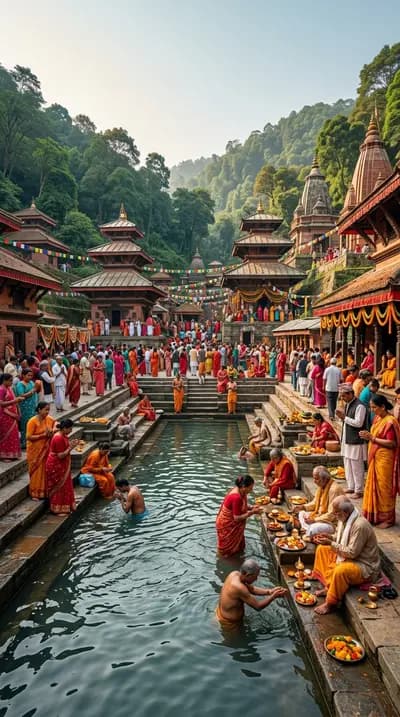 Aug 17 – Sep 16, 2027
Godavari Kunda
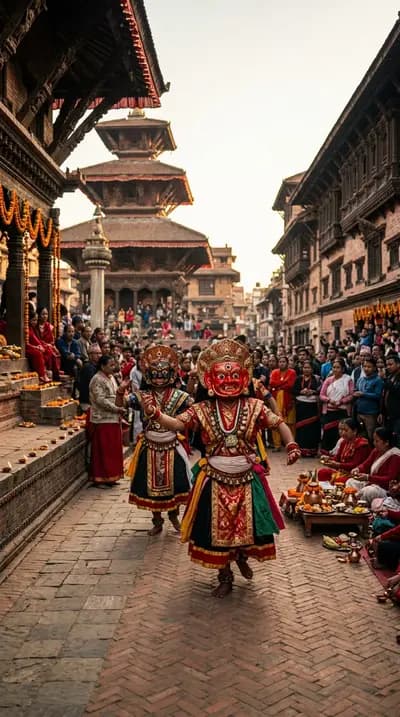 Nov 1 – Jan 1, 2028
Bhaktapur