 Nov 8 – Nov 8, 2026
Kathamandu
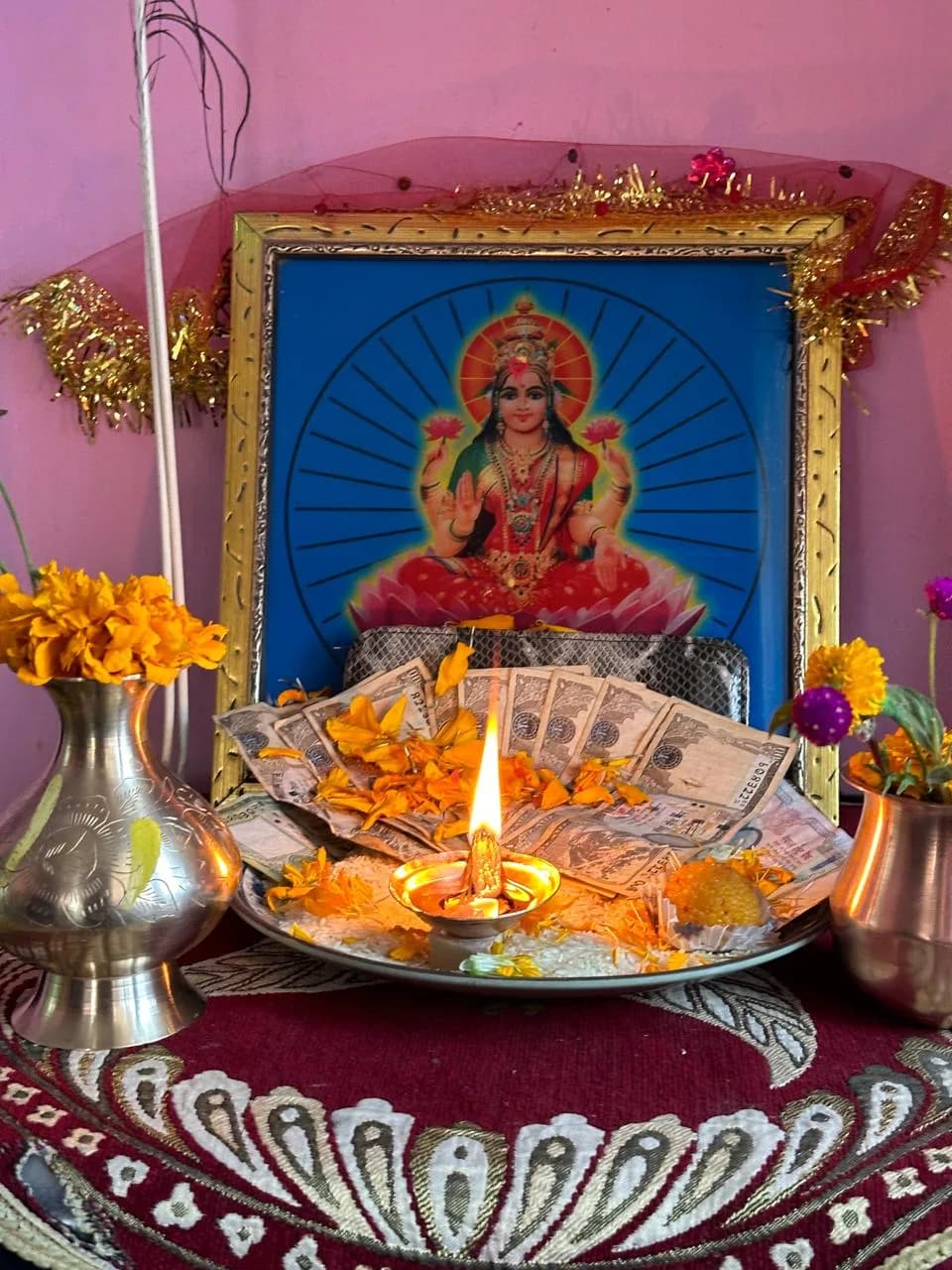
Laxmi Puja 2026 in Nepal: Tihar Festival Guide
Festival
1 Tag
Festival
Free
Kathamandu1 Tag
Event Details
Loading...
Event starts in
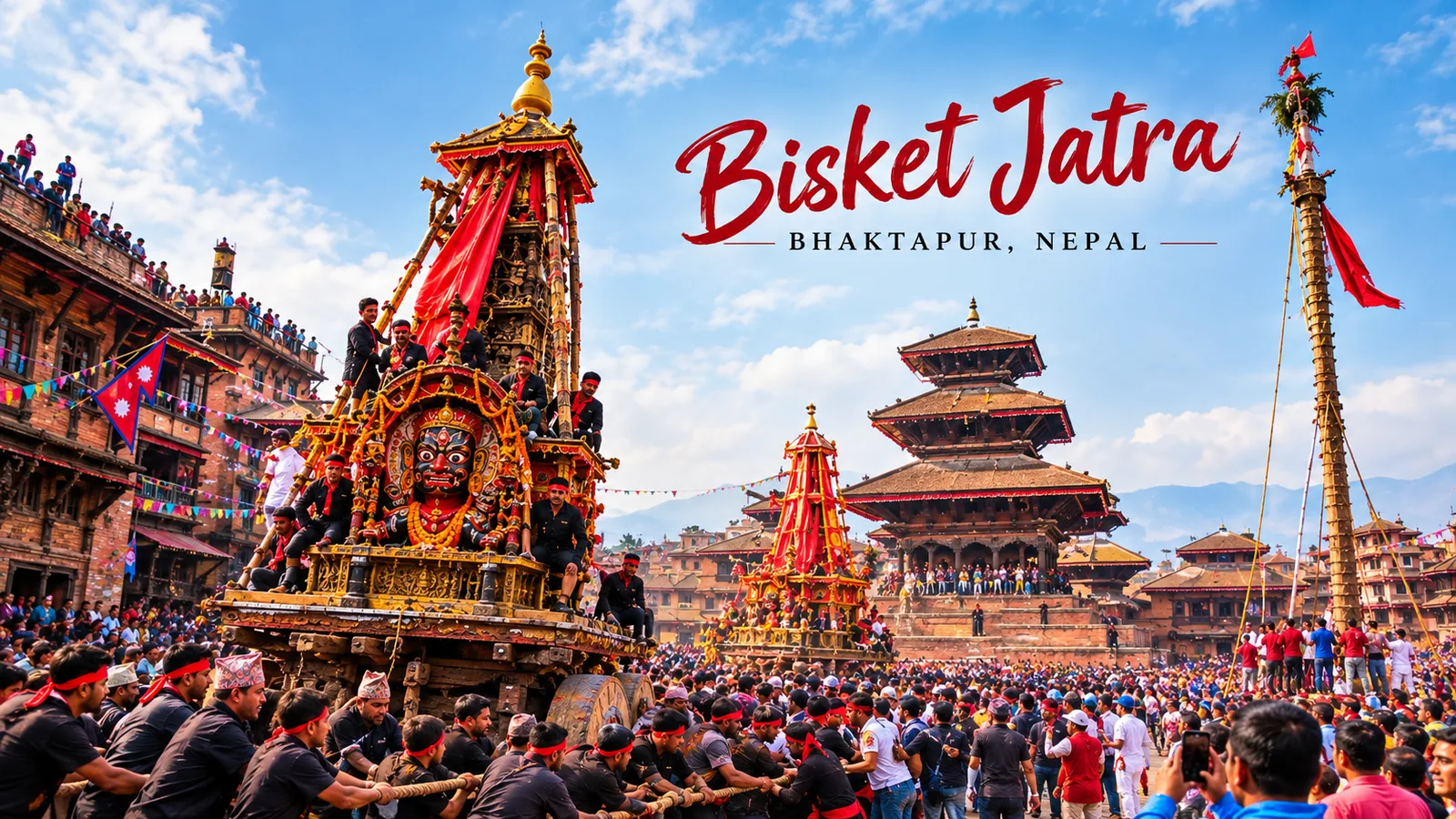
Bisket Jatra is one of the most exciting Newar festivals in Nepal, with its main celebrations taking place in the ancient city of Bhaktapur during the period around the Nepali solar New Year. Unlike many Nepalese festivals that follow a lunar calendar, Bisket Jatra follows a solar calendar, which is why its celebration comes around April each year. The festival is famous for huge wooden chariots, powerful community participation, traditional music, sacred rituals, and the raising of the tall lingo, or ceremonial pole. It is not simply a street event for visitors. For local people, it is a living part of religion, history, neighborhood identity, and community life. Visitors planning a cultural journey can begin their trip through Enticing Himalayas, where Nepal’s festivals, heritage places, cultural experiences, and Himalayan journeys can be combined into one meaningful travel plan.
The importance of Bisket Jatra comes from the way religion, legend, history, art, and community life come together. Bhaktapur has long been known as a major center of Newar culture, and the city continues to preserve old temples, courtyards, traditional music groups, festivals, crafts, and local rituals. During Bisket Jatra, these traditions move from temple spaces into public streets and squares. The large chariots become the focus of community activity, while devotees gather to worship deities and participate in rituals. The festival also creates a strong sense of local pride because different neighborhoods take part in the movement of the chariots. Travelers who want to understand this cultural setting should explore the Kathmandu Valley travel guide, which explains how Bhaktapur fits into the wider heritage landscape of Nepal.
The exact origin of Bisket Jatra has several layers of history and local belief, so it is better understood through both historical tradition and oral legends. The festival became strongly associated with Bhaktapur during the period of the Malla rulers, when elaborate public festivals and chariot traditions developed across the Kathmandu Valley. One popular explanation connects the name Bisket with a legend involving serpents and a princess, although interpretations of the name and story vary. Over time, the festival developed into a large public celebration involving Bhairava, Bhadrakali, chariots, the lingo, music, ritual, and neighborhood participation. This combination of history and living tradition makes Bisket Jatra different from a modern cultural show. It remains a community festival first and a tourism experience second.
One of the best-known stories connected with Bisket Jatra tells of a princess whose prospective husbands mysteriously died during the night. According to the popular legend, two snakes emerged and were responsible for the deaths. A brave man eventually discovered the cause and killed the serpents, saving the princess and ending the strange deaths. The festival's connection with serpents is also reflected in the long banners associated with the ceremonial lingo. However, travelers should remember that Nepalese festivals often have multiple versions of their stories. Oral traditions can differ between communities and generations. The value of the legend is therefore not only whether every detail can be proven historically, but how the story has remained part of the cultural memory of Bhaktapur. For broader cultural reading, visitors can explore Stories from the Himalayas before planning their festival journey.
Newar culture is central to understanding Bisket Jatra. The Newars of the Kathmandu Valley have developed a rich cultural system that includes architecture, sculpture, music, festivals, food, religious practice, trade, and traditional community organizations. Bisket Jatra brings many of these elements together in one event. The sounds of drums and traditional instruments mix with the movement of crowds, while temples and historic buildings create the setting for the rituals. Food is also an important part of festival life, with families preparing traditional dishes and sharing meals. Travelers should not see the Newar community only as performers for tourists. The festival belongs to the local people, and respectful visitors are guests in an active religious and cultural space. A traditional Nepali culinary experience can also help travelers understand the food traditions connected with Kathmandu Valley culture.
The heart of Bisket Jatra is Bhaktapur, one of the historic cities of the Kathmandu Valley. The old city is known for Bhaktapur Durbar Square, Nyatapola Temple, traditional brick streets, pottery, courtyards, and Newar architecture. However, celebrations connected with Biska Jatra also take place in surrounding areas, including Thimi, Bode, Nagadesh, Tokha, and other settlements. Each location has its own local traditions and style of celebration. This regional character makes the festival more than a single event at one square. A visitor can therefore experience different expressions of the same broad festival tradition. The Kathmandu Valley guide is useful when planning a route because Bhaktapur can easily be combined with other historic locations in the valley.
Bhaktapur is perhaps the best place to experience Bisket Jatra because the old city provides a remarkable setting for the festival. Its brick streets, temples, traditional houses, public squares, and carved wooden windows create a strong connection between the present and the medieval past. During the festival, normal city life changes as residents prepare for processions, religious ceremonies, music, and chariot movement. Important places such as Taumadhi Square, Pottery Square, and Bhelukhel become part of the festival landscape. Visitors should allow enough time to walk rather than trying to see everything quickly from a vehicle. The historic environment itself is part of the experience. Travelers interested in heritage can also read the Bhaktapur and Kathmandu cultural journey to see how Bhaktapur can fit into a wider Nepal itinerary.
One of the most powerful sights during Bisket Jatra is the large wooden chariot associated with Bhairava, a fierce form of Shiva. The chariot is traditionally prepared before the main procession, and local devotees gather to pull it through the historic streets. The movement can become intense because different groups of people pull from opposing directions. This is not a simple performance arranged for tourists. The pulling of the chariot has deep local meaning and involves strong participation from the community. The enormous size of the chariot, the narrow streets, the sound of drums, and the large crowds create an atmosphere that can feel overwhelming to first-time visitors. Anyone watching should maintain a safe distance and avoid standing directly in the path of the chariot.
Along with Bhairava, Bhadrakali has an important role in Bisket Jatra. The chariot of Bhadrakali forms part of the festival's religious structure and is involved in the movement and rituals that take place across Bhaktapur. The connection between the two deities is one reason the festival is more than a New Year street celebration. It contains layers of worship, symbolic movement, local history, and community ritual. When visitors see the chariots being pulled through the city, they should understand that the images inside are sacred and should be treated with respect. Good cultural tourism does not mean standing as close as possible to the action. It means observing carefully, following local instructions, and allowing devotees to complete their religious practices without interruption. The festival calendar of Nepal can help travelers discover other cultural events to combine with a Bhaktapur visit.
The chariot tug-of-war is one of the most recognizable parts of Bisket Jatra. Large groups of people pull the Bhairava chariot in opposite directions, creating a dramatic contest of strength and determination. The event can become very energetic, and crowds gather around the chariot to watch the movement. For visitors, it is an unforgettable sight, but it is also one of the moments when safety matters most. The ropes can move suddenly, people can fall, and the chariot itself is extremely heavy. Travelers should never hold a rope simply for a photograph without understanding the local situation. It is better to watch from a safe place and follow the directions of local organizers. The festival's excitement comes from real community participation, not from staged entertainment for tourists.
The lingo, also called the ceremonial pole, is another major symbol of Bisket Jatra. A tall wooden pole is raised as part of the festival rituals, with banners associated with the serpent legend hanging from the top. In Bhaktapur, the raising of the lingo at Bhelukhel is one of the most dramatic moments of the festival. The process requires coordination and traditional knowledge, and the pole is handled through community effort. In 2026, reports described the erection of the lingo as part of the eight-night, nine-day festival, followed by its lowering toward the end of the celebration. This ritual gives the festival a strong visual identity and connects physical action with symbolic meaning. Visitors should watch from a safe position because the pole and surrounding crowds can create dangerous conditions.
The lingo is not simply a tall wooden pole placed in a public square. It is part of the symbolic language of Bisket Jatra. Long banners connected with the pole are commonly interpreted in relation to the serpent legend, while the raising and lowering of the structure form important points in the festival calendar. The ritual also demonstrates the community's ability to organize a large traditional ceremony without turning it into a modern stage event. For travelers, this is one of the best examples of living heritage in Nepal. The meaning of the lingo becomes clearer when it is seen together with the chariots, temples, music, religious offerings, and community groups around it. A cultural itinerary with Enticing Himalayas can place the festival inside a wider exploration of Nepal's living traditions rather than treating it as an isolated attraction.
Bisket Jatra takes place around the time of Nepali New Year, making April a particularly lively period in Bhaktapur. However, it is useful to understand that the festival has its own history and ritual structure and should not simply be described as a New Year party. The solar calendar gives the festival a regular place in the spring season, while its religious practices come from older traditions. During this period, visitors can experience a city where traditional worship and modern daily life meet. People visit temples, meet relatives, watch processions, eat local food, and participate in community events. Travelers who want a deeper understanding of the cultural calendar can explore the Nepal festival calendar and compare Bisket Jatra with other major celebrations such as Indra Jatra, Dashain, Tihar, and Holi.
Madhyapur Thimi, near Bhaktapur, has its own important celebration connected with Biska Jatra. The most famous feature is Sindoor Jatra, when participants cover one another with bright vermilion powder. Processions carrying images of deities move through the town while music, dancing, and crowds create a joyful atmosphere. The event has a different character from the intense chariot pulling in Bhaktapur, showing how one festival tradition can develop different forms in nearby communities. Travelers who have enough time should consider visiting both Bhaktapur and Thimi rather than seeing only one location. This creates a richer understanding of the wider Newar festival network. When planning cultural travel in the Kathmandu Valley, Enticing Himalayas' Nepal journeys can be used as a starting point for building a route around heritage cities and festivals.
Another unusual tradition associated with the wider Bisket Jatra period takes place in Bode, where a devotee participates in a traditional tongue-piercing ceremony. The ritual involves an iron spike and is connected with religious faith and local belief. Reports describe the devotee carrying flaming torches as part of the ceremony. For international visitors, this can be surprising, but it should be understood within its religious and cultural context rather than judged only through modern ideas of entertainment. Photography should be done carefully and only when appropriate. Visitors should never approach the participant or interfere with the ritual for a better photograph. A respectful distance is essential. The ceremony demonstrates why Nepal's festivals cannot always be reduced to simple tourist attractions; many involve practices that remain deeply meaningful to local communities.
Traditional music is an essential part of the atmosphere of Bisket Jatra. Drums, cymbals, horns, and other traditional instruments accompany processions and religious activities. Music helps organize movement and creates a shared rhythm among participants. For visitors, listening carefully can reveal how different the festival experience is from watching a modern parade. The sound comes from within the community rather than from a stage prepared for tourists. Traditional music also links Bisket Jatra with wider Newar cultural practices, where musical groups have long played important roles during temple ceremonies and festivals. Visitors should avoid blocking musicians, touching instruments without permission, or using flash photography close to performers. The best approach is simple: observe, listen, and allow the cultural moment to happen naturally.
Food adds another important layer to the Bisket Jatra experience. The Kathmandu Valley is famous for Newari cuisine, which includes dishes such as bara, choila, chatamari, samay baji, yomari, and other traditional foods. During festivals, food becomes a way for families and communities to gather, celebrate, and maintain cultural traditions. Bhaktapur is also famous for juju dhau, a rich traditional yogurt served in clay pots. Travelers should try local foods from clean and trusted places and remember that festival crowds can make popular food areas busy. A useful way to explore the culinary side of the valley is through the Traditional Nepali Culinary & Food Tour, which introduces travelers to local food and the cultural stories behind it.
Bhaktapur Durbar Square becomes even more fascinating when experienced during festival season. The square and nearby streets contain temples, palace buildings, courtyards, statues, and traditional houses that show the depth of Newar architecture. During Bisket Jatra, these historic surroundings become active cultural spaces rather than quiet monuments. This is one reason the festival offers such strong opportunities for cultural photography. However, visitors should remember that a temple courtyard or shrine may be a religious space even when it looks like a tourist attraction. Do not climb sacred structures, touch idols, block rituals, or enter restricted areas. Before or after the festival, travelers can read the Bhaktapur section of the Kathmandu Valley guide to understand the city's history and major monuments.
The Nyatapola Temple is one of Bhaktapur's most recognizable landmarks and stands near the center of the old city. Its five levels and strong architectural form provide a dramatic background for the festival atmosphere. Visitors often combine a Bisket Jatra experience with time around Taumadhi Square, where the temple and surrounding buildings help create one of the most memorable scenes in the Kathmandu Valley. The festival gives travelers an opportunity to see how architecture, religion, and community life interact. Instead of simply taking a photograph of Nyatapola, look at how people move through the square, how shops and homes interact with the public space, and how religious traditions continue around the old buildings. The Bhaktapur heritage journey offers another useful way to understand this historic city.
The best time to experience Bisket Jatra is during the main festival period in April, when Bhaktapur's streets become active with processions, rituals, music, and crowds. Because the festival follows the solar calendar, its timing is more predictable than many lunar festivals, although exact local schedules and individual rituals should still be checked before travel. Visitors should ideally arrive in Bhaktapur early on major festival days because streets can become very crowded and transportation may be affected. Staying nearby can also make the experience easier because travelers do not have to depend on returning to Kathmandu after the main events. For updated planning, check the Nepal Festival Calendar before confirming your itinerary.
The best way for a visitor to experience Bisket Jatra is to behave like a respectful guest rather than a spectator at a show. Wear comfortable clothing, carry water, keep valuable items secure, and use a small bag because crowds can become very dense. Ask before photographing people, especially during religious rituals. Never climb onto chariots or ceremonial structures, touch sacred objects without permission, or stand in the path of moving chariots. During the tug-of-war, stay well behind the active area. If local officials or community members ask people to move, follow their instructions immediately. Cultural tourism works best when the visitor's presence supports rather than disrupts local life. A wider Nepal cultural travel experience can also include heritage sites, food, temples, and village traditions beyond the festival itself.
Travelers attending Bisket Jatra should prepare for crowds, walking, changing weather, and long periods outdoors. Comfortable walking shoes are important because much of the experience takes place on foot through old brick-paved streets. Bring a reusable water bottle, sunglasses, sunscreen, a light jacket, a small backpack, and a phone or camera with enough battery. A small amount of Nepali cash is useful for food and local purchases. Avoid carrying large luggage into crowded festival areas. If you plan to photograph the festival, bring extra battery power but remain careful about where you stand. Festival days can become physically tiring, so take breaks when needed. Visitors who want to add a cultural food experience can also consider the Nepali culinary activity as part of their Kathmandu Valley itinerary.
Bisket Jatra can be interesting for families, especially those who want children to learn about Nepal's living culture, architecture, religion, and traditional festivals. However, parents should understand that some events are extremely crowded and physically intense. The chariot pulling and tug-of-war are not ideal places for very young children because people can move suddenly and the crowd may become difficult to control. Families can choose quieter parts of Bhaktapur, visit temples and historic squares, taste local food, and observe cultural activities from a safe distance. Older children may enjoy learning how the chariots are built and why the lingo is important. Before traveling, families can use Enticing Himalayas to explore cultural and family-friendly Nepal experiences that can be combined with the festival.
Photography is one of the reasons Bisket Jatra attracts travelers and photographers from around the world. The wooden chariots, old temples, traditional clothing, musicians, crowds, and lingo create powerful visual scenes. Yet good festival photography requires patience and respect. Instead of pushing through a crowd for a close shot, find a safe location and wait for the moment to come to you. Ask permission before taking close portraits of individuals, especially older people, religious participants, or people involved in private rituals. Avoid using bright flash close to ceremonies. Most importantly, do not risk your own safety for a photograph. The festival will always be more valuable as a cultural experience than as a collection of photographs. Travelers can also read Kathmandu's cultural travel stories for ideas on combining photography with heritage exploration.
Cultural tourism in Nepal is strongest when travelers learn from communities rather than simply consuming cultural images. Bisket Jatra offers an excellent example because the festival remains deeply connected with local religious life. Visitors can support the local economy by using local restaurants, buying traditional crafts from legitimate sellers, staying in local accommodation, and hiring knowledgeable guides. At the same time, tourism must not pressure communities to change rituals simply to satisfy visitors. The goal should be mutual respect. Festivals should remain meaningful for residents while visitors gain a better understanding of Nepal. This approach fits well with the travel philosophy presented by Enticing Himalayas, which focuses on local guides and authentic experiences rather than only checking famous places from a list.
Responsible travel becomes especially important during major festivals because thousands of people can gather in a small historic area. Travelers should avoid littering, respect private homes, use designated paths, and avoid unnecessary plastic. They should also be aware that local residents still need to work, shop, pray, and move around the city during the festival. Blocking doorways or narrow streets for photographs can create problems. Visitors should be patient when roads close or transportation is delayed. Festival crowds can also create opportunities for petty theft, so phones, wallets, and passports should be kept secure. A responsible traveler leaves the festival area cleaner and calmer than they found it. Other cultural experiences can be discovered through the Nepal festival and cultural calendar, helping visitors spread travel across different communities and seasons.
One of the best reasons to visit Bisket Jatra is that it can become part of a larger Kathmandu Valley cultural journey. Travelers can spend time in Bhaktapur, then explore Patan and Kathmandu, visit ancient temples, walk through traditional courtyards, and taste Newari food. The valley's three historic cities each have their own character and festival traditions. Bisket Jatra therefore becomes an entry point into a much wider story about Nepal's art, religion, architecture, and urban history. The Kathmandu Valley destination guide provides useful context for planning this wider journey. Visitors who prefer a structured route can also consider a Nepal spiritual and cultural tour that includes Bhaktapur alongside other major heritage sites.
Bisket Jatra is only one part of Nepal's remarkable festival calendar. Travelers may also encounter Indra Jatra, Dashain, Tihar, Holi, Teej, Gai Jatra, Yomari Punhi, Rato Machhindranath Jatra, Mani Rimdu, Tiji, Losar, and many regional celebrations. Each festival has its own community, religious meaning, food, music, and seasonal setting. Comparing festivals helps travelers understand that Nepal does not have one single culture. It is a country of many communities and traditions. The Nepal festival calendar is especially useful for visitors who want to choose travel dates around cultural events rather than simply around weather. This makes a Nepal trip more meaningful because the traveler sees living traditions instead of only monuments.
Bisket Jatra deserves a place on a Nepal travel itinerary because it combines history, religion, architecture, music, food, legend, and community life in a way that few modern events can match. The huge chariots create dramatic scenes, the lingo connects the festival with ancient symbolism, and Bhaktapur's historic streets provide an extraordinary setting. But the greatest value is not the spectacle. It is the chance to see how cultural traditions remain part of everyday life. A visitor who takes time to understand the meaning behind the rituals will gain far more than someone who simply arrives with a camera. For travelers looking for authentic experiences, Enticing Himalayas can help connect a Bisket Jatra visit with wider cultural, spiritual, food, and heritage experiences across Nepal.
Bisket Jatra is much more than a festival in Bhaktapur. It is a living expression of Newar history, faith, art, community identity, and seasonal change. The chariots represent the strength of collective participation, the lingo carries layers of symbolism, and the old streets of Bhaktapur turn into an active cultural space. For travelers, the festival offers something that a normal sightseeing tour cannot provide: a chance to see heritage being practiced rather than simply displayed. When experienced responsibly, Bisket Jatra can become one of the most memorable parts of a Nepal journey. Explore Enticing Himalayas, discover the wider Kathmandu Valley, read more Nepal travel stories, explore a traditional culinary activity, and check the festival calendar when planning your next cultural adventure.
Key experiences and features
Traditional Newar festival in Bhaktapur
Giant Bhairava chariot procession
Bhadrakali chariot ceremony
Traditional lingo pole raising
Traditional Newari music and rituals
Recommended packing list
Kathmandu, Kathmandu, Bagmati, Nepal
Got questions about this event?
Bisket Jatra, also known as Biska Jatra, is a major Newar festival celebrated mainly in Bhaktapur around the Nepali New Year. The festival is famous for giant chariots of Bhairava and Bhadrakali, traditional music, religious rituals, the dramatic tug-of-war, and the raising of the sacred lingo pole. It is celebrated for approximately eight nights and nine days and is one of the most important cultural festivals in the Kathmandu Valley.
Bisket Jatra is generally celebrated in April, around the beginning of the Nepali solar New Year. Unlike many Nepalese festivals that follow the lunar calendar, Bisket Jatra follows the solar calendar. The exact dates and daily programs may change each year, so visitors should check the official local schedule before planning their trip.
The main celebration takes place in Bhaktapur, especially around Taumadhi Square, Pottery Square, Bhelukhel, and the historic city streets. Related Biska Jatra celebrations are also held in Madhyapur Thimi, Bode, Nagadesh, Tokha, Sanga, and other areas of the Kathmandu Valley. Each location has its own local rituals and cultural style.
The main attractions include the Bhairava chariot procession, the Bhadrakali chariot, the exciting chariot tug-of-war, and the raising and lowering of the tall lingo, or sacred ceremonial pole. Visitors may also experience traditional Newar music, temple rituals, local food, and related celebrations such as Sindoor Jatra in Thimi and the tongue-piercing ceremony in Bode.
Yes, tourists can attend Bisket Jatra in Bhaktapur and observe its processions, rituals, music, and cultural activities. Visitors should arrive early, expect large crowds, keep their belongings safe, and stay away from moving chariots and tug-of-war areas. It is also important to ask permission before taking photographs and respect local religious customs throughout the festival.
Apr 10 – Apr 18, 2027
8 days
Quick Info
More festival experiences
Nov 8 – Nov 8, 2026Kathamandu
 Aug 17 – Sep 16, 2027
Godavari Kunda
 Jan 15 – Jan 16, 2027
Swayambhu Bhuikhhel