 Mar 23 – Mar 7, 2027
Kathmandu
Seto Machindranath Jatra 2027: Kathmandu’s Sacred Festival
Culture
5 Tage
Festival
Free
Kathmandu 5 Tage
Event Details
Loading...

Event starts in
Chandeshwori Jatra is one of the most important traditional festivals of Banepa, Kavrepalanchok, bringing together religious devotion, Newar culture, ancient legends, traditional music, community rituals, and a spectacular chariot procession. Held around Baisakh Shukla Purnima, the full moon of the first month of the Nepali lunar calendar, the celebration transforms historic Banepa into a lively center of worship and cultural activity. Recent reporting describes the festival as a three-day celebration, with the main rituals centered on Chandeshwori Temple and the old city.
For travelers interested in experiencing Nepal festivals, Chandeshwori Jatra offers something different from the better-known celebrations of Kathmandu and Bhaktapur. It is deeply connected with the local Newar community of Banepa rather than being primarily organized for visitors. The narrow streets, traditional houses, temple courtyards, devotional music, processions, and community gatherings create an atmosphere that feels personal and strongly rooted in local identity.
Banepa itself is an important historic settlement east of Kathmandu. Its location makes the festival relatively accessible for travelers staying in the Kathmandu Valley, while its old streets and religious heritage provide plenty of reasons to stay longer than the main festival hours.
If you are planning a cultural journey through Nepal, the Kathmandu Valley heritage guide is useful for understanding how Banepa's traditions fit into the wider cultural landscape of the valley and surrounding towns.
Chandeshwori Jatra is a traditional religious and cultural festival in Banepa dedicated to Goddess Chandeshwori, a powerful form of the mother goddess worshipped by local communities. The central focus is Chandeshwori Temple, where devotees gather for prayers, offerings, rituals, and ceremonial activities before the goddess is taken through parts of the historic town.
The festival is especially significant to the Newar community of Banepa. Families, neighborhood groups, musicians, priests, and traditional organizations all contribute to the celebration. Rather than being a single temple ceremony, the jatra connects the temple with streets, courtyards, homes, markets, and historic public spaces.
The most recognizable part of the festival is the chariot procession. The image of the goddess is placed in a ceremonial vehicle and carried through the old city. Devotees gather along the route to offer prayers and receive blessings.
This combination of sacred ritual and public celebration is characteristic of many traditional festivals in Nepal. The Kathmandu Valley and nearby historic towns are known for living traditions in which religious ceremonies continue to occupy public streets rather than remaining inside isolated religious buildings.
For visitors, this makes Chandeshwori Jatra especially interesting. You are not simply watching a performance. You are witnessing a community observance in which local residents themselves are the principal participants.
Travelers who want to understand similar traditions can also read about the spiritual traditions of Nepal before arriving.
The festival takes place in Banepa Municipality in Kavrepalanchok District, east of Kathmandu. The main religious center is Chandeshwori Temple, located in the northeastern part of historic Banepa.
Banepa has long been an important trading and cultural settlement connecting Kathmandu with eastern Nepal. Its old urban core contains traditional Newar houses, temples, courtyards, shrines, and narrow streets that become especially lively during the jatra.
The location is one of the festival's major attractions. Instead of seeing the celebration inside a modern event venue, visitors encounter it within the historic town itself.
The Kathmandu Valley destination guide explains the broader heritage environment around Kathmandu, Patan, Bhaktapur, and surrounding cultural destinations.
The festival is connected with the legend of Goddess Chandeshwori defeating the demon Chandasur. According to the traditional story, the demon had become a threat to the gods and people. Because of a special boon, he could not be defeated by a male deity, so the mother goddess appeared and ultimately defeated him.
The Chandeshwori Temple is traditionally associated with this victory. A historical report on the temple connects the annual Baisakh Purnima celebration with the goddess's victory over the demon and describes the temple as an important historic religious site in Banepa.
The legend gives the festival a deeper meaning than entertainment alone. The victory represents the triumph of divine power over destructive forces and the protection of the community.
During the jatra, worshippers therefore do more than watch a procession. They participate in an inherited tradition of worshipping the goddess and maintaining the relationship between the deity, the community, and the historic town.
For travelers interested in the spiritual side of Nepal, the Nepal spiritual journey provides additional cultural context.
The exact historical origin of Chandeshwori Jatra is difficult to establish with complete certainty because traditional oral history, religious legends, and historical accounts provide different timelines.
Some local accounts describe the festival as being celebrated for around 2,500 years, while older historical reporting has proposed different dates for the establishment of the temple and festival. A 1983 architectural report suggested that the temple itself may have been founded in the 17th century, while also recording a much older religious legend connected with the site.
Recent Nepalese reporting continues to describe Chandeshwori Jatra as an extremely old tradition and emphasizes its long association with Banepa's Newar community.
For SEO and factual accuracy, it is better to describe the festival as a centuries-old or traditionally ancient festival rather than presenting one disputed numerical age as an established archaeological fact.
What is certain is that the festival has remained important to Banepa's cultural identity for generations.
That continuity is perhaps more significant than an exact starting year. The jatra survives because people continue to participate in it, pass rituals from one generation to another, maintain the temple, organize processions, prepare offerings, and teach younger community members about the traditions.
Visitors looking for more examples of Nepal's living heritage can explore the Nepal festival calendar for other celebrations throughout the year.
At the center of the celebration is Chandeshwori Temple, the principal shrine of Goddess Chandeshwori in Banepa.
The temple has strong architectural and cultural importance. Traditional accounts describe it as a pagoda-style structure, and historical documentation records multiple periods of repair and alteration.
During the jatra, the temple becomes the starting point for many rituals. Residents decorate the area, clean their homes and surroundings, prepare offerings, and participate in worship.
The temple is not simply an architectural monument. It remains an active place of worship.
That distinction matters for travelers. Visitors should treat the site as a sacred religious space rather than a tourist attraction. Appropriate clothing, quiet behavior, and sensitivity around photography are important.
The best way to understand a temple such as Chandeshwori is to see it as part of a living community rather than as an isolated historic building.
Chandeshwori Jatra is traditionally celebrated on Baisakh Shukla Purnima, the full moon day of the Baisakh month according to the Nepali lunar calendar, and the main celebration generally continues for around three days. Since the festival follows the lunar calendar, its date in the Gregorian calendar changes each year. Travelers planning to attend Chandeshwori Jatra 2027 should confirm the exact dates with the official Nepali calendar and local organizers before arranging transportation and accommodation. The festival usually begins with preparations, household worship, and religious activities at Chandeshwori Temple, followed by important temple rituals and the ceremonial procession of the goddess through the historic areas of Banepa. The chariot procession is one of the main highlights, with devotees gathering along the route to participate in worship and receive blessings. Other activities include worship at important religious locations, traditional music, community gatherings, and the eventual return of the deity to the temple. Because individual rituals and procession timings can vary from year to year, visitors should avoid relying entirely on unofficial schedules published far in advance and should check the latest local information before visiting.
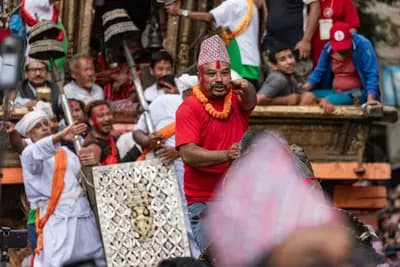
The Chandeshwori chariot procession is the visual centerpiece of the festival.
The image of the goddess is ceremonially placed on a traditional vehicle and taken through the historic parts of Banepa. Local residents gather along the streets while traditional music accompanies the procession.
According to recent reporting, the procession passes through the old market area and eventually returns the goddess to the temple after visiting important locations in the historic town.
The movement of the chariot creates a connection between the temple and the wider community. Streets that normally function as everyday transportation routes become temporary ceremonial spaces.
This is one of the most interesting aspects of Newar festivals in Nepal. Public spaces can become sacred during a procession, and ordinary streets can suddenly carry centuries of religious meaning.
Visitors should never push into the procession or attempt to stop the chariot for photographs. Finding a safe position at the side of the route is a much better way to observe.
Those interested in photography should focus on the atmosphere, architecture, musical instruments, decorations, and wider crowd rather than photographing individual worshippers without permission.
Music plays an important role in creating the atmosphere of Chandeshwori Jatra.
Traditional instruments accompany processions and religious activities, while local groups gather in neighborhoods for devotional performances and community celebrations.
The soundscape is one of the easiest ways for travelers to recognize that the jatra is taking place. Drums, bells, devotional singing, crowd movement, and ceremonial announcements combine with the visual elements of the procession.
The community dimension is equally important.
A festival like this requires cooperation. People prepare food, organize routes, clean public areas, decorate religious spaces, support processions, and participate in ceremonies.
That collective effort is one reason Chandeshwori Jatra remains meaningful to local residents.
It also demonstrates why cultural tourism in Nepal should be approached carefully. A visitor's role is to observe and learn, not to turn every ritual into a spectacle.
Banepa is strongly associated with Newar history and culture, and Chandeshwori Jatra provides an opportunity to experience this heritage outside the more internationally famous cities of Kathmandu, Patan, and Bhaktapur.
The festival reflects several characteristics associated with traditional Newar urban culture:
Community-based organization
Temple-centered neighborhoods
Traditional music
Ritual processions
Historic architecture
Local food traditions
Religious ceremonies
Strong family participation
The Kathmandu Valley and its surrounding historic towns are particularly rich in this kind of living heritage. The valley's cultural identity is shaped by Newar art, architecture, festivals, crafts, and religious traditions.
If you are interested in understanding Newar culture through food as well as festivals, the traditional Nepali food tour offers a focused cultural experience featuring Newari dishes and heritage food traditions.
At its heart, Chandeshwori Jatra is a religious celebration.
The goddess is worshipped as a powerful protective figure, and the story of her victory over Chandasur provides the central religious narrative.
For devotees, the procession is therefore not simply something to watch. It is a form of participation in a sacred tradition.
Offerings, prayers, blessings, ritual movements, and the presence of the deity all contribute to the spiritual significance of the celebration.
Travelers who come from different religious backgrounds can still appreciate the festival by learning about its symbolism and observing respectfully.
You do not need to participate in every ritual to experience the festival. Often, careful observation provides the most meaningful introduction to the traditions.
For visitors building a wider religious itinerary, the Hindu and Buddhist circuit provides broader context about Nepal's diverse sacred traditions.
Nepal has hundreds of festivals, but Chandeshwori Jatra has several characteristics that make it particularly interesting.
First, it is strongly connected with a specific historic town.
Second, the festival remains closely connected with the local community rather than being primarily designed for international visitors.
Third, the chariot procession brings the goddess into the public spaces of Banepa.
Fourth, the celebration combines mythology, religion, architecture, music, food, and community identity.
Finally, it gives travelers an opportunity to explore an important cultural destination that receives less international attention than Kathmandu, Patan, or Bhaktapur.
This makes Banepa a particularly interesting stop for travelers who want to move beyond Nepal's most photographed tourist attractions.
The best time to experience Chandeshwori Jatra is during the official festival period around Baisakh Purnima, when Banepa becomes lively with religious ceremonies, traditional processions, and community celebrations. Visitors should ideally arrive in Banepa several hours before the main procession begins, giving them enough time to visit Chandeshwori Temple, explore the historic old town, observe festival preparations, find a suitable viewing position, and experience the atmosphere before the largest crowds gather. Early arrival can also help travelers avoid heavy traffic and better understand the procession route. The weather during Baisakh is generally warmer than the winter months, although conditions can vary depending on the corresponding Gregorian date. Comfortable and breathable clothing is recommended during the warmer daytime hours, while a light layer can be useful in the morning. Since experiencing the festival may involve several hours of walking and standing on historic streets, comfortable walking shoes are strongly recommended for visitors.
Banepa is located east of Kathmandu and is accessible by road.
Travelers can reach Banepa by private vehicle, taxi, or public transportation. The route generally follows the Kathmandu–Bhaktapur–Banepa corridor.
Travel time depends heavily on traffic, road conditions, and the exact starting point in Kathmandu.
During Chandeshwori Jatra, traffic and pedestrian movement can become heavier than usual, especially near the old city.
For this reason, visitors attending the main procession should leave Kathmandu early rather than assuming that normal travel times will apply.
A private vehicle can provide greater flexibility, but parking near the festival area may be difficult. Public transport can be economical but may require walking after reaching the town center.
If your itinerary already includes Kathmandu Valley heritage sites, adding Banepa can create a broader cultural route rather than making it a separate trip.
One of the biggest mistakes travelers can make is visiting Banepa only for the procession and leaving immediately afterward.
The town has its own historic atmosphere.
Traditional streets, old houses, temples, courtyards, local markets, and nearby religious sites make Banepa worth exploring even outside festival hours.
You can walk through the older parts of the town, observe traditional architecture, visit local temples, and try Newari food.
The surrounding Kavrepalanchok region also offers access to destinations such as Panauti and Dhulikhel.
Travelers who enjoy combining culture and food can make the day more varied by including a Newari food experience as part of their wider Kathmandu Valley itinerary.
Panauti is an excellent cultural addition to a Banepa itinerary.
The historic town is known for its temples, traditional architecture, courtyards, and quieter atmosphere. Because Banepa and Panauti are relatively close, travelers can combine both destinations in a cultural day trip depending on the festival schedule.
A route combining Banepa, Panauti, and Dhulikhel can provide a broader picture of the cultural landscape east of Kathmandu.
This is particularly attractive for travelers who have already visited the major Kathmandu Valley heritage sites and want to discover less crowded historic communities.
The key is to avoid trying to fit too many locations into the main festival day. Chandeshwori Jatra deserves time on its own.
Another option is to build Chandeshwori Jatra into a larger cultural journey.
Kathmandu, Patan, Bhaktapur, Banepa, Panauti, and nearby hill towns all represent different layers of Nepal's cultural history.
Kathmandu offers major temples and urban festivals.
Patan is renowned for metalwork, Buddhist monasteries, and its Durbar Square.
Bhaktapur preserves a remarkable medieval urban environment.
Banepa provides a more locally centered festival experience.
Panauti offers a quieter historic setting.
Together, these destinations create a strong cultural itinerary.
The Kathmandu cultural overview is a useful starting point for organizing the wider route.
If your main interest is heritage rather than trekking, consider building the journey around temples, historic towns, food, and festivals.
A cultural itinerary can begin in Kathmandu and continue through Patan and Bhaktapur before moving toward Banepa.
This approach allows travelers to understand the relationship between architecture and religious practice.
Instead of simply collecting photographs of temples, you can learn why certain courtyards exist, how festivals use public streets, why chariots are important, and how local communities maintain religious traditions.
Enticing Himalayas also focuses on locally guided cultural experiences, so a Kathmandu heritage itinerary can be adapted around festival dates when appropriate.
Food is an important part of experiencing Banepa during Chandeshwori Jatra, as Newari cuisine is closely connected with festivals, family gatherings, religious traditions, and community celebrations. Depending on the season and local availability, travelers may have the opportunity to try traditional dishes such as Samay Baji, Bara, Choila, Yomari, Aloo Tama, Chatamari, Newari pickles, local curd, and traditional sweets. These foods are more than simple dishes for visitors to taste, as many have cultural, social, and ceremonial meanings within Newar communities. Exploring local food during the festival can help travelers understand how meals are connected with religious offerings, family celebrations, neighborhood traditions, and community life in Banepa. Visitors should therefore approach local cuisine as part of the wider cultural experience rather than treating it only as a tourist attraction. For travelers who want a dedicated culinary experience, the Nepali culinary food tour focuses on traditional foods and Newar culinary heritage.
Chandeshwori Jatra can be fascinating for photographers.
The combination of traditional architecture, decorated temples, processions, musical instruments, colorful clothing, crowds, and religious ceremonies provides many opportunities for documentary photography.
However, photography should always remain secondary to respect.
Before photographing a person closely, ask permission.
Do not block the procession.
Do not climb onto religious structures for a better angle.
Avoid entering restricted areas.
Do not use flash close to sensitive ceremonies unless clearly permitted.
When photographing children, elderly devotees, priests, or people performing private rituals, additional sensitivity is appropriate.
The best photographs often come from observing rather than interrupting.
A wide image showing the relationship between the chariot, old houses, musicians, and crowd can communicate much more about the festival than a close-up portrait.
Responsible tourism matters particularly during religious festivals because large crowds can put pressure on local communities.
Visitors should carry reusable water bottles, avoid unnecessary plastic, use designated waste facilities, and avoid damaging public or religious spaces.
It is also important to respect local businesses.
Buying food from local vendors, using local guides, staying in locally owned accommodation, and purchasing traditional products can help tourism benefits remain within the community.
Most importantly, visitors should remember that Chandeshwori Jatra is a religious festival first and a tourism experience second.
This simple principle can guide almost every decision you make while attending.
For a wider perspective on responsible travel, the Nepal spiritual travel guide also discusses appropriate behavior at sacred places.
Modest, comfortable clothing is the safest choice.
Avoid clothing that is excessively revealing when visiting the temple or joining the procession area.
Lightweight trousers, long skirts, shirts, and comfortable walking shoes are practical.
Because you may spend considerable time walking and standing, fashionable but uncomfortable footwear can become a problem.
A small day bag is useful for water, phone, camera, rain protection, and personal items.
Keep valuables secure because crowded festival streets can become difficult to navigate.
If you are traveling specifically for Chandeshwori Jatra, staying in or near Banepa can make the experience easier.
It allows you to reach the temple area early without depending on Kathmandu traffic.
Alternatively, travelers who prefer more accommodation choices can stay in Kathmandu and make Banepa a day trip.
Dhulikhel is another practical option for travelers who want a quieter hill-town environment and mountain views.
The right choice depends on whether your priority is festival access, accommodation comfort, or combining several destinations.
If the main procession begins early, staying closer to Banepa is usually more convenient.
Chandeshwori Jatra offers a type of cultural experience that is becoming increasingly valuable in Nepal.
Many travelers visit famous monuments, take photographs, and move on.
A festival provides the chance to see those cultural traditions in action.
A temple becomes more than architecture when hundreds of people gather to worship there.
A historic street becomes more than an old road when a deity's chariot passes through it.
A traditional musical instrument becomes more meaningful when you understand why it accompanies the procession.
A local meal becomes more interesting when you learn its connection with community celebrations.
That is why festivals can transform a normal Nepal itinerary into a much deeper cultural journey.
Nepal's festival calendar is exceptionally diverse.
Different communities celebrate religious festivals, harvest traditions, seasonal events, masked dances, chariot processions, temple fairs, and family ceremonies throughout the year.
Some are internationally famous, while others remain strongly local.
Chandeshwori Jatra belongs to the second category.
Its relative lack of international publicity can actually be an advantage for travelers looking for authentic experiences.
You may encounter fewer organized tourist groups and more direct interaction with local community life.
The experience also demonstrates an important principle of festival tourism in Nepal: authenticity does not mean the absence of crowds or modern life. It means seeing a tradition being practiced for its original community purpose.
The Nepal festival calendar can help travelers compare Chandeshwori with other celebrations across the country.
A good festival trip starts with the date.
Because Chandeshwori Jatra follows the lunar calendar, check the exact annual date before booking flights, hotels, or transportation.
Next, identify where the main procession will take place and what time you need to arrive.
Then plan your accommodation.
If you are staying in Kathmandu, allow extra road time.
If you are staying in Banepa, book early during the festival period because local demand can increase.
Finally, keep your itinerary flexible.
Festival schedules can change because of local decisions, weather, rituals, traffic, and community requirements.
Do not create a tightly packed schedule that requires you to leave the procession at an exact minute.
The festival itself should be the priority.
A simple day could begin early at Chandeshwori Temple.
Spend some time observing the temple environment before the largest crowds arrive.
Walk toward the old town and explore the surrounding streets.
Find a safe location near the procession route.
Watch the chariot movement without interfering.
Take time for local food after the busiest part of the ceremony.
In the afternoon, explore another historic area of Banepa or continue toward Panauti if the festival schedule allows.
Return to Kathmandu or stay overnight in Banepa or Dhulikhel.
This slower approach is much better than trying to combine the festival with five or six unrelated attractions.
For travelers with more time, Chandeshwori Jatra can become part of a wider cultural itinerary.
This route combines major heritage sites with a more local festival experience.
Travelers interested in spiritual tourism can also extend the itinerary toward major Hindu and Buddhist pilgrimage sites.
The Hindu Buddhist pilgrimage guide provides a useful framework for a broader religious journey.
Visitors should remember several simple rules.
Dress modestly.
Remove shoes where required.
Ask before photographing people.
Never touch religious objects unless invited.
Do not enter restricted temple areas.
Do not walk through a procession.
Keep your voice low during prayers.
Follow instructions from local organizers.
Do not make jokes about religious rituals.
Avoid treating sacrifices or sensitive ceremonies as entertainment.
These rules are simple, but following them makes a major difference.
A respectful visitor is usually welcomed much more warmly than someone who treats the festival as an exotic photo opportunity.
Banepa deserves attention even beyond Chandeshwori Jatra.
Its historic identity, Newar heritage, temples, traditional architecture, food, and location make it a useful addition to a Nepal cultural itinerary.
It also provides a transition between the dense urban environment of Kathmandu and the hill landscapes farther east.
Travelers can use Banepa as a cultural stop before continuing toward Dhulikhel, Panauti, Namobuddha, or other destinations in Kavrepalanchok.
The town therefore works well for both short day trips and longer cultural journeys.
For travelers who care about history, religion, architecture, food, and community life, Chandeshwori Jatra is especially rewarding.
It is not necessarily the best festival for someone looking for a large commercial event.
It is better suited to people who want to understand living Nepali culture.
The strongest experience comes from slowing down.
Walk the old streets.
Listen to the music.
Observe the preparation.
Watch families participate.
Learn the story of Chandeshwori.
Taste local food.
Respect the temple.
Allow the festival to unfold naturally.
That is much more meaningful than trying to capture every moment on a phone.
A traveler planning a festival-focused Nepal trip can combine Chandeshwori Jatra with other events depending on the annual calendar.
Kathmandu's Indra Jatra offers a major urban chariot tradition.
Bhaktapur's Bisket Jatra is famous for its enormous chariot and historic city streets.
Patan hosts important Buddhist and Newar festivals.
Tihar provides a completely different atmosphere centered on lights, animals, family worship, and household celebrations.
By comparing these events, travelers can see how different communities interpret religion, history, seasons, and social identity.
Our festival calendar guide is useful when planning this kind of seasonal itinerary.
Chandeshwori Jatra is much more than a festival in Banepa.
It is a living connection between religion, mythology, Newar culture, community identity, historic architecture, and public space.
The story of Goddess Chandeshwori defeating Chandasur gives the celebration its religious foundation, while the chariot procession and community rituals keep that tradition visible in the streets of Banepa.
For travelers, the festival provides a chance to see Nepal beyond the standard tourist route.
Instead of only visiting monuments, you can experience how people continue to use those cultural spaces.
Instead of reading about Newar traditions, you can see community members practicing them.
Instead of viewing a temple as an old building, you can understand it as a living religious center.
That is the real value of Chandeshwori Jatra.
If you are planning to visit Nepal around the festival period, allow enough time for Banepa itself rather than treating the jatra as a quick stop. Combine the celebration with nearby cultural destinations, local food, traditional architecture, and respectful interaction with the community.
A well-planned Nepal cultural itinerary can make Chandeshwori Jatra one part of a much richer journey through the country's living heritage.
And if your travel interests include food and community experiences, a traditional food experience can complement the festival by introducing you to another important part of Newar cultural identity.
For travelers looking beyond the usual Kathmandu, Pokhara, and Chitwan route, Banepa offers something different: a historic town where religion, community, and everyday life continue to meet in the same streets.
Chandeshwori Jatra is worth experiencing not because it is designed for tourists, but because it continues to matter to the people who celebrate it.
That is precisely what makes it special.
Key experiences and features
Chandeshwori Temple rituals and worship
Experience local festival foods and traditions
Explore historic Banepa and local heritage
Traditional music and religious ceremonies
Newar cultural traditions and community gatherings
Recommended packing list
Kathmandu, Kathmandu, Bagmati, Nepal
Got questions about this event?
Chandeshwori Jatra is a traditional Newar festival celebrated in Banepa in honor of Goddess Chandeshwori.
It is traditionally celebrated around Baisakh Shukla Purnima (Baisakh Purnima), with the exact Gregorian date changing each year.
The main celebrations take place around Chandeshwori Temple and the historic areas of Banepa.
Yes. Visitors can observe the procession, cultural activities, temple surroundings, and local traditions while respecting religious customs.
Modest, comfortable clothing and suitable walking shoes are recommended, especially because visitors may walk through crowded historic streets.
May 20 – May 22, 2027
2 days
Quick Info
More culture experiences
Mar 23 – Mar 7, 2027Kathmandu
 Dec 13 – Dec 17, 2026
Janaki Mandir, Janakpur
 Nov 15 – Nov 16, 2026
Tsum Valley