 Nov 8 – Nov 8, 2026
Kathamandu
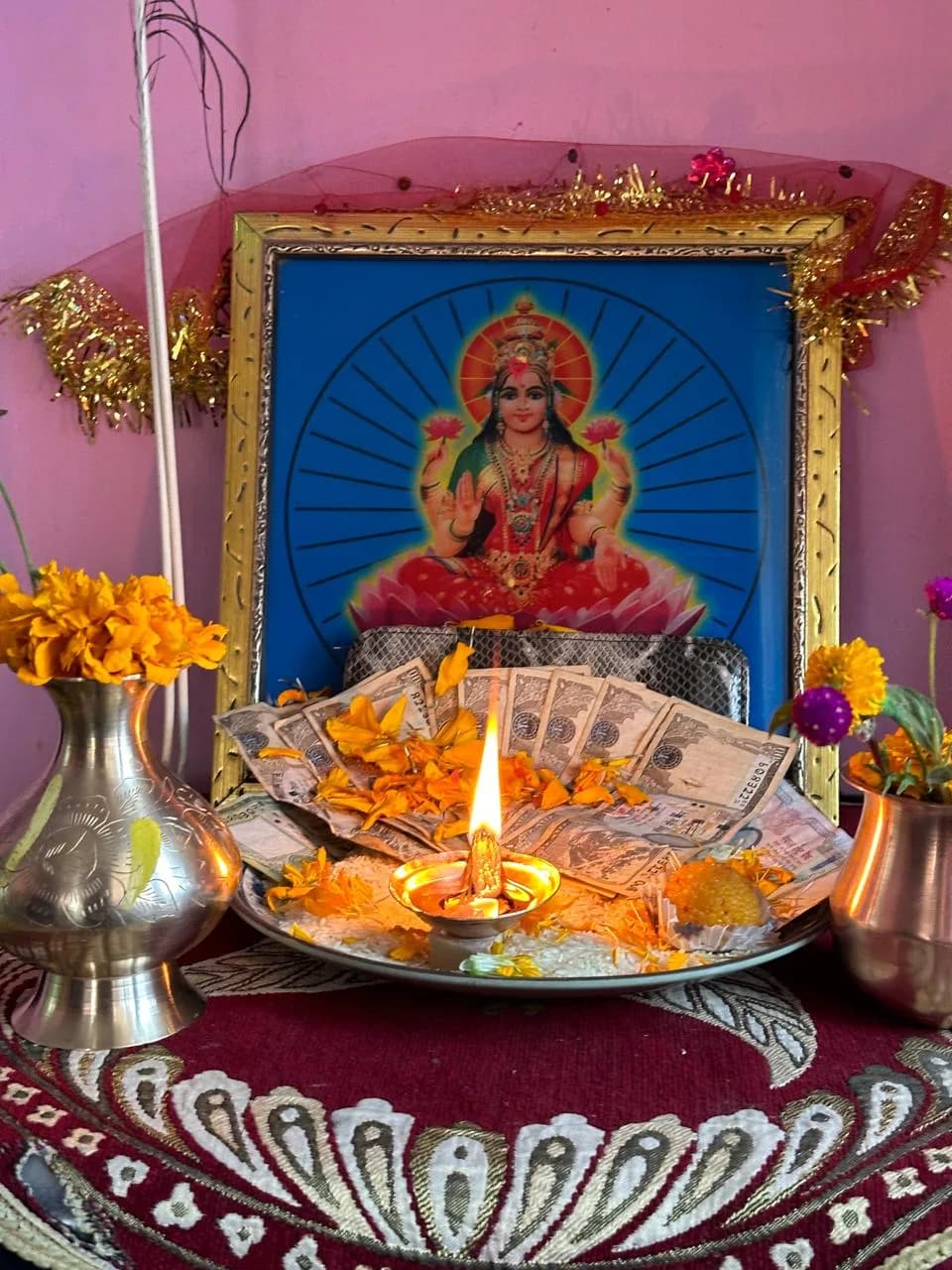
Laxmi Puja 2026 in Nepal: Tihar Festival Guide
Festival
1 Tag
Festival
Free
Kathamandu1 Tag
Event Details
Loading...
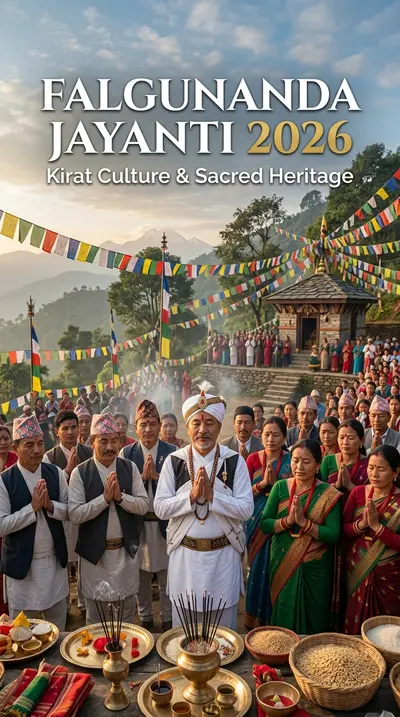
Every year in the Nepali month of Kartik, a quiet but deeply meaningful observance spreads across the hill districts of eastern Nepal. It is called Falgunanda Jayanti, and it marks the birth anniversary of Mahaguru Falgunanda Lingden, one of the most respected spiritual reformers the Kirat community has ever produced. For visitors exploring Nepal's Himalayan heartland, this day offers a rare window into a living indigenous faith that rarely makes it into standard travel itineraries. Unlike the country's larger, more commercialized festivals, Falgunanda Jayanti remains rooted in ritual, memory, and community rather than spectacle, which is exactly what makes it worth understanding before you plan a trip around it or simply wish to learn about Nepal's layered religious landscape.
Who Was Mahaguru Falgunanda Lingden?
Falgunanda Lingden was born on November 10, 1885, in the village of Chukchinamba in Ibhang, within Ilam district in eastern Nepal, to parents Hansamati Limbu and Jaganbaj Limbu. He grew up among the Limbu and wider Kirat communities of the eastern hills, a region shaped by dense forests, terraced farmland, and a strong oral tradition passed down through generations. From an early age, he showed an inclination toward spiritual reflection rather than the conventional paths available to him. Over time, he became known not simply as a religious teacher but as a social reformer whose ideas reached far beyond ritual practice.
He is remembered today as the Mahaguru, or great teacher, of the Kirat faith, and his followers regard him as a Satyavakta, a speaker of truth. His teachings drew heavily on the Mundhum, the sacred oral scripture and folklore tradition of the Kirat people, and he is widely credited with helping preserve and formalize elements of that tradition during a period when it faced significant erosion. He passed away on April 4, 1949, at the age of 66, in Imbung, Panchthar district, leaving behind a legacy that the Government of Nepal later recognized in 2009 by declaring him the 16th national luminary of the country, placing him alongside the most celebrated figures in Nepali history.
Falgunanda Jayanti is far more than a calendar entry. For the Kirat community, particularly the Limbu, Rai, and related ethnic groups of eastern Nepal, it represents a day of collective identity, gratitude, and remembrance. Falgunanda's teachings emphasized education as a means of purifying the heart, non-violence, love between communities, and emancipation through knowledge rather than blind ritual. These ideas were considered progressive for the era in which he lived, and they continue to inform how many Kirat households approach both faith and daily conduct today.
The day also carries a strong element of cultural preservation. Because Falgunanda worked to document and protect the Mundhum tradition at a time when it was largely undocumented and vulnerable to being forgotten, his birth anniversary has become an occasion to renew interest in indigenous language, ritual, and identity. Younger generations of Kirat descent often use the day to reconnect with practices that might otherwise fade under the pressures of urban migration and modernization. In this sense, Falgunanda Jayanti functions simultaneously as a religious holiday, a cultural anchor, and a quiet act of resistance against cultural erasure.
Falgunanda Jayanti falls on the 25th day of Kartik according to the Nepali lunar calendar, a date that shifts slightly against the Gregorian calendar from year to year. In 2026, this corresponds to November 11. The Nepal government has recognized the day as a public holiday specifically for the Kirat community, meaning government offices, schools, and municipal bodies in Kirat-majority areas typically observe it as a non-working day, while normal activity continues elsewhere in the country. Several rural municipalities, including areas within Panchthar, Ilam, and Taplejung, issue their own local holiday notices to ensure residents can participate fully in the day's events.
Because the date is tied to the lunar calendar rather than a fixed solar date, travelers hoping to witness the observance firsthand should confirm the exact date for the relevant year in advance, ideally by checking a current Nepali calendar, browsing the main Nepal travel homepage, or consulting a local guide. For anyone building an itinerary around cultural festivals, the events calendar is a useful starting point for cross-checking dates against other regional observances happening around the same time of year.
The observance typically begins before sunrise, particularly in Panchthar district, which holds special significance because it is home to Falgunanda's final resting place at Silati. Devotees and pilgrims, some of whom travel considerable distances from other districts and even from India, begin arriving at the site in the early morning hours. The morning is generally quiet and reflective, centered on personal prayer, the lighting of incense, and offerings made at the shrine and surrounding memorial structures.
Local temples and community halls affiliated with the Kirat faith also open early, and many households begin the day with a simple cleansing ritual before dressing in traditional attire. Elders often lead smaller groups in recitations drawn from the Mundhum, and in many villages, the morning hours are reserved specifically for family-based observance before the wider community gatherings begin later in the day. This early period sets a tone of humility and respect that carries through the rest of the day's programming.
By late morning, the character of the day shifts from private reflection to public celebration. Villages and towns across the eastern hills, many of which appear among the notable places worth visiting in Nepal, including Panchthar, Ilam, Taplejung, Dhankuta, and parts of Jhapa, organize structured programs that typically include speeches from community leaders, cultural performances, and processions honoring Falgunanda's life and teachings. Pilgrims gathered at Silati often form the largest single crowd, with local organizing committees coordinating logistics, seating, and refreshments for visitors who arrive from across the region.
Cultural exhibitions are a defining feature of the midday period. These often showcase traditional Mundhum tradition, dance forms specific to Limbu and Rai communities, handwoven textiles, and displays related to the Mundhum scripture itself. In some years, larger gatherings such as the Limbu Conference, first organized in 2070 BS around the theme of indigenous dignity and identity, have been timed to coincide with or follow closely after the Jayanti, using the occasion as a platform for broader conversations about Kirat heritage and rights. For travelers with an interest in indigenous culture, this midday window offers the richest and most visually engaging part of the day.
As afternoon turns to evening, the tone of the day softens once again. Many communities hold closing prayer sessions at local shrines, often accompanied by the lighting of oil lamps as dusk sets in. Family gatherings resume, with shared meals serving as a way to close out the day communally rather than individually. In villages closer to Silati, evening often brings a final wave of pilgrims completing their visit before returning home, particularly those who traveled from farther districts and need to begin their journey back before nightfall.
In more urban settings, such as Kathmandu or Pokhara, where Kirat communities maintain smaller but active congregations, the evening may include a modest gathering at a community hall or temple, often featuring a recap of Falgunanda's teachings delivered by a senior member of the community. While these urban observances are naturally smaller in scale compared to the eastern hill districts, they remain meaningful for Kirat families living away from their ancestral homeland, allowing the day to close with a shared sense of continuity regardless of location.
While the observance touches Kirat communities nationwide, certain locations carry particular weight. Panchthar district stands at the center of the celebration because of its connection to Falgunanda's final years and resting place at Silati, drawing the largest pilgrim numbers annually. Ilam district, his birthplace, holds its own significant programs, particularly around Ibhang and Chukchinamba. Taplejung, Dhankuta, and Jhapa also host organized events, often coordinated by local Kirat religious committees and rural municipalities that formally recognize the day with public holidays.
For travelers curious about visiting eastern Nepal during this period, exploring the destinations across this region ahead of time helps in understanding not just where the main religious events take place, but also what else the surrounding hill districts have to offer, from tea gardens in Ilam to trekking routes threading through Taplejung toward the base of Kanchenjunga. Approaching the trip with this wider geographic context makes it easier to combine the cultural experience of Falgunanda Jayanti with the natural landscapes that define this part of the country.
Perhaps the most enduring part of Falgunanda's legacy lies in his relationship to the Mundhum, the vast body of oral scripture, mythology, ritual instruction, and folklore that underpins Kirat spiritual life. Before his efforts, much of this tradition existed only in oral form, vulnerable to being lost as communities modernized and dispersed. Falgunanda's work in documenting, interpreting, and teaching the Mundhum gave the tradition a stronger institutional footing, and many of the religious practices observed by Kirat communities today can be traced directly back to frameworks he helped establish.
His broader philosophy, centered on education, non-violence, and emancipation through knowledge, also shaped how later generations of Kirat leaders approached questions of identity and rights. The 2070 BS Limbu Conference, organized under the theme of dignity and self-recognition for indigenous peoples, drew directly on the intellectual foundation Falgunanda had built decades earlier, showing how his influence extended well beyond religious practice into questions of cultural and political identity.
The Nepal government formally acknowledged Falgunanda's national significance in 2009, declaring him the country's 16th national luminary, a distinction placing him among the most honored historical figures in Nepali public life. In the years since, a commemorative postage stamp has been issued in his name, and Falgunanda Jayanti has been formally recognized as a public holiday specifically observed by the Kirat community. Various rural municipalities, including Chulachuli in Ilam and Phattalung in Taplejung, issue their own local notices confirming the holiday each year, reflecting how deeply localized the observance remains even as it carries national recognition.
For visitors, witnessing Falgunanda Jayanti firsthand requires a degree of sensitivity and preparation, since this is fundamentally a religious and community occasion rather than a tourist event. That said, respectful visitors are generally welcomed, particularly at larger public gatherings and cultural exhibitions where community leaders actively encourage wider awareness of Kirat heritage. Arriving early in the morning allows visitors to observe the quieter, more reflective rituals before the crowds build for the midday programs.
Travelers planning a trip around this period may find it useful to look through available tour packages covering eastern Nepal that already include stops in districts such as Ilam or Taplejung, since these can be adjusted around the festival date with the help of a local operator familiar with the region's calendar. Working with a guide who understands both the cultural sensitivities of the occasion and the practicalities of travel in the hill districts, arranged through a well-reviewed Nepal tour operator, makes for a far smoother and more respectful experience than attempting to navigate the event independently.
Because eastern Nepal sees far fewer international visitors than the Everest or Annapurna regions, a trip built around Falgunanda Jayanti naturally opens the door to a quieter, less commercialized side of the country. Beyond the festival itself, Ilam's rolling tea gardens offer some of the most scenic and least crowded viewpoints in Nepal, while Taplejung serves as a gateway toward the eastern approach of Kanchenjunga for travelers with a few extra days to spend on foot. Dhankuta and the surrounding hill towns add a further layer of small-town charm, with markets and viewpoints that rarely appear in mainstream travel guides.
Structuring an itinerary this way means the festival becomes one meaningful stop within a broader regional journey rather than the sole reason for the trip, which also spreads economic benefit across several communities rather than concentrating it around a single event. Anyone assembling such a route can start from the general list of Nepal destinations before narrowing down to the specific eastern hill towns that align with both the festival dates and personal interests, whether that leans toward tea culture, trekking, or simply slower, community-based travel.
Nepal's tourism identity has long been built around its mountains, but observances like Falgunanda Jayanti reveal a different, equally compelling dimension of the country: its living indigenous cultures. As more travelers seek experiences beyond conventional trekking routes, festivals rooted in specific ethnic and religious traditions offer a deeper, more authentic connection to the places they visit. Falgunanda Jayanti, precisely because it remains largely undiscovered by mainstream tourism, offers exactly this kind of experience for travelers willing to venture into the eastern hills during the right season.
This also matters for the communities themselves. Respectful tourist interest, paired with awareness campaigns and continued documentation of the Mundhum tradition, helps ensure that Falgunanda's legacy remains visible not just within Kirat communities but within Nepal's broader national narrative. Understanding a country's smaller festivals is often the surest way to understand its people, and Falgunanda Jayanti offers exactly that kind of understanding for anyone genuinely curious about Nepal beyond its most famous landmarks.
Clothing plays a quiet but important role in how Falgunanda Jayanti is observed. Many Limbu and Rai families choose to wear traditional dress for the occasion, with women often dressed in handwoven Dhaka-pattern fabric paired with distinctive jewelry passed down through generations, and men frequently wearing a Daura Suruwal or region-specific attire tied to their particular Kirat sub-group. These choices are not purely decorative. They serve as a visible marker of identity on a day specifically dedicated to celebrating that identity, and elders often use the occasion to explain the meaning behind particular patterns or ornaments to younger family members who might otherwise grow up disconnected from them.
Symbolic objects also appear throughout the day's rituals. Incense, oil lamps, and offerings of rice, flowers, and local produce are placed at shrines and memorial sites, echoing broader Kirat ritual practice found throughout the Mundhum tradition. In some communities, a ceremonial cloth or flag bearing symbols associated with Kirat identity is raised at the main gathering point, marking the formal start of the day's public program. None of these elements are treated casually. Each carries meaning rooted in generations of practice, and visitors who take the time to ask a local host or guide about their significance are usually met with genuine willingness to explain.
As with most significant occasions in Nepal, food plays a central role in bringing people together on Falgunanda Jayanti. Community kitchens are often set up near major gathering points, particularly around Silati in Panchthar, where volunteers prepare large communal meals for pilgrims who have traveled long distances. These meals typically draw on regional Kirat cuisine, featuring millet-based dishes, locally raised meat prepared according to traditional methods, and seasonal vegetables grown in the surrounding hills.
Sharing food on this day is treated as an extension of the values Falgunanda himself promoted, particularly the idea of community bound together through mutual respect rather than hierarchy. Families who are unable to travel to larger gatherings often prepare a smaller version of the same meal at home, sometimes inviting neighbors to join regardless of their own religious background. This openness reflects a broader characteristic of the festival: while it is specifically a Kirat observance, it is rarely treated as exclusionary in practice, and outside guests who show genuine respect are typically welcomed rather than turned away.
Visitors researching the festival for the first time often have similar questions, and addressing them directly can help avoid confusion when planning a visit. One frequent question concerns whether non-Kirat visitors can attend public events, and the general answer is yes, provided visitors remain respectful of the religious nature of the gathering and avoid treating it purely as a photo opportunity. Another common question involves the exact date each year, which, as noted earlier, depends on the Nepali lunar calendar and should be confirmed close to the travel date rather than assumed from the previous year's Gregorian equivalent.
Some visitors also ask whether accommodation is readily available near Silati or other major gathering points during the festival period. Because these areas are relatively rural compared to Kathmandu or Pokhara, options can be limited, and travelers are generally advised to arrange lodging well in advance or to base themselves in a nearby town such as Phidim and travel to the main sites for the day itself. Working with a local operator familiar with eastern Nepal, and reviewing what past travelers have said through verified Nepal travel reviews, removes much of this uncertainty and ensures logistics do not overshadow the experience of the festival itself.
Anyone hoping to combine Falgunanda Jayanti with a broader trip through Nepal should start by confirming the exact lunar calendar date for the year they intend to travel, since it shifts against the Gregorian calendar annually. From there, building an itinerary that includes Ilam, Panchthar, and possibly Taplejung allows for both the cultural observance and access to the region's tea estates, hill viewpoints, and trekking access points. Reviewing the full range of Nepal experiences available, alongside a closer look at the festival and events calendar, is a practical way to see how Falgunanda Jayanti fits alongside other cultural and natural highlights the country has to offer during the same travel window.
Falgunanda Jayanti will likely never become one of Nepal's headline tourist attractions, and that is precisely its appeal. It remains a day defined by memory, gratitude, and community rather than performance for outside audiences. For travelers and readers alike, understanding the life of Mahaguru Falgunanda Lingden, and the quiet but resilient tradition he helped preserve, offers a meaningful entry point into a side of Nepal that rewards patience, respect, and genuine curiosity.
Key experiences and features
Falgunanda Jayanti
Mahaguru Falgunanda Lingden
Chukchinamba in Ibhang
Mahaguru
Satyavakta
Kirat community
Mundhum tradition
Mundhum tradition
Daura Suruwal
Recommended packing list
Phidim, Panchthar, Koshi Province, Nepal
Got questions about this event?
Falgunanda Jayanti is an important Kirat cultural and religious observance in Nepal, commemorating the birth anniversary of Mahaguru Falgunanda Lingden, a respected spiritual leader and social reformer.
Falgunanda Jayanti 2026 will be observed on November 11, 2026, corresponding to Kartik 25, 2083 BS.
The observance is particularly significant in Panchthar, Ilam, Taplejung and other eastern hill districts of Nepal, where communities organize prayers, cultural programs and gatherings.
Celebrations may include morning prayers, worship, religious gatherings, cultural performances, speeches, traditional programs and community activities.
Mahaguru Falgunanda Lingden was a prominent Kirat spiritual leader known for promoting religious values, social reform, education, peace and community discipline.
Nov 11, 2026
1 day
Quick Info
More festival experiences
Nov 8 – Nov 8, 2026Kathamandu
 Aug 17 – Sep 16, 2027
Godavari Kunda
 Jan 15 – Jan 16, 2027
Swayambhu Bhuikhhel