 Nov 8 – Nov 8, 2026
Kathamandu
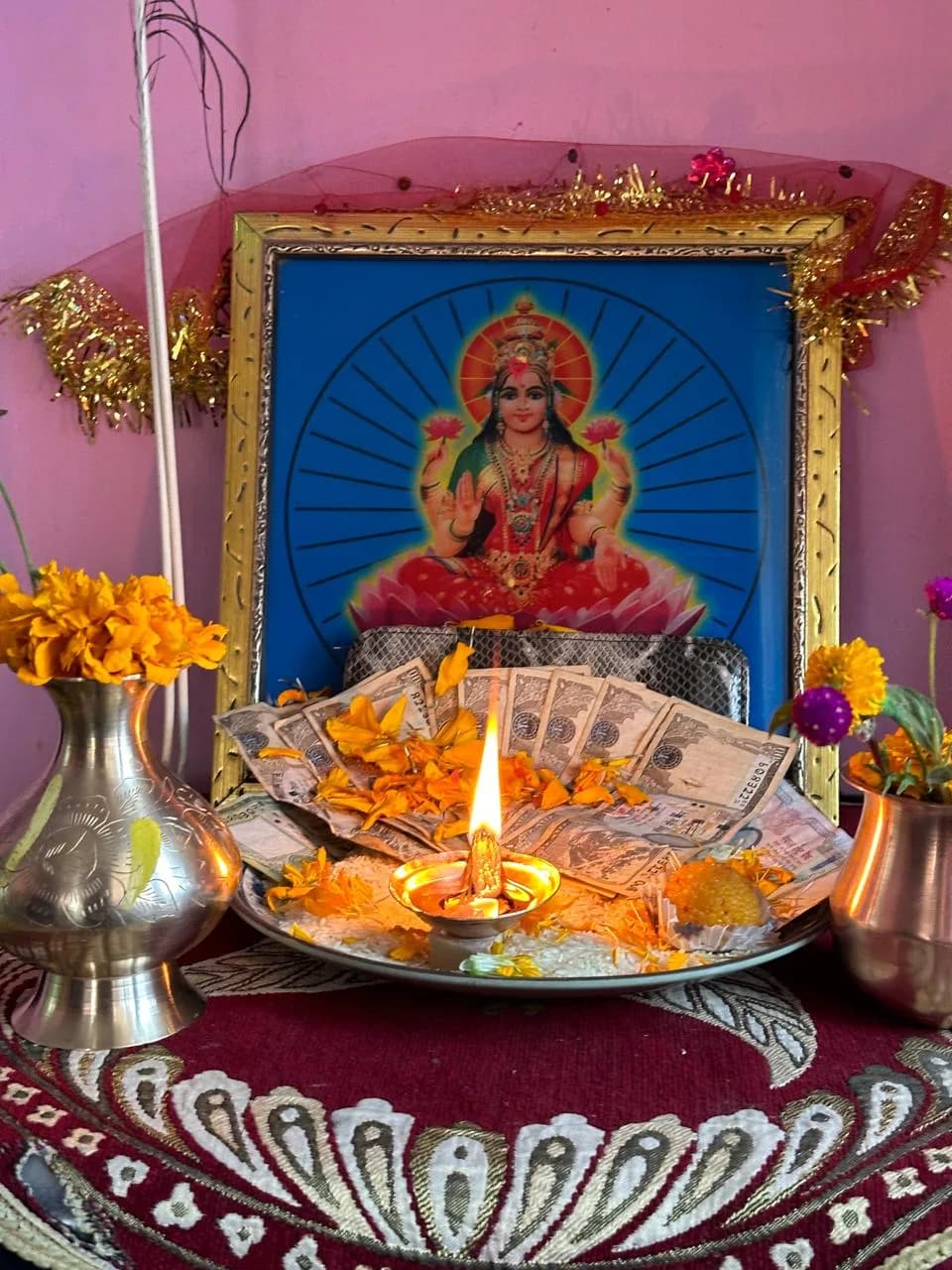
Laxmi Puja 2026 in Nepal: Tihar Festival Guide
Festival
1 Tag
Festival
Free
Kathamandu1 Tag
Event Details
Loading...
Event starts in
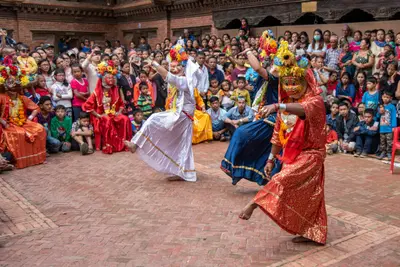
Somewhere between the drumbeats of a monsoon evening and the quiet hush of an old Kathmandu courtyard, a fanged, red haired figure steps out from a hidden shrine and begins to dance. This is Gunla Lakhey, one of the more mysterious and moving traditional festivals of Nepal, a masked demon dance that tours the old city streets throughout the sacred Buddhist month of Gunla. Unlike a single day chariot festival, this performance unfolds slowly across an entire month, weaving through Kathmandu's ancient courtyards in a rhythm few outsiders ever get to witness up close. For travellers who want something beyond the usual sightseeing checklist, following even a portion of this dance can become the most memorable part of a Kathmandu cultural tour, offering a rare look at Newar Buddhist devotion as it actually lives on the streets rather than behind museum glass. This guide walks through the full month, from the very first appearance of the mask to its final farewell, and shows how to plan a visit to Nepal around it.
Gunla Lakhey is a masked street performance in which a dancer, dressed as a fierce forest demon with a red or black mane, protruding fangs, and a wild painted face, tours different parts of old Kathmandu during Gunla, the holy tenth month of the Nepal Sambat lunar calendar that roughly matches August. The word "Lakhey" refers to this demon figure, once believed to be a forest dwelling spirit that eventually became a protector of the townspeople rather than a threat to them. This particular version of the dance is closely tied to the wider Gunla festival calendar, appearing on specific auspicious days rather than performing continuously through the month. Many Newar neighbourhoods maintain their own Lakhey dance troupe, and the mask itself is treated as a sacred object, stored carefully and only brought out under ritual supervision. Watching this ritual dance move through narrow brick lanes near Kathmandu's old bahals and courtyards offers a side of the city that rarely appears in a standard Kathmandu sightseeing itinerary.
To understand Gunla Lakhey, it helps to understand Gunla itself, a month long period of devotion observed mainly by Newar Buddhists from the Shakya and Bajracharya communities across the Kathmandu Valley. During this time, devotees rise before dawn to walk to Swayambhunath, playing traditional Gunla Bajan music along the way as an act of shared devotion. Many households restrain from eating meat, fish, or eggs for the entire month, while others recite scriptures at home or in sacred courtyards scattered through the old city. This period of quiet discipline is also when many of the valley's most distinctive cultural performances take place, since religious merit making and public celebration have always existed side by side in Newar tradition. Travellers curious about this deeper layer of Kathmandu life often build a longer stay around Gunla, adding a few extra days to their usual Nepal cultural tour just to catch the early morning processions that pass through Kathmandu's old trading quarters each day.
According to Newar folklore, Lakhes were once wild demons who lived in the forests surrounding the Kathmandu Valley, feared for their strength and their unpredictable temper. Over time, the story goes, these same demons were tamed by the divine order of the valley and transformed into loyal guardians who protected the very towns they once threatened. This shift from feared outsider to trusted protector is central to why the Lakhey dance carries such affection rather than fear among local audiences today. The female counterpart of the Lakhey, known as Lasin, appears far less often but is part of the same broader mythology found across Newar settlements throughout the Kathmandu Valley. This origin story is one of many fascinating threads that connect Nepal's masked festival traditions, and it adds real depth to what might otherwise look like a simple street performance to a first time visitor exploring Kathmandu's heritage courtyards.
Before the Gunla Lakhey can appear on the streets each year, the mask itself must be carefully prepared and ritually blessed by senior priests within the community that maintains it. Traditionally carved and painted by hand, the mask features an exaggerated, fierce expression meant to represent raw, untamed power rather than pure evil, and it is treated with the same reverence given to any sacred temple image. Once blessed, the mask is believed to temporarily house the spirit of the Lakhey itself, meaning the dancer wearing it is thought to briefly become something more than human during the performance. This transformation is taken seriously within the community, and specific rituals are performed both before the mask is worn and after it is removed to safely close that connection. Cultural travellers who join a guided Newar heritage walking tour during Gunla season sometimes get the rare chance to see this preparation process firsthand, adding a layer of understanding that makes the later street performance feel far more significant when it finally begins near Kathmandu's old shrines.
The Gunla Lakhey typically makes its first appearance in the opening days of the month, stepping out from its home shrine into the narrow lanes surrounding Kathmandu's old core, often close to Maru and the wider Durbar Square area. This first outing tends to be a shorter, more localised tour, giving the dancer and the accompanying musicians a chance to settle into rhythm before the fuller processions that follow later in the month. Small crowds gather at doorways and shopfronts to watch, and children in particular are drawn to the dramatic, jumping movements that define the Lakhey's distinct performance style. For visitors staying near the old city on a short Kathmandu city break, this opening appearance offers an easy, low pressure introduction to the wider month of celebration ahead. It is also a good moment to note how closely this tradition is tied to daily life in Nepal, unfolding in ordinary lanes rather than on any specially built stage.
As the month progresses, the Lakhey's route typically widens to include the busy market squares of Asan and Indrachok, two of the most vibrant trading hubs in the old city. Here, the dance takes on a livelier, more theatrical energy, as the demon figure weaves between shoppers, vegetable stalls, and curious tourists who often have no idea a sacred performance is about to pass directly in front of them. Musicians accompanying the dancer play traditional drums and cymbals, creating a distinctive, driving rhythm that can be heard from several lanes away before the Lakhey itself comes into view. This stretch of the tour is particularly rewarding for anyone building a Kathmandu market and culture walk into their schedule, since it combines the sensory chaos of daily commerce with a genuinely rare glimpse of living Newar Buddhist ritual. Photographers especially appreciate this segment, since the tight lanes around Asan create a naturally dramatic backdrop for the mask's exaggerated expression.
Midway through the month, attention often shifts toward the daily pilgrimages to Swayambhunath, the hilltop stupa that anchors so much of Gunla's devotional life across the valley. While the main pilgrimage bands focus on Gunla Bajan music rather than masked dance, the Lakhey's own touring schedule is often timed to intersect with these routes, allowing both traditions to share the same streets on certain mornings. This overlap creates some of the most memorable scenes of the entire month, with devotional musicians and the dramatic demon dancer moving along parallel paths through the same sacred geography. Travellers who rise early enough to catch this overlap, perhaps as part of a dedicated Swayambhu sunrise tour, often describe it as one of the most spiritually charged mornings of their entire trip to Nepal. The layered soundscape of drums, cymbals, and murmured prayer along these winding lanes is genuinely unlike anything found elsewhere in the valley.
Around the full moon day known as Janai Purnima, when many Hindu devotees travel to Banglamukhi Temple in Patan to renew their sacred threads, the Gunla celebrations in Kathmandu reach one of their most active points, and the Lakhey's touring circle widens accordingly. On this day, the demon dancer often passes through additional courtyards and smaller shrines that are not part of its usual daily route, marking the occasion with a slightly longer and more elaborate performance. Crowds tend to be noticeably larger on this particular day, drawn by the coincidence of two major devotional calendars overlapping within the same city. Visitors interested in witnessing this fuller version of the dance should check current year dates carefully through an updated Nepal festival calendar before finalising their travel plans, since the exact overlap between Janai Purnima and the Lakhey's extended route can shift slightly from year to year depending on the lunar calendar used across Nepal.
Later in the month, the celebration of Krishna Janmashtami brings its own wave of processions to sites such as Bijeshwori, Shobha Bhagawati, Maru Ganesh, Janabahal, and Seto Machhindranath, and the Gunla Lakhey's route often threads directly past several of these locations on the very same day. This convergence of festivals gives visitors a rare chance to see multiple layers of Kathmandu's religious life unfold within just a few city blocks, from Krishna devotion to the older, more primal energy of the masked demon dance. Watching the Lakhey pause briefly near Janabahal temple, home of the Seto Machindranath idol discussed in other guides to Nepal's spring chariot festivals, is a genuinely striking moment that ties several strands of Newar belief together in one place. Anyone following a longer multi-day Kathmandu cultural tour during this period should build in extra time around these overlapping celebrations, since the streets can become unexpectedly crowded and wonderfully chaotic.
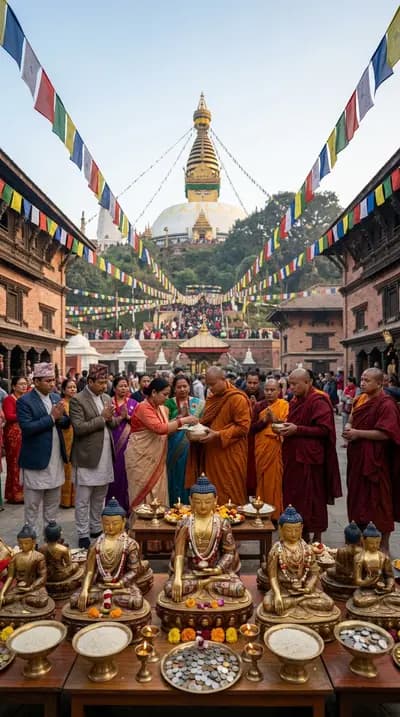
Later still, the alms giving festival known as Panjaran brings members of the Bajracharya and Shakya castes out onto the streets to receive rice and money from devotees, with shrines and Buddha statues set up temporarily at homes and roadside courtyards. On the days this coincides with a Lakhey appearance, the atmosphere becomes especially rich, blending the quiet generosity of alms giving with the loud, dramatic energy of the masked dance passing through the same lanes. Visitors often find this pairing one of the most emotionally layered parts of the entire month, since it captures both the gentle and the fierce sides of Newar Buddhist devotion within a single afternoon. A well planned Kathmandu heritage tour timed around this stretch of Gunla gives travellers a genuinely rounded picture of the celebration, far beyond what a quick visit to Kathmandu Durbar Square alone could ever offer. It is a reminder that Nepal's festival calendar rewards those willing to slow down and stay a little longer in one place.
As Gunla draws to a close near the new moon known as Gokarna Aunsi, the Gunla Lakhey makes its final appearances of the season, often with a noticeably more subdued, reflective tone compared to the energetic performances earlier in the month. The mask is eventually retired for another year through a closing ritual that mirrors the careful blessing performed at the very start of the season, formally releasing the spirit believed to inhabit it during the dance. This closing ceremony usually takes place away from public view, though the final public procession leading up to it still draws a respectable crowd of neighbourhood residents and curious visitors alike. For travellers who have followed the Lakhey's journey across several weeks, this closing stretch offers a satisfying sense of completion, tying together everything witnessed since the very first appearance near Kathmandu's old core. It is a fitting last chapter to include in any extended Nepal cultural itinerary built around the month.
Beyond its dramatic mask and energetic movements, the Gunla Lakhey carries real weight within Newar Buddhist communities, functioning as a living reminder that even fearsome forces can become protectors when properly honoured. Parents often bring young children close to the dancer, believing that a brief encounter with the Lakhey can ward off illness or bad fortune in the year ahead, a belief passed down largely through oral tradition rather than any single written text. This kind of everyday, hands on devotion is part of what makes Nepal's street level festivals so different from purely ceremonial religious events held behind closed doors. The dance also reinforces neighbourhood identity, since each troupe is deeply tied to a specific courtyard, shrine, or bahal within old Kathmandu, giving residents a strong sense of ownership over their own small piece of this larger, valley wide tradition found throughout Nepal. For visitors, understanding this significance turns a colourful street show into something far more meaningful to witness in person.
Travellers researching Lakhey traditions in Nepal often come across another well known version called Majipa Lakhey, performed by the Ranjitkar community of Kathmandu during Indra Jatra in September, and it helps to understand how the two relate to one another. While both feature the same fierce, red maned demon figure, Majipa Lakhey is tied specifically to the Indra Jatra season and the wider Yenya festival, whereas Gunla Lakhey belongs entirely to the earlier, more devotional month of Gunla. The two performances share a common mythological root but differ in tone, since Indra Jatra's version leans toward citywide carnival energy while the Gunla version stays closer to quiet neighbourhood ritual. Visitors with enough time to catch both across a longer trip to Nepal gain a much fuller picture of how the same folklore adapts to different seasons and different community roles. A flexible Kathmandu Valley festival tour spanning both August and September makes this comparison easy to experience firsthand, with both routes passing near familiar Durbar Square landmarks.
No Gunla Lakhey performance moves without its accompanying musicians, who play traditional drums, cymbals, and wind instruments in a driving rhythm that both announces the dancer's arrival and sets the pace for each dramatic movement. These musical ensembles, closely related to the Gunla Bajan bands heard throughout the wider month, are often made up of community members who have played together for years, passing down specific rhythms through direct practice rather than formal notation. The resulting sound is raw and immediate, filling narrow lanes with a sense of urgency that perfectly matches the Lakhey's wild, untamed character. Music lovers exploring Nepal's traditional festival soundscapes often find this live, unamplified performance far more powerful than any recording, since the acoustics of the old brick courtyards genuinely shape how the sound travels. Joining a guided cultural evening that includes a stop near an active Lakhey route is one of the more authentic ways to experience this music as it was always meant to be heard.
Since Gunla Lakhey performances are spread across an entire month rather than concentrated on a single fixed date, the best strategy for travellers is to plan a visit anytime during Gunla itself, which generally falls in August according to the Gregorian calendar. Checking a current, updated Nepal festival events page before booking flights is strongly recommended, since specific neighbourhood schedules can vary slightly from year to year and are often confirmed only shortly in advance by local community organisers. Early morning and early evening tend to offer the best chances of catching a performance, since these are the hours when both the pilgrimage crowds and the Lakhey's own touring schedule are most active across the old city, according to most local festival day guides. Staying somewhere central, within easy walking distance of Kathmandu's old bahals, gives visitors the flexibility to simply follow the sound of drums whenever it starts, which is often the most reliable way to actually find the dance in real time rather than relying on a fixed schedule alone.
Because Gunla Lakhey performances move unpredictably through narrow lanes rather than following one single official route, getting around during the festival month rewards a slower, more flexible style of travel than a typical sightseeing day. Walking remains by far the most practical option within the old city core, since many of the relevant lanes around Asan, Indrachok, and Maru are simply too tight for vehicles to pass through comfortably even outside festival hours. Local guides familiar with each neighbourhood's specific schedule can be invaluable here, and travellers arranging a private Kathmandu cultural guide for this period often find it far easier to locate an active performance than those wandering without local knowledge. A simple map of Kathmandu's old city neighbourhoods, paired with a willingness to follow distant drumbeats down unfamiliar alleys, usually leads to a far more rewarding and spontaneous experience of Nepal's living festival culture than any fixed itinerary could offer.
Photographing the Gunla Lakhey can produce some genuinely striking images, but a degree of care and respect is essential given how seriously the mask and its ritual status are treated within the community. Visitors should avoid physically blocking the dancer's path or touching the mask or costume, since these are considered sacred objects rather than simple performance props for the benefit of tourists. Keeping a respectful distance while still capturing the dramatic movement of the dance is entirely possible, particularly in the wider open squares around Asan and Indrachok, where there is more room to move without disrupting the procession. Travellers interested in documenting Nepal's masked festival traditions more broadly often find that asking a local guide for guidance on when and where to photograph respectfully leads to far better results than shooting on instinct alone. This same courtesy applies equally well on any guided festival photography tour elsewhere in the valley.
Since the Gunla Lakhey's route overlaps with so many of Kathmandu's most significant religious sites, the festival month naturally pairs well with visits to nearby landmarks that might otherwise be rushed on a shorter trip. A short walk from Asan brings travellers to Kathmandu Durbar Square, while the hilltop stupa of Swayambhunath remains a rewarding excursion throughout the entire month given its central role in daily Gunla pilgrimages. Those with extra time often extend their stay to include Bhaktapur's own Gunla observances at sites like Nyatapola and Dattatreya, both frequently featured on broader Kathmandu Valley heritage tours. Exploring these additional layers of the same devotional month gives visitors a much richer sense of how deeply Gunla shapes daily life across Nepal, turning a single masked dance into the doorway to an entire season of discovery.
Many first time visitors ask whether the Lakhey performs every single day of Gunla, and the honest answer is no, since specific neighbourhoods schedule their own appearances around particular auspicious dates rather than a fixed daily calendar, so checking a current festival schedule before arrival is genuinely useful. Others ask whether it is appropriate for foreigners to watch the performance up close, and the answer is generally yes, provided visitors remain respectful, keep a reasonable distance, and avoid interrupting the procession's path through the lanes. A common question also concerns where exactly to stand, and the simple answer is anywhere along the open squares near Asan or Indrachok, where the dance naturally slows down enough to be observed comfortably. Finally, travellers often ask how to combine this experience with the rest of their trip, and the most practical answer remains a flexible Kathmandu cultural tour that leaves room for spontaneous detours whenever the sound of drums begins somewhere nearby.
Few travel experiences offer the same quiet thrill as turning a corner in old Kathmandu and suddenly finding yourself face to face with a centuries old demon dance moving through streets that have barely changed in generations. Gunla Lakhey rewards travellers who are willing to slow down, follow the sound of drums, and stay curious about the smaller, less publicised corners of Nepal's festival calendar rather than only chasing the biggest, most famous events. Whether you are drawn by the mythology, the music, or simply the raw theatrical energy of the mask itself, this dance offers a genuinely unscripted window into Newar Buddhist life. Pairing it with a wider cultural tour of the Kathmandu Valley, or simply wandering the surrounding old city neighbourhoods on foot, turns a single month long tradition into one of the most memorable anchors of an entire trip through Nepal.
Ask any long time resident near Asan or Indrachok about the Lakhey, and you will likely hear a slightly different version of the same core legend, since these stories have always been passed down through spoken memory rather than a single fixed text. Some elders describe the Lakhey as a wandering spirit still testing the limits of its own tamed nature each time it dances, while others frame the mask itself as a temporary vessel that must be handled with extreme care to avoid disturbing whatever remains of its wilder, older nature. These small variations are part of what makes oral tradition in the Kathmandu Valley so rich, and travellers who take the time to simply sit and listen near a temple courtyard during Gunla often walk away with a far deeper appreciation of Nepal's living festival traditions than any guidebook could offer. A knowledgeable local guide, often included on a well organised Kathmandu storytelling walk, can translate and contextualise these stories on the spot, turning a passing conversation near Kathmandu's old shrines into one of the most memorable parts of the entire trip.
Because Gunla stretches across a full month, it leaves plenty of room to combine the Lakhey's touring performances with other classic Nepal experiences without feeling rushed or overscheduled. Travellers often use the quieter mid week days, when no major procession is scheduled, to head out toward Nagarkot or Dhulikhel for mountain views, before returning to Kathmandu in time for the next scheduled appearance of the dance. Others prefer to stay closer to the old city, using the extra time to explore smaller Newar heritage courtyards that rarely make it onto a standard sightseeing list. A well structured Nepal multi-city itinerary built around the Gunla month can easily blend cultural immersion in Kathmandu with a short trek or a scenic day trip elsewhere in the country, giving visitors the best of both worlds without sacrificing either. This kind of flexible planning is exactly what makes an extended stay in Nepal during Gunla season so genuinely rewarding, especially for travellers who also want to catch a few of the country's other seasonal festivals along the way.
Gunla Lakhey is far more than a masked street performance; it is a living thread that connects an ancient forest legend, a holy month of quiet devotion, and the everyday rhythm of Kathmandu's old neighbourhoods, all carried forward year after year through drumbeats and a single fierce painted mask. For anyone hoping to understand Nepal beyond its temples and mountains, following even part of this month long journey offers a rare, genuine glimpse into how myth, music, and community still shape daily life in the valley today. If your travel plans bring you to Kathmandu during August, take the time to listen for distant drums and follow them through the lanes, and consider building the rest of your trip around Nepal's rich calendar of traditional festivals, its most compelling heritage places, and a well planned guided tour that brings all of it together into one truly unforgettable journey through Nepal.
Key experiences and features
Gunla Lakhey
Swayambhunath
Gunla Bajan
Indrachok
Banglamukhi Temple
Krishna Janmashtami
Janabahal temple
Durbar Square
Recommended packing list
Kathmandu, Kathmandu, Bagmati, Nepal
Got questions about this event?
Gunla Lakhey is a traditional masked dance performed during Gunla, an important sacred month in Newar Buddhist culture.
Gunla Lakhey is traditionally observed during the month of Gunla according to the Nepal Sambat lunar calendar.
Gunla Lakhey performances can be seen in traditional Newar communities and heritage areas across Kathmandu Valley.
The Lakhey dance features a masked performer accompanied by traditional Newar music, drums, and lively movements.
Yes, visitors can observe public performances while respecting religious customs, sacred spaces, performers, and local photography practices.
Aug 3 – Sep 1, 2027
30 days
Quick Info
More festival experiences
Nov 8 – Nov 8, 2026Kathamandu
 Aug 17 – Sep 16, 2027
Godavari Kunda
 Jan 15 – Jan 16, 2027
Swayambhu Bhuikhhel