 Nov 8 – Nov 8, 2026
Kathamandu
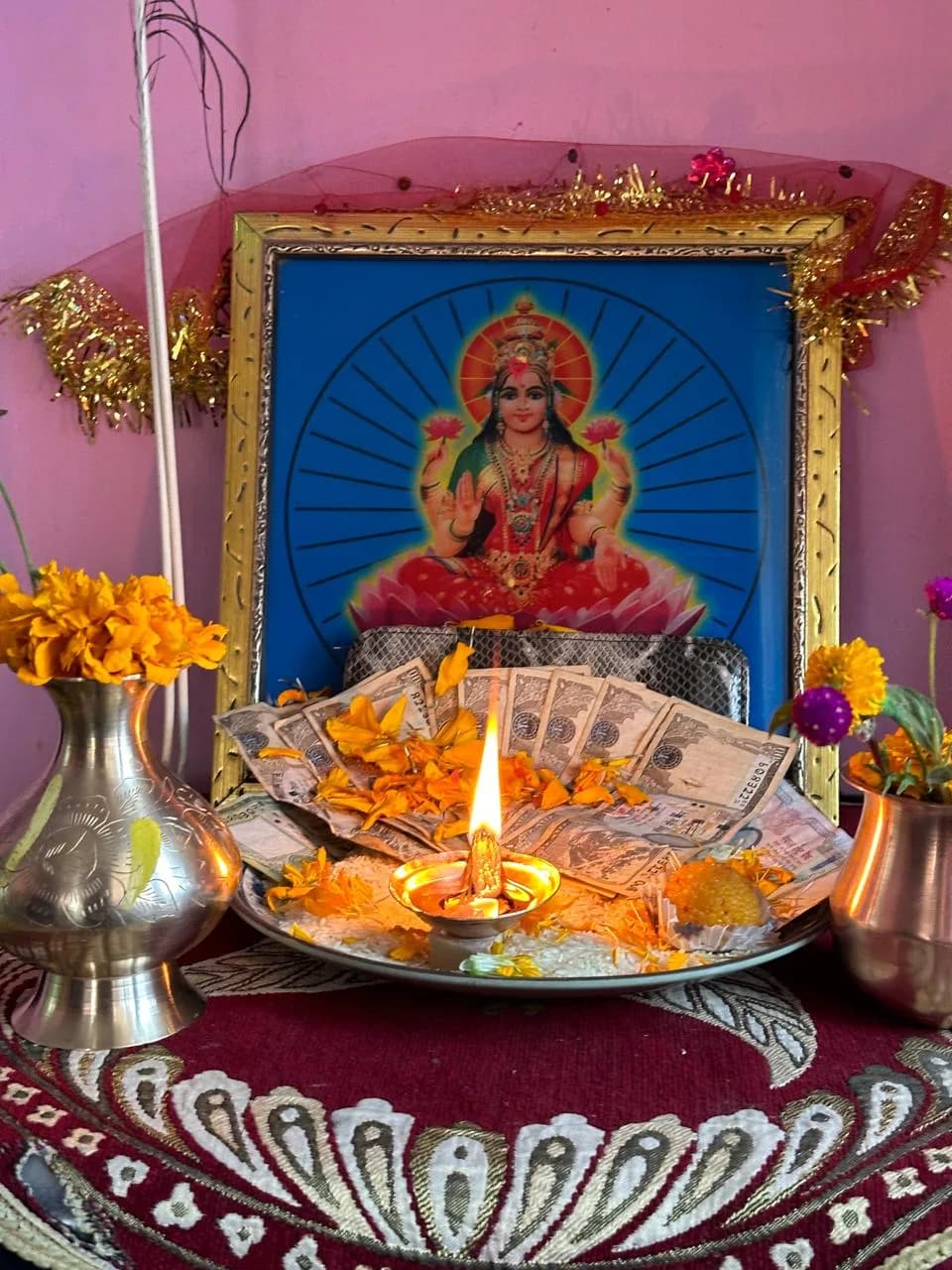
Laxmi Puja 2026 in Nepal: Tihar Festival Guide
Festival
1 Tag
Festival
Free
Kathamandu1 Tag
Event Details
Loading...
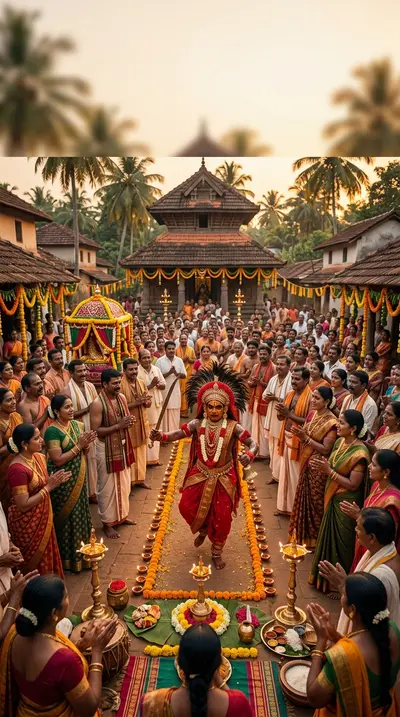
Siri Jatre is a remarkable annual temple festival celebrated across the coastal Tulu Nadu region of southwestern Karnataka, India, centred on the worship of Siri, a deified woman whose life story forms one of the longest and most significant oral epics in the Tulu language. Held at a handful of specific shrines in the Udupi and Dakshina Kannada districts, the festival is best known for its distinctive possession ritual, in which women believed to be visited by the spirits of Siri and her descendants undergo a form of ritual trance and counsel before temple priests. For travellers and researchers interested in South India's living folk religious traditions, Siri Jatre offers a rare window into a devotional practice that blends epic storytelling, community healing, and centuries of continuous oral transmission.
Siri Jatre is the annual festival held in honour of Siri, a woman who, according to Tulu oral tradition, was elevated to the status of a daiva, a term used in Tulu Nadu for a class of deified spirits and ancestral deities worshipped alongside more conventional Hindu gods. Unlike temple festivals built around processions of a fixed idol, Siri Jatre centres on a living ritual of spirit possession, in which women from the surrounding villages gather to be examined and counselled by priests while believed to be under the influence of Siri's spirit or that of one of her descendants.
The festival takes its structure and emotional core from the Siri Paddana, an extensive oral epic recounting the life of Siri and the generations that followed her, sung by ritual specialists during the event. This combination of sung epic narrative and live possession ritual makes Siri Jatre distinct even within the rich festival calendar of Karnataka, since the storytelling and the ritual enactment are treated as inseparable parts of the same devotional act rather than separate performances.
Because the festival is rooted in local Tulu identity rather than mainstream Hindu iconography, Siri Jatre has drawn considerable attention from folklorists, anthropologists, and religious scholars over the past several decades, in addition to the thousands of devotees who attend each year seeking blessings, healing, or simply the chance to witness one of the region's most distinctive living traditions.
Separating documented scholarship from traditional belief is important when discussing Siri Jatre, since much of what is known about the festival's origins comes from oral tradition passed down through generations of Tulu Paddana singers rather than from dated historical records. According to the legend itself, the story of Siri is understood by devotees to date back several centuries, though this places its setting within a legendary past rather than an independently verifiable historical timeline.
What is far more solidly documented is the modern scholarly record of the Siri epic and its associated ritual. The Finnish folklorist Lauri Honko conducted extensive fieldwork on the Siri tradition in Karnataka and published a detailed academic study and translation of the epic, treating both the sung narrative and the possession ritual as significant subjects of oral tradition and religious studies research. This body of scholarship, along with documentation by Indian folklorists and regional researchers, has helped establish Siri Jatre as one of the more thoroughly studied living oral epic traditions in South Asia.
The festival's continued observance at a specific set of temples, each maintaining its own local variation of the ritual calendar and practice, further points to a genuinely sustained community tradition rather than a recently invented event. While the precise centuries-old dating found in popular tourism write-ups should be treated as cultural belief rather than confirmed history, the documented scholarly interest, the temple lineages, and the continuous performance of the Siri Paddana together demonstrate a tradition with deep and genuine roots in Tulu Nadu's religious life.
Siri Jatre does not fall on a single fixed date across the region; instead, each participating temple holds its own annual observance, generally within the broader window running from February to May, with the main ritual day typically falling on a full moon (Purnima) according to the local temple calendar. This means that a visitor hoping to witness the festival should confirm the specific date for the particular temple they intend to visit well in advance, since the celebrations at Hiriadka, Pangala, Nandalike, Kavathar, and Nidgal do not all occur on the same day or even necessarily in the same month.
The core ritual observance at most sites is completed within a two-day period, encompassing preparatory rites, the main possession and counselling ritual, and closing ceremonies, though the surrounding festivities, including the arrival of pilgrims and the setting up of temporary stalls and gatherings, often extend the atmosphere of celebration for longer around the temple grounds. Because exact dates shift from year to year and temple to temple based on local panchang calculations, travellers planning a visit around Siri Jatre 2026 should reach out directly to the specific Adi Alade temple or a knowledgeable local contact rather than relying on a single fixed calendar date.
Attendance at the larger observances can be substantial, with some accounts describing gatherings of around ten thousand people at the more prominent temple sites, drawn by a mix of devotion, scholarly curiosity, and general cultural interest in witnessing one of the region's most striking living rituals firsthand.
The Siri Paddana, the oral epic at the heart of the festival, tells the story of a woman named Siri, born under miraculous circumstances to an ageing chieftain named Bermanna Alva after he renewed worship at a neglected ancestral shrine in the village of Nidgal. According to the narrative, Siri grew into a woman of remarkable virtue and was eventually married into a neighbouring feudal household, a union that initially brought happiness but later unravelled after a bitter dispute involving a gift saree connected to her husband's mistress, an episode that devotees still recount as central to understanding Siri's eventual suffering and vindication.
Following the collapse of her marriage and a subsequent succession dispute over her father's estate, Siri is described in the epic as leaving her home with her infant son, enduring considerable hardship, and eventually finding refuge and remarriage among sympathetic chieftains in a distant forest region. The epic continues into a second generation, following the fortunes of Siri's daughter Sonne and, in a further tragic turn, her twin granddaughters, whose story of a broken vow and a fatal childhood quarrel adds a further layer of moral and emotional weight to the wider narrative cycle.
This multi-generational structure is one reason scholars regard the Siri epic as unusually rich among South Asian oral traditions: rather than closing with a single heroine's story, it extends across several generations of women, each facing her own trials, before culminating in the belief that Siri and her descendants, moved by the injustices they suffered in life, continue to watch over and occasionally possess the women of the region who share in some form of their pain.
Siri occupies an important place within the broader system of daiva worship found throughout Tulu Nadu, a regional religious tradition that exists alongside, and often intertwines with, mainstream Hindu practice, and includes well-known related traditions such as Bhuta Kola spirit-worship rituals performed elsewhere in the same coastal districts. What distinguishes Siri worship within this wider system is its strong association with the lived experience of women, since Siri and her female descendants are worshipped specifically as figures who endured betrayal, loss, and injustice, and who are believed to now offer comfort and intervention to women facing similarly difficult circumstances.
This gendered dimension of the festival has made it a subject of particular interest to scholars examining how religious ritual can provide a sanctioned emotional and social outlet within traditional communities. The possession ritual at the centre of Siri Jatre allows participating women, some of whom are documented as coming from more marginalised backgrounds within the local caste structure, to voice grievances and psychological distress within a framework understood by the community as divine communication rather than personal complaint, offering a form of socially accepted release that might not otherwise be available to them.
At the same time, Siri worship is notable for its cross-caste appeal, drawing devotees and participants from a range of social backgrounds across Tulu Nadu rather than being confined to a single community, a characteristic frequently highlighted by regional folklorists as evidence of how deeply Siri has become embedded in the shared religious imagination of the coastal Karnataka region as a whole.
The ritual sequence at Siri Jatre typically opens with the worship of Sri Brahmalingeshwar and the Siri Kumar brothers, figures collectively regarded as protective deities of the coastal district and honoured before the central possession ritual begins. An offering known as Kanchila Seve is presented to the Siri Kumars at the temple as part of these opening devotions, establishing the ritual and spiritual framework within which the rest of the day's events unfold.
The central and most distinctive element of the festival, sometimes referred to as Pardhana Siri, involves women who identify, or are identified by their families, as being troubled by the spirit of Siri or one of her lineage. Dressed in white sarees and carrying Pingara flowers, groups of women gather at the temple while Siri Paddana verses are sung, and over the course of the ritual, individual women are believed to enter a state of trance in which a presiding priest, often called the Kumar, along with senior women already recognised as established mediums, questions the possessing spirit to determine its identity and the source of its distress.
Once a spirit's grievance or request has been identified through this process, the woman's family is expected to make appropriate offerings or promises to address it, and the woman herself is often expected to return to the festival annually thereafter, effectively joining the ranks of recognised Siri mediums within the community. This entire ritual sequence, along with the surrounding worship and communal gathering, generally unfolds over a two-day period at each participating temple, making the full experience considerably more extended than a typical single-day temple festival.
The possession ritual at Siri Jatre has attracted sustained attention from scholars in folklore studies, anthropology, and religious psychology, largely because it represents a rare instance of a sanctioned, large-scale, temple-based trance practice associated specifically with women's emotional and psychological experiences. Researchers such as Lauri Honko approached the tradition as a serious subject of oral literature and ritual studies, documenting both the sung epic and its enactment as complementary expressions of the same cultural and religious system.
Some observers and commentators have described the ritual informally as a form of communal psychological release, suggesting that the framework of spirit possession allows women to express distress, grief, or unresolved conflict in a manner that is socially legible and accepted within their community, even when the underlying causes of that distress might otherwise go unspoken. It is worth approaching this interpretation with appropriate care, since it reflects one lens through which outside observers have understood the practice rather than a claim made within the tradition's own religious framework, where the experience is understood in terms of genuine spirit visitation rather than psychological metaphor.
For visitors, this context matters primarily as a reminder that the possession ritual, however striking to observe, is a deeply meaningful and sometimes emotionally intense experience for the participating women and their families, and should be approached with the same seriousness and respect one would extend to any significant religious rite involving personal vulnerability, rather than treated purely as a visual spectacle.
Siri Jatre is held annually at a small number of specific temples, each known as an Adi Alade, dedicated to Siri and her descendants, spread across the Udupi and Dakshina Kannada districts of coastal Karnataka. The temple at Hiriadka, near Manipal in Udupi district, is among the most commonly cited venues, alongside the temple at Pangala, also within Udupi district, both drawing significant local participation each year.
Further south, the temple at Nandalike, near Karkala in Udupi district, and the temple at Kavathar, in Dakshina Kannada district near Mangalore, each maintain their own annual observance of the festival, with the Kavathar temple in particular noted in regional folklore documentation as an especially well-established centre of the tradition. The fifth major site, the temple at Nidgal, near Mundaje in Dakshina Kannada district, holds particular significance within the epic itself, since it is described in the Siri Paddana as the very shrine whose renewal by Bermanna Alva led to Siri's miraculous birth.
Because each of these five temples conducts its own independent annual festival on its own local schedule, a traveller wishing to experience Siri Jatre should treat the wider coastal region between Udupi and Mangalore as the general area to explore, rather than expecting a single centralised celebration, and should confirm which specific temple's observance falls within their travel dates.
The Siri Paddana stands as one of the most significant oral epics in the Tulu language, running to over fifteen thousand lines of verse and requiring roughly a full day to recite in its complete form. Passed down through generations of trained singers rather than preserved in a single canonical written text, the epic exists in the kind of living, orally transmitted form that folklorists consider especially valuable for understanding how communities preserve extended narrative traditions without relying primarily on writing.
During Siri Jatre, portions of the Paddana are sung in a highly ritualised style closely tied to the progression of the possession ritual itself, meaning the epic is not simply performed as background storytelling but functions as an active ritual element that helps guide and frame the trance experiences of the participating women. This close integration between sung narrative and lived ritual practice is part of why scholars regard the Siri tradition as an unusually complete example of oral epic performance still functioning within its original devotional context, rather than having been reduced to a purely artistic or theatrical presentation for outside audiences.
For visitors with a genuine interest in oral literature and South Indian folk traditions, listening to even a portion of the Siri Paddana performed live offers a rare opportunity to encounter a major oral epic in the very ritual setting for which it was composed and continues to be maintained, a combination increasingly difficult to find intact elsewhere in South Asia's rapidly changing folk religious landscape.
Visitors attending Siri Jatre should expect an atmosphere quite different from the more visually choreographed temple festivals found elsewhere in Karnataka, since much of the ritual's emotional intensity centres on the individual experiences of the women undergoing possession rather than on large-scale public spectacle such as chariot processions or fireworks. The setting is nonetheless vibrant, with temple courtyards filling with pilgrims, white-saree-clad participants carrying Pingara flowers, and the continuous sound of Paddana verses being sung throughout the ritual proceedings.
Alongside the core devotional activity, the festival draws a mix of attendees, including devout pilgrims seeking blessings, curious visitors interested in regional culture, and researchers or students of folklore and anthropology, giving the event a somewhat layered social atmosphere compared to purely devotional festivals. Photography opportunities exist around the temple architecture, the arriving processions, and general festival activity, though visitors should exercise particular restraint and sensitivity around the possession ritual itself, given its deeply personal and sometimes emotionally raw nature for the women involved.
Because Siri Jatre remains primarily a community and devotional event rather than a curated tourist attraction, travellers are likely to have a richer and more respectful experience by attending with a knowledgeable local guide or contact familiar with the specific temple's customs, rather than arriving independently with limited context for what they are witnessing.
The temples associated with Siri Jatre are concentrated in and around Udupi and Mangalore (Dakshina Kannada), both well-connected cities on Karnataka's coastal belt. Mangalore International Airport offers domestic and limited international connections, making it the most convenient air gateway for travellers heading to the Kavathar or Nidgal temple sites, while Udupi itself, roughly ninety minutes north of Mangalore by road, provides easier access to the Hiriadka, Pangala, and Nandalike temples.
Both cities are also well served by rail connections along the Konkan Railway line running down India's western coast, offering a scenic alternative for travellers approaching from Goa, Mumbai, or Kerala, while extensive local bus networks connect Udupi and Mangalore to the smaller towns and villages nearest each individual Adi Alade temple. Given the temples' relatively rural settings, hiring a local taxi or arranging transport through a homestay or guesthouse in Udupi or Mangalore is generally the most practical way to reach the specific festival site on the day of the observance.
Because Siri Jatre centres on a genuine, community-based spirit possession ritual rather than a staged cultural performance, visitors should approach the event with the same respect and restraint they would bring to any deeply personal religious ceremony. Modest dress is expected at all the participating temples, and visitors should avoid loud or disruptive behaviour, particularly during the core ritual sequence when women are undergoing trance and consultation with temple priests.
Photography of the possession ritual itself should be approached with particular caution and, wherever possible, permission should be sought from temple authorities or local organisers before taking close photographs of individual participants, given the emotionally sensitive and personal nature of what is being enacted. Visitors should also be prepared for a rural, largely unstaged festival environment, meaning limited signage, variable crowd management, and a general absence of the kind of visitor infrastructure found at larger, more internationally promoted Indian festivals.
Language can also present a practical consideration, since Tulu is the primary language spoken at these events, with Kannada widely understood as well; travelling with a local guide or Kannada-speaking companion can significantly improve both understanding and the overall respectfulness of the visit.
Responsible travel at Siri Jatre begins with recognising that the festival is, first and foremost, a living devotional and community tradition rather than a tourism product created for outside observation. Visitors are encouraged to prioritise quiet, respectful observation over active participation in ritual elements not intended for outsiders, and to follow the guidance of temple authorities or local hosts regarding where visitors may stand, when photography is appropriate, and which areas of the ritual are considered more private or sensitive.
Supporting local guides, homestays, and community contacts when arranging a visit helps ensure that any tourism interest in Siri Jatre translates into genuine benefit for the communities that sustain this tradition, rather than treating the festival purely as an exotic spectacle to be consumed and moved on from. Given the ritual's close association with women's personal and sometimes painful experiences, maintaining a particularly high standard of sensitivity, avoiding intrusive questioning or photography of individual participants, is essential to visiting this festival in a manner that honours both the tradition itself and the people who continue to sustain it each year.
What is Siri Jatre? Siri Jatre is an annual Tulu Nadu temple festival honouring Siri, a deified woman believed to visit and possess women in the community during a ritual accompanied by the sung Siri Paddana epic.
When does Siri Jatre take place? The festival is held annually between February and May, generally on a full moon day, though the exact date varies by temple and should be confirmed locally each year.
Where is Siri Jatre celebrated? The main observances take place at five Adi Alade temples: Hiriadka and Pangala in Udupi district, Nandalike near Karkala, Kavathar near Mangalore, and Nidgal in Dakshina Kannada district.
What happens during the Siri possession ritual? Women believed to be visited by the spirit of Siri or her descendants enter a ritual trance while temple priests, known as Kumars, question the spirit to identify its grievance, after which the woman's family makes appropriate offerings.
Is Siri Jatre open to outside visitors? Yes, the festival draws pilgrims, researchers, and culturally curious travellers alongside devotees, though visitors should observe respectfully, avoid intrusive photography during the possession ritual, and ideally attend with a knowledgeable local guide.
What is the Siri Paddana? It is a Tulu-language oral epic of over fifteen thousand lines recounting the life of Siri and her descendants, sung in a ritualised style during Siri Jatre and considered one of the longest and most significant oral epics in the Tulu language.
Siri Jatre remains one of the more remarkable and lesser-known living religious traditions of coastal Karnataka, combining an extensive oral epic, a distinctive women-centred possession ritual, and a genuine, unbroken thread of community devotion spanning generations at a handful of dedicated temples across Udupi and Dakshina Kannada. Its documented scholarly significance, most notably through Lauri Honko's extensive fieldwork and the continued transmission of the Siri Paddana, sits alongside a devotional practice that continues to offer meaning, comfort, and a form of sanctioned emotional expression to the women who participate in it each year. For travellers and researchers genuinely interested in South Asia's living oral traditions and folk religious practices, Siri Jatre offers a rare and rewarding, if appropriately sensitive, opportunity to witness a tradition that has managed to remain remarkably intact within its original ritual and community context.
Key experiences and features
Annual temple festival
Siri
Udupi
Dakshina Kannada
Siri Jatre
Siri Paddana
local Tulu identity
Tulu Paddana
Lauri Honko
Recommended packing list
Kathmandu, Kathmandu, Bagmati, Nepal
Got questions about this event?
Siri Jatra is a traditional ritual festival associated with the Siri tradition of Tulunad in Karnataka, India.
Siri Jatra is traditionally associated with Tulunad in coastal Karnataka, India.
It preserves the Siri oral tradition, ritual practices, folk songs, and cultural heritage of the Tulu community.
Siri Paddana is a traditional oral epic or narrative song connected with the Siri tradition.
The tradition involves ritual performances, storytelling, songs, and community ceremonies connected with the Siri tradition.
Jan 1, 0001
1 day
Quick Info
More festival experiences
Nov 8 – Nov 8, 2026Kathamandu
 Aug 17 – Sep 16, 2027
Godavari Kunda
 Jan 15 – Jan 16, 2027
Swayambhu Bhuikhhel