 Nov 8 – Nov 8, 2026
Kathamandu
Laxmi Puja 2026 in Nepal: Tihar Festival Guide
Festival
1 Tag
Festival
Free
Kathamandu1 Tag
Event Details
Loading...
Event starts in
Yele Sambat is a traditional calendar system associated with the Kirat communities of Nepal and holds an important place in the country’s diverse cultural heritage. The name is closely connected with King Yalambar, traditionally regarded as the first Kirat king, and different Kirat communities use related names such as Yele Dong among the Rai, Yele Tangbe among the Limbu, Yele Thoche among the Sunuwar, and Yele Naamsam among the Yakkha. Although interpretations of its historical beginning differ, Yele Sambat remains an important cultural symbol connecting present generations with Kirat history, identity, traditions, and ancestral memory. Understanding this calendar provides travelers and researchers with a deeper perspective on Nepal’s multicultural history beyond its better-known festivals and destinations.
Yele Sambat is traditionally described as a Kirat calendar era associated with the historical and cultural legacy of King Yalambar. It is generally discussed as a lunar or lunar-based traditional calendar rather than the modern Gregorian system used internationally or Bikram Sambat, which is widely used for everyday official purposes in Nepal. The calendar has particular importance among Kirat communities and appears in discussions of their traditional festivals, cultural identity, and historical chronology. Different communities have developed their own terminology and interpretations, so Yele Sambat should be understood within the broader diversity of Kirat traditions rather than as a single uniform practice followed identically by every community.
The cultural value of Yele Sambat goes beyond simply counting years. Calendars can preserve collective memory because they provide communities with a way to connect important events, celebrations, seasons, religious practices, and ancestral stories with a shared sense of time. For Kirat communities, Yele Sambat is therefore connected with questions of heritage and identity. A traveler researching Kirat culture in Nepal may encounter Yele Sambat while learning about traditional festivals, oral histories, indigenous communities, languages, music, dance, food, and spiritual practices. Exploring these subjects alongside a wider Kathmandu heritage experience can help visitors understand that Nepal’s cultural landscape is much broader than its famous temples and mountain trails.
The name Yele Sambat is strongly associated with Yalambar, the legendary first king of the Kirat dynasty in traditional accounts. The exact interpretation and historical chronology surrounding the beginning of the era can vary depending on the source and community tradition. This is important because ancient Nepalese history includes oral traditions, chronicles, archaeological evidence, religious narratives, and later historical interpretations that do not always provide identical dates. Rather than treating every traditional chronology as an uncontested modern historical fact, it is more useful to recognize Yele Sambat as a significant cultural calendar whose meaning has been preserved through Kirat communities and their continuing traditions.
The different names used by Kirat communities also demonstrate the richness of this cultural tradition. Rai communities commonly use Yele Dong, Limbu communities use Yele Tangbe, Sunuwar communities use Yele Thoche, and Yakkha communities use Yele Naamsam. These variations do not necessarily indicate completely separate calendars; instead, they reflect the linguistic and cultural diversity within the wider Kirat world. This diversity is one reason visitors should avoid reducing Kirat heritage to a single festival, language, or custom. A meaningful cultural journey requires attention to local differences, just as exploring Nepal’s living heritage requires understanding that communities may share historical connections while maintaining distinctive identities.
King Yalambar occupies an important place in Kirat tradition and is traditionally identified as the first Kirat king. Stories about him connect the early Kirat period with the political and cultural history of Nepal. According to traditional accounts, the establishment of Kirat rule is connected with events in the Kathmandu Valley, although the chronology of these accounts should be treated carefully because the surviving evidence from ancient periods is limited and historical interpretations differ. Yalambar nevertheless remains an influential cultural figure whose name continues to appear in discussions of Kirat identity, traditional history, and the origin of Yele Sambat.
The importance of Yalambar is not limited to a historical date. In cultural memory, rulers can become symbols representing an entire period, community, or civilization. Yalambar functions in this way for many people connected with Kirat heritage. His name provides a bridge between traditional narratives and contemporary cultural identity. When travelers explore Kathmandu Valley culture, they often encounter histories associated with many dynasties, communities, religions, and migrations. Learning about the Kirat period adds another layer to that history and helps create a fuller understanding of how the valley and surrounding regions developed through successive cultural influences.
The term Kirat encompasses several communities with related historical and cultural traditions, particularly including the Rai, Limbu, Sunuwar, and Yakkha peoples. These communities have their own languages, cultural practices, social structures, traditional clothing, songs, dances, rituals, and local histories. They are strongly associated with eastern Nepal, although Kirat communities live throughout the country and internationally. Their cultural traditions are part of the wider mosaic that makes Nepal one of the most diverse countries in the Himalayan region.
A visitor learning about indigenous cultures of Nepal should recognize that culture is not something frozen in the past. Kirat communities continue to adapt their traditions to modern life while maintaining connections with ancestral practices. Young people may celebrate traditional festivals while studying or working in cities; community organizations may organize cultural programs in urban centers; and traditional songs and dances may be presented at public events. Yele Sambat is part of this continuing process of cultural preservation, where an old system of time becomes relevant to contemporary identity.
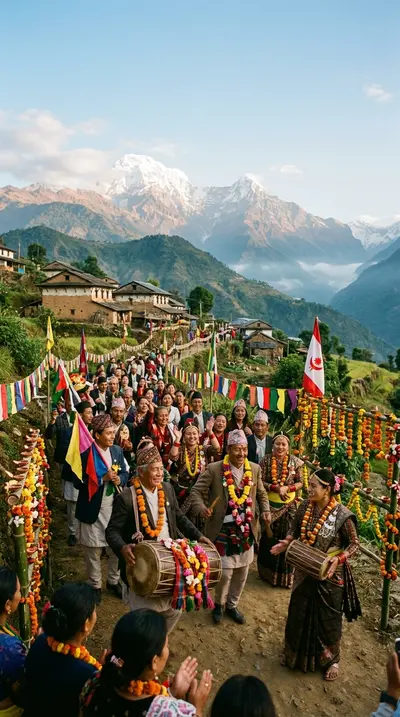
The relationship between Yele Sambat and the Kirat New Year is one of the most visible ways in which the calendar continues to have cultural relevance. Traditional sources and community calendars associate the beginning of the Kirat year with the period around Makar Sankranti, generally falling around January 14 or 15. Some community interpretations describe the New Year through their own traditional terminology and calculations, meaning that visitors should verify the exact celebration date with relevant community organizations before making travel plans.
New Year celebrations are important because they combine the idea of a new cycle of time with family, community, food, ritual, and cultural expression. Depending on the community and location, celebrations may include gatherings, traditional performances, blessings, food preparation, cultural speeches, music, dancing, and expressions of respect for elders. Travelers who attend should remember that these celebrations are community traditions rather than entertainment events created solely for tourists. The best approach is to observe respectfully, ask permission before taking photographs, and allow local participants to determine how ceremonies should be experienced.
The connection between the beginning of Yele Sambat and Maghe Sankranti is especially interesting because Maghe Sankranti itself is celebrated widely across Nepal. It marks an important seasonal transition and is associated with traditional foods, family gatherings, religious practices, and regional customs. Some sources describing Yele Sambat place its New Year around January 15, the same period in which Nepal observes Maghe Sankranti.
However, the two should not simply be treated as identical celebrations. Maghe Sankranti has significance across many Nepali communities, while Yele Sambat has a particular connection with Kirat cultural identity. This distinction matters for SEO content about Nepal festivals because travelers searching for one tradition may encounter another occurring at the same time. Explaining their relationship without incorrectly merging them creates a more useful resource for visitors, students, researchers, and anyone interested in Nepal’s cultural calendar.
Traditional descriptions of Yele Sambat present it as a lunar calendar in which months follow lunar cycles. A contemporary community calendar describing Yele Sambat explains that months can alternate between approximately 29 and 30 days, with the new moon marking the beginning of a month and the full moon occurring around the middle of the lunar cycle. Because lunar observations and calculations can differ, dates should be checked against current community calendars rather than calculated only from a fixed Gregorian conversion.
This lunar structure helps explain why traditional cultural dates can appear to move when compared with the Gregorian calendar. The same phenomenon occurs with many Nepalese festivals that follow lunar or lunisolar systems. Travelers planning a Nepal cultural trip should therefore avoid relying on a single old calendar when planning around a festival. The most reliable approach is to check current announcements from relevant cultural organizations, local authorities, or community representatives before booking transportation and accommodation.
A calendar may appear to be a simple administrative tool, but traditional calendars can also function as cultural archives. They preserve ideas about seasons, religious observances, agriculture, community life, and historical memory. For indigenous communities, maintaining a traditional calendar can therefore support cultural continuity by keeping ancestral concepts of time visible in modern society.
Yele Sambat is significant for the same reason. Its continued recognition allows Kirat communities to express their own historical perspective within Nepal’s broader national identity. Nepal already contains several calendar traditions, including Bikram Sambat and Nepal Sambat, each associated with different historical and cultural contexts. Learning about Nepal’s traditional calendars therefore provides a valuable way to understand the country’s multicultural character rather than viewing its history through only one chronological system.
Nepal is often introduced to international travelers through Mount Everest, trekking, temples, wildlife, and adventure tourism. These are important parts of the country, but they represent only one side of Nepal. The country is also home to numerous languages, ethnic groups, religious traditions, festivals, food cultures, and indigenous knowledge systems. Yele Sambat offers an opportunity to explore this deeper cultural dimension.
A traveler who spends time exploring the Kathmandu Valley can encounter Newar traditions, Buddhist and Hindu sacred sites, historic architecture, and festivals that are different from Kirat traditions. Traveling eastward introduces visitors to landscapes and communities strongly connected with Rai and Limbu heritage. A responsible itinerary can bring these experiences together without suggesting that one tradition represents all of Nepal. Enticing Himalayas’ Kathmandu Valley guide similarly presents the valley as living heritage shaped by multiple communities, religious traditions, historic cities, and continuing festivals.
Kirat cultural heritage is particularly prominent in eastern Nepal, including areas of Koshi Province associated with Rai, Limbu, Yakkha, and Sunuwar communities. The cultural landscape includes hill villages, agricultural terraces, forests, rivers, traditional settlements, community gathering spaces, and sacred locations. Geography plays an important role because many traditions developed in close relationship with the Himalayan foothills and local environments.
For travelers, eastern Nepal can offer a very different experience from the established routes around Kathmandu, Pokhara, or Everest. Cultural exploration may involve village stays, local food, traditional performances, community interaction, and nature-based travel. Visitors should remember that not every village or ritual site is a tourist attraction. Some places are private or sacred, and respectful behavior is essential when entering community spaces.
Language is another major part of understanding Yele Sambat and Kirat identity. Rai, Limbu, Sunuwar, and Yakkha communities have their own linguistic traditions, with significant internal diversity as well. Language carries oral histories, songs, ritual expressions, place names, family stories, and traditional knowledge that may not be fully represented in written national histories.
The preservation of language therefore supports the preservation of cultural identity. Younger generations face the challenge of maintaining ancestral languages while participating in increasingly multilingual urban and international environments. Cultural festivals and traditional calendar observances can create opportunities for communities to use and teach these languages. For travelers, even learning a few respectful local words or asking about the meaning of traditional names can demonstrate genuine interest rather than treating culture as a decorative part of a holiday.
Much of Nepal’s indigenous history has been transmitted through oral traditions. Stories about ancestors, rulers, migrations, conflicts, sacred places, and cultural origins can survive through generations even when written documentation is limited. This is particularly important when discussing ancient figures such as Yalambar and the chronology associated with Yele Sambat.
Oral history should neither be dismissed simply because it is not written in modern historical records nor presented automatically as verified chronology. Instead, it can be understood as a valuable form of cultural evidence and community memory. Researchers often compare oral traditions with archaeology, inscriptions, chronicles, linguistics, and other historical sources. For an SEO article, this distinction is especially important because responsible cultural writing should respect traditional beliefs while clearly separating them from claims that can be independently verified.
One of the most important points when researching Yele Sambat is the difference between traditional chronology and modern historical evidence. Some accounts place the beginning of Kirat rule thousands of years ago and use traditional king lists to calculate the age of the era. Other historians approach ancient Nepalese chronology more cautiously because surviving evidence does not always allow precise dating.
This does not reduce the cultural importance of Yele Sambat. Cultural traditions can remain meaningful even when historical dates are debated. In fact, acknowledging uncertainty makes an article more trustworthy because readers can distinguish between community tradition and academic interpretation. For travelers and students, this approach is useful because it encourages curiosity rather than presenting a complicated historical subject as if every detail were universally agreed upon.
Yele Sambat continues to appear in cultural discussions, community events, publications, and advocacy for recognition of Kirat heritage. Its modern relevance demonstrates how historical traditions can be reinterpreted and maintained within a rapidly changing society. For many people, cultural identity is not limited to preserving old objects; it also involves maintaining names, languages, festivals, calendars, rituals, and stories.
Modern cultural organizations and community groups play an important role in keeping these traditions visible. Public programs can introduce younger generations to ancestral heritage, while cultural education can help prevent traditional knowledge from disappearing. The growing interest of travelers and researchers also creates opportunities to document these traditions, provided that tourism is conducted ethically and communities remain in control of how their heritage is represented.
Cultural tourism in Nepal can become more meaningful when visitors move beyond famous monuments and learn about living communities. A cultural experience should not simply involve photographing traditional clothing or watching a performance. It should encourage visitors to understand why a ceremony exists, who participates, what stories it represents, and how the community itself understands its heritage.
This is where Yele Sambat becomes relevant to tourism. A traveler interested in Kirat heritage can use the calendar as a starting point for exploring traditional celebrations, community histories, food, music, language, and eastern Nepal. A broader cultural journey can also include Kathmandu Valley heritage sites, where travelers encounter another layer of Nepal’s complex history. Enticing Himalayas describes the valley as a living cultural landscape rather than a collection of museum objects, making it a useful starting point for understanding Nepal’s broader heritage.
Travelers who are interested in traditional calendars often have wider interests in spirituality, pilgrimage, and heritage. Nepal offers many opportunities to combine these themes. Hindu and Buddhist pilgrimage sites, indigenous cultural traditions, historic settlements, monasteries, temples, and community festivals can form different types of cultural itineraries depending on the traveler’s interests.
A spiritual journey in Nepal can include places such as Pashupatinath, Boudhanath, Swayambhunath, Lumbini, Muktinath, or other sacred destinations, while a cultural itinerary can add historic cities, local food, festivals, and community experiences. Enticing Himalayas’ spiritual travel guide emphasizes that sacred places in Nepal remain living places of worship rather than simple tourist attractions, an important principle that also applies when experiencing indigenous cultural traditions.
Food is another powerful way to understand culture. Traditional meals often contain information about geography, agriculture, family structure, festivals, hospitality, and religious practice. Kirat communities have distinctive food traditions shaped by the eastern Himalayan environment and local agricultural products. Foods prepared for festivals or family gatherings can carry meanings that go beyond taste.
Travelers interested in Nepali food and culture can also explore the wider culinary landscape of Nepal, including Newari, Thakali, Tibetan-influenced, Terai, and hill cuisines. A dedicated culinary experience can provide useful context for understanding how food connects with community life. Enticing Himalayas’ Traditional Nepali Culinary & Food Tour, for example, focuses on local dishes and cultural food traditions and includes experiences connected with Kathmandu Valley heritage.
Music and dance are essential forms of cultural expression within many Kirat communities. Traditional performances can communicate stories, celebrate community identity, honor ancestors, or accompany important ceremonies. The exact forms differ among communities, so travelers should avoid describing every Kirat dance as part of a single uniform tradition.
For visitors, a cultural performance is most meaningful when its context is explained. Understanding who performs, why the performance takes place, what instruments are used, and whether it is a ceremonial or public presentation can transform an attractive spectacle into a genuine learning experience. The same principle applies to other Nepalese festivals, where music, masks, processions, and ritual actions often have meanings that are not immediately obvious to outsiders.
Travelers visiting places connected with Kirat heritage should follow basic principles of responsible tourism. Sacred forests, stones, shrines, community houses, burial areas, and ceremonial spaces may have rules that are unfamiliar to international visitors. A location that looks like an ordinary village landscape may have deep spiritual meaning for local people.
Visitors should ask before entering restricted areas, avoid touching sacred objects, dress appropriately, and request permission before photographing people or ceremonies. They should also avoid turning private rituals into social-media content without consent. These practices are not simply formal rules; they demonstrate respect for communities whose heritage makes the journey possible. The same respectful approach is recommended across Nepal’s Hindu, Buddhist, indigenous, and community-based cultural destinations.
There is no single best season for learning about Yele Sambat because cultural traditions continue throughout the year. However, travelers specifically interested in New Year celebrations should plan around the relevant annual date after confirming it with local community organizations. Since traditional calendars can differ from fixed Gregorian dates, checking current information is essential.
For broader cultural travel in Nepal, spring and autumn are generally attractive seasons because of relatively favorable weather and good visibility in many regions. Autumn also coincides with major festivals across Nepal, creating opportunities to combine cultural exploration with other experiences. Enticing Himalayas’ festival calendar organizes Nepal’s cultural year by month and season, showing how festivals and events continue throughout the calendar rather than being limited to one period.
Planning a trip around Yele Sambat should begin with identifying what kind of experience the traveler actually wants. Someone interested in history may prefer museums, cultural guides, historic settlements, and community discussions. Someone interested in festivals may want to attend a public New Year celebration. A food-focused traveler may prefer local kitchens and traditional meals, while a photographer may be interested in landscapes, clothing, music, and public cultural performances.
A good itinerary should avoid trying to cover everything in a single day. Combining cultural activities with time for conversation makes the experience more meaningful. Travelers can begin in Kathmandu, learn about Nepal’s broader heritage, and then continue toward eastern Nepal if their schedule allows. This approach creates a cultural journey rather than a checklist of attractions.
Responsible tourism is particularly important when visiting indigenous communities. Tourism can provide income, create employment, encourage cultural preservation, and support local businesses. However, poorly managed tourism can also commercialize traditions, create privacy problems, or reduce complex cultural practices to performances for visitors.
The best approach is to support locally owned services, purchase genuine local products, follow community rules, and learn from local guides. Travelers should also understand that communities have the right to decide what aspects of their culture are public and what should remain private. This principle is especially important for ceremonies connected with spirituality, ancestors, or sacred places.
International travelers may initially find Nepal’s multiple calendar systems confusing. Gregorian dates are used internationally, Bikram Sambat is widely used in everyday Nepalese life, Nepal Sambat has strong Newar cultural significance, and Yele Sambat is connected with Kirat heritage. Rather than viewing these systems as a problem, visitors can see them as evidence of Nepal’s layered history.
A traveler who learns even the basic difference between these calendars will have a better understanding of why festival dates change and why communities may describe the same period using different systems. This is especially useful when planning cultural travel, because relying only on a Gregorian calendar can lead to misunderstandings about traditional celebrations.
It is important not to confuse Yele Sambat with Nepal Sambat. Nepal Sambat is historically associated with the Newar community and the Kathmandu Valley, while Yele Sambat is associated with Kirat traditions. Both are important traditional calendar systems, but they have different cultural histories and communities connected with them.
This distinction is particularly useful for travelers researching Nepal festivals online. Search results can sometimes mix different calendars because they all use the word “Sambat” or “Samvat.” A reliable cultural guide should clearly identify which community, historical tradition, and calendar system it is discussing. This clarity also helps search engines understand the subject of the page and improves the usefulness of the article for readers.
The future of Yele Sambat depends partly on whether younger generations continue to see value in the tradition. Cultural preservation is strongest when heritage remains relevant to contemporary life rather than being treated as something that exists only in historical books. Schools, cultural organizations, families, community events, digital archives, publications, and tourism can all contribute to keeping knowledge alive.
Digital technology creates new possibilities for documenting traditional calendars, languages, songs, oral histories, and festivals. At the same time, digital content must be created carefully so that cultural information is not distorted for clicks or simplified beyond recognition. Accurate Nepal cultural heritage content can help international audiences discover traditions while giving communities greater visibility.
Yele Sambat matters today because it represents continuity. It connects contemporary Kirat communities with stories about ancestors, kings, traditional systems of time, seasonal cycles, and cultural identity. In a rapidly changing world, such connections can provide communities with a strong sense of belonging.
Its importance also extends beyond the Kirat community because it contributes to Nepal’s overall cultural diversity. A country becomes more understandable when visitors learn about many communities rather than focusing on only its most famous heritage sites. Yele Sambat therefore provides a valuable entry point into the wider story of Nepal, where different peoples have developed distinct ways of understanding history, nature, spirituality, and time.
For travelers, learning about Yele Sambat can change the way they approach Nepal. Instead of seeing the country only through trekking routes and sightseeing stops, they can begin asking deeper questions about who lives here, how communities remember the past, and why certain festivals continue to matter.
A cultural itinerary can begin with the historic cities of the Kathmandu Valley, continue through traditional food experiences, and then extend toward eastern Nepal and communities connected with Kirat heritage. Travelers who want to combine cultural discovery with spiritual experiences can also explore Nepal’s pilgrimage traditions. Enticing Himalayas provides resources covering Kathmandu heritage, spiritual journeys, food experiences, and other cultural travel themes that can help travelers build a broader understanding of the country.
The most important thing to understand about Yele Sambat is that it should not be treated simply as an ancient number or a historical curiosity. It is part of a living cultural conversation. Communities continue to discuss identity, history, language, festivals, and the meaning of their traditions in contemporary Nepal.
That living quality makes Yele Sambat particularly valuable for cultural tourism and education. Travelers can learn about its historical associations while also observing how modern communities interpret and celebrate their heritage. Students can use it as a starting point for research into Nepalese history and indigenous cultures. Writers can explore how traditional calendars preserve collective memory. Most importantly, communities can continue to define what Yele Sambat means to them.
Yele Sambat is an important cultural calendar associated with the Kirat peoples of Nepal and the traditional legacy of King Yalambar. Its significance extends beyond calendar calculations because it represents historical memory, community identity, cultural continuity, and the preservation of indigenous heritage. Different Kirat communities use related names and maintain distinctive traditions, demonstrating the diversity within the wider Kirat cultural world. While the exact historical chronology associated with Yele Sambat can be interpreted differently, its cultural importance remains clear. For travelers, learning about Yele Sambat offers an opportunity to move beyond conventional sightseeing and discover a deeper side of Nepal through history, community, language, food, festivals, and living heritage.
Key experiences and features
Kirat New Year cultural celebration
Recommended packing list
Kathmandu, Kathmandu, Bagmati, Nepal
Got questions about this event?
Yele Sambat is a traditional calendar era associated with the Kirat communities of Nepal and the cultural legacy of King Yalambar.
It is particularly associated with Kirat communities including Rai, Limbu, Sunuwar, and Yakkha communities.
Kirat New Year celebrations are generally associated with the period around Maghe Sankranti in January, although exact observance can vary by community.
King Yalambar is traditionally regarded as the first king of the Kirat dynasty and is closely connected with the cultural history of Yele Sambat.
Yes. Visitors can observe public cultural programs and performances while respecting local customs, religious practices, and community guidelines.
Jan 5, 2027
1 day
Quick Info
More festival experiences
Nov 8 – Nov 8, 2026Kathamandu
 Aug 17 – Sep 16, 2027
Godavari Kunda
 Jan 15 – Jan 16, 2027
Swayambhu Bhuikhhel