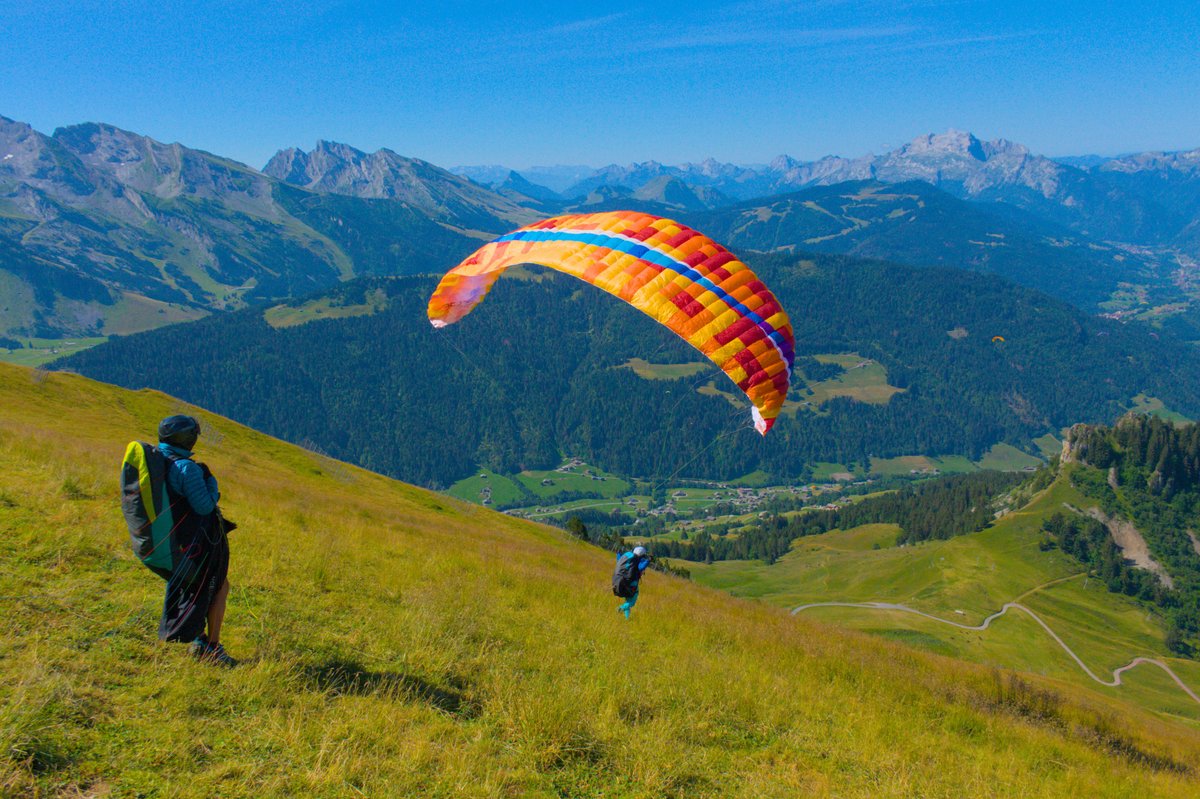
Ask a hundred paragliding pilots where to fly in Nepal and almost all of them will answer Pokhara, Sarangkot or the Kathmandu Valley. Yet the country's biggest untold flying story sits in the opposite corner of the map. Paragliding far west Nepal is the discipline's emerging frontier: a vast, thinly visited province of rolling meadow plateaus, warm Terai plains and 7,000 metre Himalayan walls where the sport has barely left a footprint. This guide explains what far west Nepal (Sudurpashchim Province) offers pilots and travelers today, which landscapes make it so promising, what a realistic trip costs, and how to plan a safe, honest adventure on the edge of Nepal's paragliding map.
Quick answer: Nepal's Far West (Sudurpashchim Province) has no established commercial tandem paragliding scene yet. It is an emerging, expedition-style frontier built around Khaptad National Park's meadow plateau, the Dhangadhi gateway, and the Api Nampa high Himal. For guaranteed tandem flights today, fly at Pokhara, Bandipur or Kathmandu's sites; the Far West rewards pilots, photographers and explorers who arrange private, licensed trips between October and April.

Where Exactly Is Nepal's Far West?
The Far West is Sudurpashchim Province, Nepal's westernmost province, created when the country adopted its new constitution on 20 September 2015. It runs from Kailali and Kanchanpur districts in the Terai lowlands up through Bajhang, Bajura, Achham and Doti in the mid-hills to Baitadi and Darchula in the high Himalaya. Tibet lies across its northern border, while India's Uttarakhand and Uttar Pradesh sit to the south and west, with the Mahakali (Sharda) river marking much of the western boundary. Dhangadhi, the bustling sub-metropolitan headquarters of Kailali District, is the region's transport and logistics gateway. For pilots, this geography is the appeal: in one province you move from 200 metre subtropical flats to launch meadows above 3,000 metres, with almost no flying infrastructure between them.
Why Are Paragliding Pilots Watching the Far West?
Pilots watch the Far West for the same reason surfers scout unnamed coastlines: terrain that clearly works, with almost nobody on it. The province stacks three flying landscapes on top of each other. The Churia (Sivalik) hills, the outermost arm of the Himalaya, offer soft forested ridges that heat gently in the morning sun. Above them, broad mid-hill ridgelines run for kilometres without a single power line, road gorge or settlement cluster in the airspace. And far beyond, the Api and Nampa massifs rise past 7,000 metres, feeding powerful but predictable mountain weather into the system. Add low population density, quiet roads and huge unobstructed horizons, and you get a place where an exploratory cross-country pilot can read the terrain the way the first Sarangkot pioneers read theirs a generation ago: with imagination, not with a site guide.
Can You Book a Tandem Paragliding Flight in the Far West Today?
Honest answer: not the way you can in Pokhara. There is no established commercial tandem operation in the Far West, no booking office on a lakeside strip, no fixed published price for a 30 minute flight. What exists instead is expedition-style flying: private arrangements through licensed pilots and adventure companies, most of them based in Kathmandu or Pokhara, who travel west with their wings when a group or a film or photography project commissions the trip. That reality shapes everything about planning. You cannot walk up and fly; you research, arrange, and travel. It also means the honest comparison for most travelers is simple: if your goal is a guaranteed tandem flight this holiday, book at Pokhara, Bandipur or the Kathmandu Valley sites. The Far West is for travelers whose curiosity is bigger than their need for convenience.
Why Is Khaptad National Park the Far West's Flagship Flying Prospect?
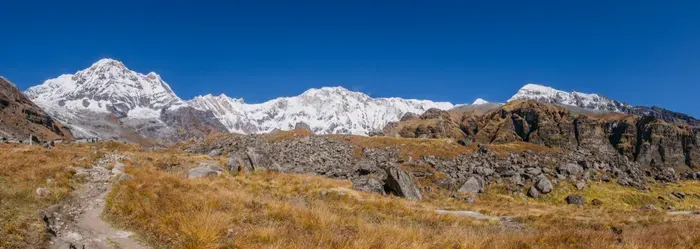
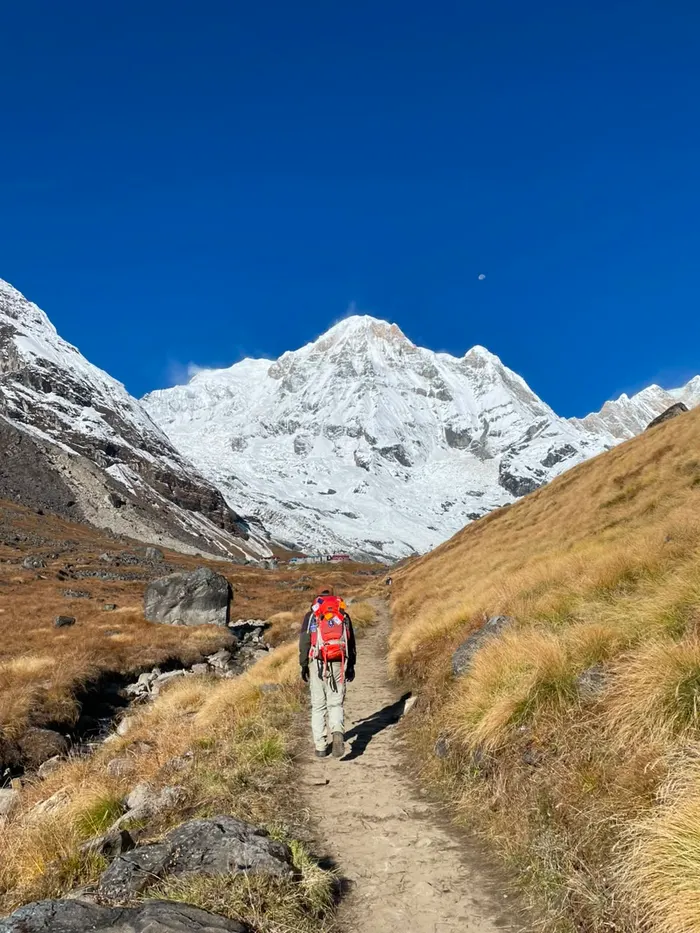
Khaptad National Park, established in 1984, protects 225 square kilometres across Bajhang, Bajura, Achham and Doti districts, with elevations running from 1,400 to 3,300 metres. Its signature is the Khaptad plateau itself, a rolling mosaic of grassland, forest patches and shallow valleys that locals and visitors have long described as a piece of heaven in the hills. For paragliding, that geometry matters. Broad meadow benches make natural launch zones, gentle ridge lift forms along the clean edges, and the plateau's bowl-like isolation protects morning air from the violent venturi winds that plague steeper valleys elsewhere in Nepal. The park is also famous as the hermitage landscape of the late Khaptad Baba, one of Nepal's most revered modern sages, which gives any visit an added layer of quiet. No commercial flight has put down on those meadows yet; that is exactly why pilots talk about Khaptad the way climbers once talked about unnamed peaks.

How Do You Reach the Far West from Kathmandu or Pokhara?
Reaching Sudurpashchim is straightforward but long, and every itinerary starts with a simple choice: fly or drive. Scheduled domestic services connect Kathmandu with Dhangadhi Airport, a little over an hour in the air across nearly the full width of the country, with daily flights that also link the region toward Karnali's Rara airport system. Overland travel uses the Mahendra (East-West) Highway corridor through the Terai, a journey of more than 600 kilometres that most travelers split across two days, breaking at towns along the southern plains. Coming from Pokhara, the overland route south to the east-west highway and west to Dhangadhi takes a full day of driving. Once in Dhangadhi, regional roads fan out: north toward Khaptad's trailheads, west toward Shuklaphanta and the Mahakali valley, and northeast on rough tracks toward the Api Nampa approaches. Build buffer days; the Far West punishes tight schedules.
What Does Dhangadhi Offer as the Region's Gateway?
Dhangadhi is the Far West's practical base, and the more time you spend in the region the more you appreciate it. As the sub-metropolitan headquarters of Kailali District, it concentrates the province's hotels, banks, hospitals, gear shops and food that a self-sufficient expedition needs before disappearing into the hills. Its domestic airport doubles as the staging point not only for Sudurpashchim itself but for Karnali destinations such as Rara Lake in Mugu, giving pilots a rare option: one arrival city that serves two provinces of flying and trekking ambition. Dhangadhi also sits close to some genuinely scenic lowland flying terrain, with the Churia hills rising immediately to the north and the Ramsar wetlands of Ghodaghodi a short drive away. Treat it the way trekkers treat Kathmandu or Pokhara: the place to organize permits, fuel, food and a last reliable night's sleep before the adventure proper begins.

What Other Far-West Landscapes Draw Pilots and Photographers?
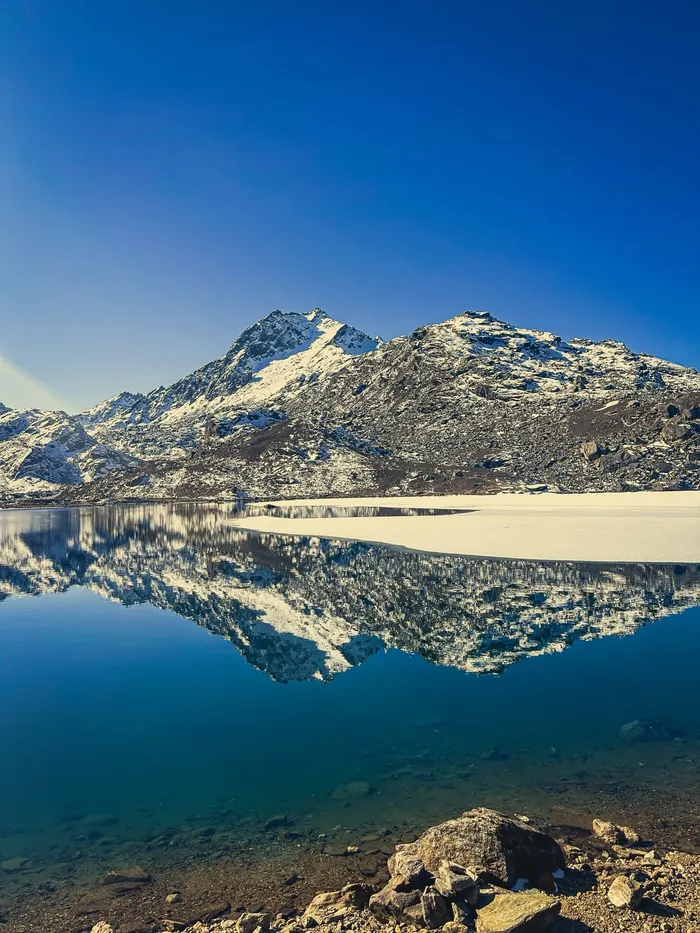
Beyond Khaptad, four landscapes define the Far West's aerial imagination. Ghodaghodi Tal, a Ramsar wetland site since 2003 and a declared bird sanctuary since March 2022, spreads across 2,563 hectares of lakes and forest in the Siwalik hills of Kailali at about 205 metres elevation; its still morning air over mirror-flat water is flatland flying and drone-grade photography in one frame. Shuklaphanta National Park, 305 square kilometres of open grassland bounded by the Mahakali river, protects one of Nepal's two southwestern populations of swamp deer (barasingha) and offers Terai savanna scenes found nowhere else in the country's airspace. In the far north, the Api Nampa Conservation Area, established in 2010 across 1,903 square kilometres, climbs from 518 metres to the 7,132 metre summit of Api, first climbed on 10 May 1960, inside the transboundary Kailash Sacred Landscape. And to the east, reachable via Dhangadhi's connections, Rara Lake in Mugu anchors Karnali as the largest freshwater lake in the Nepalese Himalaya. Together they form a circuit of images no established flying hub can match.

What Weather Systems Shape Far-West Flying?
The Far West shares Nepal's broad flying rhythm but adds its own signatures. From October, post-monsoon air arrives scrubbed clean and unusually stable, with light valley breezes that favor gentle morning soaring on the Churia ridges and long, smooth evening glass-offs over the Terai. Winter, from December to February, brings cold, dense, predictable air mass conditions, shorter days and occasional haze in the southern plains. Spring, from March to April, switches the engine on: stronger thermals climb off the khaptad meadows and the dry mid-hill slopes, and long cross-country legs become theoretically possible for the first pilots to explore them seriously. The monsoon, June to August, shuts the door with heavy rain, deep instability and cloud that swallows even the Terai. One regional habit deserves respect: the Mahakali and Karnali corridors can funnel strong afternoon valley wind, so exploratory plans should always front-load flying into the first half of the day.
When Is the Best Season for a Far-West Paragliding Trip?
October to April is the honest planning window, and within it two periods stand out. Late October through November is the premium slot: post-monsoon clarity makes the whole Api Nampa wall visible from the mid-hills, the grasslands are still green, and temperatures at Khaptad's altitude remain comfortable for camping. March to mid-April is the pilot's slot, when spring thermals over the Churia and the plateau offer the strongest lift of the year, balanced against a rising chance of pre-monsoon dust and afternoon overdevelopment. Winter trips are possible and wonderfully quiet, but you trade warmth and daylight hours for stability. Whenever you go, remember that the Far West's rescue and road infrastructure is thinner than Annapurna's; conservative weather margins are not optional courtesies here, they are the difference between an epic and an incident. The table below summarizes the year.
| Season | Months | Flying character | Verdict |
|---|---|---|---|
| Post-monsoon | Oct to Nov | Clear air, gentle morning lift, green landscapes | Best overall |
| Winter | Dec to Feb | Stable, cold, shorter days, plains haze possible | Good for quiet trips |
| Spring | Mar to Apr | Strong thermals, best lift, dust risk rising | Best for XC pilots |
| Pre-monsoon | May | Hot, turbulent, storms building | Marginal |
| Monsoon | Jun to Aug | Heavy rain, deep instability, no visibility | Avoid |
| Early autumn | Sep | Tail end of monsoon, clearing late in the month | Wait for October |
How Much Does a Far-West Paragliding Trip Cost?
Because no commercial tandem counter exists in the Far West, there is no fixed flight price to quote, and any article that invents one is misleading you. What you can budget honestly are the components. A Nepal-benchmark tandem flight at established sites runs NPR 5,000 to 12,000 depending on location and duration, with Pokhara at NPR 8,500 to 12,000 for a standard 20 to 30 minute flight, extended 45 to 60 minute thermal flights at NPR 12,000 to 15,000, Kushma at NPR 6,000 to 10,000, and the Kathmandu Valley sites between USD 70 and 140. A Far-West expedition is then assembled from travel and organization costs: Kathmandu to Dhangadhi domestic flights, vehicle hire with driver for the region's roads, accommodation in Dhangadhi and the hill towns, food, permits for the parks you enter, and, if flying is the goal, a private arrangement with a licensed pilot or company. The comparison table below puts the ecosystem side by side.
| Site | Tandem price (typical) | Booking style |
|---|---|---|
| Sarangkot, Pokhara (25 to 45 min) | NPR 8,500 to 12,000 | Walk-in or online, same-day |
| Pokhara cross-country (45 to 60 min) | NPR 12,000 to 15,000 | Walk-in or online |
| Kushma, Kali Gandaki gorge | NPR 6,000 to 10,000 | Walk-in or online |
| Kathmandu Valley (Godavari to Phulchowki) | USD 70 to 140 | Pre-booked with operators |
| Photo and video packages (most sites) | USD 15 to 25 extra | Add-on at booking |
| Far West (Sudurpashchim) | No fixed tandem price; expedition quoted as a package | Private arrangement only |
Who Should Attempt Far-West Flying?
The Far West currently suits three kinds of traveler. Cross-country and expedition pilots come for the empty ridge systems and the chance to document genuinely new air; for them, the region is a canvas. Photographers and filmmakers come for light: Terai mist over Ghodaghodi at dawn, swamp deer herds in golden Shuklaphanta grass, and the 7,000 metre Api wall glowing at dusk. Curious overlanders come to be early, to stand on a Khaptad meadow and know that no commercial wing has landed on it. Who should not come? First-time tandem customers chasing a quick adrenaline hour: their money and time are far better spent at Sarangkot or Bandipur, where infrastructure exists. Travelers who need daily comfort and short logistics should also think twice; Sudurpashchim rewards patience and punishes haste. The region is a connoisseur's destination, not a convenience one.
What Does a Safe, Responsible Far-West Flight Plan Look Like?
Responsible exploration in the Far West follows a short, non-negotiable checklist. First, fly only with licensed pilots: Nepal's tandem and free-flight activity operates under national aviation regulation, and any credible private arrangement will name a certified pilot with an established record at known Nepali sites. Second, carry genuine adventure insurance that explicitly covers paragliding, including retrieval and evacuation, because the region's road and rescue network is thinner than around Annapurna or Kathmandu. Third, respect protected-area rules: Khaptad, Shuklaphanta and Api Nampa are national parks and a conservation area, entry permits apply, and drones or flights inside their boundaries need proper authorization arranged in advance. Fourth, brief for the day, not the plan: the Mahakali corridor's afternoon winds and the plateau's exposure to weather changes argue for morning-only flying and firm turnaround decisions. Fifth, leave the logistics to people who know the districts; local partners in Dhangadhi turn a week of friction into two days of progress.
Where Can Beginners Fly While the Far West Develops?
If reading about the Far West has sparked the itch, scratch it first where the sport is mature. The Pokhara lakeside scene remains Nepal's paragliding capital, with professional tandem operators, easy logistics and the classic Sarangkot versus Pokhara choice of launches. Bandipur offers a quieter hilltown alternative with mountain panoramas. Around the capital, the Kathmandu Valley sites span Godavari, Chandragiri, Phulchowki and Kakani, and Kushma pairs flying with the world's second highest bungee. Our full top 10 paragliding sites in Nepal ranking breaks down every option by cost, duration and difficulty, and the paragliding in Nepal activity page connects you to bookable flights with Enticing Himalayas. Build experience there, and one day you may be the pilot who opens the Far West's first commercial site.
How Do You Combine a Far-West Trip with Trekking?
The Far West rarely justifies a trip on flying ambition alone, but combined with trekking it becomes one of Nepal's great itineraries. A classic arc runs: fly into Dhangadhi, drive north to the Khaptad trailheads, and walk a slow loop across the park's plateau between 2,500 and 3,300 metres, camping or using the park's basic lodges. Stronger parties continue north from the far side of the province toward the Api Nampa approaches in Darchula, one of Nepal's least-visited high regions. Southeast of Dhangadhi, the Shuklaphanta grasslands and the Ghodaghodi wetlands add easy lowland days of wildlife and birding between hill legs. And if you would rather taste the high Himal with full logistics support, pair a Far-West reconnaissance with a classic walk such as the Ghorepani Poon Hill trek on the other side of the country first. Trek first, fly later: the Far West's trails are the research trips of its future launch meadows.
What Should You Pack for a Far-West Flying Expedition?
Packing for Sudurpashchim means dressing for three climates in one week. On the Terai around Dhangadhi and Shuklaphanta, expect heat: light clothing, sun protection and serious hydration capacity. On the mid-hills and the Khaptad plateau, layers rule: warm mornings, cold evenings and wind that finds every zipper gap, so bring a windproof shell, insulated mid-layer, gloves and a hat even outside winter. For the high approaches toward Api Nampa country, full mountain clothing applies. Beyond the personal kit, the expedition list is what separates a Far-West trip from a Pokhara holiday: a comprehensive first-aid kit, a satellite communicator or reliable offline mapping, power banks for days between sockets, a repair kit for wings and camping gear, water treatment, and paper copies of permits and pilot credentials. Roll everything into duffels that porters and 4WD roofs can actually carry. In a province where the nearest reliable shop may be a full day's drive away, redundancy is not paranoia; it is the packing list.
The Honest Verdict: Is the Far West Worth It?
For most travelers this year, no: if you want a tandem flight, Nepal's established sites deliver it cheaper, faster and safer. For the right traveler, absolutely yes: Sudurpashchim offers the rare experience of a Himalayan landscape before the itinerary, one where your footsteps on a Khaptad meadow and your photographs of the Mahakali gorge are genuinely among the first of their kind. The Far West will not stay quiet forever; domestic aviation improves every season, national attention keeps drifting westward, and a province with this much vertical variety always ends up on the flying map eventually. The travelers who go now will be the ones who tell the stories later, the pilots whose names sit in the first line of the site guide that does not exist yet. Just go with honest expectations, licensed pilots, proper insurance and time in hand. Nepal's last flying frontier rewards exactly that kind of patience.
Explore More Paragliding in Nepal
Continue through our paragliding in Nepal series: start with the complete 2026 guide to tandem flights, destinations, costs and safety, then dive into Pokhara, Sarangkot, Kathmandu, Bandipur, Kushma and Chandragiri. Ready to book a flight with Enticing Himalayas? Visit the paragliding in Nepal page or browse the full tours and activities list. Explore, Heal, Thrive.
Frequently Asked Questions About Paragliding in Nepal's Far West
Can you book a tandem paragliding flight in Nepal's Far West?
Not yet at a fixed commercial price. The Far West has no established tandem paragliding scene comparable to Pokhara or Kathmandu, so flights happen only through private, expedition-style arrangements with licensed pilots. For a guaranteed tandem flight, book at Sarangkot in Pokhara, Bandipur or the Kathmandu Valley sites instead.
Where exactly is Nepal's Far West?
The Far West is Sudurpashchim Province, Nepal's westernmost province, created under the 2015 constitution. It runs from Kailali and Kanchanpur in the Terai to Bajhang, Baitadi and Darchula in the high Himalaya, borders Tibet to the north and India to the south and west, and takes Dhangadhi as its main gateway city.
Why does Khaptad National Park excite paragliding pilots?
Khaptad National Park, established in 1984, protects 225 square kilometres of rolling meadow plateau across Bajhang, Bajura, Achham and Doti, rising from 1,400 to 3,300 metres. Its broad grassland ridges, gentle launches and long unobstructed horizons read like a textbook cross-country flying landscape, which is why pilots describe it as Nepal's most promising unflown site.
When is the best season for paragliding in the Far West?
October to April offers the widest weather windows, matching Nepal's established flying season. October and November bring post-monsoon clarity and gentle thermals, December to February delivers stable but colder air, and March to April serves stronger thermic spring conditions before the monsoon. Avoid June to August, when monsoon cloud, rain and turbulence ground most free flight.
How much does paragliding in Nepal cost?
At established sites a standard tandem flight costs NPR 5,000 to 12,000 depending on location and duration. Pokhara runs NPR 8,500 to 12,000, Kushma NPR 6,000 to 10,000, and Kathmandu sites USD 70 to 140. Far-West trips have no fixed tandem price; you budget travel, lodging and a private pilot arrangement instead.
How do you get to Nepal's Far West?
Fly Kathmandu to Dhangadhi in a little over an hour on scheduled domestic services, or drive the long Mahendra Highway corridor overland, a two-day journey of more than 600 kilometres. From Dhangadhi, regional roads and 4WD tracks reach Khaptad, Ghodaghodi Lake, Shuklaphanta and the Mahakali valley toward Api Nampa.