 Mar 23 – Mar 7, 2027
Kathmandu
Seto Machindranath Jatra 2027: Kathmandu’s Sacred Festival
Culture
5 days
Festival
Free
Kathmandu 5 days
Event Details
Loading...
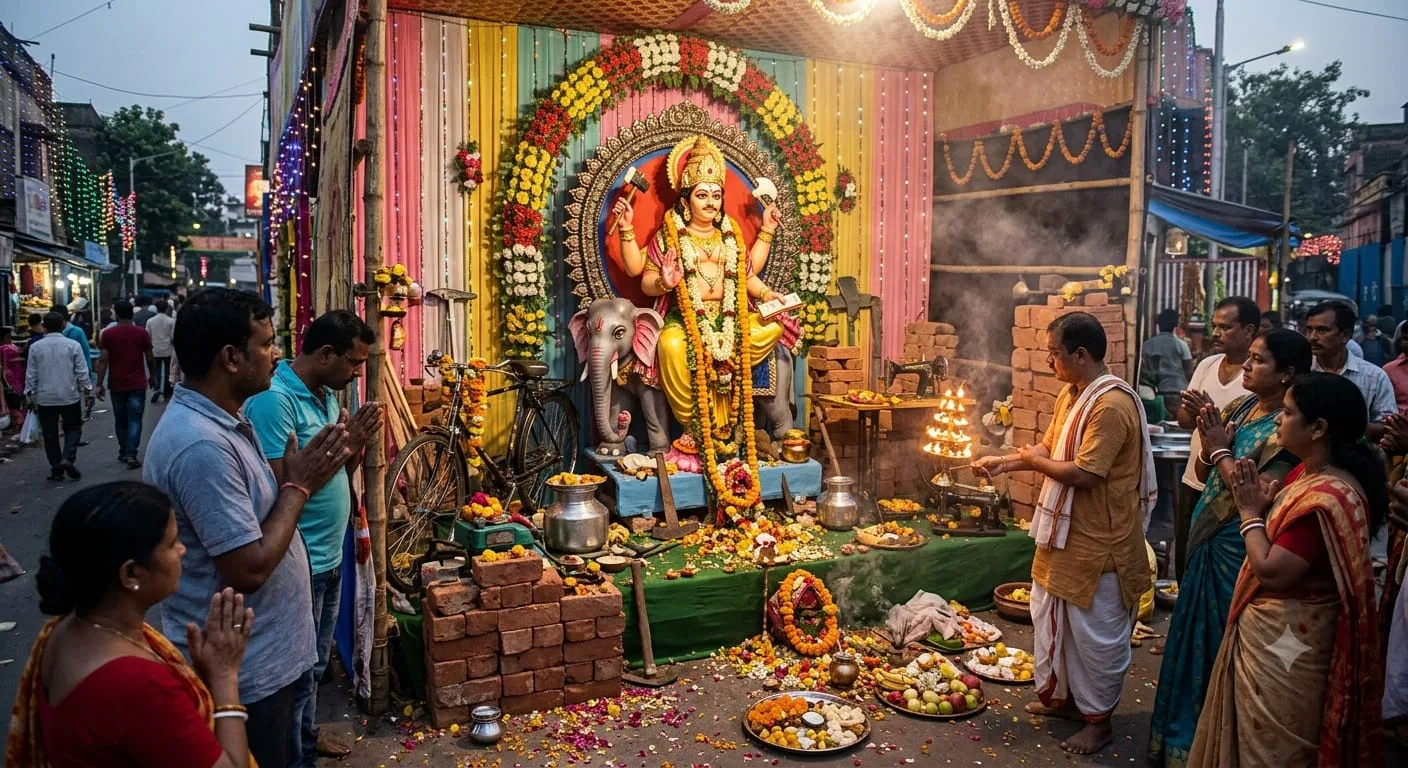
Bishwakarma Puja in Nepal is a special Hindu festival dedicated to Lord Bishwakarma, traditionally regarded as the divine architect, craftsman, and creator of tools and structures. The festival is especially important for artisans, mechanics, engineers, builders, metalworkers, factory workers, drivers, technicians, and people who work with machines and equipment. On this day, people clean and decorate their tools, vehicles, workshops, factories, and machines before offering prayers and flowers. The festival is commonly observed around Kanya Sankranti, which falls in September.
For travelers, Bishwakarma Puja offers an interesting view of Nepal's relationship with work, skill, craftsmanship, technology, and religious belief. Unlike festivals that focus mainly on temples or family worship, this celebration brings religious practice directly into workplaces. A mechanic may worship a motorcycle, a driver may decorate a vehicle, a factory may perform puja for its machines, and an artisan may pray beside the tools used every day. This connection between faith and everyday work makes Bishwakarma Puja an important cultural subject for anyone exploring Nepal beyond its mountains and famous heritage sites.
Bishwakarma Puja is a Hindu festival honoring Lord Vishwakarma, known in Hindu tradition as a divine architect and craftsman. In Nepal, the festival is widely observed by people whose daily work depends on tools, machinery, vehicles, metalwork, construction, engineering, and technical skills. Workshops and factories may install an image or temporary idol of Lord Bishwakarma, clean their equipment, decorate vehicles, and conduct prayers. Reports from Nepal describe artisans and industrial workers worshipping their tools and machinery and seeking durability, safety, and success in their work.
The festival has a simple but powerful message: respect the tools that support your livelihood. A hammer, welding machine, sewing machine, vehicle, computer, factory machine, or construction tool is not viewed only as an object. For many workers, it is directly connected to their ability to earn a living and support their family. Therefore, the act of cleaning and worshipping equipment becomes a way of showing gratitude, care, and respect for work. Visitors exploring Nepal's culture can understand this festival as a meeting point between traditional religious belief and modern working life.
According to Hindu traditions, Lord Bishwakarma is associated with divine architecture, craftsmanship, engineering, and construction. He is traditionally described as the architect or craftsman of the gods. Cultural accounts connect him with the creation of remarkable divine structures and with the legendary city of Dwarka, associated with Lord Krishna.
This image of Bishwakarma as a master creator explains why workers and craftsmen honor him. The festival celebrates not only the deity but also the human values represented by him: skill, creativity, precision, patience, knowledge, and craftsmanship. A person who spends years learning metalwork, carpentry, mechanics, construction, or another technical skill can see a strong connection between their profession and the symbolic figure of the divine craftsman.
For tourists, learning this background adds meaning to what may otherwise look like a simple workplace ceremony. When you see a decorated vehicle or machine during the festival, it represents more than decoration. It reflects a cultural belief that work deserves respect and the tools of work deserve care.
Bishwakarma Puja is generally celebrated in September, around Kanya Sankranti, the solar transition into Virgo. The exact Gregorian date can vary slightly depending on the year. For example, Nepal observed Bishwakarma Puja and Vastu Day on September 17, 2025.
Because festival dates can change according to the Nepali calendar, travelers should check the official calendar before planning a trip around the celebration. If your main goal is to see workplace worship, vehicle decoration, or community activities, local information is also useful because different businesses and communities may follow slightly different schedules.
For travelers planning a wider cultural journey, the Nepal travel experience can be used as a starting point for discovering cultural destinations, festivals, activities, and other experiences across the country.
The importance of Bishwakarma Puja in Nepal comes from its connection with work and livelihood. Many Nepali families depend on skilled professions, transportation, construction, manufacturing, metalwork, engineering, agriculture, and trade. Tools and machines therefore have an important place in everyday life.
On festival day, workers may stop their normal routine to clean and decorate their equipment. Some offer flowers, incense, tika, fruits, sweets, and other items before beginning prayers. The Himalayan Times reported that devotees believe worshipping equipment can bring durability, resistance to damage, and better performance at work.
This does not mean that the festival is only about machines. It is also about human effort. The tools are valuable because skilled people use them. In this way, the festival can be understood as a celebration of both technology and craftsmanship.
Nepal has a long history of skilled craftsmanship. Metalwork, wood carving, stone carving, pottery, weaving, carpentry, blacksmithing, and other traditional skills have played an important role in the country's cultural heritage. Kathmandu Valley, especially, is famous for its traditional Newar craftsmanship.
Some traditional tools are now being replaced by modern machines, showing how Nepal's working culture continues to change. The Himalayan Times has reported that traditional equipment such as dhiki, janto, and kol has become less common as modern technology replaces older tools.
Bishwakarma Puja provides a useful cultural lens for understanding this change. It reminds people that behind every machine or tool is a tradition of human skill and knowledge. Modern technology may change how people work, but the cultural respect for craftsmanship can continue.
The celebration usually begins with cleaning tools, machines, vehicles, and workplaces. Workshops and factories may be cleaned before a special worship area is prepared. Flowers, colorful decorations, cloth, lights, incense, and religious offerings may be used to decorate the space.
A temporary image or idol of Lord Bishwakarma may be installed at the workplace. Workers then gather for puja, prayers, tika, offerings, and blessings. After the religious ceremony, some workplaces share food or prasad among workers.
The exact rituals are not identical everywhere. A large factory may conduct a formal ceremony, while a small mechanic's workshop may have a simple puja beside a motorcycle or machine. This variation is part of the festival's character. It can be both simple and highly organized, depending on the workplace and community.
One of the most distinctive parts of Bishwakarma Puja is the worship of working equipment. Mechanics may clean their spanners, tools, and repair equipment. Welders may decorate welding machines. Factory workers may worship industrial equipment. Drivers may decorate vehicles.
The symbolism is easy to understand: the tool helps the worker perform the work. Taking care of it therefore becomes a form of gratitude. The festival also reflects a wish for safe working conditions and fewer accidents.
For a visitor, this is one of the most interesting aspects of the celebration because it shows how religious traditions can exist alongside modern technology. A contemporary factory can contain sophisticated machinery while still maintaining an ancient cultural practice of offering flowers and prayers.
Vehicle worship is especially visible in Nepal during Bishwakarma Puja. Drivers and vehicle owners may clean their motorcycles, cars, trucks, buses, construction vehicles, and other forms of transport before decorating them with flowers, colorful materials, or religious symbols.
Older reports from Nepal describe people offering red and white cloth to vehicles and decorating them with festoons during the festival.
The practice has both cultural and practical meaning. A vehicle may be the main source of income for a driver, especially for people working in transportation, delivery, tourism, construction, or logistics. Worship therefore expresses a hope for safe journeys, reliable equipment, fewer accidents, and successful work.
Kathmandu is an excellent place to understand how traditional festivals exist within a modern urban environment. Workshops, garages, factories, transport companies, construction businesses, and technical workplaces can all participate in the celebration.
The Kathmandu Valley is also important for visitors because it combines religious heritage, traditional craftsmanship, temples, historic neighborhoods, and modern city life. A traveler can explore heritage sites in the morning and observe contemporary working culture later in the day.
If you are building a cultural itinerary around Kathmandu, a specific Kathmandu cultural experience can help connect heritage, local communities, temples, and traditional life into one journey.
The Newar communities of Kathmandu Valley are widely known for their historic skills in wood carving, metalwork, stone carving, architecture, and other crafts. These skills have shaped many of the valley's temples, courtyards, monasteries, and public monuments.
Bishwakarma Puja provides an interesting opportunity to think about the relationship between craftsmanship and heritage. A carved wooden window is not simply an architectural decoration; it may represent generations of knowledge. Likewise, a metal sculpture can show the precision and creativity of an artisan.
Travelers interested in this side of Nepal can explore Kathmandu heritage stories to learn more about the city's architecture, culture, temples, and traditional communities.
Modern engineers and technicians can also connect with the festival because Bishwakarma represents design, construction, technical knowledge, and creativity. Nepal's cities increasingly depend on engineers and technical workers in construction, transportation, energy, manufacturing, communications, and other sectors.
The festival therefore provides an interesting bridge between ancient symbolism and modern engineering. While traditional stories describe a divine architect, today's engineers use computers, advanced software, machines, measurements, and scientific methods.
The underlying value remains similar: creating something useful requires knowledge, accuracy, planning, and skill.
Factories can make Bishwakarma Puja particularly visible because many machines may be worshipped together. Workers may clean production areas, decorate equipment, prepare an idol, and gather for a common ceremony.
This workplace celebration can also strengthen relationships among employees. A shared meal or ceremony creates a moment when workers step away from their normal duties and recognize the importance of their collective work.
The festival can therefore have a social role as well as a religious one. It gives workers an opportunity to celebrate their profession, their workplace, their colleagues, and their hopes for the coming year.
Although Bishwakarma Puja is religious in nature, the festival also creates a useful opportunity to think about workplace safety. Workers pray for safe equipment and successful work, but practical safety remains essential.
Machines should be inspected, repaired, and operated correctly. Protective equipment should be used. Drivers should follow traffic laws. Factory workers should follow workplace procedures.
The festival's message can therefore be connected to a modern principle: respect your tools by maintaining them and use them safely. Religious practice and responsible work can support the same goal of protecting people and equipment.
Offerings vary between households and workplaces, but common puja materials may include flowers, fruits, incense, tika, sweets, lamps, and other religious items. Some workplaces prepare special food or prasad for workers after the ceremony.
The purpose is not simply to decorate the machine. The offerings represent devotion, gratitude, and good wishes. The equipment becomes part of the ritual space for a short period.
Visitors should avoid touching offerings or religious objects without permission. If you are photographing the ceremony, it is better to ask workers or organizers before taking close-up photographs.
For cultural travelers, Bishwakarma Puja in Nepal can offer a different experience from the country's famous mountain and temple tourism. It shows a working side of Nepal: mechanics repairing vehicles, artisans using tools, engineers managing projects, factory workers operating machines, and drivers maintaining their vehicles.
This makes the festival valuable for people interested in culture, anthropology, architecture, engineering, traditional crafts, photography, and responsible tourism.
Visitors should remember that workplaces are not tourist attractions by default. The best experience comes through a local guide, host, community event, or workplace that has agreed to welcome visitors.
Festival photography can be rewarding, but respect should come first. Ask permission before photographing workers closely, especially during private prayers. Avoid blocking entrances, machinery, roads, or religious spaces while taking photographs.
Do not touch tools, vehicles, idols, offerings, or machines simply to create a photograph. If you are photographing a workshop, follow the instructions of the owner or guide.
Responsible photography allows travelers to document the festival without disrupting it. It also builds trust between visitors and local communities.
Bishwakarma Puja is celebrated in many parts of Nepal, particularly in workshops, factories, garages, industrial areas, transport businesses, and artisan communities. Kathmandu and other major cities can provide opportunities to observe the festival because of their large number of technical and commercial workplaces.
However, the best place depends on the type of experience you want. A traveler interested in vehicles may prefer a local garage or transport community. Someone interested in traditional craftsmanship may prefer a heritage neighborhood. A visitor interested in industrial culture may look for an organized workplace visit.
This is why a local cultural guide or tour operator can be useful. They can help arrange an experience that respects local customs rather than encouraging visitors to enter private workplaces without permission.
Nepal's cultural heritage is not limited to temples and monuments. Skills, occupations, rituals, tools, food, music, and community traditions are also part of cultural heritage.
Bishwakarma Puja is valuable because it connects several of these elements. The festival celebrates the worker, the tool, the workplace, the craft, and the belief system surrounding them.
Travelers who want to understand Nepal deeply should therefore look beyond famous landmarks. A local workshop, traditional craft area, community festival, or small family business may reveal aspects of Nepali culture that are difficult to see in standard sightseeing programs.
A responsible cultural tourism experience should benefit local people. Travelers can support this by choosing local guides, local businesses, community experiences, and small cultural enterprises.
Avoid turning religious ceremonies into staged performances simply for photography. Instead, choose genuine community events where visitors are welcome. Buy locally made crafts when appropriate and pay fair prices for genuine handmade work.
This approach supports the people who keep Nepal's cultural traditions alive while giving travelers a more meaningful experience.
Travelers should check the festival date and local program before planning a Bishwakarma Puja experience. Because activities happen in workplaces rather than one central festival ground, schedules can differ.
Wear comfortable and respectful clothing. If visiting a workshop or factory, closed shoes may be useful. Follow safety instructions and never approach operating machinery without permission.
Most importantly, remember that Bishwakarma Puja is a religious festival, not simply a public show. Observe quietly, ask questions respectfully, and allow workers to continue their rituals without interruption.
Nepal's festival calendar shows how religion is connected with daily life. Tihar honors different forms of life and prosperity, while festivals such as Janai Purnima connect people with sacred rivers, family traditions, and religious practices. Nepal Tourism Board describes Tihar as a five-day festival involving worship of crows, dogs, cows, oxen, Laxmi, and family relationships.
Bishwakarma Puja fits into this wider cultural pattern because it gives importance to something people use every day: their tools and working equipment. The festival demonstrates that objects connected with livelihood can also become part of religious and cultural life.
Travelers can explore more Nepal festival stories to understand how different celebrations reflect the country's diverse communities.
For students, researchers, and travelers, the festival can be a useful example of how religion adapts to changing technology. The traditional idea of honoring a divine craftsman remains relevant even when workers use modern vehicles, computers, industrial machines, and advanced equipment.
This makes Bishwakarma Puja particularly interesting in today's Nepal. It is not a festival frozen in the past. Instead, it continues to change with the workplaces and tools used by modern society.
A mechanic may worship a modern motorcycle. An engineer may pray beside digital equipment. A factory worker may decorate an automated machine. These examples show how cultural traditions can survive by changing their expression while keeping their core meaning.
A Bishwakarma-focused cultural journey can be combined with heritage walks, traditional food experiences, artisan visits, temple tours, photography, and local community activities. This creates a fuller understanding of Nepal rather than limiting the trip to one ceremony.
For example, visitors can explore Kathmandu heritage areas before learning about local craftsmanship. They can enjoy a Nepali food experience after visiting a cultural site. They can also include a spiritual destination to understand how different forms of religious practice coexist.
The Traditional Nepali Culinary & Food Tour is one relevant activity for travelers who want to connect cultural exploration with local food and cooking traditions.
International visitors may find Bishwakarma Puja in Nepal especially interesting because it is different from many internationally known festivals. Instead of focusing mainly on public performances, the celebration often happens where people work.
This creates a more personal cultural experience. Visitors can learn how religion influences professional life and how people express gratitude toward the tools that support their livelihoods.
The most important thing is to approach the festival with curiosity and respect. You do not need to understand every ritual to appreciate its meaning. Listening to local explanations can often provide more insight than simply taking photographs.
Key experiences and features
Bishwakarma Puja
Lord Bishwakarma
Hindu festival
workplace
vehicles puja
workplace safety
religious rituals
cultural experience
Recommended packing list
Kathmandu
workshops, Kathmandu, Kathmandu, Bagmati, Nepal
Got questions about this event?
Bishwakarma Puja is a Hindu festival honoring Lord Bishwakarma, the divine architect and craftsman.
It is generally celebrated in September, around Kanya Sankranti.
Tools and machines are worshipped to show respect and gratitude for the equipment used for work and livelihood.
Mechanics, engineers, artisans, drivers, factory workers, technicians, and machine operators commonly celebrate it.
Lord Bishwakarma is traditionally regarded as the divine architect and craftsman in Hindu tradition.
Sep 17, 2026
1 day
Quick Info
More culture experiences
Mar 23 – Mar 7, 2027Kathmandu
 Dec 13 – Dec 17, 2026
Janaki Mandir, Janakpur
 Nov 15 – Nov 16, 2026
Tsum Valley