 Mar 23 – Mar 7, 2027
Kathmandu
Seto Machindranath Jatra 2027: Kathmandu’s Sacred Festival
Culture
5 days
Festival
Free
Kathmandu 5 days
Event Details
Loading...
Event starts in
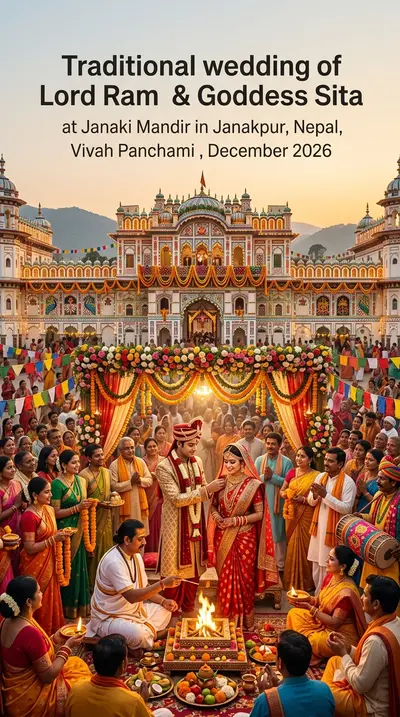
Every winter, when the fog lifts slowly over the plains of southern Nepal, the ancient city of Janakpur becomes a giant wedding hall, and Enticing Himalayas is happy to take you inside the divine wedding story. The Vivah Panchami festival celebrates the marriage of Lord Ram and Goddess Sita, and it is one of the warmest and most emotional festivals in Nepal. Hundreds of thousands of pilgrims walk to the sacred Janaki Mandir, where music, prayers and a grand wedding procession bring the old Ramayan story back to life. In this guide we explain the 2026 dates, the story behind the festival, what happens from the first day to the last, how to reach the city, where to stay, and which tour packages can turn the visit into a smooth cultural journey. Read it like a friendly chat with a local guide who wants you to feel at home.
Let us begin with the question every traveller asks first: when is Vivah Panchami in 2026? The festival falls on the fifth day of the bright half of the Hindu month of Margashirsha, which Nepalis call Mangsir. Because it follows the lunar calendar, the English date changes every year. For 2026, most calendars list Monday, 14 December, though a few show a day earlier or later, because the fifth tithi can stretch across two days. Please confirm the final date with the Nepal festival calendar and your tour operator before booking flights or a hotel.
It also helps to know that the celebration is not only one day. Different guides describe the programme in slightly different ways, and some say the main events run for about a week. In broad terms there is a gentle beginning, a busy middle and a grand finish on Panchami day itself. The short list below shows the usual shape of the festival, and after it we look at each stage in a slow and simple way.
Vivah means marriage, and Panchami means the fifth day of the lunar fortnight. So the name simply means the fifth-day wedding festival. It remembers the day when Lord Ram, the prince of Ayodhya, married Sita, the princess of Mithila. The story appears in holy books such as the Valmiki Ramayana and the Ramcharitmanas, and it has been told in villages, temples and homes for many centuries. If you want to see how this festival sits among other celebrations, the Nepal events page lists many other religious festivals across the year.
For Hindus, this is a day of love, duty and family values. Couples remember Ram and Sita as an ideal pair, and families sing songs about their wedding. In Nepal the festival is called Bibaha Panchami by many people, and it is one of the biggest dates on the pilgrimage calendar of the Terai plains. Even visitors from other faiths feel welcome, because the mood is warm and musical rather than strict. That is why so many travellers choose it as their first cultural festival in the country, before moving on to Dashain, Tihar and other big celebrations.
The legend begins in Mithila, an ancient kingdom ruled by the wise King Janaka. He found a baby girl in a furrow of the earth while ploughing the field, and he named her Sita. As she grew up, she became a brave, gentle and clever young woman, and Janaka wished to find her a worthy husband. So he arranged a swayamvara, a special event where suitors had to prove their strength. The challenge was to lift and string the huge bow of Lord Shiva, which no ordinary person could even move.
Kings and princes from many lands tried and failed, one after another, and the hall fell silent. Then young Ram, who had come with his brother Lakshman and the sage Vishwamitra, walked forward. He lifted the great bow with ease, and when he tried to string it, it broke with a thunderous sound. King Janaka was delighted, and the wedding was fixed. According to belief, the marriage took place in Janakpur on the Panchami of Margashirsha, with royal joy and divine blessings. Local tradition also connects the place called Dhanushadham with the broken bow.
Janakpur, in southern Nepal, is believed to be the birthplace of Sita and the capital of ancient Mithila. It is the heart of Vivah Panchami, and it is one of the most important pilgrimage towns in the country. The city is full of temples and ponds, and its lanes are crowded with sadhus, shopkeepers and families carrying flowers. Unlike the snow-capped Himalayas, this is a place of flat fields, mango trees and old brick buildings, and the beauty comes from faith and colour. If you want a peaceful contrast with mountain trekking, the places to see page shows how different Nepal's regions are.
In this town, Mithila culture is alive in everyday life. People speak Maithili, women paint beautiful wall art in bright colours, and wedding songs are sung in the same tunes their grandmothers used. During the festival the city receives pilgrims from Nepal, India and even distant countries where Hindu communities live. You will meet families who have travelled overnight by bus, groups of singers with drums and harmoniums, and elderly women who have saved for years to make this holy journey. Many visitors say the friendliness of the crowd is what they remember most.
The centre of the festival is the Janaki Mandir, a large white temple built in the early twentieth century and dedicated to Sita. It is known for a lovely blend of Mughal and Rajput styles, with domes, arches and carved windows that glow in the evening light. Inside are gardens and courtyards, and a special place called the Vivah Mandap, the wedding courtyard, where the marriage of Ram and Sita is remembered. During Vivah Panchami this hall becomes the stage for the ceremony, and the whole temple is covered in flowers and lights.
Around the temple you will find ponds, smaller shrines and busy markets that sell garlands, sweets, red powder and small statues. The area is very crowded on the festival day, so it is best to arrive early and keep your valuables safe. Remove your shoes at the entrance, dress modestly and follow the volunteers' instructions. If you enjoy old architecture, you can compare this temple with the palaces of Kathmandu Durbar Square or the temples of Patan, and you will see how Nepal's heritage changes from valley to plains.
Weeks before the main day, the city starts to prepare. Temples are painted, streets are cleaned, and volunteers set up stages, tents and kitchens. Hotels and guesthouses begin to fill, and many families book rooms long in advance. Shopkeepers stock flowers, sweets, clothes and decorations, and local groups practise songs and dances. The mood is like the days before a big family wedding, full of excited planning and small worries about who will cook, who will drive and who will welcome the guests.
A few days before Panchami, pilgrim groups begin to arrive from many directions. Some walk, some come by bus and some arrive by train or plane, and all of them carry bags, blankets and religious items. In recent years a procession party from the holy city of Ayodhya in India has also travelled to Janakpur to represent the groom's side, which is called the Ram Barat. Reports describe heavy preparation for this journey and strong enthusiasm among the baratis, the wedding guests. Travellers who arrive early enjoy quiet temple visits before the crowds grow.
The first days of the festival are gentle and musical. Pilgrims gather at temples, chant the names of Ram and Sita, and listen to readings from the Ramayan. Groups of singers sit in circles with drums and cymbals, and kirtan rolls out of courtyards from morning to night. Families bring offerings of flowers, fruit and sweets, and priests bless them with holy water and red tika. Because programmes may differ from year to year, it is good to ask your guide or hotel about the exact schedule of events.
In the evenings, cultural shows and small processions add more colour. Local artists may perform folk songs, dances or plays that retell parts of the story, and stalls sell simple food and handmade crafts. The best way to enjoy these early days is to walk slowly, stop at small shrines and talk with local people, who are proud to explain their Mithila traditions. If you like festival trips that mix devotion and joy, you can also read about the Holi festival and Yartung Festival on the events page and compare the atmosphere.
As Panchami comes closer, the celebration grows in size and spirit. Women sing traditional wedding songs, which are funny, affectionate and sometimes gently teasing, and these songs show the humour of Mithila families. Priests perform special prayers, and pilgrims take ritual baths in the holy ponds of the city, such as Ganga Sagar and Dhanush Sagar. Many devotees visit the nearby Ram Mandir and other shrines to offer prayers. Fasting is common for some devotees, and simple vegetarian food is served at almost every stop.
These days are also a perfect time to explore the wider area with a guide. You can walk through the narrow lanes, watch artists paint the bright Mithila pictures on walls and paper, and try local sweets from busy shops. Some visitors arrange a day trip to Dhanushadham, which is linked with the broken bow of Shiva. If you like planned trips, a Janakpur cultural tour or a longer Nepal pilgrimage tour can take care of hotels, transport and entry, so that you can focus on the sacred atmosphere rather than the paperwork.
On the main day, Janakpur wakes up early. Long before sunrise, families line up at the temple gates, and the air is thick with incense, bells and the smell of fresh flowers. Priests begin the morning worship of Ram and Sita, the idols are dressed in rich clothes and jewellery, and the wedding courtyard is decorated one more time. Pilgrims take a holy dip in the ponds and then wait patiently in the queue. Even though the crowd is huge, most people stay calm, because they feel they are part of something sacred.
By midmorning the roads around the temple are filled with pilgrims, and the ceremony preparations reach a peak. Volunteers help elders and children, and police and temple staff guide the flow of people. If you are visiting for the first time, do not try to push into the innermost area, because the space is limited and the emotional mood is strong. Find a good place near the outer courtyard, keep your mind open and enjoy the feeling of unity. This is also a good time to buy small gifts, prayer items and sweets for friends and family back home.
The most exciting moment of the festival is the wedding procession, called the Barat. In the story, Ram arrived at Janakpur with his family and friends, and the people of Mithila welcomed them with joy. During the festival this event is reenacted with a big parade of decorated chariots, elephants or horses in some places, musicians, dancers and thousands of devotees. The groom's idols are carried in a beautiful procession, and the streets fill with music, flowers and joyful shouts. Many people say this is the loudest and most colourful evening of the whole year in the city.
When the procession reaches the temple area, the wedding ceremony begins. Priests chant verses, flowers are showered, and the symbolic marriage of Ram and Sita is performed in the wedding courtyard with traditional rituals. Devotees feel as if they are attending the wedding of a beloved family member, and some of them cry with happiness. For the visitors, the safest and best idea is to reach a good spot early, keep your phone in a secure pocket and follow the local guidance. It is a night that many travellers describe as once in a lifetime.
When the wedding is over, the mood changes from noise to warmth. Sweets are shared, families hug each other, and pilgrims wander through the lanes to take blessings from other temples. In some traditions and programmes, the story continues with a farewell of the newlyweds, which reminds people of the emotional moment when a daughter leaves her parents' home. Since the exact events may vary, it is best to check with local organisers. Nevertheless, the gentle ending of the festival is one of its most touching parts, and many visitors feel it deeply.
Over the next day, the city slowly returns to normal. Pilgrims pack their bags, buses and trains fill up, and volunteers begin the huge task of cleaning the streets. Hotels give a sigh of relief, and shopkeepers count their sales. If your schedule allows, stay one extra day to enjoy a quiet visit without the crowd, and to see the wedding courtyard when it is calm. Then you can continue your journey to other places such as Lumbini or Chitwan, with a full heart and a phone full of photographs.
One of the most interesting parts of Vivah Panchami is the link between Nepal and India. Ayodhya, where Ram was born, is remembered as the groom's home, and Janakpur is remembered as the bride's home. In recent years, groups of devotees have travelled from Ayodhya to Janakpur as a symbolic wedding party, and news reports described many pilgrims joining the Ram Barat. This shared story shows how deeply the cultural bond between the two countries runs, and it makes the festival a beautiful example of friendship.
Another nice example is the Devashila story. Sacred Shaligram stones from the Kali Gandaki river in Nepal were given as a gift for the making of the Ramlala idol in Ayodhya, and the promise was linked with a Vivah Panchami occasion in Janakpur. Stories like this remind us that faith travels far beyond borders. If you like to learn about the river valleys behind such stones, the Kali Gandaki region and the trekking routes near Mustang are wonderful places to explore in another season.
Janakpur is famous for Mithila painting, a bright folk art that uses natural colours and fine lines to draw gods, animals, fish, peacocks and wedding scenes. Traditionally women painted the walls of houses during weddings, and today the same style appears on cloth, paper, bags and small items you can buy as souvenirs. Many art centres in and around the city welcome visitors, and some allow you to watch the artists at work. A painting from Mithila is not only a beautiful gift but also a living piece of culture, so buy from reliable local shops and pay a fair price.
Music and language are equally rich. Maithili songs about the wedding of Ram and Sita are sung during the festival, and some are decades old. You will hear the harmonium, tabla and dholak in almost every courtyard. Food is another delight: sweets such as laddu, jalebi and peda are common, and fresh yoghurt and flattened rice are popular breakfast items. When you visit, try to learn a few Maithili greetings, because small words open warm doors. To see how varied Nepal's cultural landscape is, take a look at the cultural events in Nepal on the website.
While you are in the city, do not miss the holy ponds, which are called sagars. Ganga Sagar, Dhanush Sagar and Ratna Sagar are lined with steps and small temples, and in the early morning you can watch priests and pilgrims perform simple prayers at the water's edge. The Ram Mandir near the main temple is another peaceful spot, and the local market is perfect for buying garlands, red powder and handmade crafts. Ask your guide to take you at sunrise or sunset, when the light makes the white buildings glow.
Beyond the city, the countryside has mango orchards, rice fields and small villages where the tradition of Mithila art is passed from mothers to daughters. A trip to Dhanushadham, about a short drive away, lets you see the place that local belief connects with the pieces of the broken bow. Travellers with extra days can also add Lumbini, the birthplace of the Buddha, or the wild forests of Chitwan National Park for a very different scene. A good Terai cultural tour joins these places smoothly, giving you both faith and nature in one trip.
Most travellers begin in Kathmandu, where they can rest, pick up permits or gear and meet their guide. From there you can reach Janakpur by road in about eight to ten hours, depending on traffic, road works and the season. The journey goes through hills and then flat land, and it is a scenic drive with plenty of small towns and tea stops. Sometimes short domestic flights are also available, but schedules change and winter fog can cause delays, so always check current information and keep a spare day in your plan.
Travellers from India can enter Nepal by road at nearby border crossings, and many pilgrims cross in large groups during Vivah Panchami. Bring your passport or valid identity documents, and follow the rules that your travel agent explains. A private car with a driver is more comfortable than public buses during the festival week, when transport is crowded. If you are not sure which route is best for you, the custom tour option can arrange pick-ups and drop-offs so that you do not need to worry about tickets and timetables.
Hotels in Janakpur fill up very fast during the festival, because hundreds of thousands of pilgrims come for the same few days. Rooms near the main temple are the first to go, and prices often rise. So the most important tip is to book your stay as early as possible, ideally several weeks before, and to confirm your booking again a few days before arrival. Simple guesthouses, dharamshalas run by temples and mid-range hotels are all available, and comfort levels vary. If you want a smooth stay, choose a place that is within walking distance of the temple or has reliable transport.
Some travellers prefer to stay in Kathmandu or another city and travel in for the day, but this is tiring because of the crowds and the long road. If you are with children or elders, it is much better to stay in the town itself. Many trusted operators, including Enticing Himalayas, can arrange hotels, transport and guides together, which makes the whole trip easier. Compare different guided tour packages and ask what is included, such as breakfast, transfers and temple guidance, so there are no surprises on arrival.
December in the Terai is cool and often foggy, especially in the mornings and evenings. Days can be pleasant and dry, but the nights are chilly, and the fog sometimes delays roads and flights. So you should pack a light jacket, a shawl or sweater, socks and comfortable shoes that are easy to take off. Cotton clothes in layers work well, and a scarf helps in the morning breeze. Since you will walk a lot on hard ground, good sandals or slip-on shoes are a great idea, because you must remove them at temple gates.
Other useful items include a small backpack, a water bottle, sunglasses, a mask for dust, wet wipes and a power bank. Bring some small cash in Nepali rupees for offerings, food and taxis, because many small vendors do not accept cards. Keep valuables and your passport in a safe place, and avoid wearing expensive jewellery in crowds. If you are planning to join a mountain trek after the festival, you can find more packing advice in the trekking packages, since the weather changes a lot from the plains to the hills.
Vivah Panchami is a religious festival, so respect matters more than anything else. Dress modestly, covering shoulders and knees, and remove your shoes and hats before entering temple areas. Do not touch idols, offerings or priests unless invited, and speak softly near the shrines. Non-Hindus are usually welcome in the open areas of the festival, and the crowds are used to meeting visitors, but some inner rooms may be restricted. If you are not sure, ask a volunteer or your guide first.
Photography needs care as well. Ask permission before taking close pictures of pilgrims, especially women, children and elders, and never use flash inside a shrine. Drones are not welcome in crowded religious areas. Avoid meat and alcohol in the temple zone, and do not smoke near the shrine. Above all, be patient with queues and smile at strangers, because good manners are the best way to earn trust. Many of the same rules apply at other sacred sites, from Pashupatinath Temple to Swayambhunath, so the habits you learn here will serve you well all over Nepal.
Big crowds can be exciting, but they also need care. Arrive early, keep your group together and agree on a meeting point in case you get separated. Carry a small card with your hotel name and phone number, and keep your phone charged. Avoid pushing, especially in narrow lanes near the temple, and step out if the crowd becomes too tight. Children and older people should stay close to an adult, and everyone should follow the instructions of volunteers and security staff.
Take care of your health as well. Drink bottled or boiled water, eat freshly cooked food and wash your hands often, because a stomach problem can ruin your trip. Winter air can be dusty, so a mask and lozenges help. If you have heart, breathing or mobility problems, plan short walks, rest breaks and a hotel near the venue. Solo women travellers often feel safer in a group tour or with a trusted guide, so a small-group tour is a good idea. And of course, keep travel insurance and a simple emergency plan on your phone.
The food of the festival is mostly vegetarian, and it is served with love and generosity. Temples and volunteer groups often offer free meals called prasad or bhandara, and pilgrims sit in long rows to eat together. You will find dishes such as rice, lentils, vegetable curry, puri, potatoes and different sweets. Fresh sweet treats like jalebi, laddu and peda are sold at every corner, and cups of hot tea keep everyone warm on foggy mornings. Eating with your right hand and finishing what you take are simple signs of respect.
If you have a sensitive stomach, choose busy stalls where food is cooked fresh and served hot, and avoid raw salads or unfiltered water. Vegetarian restaurants in the town offer familiar dishes, and hotels can prepare simple meals on request. For a wider taste of local life, join a food walk or ask your host to explain the Maithili dishes. Compare this with the feasts of Maghe Sankranti and Yomari Punhi, and you will see how each festival has its own flavour and story.
Many people are surprised to learn that Vivah Panchami is not usually chosen as a wedding date, even though it celebrates the most famous marriage in Hindu tradition. Some calendars and priests explain that the story of Ram and Sita included hardship after the wedding, so the day is honoured and remembered rather than chosen for a new marriage. This is a local belief and different families may follow different ideas, so it is best to talk with a priest if you are planning a wedding. The point is that the festival is a day of respect and remembrance.
For travellers this small fact shows how deep and layered Nepali culture is. A single festival can be full of joy and yet carry a quiet note of sadness, like a good story. If you want to learn more about traditions of marriage and family in Nepal, ask your guide or host, because most people love to talk about their weddings. And if you enjoy studying how different communities mark love, you can read about the colourful Sindoor Jatra and other events, which show another side of festival life.
Winter in Nepal is a lovely season for culture, and Vivah Panchami is only one star. Just before it, in autumn, you can catch Tihar, the festival of lights, and Chhath in the Terai, where families gather at riverbanks at sunrise and sunset. After Vivah Panchami come the winter events such as Maghe Sankranti, Gyalpo Losar and Maha Shivaratri at Pashupatinath, each with its own mood. Some of them are colourful, some are quiet, and all of them are full of living traditions.
If you would like to compare Terai celebrations with mountain ones, look at the Tiji Festival in Upper Mustang, the Mani Rimdu Festival in Solukhumbu and the Dumji Festival in the Sherpa region. In spring, the Holi festival and Bisket Jatra bring more colour, and in May Buddha Jayanti fills Lumbini with calm. The events page is a good place to browse the whole year, and you can even build a festival calendar trip that catches a few of them in one journey.
A visit to Janakpur fits nicely into a longer holiday. Many travellers begin with a Kathmandu Valley tour to see temples, old squares, Swayambhunath and Boudhanath Stupa, which gives a gentle introduction to Nepali culture. Then they go south for the festival, and later they add a wildlife stop with a Chitwan safari tour, where rhinos, deer and birds wait in the winter sun. Some add a peaceful Lumbini pilgrimage tour, and others finish with a relaxing Pokhara adventure tour beside the lake. This mix gives you faith, nature and rest in a single plan.
Those who love the mountains can join a short trek after the festival, choosing from the trekking packages and picking a route that suits their fitness and time. For a wider journey, the Best of Nepal tour joins culture, nature and Himalayan views, and the tour list shows more ideas. If none of these suits you exactly, ask for a customised itinerary that puts the exact festival date in the middle and builds the rest around it. Good planning also keeps a spare day in case of fog, roads or crowds.
To make planning simple, here is a sample idea. On day one, arrive in Kathmandu, rest and take an easy walk in Thamel. On day two, join a half-day Kathmandu Valley tour to see the main temples and stupas. On day three, drive or fly toward Janakpur, check into your hotel and visit the Janaki Mandir in the evening to feel the mood before the crowd grows. This gentle start lets your body get used to the new place and the different weather of the plains.
On day four, explore the ponds, Ram Mandir and local markets, and watch the early festival programmes. Day five is the main event, with the morning rituals, the afternoon rest and the evening procession and wedding ceremony. On day six, take a calm morning, visit Dhanushadham or an art centre, and then travel toward Chitwan or Kathmandu. Day seven can be a slow return, with a final meal and a farewell to Nepal. This is only a simple example, and a good operator can shape it to your dates, budget and pace.
Big festivals leave big marks, so every visitor should do a little to protect the place. Do not throw plastic, cups or leftover food into the ponds, and use dustbins or carry your rubbish back to the hotel. Carry a refillable bottle, refuse plastic bags and avoid buying items made from endangered animals or plants. Volunteers work very hard to clean the city after the festival, and you can help by leaving each place as tidy as you found it. This small habit protects the holy ponds and shows respect to the people who live there.
Support the local community by staying in local hotels, eating in family-run restaurants and buying crafts directly from Mithila artists. Pay a fair price, do not bargain too aggressively, and give donations only through trusted temple offices. Follow your guide's advice, respect private moments of prayer and avoid loud behaviour. Choosing a responsible company like Enticing Himalayas also helps, because trained guides know the local customs and limits. When travel is kind, the festival can stay beautiful for many more generations.
Many people ask whether they can join the festival if they are not Hindu. The answer is yes, most events are open to all visitors, as long as you respect the rules and dress properly. Another common question is whether the exact date is safe to trust. Since the fifth tithi can cover two English dates, the wise idea is to keep flexible dates, arrive at least a day early and check the newest news before you travel. Travellers also ask about tickets, but there are no tickets for the public events, because the celebration belongs to the community.
A few small details are worth remembering. Mobile networks can be slow when the crowd is huge, so download maps and save your hotel address offline. Public toilets are limited, so use the hotel facilities before going out. Banks and ATMs may run out of cash, so bring enough money in advance. Travellers who cannot join in 2026 should not worry, because Nepal has many other cultural events and you can browse the events guide to pick another date. The places to visit page also offers ideas for extra stops.
Vivah Panchami is more than a religious date, because it shows how a very old story can still fill a whole city with joy. From the quiet arrival of pilgrims to the songs, the procession, the wedding ceremony and the soft farewell, every stage of the festival has its own feeling. In Janakpur, faith is not something you only read about, it is something you see, hear and taste. Whether you go as a devotee, a photographer, a student of culture or a curious traveller, you will leave with warm memories and new friends.
If this guide has made you curious, start planning now. Check the festival calendar for the final date, read about the places to see on your route, and choose a comfortable tour package that gives you time and safety. The team at Enticing Himalayas can help you build a journey that respects the culture, fits your budget and keeps your dates flexible. The bells of Janaki Mandir will ring again next winter, and the city of Sita will be ready to welcome you with flowers, songs and a warm smile.
Key experiences and features
Vivah Panchami
lunar calendar
Fifth-day wedding festival
Mithila
Swayamvara
Janakpur
Holy journey
Vivah Mandap
Nepal's heritage
Mithila traditions
Recommended packing list
Janakpur, Dhanusha, Madhesh Province, Nepal
Got questions about this event?
Vivah Panchami is a major Hindu festival commemorating the symbolic wedding of Lord Ram and Goddess Sita, traditionally celebrated in Janakpur.
The main celebrations take place in Janakpur, particularly around Janaki Mandir and other important religious sites connected with Sita and Ram.
Vivah Panchami 2026 falls in December 2026, according to the Hindu lunar calendar, with celebrations taking place over several days in Janakpur.
The festival features religious rituals, processions, devotional music, temple ceremonies, and the traditional reenactment of the wedding of Ram and Sita.
Yes, visitors can experience the public celebrations while respecting temple rules, religious customs, crowd-management guidance, and the sanctity of ongoing ceremonies.
Dec 13 – Dec 17, 2026
5 days
Quick Info
More culture experiences
Mar 23 – Mar 7, 2027Kathmandu
 Nov 15 – Nov 16, 2026
Tsum Valley
 Nov 13 – Nov 14, 2027
Falangashaini Bhagwati Temple