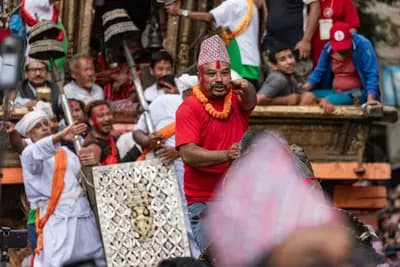
 Mar 23 – Mar 7, 2027
Kathmandu
Seto Machindranath Jatra 2027: Kathmandu’s Sacred Festival
Culture
5 days
Festival
Free
Kathmandu 5 days
Event Details
Loading...

Event starts in
High in the Khumbu valleys, where prayer flags stretch between stone monasteries and the shadow of Everest falls over villages that have barely changed in centuries, the Sherpa community prepares each year for one of the most spiritually significant events in their calendar. The Dumji Festival 2027 will once again bring monks, families, and mountain communities together across Namche Bazaar, Tengboche, Khumjung, Pangboche, and Thame for a week of sacred ritual, masked dance, and communal feasting. At Enticing Himalayas, we consider Dumji one of the most rewarding, least commercialized cultural experiences available anywhere in the Everest region, and this guide walks through everything worth knowing before you plan a trip around it — the likely 2027 timing, the origins of the festival, what actually happens during the celebration, and why it continues to matter so deeply to the people who have kept it alive for hundreds of years. If you're building a broader Himalayan itinerary around this kind of cultural depth, our full Events calendar tracks Dumji alongside dozens of other Nepali festivals worth timing a trip around.
Unlike Nepal's larger national festivals, Dumji is not something staged or adjusted for outside visitors. It unfolds on its own terms, governed by lunar timing and monastic authority, which is precisely what makes witnessing it feel like stepping into something genuinely unaltered by tourism. For travelers who have already explored the more visible side of Everest region trekking, adding a cultural layer like Dumji transforms a mountain trip into something closer to an immersion in Sherpa spiritual life itself, and it pairs naturally with a visit to the wider set of Himalayan places worth exploring beyond the standard trekking checklist.
Dumji, sometimes spelled Dumje, is an annual Buddhist ritual festival celebrated by the Sherpa people of the Khumbu and Solu regions of Nepal. It is rooted in the Nyingma school of Tibetan Buddhism and centers on protective rituals intended to remove negative influences from the community while strengthening social bonds among Sherpa families. The festival is celebrated in the fifth lunar month of the Tibetan calendar, which typically corresponds to June or July on the Gregorian calendar, though the exact days shift slightly depending on lunar calculations and the specific monastery hosting the event. Because each village's celebration is tied to its own local monastery and lineage, the festival doesn't happen on a single fixed date across the entire region — Tengboche, Namche, Khumjung, Pangboche, and Thame each hold their own version, occasionally staggered by days or weeks from one another, which is worth understanding before locking in fixed travel dates through our tour packages.
At its core, Dumji is considered both a religious obligation and a community responsibility. Hosting duties rotate annually among village households, meaning a different family or group of families takes on the considerable task of funding and organizing the week's rituals, feasts, and monastic ceremonies each year. This rotating responsibility is part of what has allowed the tradition to survive largely intact for centuries, since it distributes both the honor and the burden of preservation across the entire community rather than concentrating it in a single institution. Readers wanting a deeper background on how Sherpa communities structure this kind of collective responsibility can find related context across our blog archive, which covers Himalayan culture well beyond the festival calendar alone.
Because Dumji follows the Tibetan lunar calendar rather than a fixed solar date, an exact 2027 date cannot be confirmed this far in advance — the precise days are typically finalized by the Rinpoche of Tengboche Monastery only a few months before the event itself. Based on the consistent historical pattern, however, travelers can reliably expect the Dumji Festival 2027 to fall sometime in June or July 2027, most likely centered around the 10th day of the fifth Tibetan lunar month, which has traditionally marked the ceremonial peak of the celebration. Preparation activities, including monastery decoration, prayer flag renewal, and family gatherings, generally begin several days before the main rituals, meaning a visit timed even slightly before the confirmed peak day can still offer meaningful cultural access. Nepal's broader festival and events calendar is typically updated as monasteries confirm exact dates, so checking back closer to the season is worthwhile for anyone locking in flights.
Travelers hoping to build a trip around this window should treat June and July as the target planning period, while remaining flexible on exact dates until closer confirmation. This is also the pre-monsoon to monsoon transition in the Everest region, which affects trekking conditions, so anyone planning to combine Dumji with a trek to Everest Base Camp should factor in potential cloud cover and rain alongside the cultural planning. For the most current Everest region altitude and seasonal trekking guidance, our detailed article on preventing altitude sickness on the Everest Base Camp trek is a useful companion read, since acclimatization planning matters just as much during festival season as it does during the peak autumn trekking months. Beyond that single guide, the wider blog section holds seasonal breakdowns for most of the major trekking routes in the region.
The story of Dumji traces back to the founding of Buddhism's institutional presence in the Khumbu region itself. According to Sherpa oral and monastic tradition, three spiritual brothers played a foundational role in establishing the earliest monasteries of the area: Lama Sangwa Dorje, who founded Pangboche Gompa and is widely credited as the originator of the Dumji tradition roughly 350 to 400 years ago; his brother Rolpa Dorje, who founded Thame Gompa; and a third brother, Khyenpa Dorje, associated with the founding of Rimijung Gompa. The festival itself was established to coincide with the birth anniversary of Guru Rinpoche, also known as Padmasambhava, the revered Buddhist master credited with bringing Vajrayana Buddhism to Tibet and the greater Himalayan region in the eighth century. Each of these founding monasteries remains an active destination today, and several appear among the notable places to visit across the Khumbu region.
This origin story matters because it roots Dumji not in abstract mythology but in the actual institutional history of the Khumbu region — the monasteries where the festival is celebrated today are, in many cases, the very same ones founded by the figures credited with starting the tradition. That continuity, stretching back multiple centuries through a chain of monastic succession and family responsibility, is part of what gives Dumji its weight within Sherpa identity. It isn't simply a seasonal celebration; it's a living link to the founding moments of Buddhist institutional life in the high Himalayas, maintained through the same rotating community structure that has existed since its earliest days. Several of our guided tour packages route directly past these founding monasteries, giving travelers a chance to see the physical continuity of the tradition even outside festival season.
The Dumji Festival typically unfolds over roughly a week, though the most significant public rituals are concentrated within a shorter core period of three to five days. Early preparation days involve welcoming visiting monks from Tengboche Monastery, who are received with tea and food by the host family or organizing committee, followed by gathering and prayer sessions led by the lawa, or festival organizers, at the local monastery. As the festival builds toward its main days, monasteries are elaborately decorated, prayer flags are replaced, and households throughout the village engage in thorough cleaning, treating the period with the same seriousness many cultures reserve for a major religious holiday. A closer written breakdown of how this preparation period unfolds day by day is available in our wider blog coverage of Himalayan cultural events.
The most visually striking element of Dumji, and the one most likely to draw outside visitors, is the Cham dance — a series of highly choreographed, ritualistic masked dances performed by monks in elaborate costumes. These are not theatrical performances in the entertainment sense; they are considered sacred offerings meant to purify the surrounding land and community while symbolically enacting the triumph of dharma, or righteous order, over destructive or demonic forces. Monks spend considerable time in preparation, and the dances themselves are accompanied by ceremonial music, chanting, and the burning of butter lamps, which line monastery courtyards in the hundreds during peak celebration days. Watching a Cham dance unfold is, for many travelers, the single most memorable image from a Dumji-timed visit, and it's a moment worth planning a dedicated tour around rather than hoping to catch incidentally during a standard trek. Our tour packages can be adjusted to prioritize arrival during these specific ceremonial windows once exact 2027 dates are confirmed.
Alongside the dances, communities also perform ceremonies welcoming Khumbiyulha, the protector deity of the Khumbu region, with participants wearing traditional costumes and ceremonial masks while offering khada, the traditional silk scarves used throughout Tibetan Buddhist ritual as gestures of respect and blessing. Feasting is woven throughout the entire week, reinforcing Dumji's dual identity as both sacred ritual and community celebration. Extended families and neighbors gather for shared meals, and the communal preparation and consumption of food functions as a practical expression of the same unity the rituals themselves are meant to reinforce. For travelers building a broader itinerary around Sherpa cultural experiences, our events and festival calendar offer additional ways to engage respectfully with local communities beyond the festival days themselves, whether through monastery visits, homestays, or guided cultural walks through nearby places in the Khumbu.
Understanding why Dumji continues to matter requires looking past the visual spectacle of the masked dances toward what the festival actually does for the community that sustains it. First, Dumji functions as an act of collective spiritual maintenance — the ritual purification at its center is understood by participants as genuinely protective, clearing negative influences from the village for the year ahead rather than serving as symbolic performance alone. This gives the festival a functional seriousness that distinguishes it from purely cultural or tourist-facing events; for the Sherpa community, Dumji is doing real spiritual work, not simply commemorating history. Travelers curious about how this compares to Nepal's other major religious festivals can browse the full festival and events calendar for context on how Dumji fits within the country's much wider religious calendar.
Second, the rotating hosting responsibility embedded in Dumji reinforces social cohesion in a very concrete, economic sense. Families who take on hosting duties shoulder real financial and organizational responsibility, and the broader community's participation in feasting, preparation, and ritual support reflects a mutual obligation system that has helped sustain close-knit village structures across generations, even as many Sherpa families have become increasingly connected to global trekking tourism and outside economic opportunity. Third, Dumji preserves an unbroken institutional link to the earliest Buddhist monastic history of the Khumbu region, keeping alive both the specific liturgical practices established by Lama Sangwa Dorje and his brothers, and the broader Nyingma Buddhist traditions those monasteries were built to serve. Several deeper explorations of Sherpa social structure and monastic history are collected in our blog section for readers who want to go further than a single festival overview.
Finally, for a community whose economic life has become deeply intertwined with international trekking and mountaineering, Dumji represents a space where Sherpa identity is expressed on entirely Sherpa terms — not adapted, translated, or staged for outside consumption, but practiced exactly as it has been for centuries. That distinction matters enormously in a region where cultural identity and tourism economics are so closely intertwined, and it's part of why respectful, well-timed visits during Dumji offer something genuinely different from a standard trekking itinerary built purely around mountain views and summit photos.
While Sherpa communities across several villages observe Dumji, certain locations have become particularly well known for the scale and visibility of their celebrations. Tengboche Monastery, the most prominent monastic institution in the Khumbu region and a familiar landmark for anyone who has trekked toward Everest Base Camp, hosts monks central to Dumji observances across the wider area, and it remains one of the most visited places in the entire Everest region regardless of festival timing. Namche Bazaar, the bustling administrative and commercial hub of the Khumbu, hosts what many consider the most accessible and lively version of the festival, drawing both local participants and the occasional respectful visitor passing through during trekking season.
Pangboche, historically significant as the founding site of the Dumji tradition itself, retains a particularly strong connection to the festival's origins, while Khumjung, Phortse, and Thame each maintain their own local observances. Sherpa communities further south in Junbesi, in the Solu region, and in the Helambu area also participate in related traditions and dances tied to the same broader festival calendar, and all of these locations are covered in more depth across our places to visit guide for travelers planning routes beyond the standard Everest Base Camp trail.
For travelers, this geographic spread means that timing a visit around Dumji doesn't require choosing a single fixed itinerary — depending on which village's celebration aligns with your travel window, a Dumji-focused trip could be built around a shorter cultural visit to Namche and Tengboche, or extended into a longer trek that combines festival observance with the classic route toward Everest Base Camp. Browsing our full range of Everest region tours and Himalayan trekking packages is a useful starting point for understanding how a Dumji-timed trip can be structured around your available days and fitness level, since combining a multi-day trek with a specific festival window requires more careful scheduling than a standard trekking itinerary. Our tour packages page lists current departure structures that can be adapted once Tengboche Monastery confirms exact 2027 dates.
Because Dumji is a genuine religious observance rather than a tourism product, travelers hoping to witness it should approach the experience with a different mindset than they might bring to more commercialized cultural events. Photography inside monastery courtyards during Cham dances is sometimes permitted but should always be confirmed locally rather than assumed, and visitors should be prepared to observe quietly rather than participate directly in ceremonies reserved for community members and monks. Modest dress, particularly when entering monastery grounds, is expected, and travelers should be mindful that they are witnessing a living religious practice rather than a historical reenactment staged for their benefit. Further etiquette guidance for visiting active monasteries in Nepal is covered across several posts in our blog archive.
Because the exact dates shift each year and are confirmed relatively close to the event itself, building flexibility into travel plans is essential. Working with a guide or operator who maintains current contact with monastery communities in the Khumbu region can make the difference between arriving during genuine peak ritual days and simply missing the festival's most significant moments by a matter of days. This is precisely the kind of nuanced, locally connected planning that separates a meaningful cultural visit from a missed opportunity, and it's an area where experienced regional operators add real value beyond simply booking transportation and accommodation. Our events calendar is updated as monastery confirmations come in, making it a practical first stop before finalizing any Dumji-timed travel dates.
For travelers who can't structure an entire trip around a single festival, it's worth noting that Dumji pairs naturally with several other experiences in the region. A visit timed loosely around June or July can combine early Dumji preparation activities in Namche or Tengboche with visits to nearby places such as the Sagarmatha National Park viewpoints, Khumjung's historic Hillary School, or the Everest View Hotel above Namche. Because the pre-monsoon to monsoon transition brings a quieter trekking season compared to the autumn crowds, travelers who prioritize cultural depth over guaranteed mountain visibility often find this a rewarding trade-off, particularly when paired with a well-planned itinerary from our tour packages collection.
It's also worth considering Dumji alongside Nepal's wider festival calendar when planning a longer trip. Travelers with flexible schedules sometimes choose to combine a Dumji-timed visit to the Khumbu with other cultural stops elsewhere in the country, using our full events and festival calendar to identify whether any complementary celebrations fall within a reasonable travel window before or after the Everest region leg of the trip. This kind of multi-region cultural itinerary tends to require more lead time to plan properly, which is another reason to start checking confirmed 2027 dates well before booking flights.
Key experiences and features
Dumji Festival 2027 in Nepal
Dumji Festival 2027
Nyingma Buddhist traditions
Dumji Festival in Khumbu
Tibetan Buddhist
Recommended packing list
Namche Bazaar, Solukhumbu, 1, Nepal
Got questions about this event?
Not yet confirmed — expected June or July 2027, likely around the 10th day of the fifth Tibetan lunar month.
Dumji is mainly celebrated in the Khumbu and Solukhumbu regions, including Namche Bazaar, Khumjung, Pangboche, Thame, Tengboche and other Sherpa settlements.
Dumji is an important Sherpa religious and cultural festival that honors Guru Rinpoche (Padmasambhava) and brings communities together through prayers, rituals, masked dances and feasts
The celebration commonly lasts about four days, although the length and specific rituals can differ between villages.
Dumji includes Buddhist prayers, monastery rituals, Cham masked dances, traditional music, community feasts and Sherpa cultural gatherings. Some communities also perform rituals intended to remove negative influences and protect the village.
Jul 4, 2027
1 day
Quick Info
More culture experiences
Mar 23 – Mar 7, 2027Kathmandu
 Dec 13 – Dec 17, 2026
Janaki Mandir, Janakpur
 Nov 15 – Nov 16, 2026
Tsum Valley