 Mar 23 – Mar 7, 2027
Kathmandu
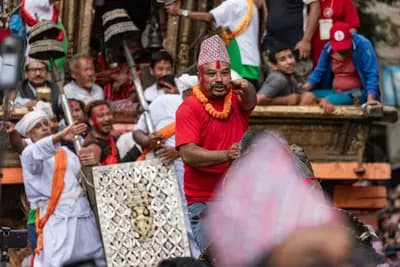
Seto Machindranath Jatra 2027: Kathmandu’s Sacred Festival
Culture
5 days
Festival
Free
Kathmandu 5 days
Event Details
Loading...
Event starts in
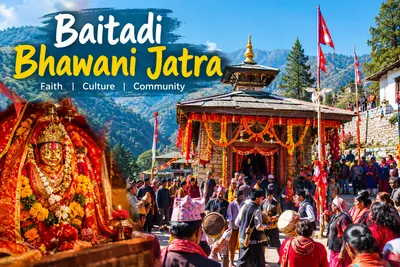
Baitadi Bhawani Jatra is a traditional religious celebration associated with Falngashaini Bhagwati Temple in Sunarya Rural Municipality of Baitadi, in Nepal's far-western Sudurpashchim Province. The festival brings together devotees, local families, traders, priests, and visitors around worship of the goddess and a strong sense of community tradition. Unlike some of Nepal's better-known festivals that attract large numbers of international travelers, Bhawani Jatra remains closely connected with the everyday religious life of the local community. The celebration is particularly associated with Kartik Shukla Chaturdashi and Purnima, making its exact Gregorian date change from year to year. Visitors interested in Nepal's wider sacred traditions can also explore the Nepal festival calendar, the spiritual tour in Nepal, and the broader Nepal travel experience before planning a journey to Baitadi.
The festival follows the traditional lunar calendar rather than a fixed Gregorian date, so travelers should check the corresponding Kartik Shukla Chaturdashi and Purnima dates each year. For the 2027 calendar, the festival period falls around November 13–14, 2027, with the Purnima observance on November 14. The exact sequence of temple rituals, gatherings, worship, and local activities can depend on the community's traditional schedule, so the published Gregorian date should be treated as a planning reference rather than a replacement for local confirmation. This is common with Nepal's religious festivals, where lunar observances determine important ceremonies. Enticing Himalayas maintains a festival calendar for Nepal, while its spiritual Nepal guide explains why religious journeys often need to be planned around traditional calendars rather than ordinary travel seasons. The Nepal travel homepage can then be used as the starting point for wider trip planning.
Baitadi Bhawani Jatra is associated with Falngashaini Bhagwati Temple in Sunarya Rural Municipality–5, Baitadi, in the hills of Sudurpashchim Province. Baitadi is far from Nepal's busiest tourist centers, and that distance is part of what gives the festival its local character. The surrounding landscape consists of steep hills, rural settlements, forests, agricultural terraces, and mountain views typical of western Nepal. A visit therefore becomes more than a temple visit; it introduces travelers to a part of Nepal that is often overlooked by conventional itineraries. Those interested in combining the festival with a broader cultural journey can begin with the spiritual Nepal travel guide, compare other sacred destinations through the Nepal festival calendar, and use the main Nepal travel guide for further planning.
The Falngashaini Bhagwati Temple is the central sacred place around which the Bhawani Jatra is organized. In local religious life, Bhagwati is approached as a powerful goddess and a source of protection, blessings, and spiritual strength. The importance of such a temple cannot be measured only by its architecture or size. A rural shrine may hold enormous meaning because generations of families have visited it, performed rituals there, made offerings, and passed traditions from parents to children. This kind of living religious heritage is common throughout Nepal. Visitors can better understand the wider tradition by reading about spiritual journeys in Nepal and visiting information about the Nepal cultural calendar. For travelers planning a longer pilgrimage, the Nepal journey collection provides a wider starting point.
The name Bhawani is commonly associated with the divine feminine and with forms of the goddess worshipped within Hindu traditions. In different parts of Nepal and South Asia, goddess traditions have developed their own local stories, rituals, names, and forms. Therefore, Bhawani worship in Baitadi should be understood through the local community and its own religious practices rather than being treated as identical to every other Bhagwati or Bhawani shrine. The festival expresses devotion through collective worship and traditional observances, while the temple provides a permanent spiritual center for the surrounding community. Travelers interested in how sacred traditions vary across Nepal can read the spiritual tour guide, compare festivals through the Nepal festival calendar, and explore the wider cultural journeys of Nepal.
The festival is traditionally associated with Kartik Shukla Chaturdashi, the fourteenth lunar day of the bright half of Kartik. Lunar dates are deeply important in Nepal's religious calendar because many festivals are determined by tithi rather than by a fixed date on the international calendar. The Chaturdashi observance therefore forms part of the ritual rhythm leading into the full moon. For travelers, understanding this helps avoid a common mistake: assuming that a festival will happen on exactly the same Gregorian date every year. The Nepal festival calendar is useful for checking the broader annual pattern, while the spiritual Nepal guide provides context on religious travel. A wider look at Nepal's sacred destinations can also begin through the Enticing Himalayas travel guide.
The festival period continues into Kartik Purnima, the full-moon day of Kartik, which is one of the important full-moon observances in the Hindu calendar. Full-moon days frequently carry special religious significance in Nepal, and temples may become busier as devotees gather for worship and offerings. At Falngashaini, the Purnima day forms an important part of the Bhawani Jatra observance and brings the festival to its central period of community participation. Visitors should remember that religious calendars can differ slightly according to location and calculation method, so final local timing matters. The Nepal festival calendar offers a useful overview, while the spiritual travel guide explains how lunar festivals shape pilgrimage planning across the country. The Nepal travel homepage is useful for planning the rest of the journey.
At the heart of Bhawani Jatra is devotion to the goddess. People visit the temple to pray, make offerings, seek blessings, and participate in the community's religious observances. The exact ritual sequence can be determined by local priests and traditional practices, meaning visitors should not assume that every ceremony will look the same each year. This is one of the reasons a local guide or knowledgeable community member can be valuable. Instead of viewing the festival only as a photographic opportunity, travelers can learn what different actions mean and why people gather at particular times. Enticing Himalayas' spiritual journey guide provides useful background for approaching sacred places respectfully, while the Nepal festival calendar helps travelers discover other religious celebrations.
Offerings are an important part of Hindu worship, and devotees may bring items according to their family traditions and the requirements of the temple. Flowers, fruits, incense, lamps, food, and other devotional materials are common forms of offering at many Nepali temples, although the exact practice at Falngashaini should be learned locally. The act of offering is often less about the material object and more about expressing faith, gratitude, hope, and respect. Visitors should avoid touching offerings or sacred objects unless invited to do so. Similar principles apply when visiting other pilgrimage destinations in Nepal. The spiritual Nepal guide explains basic etiquette at sacred places, while the Muktinath pilgrimage guide provides another example of how visitors can approach an active pilgrimage site respectfully.
A festival like Bhawani Jatra is not created by a temple alone. It depends on the local community, including families, priests, organizers, traders, musicians, volunteers, and devotees. Religious festivals create opportunities for people who may live in different places during the year to reconnect with their ancestral community. This is particularly meaningful in rural Nepal, where migration for education, employment, and other opportunities has changed the rhythm of village life. Annual festivals can become moments when people return home and renew social relationships. That community dimension is visible in many Nepali festivals listed through the Nepal festival calendar. It also connects with the broader idea of community-based spiritual travel described in the spiritual Nepal guide and the wider Nepal travel experience.
Religious festivals are often passed from one generation to the next through family participation. Children learn where the temple is, how offerings are prepared, when the family visits, and which stories are connected with the goddess. Parents and grandparents become informal teachers, while the festival itself becomes a living classroom. This family dimension is one reason rural festivals can remain strong even when modern lifestyles change rapidly. Visitors who come with families can observe this relationship between generations without interfering in private rituals. The Nepal spiritual travel guide offers broader context about pilgrimage traditions, while the Nepal festival calendar provides a way to explore other family-centered celebrations. A wider cultural itinerary can begin through the Enticing Himalayas Nepal guide.
Baitadi offers a very different visual environment from Kathmandu or Pokhara. The district is characterized by hills, valleys, forests, terraced fields, and scattered settlements, creating a journey that is as much about the landscape as the destination. Roads through western Nepal can involve winding mountain sections, so travelers should allow more time than a simple map distance might suggest. The slower journey can also be rewarding because it reveals rural life, agricultural landscapes, local markets, and hill settlements that are rarely seen from major tourist routes. Travelers interested in combining spiritual destinations with mountain landscapes can read the Muktinath and Mustang spiritual circuit and the broader spiritual Nepal guide, then use the Nepal travel homepage for wider planning.
Reaching Baitadi requires more planning than visiting the major cultural centers of Kathmandu Valley. Travelers should check road conditions, transportation availability, accommodation options, and local festival arrangements before departure. The final approach to a rural temple may involve walking after reaching a nearby road-accessible settlement. Since the festival takes place during the late autumn period, travelers should also consider cooler temperatures in the hills. Carrying comfortable walking shoes, warm layers, water, personal medicines, and a small day bag is practical. Visitors who regularly travel for pilgrimage can compare this kind of journey with the Muktinath pilgrimage guide and the spiritual tour in Nepal. The Enticing Himalayas homepage can be used to explore other Nepal travel options.
Nepal has a remarkable range of pilgrimage traditions, from famous national temples to small rural shrines known mainly to local communities. Bhawani Jatra belongs to the second category and therefore offers an opportunity to see a less internationally documented part of Nepal's religious life. This does not make the tradition less important to the people who practice it. In fact, local festivals often provide some of the clearest examples of how religion, family history, landscape, and community identity remain connected. The spiritual tour in Nepal explores this wider relationship, while the Muktinath spiritual guide shows how pilgrimage traditions can continue across very different Himalayan landscapes.
Baitadi Bhawani Jatra and Muktinath pilgrimage are very different experiences, but both demonstrate how sacred places can shape travel in Nepal. Muktinath attracts pilgrims from across Nepal and neighboring countries and is revered by both Hindus and Buddhists, while Falngashaini Bhagwati Temple has a much stronger local and regional character. Muktinath is a major destination within established pilgrimage circuits, whereas Bhawani Jatra offers a closer look at community-centered worship in western Nepal. Travelers interested in both can read the Muktinath pilgrimage guide and the Muktinath spiritual circuit while using the Nepal spiritual guide to understand pilgrimage as a wider cultural experience.
Religion remains deeply connected with everyday life in many rural communities across Nepal. Temples can function not only as places of worship but also as meeting points, landmarks, cultural centers, and spaces where collective memory is maintained. A festival such as Bhawani Jatra brings these different roles together for a short but important period. People come not only to pray but also to reconnect with neighbors, relatives, and the wider community. This layered role of sacred places can also be seen in the Kathmandu Valley cultural landscape, where temples and stupas remain active parts of daily life. Travelers can compare that urban environment with the rural character of Baitadi through the spiritual Nepal guide and the wider Nepal travel collection.
Visitors should approach Bhawani Jatra with the same basic respect expected at any active religious site. Dress modestly, avoid loud conversations near worship areas, ask before taking close photographs, and follow instructions from priests or local organizers. Some spaces may be restricted to particular devotees, and visitors should never assume that being a tourist gives them access. Shoes may need to be removed in certain temple areas, and touching sacred objects without permission is inappropriate. These principles are not unique to Baitadi. The spiritual Nepal travel guide provides practical guidance for sacred places, while the Muktinath pilgrimage guide gives another example of respectful behavior at a major pilgrimage site.
Bhawani Jatra can offer interesting opportunities for cultural photography because the festival combines religious activity with rural architecture, traditional clothing, community gatherings, and the surrounding hills. However, the best photographs usually come from patient observation rather than intrusive behavior. Ask permission before photographing individuals at close range, especially during private worship. Do not stand in the way of processions or priests simply to obtain a better image. If a ceremony appears particularly private, put the camera away and observe instead. The same approach is useful when photographing the Kathmandu Valley's sacred places or the religious environments described in the spiritual Nepal guide. The Nepal festival calendar can also help identify other cultural events suitable for responsible photography.
Religious festivals in Nepal are often connected with food and hospitality. Families may prepare special dishes, visitors may be offered food, and local markets can become busier during festival periods. The exact foods served during Bhawani Jatra will vary between households and communities, so travelers should avoid assuming that one standard festival menu exists. What matters more is the role food plays in bringing people together. Visitors who are invited to share food should accept respectfully where appropriate and be aware of dietary requirements. Travelers interested in Nepal's wider food culture can explore the traditional Nepali culinary experience and then connect it with the spiritual journey guide. The Nepal travel homepage can help plan a broader cultural trip.
Sudurpashchim Province has a strong cultural identity shaped by its mountain geography, local languages, religious traditions, agriculture, and long-established community practices. Baitadi is one part of this larger region, and Bhawani Jatra provides a useful entry point for travelers who want to understand western Nepal beyond the better-known destinations. The region is also home to many local temples, traditional settlements, forests, rivers, and hill landscapes. Travelers should approach the area slowly because transportation distances can be long and infrastructure varies. The Nepal spiritual travel guide provides a national perspective on sacred travel, while the Nepal cultural calendar shows how regional traditions form part of the country's larger annual cycle.
Nepal tourism is often associated with Everest, Annapurna, Pokhara, Kathmandu, and famous heritage sites, but festivals such as Bhawani Jatra reveal another side of the country. Regional festivals distribute cultural tourism beyond the major destinations and give travelers opportunities to understand local traditions in their original community settings. This can also encourage visitors to spend more time in rural areas and support local accommodation, food businesses, guides, transportation providers, and artisans. Responsible tourism should never turn a sacred festival into a commercial show, however. The community should remain at the center. Travelers can learn more about this approach through the spiritual tour in Nepal, explore other celebrations through the Nepal festival calendar, and begin planning through Enticing Himalayas.
The phrase living heritage is useful when discussing Bhawani Jatra because the tradition is not simply preserved in a book or museum. It continues through people, worship, family participation, temple spaces, and annual observance. Living heritage can change over time while still retaining important elements of identity and ritual. Younger generations may experience the festival differently from their grandparents, especially as education, migration, technology, and transportation change rural life. Yet the annual return to the temple can maintain a connection with place and memory. This same relationship between sacred place and living practice can be seen in the Kathmandu Valley heritage landscape and the spiritual traditions of Nepal. The Nepal festival calendar provides a broader picture of this living cultural diversity.
A visit to a rural temple can feel very different from visiting a famous urban monument. There may be fewer signs, fewer formal visitor facilities, and less separation between ordinary community life and religious activity. This can make the experience feel more personal, but it also requires greater sensitivity from visitors. The best approach is to slow down, observe what local people are doing, and ask questions when appropriate. The spiritual Nepal guide encourages travelers to see sacred sites as living places rather than museums. A comparison with the Muktinath pilgrimage experience shows how different environments can still share the same basic expectation of respectful conduct.
Planning around Bhawani Jatra requires attention to festival dates, transportation, accommodation, weather, walking conditions, and local schedules. Because the festival follows the lunar calendar, travelers should verify the date close to the journey. Road travel in western Nepal can also take longer than expected, especially if weather or road conditions change. It is wise to keep some flexibility rather than planning every hour. A small backpack, comfortable shoes, warm clothing, water, personal medicines, and a charged phone are useful basics. Those extending their journey into a larger pilgrimage can explore the Muktinath and Mustang route, while the spiritual Nepal guide can help frame a longer religious itinerary.
The most rewarding approach is to treat Baitadi Bhawani Jatra as a cultural immersion rather than a checklist attraction. Spend enough time to understand the local environment, talk respectfully with people when invited, learn about the temple's traditions, and observe how the community participates. If possible, arriving before the busiest ritual period can help you become familiar with the surroundings. You can also use the wider Nepal festival calendar to identify other festivals that could be combined with your trip. Travelers interested in spiritual experiences can read the spiritual tour guide, while those planning a larger journey can start from the Enticing Himalayas Nepal travel page.
Bhawani Jatra belongs to a much larger network of Hindu festivals celebrated throughout Nepal. Dashain, Tihar, Janai Purnima, Shivaratri, Krishna Janmashtami, Teej, and many regional deity festivals each have different histories, rituals, and community structures. What makes regional celebrations valuable is that they show how national religious traditions are interpreted through local places and identities. A goddess festival in Baitadi does not need to look identical to a goddess festival in Kathmandu or another district. The Nepal festival calendar helps travelers compare these different celebrations, while the spiritual Nepal guide explores the country's wider pilgrimage culture. The Nepal travel collection can then help build a broader itinerary.
Travelers visiting Baitadi can consider extending their journey to other parts of Nepal, although the route should be designed according to available time and transport conditions. A cultural journey could include western hill destinations before continuing toward Kathmandu, while a spiritual journey could connect selected temples and pilgrimage centers. Muktinath is a very different destination geographically, but its role in Nepal's pilgrimage landscape makes it an interesting comparison. The Muktinath spiritual circuit describes how religious travel can connect sacred sites with mountain landscapes. The spiritual tour guide gives a broader framework, while the Nepal travel homepage provides the starting point for wider itinerary planning.
For travelers willing to go beyond Nepal's familiar tourism routes, Bhawani Jatra provides a doorway into western Nepal's religious and community life. The journey itself becomes part of the experience, with changing landscapes, hill roads, rural settlements, terraced fields, and local markets creating a gradual transition away from the country's major urban centers. At the temple, the festival adds another layer through worship and community gathering. This combination of landscape and living tradition makes regional festivals valuable for cultural travelers. The spiritual Nepal guide places such experiences within Nepal's wider sacred geography, while the Nepal festival calendar shows how many regional traditions continue throughout the year.
Baitadi Bhawani Jatra is a festival of faith, community, place, and continuity. Centered on Falngashaini Bhagwati Temple, the celebration connects the lunar calendar with local religious practice and gives families an annual opportunity to gather around an important sacred tradition. Its association with Kartik Shukla Chaturdashi and Purnima also demonstrates how Nepal's festivals are deeply connected with traditional timekeeping rather than fixed international dates. For travelers, the value of the festival lies not only in seeing a ceremony but in understanding the community and landscape that give the ceremony meaning. Reading the Nepal festival calendar, exploring the spiritual Nepal guide, comparing other pilgrimage traditions, and planning through Enticing Himalayas can help visitors approach the journey with greater cultural understanding and respect.
Key experiences and features
Baitadi Bhawani Jatra
Kartik Shukla Chaturdashi
Falngashaini Bhagwati Temple
Kartik Shukla Chaturdashi
Kartik Purnima
living heritage
western Nepal's religion
Baitadi Bhawani Jatra
Recommended packing list
Surnaya Rural Municipality, Baitadi, Sudurpashchim Province, Nepal
Got questions about this event?
Baitadi Bhawani Jatra is a traditional religious festival associated with Falangashaini Bhagwati Temple in Baitadi, featuring worship, rituals, prayers, and community gatherings.
The festival is celebrated at Falangashaini Bhagwati Temple in Sunarya Rural Municipality–5 of Baitadi District, Sudurpashchim Province.
Visitors can observe religious rituals, temple worship, local traditions, devotional gatherings, and the cultural atmosphere of rural Baitadi.
Yes. Families can attend the festival, provided they respect temple customs, religious practices, and crowd-management instructions.
Comfortable and modest clothing is recommended, especially because the festival takes place around a religious temple and traditional ceremonies.
Nov 13 – Nov 14, 2027
2 days
Quick Info
More culture experiences
Mar 23 – Mar 7, 2027Kathmandu
 Dec 13 – Dec 17, 2026
Janaki Mandir, Janakpur
 Nov 15 – Nov 16, 2026
Tsum Valley