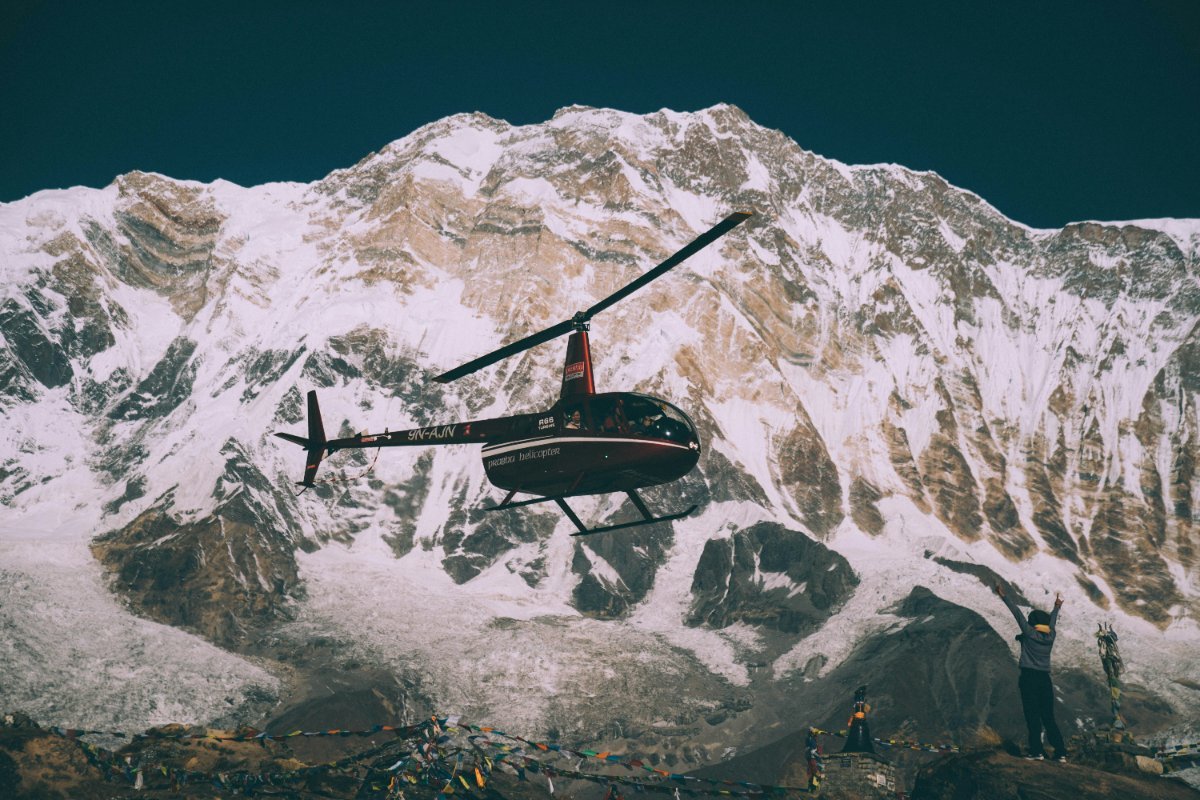
Everest Base Camp Trek Itinerary: 14-Day Complete Day-by-Day Guide
The classic Everest Base Camp trek can be walked in anywhere from 10 to 18 days, but the 14-day version is the itinerary we recommend most often at Enticing Himalayas, and it is the one our own guides run as the default for first-time Everest trekkers. The reason is simple: acclimatisation maths. You fly into Lukla at 2,860 metres and climb to 5,364 metres at Base Camp, gaining close to 2,500 vertical metres along a trail where altitude illness, not fitness, is the number one reason people turn back. The golden rule of high-altitude trekking is to sleep no more than 300 to 500 metres higher than the night before once you pass 3,000 metres, with a full rest day roughly every 1,000 metres of gain. A 14-day Kathmandu-to-Kathmandu schedule lets you honour that rule without rushing: two acclimatisation days (Namche and Dingboche), a steady three-day descent, and a built-in buffer day for the notorious Lukla flight. Cut it to 10 or 11 days and you remove exactly the days that keep you healthy. Stretch it past 16 and you are mostly adding rest, which is pleasant but not necessary for a well-prepared trekker.
This guide walks the full 14 days, village by village: the Lukla flight realities on day one, the climb into Namche Bazaar, monastery morning at Tengboche, the thin-air stretch through Lobuche and Gorak Shep, the pre-dawn push up Kala Patthar, and the long, satisfying walk back down. Each day lists distance, walking hours, sleeping altitude and elevation gain, plus what the day actually feels like on the ground. For the money side of the same trek, our Everest Base Camp trek cost 2026 budget breakdown prices every line item, and our Everest region route planner from Lukla to Namche Bazaar zooms into the first half of the trail in more detail.
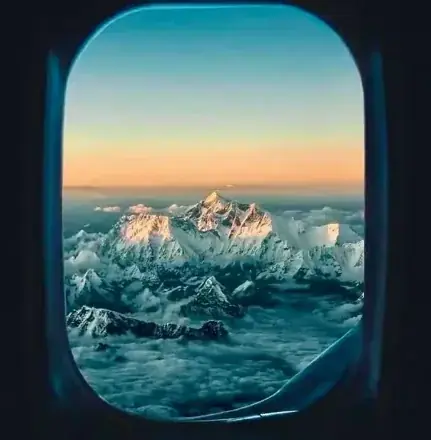
The 14-Day Itinerary at a Glance
| Day | Route | Walking hours | Sleeping altitude |
|---|---|---|---|
| 1 | Fly Kathmandu to Lukla (or via Ramechhap), trek to Phakding | 3 to 4 | 2,610 m |
| 2 | Phakding to Monjo / Jorsale | 3 to 4 | 2,835 m |
| 3 | Monjo to Namche Bazaar | 5 to 6 | 3,440 m |
| 4 | Acclimatisation day: Hotel Everest View and Khumjung loop | 3 to 4 | 3,440 m |
| 5 | Namche to Tengboche | 5 to 6 | 3,860 m |
| 6 | Tengboche to Dingboche | 5 to 6 | 4,410 m |
| 7 | Acclimatisation day: Nagarjun Hill (5,100 m) hike | 4 to 5 | 4,410 m |
| 8 | Dingboche to Lobuche via Thukla Pass memorials | 4 to 5 | 4,940 m |
| 9 | Lobuche to Gorak Shep, afternoon to Everest Base Camp | 7 to 8 | 5,164 m |
| 10 | Kala Patthar sunrise (5,545 m), descend to Pheriche | 7 to 8 | 4,240 m |
| 11 | Pheriche to Namche Bazaar | 6 to 7 | 3,440 m |
| 12 | Namche to Monjo or Phakding | 4 to 5 | 2,835 m |
| 13 | Phakding to Lukla | 3 to 4 | 2,860 m |
| 14 | Fly Lukla to Kathmandu (buffer built in) | flight day | 1,400 m |
Total walking distance is roughly 130 km return. The long downward jumps on days 11 and 12 are intentional: descending fast once the altitude work is done is safe, comfortable, and kind to your knees if you use poles.
Days 1 and 2: The Lukla Flight and the Gentle Warm-Up
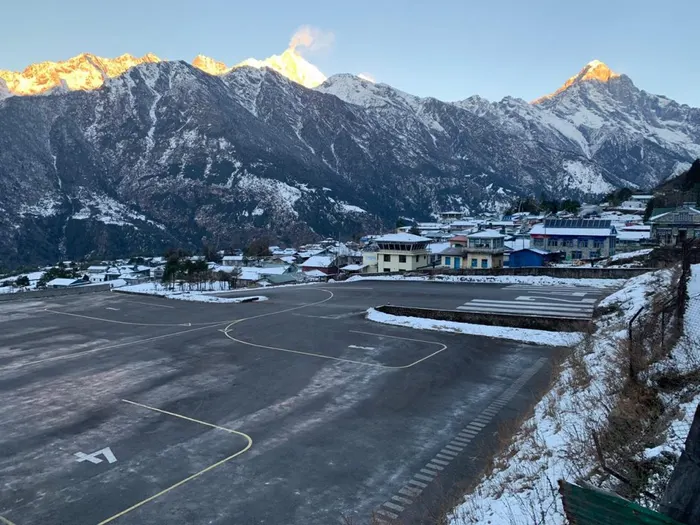
Day 1: Fly Kathmandu to Lukla (2,860 m), trek to Phakding (2,610 m), 3 to 4 hours, about 8 km. Your trek starts with the most famous short flight in the world. The 30-minute hop from Kathmandu (or a 20-minute hop from Ramechhap, where flights are redirected during the busiest weeks of spring and autumn) lands on the sloped runway of Tenzing-Hillary Airport, wedged into the mountainside at 2,860 metres. Book the earliest morning departure you can; clouds build over the valley by mid-morning and afternoon flights cancel first. From the airstrip it is an easy, mostly downhill stroll through pine forest and past mani walls to Phakding, a string of teahouses along the Dudh Koshi river. Keep this first day short on purpose; your body is already processing a jump from 1,400 to 2,860 metres even though you walked downhill.
Day 2: Phakding to Monjo or Jorsale (2,835 m), 3 to 4 hours, about 7 km. Another deliberately easy day. You cross and recross the Dudh Koshi on swaying suspension bridges hung with prayer flags, pass through Benkar and its waterfall, and stop for lunch in a garden teahouse before reaching Monjo, the gateway village just below the Sagarmatha National Park checkpoint. Many itineraries push straight through to Namche on day 2, but splitting the approach over two days keeps your sleeping-altitude gains gentle and gives you a quieter first night inside the park buffer. The welcome ritual on our treks is a pot of cardamom tea in the lodge dining room while your guide briefs the next morning's big climb.
Days 3 and 4: Namche Bazaar and the First Acclimatisation Day
Day 3: Monjo to Namche Bazaar (3,440 m), 5 to 6 hours, about 6 km. Today is short on distance and big on effort. After the park gate at Monjo you drop to the river, cross the dramatic double-decker Hillary suspension bridge, then climb roughly 600 vertical metres up the famous Namche hill. Go slowly; this is your first real altitude stair. About halfway up, on a clear day, a gap in the trees delivers your first distant glimpse of Everest itself. Namche Bazaar is the Sherpa capital of the Khumbu: an amphitheatre of lodges, bakeries, gear shops, ATMs, a Saturday market, and even an Irish pub. It is the last place on the trail with full services, reliable Wi-Fi and a proper gear-restock opportunity.
Day 4: Acclimatisation day, sleep Namche (3,440 m), 3 to 4 hours hiking. The rule is climb high, sleep low. Our standard loop gains altitude without moving your bed: a steady morning climb past the Syangboche airstrip to the Hotel Everest View at 3,880 metres, where the terrace frames Everest, Lhotse and Ama Dablam over coffee. From there, continue to the village of Khumjung, home to the Hillary school and a monastery that keeps a yeti scalp, then descend to Namche for an afternoon of bakery cake, laundry and gear checks. This day is non-negotiable. It is the single most effective insurance against altitude sickness on the whole itinerary; our guide on altitude sickness prevention and acclimatisation on the Everest and Annapurna treks explains the physiology in detail.
Days 5 and 6: Tengboche Monastery and on to Dingboche
Day 5: Namche to Tengboche (3,860 m), 5 to 6 hours, about 10 km. The trail contours high above the Dudh Koshi on a nearly flat ridgeline with what many trekkers call the best easy walking of the whole route: Ama Dablam fills the sky ahead, and Everest and Lhotse peek over the shoulder of the Nuptse wall. After lunch at Phunki Tenga beside the river, a long forested climb delivers you to Tengboche, home of the Khumbu's most important monastery. If timing allows, sit in on the afternoon or early-morning puja ceremony; the deep chant of the monks against a backdrop of Everest is one of those moments people carry home for years. If the small Tengboche lodges are full, the nearby settlement of Deboche, 20 minutes further down, has quieter and slightly warmer rooms.
Day 6: Tengboche to Dingboche (4,410 m), 5 to 6 hours, about 11 km. You descend through rhododendron and birch forest to Deboche, cross the Imja Khola, and climb gently to Pangboche, the highest permanent Sherpa village, where lunch comes with another angle on Ama Dablam that seems close enough to touch. Above Pangboche the trees give up entirely. The landscape turns to open alpine tundra, stone-walled barley fields and big sky, and the air noticeably thins. You reach Dingboche, a spread of lodges beneath the south face of Lhotse, by mid-afternoon. Expect your first real altitude headache or poor sleep somewhere around here; hydrate aggressively and report symptoms honestly to your guide.
Days 7 and 8: Second Acclimatisation and the Move to Lobuche
Day 7: Acclimatisation day, sleep Dingboche (4,410 m), 4 to 5 hours hiking. The classic day hike climbs Nagarjun Hill (also called Nangkartshang), a steep viewpoint at about 5,100 metres directly above the village. The panorama from the cairns covers Makalu (the world's fifth-highest mountain), Lhotse, Ama Dablam, Island Peak and the whole Imja valley. Two hours up, one hour down, and the altitude gain you bank during the day makes the following nights measurably easier. If energy is lower, the gentler alternative is a two-hour round trip partway up the Chukhung valley for the same mountain theatre with less strain.
Day 8: Dingboche to Lobuche (4,940 m), 4 to 5 hours, about 8 km. A short, serious day. The trail climbs gradually along the lateral moraine of the Khumbu Glacier to Thukla (4,620 m), a natural lunch stop at the foot of a steep pass. Above Thukla, the slope tops out at a plateau covered in stone memorials to climbers and Sherpas who died on Everest, including famous names like Scott Fischer and Babu Chiri Sherpa. Take a quiet ten minutes here; it is a sobering and strangely beautiful place that resets your respect for these mountains. From the memorials it is an easier hour to Lobuche, a functional huddle of lodges at 4,940 metres. Above this altitude, sleep gets shallow, appetites drop, and everyone walks more slowly. That is normal, not weakness.
Day 9: Gorak Shep and Everest Base Camp (5,364 m)
Day 9: Lobuche to Gorak Shep (5,164 m), afternoon to Everest Base Camp (5,364 m), 7 to 8 hours total, about 12 km. This is the big day, and it is engineered in two stages. Stage one: leave Lobuche just after dawn and walk the rocky moraine trail for about three hours to Gorak Shep, the last settlement on the route, a sandy shelf of lodges at 5,164 metres beside a frozen lakebed. Arrive, eat a fast lunch, drop your duffel (your porter takes it to your room) and refill your water. Stage two: continue lighter along the edge of the Khumbu Glacier for roughly 2.5 to 3 hours to the Base Camp rock, the cairn wrapped in prayer flags at 5,364 metres where expedition tents cluster in climbing season (March to May). There is no summit view from Base Camp itself; what you get instead is the rumbling Khumbu Icefall, the glacier under your boots, and the knowledge that you walked every step from Lukla. Take the photo, do not linger past early afternoon, and return the way you came for dinner and an early night at Gorak Shep. Walk slowly, breathe with a rhythm, and treat the day as a site visit, not a race.
Day 10: Kala Patthar Sunrise and the Descent to Pheriche
Day 10: Kala Patthar (5,545 m) at sunrise, descend to Pheriche (4,240 m), 7 to 8 hours, about 13 km. The highest point of the trek starts in the dark. Headlamps on by 4:30 to 5:00 am, you climb the steep switchbacks behind Gorak Shep for 1.5 to 2 hours to the black-rock summit of Kala Patthar, Nepal's most famous viewpoint at 5,545 metres. This is the place Everest finally shows its full face: the summit pyramid, the South Col route, and the Nuptse and Pumori walls turning gold as the sun rises over the eastern ridge. It is routinely described by our guests as the finest single hour of the trek. Give yourself 30 minutes at the top, then descend to Gorak Shep for a late breakfast, collect your duffel, and walk down past Lobuche and Thukla to Pheriche (4,240 m), where the Himalayan Rescue Association runs a famous altitude clinic. The difference in how your body feels between 5,164 and 4,240 metres is remarkable; most people sleep better here than they have in four days.
Days 11 to 13: The Long Walk Down
Day 11: Pheriche to Namche Bazaar (3,440 m), 6 to 7 hours, about 17 km. Descending reverses the entire upward approach in one long day. Past Pangboche you re-enter the forest, climb the short ridge back to Tengboche for a last look at the monastery under Ama Dablam, drop to the riverside at Phunki Tenga, then take the long contour trail home into Namche. Your calves will know you have done a big day. The reward is a hot shower that actually works, a bakery brownie, and the first night below 3,500 metres in a week.
Best matched trek: 14-Day Everest Base Camp Trek lukla flight from Kathmandu . Join the 14-Day Everest Base Camp Trek from Kathmandu.
Day 12: Namche to Monjo or Phakding (2,835 m), 4 to 5 hours, about 10 km. An easy, social day down the Namche hill that felt so hard on day 3, across the Hillary bridge, and out of the national park checkpoint. The air is thick, the beer is cold, and the mood in the lodge dining room is celebratory. This is a good night to thank and tip your crew.
Day 13: Phakding to Lukla (2,860 m), 3 to 4 hours, about 8 km. The final walk along the Dudh Koshi reverses your first day. Arriving in Lukla by early afternoon matters: your guide reconfirms tomorrow's flight at the airline desk, and you return your rented gear and sort luggage before the chaos of departure morning. Sleep early; most Lukla flights leave between 6 and 9 am.
Day 14: Fly Lukla to Kathmandu, the Buffer Built In
Day 14: Fly Lukla to Kathmandu (1,400 m). Weather permitting, you are back in the capital by late morning with the afternoon free for a hot bath, a Thamel shopping run and a farewell dinner. The logic of putting this on day 14, rather than treating it as an extension, is that Lukla flights are weather-dependent and delays of one to three days are common in shoulder season. If your outbound flight is delayed, this buffer absorbs it. If you fly on schedule, you gain a free Kathmandu day. Either way, never book an evening international departure on your Lukla flight day; the single most common and expensive planning mistake on this trek is a missed long-haul connection caused by a grounded Twin Otter.
12-Day and 16-Day Variations, Side by Side
The 14-day frame flexes in both directions. Here is how the two most common variations differ:
| 12-day (fast) | 14-day (standard) | 16-day (gentle) | |
|---|---|---|---|
| Days 1 to 3 approach | Lukla to Phakding, then direct to Namche on day 2 | Phakding and Monjo split over 2 days, Namche day 3 | Same as 14-day, plus a rest half-day in Namche on arrival |
| Acclimatisation days | Namche only (one rest day) | Namche and Dingboche (two rest days) | Namche, Dingboche, plus extra half-days at Tengboche or Lobuche |
| Descent | 2 days (Pheriche to Namche, Namche to Lukla) | 3 days (Pheriche, Namche, Lukla) | 3 to 4 days with shorter stages |
| Buffer for Lukla delays | None in itinerary (risky) | 1 day built in (day 14) | 2 days built in |
| Best for | Fit, altitude-experienced trekkers over 40 are advised against it | First-time EBC trekkers, most guided groups | Trekkers who want margin, photographers, older guests, autumn peak crowds |
If you are weighing EBC against shorter Nepal treks entirely, our roundup of the best treks in Nepal for beginners, families and solo women travellers gives useful alternatives with lower maximum altitudes.
Cons and What Can Go Wrong
An honest itinerary guide has to name the things that break plans. The four big ones:
- Altitude sickness. Even on a well-paced 14-day schedule, roughly a third of trekkers feel mild AMS symptoms above 4,000 metres: headache, poor sleep, nausea, loss of appetite. The answer is never to push through worsening symptoms. Descend, rest, and let your guide manage the call. Two acclimatisation days (as in this itinerary) plus honest reporting prevent the overwhelming majority of serious cases.
- Weather. Snow above 4,500 metres can close the Kala Patthar and Base Camp viewpoints for a day or two, and shoulder-season cloud can ground Lukla flights for 24 to 72 hours. Buffers at both ends, plus a flexible attitude, solve what planning cannot.
- Gastro bugs. Stomach issues are the quiet itinerary-killer. Boiled or purified water only, skip raw salads above Namche, and carry oral rehydration salts. Most cases pass in 24 to 48 hours if you keep fluids up.
- Lukla flight backlog. When flights cancel for a day or two, the queue of trekkers out of Lukla grows, and rebooked seats prioritise earlier ticket holders. Fly out on the first day your schedule allows, keep your international return date loose, and let your operator work the airline desks on your behalf.
Costs for dealing with all of the above (insurance, buffer nights, contingency cash) are priced in our complete 2026 EBC budget breakdown.
Altitude Profile: Sleeping Elevation by Day
| Day | Sleeping altitude (m) | Change from previous night |
|---|---|---|
| 1: Phakding | 2,610 | -250 from Lukla (2,860) |
| 2: Monjo | 2,835 | +225 |
| 3: Namche Bazaar | 3,440 | +605 (the big one) |
| 4: Namche (rest) | 3,440 | 0 |
| 5: Tengboche | 3,860 | +420 |
| 6: Dingboche | 4,410 | +550 |
| 7: Dingboche (rest) | 4,410 | 0 |
| 8: Lobuche | 4,940 | +530 |
| 9: Gorak Shep | 5,164 | +224 |
| 10: Pheriche | 4,240 | -924 (descent) |
| 11: Namche Bazaar | 3,440 | -800 |
| 12: Monjo / Phakding | 2,835 | -605 |
| 13: Lukla | 2,860 | +25 |
| 14: Kathmandu | 1,400 | fly out |
Notice how the sleeping-altitude staircase respects the 300 to 500 metre rule, with the single exception of day 3's 605-metre climb into Namche, which is why day 4's acclimatisation day immediately follows it. That one-two pattern is the heart of safe EBC pacing.
When to Book Your 14-Day EBC Trek
The route runs in two main seasons. Spring (March to May) brings climbing-expedition atmosphere at Base Camp, rhododendrons below Tengboche, and gradually warming temperatures. Autumn (late September to November) brings the clearest skies of the year and the coldest nights, and it is the busiest window on the trail. Winter (December to February) is doable for hardy, well-equipped trekkers and the trails are blissfully empty; the monsoon months (June to August) are wet, cloudy and best avoided on the Everest side.
Lead time matters more than most first-timers expect. For spring, reserve three to four months ahead: Lukla flight seats in April sell out 8 to 12 weeks in advance, and premium teahouse beds in Lobuche and Gorak Shep are rationed by early afternoon on peak October days. For autumn, lock in by June or July. Whatever your season, build your international flight schedule around two extra Kathmandu nights at the end, so a grounded Lukla flight cannot strand you. Choosing who handles all of this is its own decision; our honest guide to picking the best trekking agency in Nepal in 2026 lays out what to check before you hand anyone a deposit. And if this trek is one item on a longer Nepal list that includes temples and heritage, our pillar guide to cultural and spiritual tours in Nepal pairs well with your Kathmandu buffer days.


The Bottom Line
Fourteen days is the sweet spot for Everest Base Camp because it is the shortest schedule that takes acclimatisation seriously and the cheapest schedule that respects Lukla's weather. You climb in a disciplined staircase of 300 to 500 metre sleeping gains, rest twice in the places that matter (Namche and Dingboche), stand on Base Camp on day 9 and on Kala Patthar at sunrise on day 10, and walk down with your lungs full and your camera heavier. Everything else about a successful EBC trek, good crew, honest pacing, sensible buffers, decent insurance, flows from that structure. When you are ready to talk dates, contact Enticing Himalayas and we will build your 14-day itinerary around your season, your group and your budget.
Related Guides
- Everest Base Camp Trek Cost 2026: Complete Budget Breakdown
- Altitude Sickness on the Everest and Annapurna Treks: Prevention and Acclimatisation
- Everest Region Guide: Lukla to Namche Bazaar Complete Trekking Route Planner 2026
- Best Treks in Nepal for Beginners, Families and Solo Women Travellers



Why travel with Enticing Himalayas
Enticing Himalayas is a Nepal-based travel company built on three words: Explore, Heal, Thrive. We design cultural, spiritual, and trekking journeys across Nepal with licensed local guides, handpicked community stays, and a focus on responsible tourism.
Our services: private and small-group cultural tours, spiritual and pilgrimage circuits, tea-house and lodge treks, helicopter tours, yoga and wellness retreats, and custom itineraries.
About the author
The Enticing Himalayas editorial team compiles every guide from on-the-ground experience across Kathmandu, the Himalayas, and the Terai.
Why trust Enticing Himalayas
We are a registered Nepal operator, a member of the Nepal Tourism Board, and a GetYourGuide partner. Every itinerary is built around real places, real permits, and real local guides.