What Makes Boudhanath Stupa the Spiritual Heart of Kathmandu?
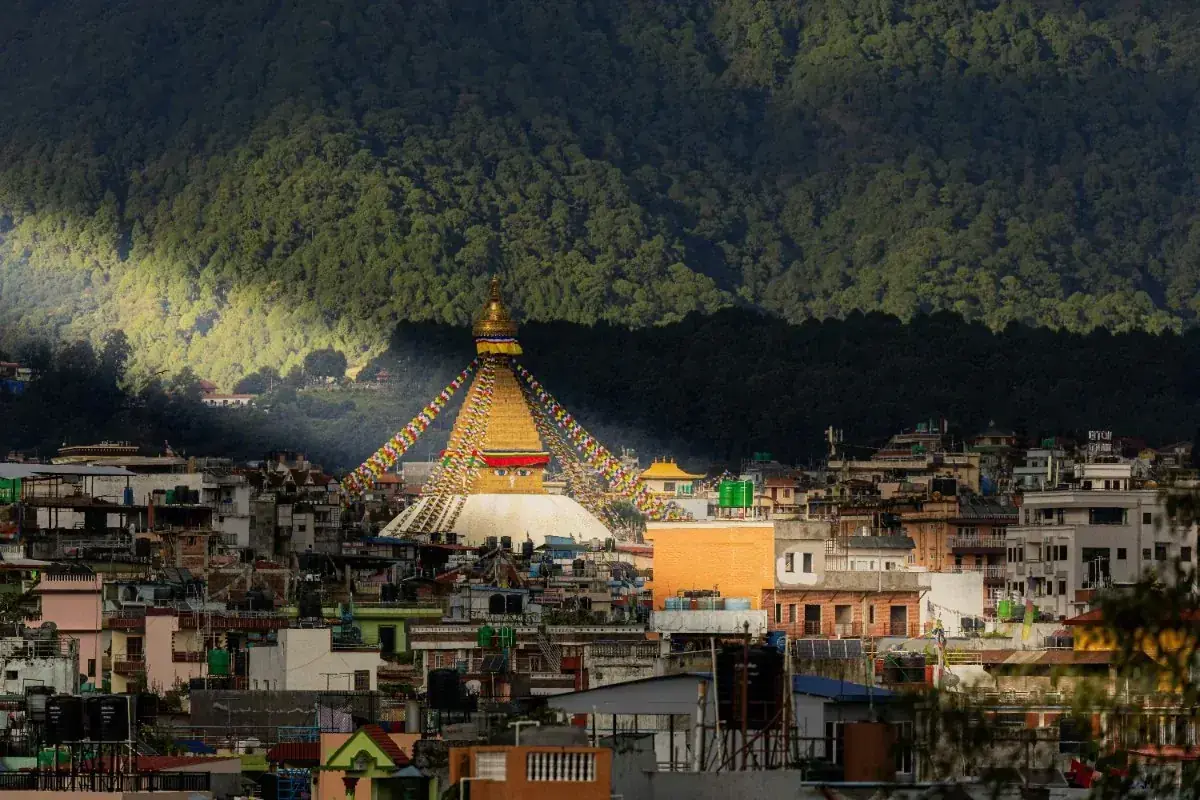
Rising majestically in the northeastern edge of Kathmandu, the Boudhanath Stupa glows like a white dome of peace beneath the Himalayan sky. Encircled by prayer flags fluttering in the wind and watched over by the all-seeing eyes of Buddha, it is more than a monument: it is the living heartbeat of spiritual travel in Nepal. Recognized as a UNESCO World Heritage Site, Boudhanath stands as one of the world's largest spherical stupas and an essential highlight of any Kathmandu city tour. The stupa is not a museum piece. It is a living site of practice where Tibetans, Sherpas, Tamangs, and visitors from around the world walk the kora (circumambulation) daily, spinning prayer wheels and chanting mantras as the sun moves across the sky.
What Is the History and Legend Behind Boudhanath Stupa?
The origins of Boudhanath are ancient and layered with legend. One tradition holds that the stupa dates to the fifth century, built by a woman named Jadzimo who requested land from the king to build a shrine. The king granted her only as much land as could be covered by a buffalo skin, so she cut the skin into thin strips and encircled a large area. The stupa was built on that ground. Another tradition links it to the relic of Kashyapa Buddha, one of the ancient Buddhas before Shakyamuni. Whatever the exact origin, the stupa has been a pilgrimage site for over a thousand years and has survived earthquakes, invasions, and the passage of empires. The 2015 earthquake damaged the dome, and the local community rebuilt it within two years, a testament to its living importance.
Why Are the Eyes of Buddha on Boudhanath So Significant?
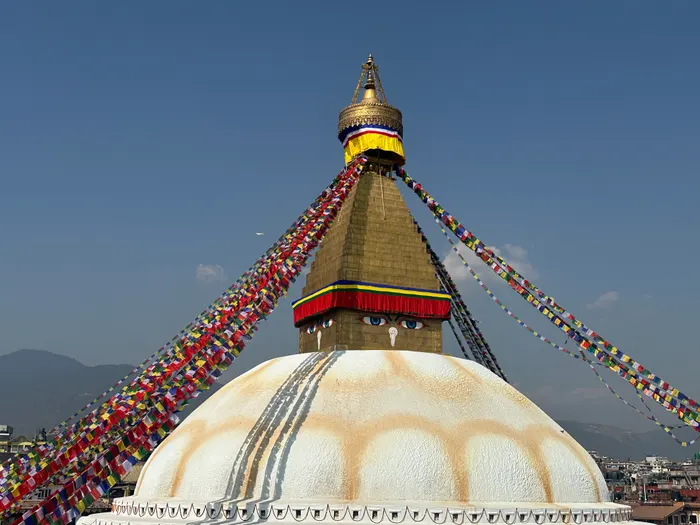
The all-seeing eyes of Buddha gaze out from each of the four sides of the stupa's tower. These eyes are the most iconic image of Buddhism in Nepal. They represent omniscience, the Buddha's ability to see all suffering and all beings in every direction. Between the eyes is a curl of hair (the urna) which is the third eye, a symbol of spiritual insight. Below the eyes is a question-mark-shaped nose, which is the Nepali number one, representing unity and the single path to enlightenment. The eyes are painted fresh regularly by the local community, and the act of painting them is itself a devotional practice. When you stand in front of those eyes, you feel seen in a way that is both unsettling and profoundly comforting.
How Do Pilgrims and Visitors Experience Boudhanath?
The experience of Boudhanath is not passive. Pilgrims and visitors walk the kora, the clockwise circumambulation around the stupa, spinning the 147 prayer wheels set into the base. The kora is a meditation in motion, and many Tibetans complete 108 circuits in a single visit, a number tied to the beads of the mala. At dawn, the kora is busiest with local practitioners, and at dusk, the butter lamps are lit and the stupa takes on a golden glow. The Kathmandu Spiritual Circuit (2 Days) includes Boudhanath as a key stop, along with Pashupatinath and Swayambhunath. The 5-Day Kathmandu Valley Tour combines UNESCO heritage with an aerial Himalayan adventure.
What Is the Tibetan Community Connection to Boudhanath?
After the Chinese occupation of Tibet in 1959, thousands of Tibetan refugees settled around Boudhanath, transforming the neighborhood into a vibrant Tibetan cultural center. The gompas (monasteries) surrounding the stupa are primarily Tibetan, and the area has the feel of a Lhasa neighborhood transplanted into Kathmandu. Tibetan restaurants, craft shops, and healing centers line the alleys around the stupa. Monks in maroon robes are a common sight, and the sound of chanting drifts from the gompas at dawn and dusk. The Tibetan presence has made Boudhanath one of the most important centers of Tibetan Buddhism outside of Tibet itself. This cultural density is why many spiritual travelers base themselves in Boudhanath rather than Thamel.
When Is the Best Time to Visit Boudhanath Stupa?
Boudhanath is open year-round and is always active, but the quality of the experience varies by time of day and season. Dawn (5:30 to 7:00 AM) is the most powerful time, when local pilgrims walk the kora and the light is soft and golden. Dusk is the second best, when butter lamps are lit and the stupa glows. Saturdays draw larger crowds of Nepali families. During Buddhist festivals like Saga Dawa (May or June) and Losar (Tibetan New Year, February or March), the stupa is especially vibrant with ceremonies, processions, and thousands of devotees. Autumn and spring offer the best weather for the outdoor circumambulation. Winter mornings are cold but beautiful, with crisp light and fewer tourists. Monsoon adds dramatic cloud formations but frequent rain.
What Monasteries and Gompas Surround Boudhanath?
Over 50 monasteries and gompas surround the stupa, representing different schools of Tibetan Buddhism. The most visited include Shechen Monastery, Ka-Nying Shedrub Ling, Khachoe Ghakyil Ling (Boudhanath nunnery), and Pullahari Monastery. Each has its own character, daily prayer schedule, and teaching program. Visitors are welcome to attend morning puja (usually 6:00 to 7:30 AM) and to sit in the shrine halls. The monasteries are also centers for Buddhist education, where monks as young as seven begin their studies. The concentration of monastic life in such a small area is unique in the Buddhist world and makes Boudhanath a living library of Tibetan Buddhist practice.
How Does Boudhanath Connect to the Wider Buddhist Circuit in Nepal?
Boudhanath is one anchor of the Buddhist circuit in Nepal. The other anchors are Lumbini (the birthplace of the Buddha), Swayambhunath (the self-arisen stupa), and Namobuddha (where the Buddha in a previous life offered his body to a starving tigress). The Lumbini Buddhist Pilgrimage (3 Days) takes you south to the birthplace. The Kathmandu Spiritual Circuit (2 Days) covers the valley sites. Together, these sites form a pilgrimage arc that traces the life of the Buddha and the development of Buddhism in the Himalayas. Explore, Heal, Thrive finds its fullest expression on this circuit.
What Can You Do Around Boudhanath Beyond the Stupa?
The Boudhanath neighborhood is a destination in itself. Beyond the kora, you can visit the surrounding monasteries, take singing bowl therapy sessions, browse Tibetan craft shops for thangka paintings and singing bowls, and eat at rooftop restaurants that ring the stupa. Many guests combine a Boudhanath visit with a healing session at one of the nearby wellness centers. The 3 Days Yoga and Sound Healing Retreat is based near Boudhanath and uses the stupa as a meditation focal point. Photography is rich here, especially at dawn and dusk, with prayer flags, pilgrims, and the stupa itself providing endless compositions.

What Should Visitors Know About Etiquette at Boudhanath?
Boudhanath is a living religious site, and basic respect goes a long way. Walk clockwise around the stupa, not counterclockwise. Spin prayer wheels with your right hand. Dress modestly, covering shoulders and knees. Do not sit on the stupa base or climb on it. Keep your voice low, especially inside gompas. Remove your shoes before entering any monastery shrine hall. Do not point your feet at the stupa or at any sacred image. Photography is fine outdoors but ask permission inside monasteries. If you are offered a blessing or a kata (ceremonial scarf), accept it with both hands. These small acts of respect connect you to the living tradition of the place.
How Can You Include Boudhanath in a Kathmandu City Tour?
Boudhanath is typically combined with Pashupatinath and Swayambhunath in a one or two day Kathmandu city tour. The 2-Day Kathmandu Spiritual Circuit covers all three sites with a guide who explains the Hindu and Buddhist significance of each. The 3-Day Kathmandu Heritage Tour adds the Durbar Squares and Patan. Boudhanath is best visited in the late afternoon, when the light is golden and the butter lamps are being lit, or at dawn, when the kora is at its most authentic. Allow at least two hours for a meaningful visit: one for the kora and one for tea at a rooftop restaurant watching the stupa.
How Did Boudhanath Survive the 2015 Earthquake and Rebuild?
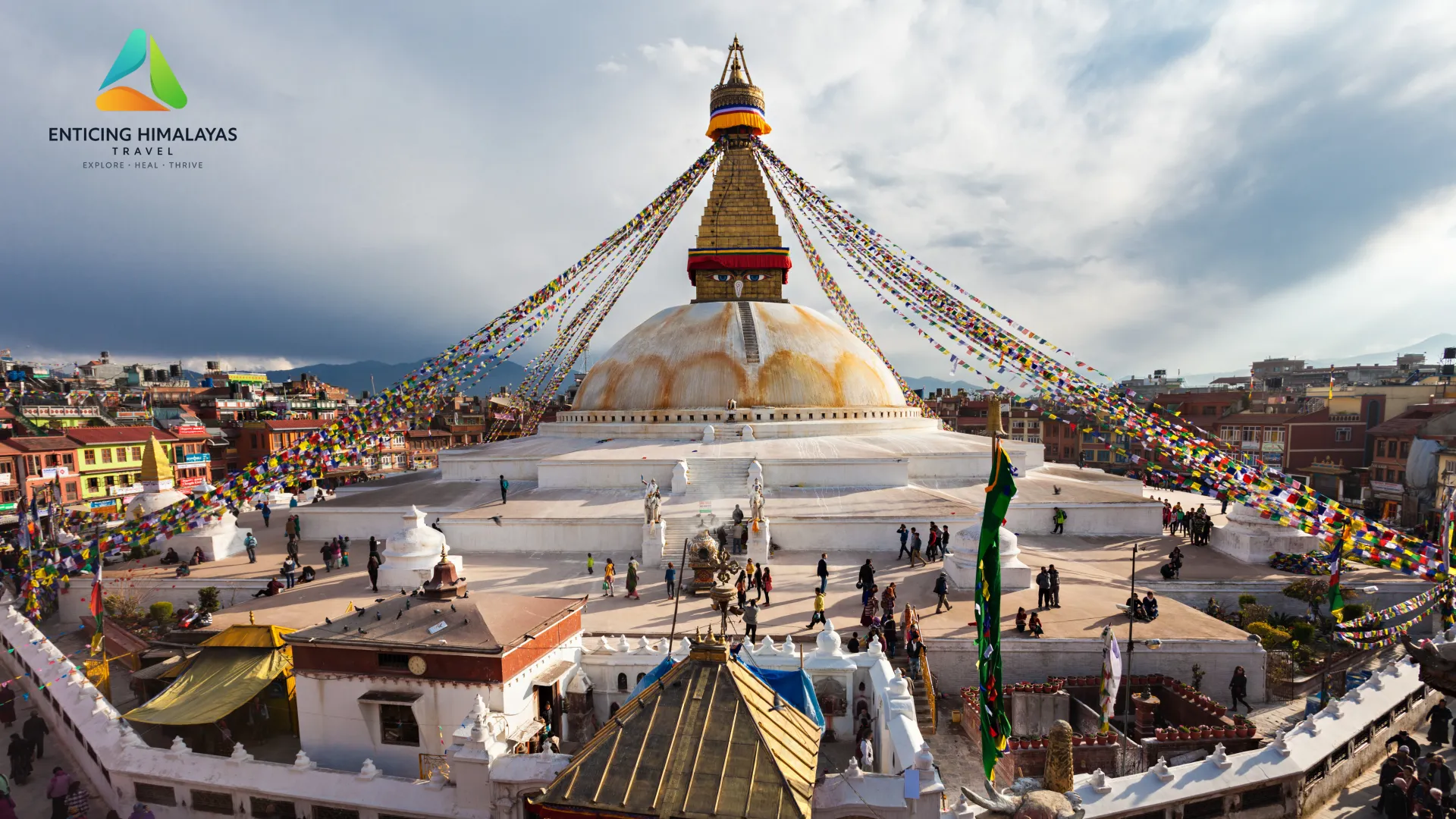
The 2015 Gorkha earthquake cracked the central spire and damaged the dome of Boudhanath Stupa. The damage was significant but not catastrophic, and the local community responded immediately. Within days, volunteers were clearing rubble and assessing the structure. The reconstruction was funded by donations from Nepal, Tibet, and the international Buddhist community, and was completed in November 2016, less than two years after the earthquake. The reopening ceremony drew thousands of devotees and was marked by prayers, processions, and the relighting of butter lamps. The reconstruction used traditional materials and techniques, and the community used the opportunity to strengthen the structure against future earthquakes. The speed and care of the rebuild demonstrated that Boudhanath is not just a monument. It is a living community that takes responsibility for its own spiritual center.
What Festivals and Ceremonies Take Place at Boudhanath?
Boudhanath is the site of major Buddhist festivals throughout the year. Losar (Tibetan New Year, usually February or March) brings thousands of Tibetan and Sherpa families to the stupa for prayers, offerings, and celebrations lasting several days. Saga Dawa (May or June) commemorates the birth, enlightenment, and parinirvana of the Buddha, and is the most sacred day in the Buddhist calendar. During Saga Dawa, devotees walk the kora and offer butter lamps through the night. Lhabab Duchen (November) celebrates the Buddha's descent from the heaven realm. Throughout the year, the stupa is the site of daily prayers at the surrounding monasteries, and on full moon days, the kora is especially busy. If you are planning a visit, check the lunar calendar and try to coincide with one of these occasions.
What Is the Symbolism of the Stupa's Architecture?
Every element of Boudhanath's architecture carries symbolic meaning. The white dome represents the earth. The square tower above it represents fire. The 13 steps of the tower represent the 13 stages of the path to enlightenment. The parasol at the top represents water. The pinnacle represents air. The base of the stupa has 108 small images of the Dhyani Buddha Amitabha, and 147 prayer wheels are set into the base wall. The four sets of all-seeing eyes gaze in the four cardinal directions. The entire structure is a three-dimensional mandala, and walking around it clockwise is a form of meditation that mirrors the path from ignorance to enlightenment. Understanding this symbolism transforms a visit from sightseeing to pilgrimage, and it is why a guided visit is so much more meaningful than walking the kora without context.
What Souvenirs and Crafts Can You Find Around Boudhanath?
The alleys around Boudhanath are one of the best places in Kathmandu to buy authentic Tibetan and Buddhist craft items. Singing bowls, hand-painted thangkas, prayer beads (mala), prayer flags, yak wool scarves, and silver jewelry are all available from shops run by Tibetan families who have been in the neighborhood for decades. Quality varies, so buy from established shops rather than street vendors, and ask about the materials and origin. A genuine singing bowl from Boudhanath, bought from the family that made it, is a wellness tool and a memory in one. Thangka painting workshops in the area offer demonstrations where you can watch artists work on intricate Buddhist iconography using mineral pigments and gold leaf.
Frequently Asked Questions
What is Boudhanath Stupa and why is it important?
Boudhanath is one of the largest spherical stupas in the world and a UNESCO World Heritage Site in Kathmandu. It is the spiritual center of Tibetan Buddhism in Nepal, surrounded by over 50 monasteries. Pilgrims walk the kora (circumambulation) daily, making it a living site of practice rather than just a monument.
When is the best time to visit Boudhanath?
Dawn (5:30 to 7:00 AM) is the most powerful time, when local pilgrims walk the kora and the light is soft. Dusk is the second best, when butter lamps are lit and the stupa glows. Autumn and spring offer the best weather. Buddhist festivals like Saga Dawa and Losar bring special ceremonies.
Is there an entrance fee for Boudhanath?
Yes, there is a small entrance fee for international visitors, collected at the gates to the stupa area. The fee goes toward maintenance and conservation of the heritage site. SAARC nationals pay a reduced rate. The stupa is open daily from early morning until evening.
Can I visit the monasteries around Boudhanath?
Yes, most monasteries are open to visitors. Morning puja (around 6:00 to 7:30 AM) is the best time to experience the chanting and ritual. Remove your shoes before entering shrine halls, dress modestly, and ask before taking photographs inside. The Shechen and Ka-Nying monasteries are among the most welcoming.
How far is Boudhanath from Thamel?
Boudhanath is about 6 km from Thamel, a 20 to 30 minute taxi ride depending on traffic. Many visitors combine it with Pashupatinath, which is only 2 km away. Allow at least two hours for a meaningful visit to the stupa, including the kora and time at a rooftop cafe.
What do the eyes on Boudhanath Stupa mean?
The all-seeing eyes of Buddha on each side of the tower represent omniscience and the Buddha's ability to see all beings. Between the eyes is the urna (third eye), symbolizing spiritual insight. Below is the Nepali number one, representing unity and the single path to enlightenment.