If Kathmandu Durbar Square is the political heart of the valley and Bhaktapur preserves its medieval memory, Patan Durbar Square is its artistic soul. The city of Patan, known locally as Lalitpur, the City of Beauty, has been a center of craftsmanship for over a thousand years. Its metalworkers, woodcarvers, and stone sculptors were renowned throughout the Himalayas, commissioned by kings and monasteries from Tibet to India. Walking through Patan Durbar Square is like walking through a gallery of the finest Newari art ever produced, set in a living city where the traditions that created it continue to this day.

This guide covers everything you need to know about visiting Patan Durbar Square. You will learn about the square's most important monuments, the extraordinary Patan museum, the hidden courtyards and temples that most visitors miss, and how to experience the city's living artistic traditions. For a broader perspective on the valley's heritage, the complete guide to cultural and spiritual tours in Nepal places Patan in the context of all seven UNESCO World Heritage sites, while the Nepal cultural and heritage tour guide covers every temple town and living tradition across the kingdom's old royal cities.


Why Is Patan Considered the Finest Durbar Square in Nepal?
Patan earns its reputation through sheer quality: a museum ranked among the finest in South Asia, a higher density of masterwork architecture than the other royal squares, and a living city of artisans that keeps the traditions alive. It is more compact than Kathmandu's square, less touristy than Bhaktapur, and it rewards slow, attentive exploration. Most travelers who visit all three royal squares name Patan their favorite.
Patan is often described as the finest of the three durbar squares, and the claim is not hyperbolic. The square is more compact and coherent than Kathmandu's, with a density of exceptional architecture that rewards slow, attentive exploration. The Patan Museum, housed in a restored section of the old palace, is one of the finest museums in South Asia, with a collection of Hindu and Buddhist art displayed in a building that is itself a masterpiece. And unlike Bhaktapur, which can feel like a preserved monument, Patan feels like a living city, with a vibrant local population, active temples, and a thriving contemporary arts scene alongside its ancient traditions.
Patan is also less crowded than Kathmandu Durbar Square, and its scale is more intimate. You can see the major monuments in two to three hours, but you will want longer. The square rewards lingering: sitting on the steps of a temple, watching devotees make offerings, observing the play of light on carved stone as the sun moves across the sky. The spiritual tour in Nepal guide explores the living religious traditions that animate Patan's temples and courtyards.


How Do You Get to Patan from Central Kathmandu?
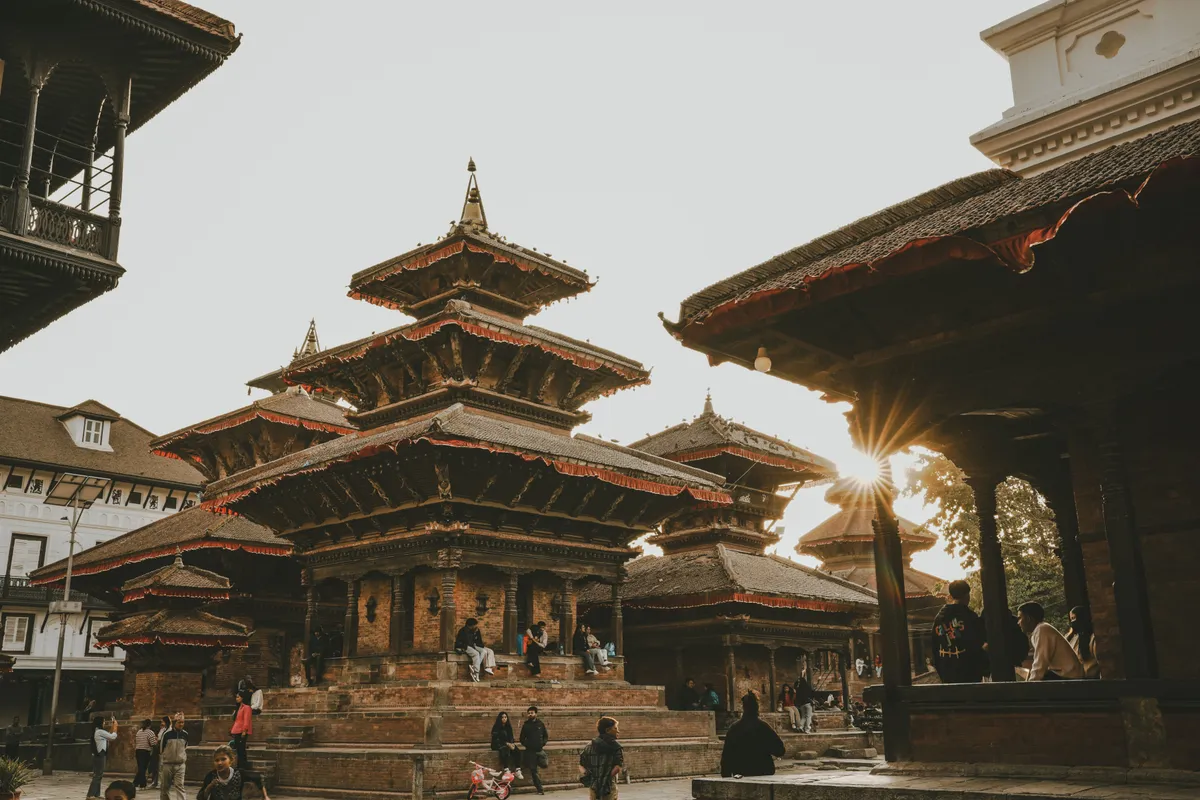
Patan lies about five kilometers south of Thamel, across the Bagmati River, and a taxi takes twenty to thirty minutes depending on traffic, costing roughly NPR 500 to NPR 800. Public buses and microbuses run from Ratna Park and Lagankhel but are crowded and confusing for first-time visitors. A taxi or a pre-booked transfer is the most practical option for most travelers.
Patan lies just across the Bagmati River from central Kathmandu, about five kilometers south of Thamel. A taxi from Thamel takes twenty to thirty minutes, depending on traffic, and costs around NPR 500 to NPR 800. The ride itself is an experience, crossing the chaotic bridge into a city that feels distinct from Kathmandu despite their physical proximity. Patan has its own identity, its own dialect of Newari, and its own pride, and you feel it the moment you arrive.
Public buses and microbuses run from Ratna Park and Lagankhel, but they are crowded and confusing for first-time visitors. A taxi is the most practical option. If you are combining Patan with other valley sites, it pairs naturally with Kathmandu Durbar Square and Swayambhunath for a full day of UNESCO exploration, though each site deserves its own time. The 7-day yoga retreat with sightseeing includes a guided visit to Patan as part of its cultural program.
The Square: A Walk Through the Monuments
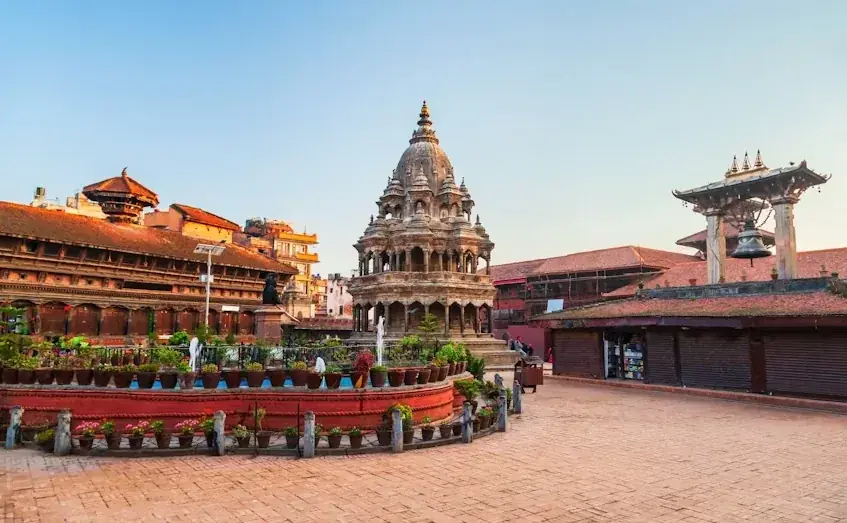
Patan Durbar Square is actually a sequence of three interconnected courtyards: the main square, the Sundari Chowk, and the Mul Chowk. The main square is dominated by the old royal palace, a long, low building with a series of interconnected wings, and by the Krishna Mandir, the square's most distinctive temple. The palace's facade is a study in Newari architectural refinement: carved wooden windows, delicate struts supporting overhanging eaves, and a sense of proportion that feels inevitable rather than designed.
The Krishna Mandir, built in 1637 by King Siddhi Narsingh Malla, is unusual in a valley dominated by pagoda architecture. It is a stone temple in the North Indian shikhara style, with a tall, tapering spire rather than tiered roofs. The entire structure is carved from stone, and the friezes depict scenes from the Mahabharata and Ramayana epics in exquisite detail. The temple is particularly beautiful in the early morning, when the low sun illuminates the carvings, and during the Krishna Janmashtami festival, when thousands of devotees gather to celebrate Krishna's birth.
Other highlights of the main square include the Bhimsen Temple, a three-story pagoda with a golden balcony dedicated to the god of trade; the Vishwanath Temple, with its erotic carvings reminiscent of Khajuraho; and the Taleju Bell, a large bronze bell that citizens could ring to petition the king for justice. The stone column topped by a statue of King Yoga Narendra Malla, with a small bird perched on a lotus above the king's head, is a Patan icon. Legend says that as long as the bird remains, the king may return to his palace, and a window and door of the palace are kept open for him.
Why Is the Patan Museum Worth a Dedicated Visit?
Yes, unreservedly. The Patan Museum holds some of the finest Hindu and Buddhist bronzes in the world, displayed in a restored palace wing that is a masterpiece in its own right. Most visitors budget at least an hour, and serious art lovers stay for two or more. It is one of the few museums in South Asia where the building, the collection, and the presentation are all of equal excellence.
The Patan Museum, housed in the restored Keshav Narayan Chowk of the old palace, is worth the visit to Patan by itself. The building is a superb example of adaptive restoration, with traditional Newari architecture adapted to modern museum standards. The central courtyard, with its golden window and intricately carved wooden struts, is a work of art, and the galleries are arranged around it in a sequence that guides you through the history of Nepali art.
The collection is extraordinary. It includes some of the finest Hindu and Buddhist bronzes in the world, many dating from the Licchavi period, the fourth to ninth centuries, when Patan was a center of metal casting. The Buddhist collection includes exquisite images of Buddhas, bodhisattvas, and tantric deities, while the Hindu collection features Shivas, Vishnus, and Devis in bronze, copper, and gilt. The museum also displays paubha scroll paintings, the Nepali equivalent of Tibetan thangkas, and a collection of ritual objects. The labels are informative, the lighting is excellent, and the atmosphere is serene. Allow at least an hour, and more if you are seriously interested in art.
What Is the Golden Temple and Why Should You Not Miss It?
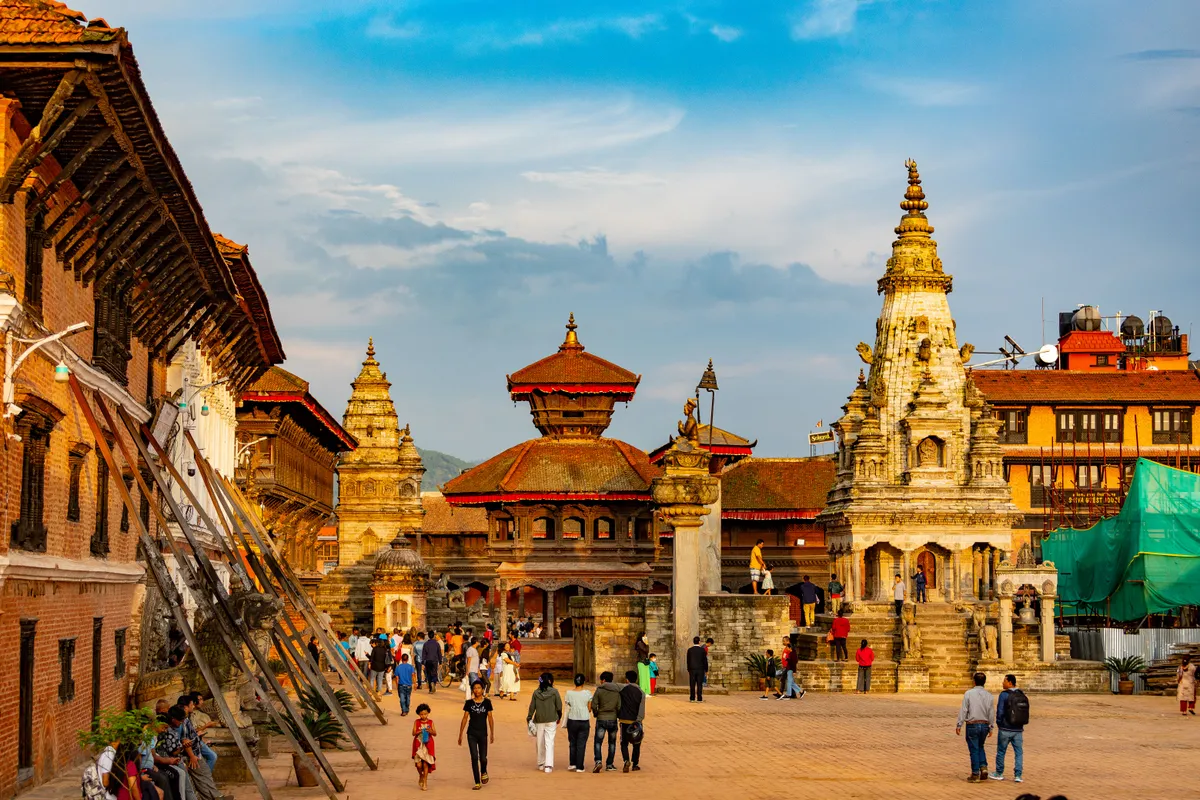
The Golden Temple, or Hiranya Varna Mahavihar, is a twelfth-century Buddhist monastery courtyard a five-minute walk north of the square, its facade sheathed in gilded copper repousse. It is the most breathtaking single sight in Patan after the durbar square itself, and most day visitors walk right past it. Seek it out: entering feels like stepping into a jewel box.
A short walk north of the durbar square, the Golden Temple, or Hiranya Varna Mahavihar, is one of the most beautiful Buddhist monasteries in Nepal. The temple is a Newari Buddhist vihar, a monastery courtyard, rather than a freestanding building, and entering it feels like stepping into a jewel box. The facade is covered in gilded copper repousse work, depicting deities, mythical creatures, and floral patterns. The courtyard contains a central shrine, smaller shrines, and statues of elephants, lions, and deities.
The temple dates to the twelfth century, though it has been renovated many times. It is an active monastery, and you will see monks and devotees going about their rituals. The atmosphere is intimate and sacred, and visitors are welcome as long as they are respectful. Remove your shoes before entering, dress modestly, and keep your voice low. Photography is permitted in the courtyard but not inside the shrines. The Golden Temple is often missed by visitors who stick to the durbar square, and finding it, through a narrow alley off a busy street, feels like discovering a secret.
Which Hidden Courtyards Lie Beyond the Main Square?
Dozens of them. Patan is a city of courtyards, or chowks, and bahals, Buddhist monastery courtyards, and the lanes around the durbar square hide the city's best treasures. The terracotta Mahabouddha Temple, the ancient Uku Bahal, and the five-story Kumbheshwar Temple are all within ten minutes on foot. The main square is the headline, but the courtyards are the story.
The area around the durbar square contains dozens of courtyards, each with its own character and its own treasures. The Mahabouddha Temple, a short walk east of the square, is a terracotta temple covered in thousands of small terracotta tiles, each depicting a Buddha. It is sometimes called the Temple of a Thousand Buddhas, and the effect is unlike anything else in the valley.
The Uku Bahal, near the Mahabouddha Temple, is one of the oldest Buddhist courtyards in Patan, with exquisite woodcarvings and a peaceful atmosphere. The Kumbheshwar Temple, a five-story pagoda north of the square, is one of only two five-story temples in the valley, the other being Bhaktapur's Nyatapola. Its courtyard contains two natural spring-fed ponds, and the temple is an important site for the annual Janai Purnima festival. Exploring these hidden spaces is the best part of visiting Patan.
Where Can You Watch Artisans at Work in Patan?
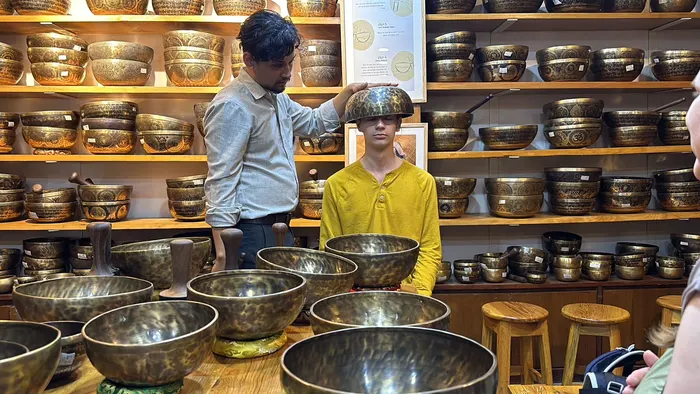
Everywhere in the old city. The streets leading from the durbar square toward the Golden Temple are lined with metalworking workshops where craftsmen cast statues, ritual objects, and jewelry using the lost-wax method, exactly as their ancestors did a thousand years ago. Many workshops welcome visitors and are happy to explain the process. Buying directly from an artisan keeps the tradition alive and gives you a souvenir with genuine meaning.
Patan's artistic tradition is not confined to museums. The city remains a center of metalworking, woodcarving, and stone sculpture, and you can watch artisans at work in workshops throughout the old city. The area around the durbar square, particularly the streets leading toward the Golden Temple, is lined with metalworking shops where craftsmen create statues, ritual objects, and jewelry using techniques that have been passed down for generations.
The lost-wax casting method, in which a wax model is encased in clay, melted out, and replaced with molten metal, is still practiced in Patan as it has been for over a thousand years. Watching a craftsman transform a lump of wax into a detailed deity figure, then seeing the finished bronze, is a reminder that Patan's artistic heritage is not just preserved but alive. Many workshops welcome visitors and are happy to explain their process. Purchasing directly from an artisan supports the continuation of these traditions and gives you a souvenir with genuine meaning.
What Should You Eat in Patan?
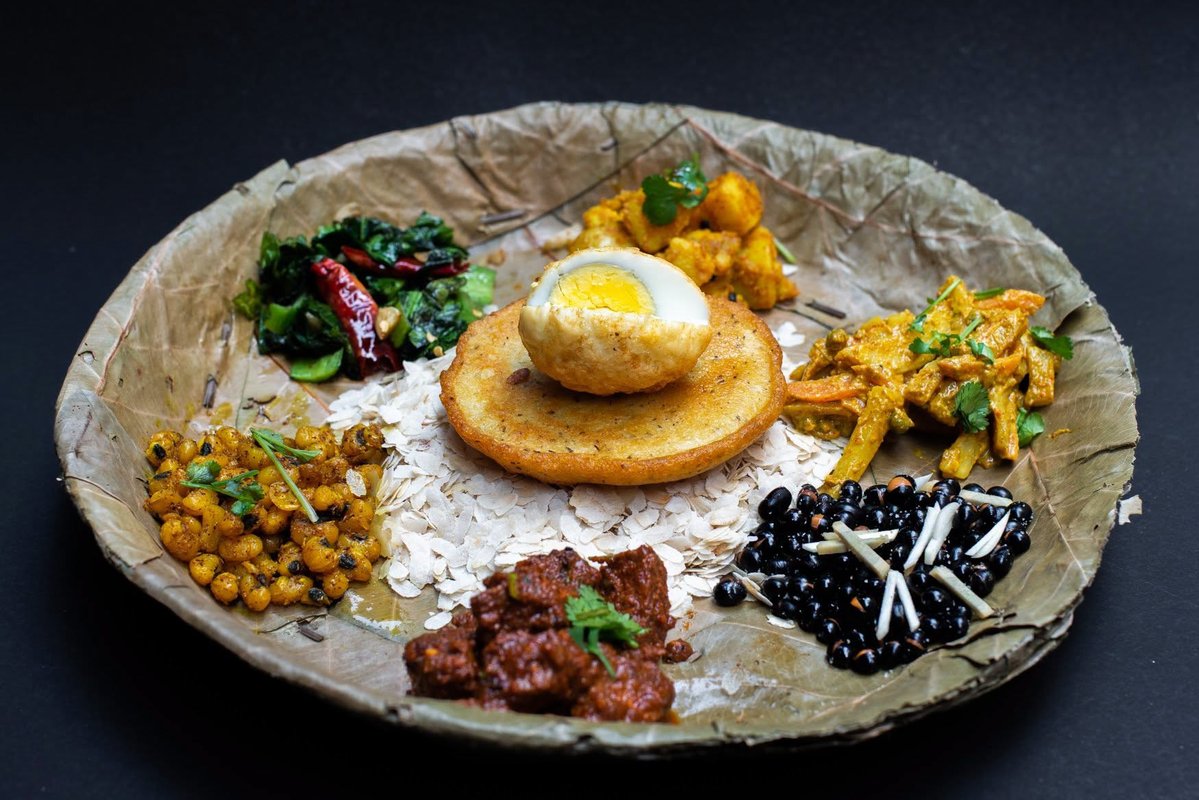
Try a traditional Newari set meal in one of the old-city bhatti, the local eateries in the streets around the square. Beaten rice, spiced vegetables, lentil soup, pickles, and a choice of meat arrive together, flavored boldly with mustard oil, Sichuan pepper, and chili. After a morning of temple-hopping, the cafes of nearby Jhamsikhel offer a more contemporary contrast, from wood-fired pizza to excellent Nepali coffee.
Patan has an excellent food scene, with options ranging from traditional Newari restaurants to contemporary cafes. For an authentic Newari meal, seek out one of the traditional bhatti, or local eateries, in the streets around the square. A Newari set meal typically includes chiura, beaten rice, served with spiced vegetables, lentil soup, pickles, and your choice of meat, often buffalo or chicken. The flavors are bold, with heavy use of mustard oil, timur, Sichuan pepper, and chili.
For a more contemporary experience, the area around Patan's Jhamsikhel neighborhood, a short walk from the square, has become a hub of cafes, restaurants, and bars catering to a mix of locals, expatriates, and travelers. You can find everything from wood-fired pizza to authentic Korean food, alongside excellent Nepali coffee. After a morning of temple-hopping, a leisurely lunch in Jhamsikhel is a pleasant contrast, a reminder that Patan is a modern city as well as an ancient one.
When Is the Best Time to Visit Patan Durbar Square?
October through December offers clear skies and comfortable temperatures, and is widely considered the best season. Within the day, arrive before 9 AM for soft light, thin crowds, and the square at its most peaceful. Late afternoon after 3 PM brings warm light and a lively local atmosphere, and the monsoon months of June through August deliver rain-washed streets and the thinnest crowds of the year.
Patan is beautiful year-round, but the best months are October through December, when the skies are clear and the temperatures are comfortable. The morning light in the square is magical, illuminating the carved stone and wood with a warm glow. March and April bring warm weather and blooming flowers but also more tourists. The monsoon months of June through August are wet, but the rain-washed streets are atmospheric and the crowds are thin.
Within a day, early morning, before 9 AM, is the best time for the square. The light is soft, the crowds are minimal, and you can experience the monuments in relative peace. Late afternoon, after 3 PM, brings warm light and a lively local atmosphere as people gather in the square after work. The Patan Museum is a good midday activity, when the sun is harsh and the square is busiest. The museum is air-conditioned, a rare luxury in Nepal, and its serene atmosphere provides a welcome respite from the midday heat.
Photography in Patan: A Practical Primer
Patan is a photographer's paradise, with endless opportunities for architectural, detail, and street photography. The Krishna Mandir is particularly photogenic in the early morning, when the low sun brings out the texture of the stone carvings. The Golden Temple's gilded facade glows in the late afternoon light. The courtyards offer intimate scenes of daily life, with women washing at stone spouts, children playing, and artisans at work.
A wide-angle lens is useful for the square and the larger temples. A telephoto lens is useful for details of carvings and for candid portraits. Always ask permission before photographing people up close. Patan residents are generally friendly and accustomed to cameras, but a smile and a gesture of inquiry are appreciated. Some artisans may ask for a small payment if you photograph them at work. A few rupees is a fair exchange.
How Do You Combine Patan with Other Valley Sites?
Patan works well as a half-day or full-day excursion, pairing naturally with Kathmandu Durbar Square and Swayambhunath. The classic rhythm is Patan in the morning when the light is best, lunch in Jhamsikhel, then Kathmandu's old town in the afternoon. Travelers with more time add the valley rim day hikes or a longer cultural circuit across all the UNESCO sites. A guided day tour of Kathmandu's landmarks is the simplest way to handle the logistics of a multi-site day.
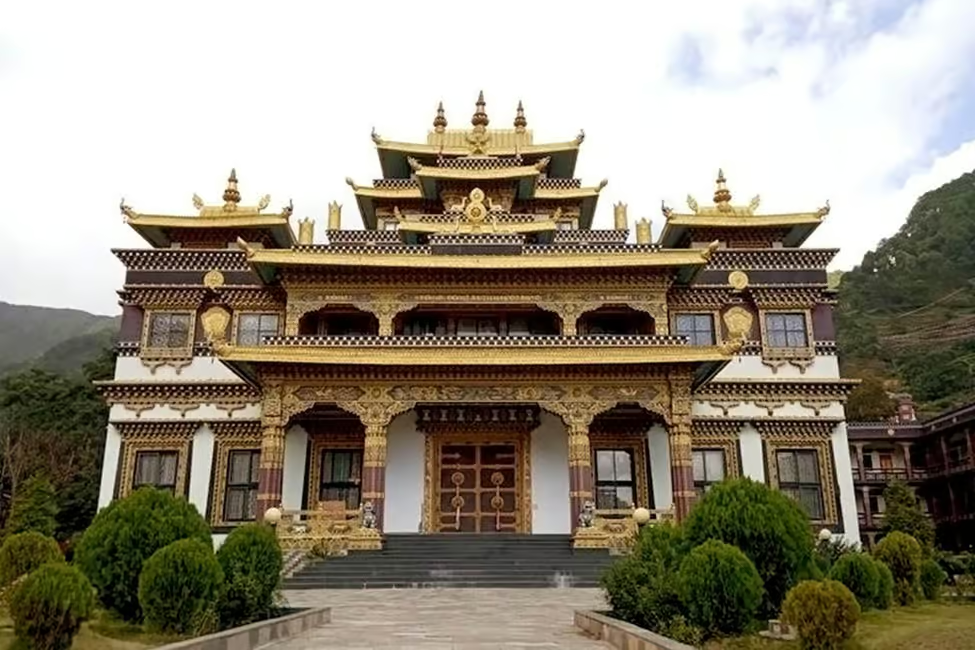
Patan works well as a half-day or full-day excursion from Kathmandu. It pairs naturally with Kathmandu Durbar Square and Swayambhunath for a full day of UNESCO exploration, though each site deserves unhurried time. A good itinerary is to visit Patan in the morning, when the light is best, have lunch in Jhamsikhel, and then continue to Kathmandu Durbar Square or Swayambhunath in the afternoon.
For travelers interested in trekking, the valley rim offers excellent day hikes that can be combined with cultural touring. The complete guide to trekking in Nepal includes information on valley hikes. For a wellness-oriented approach, the 5-day yoga retreat with hiking combines daily yoga with guided hikes in the valley. The spiritual tour in Nepal 2026 guide offers multi-day itineraries that include Patan alongside other sacred sites.


Practical Information: Tickets, Guides and Timing
Plan on NPR 1,000 for the square itself as a foreign visitor, NPR 500 extra for the Patan Museum, and a small NPR 100 donation at the Golden Temple. Tickets are valid for the day, payable in Nepali rupees at each entrance. A licensed half-day guide costs roughly NPR 1,500 to NPR 2,500, and the museum's audio guides are excellent for independent travelers.
The entrance fee for Patan Durbar Square is NPR 1,000 for foreign visitors as of 2026. SAARC nationals pay NPR 250. The ticket is valid for the entire day. The Patan Museum has a separate entrance fee of NPR 500 for foreign visitors, and it is worth every rupee. The Golden Temple charges a small donation, typically NPR 100, for entry.
Guides are available at the square entrance and are recommended, particularly if you are interested in the history and symbolism of the monuments. A half-day tour with a licensed guide costs around NPR 1,500 to NPR 2,500. The Patan Museum has excellent audio guides available for rent, and the labels are informative enough that you can explore independently if you prefer. If you would rather not arrange guides and transport yourself, the guided day tour of Kathmandu's landmarks bundles the valley's signature sites with a licensed guide and door-to-door transport.
Wear comfortable walking shoes. The streets are uneven, and you will be on your feet for hours. Dress modestly, covering shoulders and knees, particularly if you plan to enter temples and the Golden Temple. Bring water, sunscreen, and a hat. There are cafes and restaurants in and around the square, so you do not need to carry food.
How Has Patan Recovered from the 2015 Earthquake?
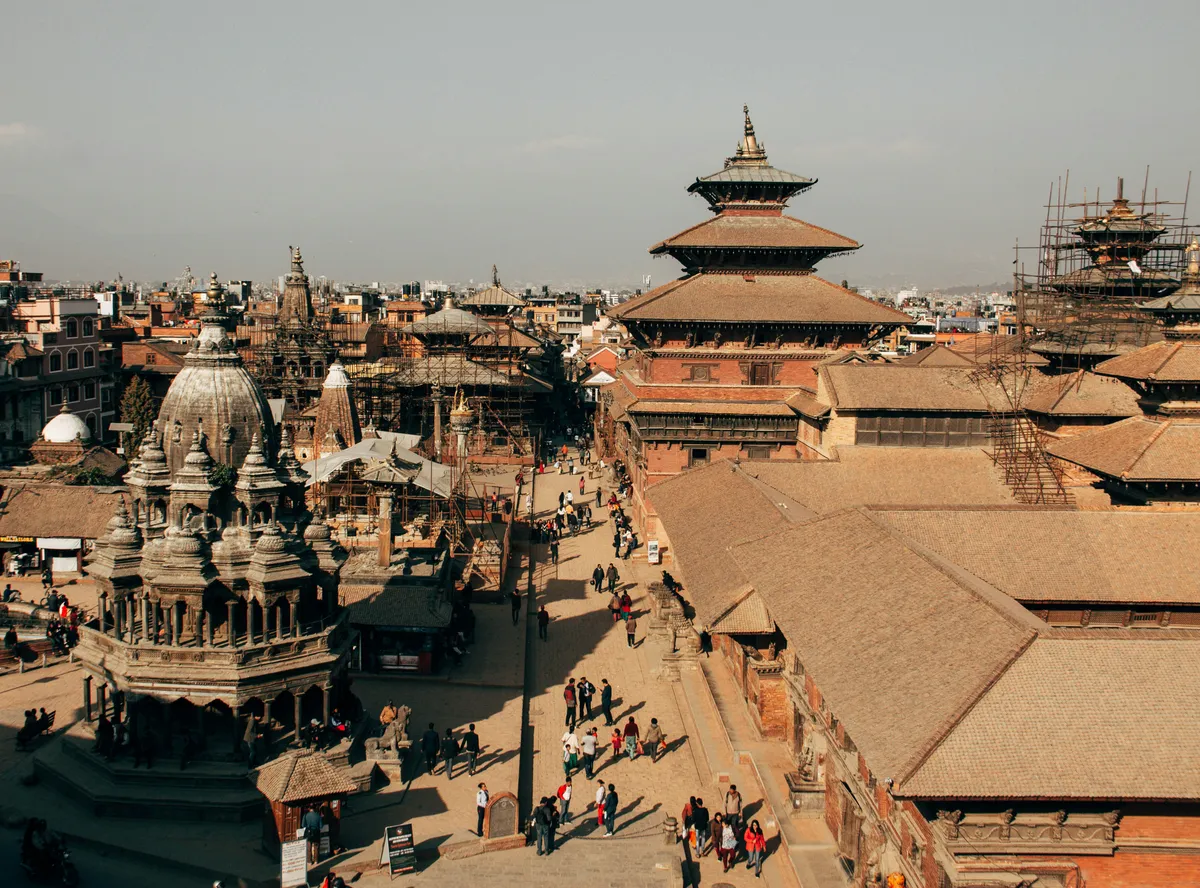
Remarkably well. The 2015 earthquake collapsed several temples, including the Char Narayan and Hari Shankar temples, and closed the Patan Museum for years. The Kathmandu Valley Preservation Trust led an exemplary restoration using traditional materials and techniques, and by 2026 most of the square stands restored. A few temples remain behind scaffolding, and watching craftsmen rebuild them with their ancestors' tools is itself part of the Patan story.
Patan Durbar Square suffered significant damage in the 2015 earthquake. Several temples collapsed entirely, including the Char Narayan Temple and the Hari Shankar Temple. The palace buildings sustained structural damage, and the Patan Museum was closed for several years for repairs. The reconstruction effort, led by the Kathmandu Valley Preservation Trust with international support, has been exemplary, using traditional materials and techniques to restore the damaged structures.
As of 2026, most of the square has been restored, though some temples remain behind scaffolding. The reconstruction process itself is fascinating to observe, with craftsmen using the same tools and techniques as their ancestors. The earthquake damage and the ongoing restoration are part of the story of Patan, a reminder that these monuments have been built, destroyed, and rebuilt many times over the centuries. The resilience of the city and its people is as impressive as the architecture.
Why Patan Matters
Patan matters not just for its art and architecture but for what it represents: a civilization that valued beauty, that invested in craftsmanship, and that created public spaces designed for both the sacred and the social. The durbar square is not a museum. It is a living space where people worship, trade, celebrate festivals, and gather in the evenings to talk and watch the world go by. The temples are not relics. They are active places of devotion, with offerings of flowers and vermilion renewed daily.
This continuity is what makes Patan, and the Kathmandu Valley as a whole, unique among the world's heritage sites. The past is not preserved behind glass. It is woven into the fabric of daily life. Visiting Patan is not just about seeing beautiful things. It is about experiencing a way of being in the world that has endured for centuries and that offers, to those who pay attention, a different perspective on what a city can be. The spiritual wellness travel guide explores how Nepal's living traditions offer healing and perspective for modern travelers, and Patan is one of the best places to experience this firsthand.