 Mar 23 – Mar 7, 2027
Kathmandu
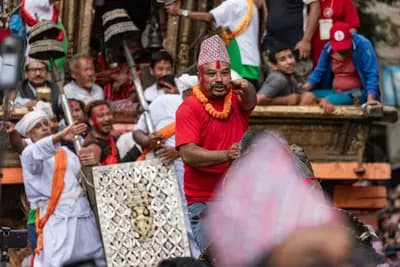
Seto Machindranath Jatra 2027: Kathmandu’s Sacred Festival
Culture
5 days
Festival
Free
Kathmandu 5 days
Event Details
Loading...
The Maruni Dance Festival is one of Nepal’s most colorful and meaningful traditional dance celebrations. Rooted mainly in the Magar community, Maruni is a lively folk performance that combines music, dance, storytelling, costumes, humor, and religious belief. It is traditionally performed during major festivals such as Dashain and Tihar, although many communities also present it during weddings, cultural gatherings, village celebrations, and special social events. The dance reflects the happiness of the community, respect for ancestors, the victory of good over evil, and the importance of preserving cultural identity. Unlike a modern stage performance created only for entertainment, Maruni is connected with family, faith, local history, and collective memory. Visitors exploring Nepal during festival season may encounter Maruni performances in villages, cultural programs, community courtyards, and traditional celebrations. A journey through Nepal’s cultural destinations can provide opportunities to understand how music, dance, religion, and everyday life remain closely connected across the country.
Maruni is especially important because it represents the cultural heritage of Nepal’s Magar and Gurung communities, while also being performed by other ethnic groups in different regions. Over time, the dance has developed regional variations, meaning that the movements, songs, costumes, instruments, and performance style may differ from one place to another. In some communities, Maruni is performed by men dressed in traditionally feminine clothing, while in others both men and women participate. The dancers often wear bright clothes, jewelry, ornaments, and decorative accessories that create a lively visual impression. The performance may include a humorous character who interacts with the dancers and audience, making the atmosphere joyful and informal. The dance is not simply a display of artistic skill; it is also a way to pass stories and values from older generations to younger people. Travelers interested in living heritage can combine a festival visit with a Kathmandu Valley cultural experience to see how Nepal’s traditions continue in modern communities.
The exact origin of Maruni Dance is connected with oral history, community traditions, and different regional interpretations. Many cultural accounts associate its development with the Magar community of western Nepal. Some traditions connect Maruni with the historical period of King Balihang Rana Magar and the Magar military communities. According to this belief, dance and music were used to create joy, strengthen unity, and celebrate the return of soldiers or important community occasions. Other interpretations describe Maruni as a ritual performance connected with the victory of good over evil. Because the dance was passed down orally, its history may differ between villages and ethnic groups. This does not make the tradition less valuable. Instead, it shows that Maruni has continued to evolve while retaining its central identity. Visitors who want to explore Nepal beyond famous mountains can learn more through Nepal’s festival calendar, which presents the country as a place of living traditions rather than only historical monuments.
Maruni later spread beyond its original cultural areas and became popular among communities in eastern and western Nepal, as well as Nepali-speaking communities in parts of India, Bhutan, and Myanmar. In Nepal, the dance is especially associated with Magar, Gurung, and other hill communities, although local versions may be performed by different groups. As people migrated for work, education, military service, and trade, they carried their songs and dances with them. This helped Maruni become a shared cultural expression while preserving regional differences. The performance may include several sections, each with its own rhythm, movement, and meaning. Some versions use traditional musical instruments, while others now include modern sound systems during public events. Even when the setting changes, the dance continues to communicate celebration, belonging, and cultural pride. Travelers exploring Nepal through a traditional village and cultural tour should look for opportunities to meet local communities rather than only visiting commercial attractions.
The Magar community has played a major role in preserving and developing Maruni Dance. For many Magar families, the dance is more than a performance presented for visitors. It is part of their identity, social relationships, religious customs, and community celebrations. Older performers teach songs, movements, costume preparation, and performance etiquette to younger generations. During festival periods, family members may gather to rehearse, prepare musical instruments, organize costumes, and invite neighbors to participate. This process strengthens relationships and gives young people a connection with their cultural roots. In many villages, Maruni is performed in open spaces, courtyards, community halls, or temporary festival grounds. The audience may include children, elders, local leaders, and visitors. This shared participation makes the dance a community activity rather than a performance separated from daily life. A responsible traveler can support such traditions by choosing authentic cultural experiences in Nepal and respecting the community’s own way of presenting its heritage.
Maruni also reflects the importance of oral tradition in Nepal. Before written records became common, songs and performances helped communities preserve stories, beliefs, memories, and social values. A Maruni song may describe love, family, bravery, humor, village life, spiritual ideas, or the relationship between people and nature. The meaning of the song can change depending on the occasion and the performers. Some songs are devotional, while others are playful or connected with social commentary. The dance therefore acts as a form of cultural education. Young performers learn not only the steps but also the language, symbolism, and behavior associated with the tradition. In a country where migration and modernization are changing village life, Maruni provides a way to keep local identity visible. Visitors interested in cultural preservation may also explore articles such as Nepali cultural shows and traditional music to understand the wider diversity of Nepal’s performing arts.
Maruni Dance is traditionally performed during Dashain and Tihar, two of Nepal’s most important festival periods. These festivals usually fall during the autumn season, although their exact dates change each year according to the lunar calendar. Dashain is associated with family gatherings, blessings, religious worship, and the victory of good over evil. Tihar is known as the festival of lights and includes the worship of crows, dogs, cows, oxen, Goddess Laxmi, and the relationship between brothers and sisters. In many communities, Maruni performances add music, color, and social energy to these celebrations. The dance may be organized in the evening after religious rituals, family meals, or community gatherings. In some places, performers travel from one neighborhood to another, while in others the dance takes place in a village courtyard or cultural stage. Travelers planning a festival-focused journey should check the updated Nepal festival calendar because the dates and performance locations can vary from year to year.
Although Dashain and Tihar are the most common occasions, Maruni is not limited to these festivals. It may also be performed during weddings, community anniversaries, cultural competitions, local fairs, and welcome programs. Some municipalities organize cultural events where different ethnic groups present their traditional dances. Maruni may appear alongside Sorathi, Kaura, Ghatu, Deuda, Tamang Selo, or other Nepali folk performances. Such programs help introduce younger audiences and international visitors to the country’s cultural diversity. The dance can also be included in tourism programs when local communities agree to present it. However, visitors should remember that not every Maruni performance is a scheduled tourist attraction. Many are private or community-based events. It is best to ask permission before attending, photographing, or recording. A cultural journey through Kathmandu, Patan, and Bhaktapur can be combined with festival research, heritage walks, and local cultural programs.
The meaning of Maruni Dance is connected with celebration, protection, fertility, community unity, and the victory of good over evil. In many traditional performances, the dance is presented during auspicious occasions when families and communities wish for happiness, prosperity, health, and peace. The colorful costumes and lively movements symbolize joy and positive energy. The music creates an atmosphere where people can gather, sing, dance, laugh, and share food. Some performances also include religious references, devotional songs, or symbolic gestures connected with local beliefs. The exact meaning differs between communities, so it is important not to describe Maruni as having only one fixed interpretation. Its cultural importance comes from the way each community uses it to express its own history and values. Visitors who explore Nepal through a spiritual and cultural tour can better understand how religious practice and artistic expression often exist together.
Maruni also creates a strong sense of social unity. During a performance, different generations may work together. Elders explain the songs, experienced dancers teach the movements, musicians prepare instruments, and younger participants help with costumes and organization. The audience also becomes part of the event through clapping, singing, laughter, and conversation. This shared activity strengthens relationships between families and neighbors. In some communities, performances continue late into the evening, creating a warm and festive atmosphere. The dance can also help resolve social distance by bringing people together during important celebrations. For visitors, this offers a valuable lesson: culture is not only found inside museums or monuments. It is also present in ordinary community spaces where people celebrate together. A visit to Nepal’s living cultural heritage destinations can help travelers experience this community-centered side of the country.
One of the most attractive features of Maruni Dance is its bright and detailed costume design. Performers may wear colorful dresses, decorated blouses, shawls, ornaments, necklaces, earrings, bangles, nose rings, and other traditional accessories. In some versions, male dancers dress in feminine clothing as part of the traditional performance style. The clothing creates a playful and theatrical appearance while also reflecting local ideas of beauty, celebration, and identity. Costumes may be prepared specially for festivals and passed down within families or performance groups. Some communities use handmade decorations, while others combine traditional clothing with modern fabrics and accessories. The colors, jewelry, and movement of the costumes make Maruni visually expressive, especially when dancers perform in a group. Visitors should avoid touching costumes or accessories without permission because these items may have personal, cultural, or religious importance.
The costume is closely connected with the performance itself. When dancers turn, move their arms, step in rhythm, or interact with the audience, the fabric and ornaments create a flowing visual effect. The costume also helps distinguish the main dancers from musicians or humorous characters. In some performances, the clown-like figure wears a different style of clothing and uses gestures to create laughter. This character may comment on social behavior, interact with the audience, or guide the performance from one section to another. The combination of music, costume, movement, and humor makes Maruni different from a silent or purely formal dance. Travelers interested in traditional clothing can combine a Maruni experience with a traditional Nepali food and culture activity, where local customs are explored through food, dress, hospitality, and storytelling.
Maruni Dance is usually accompanied by traditional Nepali music, singing, clapping, and rhythmic instruments. One important musical tradition associated with Maruni is the Naumati Baja, a group of traditional instruments that may include drums, trumpets, horns, and other wind or percussion instruments. The exact instruments depend on the region and performance group. The music gives the dance its energy and helps performers maintain rhythm. Songs may be sung by the dancers themselves or by supporting singers. In some performances, the audience joins the singing, creating a strong sense of participation. The music may begin slowly before becoming more energetic as the dance develops. This change in rhythm helps create excitement and encourages the audience to respond through clapping, cheering, or dancing.
Traditional music is important because it preserves local language and performance styles. Many Maruni songs are passed from one generation to another without being formally written down. The words may contain references to village life, love, family, religion, nature, humor, and historical memory. Some songs are performed only during certain festivals or ceremonies, while others are adapted for weddings and public cultural programs. Modern performances may use microphones, speakers, and recorded backing music, but the central role of rhythm and voice remains. Visitors should listen carefully rather than treating the music only as background entertainment. The songs may carry meanings that are not immediately understandable to outsiders. A wider understanding of Nepal’s performing arts can be developed through Nepali cultural music and dance experiences.
The movement style of Maruni Dance is generally lively, expressive, rhythmic, and theatrical. Dancers may move their hands, shoulders, feet, and upper body in coordinated patterns while following the music. Some performances include circular movements, group formations, playful exchanges, and individual displays. The dance may look spontaneous to an audience, but performers often learn specific sequences through repeated practice. Facial expressions are also important because they communicate joy, humor, emotion, and interaction. The dancers may respond to the singer, musicians, or comic character during the performance. This creates a flexible style in which the audience feels involved. The exact movements differ between regions, and local groups may use their own songs and choreography.
Maruni is often performed as a group dance, which makes coordination important. Dancers must maintain rhythm, respond to musical changes, and remain aware of one another. The performance may begin with an introduction before moving into more energetic sections. In some communities, the dance includes several stages or song patterns. A humorous character may appear between sections to entertain the audience and create a relaxed atmosphere. The combination of formal movement and playful interaction makes Maruni accessible to people of different ages. Children may watch from the front, elders may sing along, and adults may join the dance when the atmosphere becomes more informal. Travelers should understand that the performance is a social celebration, not only a stage show.
During Dashain, Maruni may be performed as part of community celebration, family reunion, and cultural entertainment. Dashain is a major festival when people return to their home villages, receive blessings from elders, prepare special meals, and spend time with relatives. These gatherings create an ideal setting for traditional dance. Maruni performances may take place after family rituals or during evening community programs. The dance adds color and happiness to a festival already associated with reunion and renewal. It also allows younger people who live in cities to reconnect with the customs of their ancestral communities. Travelers visiting Nepal during Dashain should remember that many businesses and public services may operate on different schedules, while roads and transportation can become busy because of family travel.
During Tihar, Maruni is connected with the wider atmosphere of music, lights, family gatherings, and traditional celebration. Tihar includes several days of worship and cultural activities, and many neighborhoods become decorated with oil lamps, candles, flowers, and colorful patterns. Maruni performances may take place alongside other forms of singing and dancing. In some communities, groups perform traditional songs while visiting homes or gathering in public spaces. The festival atmosphere can be especially lively in the evening. Visitors should observe respectfully and avoid interrupting religious rituals or entering private homes without permission. Those interested in festival travel may combine Tihar with a spiritual journey in Nepal, heritage sightseeing, local food, and visits to important temples.
Maruni Dance is not restricted to one single festival ground or city. It may be performed in western Nepal, central hill communities, Kathmandu Valley cultural programs, and Nepali communities across the country. The best place to experience it is often a village or community event where the dance is part of local life. However, public cultural programs in Kathmandu and other cities may also feature Maruni during festivals, tourism fairs, exhibitions, and heritage celebrations. The exact location and date depend on the community and event organizer. Travelers should not assume that a performance will be available every day. It is better to ask a local guide, cultural organization, homestay host, or community representative about current events.
The Kathmandu Valley is a useful base for cultural exploration because it contains many festivals, traditional neighborhoods, temples, courtyards, and public celebrations. Visitors may explore Kathmandu, Patan, Bhaktapur, Boudhanath, and Swayambhunath while learning about Nepal’s diverse cultural traditions. A Kathmandu Valley destination guide can help travelers understand the region’s heritage and plan a respectful itinerary. For a deeper experience, visitors may choose a community-based homestay, local food walk, or cultural tour where traditional dance can be discussed in context. The most meaningful experience is not always the largest performance. A small community gathering may offer a more personal understanding of the dance.
Visitors should follow basic rules of cultural respect when attending Maruni Dance. First, ask permission before taking close-up photographs or recording videos. Some performers may welcome photography, while others may prefer privacy, especially when the dance is part of a religious or family ceremony. Avoid walking across the performance space, touching costumes, interrupting musicians, or standing directly in front of dancers. If the event takes place inside a temple, courtyard, or private home, follow the instructions of the host. Dress modestly and comfortably, especially when visiting religious or traditional neighborhoods. It is also polite to avoid loud conversations while performers are singing or elders are explaining the tradition.
Travelers should also avoid treating Maruni as a strange or exotic spectacle. The dance is connected with real community identity and deserves the same respect given to any religious or cultural practice. If photography is allowed, capture the performance without blocking the audience or disturbing the dancers. Do not offer money directly to performers unless the event organizer explains an appropriate contribution system. Visitors may support the tradition by purchasing locally made crafts, joining a responsible cultural tour, or sharing accurate information about the performance. A respectful cultural visit should benefit the community and encourage the continued preservation of its heritage. Travelers can also explore responsible tourism experiences in Nepal that connect local culture with ethical travel.
Maruni Dance has strong potential to support cultural tourism because it offers visitors an opportunity to experience Nepal’s living traditions. Many travelers know Nepal mainly for trekking, mountains, temples, and wildlife. Traditional dance adds another important dimension by showing how communities celebrate, remember history, and express identity. Cultural tourism can create income for performers, musicians, guides, homestays, costume makers, and local businesses. It can also encourage younger generations to continue learning traditional arts. However, tourism should be managed carefully. A performance should not be changed completely to satisfy outside expectations, and communities should have control over how their traditions are presented.
Responsible cultural tourism focuses on community benefit, authenticity, and respect. Visitors should choose local guides, ask permission before recording, pay agreed fees, avoid wasting food, and follow local customs. Tour operators can help by explaining the background of Maruni instead of presenting it only as a colorful show. They can also encourage small-group visits and support community-led programs. A cultural itinerary may combine Maruni with heritage walks, local cooking, village visits, traditional music, and festival observation. Travelers interested in combining culture with food can explore the Traditional Nepali Culinary and Food Tour, which offers a useful way to understand how food, family, celebration, and hospitality are connected.
Although Maruni remains popular in many communities, it faces several challenges. Modernization, migration, changing entertainment habits, and limited training opportunities can make it difficult for younger people to learn the dance. Many young people move to cities or abroad for education and employment, reducing the number of performers available in their home villages. Traditional instruments and costumes may also be expensive to maintain. Some communities struggle to find experienced teachers who can pass on the songs and movements. In addition, public performances may sometimes simplify or change the dance so much that important cultural meanings are lost. These challenges show why preservation requires more than occasional festival performances.
The preservation of Maruni can be supported through community training, school programs, cultural documentation, local festivals, and fair payment for performers. Recording songs and movements with the permission of the community can help protect knowledge for future generations. Schools and cultural organizations can invite traditional artists to teach students. Local governments can provide spaces and funding for rehearsals and public programs. Tourism businesses can support performers through ethical partnerships rather than demanding unrealistic performances. Most importantly, young people should be encouraged to see Maruni as a valuable art form with a place in contemporary life. Cultural preservation becomes stronger when traditions are allowed to evolve while their core identity remains respected.
Maruni Dance represents the importance of diversity, memory, and community in Nepal. The country is home to many ethnic groups, languages, religions, musical styles, and regional customs. Maruni shows how a traditional art form can preserve a community’s history while also being adopted and adapted by others. Its songs and movements express values that remain important today, including family unity, celebration, cooperation, respect for elders, and pride in local heritage. The dance also demonstrates that culture is not static. It changes as people move, communicate, and respond to new circumstances. This flexibility has helped Maruni survive across generations.
For international visitors, Maruni offers a more meaningful way to understand Nepal. A traveler who watches the dance respectfully may learn about the community’s clothing, music, language, religious beliefs, humor, and social relationships. The experience can become more valuable when combined with conversations with local people. Instead of simply taking photographs, visitors can ask about the meaning of the songs, the preparation of costumes, and the history of the performance. This approach supports cultural exchange and avoids reducing the tradition to a tourist attraction. Nepal’s heritage becomes easier to understand when visitors explore both famous landmarks and local community life.
A Maruni-focused journey can be combined with several cultural and spiritual experiences in Nepal. Travelers may explore ancient courtyards, visit temples, taste traditional food, walk through local markets, or stay with a community host. Kathmandu Valley is especially suitable for combining festival observation with heritage sightseeing because Kathmandu, Patan, and Bhaktapur contain important examples of architecture, ritual, and traditional craftsmanship. Visitors may also include a spiritual itinerary involving Pashupatinath, Boudhanath, Swayambhunath, and other sacred sites. The Spiritual Tour in Nepal 2026 provides useful inspiration for travelers interested in connecting cultural experiences with reflection, religious heritage, and local traditions.
Travelers who prefer a broader cultural journey may explore a Hindu and Buddhist pilgrimage route in Nepal. Such a journey can include sacred temples, Buddhist stupas, historic towns, local markets, and traditional communities. Visitors may also combine Maruni with activities such as cooking, heritage walks, meditation, photography, and village experiences. The goal should be to create a balanced itinerary rather than rushing between attractions. A slower journey gives travelers time to understand the meaning behind the dance and interact respectfully with local people. This approach also supports the values of responsible tourism promoted by Enticing Himalayas.
Maruni is a traditional Nepali folk dance mainly associated with the Magar community and also performed by other ethnic groups. It combines colorful costumes, music, rhythmic movements, songs, humor, and cultural storytelling.
Maruni is traditionally performed during Dashain and Tihar. It may also appear during weddings, village celebrations, cultural programs, fairs, and community gatherings.
Maruni is strongly associated with the Magar community of Nepal. It is also practiced by Gurung and other communities, with regional variations in costume, music, and movement.
Maruni may represent joy, community unity, cultural identity, religious belief, protection, and the victory of good over evil. Its exact meaning can differ between communities.
Traditional performances may use drums, wind instruments, singing, clapping, and the Naumati Baja orchestra. Modern programs may also use microphones and sound systems.
Yes, tourists may watch Maruni during public cultural programs or community festivals. Visitors should ask permission and follow local customs before photographing or recording.
No. In some traditional versions, men dress in feminine clothing and perform the main roles. Other versions include both male and female dancers.
Travelers can support local performers, choose community-based cultural experiences, pay fair fees, respect photography rules, and share accurate information about the tradition.
Kathmandu Valley, western hill communities, village homestays, cultural festivals, and local heritage programs are useful places to explore Nepal’s living traditions. Visitors can begin with Nepal’s cultural destinations.
The Maruni Dance Festival is a beautiful example of Nepal’s living cultural heritage. Through colorful costumes, traditional music, rhythmic movement, humor, and community participation, Maruni expresses the history and identity of the people who preserve it. Its connection with Dashain, Tihar, weddings, and village celebrations shows that the dance remains part of everyday cultural life rather than existing only as a performance for tourists. Although modernization and migration create challenges, community training, cultural tourism, documentation, and youth participation can help protect Maruni for future generations. Visitors can contribute by attending respectfully, supporting local performers, asking permission before taking photographs, and learning about the tradition beyond its visual beauty. A journey through Nepal becomes richer when travelers experience not only mountains and monuments but also the songs, dances, festivals, and people who give the country its living spirit.
Kathmandu, Kathmandu, Bagmati, Nepal
Oct 18, 2026
1 day
Quick Info
More culture experiences
Mar 23 – Mar 7, 2027Kathmandu
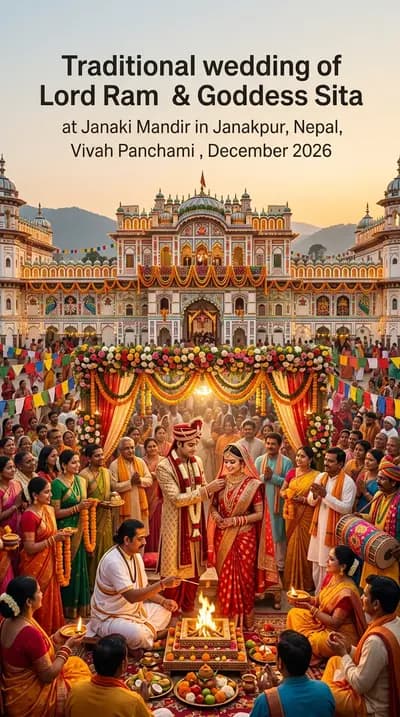 Dec 13 – Dec 17, 2026
Janaki Mandir, Janakpur
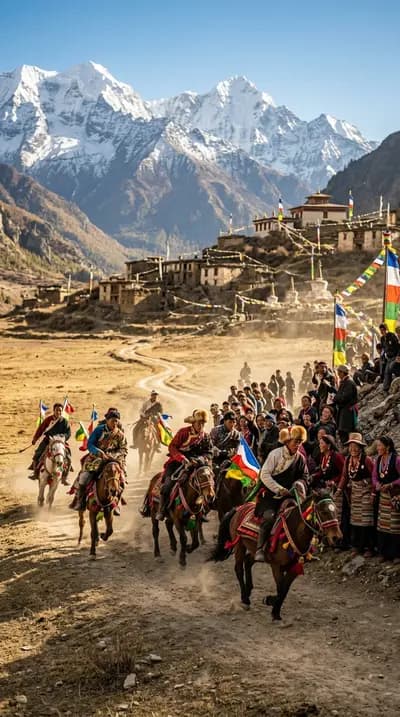 Nov 15 – Nov 16, 2026
Tsum Valley