Spiritual Tour in Nepal 2026: The Uncensored Guide to Himalayan Awakening
Kathmandu hits you immediately. The air smells of burning juniper, raw diesel exhaust, and wet dust. The noise is absolute. Horns blare in a continuous, deafening loop. Yet a few steps off the main ring road, ancient stone courtyards hold a quiet gravity. Your resting heart rate drops instantly. If you are planning a Spiritual Tour in Nepal 2026, you need to drop your expectations of a perfectly silent, pristine sanctuary right now. Nepal is messy. It is profoundly holy. The sacred and the ordinary exist side by side here without contradiction. You will step over sleeping street dogs to spin heavy copper prayer wheels. You will hear ancient Sanskrit chants drowning out the roar of passing motorcycles.
This guide strips away the travel brochure clichés. We break down the exact logistics, the essential sacred sites, the physical toll, and the unspoken rules of undertaking a Himalayan spiritual journey this year. Enticing Himalayas Travel has guided thousands of seekers through these exact routes. We know what works. We know what breaks people. We know what actually creates lasting internal change. Learn more about our operational approach here.
Why 2026 Demands a Different Approach
The travel infrastructure in the Himalayas shifted heavily over the last five years. Backpacker routes became paved roads. Remote monasteries now have satellite internet. 2026 represents a tightening window. You can still access deep, untouched spiritual traditions. You just have to know exactly where to look. Following outdated guidebooks will lead you to crowded tourist traps filled with people taking selfies in front of altars.
We see travelers arrive with rigid expectations. They want a movie-version of enlightenment. They break down when their flight to Pokhara gets delayed by heavy monsoon clouds. Nepal does not care about your itinerary. The friction of travel here is the actual meditation. Sitting in a calm, climate-controlled room back home is easy. Finding your center while trapped in a delayed jeep on a dusty mountain pass is the real practice. You have to surrender control. Let the environment dictate the pace.
The Hindu Pilgrimage Route: Facing the Absolute
Hinduism in Nepal is raw. It deals directly with creation, preservation, and total destruction. You will not find sanitized religious experiences here. You will face life and death directly. The ancient Vedic texts come alive in the dirt, the fire, and the ice of the Himalayas.
Pashupatinath: The Reality of the End
Pashupatinath is the absolute epicenter of Hindu devotion in Nepal. It sits on the banks of the Bagmati River. Death is entirely visible here. Open-air cremations happen all day on the stone ghats. You will watch families say goodbye to their loved ones while sadhus—holy men covered in pale ash—meditate just yards away. Watching this cycle forces a brutal, honest confrontation with your own mortality. It alters how you view your daily anxieties back home. The things you stress about suddenly seem entirely irrelevant.
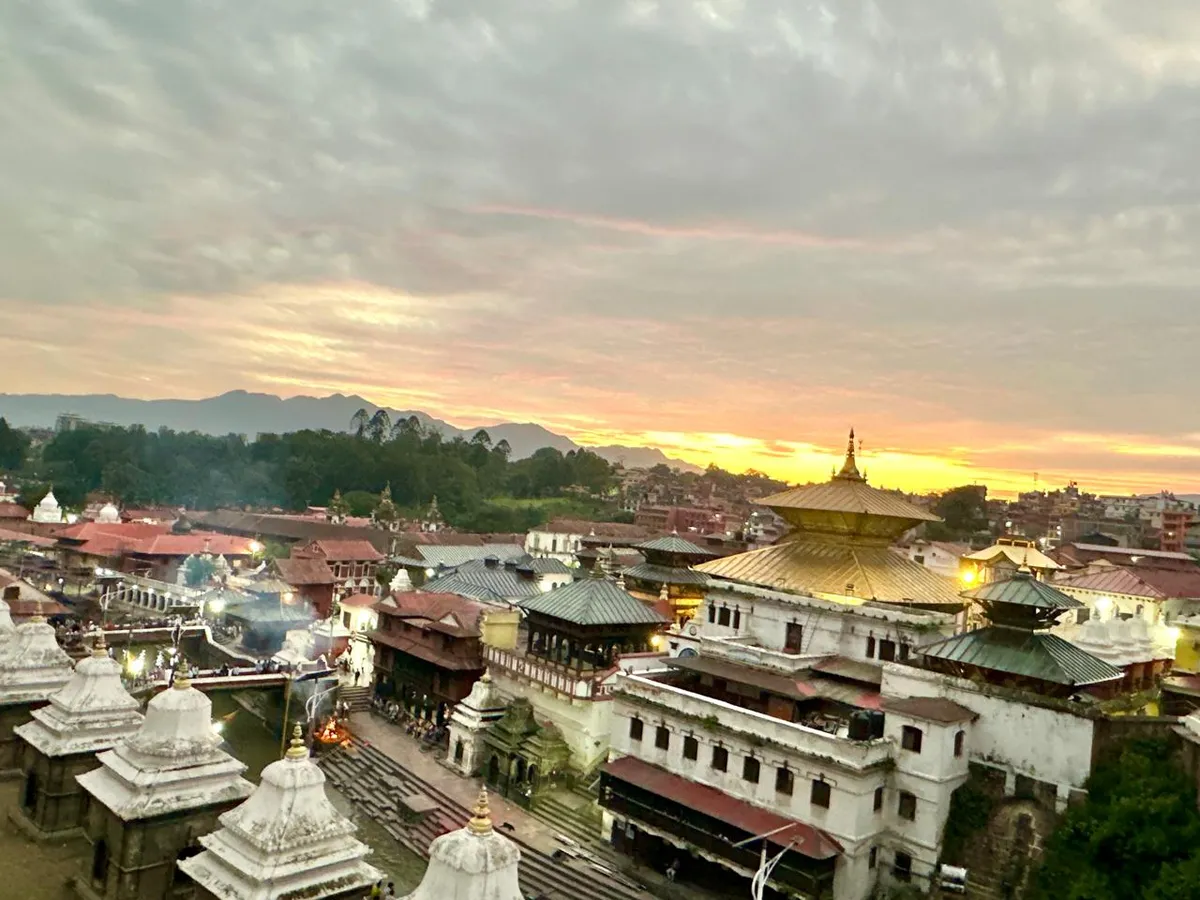
Visit during the evening Aarti ceremony. Priests perform synchronized fire rituals as hundreds of devotees sing in unison. The energy is massive. The heat from the brass lamps pushes into the crowd. You smell burning sandalwood, marigolds, and the smoke from the pyres. The sound of bells ringing cuts through the chanting. Book a guided day tour to safely navigate the overwhelming crowds during Aarti.
Muktinath: High Altitude Devotion
Muktinath sits at 3,710 meters. The air is incredibly thin. Your lungs will burn walking up the final stone stairs. This temple at the edge of the Mustang region is sacred to both Hindus and Buddhists. Hindus call it Mukti Kshetra—the place of liberation. Reaching this site requires a difficult overland jeep ride through the Kali Gandaki gorge or a sharp, unpredictable flight from Pokhara to Jomsom.
Bathing in the 108 icy water spouts outside the temple washes away negative karma. The water freezes your skin immediately. The clarity that follows is absolute. The cold forces you entirely into the present moment. You forget your past. You stop worrying about the future. You just breathe. You stand shivering in the thin mountain air and feel entirely alive.
Janakpur: The Heavy Heat of Devotion
Most spiritual tours ignore the Terai plains. That is a mistake. Janakpur is the mythical birthplace of Goddess Sita. The Janaki Mandir temple looks like a massive Rajput palace. It shines bright white against the dusty southern plains. The heat here is oppressive. Pilgrims sing devotional songs 24 hours a day. The chanting never stops. It embeds itself in your head. The air is thick with humidity and the smell of sweet milky tea.
Gosainkunda: High Altitude Shamanism
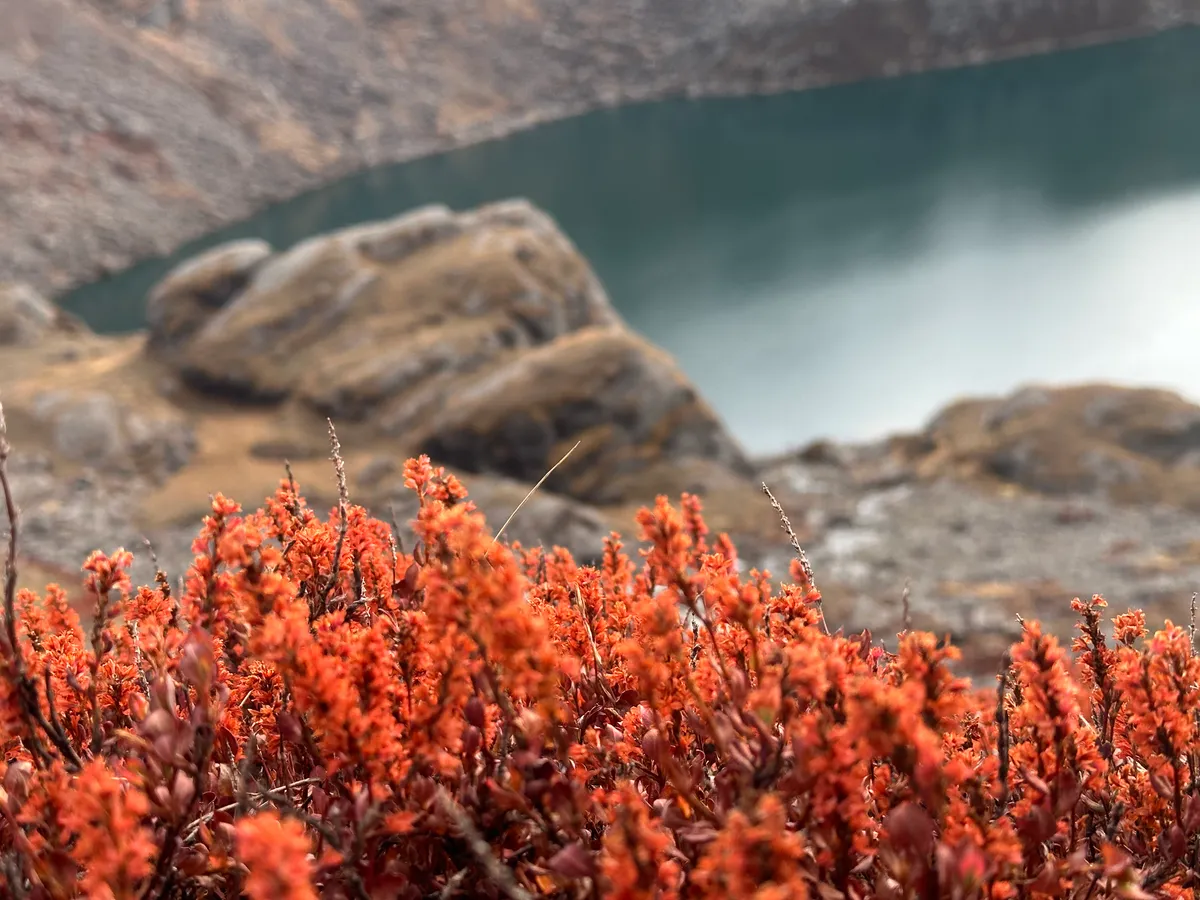
At 4,380 meters, the frozen alpine lake of Gosainkunda tests your physical endurance. Hindu mythology states Lord Shiva created this lake with his trident to cool his throat after swallowing poison to save the universe. During the Janai Purnima festival in August, thousands of pilgrims hike up here in monsoon rain. Shamans (Jhankris) beat drums and dance in trances all the way up the mountain. It is wild. It is dangerous. The altitude sickness takes out dozens of people every year. If you make it, the sight of the turquoise lake surrounded by jagged peaks feels like a hallucination.
Pathibhara: The Eastern Extreme
Far in eastern Nepal lies Pathibhara Devi. This is a pilgrimage for the deeply committed. The journey requires long drives on terrible roads followed by a steep, exhausting trek. Devotees believe the goddess here fulfills desires, but she demands extreme effort to reach her. The trail runs through dense rhododendron forests. The mist is constant. You will walk alongside barefoot pilgrims carrying heavy offerings. It strips away your ego entirely.
The Nepal Buddhist Circuit Tour: Tracing the Footsteps
Buddhist practice in Nepal ranges from quiet Vipassana meditation to the heavy ritualism of Tibetan Vajrayana. A true Nepal Buddhist Circuit Tour exposes you to both extremes. You move from silent contemplation to sensory overload.
Boudhanath Stupa: The Center of the Wheel
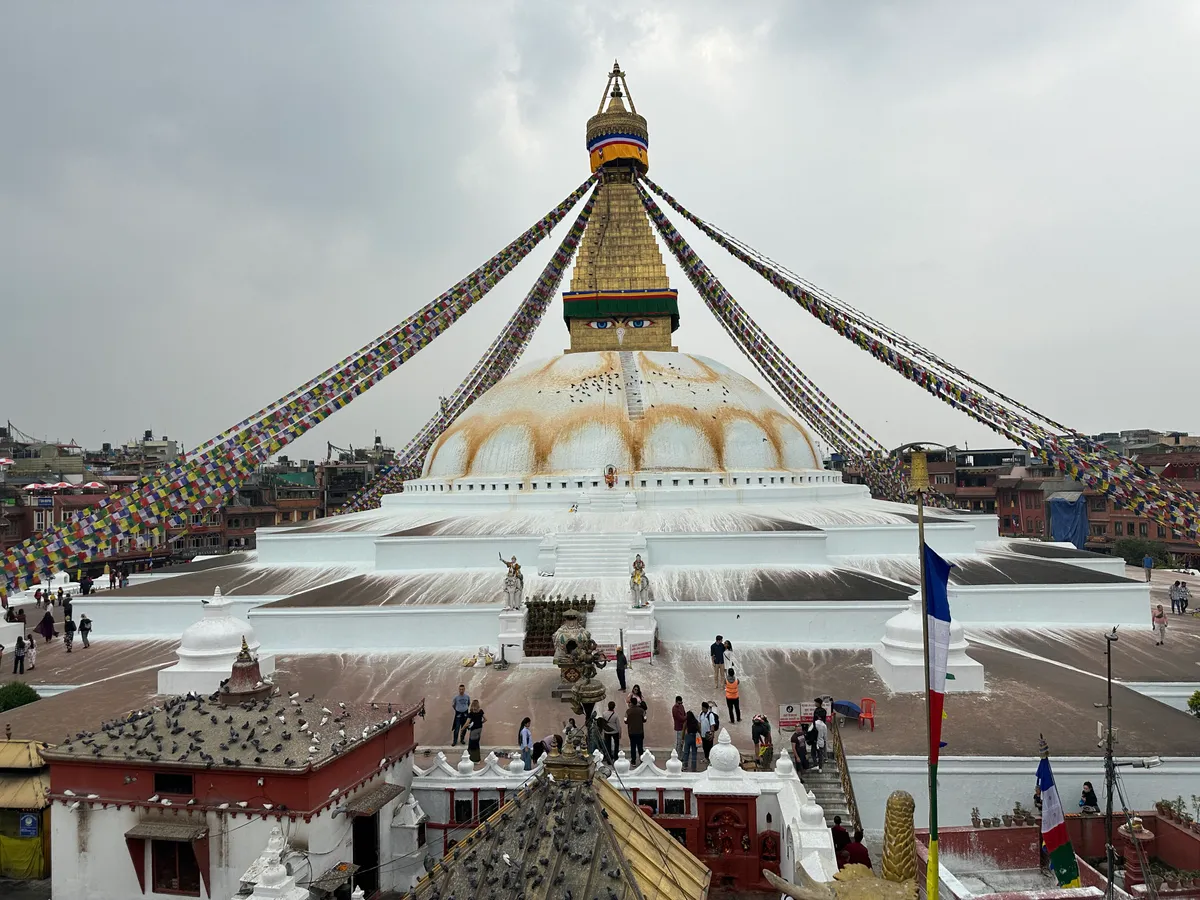
Boudhanath is massive. The white dome rises above the Kathmandu skyline and draws thousands of Tibetan Buddhists daily. Walking clockwise around the stupa—a practice known as kora—becomes hypnotic. You smell burning juniper. You hear the rhythmic clacking of wooden prayer beads. You join a sea of monks in maroon robes murmuring mantras. Find a rooftop café overlooking the square. Drink mint tea. Watch the devotion unfold below you. You can sit there for hours doing absolutely nothing, and it feels entirely productive.
Swayambhunath: The Monkey Temple
You have to climb 365 steep stone steps to reach Swayambhunath. Rhesus macaques watch you the entire way up. They will steal your water bottle if you leave it exposed. The top offers a panoramic view of the Kathmandu Valley. The eyes of the Buddha painted on the main stupa look out in all four directions. The air here is thinner than the city below. The wind carries the sound of the metal prayer wheels spinning continuously. The smell of butter lamps mixes with the scent of pine.
Lumbini: The Birthplace
Lumbini demands your time. This is where Queen Maya Devi gave birth to Siddhartha Gautama. The exact spot of his birth sits inside the Maya Devi Temple. Outside, you will find the sacred pond and the Ashokan Pillar erected in 249 BC. The surrounding monastic zone stretches for miles. You can walk through temples built by nations from all over the world. Rent a bicycle. Ride through the heavy southern heat to explore them all. The silence in the restricted zones is absolute.
Namobuddha: The Act of Sacrifice
Drive two hours outside Kathmandu to reach Namobuddha. The legend states a previous incarnation of the Buddha found a starving tigress and her cubs here. He offered his own body to feed them. The sheer scale of that compassion permeates the area. Thrangu Tashi Yangtse Monastery sits on the hill. The chanting of young monks echoes through the valley at dawn. The air is clean. The views of the snow-capped Himalayas are razor sharp on a clear morning.
Pharping: The Sacred Caves
South of Kathmandu lies Pharping. This town is a major pilgrimage site for practitioners of Tibetan Buddhism. Guru Rinpoche (Padmasambhava) attained a high state of realization in the Asura Cave here. You can walk up the stone stairs to the cave. The rock bears the imprint of his hand. Sit inside the dark, small space. The energy is intense. Monasteries line the hillside. The entire town revolves around meditation and study.
Tengboche: Spirituality in the Khumbu
Tengboche Monastery sits at 3,867 meters on the trail to Everest Base Camp. You have to trek for days to get here. Your legs will burn. You will cross high suspension bridges covered in prayer flags. When you finally arrive, the sight of the monastery with Ama Dablam rising in the background stops you dead. Attend the afternoon prayer ceremony. The deep throat chanting of the Sherpa monks vibrates in your chest. Our trekking teams handle the permits and logistics to get you there safely.
Finding Quiet in Meditation Retreats Kathmandu
You need time to process everything you see. Kathmandu offers several serious meditation centers for structured silence. A quick visit to a temple provides a spark. A formal retreat builds the fire.
Kopan Monastery
Kopan Monastery sits on a hill overlooking the valley. They teach Tibetan Buddhist philosophy. You can book courses ranging from a few days to a full month of strict silence. The daily schedule is rigid. You wake up before dawn. You eat simple vegetarian meals. You meditate for hours. The monks answer your questions directly. They do not sugarcoat the difficulty of the path.
Vipassana: The Ultimate Breakdown
If you want absolute rigor, look into a Vipassana course at Dhamma Shringa in Budhanilkantha. These ten-day silent retreats strip away all distractions. You surrender your phone, your books, and your right to speak. You meditate for ten hours a day. Your knees will ache. Your back will burn. Your mind will scream for stimulation. It is exhausting. It is often the most rewarding part of the entire trip. You break through the physical pain and find a bizarre, silent clarity on the other side. We recommend booking these months in advance.
Osho Tapoban: The Dynamic Approach
Located in the Nagarjun forest, Osho Tapoban offers a completely different approach. The meditations here are active. You dance. You shout. You shake. You exhaust the physical body to quiet the mind. It confronts Western conditioning directly. The forest setting is lush. The food is excellent. It is a gentler entry point into meditation for those who cannot sit still for hours.
Sound Healing and Yogic Practices
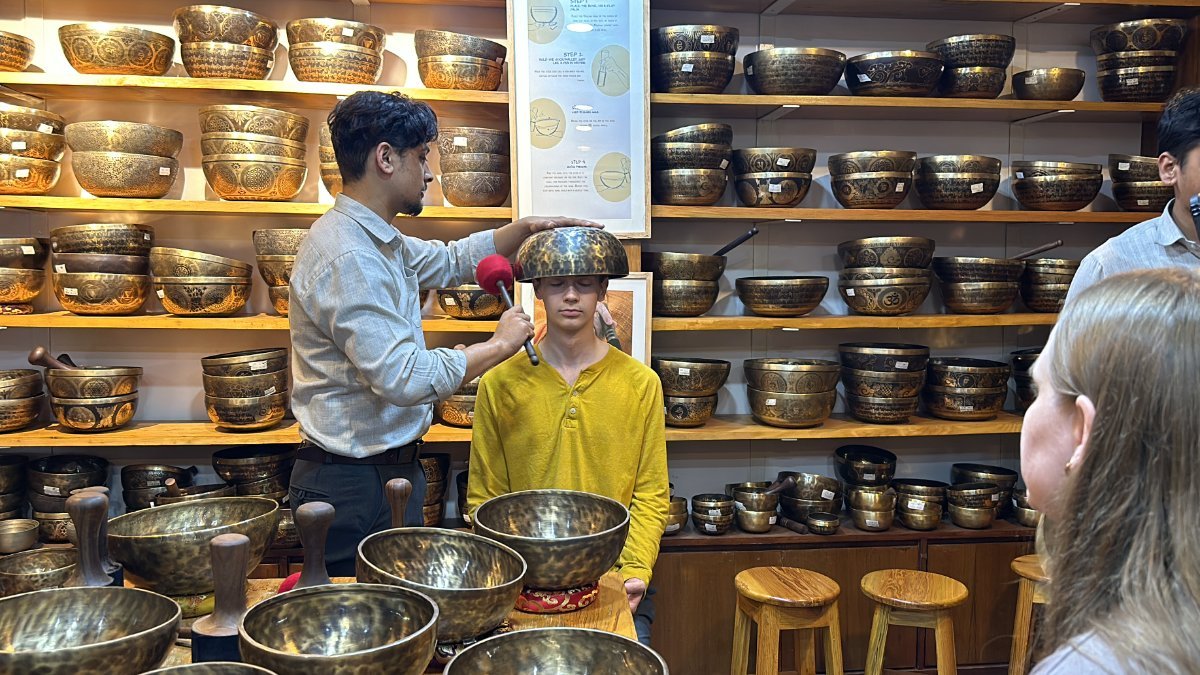
Nepal is a global center for sound healing. Tibetan singing bowls are forged from seven metals. Practitioners strike and rub the bowls around your body. The sound frequencies alter your brainwaves. You drop into a deep meditative state effortlessly. In Thamel and Patan, you will find masters who have practiced this for decades. Do not buy a bowl from a random souvenir shop. Find a master. Learn the technique.
Yoga here leans toward traditional Hatha and Ashtanga. It is less about fitness and more about breath control and spiritual alignment. Practicing asanas on a rooftop in Pokhara as the sun hits the Annapurna range changes your perspective on the practice entirely.
Aligning Your Trip with Sacred Festivals
Timing your trip to coincide with a major festival amplifies the experience exponentially.
- Maha Shivaratri (February/March): Millions of Hindus descend on Pashupatinath. Sadhus arrive from across India. The government temporarily lifts the ban on marijuana for holy men. The fires burn all night. The crowds are terrifying and magnificent.
- Buddha Jayanti (May): The celebration of the Buddha's birth, enlightenment, and death. Lumbini and Boudhanath are flooded with pilgrims. Thousands of butter lamps light up the night.
- Mani Rimdu (October/November): Held at Tengboche Monastery. This Sherpa festival features elaborate masked dances. The monks perform rituals to empower the community and destroy negative forces.
- Tiji Festival (May): Held in the walled city of Lo Manthang in Upper Mustang. This three-day Tibetan ritual chases away demons. It is incredibly remote. You need special restricted area permits to attend.
The Digital Nomad Dilemma: Working While Seeking
Many travelers coming in 2026 are not taking standard vacations. They are digital nomads carrying laptops. Balancing remote work with deep spiritual seeking requires discipline. Kathmandu has a thriving café culture with solid fiber-optic internet. You can work for six hours and spend the evening meditating at Swayambhunath.
The friction comes when you want to leave the valley. Internet in the mountains is unreliable. Power outages happen. If you need to hit deadlines, do not go to a remote monastery. Build your itinerary in blocks. Spend two weeks completely offline in a retreat or on a trek. Then spend two weeks in Patan or Pokhara working from coworking spaces. Enticing Himalayas Travel designs specialized long-term itineraries specifically for remote workers. We ensure your housing has backup power. We handle the visa extensions. We remove the logistical stress so you can focus on your work and your practice.
Logistics for Your 2026 Journey
Preparation dictates the quality of your trip. The Himalayas do not care about your travel anxiety. You must arrive ready.
Visas and Paperwork
You get a visa on arrival at Tribhuvan International Airport. Bring crisp US dollars. The machines often break down. Bring physical passport photos just in case. If you head into the mountains, you need specific permits. The Annapurna Conservation Area Project (ACAP) permit and the Trekkers' Information Management System (TIMS) card are mandatory. Trekking without a licensed guide is now illegal in many regions. Do not try to bypass the checkpoints. The tourist police will send you back down the mountain.
The Transport Nightmare
Domestic flights in Nepal rely entirely on visual flight rules. If there are clouds, the planes do not fly. Flights to Lukla or Jomsom cancel constantly. You need buffer days. Never book an international flight the day after a domestic mountain flight.
Overland travel is bruising. The highways cling to the edge of steep river valleys. Traffic jams caused by landslides can last for ten hours. Tourist buses are safer than local microbuses. Private jeeps are the best option for rough roads. Accept that travel here takes time. Bring a book. Learn to sit still.
Aggressive Packing List for Extreme Variables
You will sweat in the southern plains of Lumbini at 40°C. You will freeze in the harsh winds of Muktinath at -10°C. Your packing list requires aggressive versatility. You need layers.
- Base Layers: Merino wool. It does not hold odor. You can wear it for a week straight.
- Insulation: A high-quality 800-fill down jacket. It packs down small and saves you in the mountains.
- Footwear: Slip-on shoes for the city. You have to take your shoes off at every temple. Laces become infuriating. Bring sturdy trekking boots for the trails.
- Electronics: A heavy-duty power bank. A universal adapter. A headlamp. Power outages are a reality.
- Hydration: A water purifier bottle (like Grayl or LifeStraw). Never drink from the tap. Reduce plastic waste by filtering your own water.
- Documentation: A physical journal. You will want to write down the things you realize while sitting in silence. Do not rely on your phone for notes.
Food, Water, and Gut Health on the Road
Your digestive system will face new bacteria. Dal Bhat—rice, lentil soup, and curried vegetables—is the staple fuel of the Himalayas. Eat it. The turnover is high, meaning it is usually fresh and safe. Avoid raw salads in cheap restaurants. Avoid street food that has been sitting in the sun.
Bring a medical kit. Pack oral rehydration salts, broad-spectrum antibiotics (like Azithromycin for severe traveler's diarrhea), and altitude sickness medication (Diamox). Start taking probiotics a month before you arrive. A strong gut makes the physical journey much easier.
The Psychological Toll of the Himalayas
Do not romanticize the physical reality of Nepal. A genuine spiritual trip breaks you down physically. You will get sick of the bumpy roads. The dust will coat your throat. You will get frustrated by the endless delays. The lack of personal space in the cities will overwhelm you.
We have seen highly successful executives break down in tears because a jeep broke an axle on the way to Mustang. We have seen seasoned travelers lose their temper over a cold shower. This is the exact point of the trip. The Himalayas strip away your comfort mechanisms. You are forced to face your own impatience, anger, and ego. Once you stop fighting the friction and accept the reality of the moment, the real spiritual journey begins.
How Enticing Himalayas Travel Operates
We do not sell cookie-cutter vacations. We operate a fully functional travel infrastructure with a dedicated team in Kathmandu. We have IT staff ensuring our systems run flawlessly. We handle student groups, digital nomad retreats, and hardcore high-altitude pilgrimages. Our guides do not just point at statues and recite dates. They facilitate access.
They know when the head priest at a remote temple is receiving visitors. They know the quietest hours to visit the major stupas. They handle the brutal logistics—the permit offices, the canceled flights, the jeep negotiations—so you can focus entirely on your internal experience. We take the administrative burden completely off your shoulders.
Book Your Transformation
The slots for the peak 2026 seasons are filling up fast. The spring and autumn windows are short. Do not wait until the last minute to secure your permits, domestic flights, and retreat spots. Contact our team in Kathmandu today. Tell us what you are trying to find. We will build an itinerary that forces you out of your comfort zone and into a state of absolute clarity.