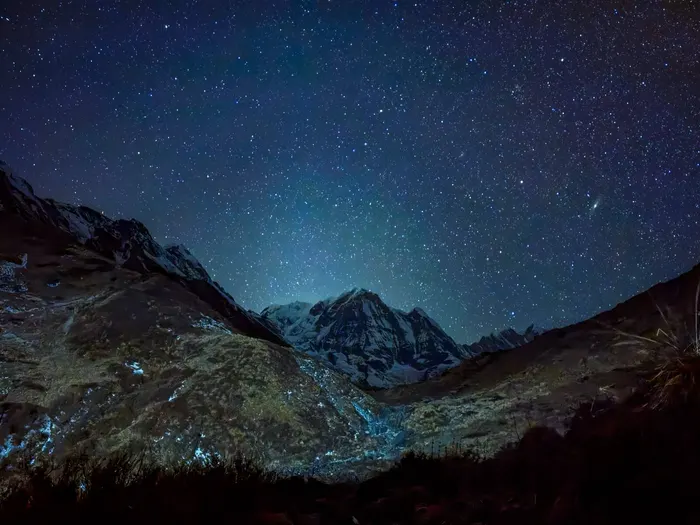
Annapurna Helicopter Return Trek: 6 Days Trek Up, Fly Back
The Annapurna Base Camp trek is one of the great walks of the Himalaya, a climb into a 4,130 m amphitheatre ringed by Annapurna I, Annapurna South and the sacred fishtail of Machhapuchhre. The catch has always been the return. After you reach the sanctuary, most trekkers turn around and spend two more days retracing the same stone staircases down the Modi Khola valley, tired legs complaining at every step. The Annapurna helicopter return trek removes that descent entirely. You walk up on your own two feet, sleep at Base Camp, watch the sunrise paint the peaks pink, and then lift off for a short flight back to Pokhara.
This guide explains exactly how the trek up, fly back format works, what the six-day itinerary looks like, what it costs in 2026/27, which permits you need, the best season to fly, and how to stay safe at altitude. Every package and link below is real and live, and the itinerary figures come straight from our Annapurna Helicopter Return Trek product page.
What Is a Helicopter Return Trek?
A helicopter return trek combines a one-way trek with a one-way helicopter flight. You walk up to your high point over several days, acclimatising naturally along the way, then fly back down instead of retracing the trail. It saves days of descent, spares your knees, and turns the journey home into a scenic aerial tour.
It helps to see what the format is not. A helicopter day tour starts and ends in the same morning: you fly out, land, look around, and fly home without walking more than a few hundred metres. A classic return trek asks your legs to carry you both up and down the same valley. A heli-supported trek uses a helicopter as an emergency exit or a shortcut on one tricky section. The helicopter return trek sits between them. You earn the mountain on foot, then let the aircraft handle the least rewarding part of the route.
That combination is why the format has quietly become one of the most requested products in the Annapurna region. The ascent is the part trekkers remember: the rhododendron forest below Chhomrong, the hot springs at Jhinu Danda, the first glimpse of Machhapuchhre from Deurali. The descent along the same trail is the part most people could happily skip. A helicopter return lets you keep the good half and delete the slog.
Why Trek Up and Fly Back: The Smartest Route to Annapurna Base Camp
The strongest argument for trekking up and flying back is acclimatisation. A helicopter that drops you directly at Base Camp gives your body no time to adjust to 4,130 m, and altitude sickness is the single most common reason people feel unwell in the sanctuary. By climbing over four days, sleeping a little higher each night, you give your body a proper chance to adapt. You arrive at Base Camp tired but acclimatised, which is exactly how it should be.
The second argument is time. A full Annapurna Base Camp return trek usually runs eleven to twelve days from Pokhara. The helicopter return version is six. That gap matters for anyone slotting a Himalayan highlight into a short holiday, or pairing a trek with the cultural circuit of Kathmandu Valley. If you want to combine mountain walking with temples and pilgrimage, our complete guide to cultural and spiritual tours in Nepal shows how the valley fits before or after a trek.


There is a comfort argument too. The descent from Annapurna Base Camp is roughly 1,700 m of near-continuous stone steps, and it is hard on knees, ankles and morale. Flying out over the same ground you walked gives you a reward rather than a punishment, and the aerial view of the sanctuary from above is something trekkers who walk down never get to see.
How Does the Annapurna Helicopter Return Trek Work?
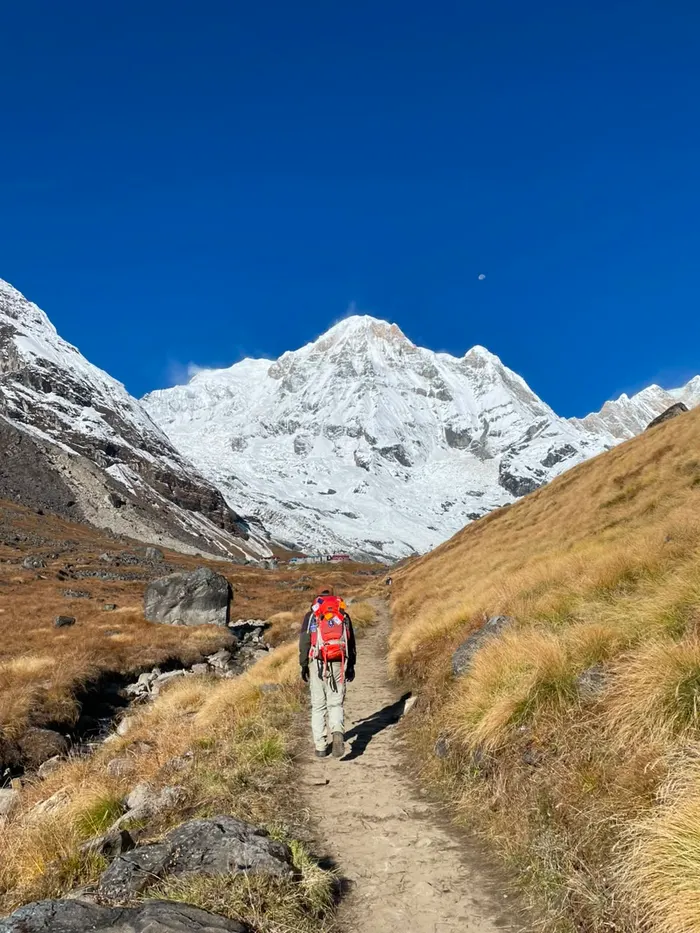
The trek runs from Pokhara. A private jeep takes you to the trailhead near Kimche or Jhinu, you trek up through Chhomrong, Bamboo and Deurali to Annapurna Base Camp, sleep one night at 4,130 m, and fly back to Pokhara by helicopter at sunrise the next morning. The whole route fits into six days.
The helicopter leg is short and simple. From Base Camp the aircraft lifts off and climbs gently over the ridge before turning back down the valley, giving you a final look at the sanctuary before the mountains give way to terraced hills and, finally, the lakeside sprawl of Pokhara. The flight itself is typically twenty to thirty minutes, depending on routing and weather. Ground time at Base Camp is spent the way it should be: standing in the cold morning air watching the light arrive on Annapurna I.
Two practical details shape the whole plan. First, the helicopter has a strict weight limit: passenger and cabin bag together must stay under 80 kg, and you are weighed in Pokhara before departure. Second, the flight is weather dependent. Operators build in a buffer, and in the rare case the aircraft cannot fly, the fallback is a same-day walk down to Machhapuchhre Base Camp with a flight arranged from there. Both details are worth knowing before you commit, and both are handled by the agency rather than by you.
The format works from Kathmandu as well as Pokhara. Most travellers fly or drive to Pokhara first, but a package can start with a morning flight from Kathmandu to Pokhara and end with your helicopter shuttle back. If you are weighing departure points, our guide to helicopter tours in Nepal compares the two, and neighbouring regions are covered in the Pokhara helicopter guide.
The 6-Day Annapurna Helicopter Return Trek Itinerary, Day by Day
Here is how the six days unfold, using the exact stops and altitudes from the live itinerary. Distances are modest because the climbing is steady, and the goal each day is a comfortable gain in altitude.
Day 1: Pokhara to Chhomrong (2,170 m)
Your day begins with a private jeep ride from Pokhara along the Modi Khola valley to the road head, then a short trek to Jhinu Danda, where you can soak tired legs in the natural hot springs before climbing on to the Gurung village of Chhomrong. Views open toward Annapurna South and Machhapuchhre.
Day 2: Chhomrong to Bamboo (2,310 m)
A day of deep forest. The trail drops to the Chhomrong Khola on a long flight of stone steps, crosses the suspension bridge, and then climbs through rhododendron and bamboo groves. This is bamboo country in every sense: the trail is green, shaded and rich with birdlife.
Day 3: Bamboo to Deurali (3,230 m)
The landscape changes quickly here. Forest gives way to a narrower, rockier gorge as you pass Himalaya and Dobhan, climbing steadily toward Deurali. The air cools, the trees thin out, and the first serious mountain views start to appear above the ridgeline.
Day 4: Deurali to Annapurna Base Camp (4,130 m)
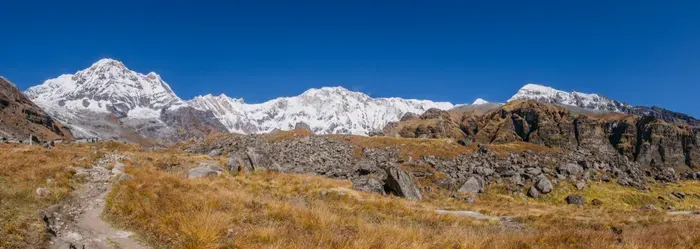
The big day. You leave the last trees behind and climb into the open sanctuary, passing Machhapuchhre Base Camp before the final rise to Annapurna Base Camp at 4,130 m. You are now standing inside a ring of giants: Annapurna I at 8,091 m, Annapurna South, Hiunchuli and the fishtail of Machhapuchhre above you. Sunset and sunrise here are the reason people make the walk.
Day 5: Sunrise at Base Camp, Helicopter to Pokhara
Wake before dawn, step outside, and watch the peaks turn gold in the first light. This is the moment the whole trip was built around. After the sunrise and a leisurely breakfast, you board the helicopter for the flight back to Pokhara, with a last aerial sweep over the moraines and glacier you walked through the day before.
Day 6: Departure
A relaxed morning in Pokhara, with the option to add sightseeing around Phewa Lake, before your onward flight or drive. Because the trekking ended with a flight rather than a two-day descent, you arrive back rested rather than wrecked.
How Much Does the Annapurna Helicopter Return Trek Cost?
The six-day Annapurna helicopter return trek is priced from USD 2,818 per person. That covers the jeep transfer to the trailhead, a licensed guide, teahouse lodging and meals on the trek, the required permits, and the helicopter flight from Annapurna Base Camp back to Pokhara. Private departures and added Kathmandu transfers raise the total.
It is worth understanding what you are paying for, because two very different costs are bundled together. The trekking portion is inexpensive on its own: tea house lodging runs a few dollars a night and meals are modest. The helicopter is where the budget goes, and a shared flight is far cheaper per person than a private one. Because the aircraft seats a small group, a private charter can multiply the price several times over. If you want the experience without the premium of a solo flight, ask for a shared departure.
On top of the package price come the government permits. The Annapurna Conservation Area Permit (ACAP) is USD 30 for foreign nationals and USD 10 for SAARC nationals (about NPR 1,000), while Nepali citizens pay NPR 100 and children under ten go free. The Trekkers' Information Management System (TIMS) card is USD 30 for an individual trekker and USD 10 for a trekker booked through an agency, the green card. These are collected before you enter the conservation area and are usually arranged for you, but it pays to confirm they are included in your quote. For a full breakdown of every permit in the country, see our Nepal trekking permits and TIMS guide.
What Is the Best Time for a Helicopter Return Trek?
The best windows are October to December and March to May. Both periods bring clearer skies, calmer air and the most reliable flying conditions. October and November offer the crispest mountain views after the monsoon, while spring adds rhododendron bloom and warmer days.
Helicopter flying depends on visibility and wind, so the season matters more than it would on a pure trek. Post-monsoon autumn, from early October through December, is the safest bet. The rains have washed the air clean, the peaks stand out against deep blue sky, and morning flights are rarely troubled. Spring, from March to May, is nearly as good, with flowers on the lower trail and slightly softer temperatures at Base Camp.
Winter, from late December to February, brings cold nights and occasional snow, and the sanctuary can be genuinely frigid, but the skies are often brilliantly clear and the trails empty. The monsoon, from June to early September, is the season to avoid: cloud, rain and unstable air make both the trek and the flight unreliable, with landslides a real hazard on the valley trails. If your dates are fixed, our month-by-month guide to the best time for a helicopter tour in Nepal dives deeper into visibility by month.
Is a Helicopter Return Trek Safe?
Yes, when run by a licensed operator with qualified pilots and proper weather protocols. The main constraints are the aircraft weight limit, which keeps passenger and bag under 80 kg, and weather, which can delay or cancel a flight. Operators hold buffer days and offer a trek-down fallback for exactly this reason.
Altitude is the first thing to respect, and the trek-up format is itself a safety feature: by climbing gradually you give your body time to adapt, which is far safer than being flown straight to 4,130 m. Recognise the symptoms of altitude sickness, headache, nausea, dizziness, and never push higher if they worsen. A guide trained in high-altitude first aid will monitor the group.
Helicopter operations in Nepal are tightly regulated. Pilots are licensed, aircraft are maintained to schedule, and flights only depart when the weather allows. Carry travel insurance that explicitly covers helicopter evacuation above 4,000 m, since standard policies often exclude altitude. The weight limit is not negotiable: it is a performance calculation, and everyone is weighed before boarding. For travellers who want the wider picture, our guide to helicopter tour safety in Nepal covers aircraft, pilots and insurance in detail.
What Do You See From the Air on the Way Back?
The return flight lifts off from Annapurna Base Camp and crosses the sanctuary ridge before descending the Modi Khola valley. From the window you look across Annapurna I at 8,091 m, Annapurna South, Hiunchuli and the fishtail summit of Machhapuchhre, then over terraced hills to Pokhara and Phewa Lake.
The aerial view is the part trekkers who walk down never see. From above, the whole sanctuary reads at once: the glacier, the moraine, the lodges clustered on the flat ground where you slept, and the wall of peaks that surrounds them. Because the aircraft climbs gently rather than turning away immediately, you get a last, wide look at the mountains before the landscape softens into green ridges and, finally, the lakeside city.
Keep a camera within reach and a lens cloth handy, because conditions change fast. If photography is a priority, ask the pilot which side of the aircraft gives the cleanest line to Annapurna I on your route, and book a window seat. Our helicopter photography guide explains camera settings and seat choice for exactly this kind of flight.
Helicopter Return vs the Classic Annapurna Base Camp Trek
Both routes reach the same sanctuary. The difference is entirely in how you come back, and that changes the length, cost and physical toll of the trip.
| Factor | Helicopter Return Trek | Classic Return Trek |
|---|---|---|
| Duration | 6 days | 11 to 12 days |
| Descent | A scenic flight | Two days of stone steps |
| Acclimatisation | Graded over four days | Graded over six days |
| Cost | Higher, helicopter included | Lower per day |
| Best for | Short holidays, knees, aerial views | Full on-foot immersion |
If your priority is the walk itself, the classic trek gives you more days on the trail and a stronger sense of journey. If your priority is the sanctuary, the sunrise and a comfortable ending, the six-day helicopter return trek delivers all three without the grind. Roughly the same effort to get up, a fraction of the effort to get down.
Who Is the Annapurna Helicopter Return Trek Best For?
It suits time-poor travellers, families, photographers and anyone in their forties, fifties or sixties who wants the mountain without the punishing descent. It is also ideal for trekkers with knee, ankle or back issues, and for anyone pairing a short trek with the Kathmandu Valley.
Because the format keeps the climbing but removes the long downhill, it opens Annapurna Base Camp to people who would otherwise rule the trek out. Fitness still matters, since the ascent is real, but the elimination of two days of descending is the difference between "manageable" and "too much" for many travellers.
Photographers love it for the aerial reward at the end. Couples and honeymooners like the mix of effort and comfort. Families with older children find the six-day structure easier to schedule than a two-week trek. And if a sanctuary sunrise is on your list, this is one of the most reliable ways to be standing there when the light arrives. If you would like to pair the mountains with temples, festivals and pilgrimage sites, our guide to cultural and spiritual tours in Nepal shows how the Kathmandu Valley fits around a trek.
What Should You Pack for a Trek Up, Fly Back Adventure?
Bring broken-in trekking boots, a down jacket, a four-season sleeping bag, warm layers, a waterproof shell, trekking poles, and strong sun protection including sunglasses. The helicopter leg adds one rule: keep your cabin bag light, because passenger and hand luggage together must stay under 80 kg.
Tea houses provide bedding, but a four-season bag adds real warmth at 4,130 m, where nights are well below freezing. Layers matter more than any single heavy item, because you will move between shaded forest and exposed high ground in the same day. Poles take the sting out of the stone steps on the way up and steady you on loose ground.
Sun protection is not an afterthought at this altitude. The air is thin, the snow and glacier reflect light, and helicopter windows magnify both. Pack high-factor sunscreen, lip balm and polarised sunglasses. A small daypack for the trek and a soft duffel that squashes into the aircraft keep the logistics simple. Leave hard suitcases in Pokhara.
Other Helicopter Return Treks in Nepal
Annapurna is the classic, but it is not the only fly-back route in the country. If you want a tougher challenge, a different range or a longer trek with an aerial finish, the same trek up, fly back principle applies elsewhere.
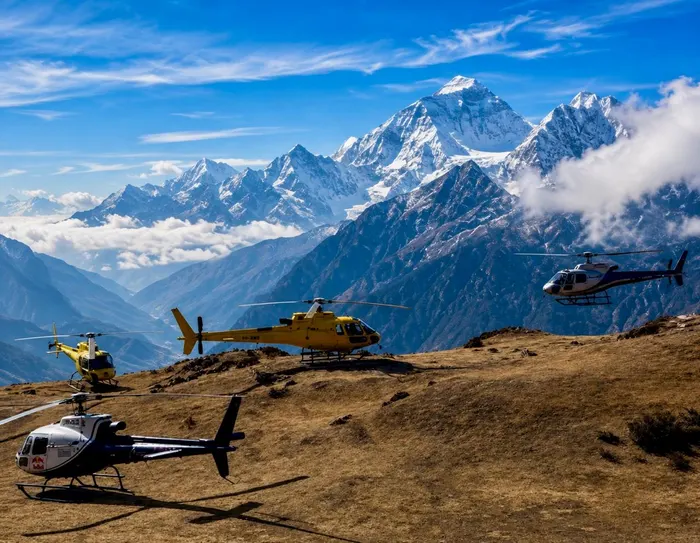
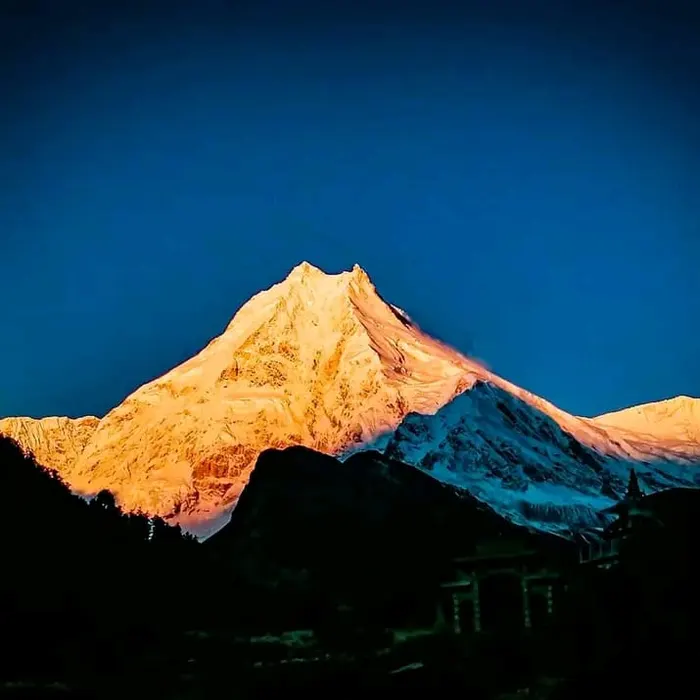
The most famous is the Everest Base Camp helicopter trek, a ten-day ascent to 5,364 m finishing with a helicopter return from Kala Patthar or Lukla, priced from USD 3,300. It is harder, higher and longer than Annapurna, and the flight out over the Khumbu icefall is unforgettable. For a quieter, less-trodden version, the Manaslu helicopter return trek crosses the Larkya La at 5,106 m in a restricted area and flies out by helicopter, from USD 5,200. And if you would rather trade glaciers for turquoise lakes, the Gokyo Valley lakes trek with a scenic Everest helicopter tour climbs to Gokyo Ri and adds an aerial finale, from USD 2,460.
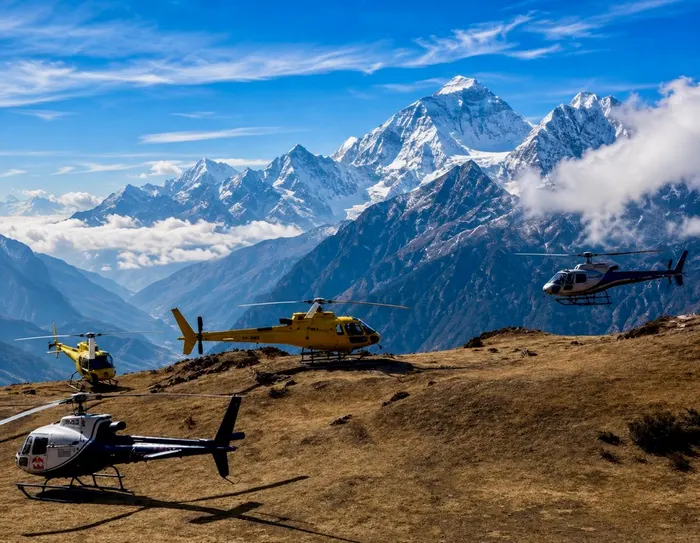
Whichever route you choose, booking through a licensed agency matters, and a good one will match the itinerary to your fitness and schedule. Our guide to the best trekking agency in Nepal in 2026 explains what to look for, from permits to safety standards.
How Do You Book an Annapurna Helicopter Return Trek?
Book through a licensed Nepali agency so permits, guide, teahouse bookings and the helicopter are handled together. Confirm the departure is shared or private, add at least one buffer day for weather, arrange insurance that covers helicopter evacuation above 4,000 m, and prepare to be weighed in Pokhara.
Timing your booking matters in peak season. October, November, March and April fill quickly, and helicopter slots are limited by daylight and weather, so reserve weeks ahead rather than days. Ask whether the flight departs from Base Camp or from Machhapuchhre Base Camp, and how the operator handles a weather cancellation. A reputable agency will explain the fallback in writing rather than leaving it vague.
Finally, think about how the trek fits your wider trip. Many travellers pair the fly-back with a few days in the Kathmandu Valley, or with time in Pokhara before and after. Booking the pieces together lets the agency sequence flights and transfers so you are not racing between them. If you are still choosing an operator, our guide to the best trekking agency in Nepal in 2026 explains what to look for. When you are ready, our team can build the itinerary around your dates, fitness and budget, and confirm the current helicopter schedule before you commit.