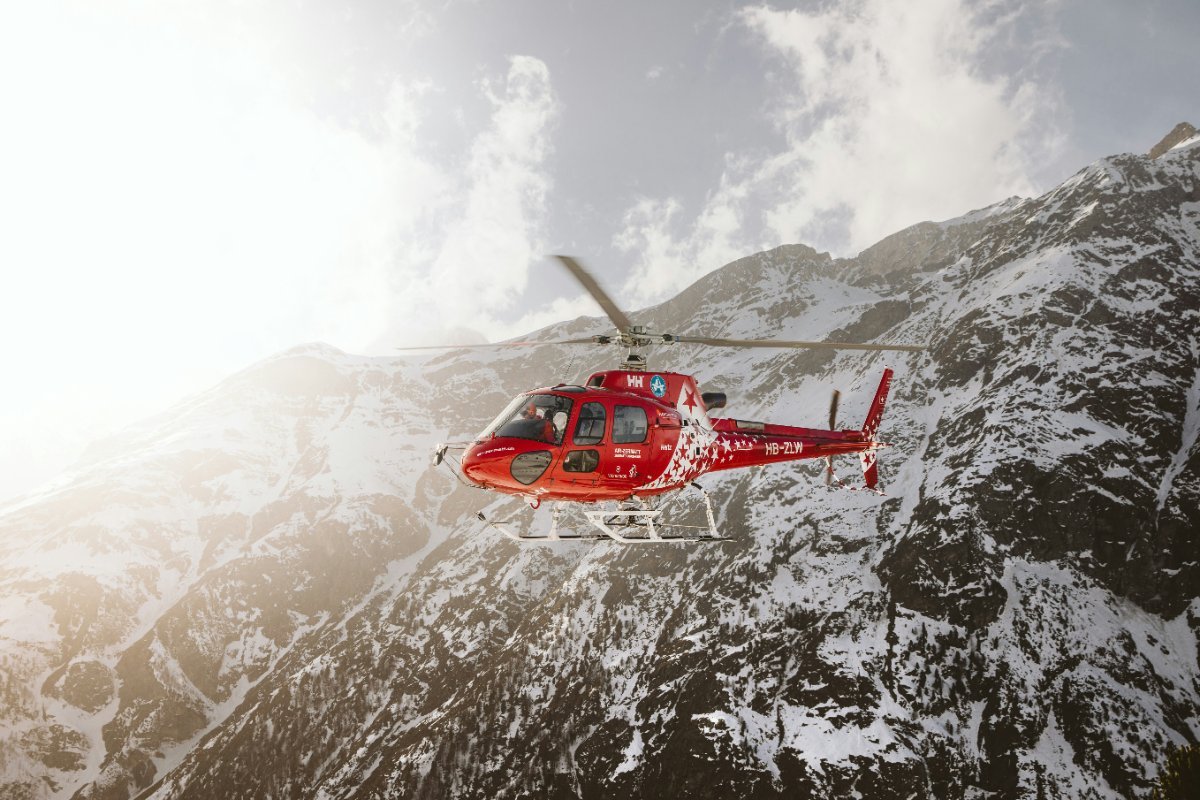
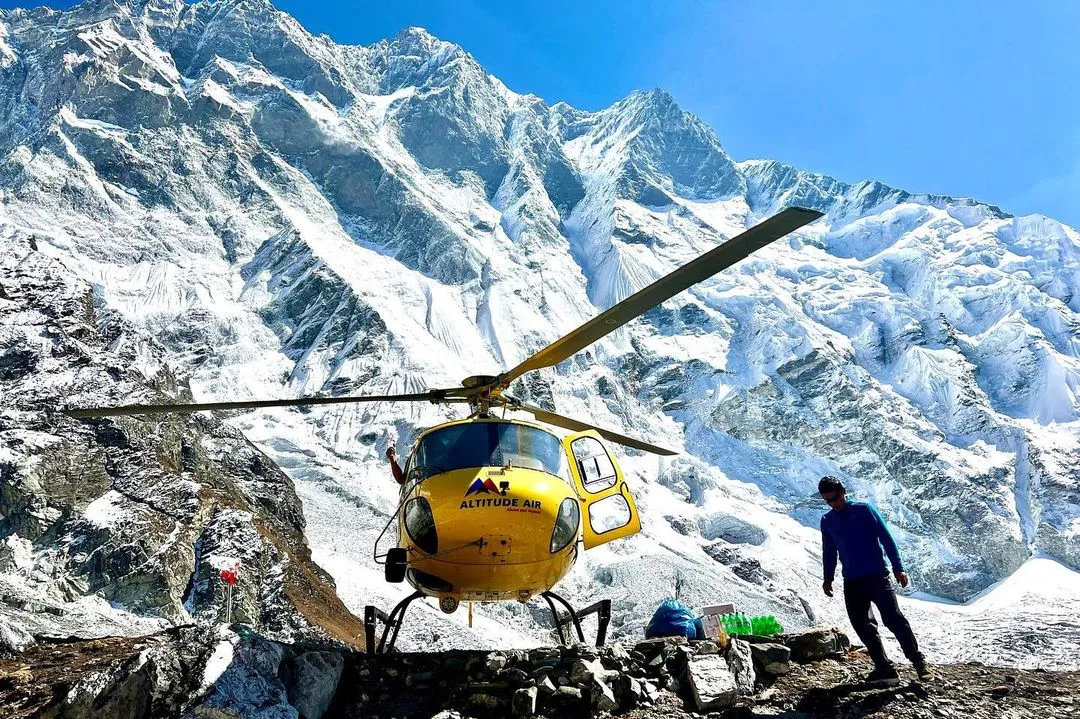
When you book a helicopter tour in Nepal, you face a fundamental choice: soar above the Himalayas and return to Kathmandu, or touch down on the roof of the world. A helicopter tour in Nepal with landing at Everest Base Camp or Annapurna Base Camp is not merely an upgraded version of a flyover - it is a completely different category of experience. The moment your skids kiss the glacial moraine at 5,364 meters or 4,130 meters, the journey shifts from observation to participation. You breathe the same thin air as climbers. You stand on the same ice that has tested generations of mountaineers. That three-to-five-minute grounding changes everything: your perspective, your photographs, your stories, and your understanding of what the Himalayas actually are.
This guide explores why the landing option matters, how it compares to flyover tours across every dimension that counts - cost, time, altitude exposure, photography, weather flexibility, and emotional impact - and which specific tours offer the most meaningful touchdown experience. Whether you are deciding between the Everest Base Camp landing and the Annapurna Base Camp landing, or wondering if the premium over a flyover is justified, this article gives you the framework to decide. For the broader context of all helicopter options in Nepal, start with our Nepal Helicopter Tours aerial guide and our cultural and spiritual tours pillar. The best trekking agency in Nepal overview helps you evaluate operators.


What "With Landing" Actually Means
The phrase "helicopter tour with landing" gets used loosely in marketing. In practice, there are three distinct tiers of ground contact, and the difference between them is substantial:
Tier 1: Technical Touch-and-Go (30-90 seconds)
The helicopter lands briefly - often just long enough for the pilot to confirm stable footing - and you step out for a rapid photo before lifting off. This is common on shared Everest Base Camp flights where the aircraft must clear the landing zone quickly for the next group. You get the "I stood at Base Camp" moment, but there is no time to absorb the environment, walk to a viewpoint, or take more than a handful of frames.
Tier 2: Guided Ground Time (3-5 minutes)
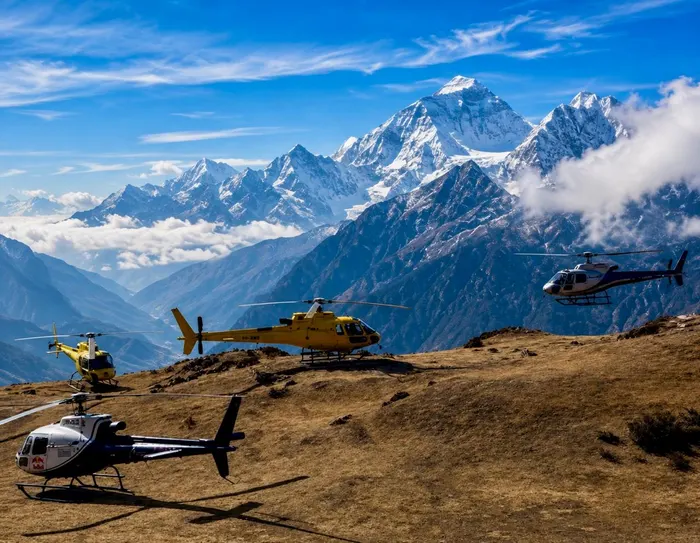
The helicopter shuts down or idles while a guide walks you to a designated viewpoint - the iconic Everest Base Camp rock cairn, the Khumbu Icefall overlook, or the Annapurna Base Camp amphitheater. You have time for panoramic video, a proper portrait, and a few breaths of genuine high-altitude air. This is the standard for private charters and premium shared flights (such as the Luxury Everest Base Camp Helicopter Tour with Landing & View Hotel which includes a stop at Hotel Everest View for breakfast).
Tier 3: Extended Experience (15-30 minutes with amenities)
The aircraft remains on the ground while you enjoy a full breakfast, tea ceremony, or guided walk to multiple viewpoints. The Luxury Annapurna Base Camp Helicopter Tour from Kathmandu with Landing offers a generous ground window at the Annapurna Sanctuary, where the 360-degree amphitheater of 7,000- and 8,000-meter peaks surrounds you completely. This tier transforms a flight into a destination.
When evaluating any "with landing" tour, clarify exactly which tier you are buying. The price difference between Tier 1 and Tier 3 can be USD 500-1,000 per person, but the experiential difference is exponential.
Everest Base Camp Landing vs Annapurna Base Camp Landing: The Core Comparison
Both landings put you on the ground in the high Himalayas. The character of that ground, however, could not be more different.
Everest Base Camp (5,364 m / 17,598 ft)
- Environment: Glacial moraine, moving ice, active climbing expeditions (spring season), prayer flags on rocks, the Khumbu Icefall looming above.
- Altitude exposure: Significant. Even 3-5 minutes at 5,364 m can trigger mild hypoxia symptoms in unacclimatized visitors - lightheadedness, shortness of breath, rapid heart rate. Pilots carry portable oxygen; use it.
- Visual payoff: You are in the throat of the Khumbu. The Icefall tumbles toward you. Nuptse, Lhotse, and Everest's north face form a wall. No 360-degree panorama - the valley is narrow.
- Photography: Iconic "I was here" shots at the Base Camp rock, wide angles of the Icefall, expedition tents in season. Harsh midday light; morning flights preferred.
- Weather sensitivity: High. Morning clarity is common; afternoon cloud buildup frequently forces cancellations or flyover-only diversion.
Annapurna Base Camp (4,130 m / 13,550 ft)
- Environment: Glacial basin (the Annapurna Sanctuary), stable ground, 360-degree amphitheater of Annapurna I (8,091 m), Annapurna South, Hiunchuli, Machapuchare, Gangapurna. No active icefall overhead.
- Altitude exposure: Moderate. 4,130 m is noticeably thinner than Kathmandu but far more manageable than Everest Base Camp. Most visitors feel only mild breathlessness.
- Visual payoff: The complete panorama. You stand in the center of a stone circle of giants. Machapuchare's fishtail profile dominates the southern horizon.
- Photography: Softer light in the basin, 360-degree panoramic opportunities, reflection shots in glacial tarns (early season), no harsh icefall shadows.
- Weather sensitivity: Lower. The Sanctuary often clears when Everest region is socked in. More reliable landing window across seasons.
Cost Breakdown: Landing Premium Over Flyover
The landing option typically adds USD 200-500 per person over a comparable flyover, depending on aircraft sharing and ground time tier. Here is the 2026/27 pricing landscape from the Helicopter Tour in Nepal activity hub:
| Tour Type | Flyover (shared) | Landing Tier 1 (shared) | Landing Tier 2 (private) |
|---|---|---|---|
| Everest Base Camp | ~USD 1,100 | ~USD 1,305 | ~USD 4,500-5,500 |
| Annapurna Base Camp | ~USD 1,000 | ~USD 1,200 | ~USD 4,000-5,000 |
| Gosaikunda (landing) | N/A | ~USD 800-900 | ~USD 3,000-3,500 |
For the definitive cost analysis across all heli products, see our Helicopter Tour in Nepal Cost 2026/27 guide.
Why the Landing Moment Changes Everything
1. From Spectator to Participant
A flyover makes you a spectator. You observe the Himalayas through plexiglass, separated by temperature, pressure, and altitude. A landing makes you a participant. Your boots touch the same ground as Tenzing and Hillary, as the climbers who will summit next week, as the Sherpas who carry the loads. The psychological shift is immediate: the mountains are no longer a backdrop; they are a place you have been.
2. Sensory Data No Camera Captures
The sound of wind across the Khumbu Icefall. The smell of cold stone and jet fuel mingling. The bite of air at 5,364 meters in your lungs. The vibration of the rotor wash fading to silence when the engine idles. These sensory inputs create a memory trace that a photograph cannot replicate. Travelers consistently report that the landing moment - not the flight - is what they recall years later.
3. Photography Without Compression
Aerial photography compresses depth. Peaks that are kilometers apart appear stacked. On the ground, you recover true scale. You can place a human figure (yourself, your partner) in the foreground with Everest or Annapurna looming behind, creating the perspective that conveys genuine magnitude. The Everest vs Annapurna helicopter tour comparison includes side-by-side photo examples from both landings.
4. Altitude as Earned Credibility
There is a quiet credibility in having stood at Base Camp, even for five minutes. It changes how you speak about the Himalayas. You are no longer repeating brochure copy; you are describing lived sensation. This matters for travelers who value authenticity over checkbox tourism.
Weather, Timing, and the Landing Decision
Weather is the single variable that can convert a landing tour into a flyover - or cancel it entirely. Understanding the patterns helps you book the right window.
Everest Region: Morning Imperative
The Khumbu valley follows a near-clockwork pattern: clear mornings, cloud buildup by 10:00-11:00 AM, frequent afternoon whiteout. Landing requires visual flight rules (VFR) at the landing zone. If cloud obscures the moraine, the pilot cannot land - regulation and safety both forbid it. The result is either a flyover diversion (partial refund on some operators) or a full cancellation.
Book the earliest slot (6:00-6:30 AM departure from Kathmandu). This maximizes your landing probability to 85-90% in peak seasons (March-May, October-November). Our Best Time for Helicopter Tour in Nepal guide breaks down monthly landing success rates.
Annapurna Sanctuary: More Forgiving
The Annapurna Basin's broader topography allows more cloud dissipation. Landing success rates run 90-95% in peak season, with usable windows often extending to midday. This makes Annapurna Base Camp landing the more reliable choice if your dates are fixed and you cannot chase a weather window.
Monsoon and Winter Considerations
Monsoon (June-September): Landing tours operate but success rates drop to 40-60%. Flyovers are more reliable. Winter (December-February): Crystal-clear air, high landing success, but extreme cold at Everest Base Camp (-15°C to -25°C). Annapurna Base Camp is more comfortable (-5°C to -10°C). The Shared vs Private Helicopter Tour guide covers how aircraft sharing affects weather flexibility.
Shared vs Private: How Sharing Affects Your Landing
The aircraft sharing model directly determines your ground experience:
Shared (5-6 passengers, Tier 1-2 ground time)
- Cost: USD 1,200-1,305 per person (Everest/Annapurna)
- Ground time: 2-4 minutes typical (pilot manages multiple groups at the landing zone)
- Landing zone congestion: 2-4 aircraft may cycle through in 30 minutes
- Flexibility: Fixed schedule; no itinerary customization
- Best for: Budget-conscious travelers who want the landing credential
Private Charter (1-5 passengers, Tier 2-3 ground time)
- Cost: USD 4,000-5,500 total (split among passengers)
- Ground time: 10-30 minutes negotiable
- Landing zone priority: Your aircraft, your timeline
- Flexibility: Custom departure, extended ground time, optional second landing (e.g., Kala Patthar + Everest Base Camp)
- Best for: Photographers, couples/families, travelers with specific medical or mobility needs
The How to Book a Helicopter Tour in Nepal guide walks through the inquiry-to-contract process for both shared and private options.
Safety Protocols Specific to Landing Tours
Landing introduces risks that flyovers do not: ground crew coordination, passenger egress/ingress at altitude, rotor wash on loose moraine, and rapid weather deterioration at the landing zone. Reputable operators (the Helicopter Tour in Nepal Safety guide details the audit framework) implement:
- Pre-landing weather confirmation via satellite link and ground spotter
- Oxygen briefing and portable cylinders for every passenger (Everest landings)
- Designated egress paths marked by ground crew
- Maximum ground time limits enforced by pilot (typically 5 min Everest, 10 min Annapurna)
- Abort criteria: wind >15 knots, visibility <3 km, cloud base below ridge line
Ask your operator for their landing SOP document before booking. If they cannot provide it, book elsewhere.
Medical Considerations for High-Altitude Landings
The physiological impact of even brief exposure to 5,364 meters is real and varies significantly between individuals. Understanding the risks helps you prepare and decide whether the Everest landing is appropriate for your health profile.
Acute Mountain Sickness (AMS) Risk
AMS can develop within hours of exposure to altitudes above 2,500 meters. At 5,364 meters, the partial pressure of oxygen is roughly 50% of sea level. While a 3-5 minute exposure rarely causes full AMS in healthy adults, it can trigger symptoms in susceptible individuals: headache, nausea, dizziness, and shortness of breath. The risk factors include: previous history of AMS, rapid ascent without acclimatization, dehydration, overexertion, and certain medical conditions (respiratory disease, cardiac disease, sickle cell trait).
Oxygen Saturation and Portable Oxygen
Pulse oximetry readings at Everest Base Camp typically show SpO2 of 75-85% in unacclimatized visitors (sea level normal is 95-100%). Portable oxygen cylinders carried by reputable operators can raise this to 90%+ within a few breaths. Use the oxygen proactively - do not wait for symptoms. The Luxury Everest Base Camp Helicopter Tour includes oxygen for every passenger as standard.
Who Should Avoid Everest Base Camp Landing
Pregnant women, children under 12, anyone with uncontrolled hypertension, severe COPD, recent heart attack or stroke, sickle cell disease, or severe anemia should not land at Everest Base Camp. The Annapurna Base Camp landing at 4,130 meters is a safer alternative for these groups. Always consult your physician before booking any high-altitude helicopter landing.
Acclimatization Strategy
If your itinerary allows, spend 2-3 nights in Kathmandu (1,400 m) before the flight. This partial acclimatization reduces AMS risk. Hydrate aggressively (3-4 liters daily) starting 48 hours before the flight. Avoid alcohol and sleeping pills the night before. Diamox (acetazolamide) 125mg twice daily starting 24 hours before ascent can reduce AMS incidence by 50-75% - discuss with your doctor.
Photography Guide: Maximizing Your Landing Shots
The landing window is brief. Preparation determines whether you come away with a few snapshots or a portfolio-grade series.
Everest Base Camp: Key Compositions
- The Rock Cairn Portrait: Stand at the iconic "Everest Base Camp 5364m" rock pile. Wide angle (16-24mm equivalent) to include the Khumbu Icefall backdrop. Low angle emphasizes the cairn; eye level shows the Icefall scale.
- Icefall Panorama: Sweep from Nuptse left to Lhotse right. The Icefall's seracs and crevasses create leading lines. Shoot vertical panoramas for maximum drama.
- Expedition Life (Spring Only): Colorful tents, Sherpas moving loads, climbers on acclimatization rotations. Telephoto (70-200mm) compresses the scene. Ask permission before photographing identifiable people.
- Helicopter Context: Include the rotor blades or skid in frame for scale. The aircraft against the Icefall tells the "how I got here" story.
Annapurna Base Camp: Key Compositions
- 360-Degree Amphitheater Panorama: The Sanctuary's circular arrangement is its signature. Multi-row panorama (3-5 rows, 60% overlap) captures the full ring: Annapurna I center, Annapurna South right, Machapuchare left, Hiunchuli and Gangapurna filling the gaps.
- Machapuchare Reflection: Early season (March-April) glacial tarns near the helipad reflect Machapuchare's fishtail. Low angle, polarizing filter, calm morning.
- Sanctuary Floor Details: Alpine flowers (primula, rhododendron in spring), prayer flags on boulders, glacial streams. Macro or close-up lenses.
- Human Scale: Your silhouette or a companion against the peaks. The Annapurna Sanctuary's openness makes this easier than at Everest Base Camp.
Gear Recommendations
- Camera: Any modern mirrorless or DSLR. Smartphone (iPhone 15 Pro / Samsung S24 Ultra) is surprisingly capable in good light.
- Lenses: Wide zoom (16-35mm or 24-70mm) is the workhorse. Telephoto (70-200mm) for detail compression. Leave primes at home - versatility matters in 3 minutes.
- Settings: Aperture priority f/8-f/11 for depth of field. ISO 100-400 (morning light is bright). Shutter speed >1/500s to freeze rotor blur if shooting from aircraft. RAW + JPEG.
- Accessories: Polarizing filter (reduces glare on ice/snow, deepens sky). UV filter for lens protection (rotor wash carries grit). Spare battery (cold reduces capacity). Microfiber cloth for rotor-wash spray.
Video Tips
Shoot 4K/30p or 4K/60p for smooth slow-motion. Stabilize with gimbal or in-body IS. Record ambient audio - the rotor fade to silence is powerful. 15-second clips: approach, landing, first step, 360 pan, departure. Edit into 60-second reel.
Environmental Impact and Responsible Landing Tourism
Helicopter landings in fragile high-alpine environments carry ecological responsibilities. The Khumbu and Annapurna regions are both protected areas (Sagarmatha National Park and Annapurna Conservation Area) with specific regulations.
Flight Path Regulations
Civil Aviation Authority of Nepal (CAAN) mandates specific corridors and minimum altitudes over national parks. Landing zones are designated and limited. No-go zones include wildlife corridors, nesting sites, and culturally sensitive areas. Reputable operators file flight plans and obtain permits for each landing.
Waste and Footprint Management
Leave No Trace applies at 5,364 meters as much as at sea level. No litter, no food waste, no human waste (use facilities at Lukla or Hotel Everest View before the flight). Operators should brief passengers on waste protocols. The Safety guide includes environmental compliance as an audit criterion.
Community Benefit
Landing fees and national park permits fund trail maintenance, waste management, and community development in Khumbu and Annapurna regions. The Muktinath Helicopter Pilgrimage similarly supports Mustang region communities. Choosing operators who employ local pilots, guides, and ground crew ensures economic benefit stays in the region.
Carbon Considerations
A round-trip Kathmandu-Everest Base Camp-Kathmandu flight burns approximately 400-500 liters of Jet A1, emitting roughly 1-1.2 tons CO2 per flight (shared among 5-6 passengers = ~200 kg CO2 per person). Private charters multiply this. Some operators offer carbon offset programs; verify they use Gold Standard or Verra-certified projects. The Gosaikunda Sacred Lake Trek and 9- Day Luxury Yoga Wellness Escape offer lower-carbon alternatives for Himalayan immersion.

Related Himalayan Guides
Deepen your planning with these sister articles from the helicopter cluster and beyond:
- Helicopter Tour in Nepal Cost 2026/27: Complete Price Breakdown - comprehensive pricing across all heli products
- Best Time for Helicopter Tour in Nepal: Weather, Seasons and Visibility - monthly landing success rates
- Everest vs Annapurna Helicopter Tour: Which One Should You Choose? - side-by-side comparison
- Helicopter Tour in Nepal for Seniors: Accessible Himalayan Views - comfort-focused options
- Shared vs Private Helicopter Tour: Best Value Analysis - sharing model deep dive
- How to Book a Helicopter Tour in Nepal: Step-by-Step Guide - booking workflow
- Helicopter Tour in Nepal Safety: Pilot Qualifications, Aircraft, Weather Protocols - safety audit framework
- What to Wear and Pack for a Helicopter Tour: Complete Checklist - packing list by destination
- Everest Base Camp Helicopter Tour 2026: The Definitive One-Day Guide - the original EBC heli guide
- Nepal Helicopter Tours: Everest, Annapurna & Gosaikunda Aerial Guide - cluster hub blog